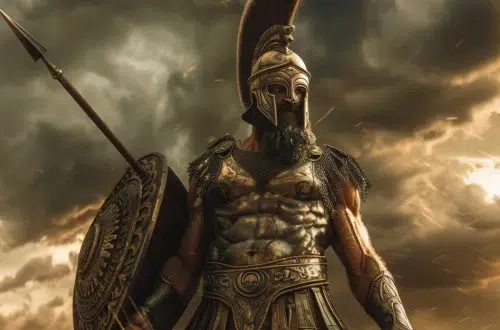

Aphrodite Goddess of Love, Beauty and Desire
In ancient Greek mythology, Aphrodite goddess, shines as the goddess of love, beauty, and desire. She’s known for her divine love and eternal charm. Imagine a goddess so enchanting that even gods couldn’t resist her charm!
She is said to be born from the sea foam, and she has a magical girdle that makes anyone fall head over heels for her. Though married to Hephaestus, the god of fire and blacksmiths, Aphrodite had many legendary love affairs, including one with Ares, the god of war.
Aphrodite’s influence is vast, making her one of the most captivating figures in Greek mythology. People adore her, often seeking her blessings for love and beauty.
Her influence touches art and literature, making her a key figure in human culture.
Aphrodite is known as Venus in Roman mythology. She’s one of the most important Olympian gods.
Her beauty and stories have made her a key figure in history. People have worshipped her for centuries, showing her lasting impact.
| Aphrodite – Goddess of Love | |
|---|---|
| Domain | Love, Beauty, Desire |
| Symbols | Dove, Rose, Seashell, Myrtle |
| Family Origin | Possibly Zeus (father); many half-siblings |
| Interesting Fact | Aphrodite, the goddess of love, was born from sea foam |
Origins and Birth of Aphrodite Goddess

Aphrodite has two fascinating birth stories in Greek mythology.
Born From Sea Foam
The first story is about her birth from the sea foam. When Cronus, one of the Titans, cut off Uranus’s (the sky god’s) genitals, they fell into the sea. From the sea foam (aphros), Aphrodite emerged as a fully grown and beautiful goddess. She stepped out of the sea and onto the shore, enchanting everyone with her beauty. This story shows how she is connected to the ocean and the power of nature.
Aphrodite’s birth from sea foam connects her to the ocean’s beauty and mystery.
This symbolizes beauty emerging from chaos. The sea’s vastness and foam represent the wild and unpredictable nature of life.
From this chaos, Aphrodite appears, showing how beauty and love can arise even in turbulent times. Her connection to the sea also highlights her power and enchantment, making her a unique and captivating goddess.
This symbolism reminds us that beauty and love can come from unexpected and chaotic places, bringing harmony and wonder.
Daughter of Zeus
The second story is different. In this version, Aphrodite is the daughter of Zeus, the king of the gods, and Dione, a Titaness.
This version makes her part of the powerful Olympian family. Both stories highlight her beauty and charm. Whether she comes from the sea foam or is born from Zeus and Dione, Aphrodite remains the goddess of love and beauty.
Based on this version, Aphrodite has many half-siblings.
People in ancient Greece worshipped her, seeking her help with love and relationships. Aphrodite’s myths remind us of the power of love and beauty in the world. They show how even the gods couldn’t resist her enchanting presence. Her birth stories are a vital part of her fascinating legend.
Most stories agree she came from the sea foam. This shows her deep link to the ocean and her beauty.
Symbols of Aphrodite

- Major Symbols
- Seashells, myrtles, roses, doves, sparrows, swans.
- Other symbols: mirror, girdle, apple, dolphin.
- Sacred Animals and Plants
- Animals: Dolphin, sparrow, dove, swan, hare, goose, bee, fish, butterfly.
- Plants: Myrtle, rose, apple, pomegranate.
Aphrodite has many symbols that represent her. Seashells remind us of her birth from the sea. Myrtles, roses, and doves symbolize love and beauty. Sparrows and swans show her gentle and graceful nature.
Aphrodite’s mirror reflects her beauty and vanity. The apple stands for desire and choices, like the golden apple from the famous myth. Dolphins connect to her sea birth and her playful, free spirit.
Her most famous tool was the magical girdle. This girdle made anyone fall in love. It showed her power over feelings and relationships. This made her a strong Olympian goddess.
Each of these symbols tells a part of Aphrodite’s story. Seashells and dolphins remind us of her ocean connection. Roses, doves, and myrtles show her link to love and nature. The mirror and girdle highlight her power and charm. The apple adds a touch of mystery and desire.
These symbols help us understand Aphrodite’s many sides. They show her beauty, love, and enchanting nature. When we see these symbols, we remember her stories and the magic she brings. Aphrodite’s symbols make her one of the most captivating and beloved goddesses in Greek mythology.
Aphrodite Goddess Role and Influence in Greek Mythology

Aphrodite was known for her divine beauty. She was loved by both gods and mortals. She could control love manipulation and spark passion.
Beauty is another domain, where she inspires admiration and awe. Sexual pleasure falls under her influence, bringing joy and intimacy.
She was involved in the most tragic love stories in Greek mythology.
Aphrodite’s beauty and power often mixed up gods and humans. She was often at the heart of divine and mortal relationships. Her actions caused trouble among the gods and made mortals fall deeply in love.
Aphrodite was more than just about love. She was a symbol of life and rebirth. Her stories show her deep connection to fertility. She played a key role in keeping the world balanced. Her magical girdle showed her true power.
Fertility is a key area for Aphrodite. She helps people have children and ensures the growth of life. Passion, with its fiery and intense emotions, is also her domain. She sparks desire and excitement in people’s hearts.
Procreation, the act of creating new life, is vital in her realm. Aphrodite encourages the continuation of families and communities. Her influence touches many aspects of life, making her one of the most powerful and beloved goddesses.
Aphrodite’s domains remind us of the importance of love, beauty, and life. She brings joy, passion, and growth to the world. Through her influence, she shapes the way we experience and cherish these vital aspects of life.
Cult and Worship

Aphrodite has many places where people worshipped her. The main centres are Cythera, Cyprus, Corinth, and Athens. People in these cities built temples and altars for her.
One of the main festivals for Aphrodite was Aphrodisia. This festival took place every midsummer. People celebrated by giving offerings and holding ceremonies in her honour. They wanted her blessings for love, beauty, and happiness.
In ancient Greek religion, worship of Aphrodite was very important. People would pray to her for help with love and relationships. They believed she could bring beauty and joy into their lives. Worship practices included singing hymns, making sacrifices, and holding festivals.
Aphrodite’s worship showed how much the Greeks valued love and beauty. Her followers felt connected to her through their rituals and prayers. Worship of Aphrodite played a big role in their daily lives, reminding them of the power and magic of love.
Temples and Worship of Aphrodite
Temples dedicated to Aphrodite were key in Ancient Greek Religion. The one in Paphos was especially famous for its spiritual and cultural importance.
Aphrodite’s worship was closely linked with priestesses. They led important rituals and kept the temples sacred.
Worship included big religious festivals. The Aphrodisia was a major event, showing how much followers revered Aphrodite. It featured processions and offerings that brought the community together.
Sanctuary sites were key for worship and were at the heart of religious life. They were places for worship and cultural events. These sites helped keep the spiritual health of society strong.
The temples and worship of Aphrodite in places like Paphos show how Ancient Greek Religion connected the divine and mortal worlds. This was done through rituals and festivals led by priestesses.
Relationships and Children

Marriage to Hephaestus
Aphrodite had an arranged marriage to Hephaestus, the god of fire and blacksmiths. Zeus, the king of the gods, decided this marriage. He thought it would bring peace among the gods.
Hephaestus loved Aphrodite deeply, but she did not feel the same way. This marriage had many implications.
Aphrodite, known for her beauty and charm, did not stay loyal to Hephaestus. She had many lovers, including Ares, the god of war. This caused tension and jealousy among the gods.
Despite this, Hephaestus and Aphrodite’s marriage showed the gods’ complex relationships.
It highlights the contrast between Hephaestus’s hardworking nature and Aphrodite’s passionate, free-spirited personality.
Affairs and Lovers
Aphrodite, the goddess of love, had many famous lovers.
Some of her most notable lovers were Ares, Hermes, Poseidon, Adonis, and Dionysus. These relationships added to her legend and influence.
With Ares, the god of war, she had a passionate and famous affair. They had children together, including Eros (Cupid), Phobos, and Deimos. Eros, known as Cupid, became the god of love, spreading affection with his arrows.
Aphrodite also had a relationship with Hermes, the messenger god. Together, they had Hermaphroditus, a unique figure with both male and female traits.
Poseidon, the god of the sea, was another lover of Aphrodite. Their affair linked her further to the ocean.
Adonis, a mortal, was one of Aphrodite’s great loves. His beauty captivated her, and their story became a tragic romance. Dionysus, the god of wine, also had a relationship with Aphrodite, adding to her list of lovers.
Through these affairs, Aphrodite had many children, each with their own important roles in mythology. Her relationships and offspring show her influence and the power of love and passion. Aphrodite’s lovers and children remain key parts of her captivating myth.
Legends and Myths of Aphrodite
Aphrodite deity of love and beauty, is at the heart of many lasting stories. Her tale with Adonis is especially famous. It’s a story filled with love and sadness, showing how much she felt deeply.
The Judgement of Paris
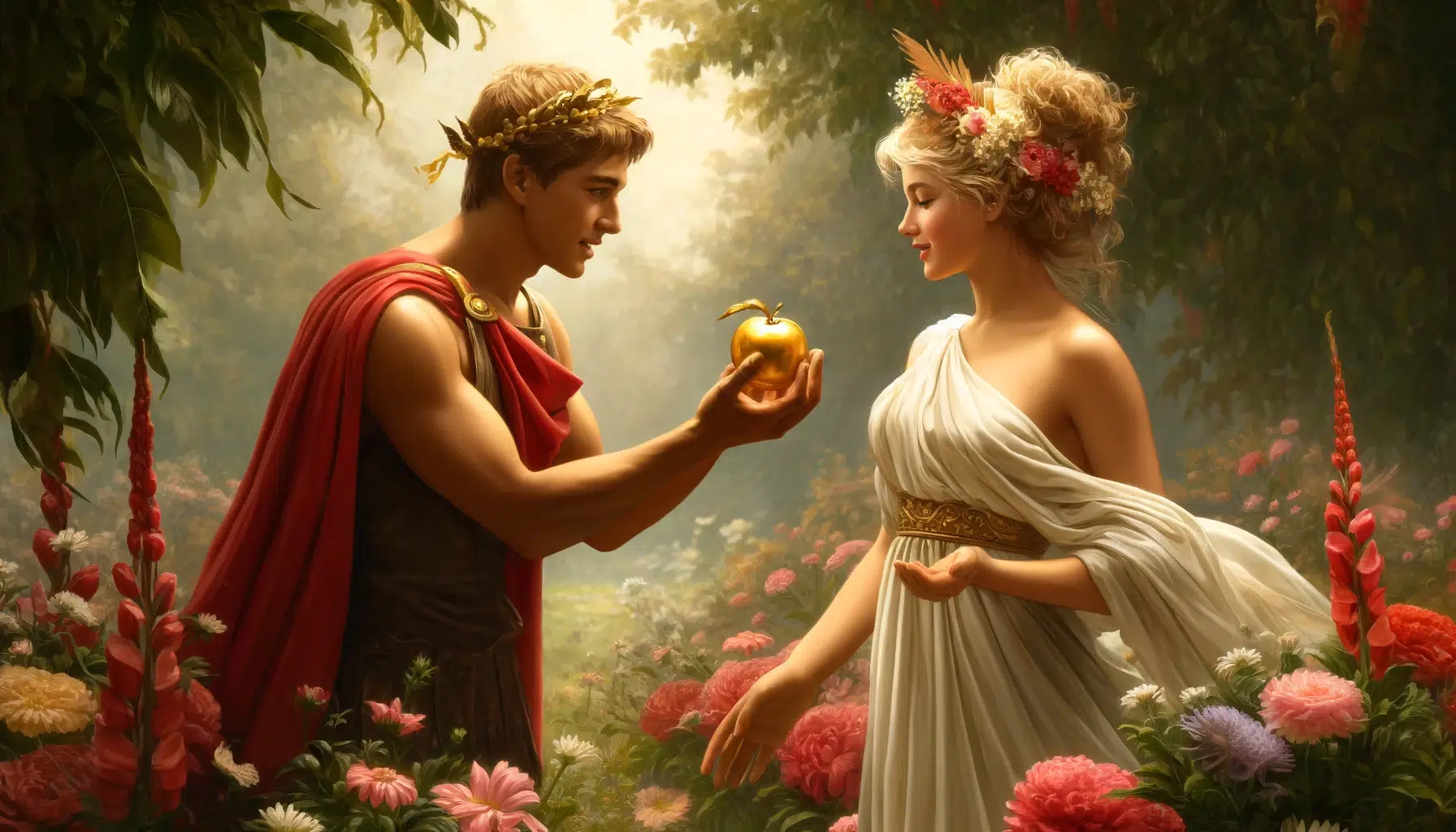
The Judgement of Paris is a famous story that leads to the Trojan War. It starts with a golden apple. Eris, the goddess of discord, throws the apple into a party, saying it belongs to the fairest goddess.
Three goddesses claim the apple: Hera, Athena, and Aphrodite. They ask Zeus to decide, but he passes the job to Paris, a prince of Troy. Each goddess offers Paris a bribe to win the apple. Hera promises power and kingship. Athena promises wisdom and victory in battle. Aphrodite promises the most beautiful woman in the world, Helen of Sparta.
Paris chooses Aphrodite and gives her the golden apple. As a result, he wins Helen’s love. However, Helen is already married to King Menelaus of Sparta. Paris takes Helen to Troy, causing Menelaus to seek revenge. This act leads to the Trojan War, a conflict involving many heroes and gods.
Aphrodite’s promise and Paris’s choice show her influence and the power of love and beauty. The Judgement of Paris highlights how personal desires can lead to great events and conflicts. This story remains a key part of Greek mythology and shows the complex relationships between gods and humans.
Learn more about:
Aphrodite and Adonis

Aphrodite fell deeply in love with Adonis, a handsome mortal. Adonis was known for his incredible beauty, capturing Aphrodite’s heart. They spent much time together, enjoying each other’s company.
One day, Adonis went hunting alone. Despite Aphrodite’s warnings, he faces a wild boar. The boar attacks and fatally wounded Adonis. Aphrodite hurried to his side but arrives too late. She wept over his body, and her tears mix with his blood, creating the anemone flower.
The anemone flower symbolizes the short-lived beauty of life and love. It reminds us that beauty and happiness can be fleeting. Adonis’ death highlights the tragic side of love and the pain of losing someone dear.
Aphrodite and Adonis’ story shows the powerful emotions tied to love and loss. It teaches us about the deep connections we form and the heartache that can come with them. The tale of Aphrodite and Adonis remains a poignant reminder of love’s joys and sorrows in Greek mythology. Their story continues to inspire and move us, showing the enduring power of love and beauty.
Aphrodite and Anchises

Aphrodite had an affair with Anchises, a mortal shepherd. She disguises herself as a mortal woman and charms Anchises. They spend the night together, and their union results in the birth of Aeneas.
Aeneas became a significant figure in both Greek and Roman mythology. He was known for his bravery and leadership. In Greek mythology, Aeneas fought in the Trojan War and survived its destruction. The gods often protected him because of his divine mother, Aphrodite.
In Roman mythology, Aeneas had an even more important role. The poet Virgil wrote about him in the epic “The Aeneid.” This story tells of Aeneas’s journey to Italy after the fall of Troy. He became the ancestor of Romulus and Remus, the founders of Rome.
Aphrodite’s affair with Anchises and the birth of Aeneas connect her to epic narratives. These stories highlight the blend of divine and mortal worlds. Aeneas’s adventures and legacy show how the gods influenced human history.
Aphrodite and Anchises’s story reminds us of the gods’ involvement in human lives. It also shows the lasting impact of their relationships on myth and history. Aeneas’s tale continues to inspire and connect Greek and Roman cultures.
The Affair with Ares

Aphrodite had a passionate affair with Ares, the god of war. They felt a strong attraction to each other. Despite being married to Hephaestus, Aphrodite couldn’t resist Ares’s charm and strength.
Their secret meetings became well-known among the gods. Hephaestus eventually discovers their affair. He devises a clever plan to catch them. He crafts a fine, unbreakable net and set it around his bed.
When Aphrodite and Ares meet again, Hephaestus traps them in the net. He calls the other gods to witness their shame. Instead of scolding, the gods laugh at the situation. They found it amusing and tease Aphrodite and Ares.
From their union, Aphrodite and Ares had several children, including Eros (Cupid), Phobos, and Deimos. These children symbolize the mix of love and war. Eros spread love and desire, while Phobos and Deimos brought fear and terror.
The affair between Aphrodite and Ares shows the complex relationships among the gods. It also highlights how love and war can intertwine. Their story remains one of the most famous and intriguing tales in Greek mythology. It reminds us of the powerful and unpredictable nature of love.
Learn more about:
Pygmalion and Galatea
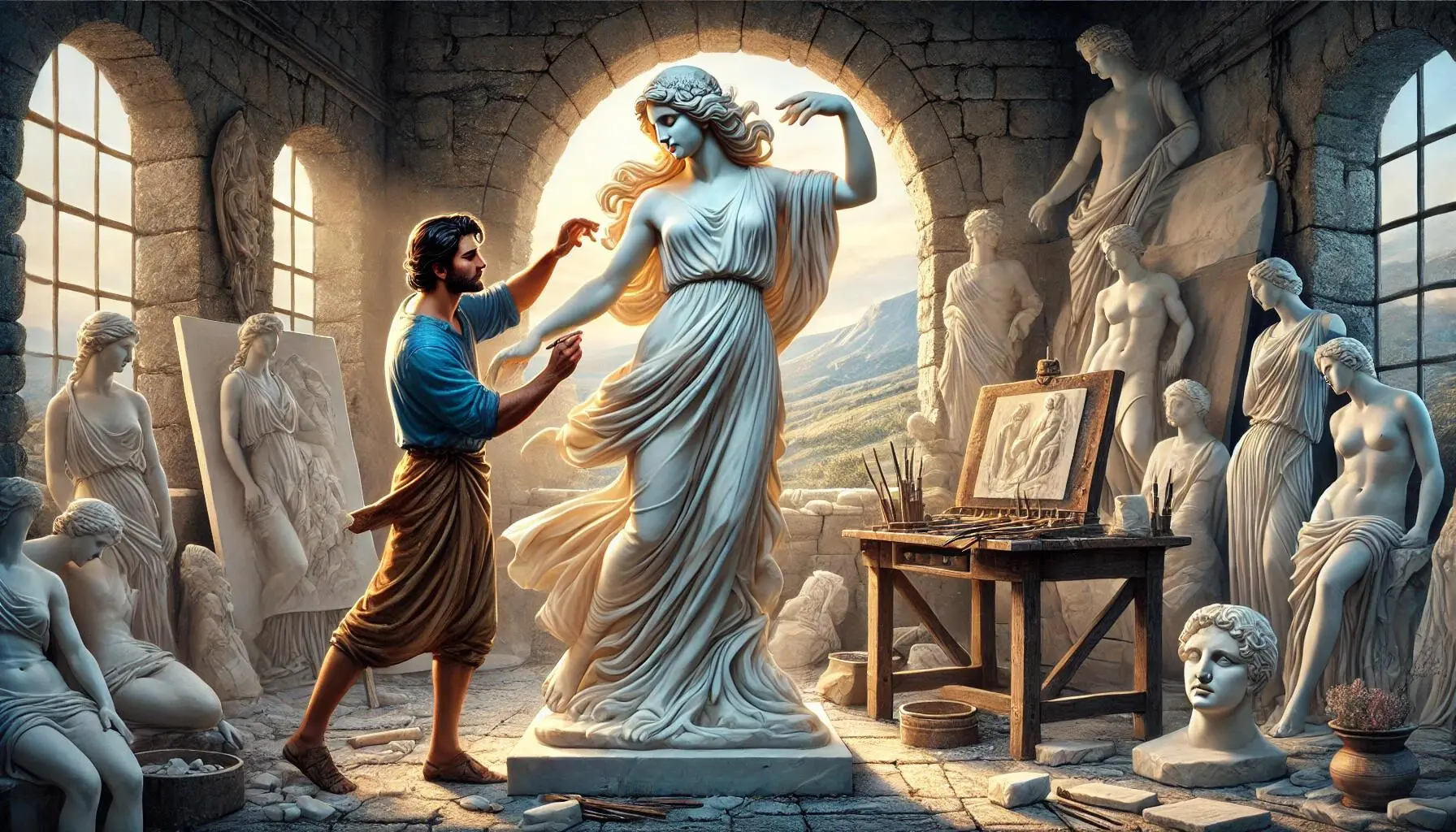
Pygmalion was a talented sculptor who lived in Cyprus. He didn’t like the women around him, so he decided to create a perfect woman from marble. He works hard and carves a beautiful statue, which he named Galatea. Pygmalion fell in love with his creation because she was so lovely and perfect.
Every day, Pygmalion talks to Galatea and treats her like she was alive. He wishes she could be real. During a festival honouring Aphrodite, Pygmalion prays to the goddess of love. He asks her to bring his beloved statue to life.
Aphrodite heard Pygmalion’s prayers and felt his deep love. She decides to help him. When Pygmalion returned home, he kisses Galatea. To his surprise, her lips felt warm. Slowly, the marble turned into soft, living flesh. Galatea came to life, and Pygmalion’s dream came true.
Pygmalion and Galatea got married and lived happily together. They even had a child named Paphos. Their story shows the power of love and how it can bring even the most unlikely dreams to life. It also highlights how faith and devotion can lead to amazing outcomes. This tale continues to inspire and fascinate people today.
The Rescue of Paris and Aeneas

Aphrodite plays a big role in rescuing Paris and Aeneas during the Trojan War. Paris, a prince of Troy, faced Menelaus in a fierce battle. Menelaus almost defeats Paris. But Aphrodite intervenes, saving Paris from death. She wraps him in a mist and carries him to safety in his bedroom.
Aphrodite also protects her son, Aeneas. During a battle, Aeneas is injured by Diomedes, a Greek warrior. Seeing her son in danger, Aphrodite quickly came to his aid. She lifts Aeneas and shields him with her divine power. Despite being wounded herself by Diomedes, she manages to get Aeneas to safety.
Apollo, another god, then helps Aeneas heal and regain his strength. Aphrodite’s actions show her deep love and care for her son. She ensures that both Paris and Aeneas lived to fight another day. Her intervention changes the course of events in the Trojan War.
These rescues show Aphrodite’s power and devotion. She protects those she loved, even in the chaos of war. Her bravery and care remind us of the strong bonds between gods and mortals in Greek mythology. Aphrodite’s actions had lasting impacts on the stories of Paris and Aeneas.
Learn more about:
Aphrodite and Psyche
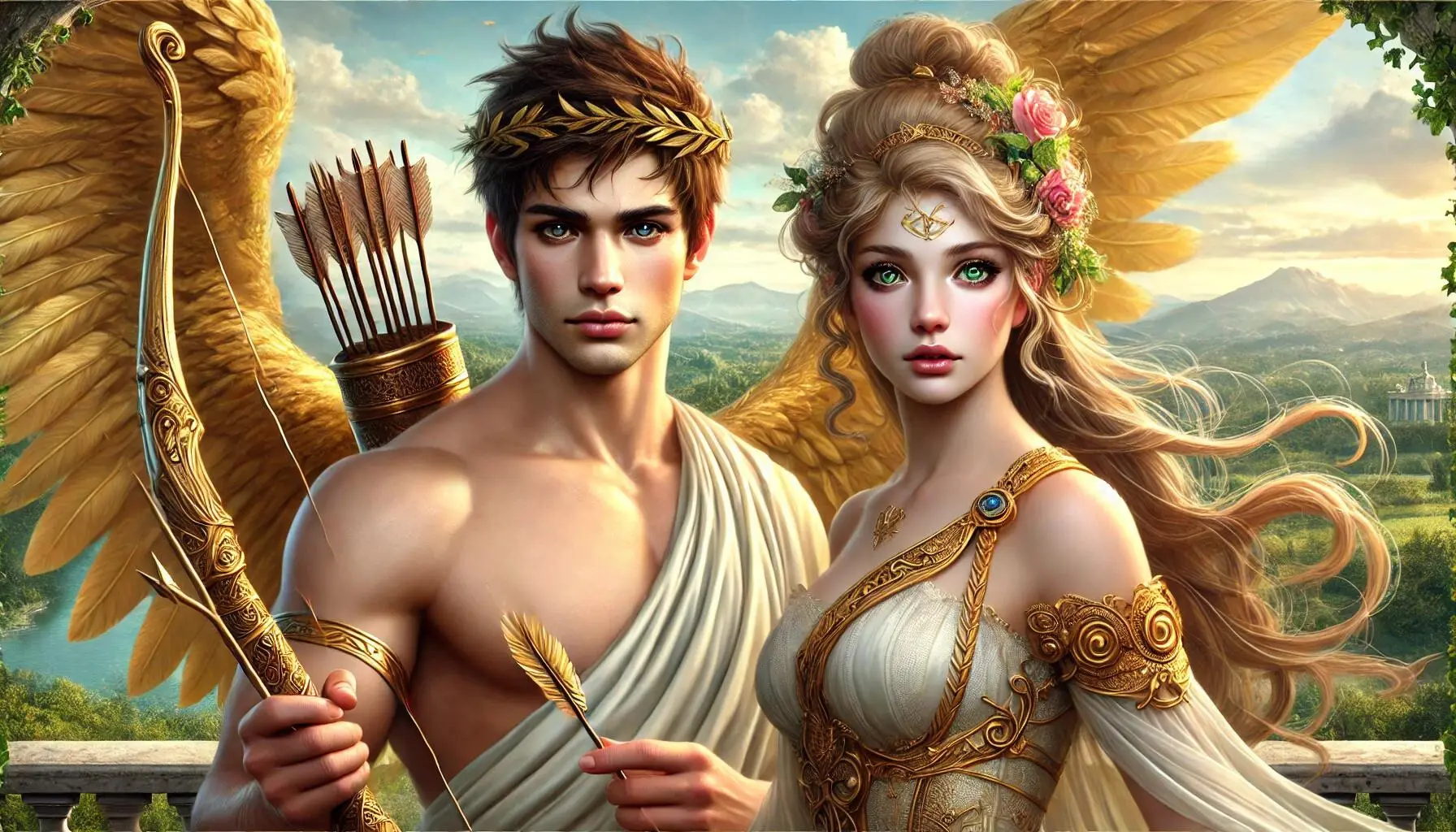
Psyche is a beautiful mortal princess in Greek mythology. Her beauty is so great that people start to neglect the worship of Aphrodite, the goddess of love and beauty.
Aphrodite was jealous of Psyche’s beauty. People admire Psyche and neglect Aphrodite’s temples. This makes Aphrodite very angry so she decides to punish Psyche.
She askes her son, Eros (Cupid), to make Psyche fall in love with a terrible monster. However, when Eros saw Psyche, he fell in love with her instead. He secretly marries her, but he visits only at night and tells her not to look at him.
Psyche’s sisters became jealous and convince her to look at Eros. One night, Psyche lit a lamp and saw Eros. He woke up, felt betrayed, and left her.
Heartbroken, Psyche searched for Eros. She went to Aphrodite for help, but Aphrodite gave her impossible tasks. Psyche’s determination impresses the gods. She completes the tasks with help from various beings, like ants and a talking tower.
Finally, Psyche opens a box from the underworld and fell into a deep sleep. Eros found her and revives her with a kiss. He then begs Zeus to make Psyche immortal. Zeus agreed, and Psyche became a goddess.
Psyche and Eros reunited and lived happily together. Aphrodite accepted their love. Their story shows the power of love, determination, and forgiveness.
Learn more about:
Depictions of Aphrodite Goddess in Art and Literature
Classical Art
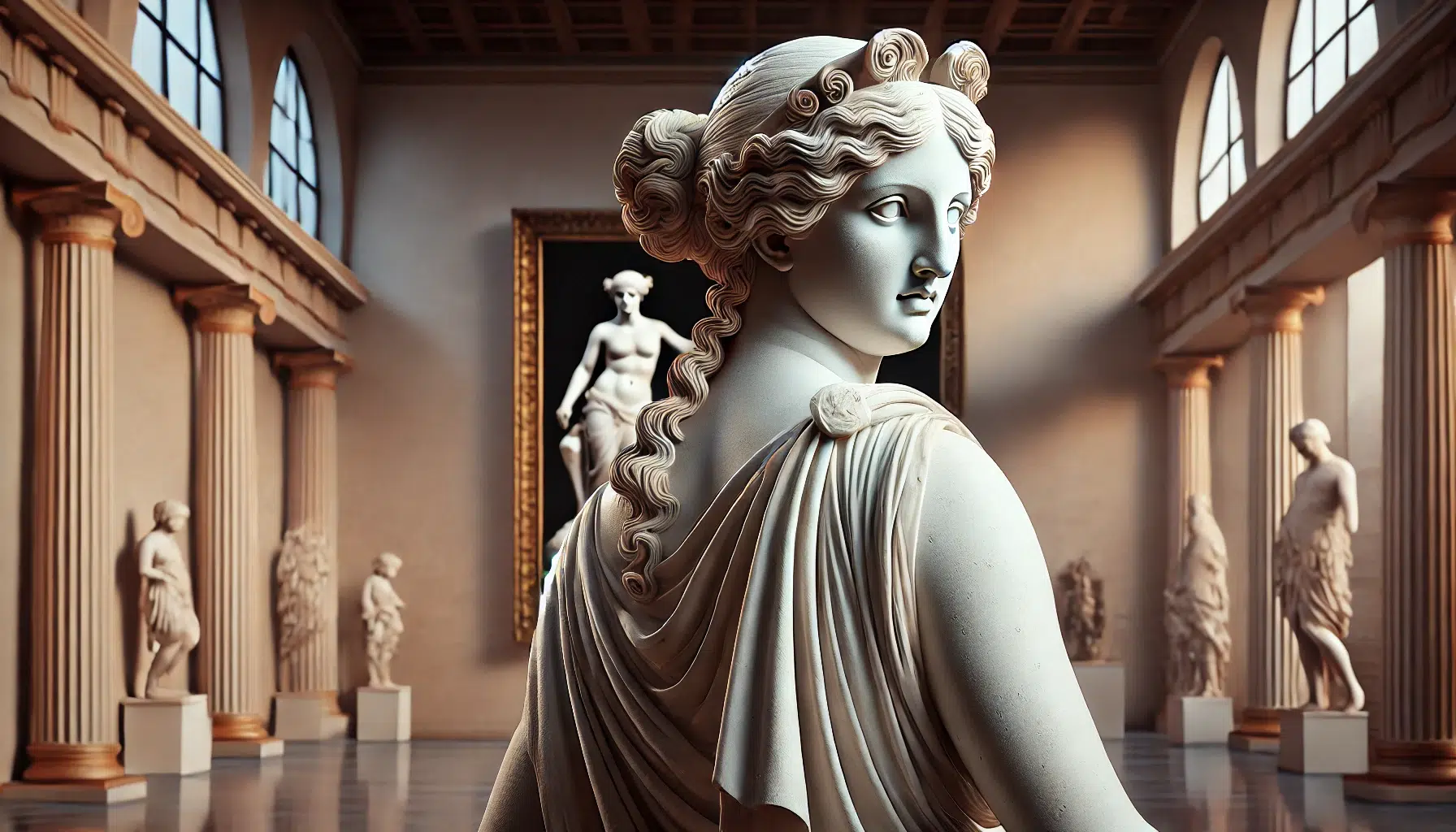
Classical art often depicts Aphrodite, the goddess of love and beauty, as a nude, symmetrically perfect maiden. Artists love to capture her stunning beauty and graceful form. These images emphasize her divine and enchanting nature.
One of the most famous sculptures of Aphrodite is the Venus de Milo. The sculptor carved her in a way that highlights her perfect, balanced features. Even though the statue’s arms are missing, it remains a symbol of beauty and grace.
In many classical paintings and sculptures, Aphrodite appears with a calm and gentle expression. Artists often show her with symbols like seashells, doves, and roses. These symbols remind viewers of her connection to love, beauty, and the sea.
Classical art also portrays Aphrodite in scenes with other gods and mortals. These artworks tell stories from her myths and show her interacting with other important figures.
Here are a few examples of classical art that depict Aphrodite:
- Venus de Milo: This famous ancient Greek statue shows Aphrodite as a beautiful, elegant and serene figure, even without her arms.
- Aphrodite of Knidos: Created by the sculptor Praxiteles, this statue is one of the first major sculptures to show Aphrodite nude, highlighting her perfect form.
- Birth of Venus by Sandro Botticelli: Although from the Renaissance period, this painting captures the classical beauty of Aphrodite emerging from the sea on a shell.
- Aphrodite of Capua: This statue depicts Aphrodite holding a shield, emphasizing her connection to both beauty and warrior gods.
- Aphrodite Kallipygos: This statue shows Aphrodite looking over her shoulder, admiring her own reflection, symbolizing beauty and self-admiration.
These artworks highlight Aphrodite’s role as the goddess of love and beauty.
Literary Works
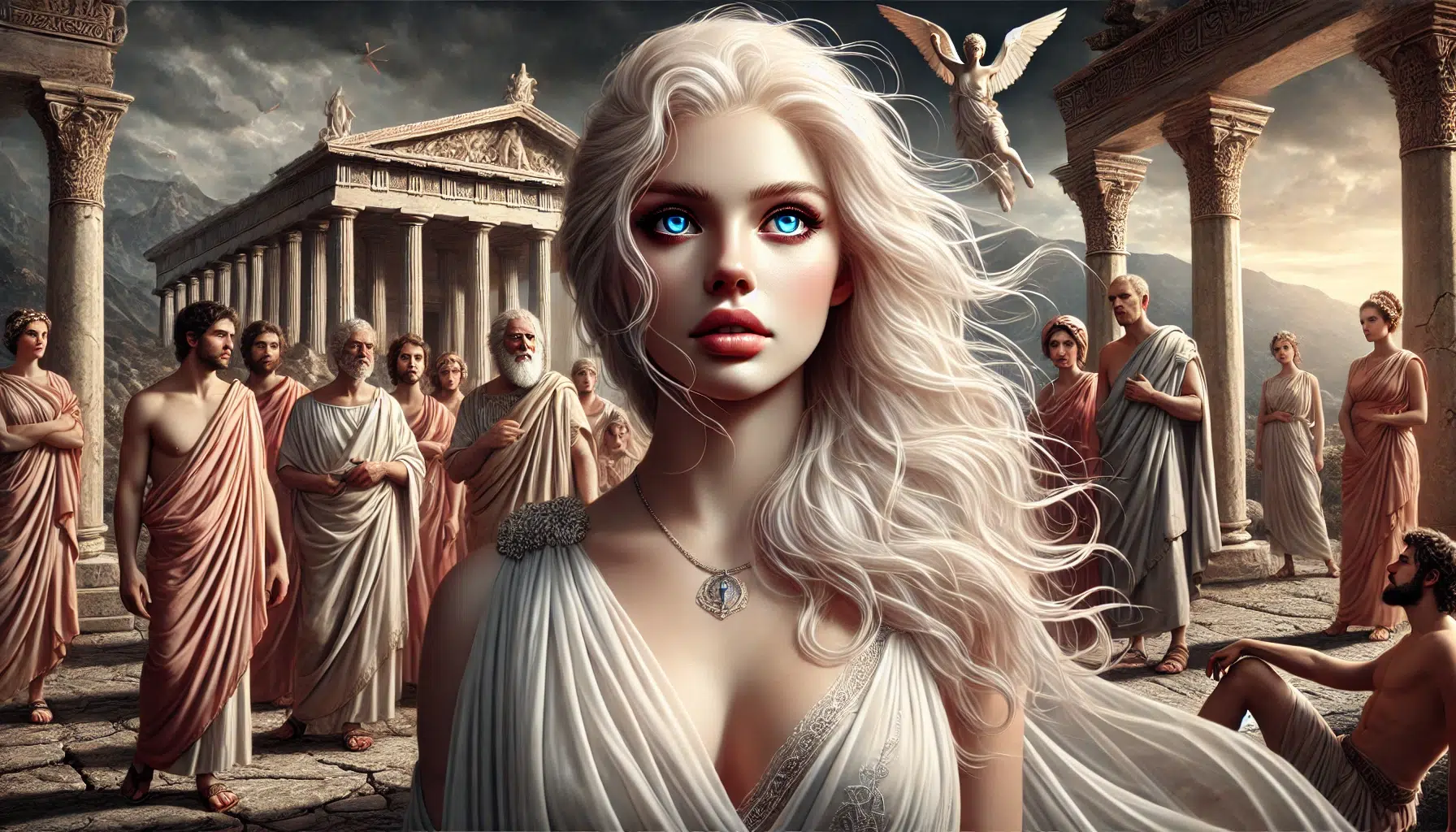
Aphrodite appears in many classical literary works.
The Homeric Hymns praise her beauty and power. These hymns tell stories about her birth and her influence over love and desire.
Hesiod, a famous ancient Greek poet, wrote about Aphrodite in his work “Theogony.” He describes her birth from the sea foam and her role among the gods. Hesiod’s “Works and Days” also mentions her influence on human life and love.
Aphrodite’s influence extends beyond ancient texts. She inspires later literature and poetry, including works by Shakespeare and modern authors. Aphrodite’s presence in literature shows her lasting impact.
From ancient hymns to modern poems, she continues to inspire and captivate.
Here are a few examples of literary works that feature Aphrodite:
- Homeric Hymns: These ancient Greek hymns include poems dedicated to Aphrodite, praising her beauty and influence over love.
- “Theogony” by Hesiod: This work describes Aphrodite’s birth from the sea foam and her role among the gods.
- “Works and Days” by Hesiod: This poem mentions Aphrodite and her influence on human life and love.
- “Metamorphoses” by Ovid: This Roman poet includes stories about Aphrodite, highlighting her relationships and impact on both gods and mortals.
- “Hippolytus” by Euripides: This Greek tragedy features Aphrodite as a central character, showcasing her power and influence.
- “Venus and Adonis” by Shakespeare: This poem explores the love story between Aphrodite (Venus) and Adonis, inspired by ancient myths.
These works show Aphrodite’s importance in literature and her enduring influence on writers throughout history.
Cultural Impact

Legacy in Modern and Popular Culture
Aphrodite’s legacy continues to influence modern culture in many ways.
- Art: Artists like Salvador Dalí and Botticelli have created works inspired by Aphrodite, such as Dalí’s “Venus de Milo with Drawers” and Botticelli’s “The Birth of Venus.”
- Literature: Rick Riordan’s “Percy Jackson” series features Aphrodite as a character, influencing the lives of demigods.
- Movies and TV Shows: In the TV show “Hercules: The Legendary Journeys” and “Xena: Warrior Princess,” Aphrodite appears as a character, showcasing her charm and influence.
- Fashion: Designers often name collections or pieces after Aphrodite, celebrating her connection to beauty and elegance.
- Music: Artists like Shakira have songs referencing Aphrodite, such as “Aphrodite” by Kylie Minogue, celebrating love and allure.
- Video Games: Aphrodite appears as a character in games like “God of War” and “Smite,” where her beauty and powers are central themes. She is a recent addition to Fortnite ‘s “Myths and Mortals” Season 2, Chapter5.
- Advertisements: Brands use Aphrodite’s image and name to promote products related to beauty and romance, emphasizing her timeless appeal.
These examples show how Aphrodite’s influence spans various aspects of contemporary art, literature, and popular culture, making her a timeless icon.
Comparison of Aphrodite With Other Love Goddesses

A comparative look at mythology shows how Aphrodite is similar to other love deities from around the world.
Ishtar, the Mesopotamian goddess of love, has many traits and stories like Aphrodite. Both control love, beauty, and desire, showing how similar their roles are.
Venus, the Roman goddess of love and beauty, is another great example. She shares many qualities with Aphrodite. This shows how ancient myths are connected and how love is a universal theme.
In Roman mythology, Venus is the equivalent of Aphrodite. Venus also represents love, beauty, and fertility. The Romans worshiped her in many temples and festivals.
In Mesopotamian mythology, Inanna is similar to Aphrodite. Inanna is the goddess of love, beauty, and war. She has many stories about her power and influence.
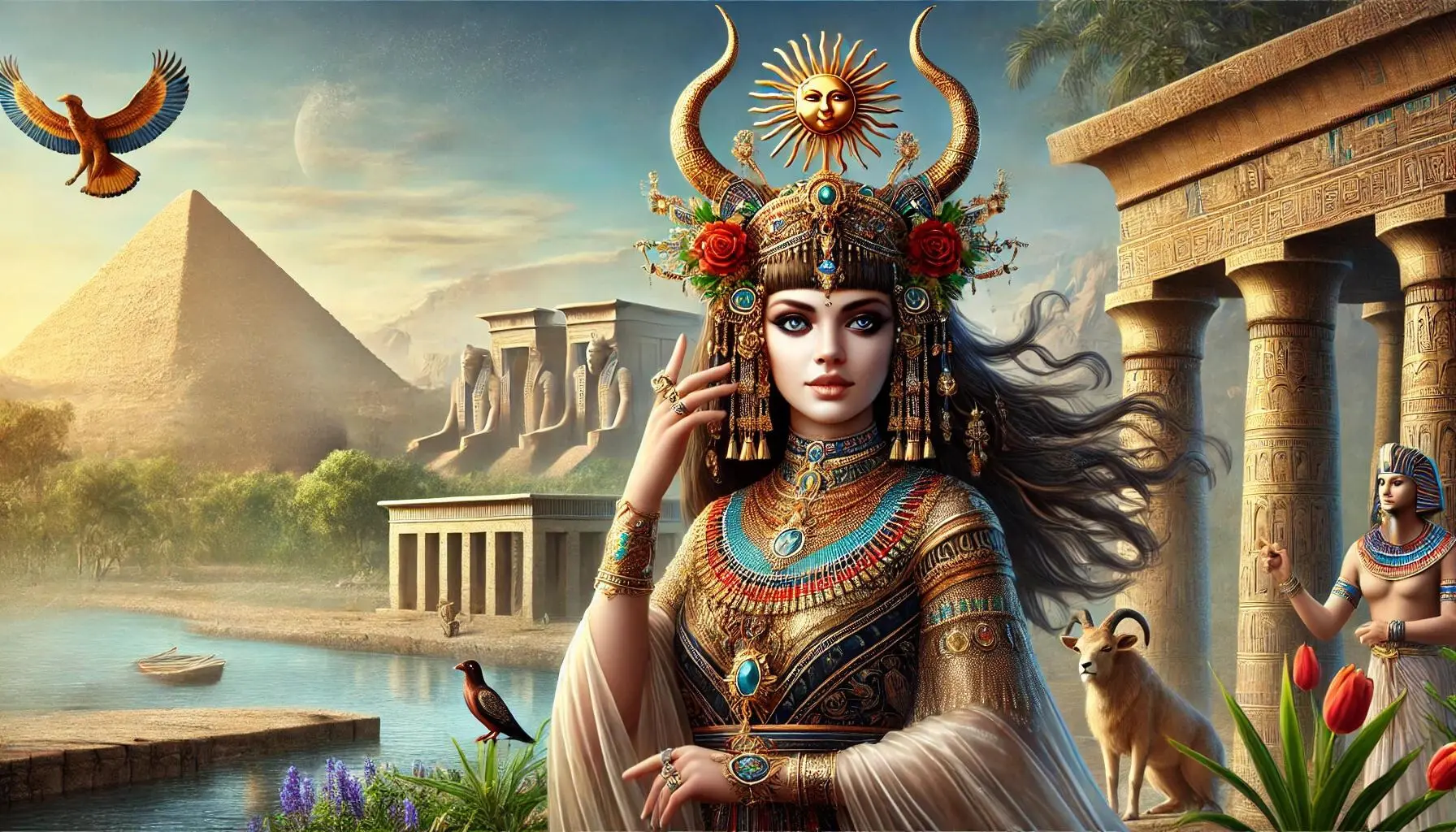
In Egyptian mythology, Hathor is the goddess of love, beauty, and music. Hathor protects women and children and brings joy and happiness.
These goddesses show how important love and beauty are in different cultures. They all share similar qualities and roles, highlighting the universal themes of love and beauty. Aphrodite, Venus, Inanna, and Hathor all remind us of the power of love and the importance of beauty in our lives. They continue to inspire and captivate people across the world.
Conclusion
Aphrodite’s story shows the lasting impact of Greek mythology. Her tale covers themes like love, beauty, and desire that are still important today. These themes make her story a key part of history and culture.
Greek mythology still teaches us about complex human feelings through its characters and stories. Aphrodite, the goddess of love and beauty, shows us that love is a timeless human need. Her stories inspire art, literature, and pop culture, proving their lasting power.
Aphrodite’s role among the Greek gods is huge. Her stories are more than just fun—they give us deep insights into what it means to be human. They show us the ongoing search for love, beauty, and desire. Aphrodite’s themes of love are just as powerful now as they were back then.