Aengus: Celtic Myth and Irish God of Love and Eternal Youth
Aengus, also known as Aengus Óg or Aonghus, is a key figure in Irish mythology. He is seen as the god of love, eternal youth, and poetic inspiration. Aengus is a big part of the Celtic pantheon. His stories are full of love and the chase for beauty, showing the joy and energy of being young.
Early stories about Aengus appear in texts like the “Lebor Gabála Érenn” and the “Dindsenchas.”
These stories tell of his family and adventures. Being the son of the Dagda and Boann, Aengus is seen as a young, charming god. He stands for artistic expression and love. His stories have lived through the ages, making him a legendary figure in Ireland.
Aengus’s impact goes beyond old texts and reaches modern times. His stories still capture the interest of those who love mythology and cultural symbols.
Origins of Aengus
Aengus is linked to the Tuatha Dé Danann’s divine lineage, famous for their magical skills and deep heritage.
Aengus’s birth story is filled with magic, power, and clever tricks.
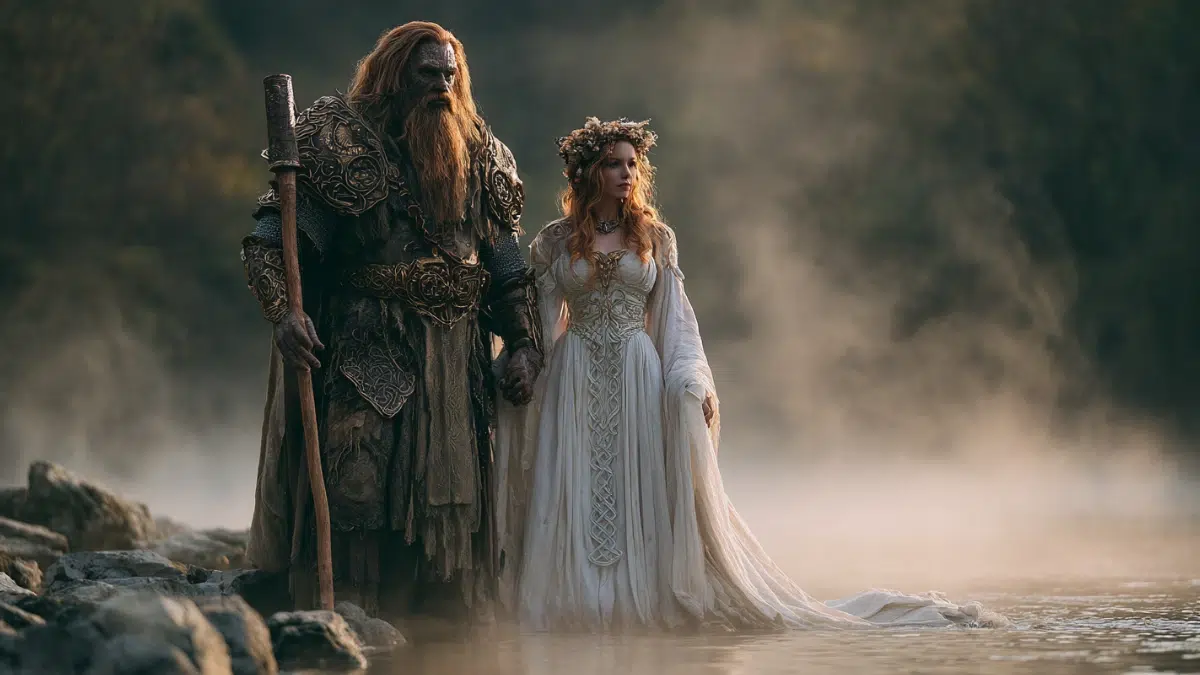
The story starts with the Dagda, a mighty god, and Boann, a goddess of the River Boyne. Their secret union led to Aengus’s birth. They used magic to hide his arrival, showing their incredible powers.
This shows how much they wanted Aengus to be part of their world. It highlights his important role in their stories.
Aengus is also linked to Newgrange, a famous ancient tomb.
He got this site by being very smart and strategic. He tricked his dad, the Dagda, into giving him Newgrange for “a day and a night.” Aengus then claimed it for all eternity.
Aengus’s story is not just a myth but also connected to Ireland’s history and archaeology. His link to Brú na Bóinne brings together the gods’ world with today’s ruins. This makes his story believable and magical.
What is the theme of The Song of Wandering Aengus?
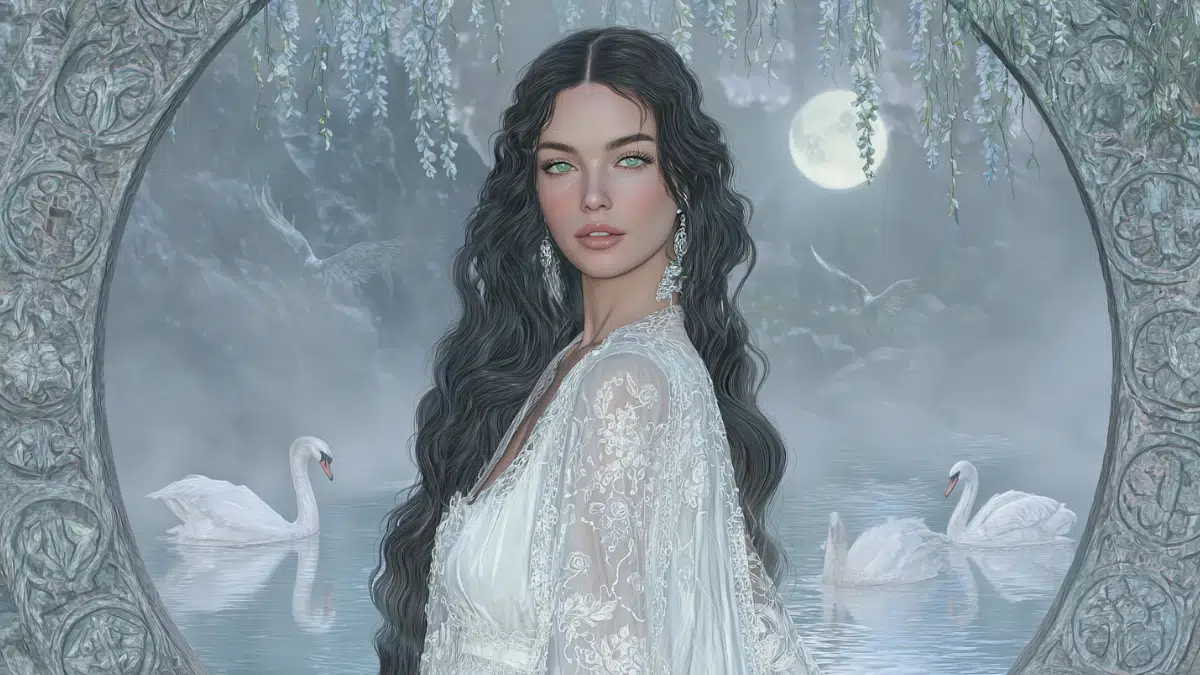
The main theme of The Song of Wandering Aengus is the longing for beauty, love, and transcendence. It connects both to W.B. Yeats’s poem and to Aengus’s mythological roots.
Inspired by the myth of Aengus and his dream of Caer Ibormeith, the poem explores an eternal quest for an elusive, idealized love that symbolizes desire, transformation, and the passage of time.
Aengus’s journey isn’t only about him—it reflects the human experience of yearning for something deeper and meaningful in life.
It blends Celtic mythology with universal themes of yearning, aging, and the pursuit of something just beyond reach, reflecting the romantic and mystical qualities of Aengus’s mythology.
What does the “silver and golden” imagery mean in the poem?
The “silver and golden” imagery symbolizes time and transformation.
Silver represents youth and the early stages of life, while gold reflects maturity and timeless beauty. Together, they show how Aengus’s quest for love transcends age and becomes eternal.
Why is The Song of Wandering Aengus important in Celtic-inspired literature?
This poem blends Irish mythology and romantic symbolism. It captures the mystical allure of Aengus while exploring universal themes of longing and the passage of time.
Its lyrical beauty and mythic roots make it a cornerstone of Celtic-inspired literature and Yeats’s enduring legacy.
Mythological Adventures of Aengus
In the “Ulster Cycle” and “Fenian Cycle,” Aengus’s actions are both varied and important. He helps and protects love, using his magical powers to help lovers overcome obstacles. This shows how he aids those in love to be together.
Aengus is seen as a hero who captures the beauty and charm of youth. His stories are not just about love but also about the joy and beauty of being young. This double role as a god of love and youth makes him very important in Irish myths.
The Story of Diarmuid and Gráinne
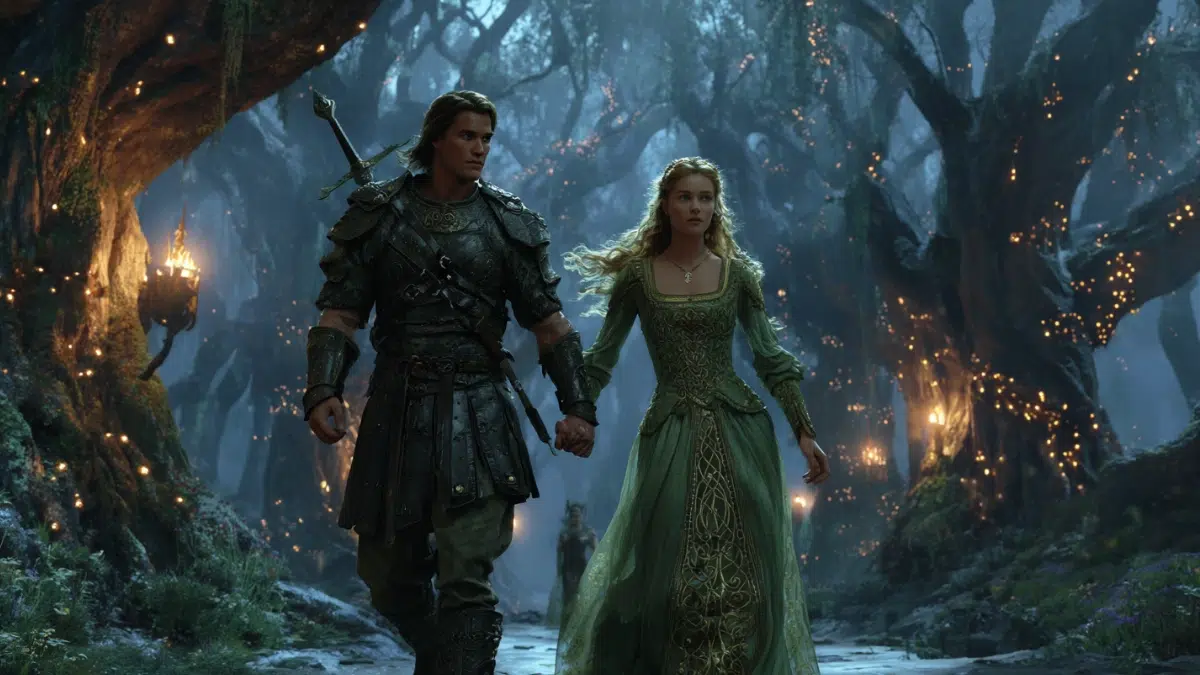
Aengus plays a vital role in the famous Irish tale of Diarmuid and Gráinne, a story of love, loyalty, and tragedy.
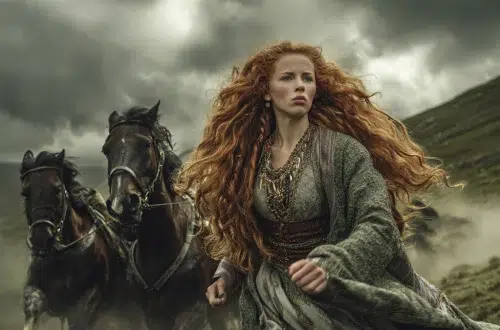
Gráinne, betrothed to the aging hero Fionn mac Cumhaill, falls in love with the young warrior Diarmuid. They flee together, sparking Fionn’s anger and relentless pursuit.
Aengus, known for his compassion and romantic nature, aids the lovers throughout their journey.
He uses his magic to shield them from Fionn’s wrath, offering refuge in the Brú na Bóinne, his mystical dwelling. Aengus’s involvement underscores his role as a protector of love, even when it defies social order.
Ultimately, when Diarmuid is fatally wounded by a wild boar, Aengus carries his body away, ensuring he rests eternally in the Otherworld. This act shows Aengus’s deep empathy and reinforces his ties to love, loyalty, and the passage between worlds.
The Dream of Aengus
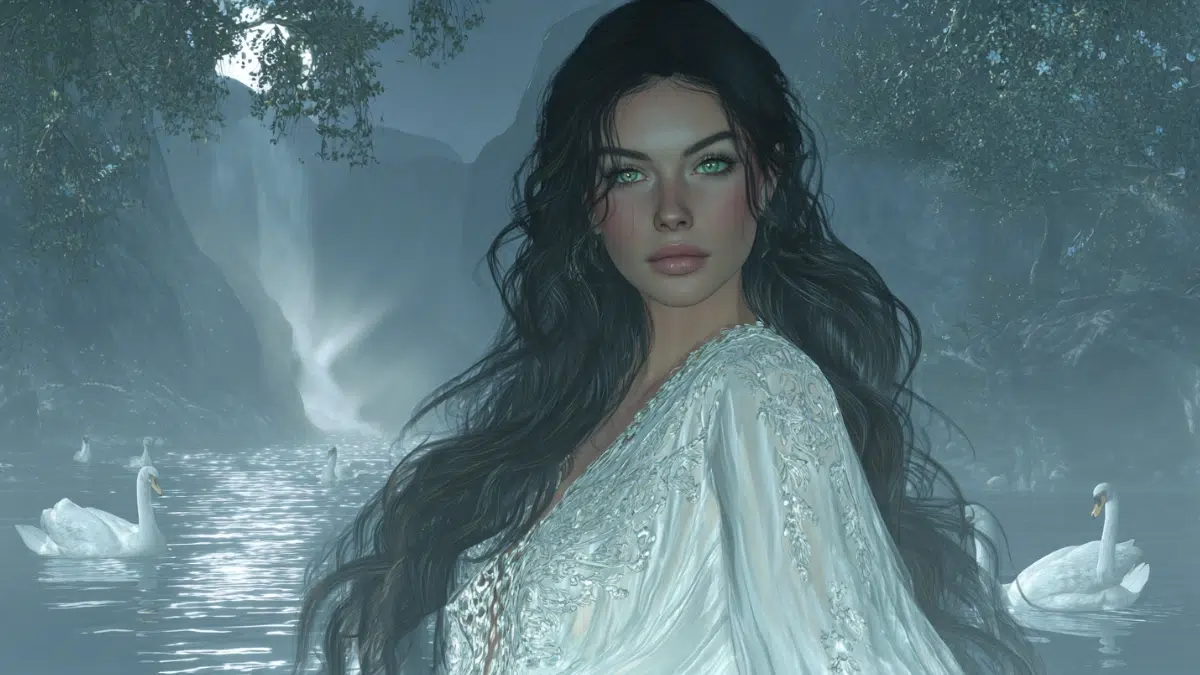
“The Dream of Aengus” is a captivating tale from Celtic mythology. It’s filled with love and change.
Aengus, a god of youth and beauty, dreams of a beautiful maiden named Caer Ibormeith. This dream sets him on a deep quest, filled with longing and change.
Aengus dreams of Caer Ibormeith, a woman so captivating he falls deeply in love. He sets out on a tough journey to find her. This journey shows his personal growth and symbolizes a quest for fulfillment. Dreams and visions are key in Celtic folklore, showing the importance of understanding their meanings.
This story has lasted for centuries, appearing in Irish literature and arts. It shows the power of allegory, touching on themes like love, pursuit, and change. Aengus’s search for Caer Ibormeith shows how dreams can connect us to reality and the human experience.
Aengus and the Dagda
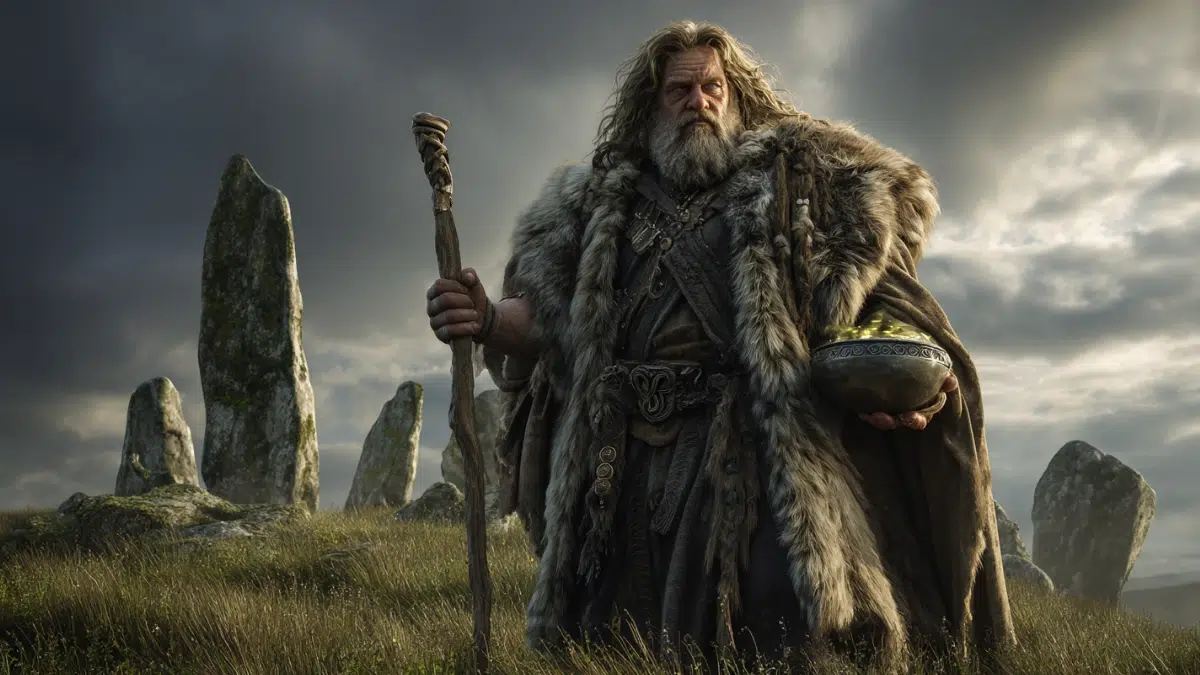
Aengus has a deep bond with the Dagda, the main god. This bond shows how family ties shape the Irish gods’ world.
The Dagda and Aengus have a special father-son relationship. The Dagda is strong, wise, and a leader. Aengus is young, full of energy, and inspires poetry. Their differences show how various traits are important in Celtic families.
Aengus and the Dagda’s relationship also talks about family and legacy. The Dagda protects his realm with strength and wisdom. Aengus uses his magic to inspire love and art. They show how balance keeps the pantheon in harmony.
Their bond is key to understanding Celtic deity relationships. It shapes who they are and their roles in myths. The Dagda’s leadership benefits from Aengus’s creativity and energy.
The story of Aengus and the Dagda shows the balance needed among Celtic gods. Power, wisdom, and creativity must work together for the gods to thrive. Their story highlights the lasting impact of family in Irish myths.
Navigating the Otherworld
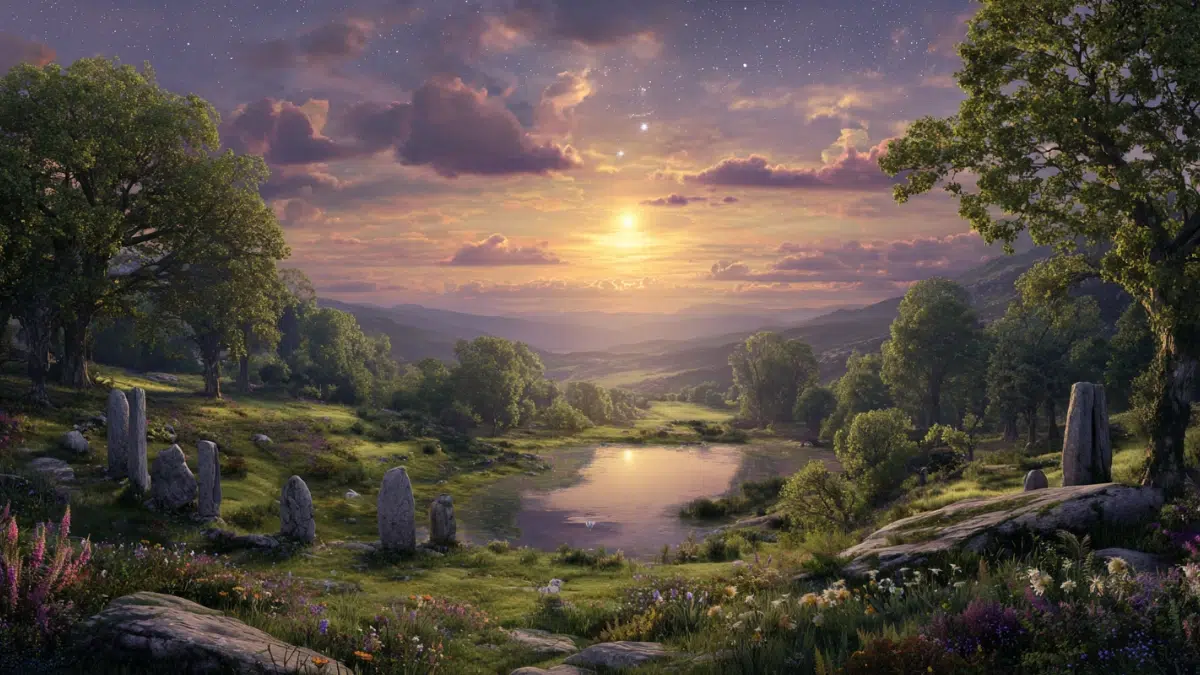
Aengus is closely linked to the Irish Otherworld, a mystical realm of eternal youth, beauty, and inspiration.
His home, the Brú na Bóinne, straddles both the mortal world and this divine plane, making him a guide between realms.
Many myths describe Aengus leading mortals and other gods through this liminal space, helping them cross the thin veil between life and death.
His connection to the Otherworld ties him to themes of rebirth, dreams, and transformation, reflecting his role as a deity of youth and renewal.
In Celtic mythology, Aengus’s ability to navigate this mystical realm emphasizes his dual nature: both a god of love in the human world and a keeper of divine secrets in the Otherworld. His myths show how love, dreams, and the spiritual journey intertwine in Irish lore.
Significance of Aengus’s Symbolism
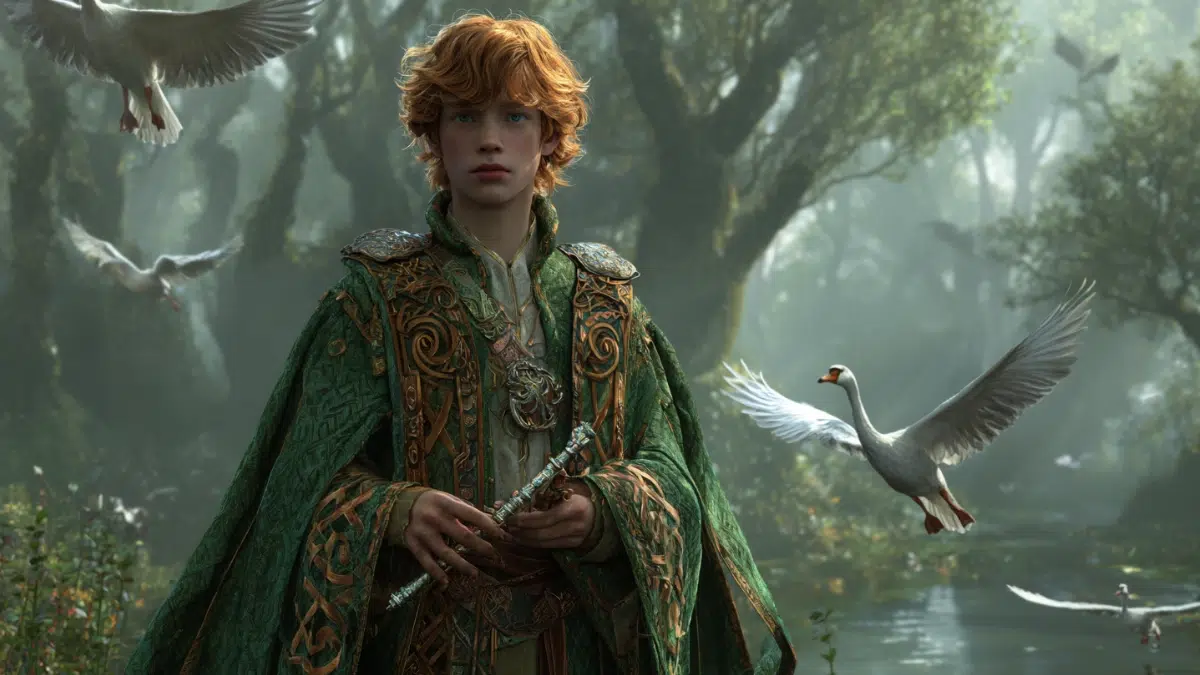
Aengus is deeply tied to Celtic symbolism. He stands for many spiritual meanings and cultural importance.
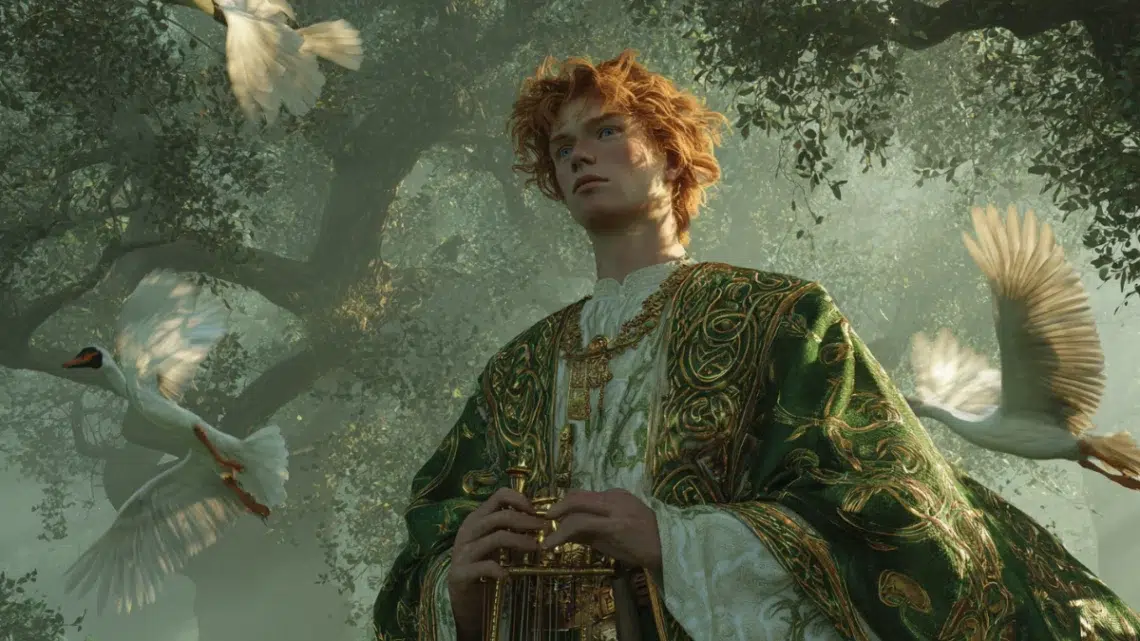
Often shown with swans, Aengus symbolizes beauty, love, and deep emotions. These swans mean transformation and life’s cycles, key parts of Celtic symbolism.
Aengus is known for his magical sword and harp.
The sword shows the balance between life and death. The harp stands for art and feelings. Together, they show Aengus’s complex character and deep spiritual meaning.
Aengus’s symbols talk about his lasting effect. They show his power over life’s challenges and his ability to mix love and conflict. His symbols also highlight his talent in art and life.
Aengus’s symbols point to his deep spiritual meaning. They connect to wider Celtic symbolism, showing the link between life and nature. Aengus stands for the mix of culture and spirituality.
- Celtic symbolism: Swans, life cycles
- Aengus iconography: Sword, harp
- Spiritual meaning: Transformation, love
- Cultural significance: Artistic expression, daily life integration
Similarities to Aengus in Other Deities
Aengus, as a god of youth, love, poetry, and dreams in Irish mythology, shares similarities with several mythological gods across different cultures.
- God of love and desire
- Similarity: Eros is tied to romantic passion and youthful energy. Both inspire love that transcends boundaries and often appear in myths involving pursuit and longing.
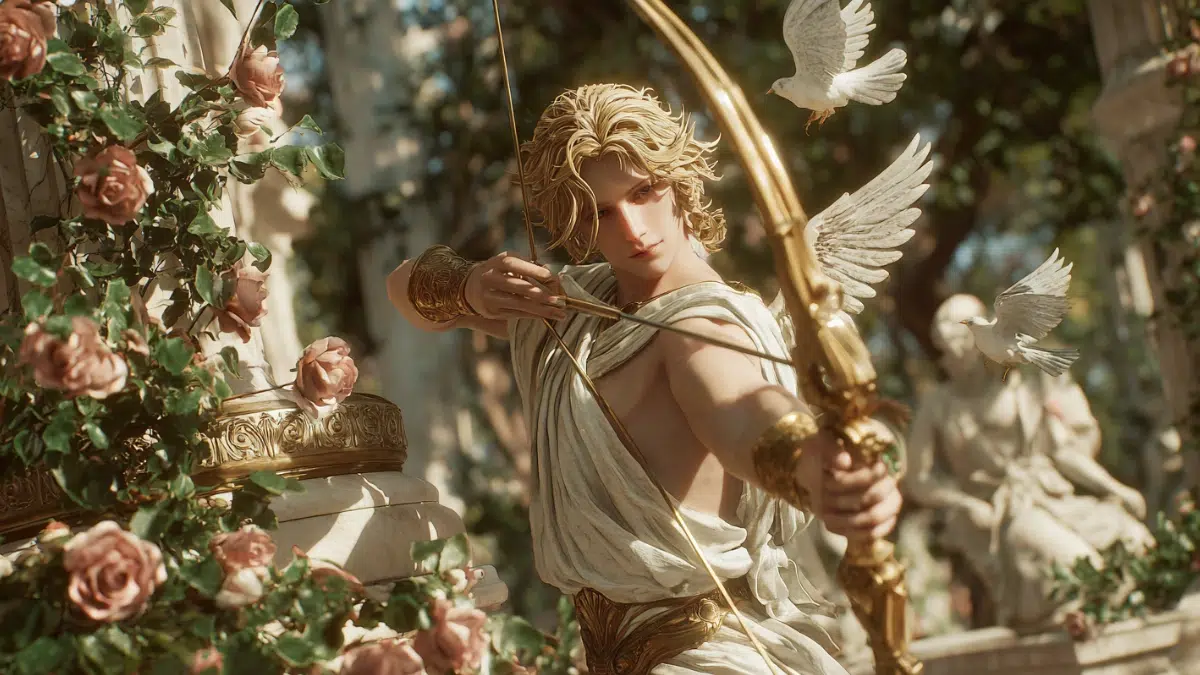
2. Apollo (Greek/Roman Mythology)
- God of music, poetry, and prophecy
- Similarity: Apollo shares Aengus’s artistic and inspirational aspects. Both deities represent creativity and a youthful, vibrant presence, bridging beauty and intellect
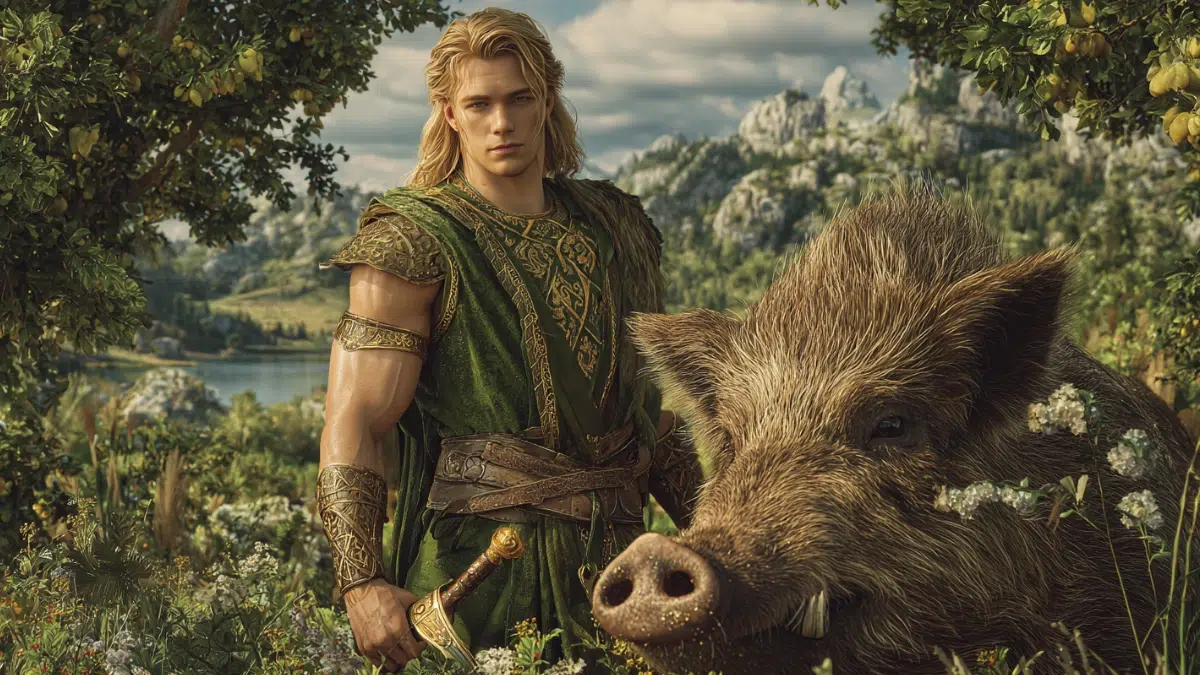
3. Freyr (Norse Mythology)
- God of fertility, prosperity, and beauty
- Similarity: Freyr’s association with fertility and attraction mirrors Aengus’s ties to love and renewal. Both are also connected to nature and growth.
- God of love and desire
- Similarity: Kama is akin to Aengus in his embodiment of passion, romance, and the power of attraction, often using his influence to inspire love between others.
- God of skill, arts, and youthful energy
- Similarity: Lugh, another prominent Irish deity, shares Aengus’s vibrant youthfulness and connection to creativity and inspiration. However, he focuses more on craftsmanship and skill.
6. Bragi (Norse Mythology)
- God of poetry and eloquence
- Similarity: Bragi’s focus on storytelling and poetic arts mirrors Aengus’s inspiration for love and lyrical expression in Celtic tradition.
Aengus’s Influence in Modern Culture
Aengus, a Celtic god of youth, love, and poetry, still has a big impact today. His story is seen in art like books, music, and paintings. These works use his stories and symbols to connect with us.
Writers like W.B. Yeats have brought Aengus into their stories. They use his tales to add a touch of Irish culture. Musicians also talk about Aengus in their songs, celebrating his love and dreams.
Artists use Aengus’s images in their work. They show scenes from his adventures or his symbols. This keeps his story alive for us today. It helps a new generation feel connected to old tales.
Aengus is important in bringing back Celtic culture and neopaganism. His story of eternal youth and love inspires people. It helps them find a spiritual connection to their heritage.
Creators use his stories to make new art. This way, they pay tribute to his timeless tale and add to modern mythology.
Conclusion
Aengus is a key figure in Celtic mythology, known for his deep cultural roots. His story, filled with adventure and deep meanings, shows the rich heritage of ancient Ireland. His tales reflect the values and beliefs of the Celts, passed down through time.
Aengus’s journey from a dream to a symbol of love and youth is fascinating. His stories teach us about the importance of these values. They show how Celtic mythology still touches our lives today.
Today, Aengus still captures our imagination, attracting scholars and those who love Irish culture. His stories show how ancient myths are still relevant today. As we move forward, Aengus’s tales will keep inspiring us, showing the power of myth in our shared human experience.