Achilles: Greek Warrior Hero’s Journey
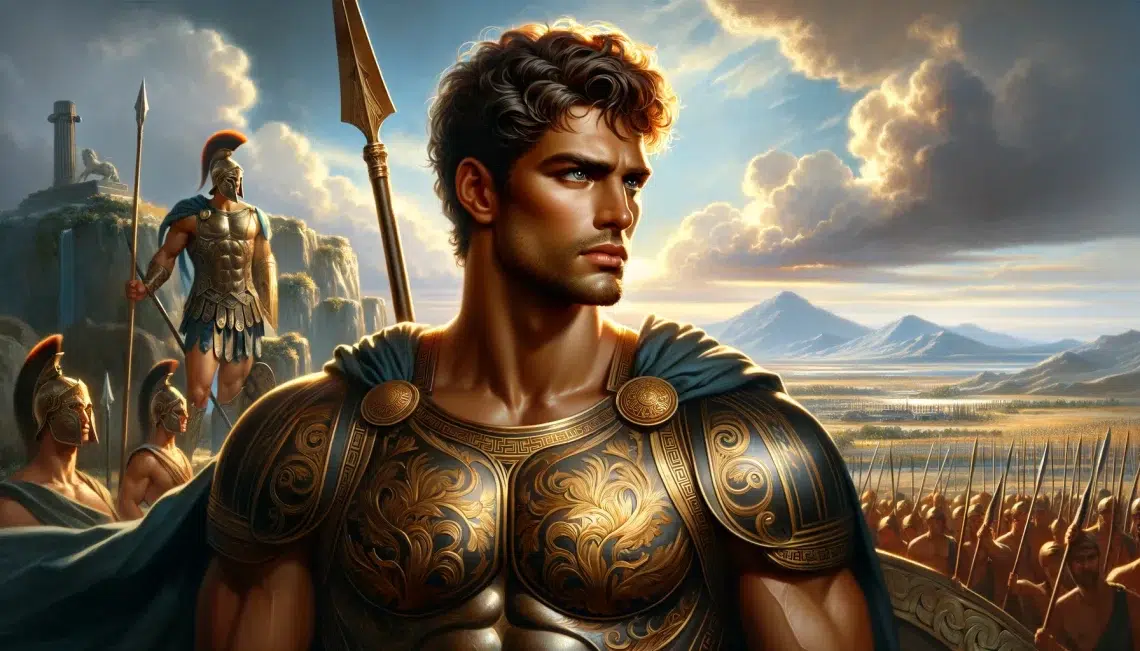
Achilles, the legendary hero of Greek mythology, is known as the greatest of all Greek warriors.
His name evokes images of invincible strength and unparalleled heroism.
Key Takeaways:
- Legendary Greek warrior and hero, with a story filled with both glory and tragedy.
- His journey through the Trojan War showcases the complexities of his character.
- His invincibility stems from his mother’s divine intervention.
- His most tragic flaw is his vulnerable heel, known as his Achilles heel.
The Birth and Early Years

Achilles was no ordinary warrior; he was the son of a mortal king, Peleus, and a sea nymph, Thetis.
This mix of divine and human parentage made him very special.
His mother, Thetis, was beautiful and powerful in the sea world. His father, Peleus, was a brave king.
From a young age, Achilles was destined to be a hero.
A prophecy foretold that he would become one of the greatest warriors of his time.
But, the same prophecy also would warn of his early death if he went to war. This worried his mother, Thetis, greatly.
To protect him, Thetis took Achilles to the River Styx, which was believed to offer powers of invincibility.
She dipped him into the water, holding him by his heel. This act was supposed to make him invulnerable.
However, since his heel never touched the water, it remained his one weak spot.
His Training and Destiny

Achilles was brought up by his mother at Phthia.
He was inseparable from his young companion and friend, Patroclus.
Patroclus, a prince exiled from his homeland, found solace in Achilles’ friendship.
He saw in Patroclus a kindred spirit and a trusted confidant.
Achilles grew up at the court of King Lycomedes. He was disguised as a girl to hide him from the war.
Despite this, his destiny could not be avoided.
The hero Odysseus eventually found him, and Achilles joined the Greek forces heading to Troy.
Even as a young man, Achilles was unmatched in strength and skill.
His training with the centaur Chiron, who taught him to be both a skilled warrior and a wise leader, prepared him for his future battles.
Chiron’s teachings also shaped Achilles’ understanding of honour and heroism, traits that defined his actions throughout the Trojan War.
His life was a blend of immense power, fame, and eventual tragedy.
All of which influencing his heritage and the foretellings of his early and heroic death.
| Achilles | Details |
|---|---|
| Mother | Thetis, a Nereid, daughter of the sea gods |
| Father | Peleus, mortal king of the Myrmidons of Thessaly |
| Divine Intervention | Thetis dipped Achilles in the River Styx by his heel to grant him invincibility |
| Vulnerability | Achilles’ heel, the spot where Thetis held him during the immersion |
The Legendary Trojan War
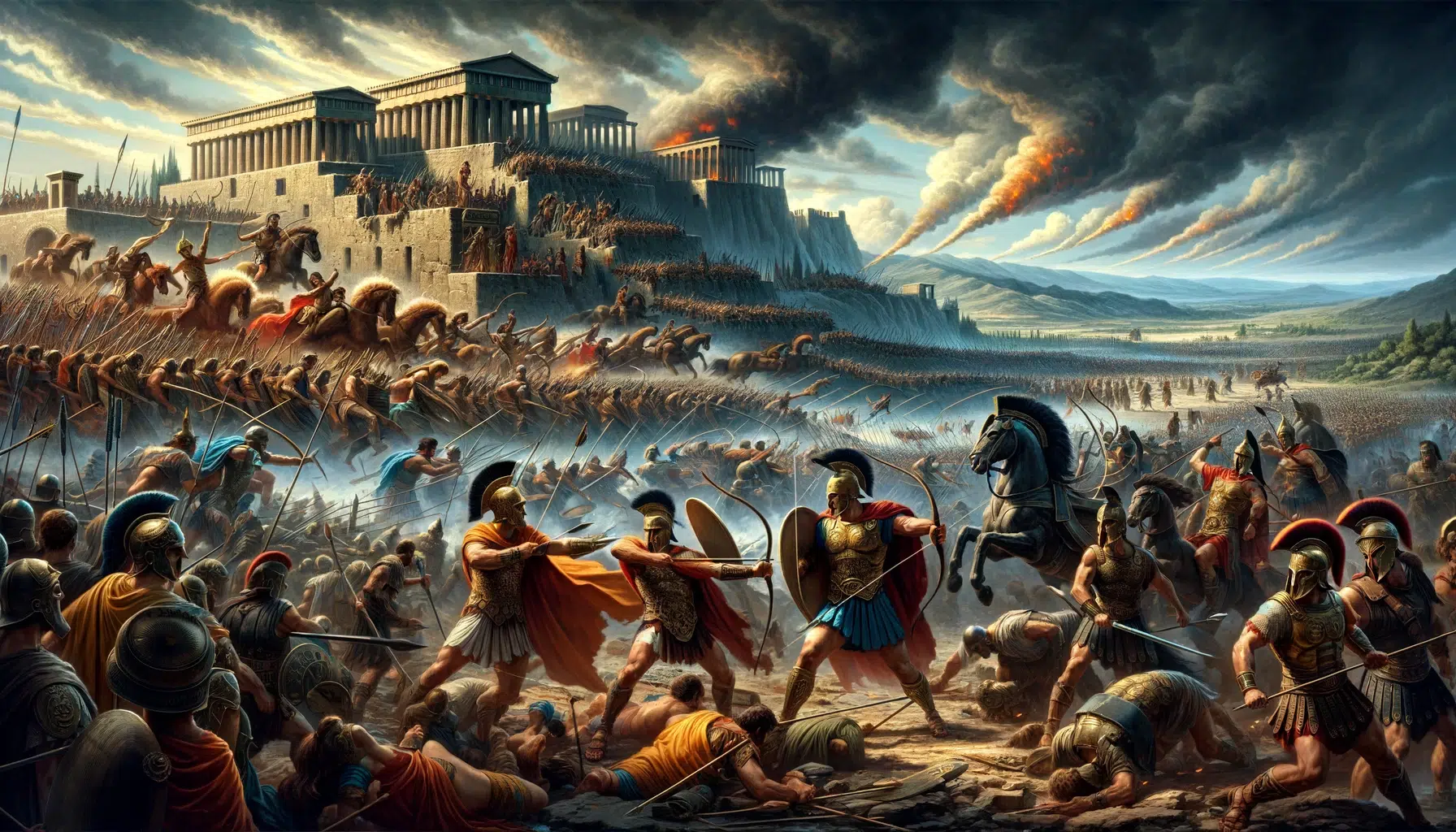
In approximately the 12th or 13th century BCE, a legendary war began between the early Greeks and the people of Troy.
Known as the Trojan War, it would last 10 years.
It began when Paris, son of the Trojan king, ran off with Helen.
Helen was the wife of Menelaus of Sparta.
Menelaus’s brother was Agamemnon, Greek commander-in-chief.
Agamemnon led a Greek expedition against Troy
The war ended when the Greeks pretended to withdraw.
They left behind them a large wooden horse, however soldiers were concealed inside.
When the Trojans brought the horse into their city, the hidden Greeks slipped out and opened the main gates to the city.
The Greek comrades then entered and sacked Troy, massacring its men, and carrying away the women.
Achilles Role in the Trojan War
Achilles’ role in the Trojan War was crucial, and his actions shaped much of its course.
He joined the war not by choice but due to a sense of honor and duty.
Initially, he went to Troy because of a pact among the Greek kings and princes.
They had all agreed to protect Helen’s marriage to Menelaus.
When Helen was taken by Paris to Troy, Achilles was bound by this oath to assist.
During the war, Achilles proved himself as a mighty warrior.
Achilles Key Battles During the Trojan War

Achilles played a central role in many key battles during the Trojan War, showcasing his unmatched skills and heroism.
During the first nine years of the war, Achilles ravaged the country around Troy and took control of multiple cities.
His contributions began early in the war when he captured several enemy cities.
This included taking the island of Tenedos, which was crucial for controlling sea routes.
Seizure of the City Lyrnessus
One of his most famous exploits was during the battle to seize the city of Lyrnessus.
Here, Achilles showcased his strength and strategic mind, leading a swift attack that overcame the city’s defenses.
This victory not only added to his fame but also to his wealth, as he gained valuable spoils and captives, including Briseis, who later became central to his conflict with Agamemnon.
Killing the Ethiopian King Memnon
Another significant moment was when Achilles fought and killed the Ethiopian king, Memnon.
This battle was particularly fierce because Memnon was also considered a formidable warrior, blessed by the gods.
The fight drew a crowd of gods watching from above, illustrating its importance.
Achilles’ victory over Memnon further cemented his reputation as the greatest warrior of his time.
Confrontation with Hector
Perhaps the most crucial of Achilles’ battles was his confrontation with Hector, the Trojan prince and greatest warrior of Troy.
This battle was not just a clash of two champions but also a turning point in the war.
The Greeks had been struggling, and Achilles’ return to combat brought renewed vigor to their ranks.
His duel with Hector was intense and personal.
Hector’s death marked a significant low point for the Trojans, shifting the balance of the war.
The Gods Play a Large Role in the Trojan War

The Trojan War is one of the most famous stories from ancient Greek mythology.
It all started with a special apple called the “Apple of Discord.”
This apple was thrown by Eris, the goddess of discord, into a party she wasn’t invited to. On the apple was written “For the fairest.”
Three powerful goddesses, Hera, Athena, and Aphrodite, each believed they deserved the apple.
To settle the dispute, Zeus, the king of the gods, chose Paris, a prince of Troy, to decide who was the fairest.
Each goddess tried to bribe him with amazing gifts.
Hera offered power, Athena promised wisdom, and Aphrodite tempted him with the most beautiful woman in the world, Helen.
Helen was already married to King Menelaus of Sparta.
Paris awarded the apple to Aphrodite, setting off a chain of events that led to war.
Aphrodite helped Paris kidnap Helen from Sparta.
Helen’s abduction made Menelaus furious.
He called on other Greek kings and heroes to help him get Helen back.
This group included powerful warriors like Achilles.
The gods played a big role in the war.
They picked sides and even fought among themselves.
Some, like Zeus, would stay neutral, while others, like Aphrodite, were actively involved.
This divine involvement shows how the gods could influence human affairs for their own reasons.
The war would last for ten long years. It became more than just a fight to return Helen to Sparta; it was a struggle for honour and power.
Achilles, the greatest warrior of the Greeks, was at the center of many key battles.
His actions and fate were closely tied to the gods’ will and the choices of other heroes.
Feud with Agamemnon

The wrath of Achilles began after a serious dispute with Agamemnon, the leader of the Greek forces.
Agamemnon, the leader of the Greek forces, sacked a village and kidnapped two young women, Chryseis and Briseis, as war prizes.
Agamemnon was to keep Chryseis and Briseis is given to Achilles, his best soldier.
They were unaware that Chryseis’ father, Chryses, was a priest of Apollo.
In the following year a feud with Agamemnon, the Greek commander-in-chief, occurred and became a defining moment in his story.
Achilles insisted that Agamemnon restore Chryseis to her father, being a priest of Apollo.
This was to avoid the wrath of the god Apollo who had already destroyed their camp.
An irate Agamemnon recouped his loss and demanded Briseis, Achilles favourite slave as compensation.
This act deeply insulted Achilles, leading him to withdraw from the battle out of anger.
His withdrawal had a significant impact on the Greek forces, who found themselves struggling without their greatest warrior.
Greek Forces in Disarray
The absence of Achilles weakened their defense, and the Trojans gained a strategic advantage.
Achilles, fueled by his strong sense of honour, reacted vehemently to Agamemnon’s actions.
He made a conscious decision to withdraw from battle, refusing to fight alongside the Greeks unless his honour was restored.
Achilles’ withdrawal from battle had disastrous consequences for the Greek army.
The conflict created a rift in their alliance, leaving the Greeks vulnerable to the Trojan forces.
Without their most formidable warrior, the Greeks struggled to overcome the Trojan forces.
The Greeks faced numerous setbacks and losses on the battlefield, leading to a sense of hopelessness and despair.
Both warriors let their personal conflicts overshadow the greater goal of victory in the Trojan War.
Resulting in dire consequences for the entire Greek army.
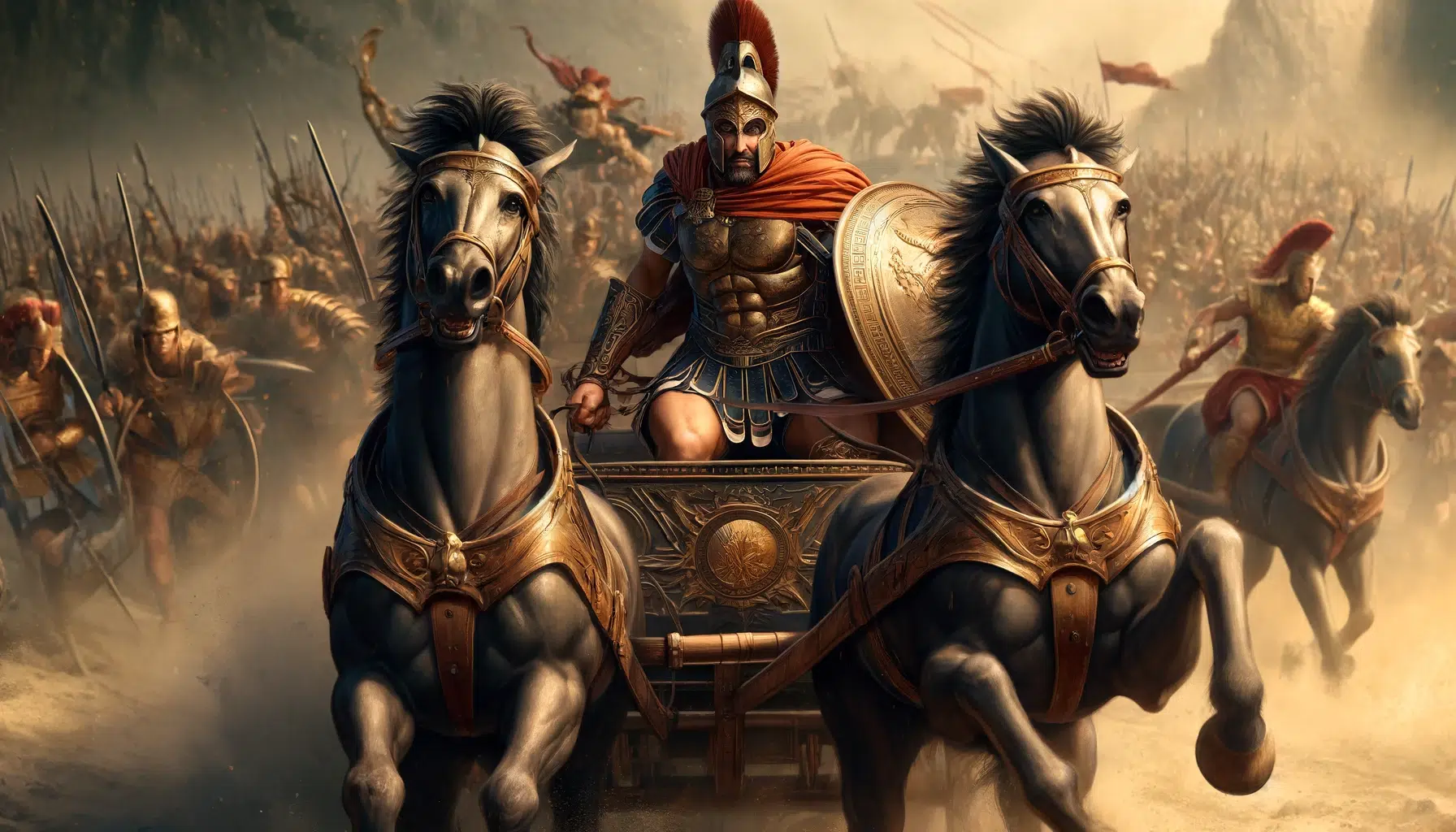
Patroclus approaches Achilles about joining the fight to help the suffering Achaeans since Achilles still refused to fight himself.
He gave Patroclus his armour and chariot and sent his friend into the fray.
Unfortunately, Trojan Prince Hector killed Patroclus, thinking it was Achilles.
Achilles reconciled with Agamemnon and was in a rage and grieving his friend.
He got new armour from the god Hephaestus and killed Hector.
After dragging Hector’s body behind his chariot, Achilles gave it to Priam at his earnest entreaty.
Learn more about Greek mythology:
- Apollo: Exploring the Archer God’s Myths and Legends
- Artemis: Ancient Greek Goddess of Archery
- Atalanta: Fabled Archer to Legendary Heroine
- Diana: Goddess of Hunt in Roman Mythology
- Gods and Archery in Greek Mythology Books
- God of Archery: Norse, Greek & Roman Mythology
- Hector of Troy: Legendary Trojan Warrior
- Hippolyta: Queen of the Amazons in Greek Mythology
- Legacy of Archers: Women in Greek Mythology
- Paris: Tragic Hero, Villain or Pawn of the Gods
- Penthesilea: Amazon Queen Who Died in Trojan War
- Philoctetes: The Legendary Greek Archer and Healer
Achilles and Patroclus: The Bond of Friendship

Achilles and Patroclus shared a deep and unbreakable bond, their friendship serving as a pillar of support during the tumultuous events of the Trojan War.
Their connection was of mutual admiration and loyalty.
Making their relationship one of the most legendary friendships in ancient mythology.
Their bond would start at a young age.
Together, they faced the challenges of war, providing unwavering support and protection to one another on and off the battlefield.
They fought side by side against the Trojans, displaying unparalleled bravery and skill.
The Death of Patroclus
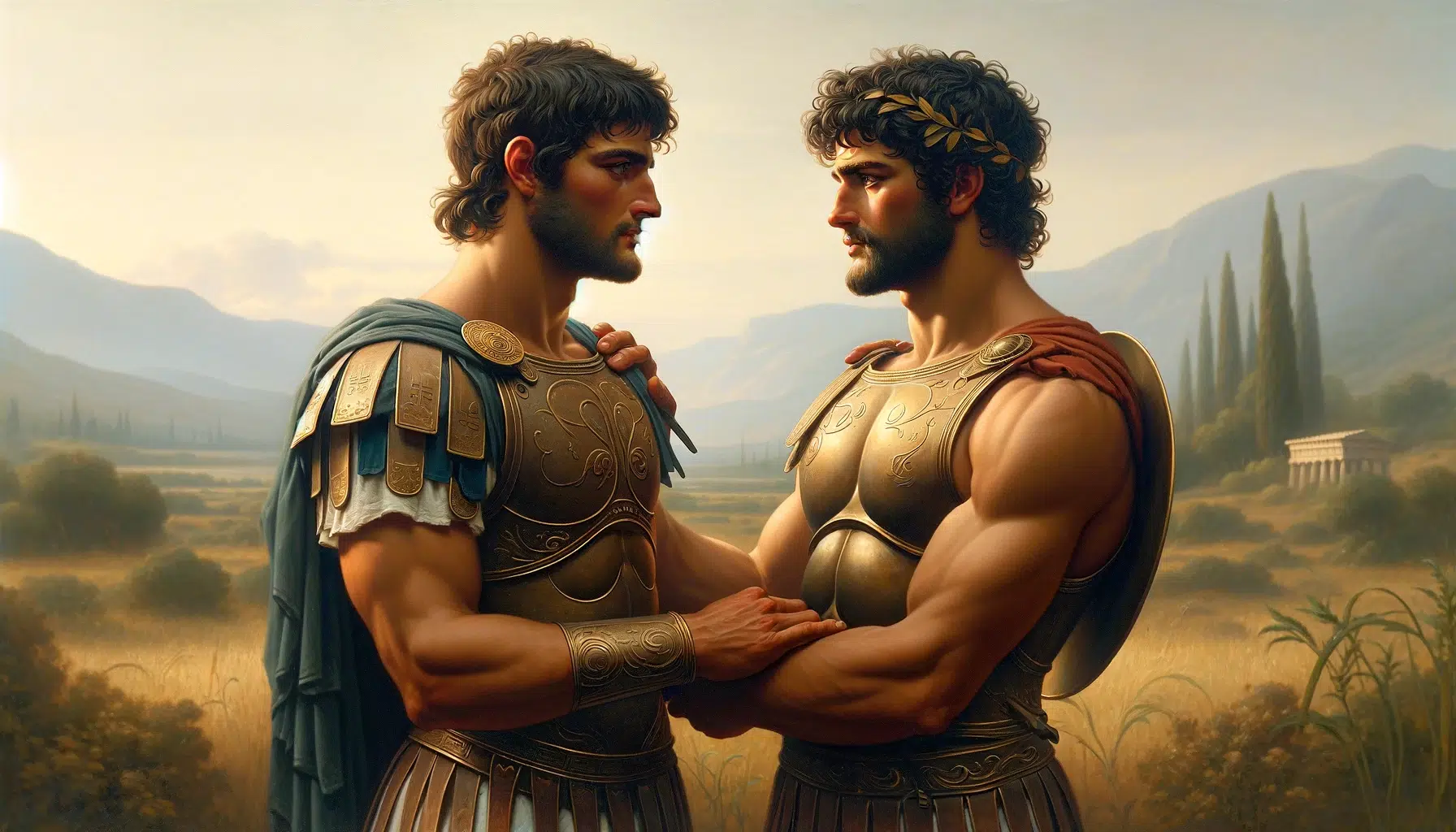
However, tragedy struck when Patroclus fell in battle at the hands of Hector, the Trojan prince.
The loss of his closest friend shattered Achilles, igniting a burning desire for revenge.
Consumed by grief and driven by his unyielding love for Patroclus, he embarked on a path of vengeance, fueled by sorrow and rage.
The death of Patroclus had a profound impact on Achilles, leaving him devastated and bereft of the unshakeable support he had relied upon.
His actions became a reflection of his grief and an expression of his unwavering love for his fallen comrade
He sought to avenge Patroclus’ untimely demise.
Achilles’ Rage and Grief
After Patroclus died, an overwhelming surge of rage and grief consumed Achilles.
In his frenzied state, he cast aside his humanity and descended into bestial savagery.
Achilles pushed the boundaries of what it meant to be human to their limits as he unleashed his wrath upon the battlefield.
His actions defied the laws of reason and morality, driven solely by his insatiable desire for retribution and personal glory.
Amidst the chaos and carnage, Achilles’ rampage exemplifies the inherent darkness that lies within each mortal soul.
And the potential for uncontrollable fury to obliterate the boundaries that separate us from the realm of beasts.
Achilles’ Anger Redirected Towards Hector

Despite his overwhelming anger, Achilles’ rage eventually found a new direction.
He channeled his fury towards Hector, the Trojan prince who killed Patroclus.
The showdown between Achilles and Hector was one of the most dramatic moments of the Trojan War.
After his friend Patroclus was killed by Hector, Achilles was filled with rage and grief.
He vowed to take revenge on Hector, the Trojan prince who was also Troy’s greatest warrior.
Achilles called out Hector for a one-on-one battle in front of the gates of Troy.
Hector, knowing he might die, accepted the challenge to defend his city and honour.
The two warriors circled each other, looking for any weakness.
They were both skilled fighters, but Achilles was stronger and faster.
As they fought, Achilles managed to find an opening.
He thrust his spear, and it struck Hector fatally.
With his last breath, Hector begged Achilles to return his body to his family for a proper burial.
However, Achilles, still furious, refused and instead dragged Hector’s body behind his chariot around the walls of Troy.
This act of disrespect shocked both the Trojans and Greeks.
This victory was bittersweet for Achilles.
While he had avenged Patroclus, his actions showed a loss of honour and respect.
Hector’s death also marked a turning point in the war, bringing Achilles back into the fight but at great personal cost.
The battle was not just about strength.
It was about the intense emotions of love, loss, and revenge that defined the human condition even in myth.
However, this victory came at a great cost, as it marked the irreversible loss of his own life, foretold by the gods.
The Hero’s Return and the Gift of Life
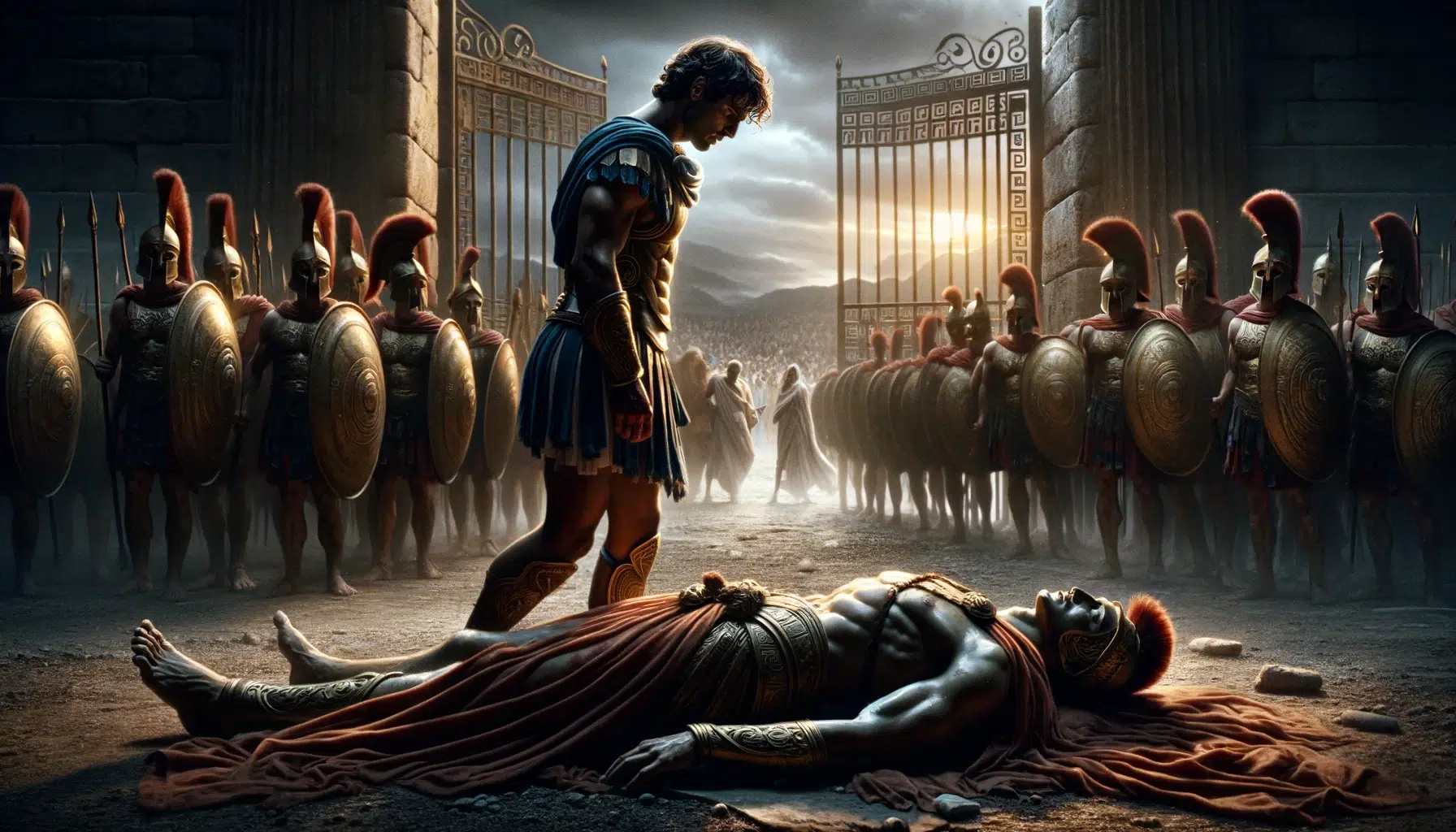
In the hero’s return, Achilles experiences a transformative moment.
He releases the body of Hector and experiences a profound change in perspective.
This act of mercy brings the poem to a quiet resolution and highlights the gift of life that Achilles possesses.
His return to his humanity is a pivotal scene where he releases the body of his fallen enemy, Hector.
This act of compassion and respect represents a shift in his character, showing his realization of the value and sanctity of human life.
Through this act, Achilles not only finds redemption but also displays the capacity for empathy and forgiveness.
Vulnerability: His Achilles Heel
Achilles possessed an invincibility that made him a formidable force on the battlefield.
This invulnerability was a result of his mother’s act of dipping him in the River Styx, a divine river believed to grant impenetrable strength.
There was one critical flaw in his invincibility – his mother Thetis held him by his heel, rendering that part vulnerable.
This weakness, famously known as Achilles’ heel, would ultimately prove to be the cause of his downfall.
Despite his near invincibility, he would meet his tragic fate due to a single vulnerable spot on his body.
It is said that Paris, prince of Troy, shot a poisoned arrow that struck Achilles’ heel during the Trojan War leading to his demise.
The story of Achilles’ invincibility and his Achilles’ heel serves as a cautionary tale, reminding us that even the mightiest of heroes are not without their vulnerabilities.
It emphasizes the fragile nature of human existence and the consequences of overlooking one’s weaknesses.
Achilles’ Legacy and Cultural Significance
Achilles, the legendary hero of Greek mythology, has left an enduring legacy that continues to captivate audiences across the world.
His story has inspired numerous works of literature, art, and adaptations, showcasing the profound impact of his heroic feats and tragic fate.
In modern times, Achilles serves as a symbol of bravery and the relentless pursuit of glory.
His unwavering courage on the battlefield and his ultimate sacrifice resonate with individuals seeking to emulate his extraordinary qualities.
He has been celebrated in literature, with authors drawing inspiration from his character to craft compelling narratives exploring themes of heroism, honor, and destiny.
Adaptations in film, television, and theater have brought his story to life, allowing new generations to engage with his timeless tale.
His Achilles’ heel, a symbolic representation of vulnerability, has permeated our lexicon, serving as a metaphor for weaknesses that undermine even the most formidable individuals.
It reminds us of our shared human experiences, the complexities of our emotions, and the consequences of our actions.
Learn more:
| Works of Literature | Art | Adaptations |
|---|---|---|
|
|
|
The Enduring Influence of Achilles’ Mythology
Achilles, the invincible hero of Greek mythology, has left an indelible mark on literature, art, and popular culture.
His tale resonates with audiences across generations, showcasing the timeless themes of heroism, honor, and fate.
Immortalized in the epic poem The Iliad by Homer, his story continues to inspire countless adaptations and interpretations.
His character embodies the ideals and flaws of humanity, making him a relatable and complex figure.
Throughout history, artists, writers, and filmmakers have drawn inspiration from Achilles’ mythology to create compelling narratives.
His story is in countless works of art, including sculptures, paintings, and pottery.
From Renaissance masterpieces to modern films and TV series, Achilles remains a captivating and influential figure in the world of art and entertainment.
The term “Achilles’ heel” has become synonymous with vulnerability or a weak point, reflecting the enduring impact of his tragic flaw.
His name has been adopted by sports teams and used as a metaphor for exceptional skill and prowess.
The stories and characters from Greek mythology continue to captivate and resonate with audiences worldwide.
From ancient Greece to modern times, his story continues to inspire, entertain, and provoke thought.
Conclusion
The tale of Achilles, the invincible hero of Greek mythology, is a captivating journey that encompasses both glory and grief.
From his legendary status as the greatest of all Greek warriors to his heroic feats on the battlefield, Achilles has etched his name into the annals of Greek mythology with undeniable impact.
His invincibility and unmatched strength evoke a sense of awe and admiration.
While his fatal flaw, the vulnerability of his Achilles heel, brings forth a cautionary tale about the power of one’s weaknesses.
His story has inspired countless adaptations, works of art, and literary pieces across different generations.
The myth of Achilles serves as a testament to the enduring power of Greek mythology.