Abnoba: Celtic Goddess of Forests and Rivers
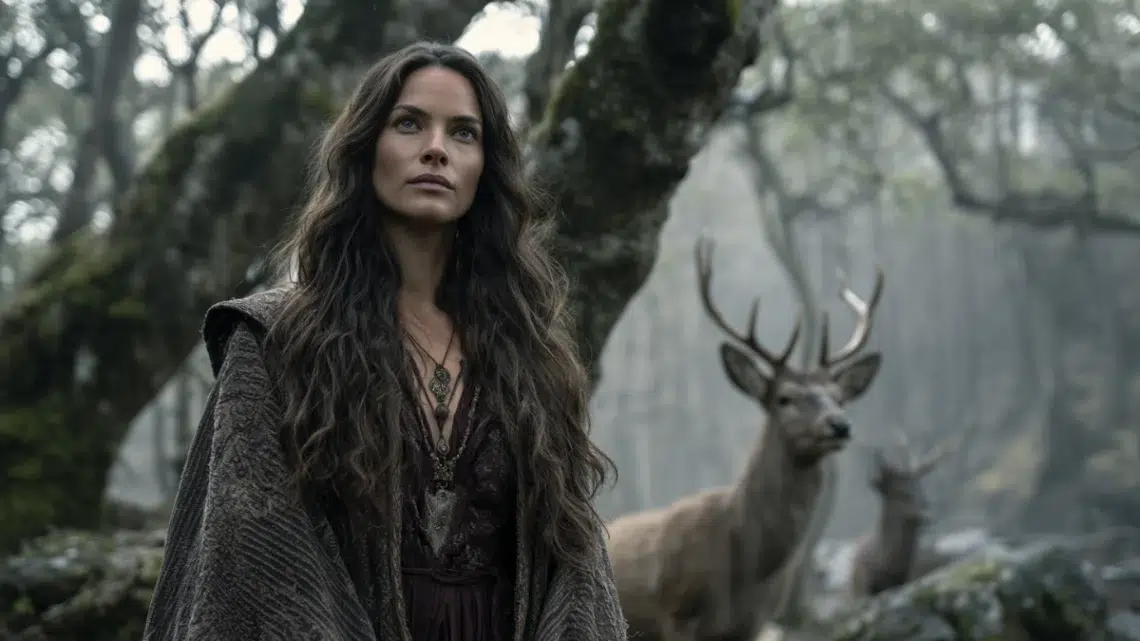
Deep in the heart of the ancient Black Forest, a powerful Celtic goddess once reigned—Abnoba. Revered by the people of Gaul and what is now southern Germany, she was more than a nature spirit. Abnoba was the guardian of rivers, wild places, and untamed freedom. Her name appears in Roman inscriptions, often linked with the goddess Diana, showing how deeply rooted she was in local worship.
Known as the spirit of both the hunt and the healing waters, Abnoba represented nature’s balance—calm yet fierce, nurturing yet wild. Her influence stretched across forests, springs, and hills. She was a goddess who protected the living pulse of the land.
This blog explores the rich legacy of Abnoba, the Celtic goddess of forests and rivers. We’ll look at her origins, symbols, powers, and the myths or interpretations that surround her. While she may not be as widely known today, her spirit lives on in the rivers and forests of Europe—and in the echoes of ancient belief.
Origins and Cultural Roots
Abnoba was worshipped in the region now known as the Black Forest in southwestern Germany. Her name appears in several Roman inscriptions, especially near springs, rivers, and wooded areas. The Romans often merged her identity with Diana, their goddess of the hunt and wild places, showing how strongly Abnoba symbolized nature’s power and independence.
Her name may come from the Celtic root ab- meaning “water” or “river,” and noba possibly meaning “new” or “fresh.” This supports her connection to both freshwater sources and natural renewal. Abnoba was not only the spirit of the forest but also the life-giving force in rivers and springs. These waters nourished the land and provided healing—both physical and spiritual.
Celtic people did not leave behind written records, but Roman texts suggest Abnoba held high importance among local deities. She was a protector of hunters, travellers, and those who respected the wild. Her worship likely included offerings at springs and shrines, often near the edges of forests or highland rivers.
Although much of her story is lost, her presence in both archaeological evidence and Roman texts reveals her lasting influence. She stands as a reminder of how deeply ancient peoples revered the natural world and its unseen guardians.
Symbols and Powers of Abnoba
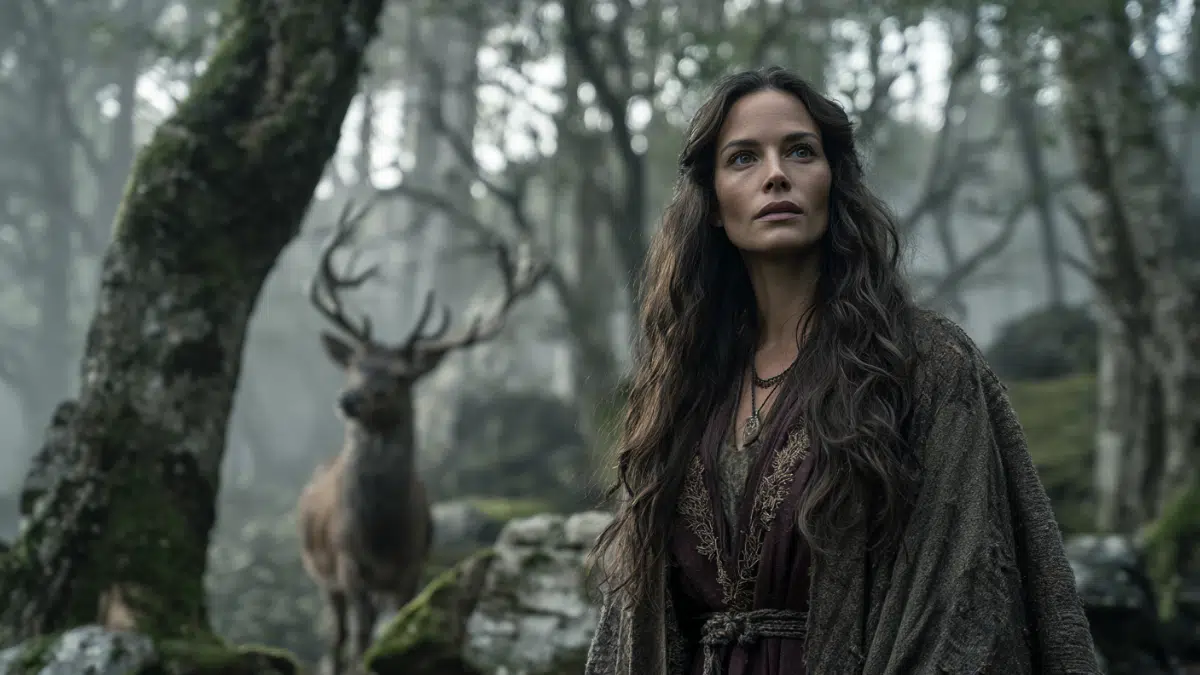
Abnoba’s power stems from the natural world—especially forests, rivers, and hills. She is often seen as a goddess of the wilderness, much like the Roman Diana or Greek Artemis. While no statues of Abnoba survive, Roman inscriptions and local dedications link her to hunting, wild animals, flowing waters, and healing.
Her symbols likely included:
- Stags or deer – representing freedom, speed, and the untamed forest.
- Rivers or springs – marking her role as a water deity, tied to life and renewal.
- Trees or forest groves – especially evergreens common in the Black Forest.
Abnoba’s powers reflect a dual nature. She could be fierce and protective—warding off danger and watching over travellers—but also gentle, offering healing and fertility through her sacred waters. People may have turned to her for safe journeys, successful hunts, and spiritual cleansing in natural springs.
Her energy was not confined to a single role. She was a goddess of balance—uniting the life-giving force of water with the unpredictability of wild landscapes. This blend made her especially revered in a region where survival depended on both respect for nature and guidance from the divine.
Abnoba Myths and Interpretations
Unlike Greek or Norse mythology, Celtic mythology often survives through fragments, place names, and Roman inscriptions. Abnoba does not have a single, detailed myth that tells her life or deeds. However, her presence in the ancient Black Forest and her connection to Roman deities give us clues about how people saw her.
Abnoba was likely seen as a guardian of the wild. Some believe travellers and hunters would offer small gifts or prayers before entering her forest, hoping for safety and success. In some local beliefs, she may have been thought to guide lost souls or protect children who wandered into the woods. This aligns her with many “wild goddesses” across cultures who are fierce but fair.
When the Romans came into contact with Celtic people, they equated Abnoba with Diana, the Roman goddess of the hunt and moon. This tells us that they saw her as independent, powerful, and tied to nature’s rhythms. Abnoba may have been seen as a healer too, thanks to her links to springs and waters believed to hold spiritual power.
While there’s no single myth with battles or love stories, Abnoba’s story lives in the land—in rivers, mountains, and ancient names that still honour her today.
Abnoba with other nature and hunting goddesses
1. Abnoba and Diana (Roman Mythology)
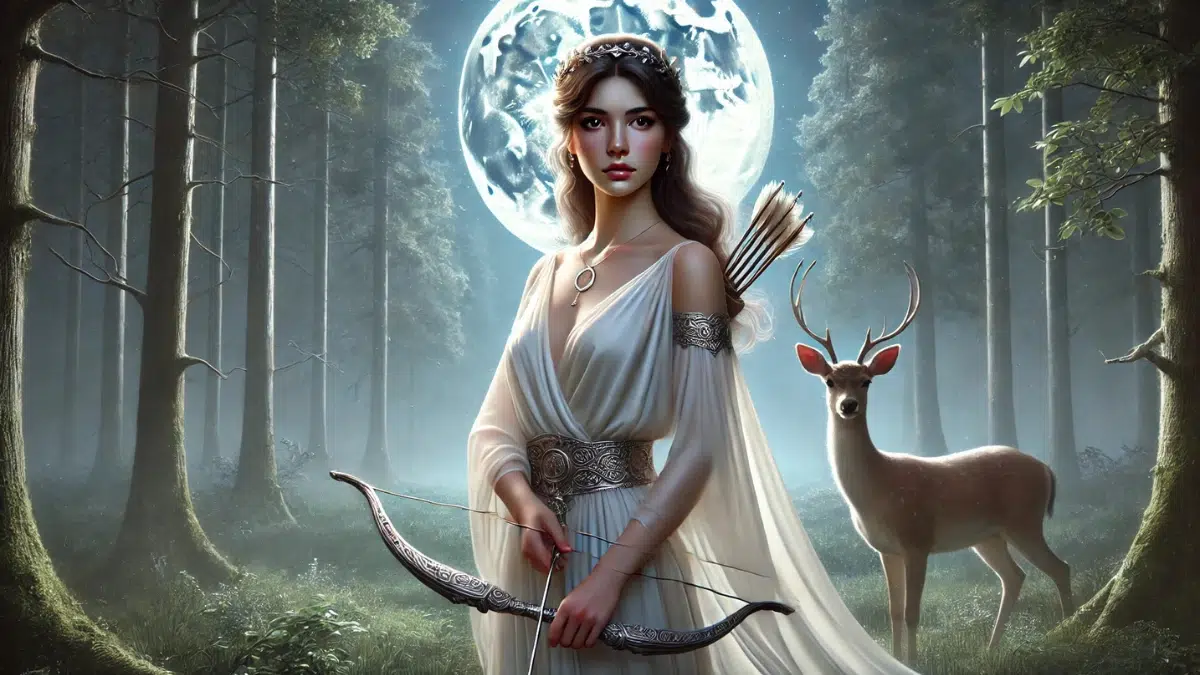
The Romans directly associated Abnoba with Diana, their goddess of the hunt, moon, and wilderness. Both goddesses:
- Are linked to forests, wildlife, and untamed nature
- Often appear as solitary figures, watching over sacred natural places
- Represent independence and strength, especially in wild spaces
Diana, however, has detailed myths (like the story of Actaeon) while Abnoba does not.
2. Abnoba and Artemis (Greek Mythology)
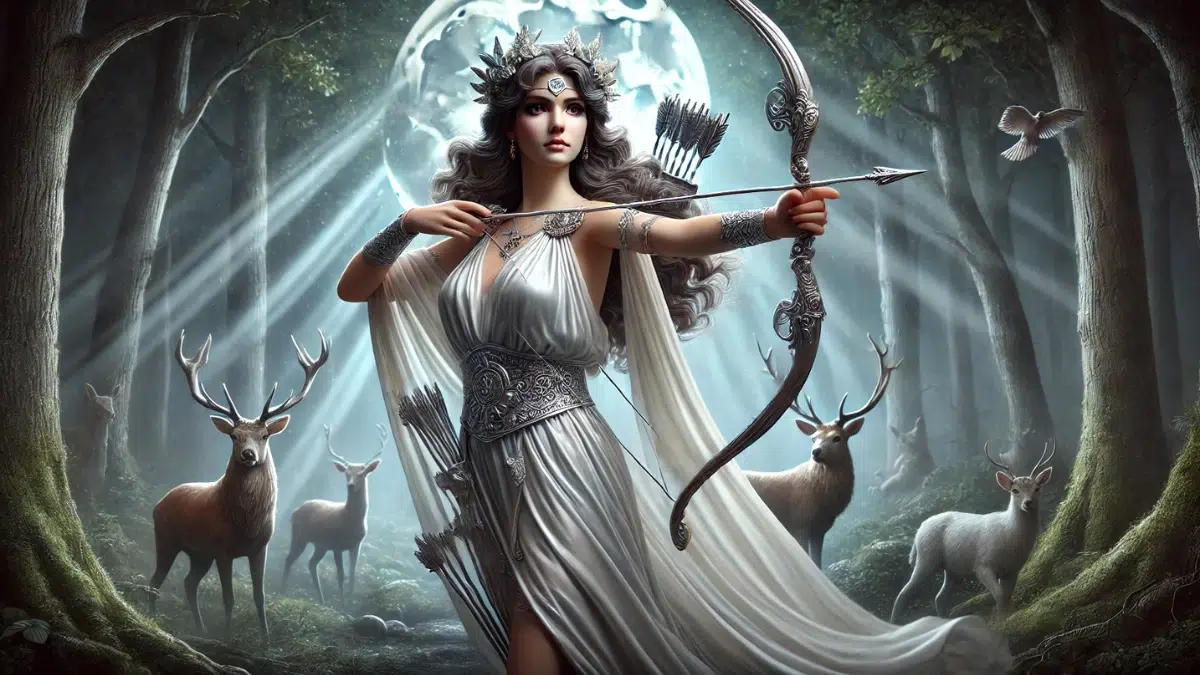
Diana and Artemis are closely related, and so comparisons to Artemis apply too:
- Both Artemis and Abnoba are huntresses, often depicted with a bow
- Artemis is known to protect young women and wild animals, a role Abnoba may have shared symbolically
- Artemis also embodies chastity and punishment, though we don’t have evidence of those traits in Abnoba
3. Abnoba and Flidais (Celtic Mythology – Irish)
Flidais is another Celtic goddess of forests and wild animals.
Compared to Abnoba:
- Flidais is tied to cattle, fertility, and abundance, while Abnoba leans more toward wilderness and mountains
- Both seem to protect nature and could be invoked by those living close to the land
Conclusion: The Quiet Power of Abnoba
Abnoba may not be as well-known as Artemis or Diana, but she remains a powerful figure in ancient mythology. As the spirit of the Black Forest and protector of wild places, she reflects a deep respect for nature. Her presence in Roman temples and Celtic landscapes shows how important local deities were to everyday life.
Even without long myths, Abnoba still speaks to us. She stands for freedom, wild beauty, and the mystery of deep forests. Like other hunting goddesses, she reminds us that the natural world is sacred—and that women held strong, guiding roles within it.
Abnoba is not just a footnote in history. She’s a symbol of how belief systems blended across cultures and how nature itself became divine. Whether you see her as a guardian of the land or a fierce huntress, her story still echoes in the forests of Europe.