Yi Sun-Sin: Korea’s Legendary Naval Commander
Yi Sun-Sin, a Korean admiral from the Joseon Dynasty, is considered one of the greatest naval commanders in history.
His remarkable achievements in naval battles and his innovative tactics have made him a national hero and a symbol of Korean military prowess.
Key Takeaways:
- Yi Sun-Sin is a legendary naval commander from Korea’s Joseon Dynasty.
- He is renowned for his strategic vision, intelligence, and innovations in naval warfare.
- Yi Sun-Sin played a significant role in defending Korea against the Japanese navy during the Imjin war.
- His victories in naval battles, including the Battle of Myeongnyang, were achieved against overwhelming odds.
- Yi Sun-Sin’s legacy continues to inspire admiration and reverence in Korea and beyond.
Early Life and Family Background
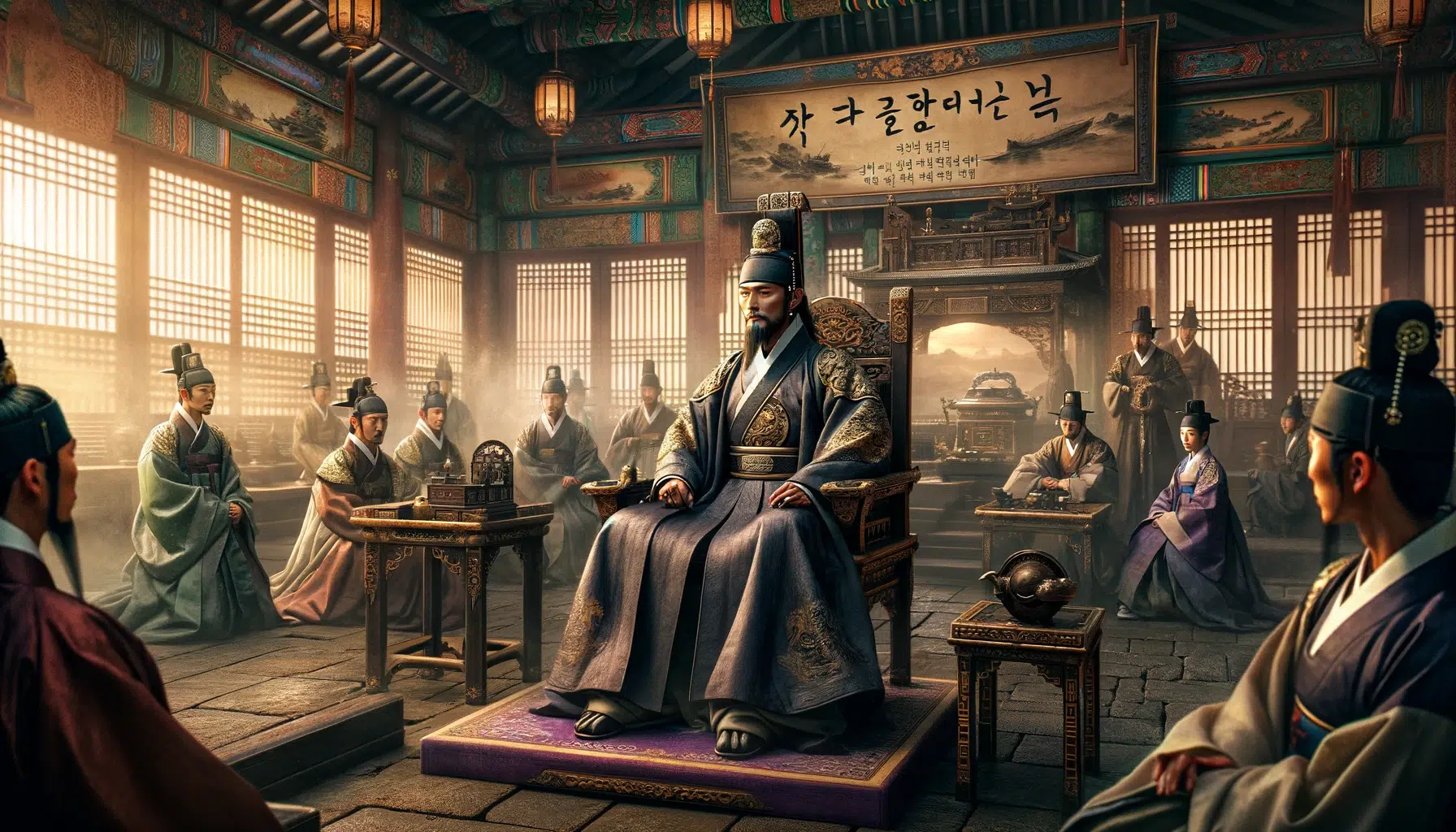
Yi Sun-Sin, widely known as one of Korea’s legendary naval commanders, was born on April 28, 1545, in Seoul, Korea.
He hailed from the Deoksu Yi clan, an aristocratic family with a rich lineage.
Yi Sun-Sin’s family background played a significant role in shaping his character and ambitions.
His grandfather, Yi Baek-rok, was a retired politician who relocated near the burial site of the executed reformer Jo Gwang-jo.
This proximity to such a historical figure may have instilled a sense of honor and duty in the young Yi Sun-Sin.
Furthermore, his father, Yi Jeong, also deviated from pursuing a career in government service, despite belonging to a noble family.
Yi Sun-Sin’s family background, with its mix of political connection and purposeful deviation, likely influenced his own journey and aspirations.
Yi Sun-Sin’s Family Background
| Family Member | Background |
|---|---|
| Grandfather – Yi Baek-rok | Retired politician, lived near Jo Gwang-jo’s burial site |
| Father – Yi Jeong | Chose not to pursue government service |
Military Career and Early Achievements
Yi Sun-Sin embarked on his military career in 1576 after passing the military examination.
From the outset, it became evident that Yi possessed exceptional strategic skills and leadership qualities.
He showcased his prowess in battles defending the border settlements against Jurchen marauders, earning widespread recognition for his tactical brilliance.
However, his path to success was not without obstacles. Yi faced false accusations of desertion during battle, which led to his imprisonment.
Despite the setback, he showed unwavering determination and refused defeat.
His steadfast resilience eventually restored Yi Sun-Sin to his commander position.
Yi rapidly climbed the ranks and received appointment as the Commander of the Jeolla Province Left Naval District.
This promotion further solidified his reputation as a capable and influential military leader.
His uncanny ability to devise strategic plans and guide his troops during battles set him apart, earning him the respect and admiration of his soldiers.
Japanese Invasions of Korea
Yi Sun-Sin’s most significant achievements came during the Japanese invasions of Korea from 1592 to 1598.
Despite being outnumbered and lacking resources, he won numerous naval battles against the Japanese navy.
His victories at the Battle of Okpo, Battle of Sacheon, and Battle of Myeongnyang were particularly notable.
Yi’s strategic vision, courage, and innovations in naval warfare played a crucial role in repelling the Japanese forces.
“During the Imjin war, Yi Sun-Sin demonstrated remarkable resilience and tactical brilliance in the face of overwhelming odds. His naval victories became legendary, inspiring subsequent generations of Koreans.”
Battle of Okpo
One of Yi Sun-Sin’s early triumphs came at the Battle of Okpo in 1592. Despite being outnumbered by the Japanese fleet, Yi employed ingenious tactics and dealt a significant blow to the invaders.
His strategic maneuvers combined with the formidable defense of his turtle ships resulted in a decisive victory for the Korean navy.
Battle of Sacheon
The Battle of Sacheon, fought in 1598, showcased Yi Sun-Sin’s unwavering resolve and military prowess.
By employing a combination of naval strategies and tactical brilliance, he achieved another resounding victory against the Japanese fleet.
This triumph further solidified Yi’s reputation as an indomitable force in naval warfare.
| Battles | Achievements |
|---|---|
| Battle of Noryang | Decisive victory against the Japanese navy, resulting in the downfall of their fleet |
| Battle of Hansando | Successful defense of Korean waters, inflicting heavy losses upon Japanese forces |
| Battle of Sacheon | Sinking over 60 Japanese ships, asserting Korean dominance |
The Battle of Myeongnyang

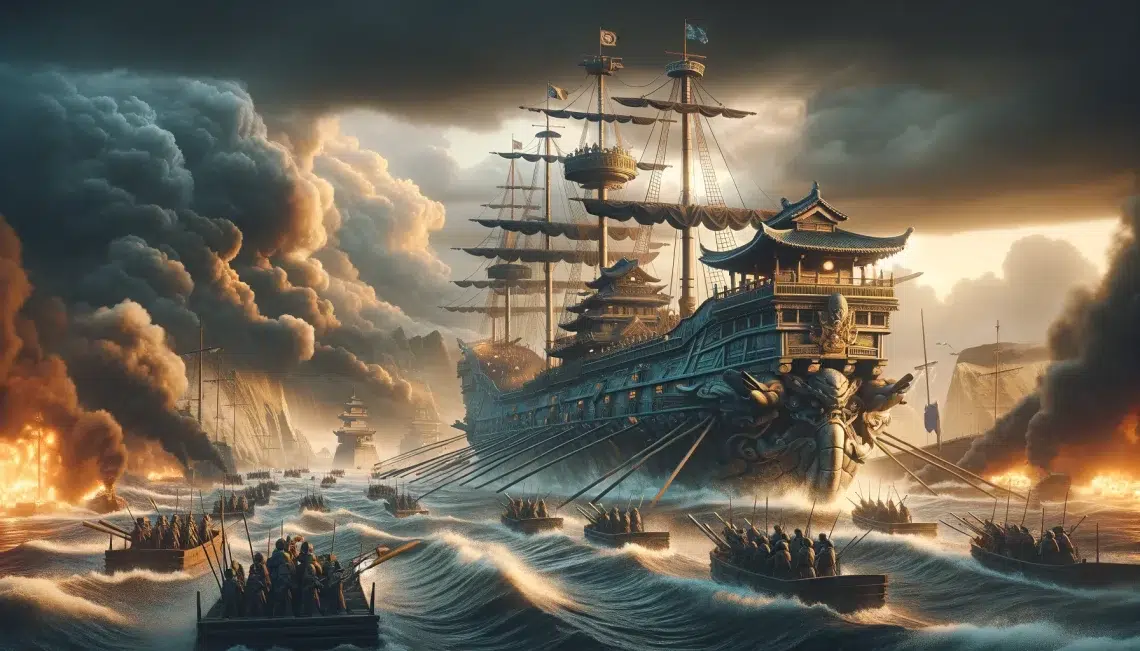
The Battle of Myeongnyang stands as one of Yi Sun-Sin’s most remarkable triumphs.
Facing a Japanese navy of 333 ships, Yi’s fleet consisted of only 13 ships.
However, utilizing his knowledge of the Korean coast, he expertly maneuvered through treacherous waters and narrow straits.
Through strategic planning and exploiting the advantage of tidal currents, Yi disabled or destroyed 31 Japanese warships without losing a single ship of his own.
The Battle of Myeongnyang is a legendary chapter in the remarkable career of Yi Sun-Sin.
In this historic encounter, Yi faced overwhelming odds as he found himself outnumbered by a staggering fleet of 333 Japanese ships.
However, through his tactical brilliance and strategic prowess, Yi Sun-Sin managed to disable or destroy an astonishing 31 Japanese warships while not losing a single ship of his own.
This unprecedented victory showcased his unparalleled skill and indomitable spirit.
Despite being vastly outnumbered, Yi Sun-Sin’s tactical genius allowed him to turn the tide of battle.
He exploited the challenging sea tides and utilized the narrow straits to his advantage, creating difficult conditions for the Japanese ships to navigate.
This forced the enemy fleet into disarray and provided Yi with the opportunity to disable and destroy their warships effectively.
| Yi Sun-Sin: | Number of Ships |
|---|---|
| Outcome | Disable/Destroy |
| Battle of Myeongnyang | 31 Japanese Warships |
The Battle of Myeongnyang stands as a testament to Yi Sun-Sin’s tactical brilliance, unwavering courage, and strategic foresight.
Despite facing insurmountable odds, he defied expectations and achieved a resounding victory, leaving an indelible mark on naval warfare history.
Learn more about: Famous Archers in History: Legends of the Bow and Arrow
Legacy and Historical Significance

Yi Sun-Sin, a legendary naval commander, holds an esteemed place in history as one of the greatest naval commanders of all time.
His legacy is deeply rooted in the Korean culture, and his heroic feats continue to be celebrated and remembered to this day.
The impact of Yi Sun-Sin’s contributions is evident in the numerous landmarks, awards, and towns named after him throughout Korea.
These serve as a testament to his historical significance and the profound admiration he garners from the Korean people.
One of the most notable recognitions of Yi Sun-Sin’s historical significance is the listing of his personal records of the war, known as the Nanjung Ilgi, in UNESCO’s prestigious Memory of the World initiative.
This recognition highlights the immense value and importance of his experiences and their significance to humankind.
Furthermore, Yi Sun-Sin’s legacy extends beyond physical landmarks and written records.
His heroic exploits and remarkable life story have been immortalized on the silver screen through films and documentaries.
These cinematic portrayals serve as a powerful medium to keep his memory alive and to inspire future generations with his bravery and unwavering dedication to protecting his homeland.
Yi Sun-Sin Landmarks, Awards, and Honours
The indelible mark left by Yi Sun-Sin can be witnessed through various landmarks and memorials dedicated to his memory.
Some notable examples include:
- Yi Sun-Sin Square in Seoul, a bustling public square that pays homage to his legacy
- Yi Sun-Sin Memorial Hall, a museum in Asan that showcases his life and accomplishments
- The Admiral Yi Sun-Sin Statue, a towering monument in Busan
In addition to physical landmarks, Yi Sun-Sin has also received multiple awards and honours for his exceptional service, bravery, and military achievements.
These accolades affirm his historical significance and the enduring impact he has had on Korea and the world.
Yi Sun-Sin’s Personal Qualities

Apart from his remarkable military accomplishments, Yi Sun-Sin is also revered for his outstanding personal qualities.
Throughout his career, he displayed exemplary leadership, unwavering loyalty, and deep respect for his soldiers.
Despite the challenges and personal hardships he faced, Yi Sun-Sin remained dedicated to his men and the preservation of his state.
His empathetic nature and genuine concern for the plight of war victims set him apart as a truly remarkable individual.
Leadership
Yi Sun-Sin’s leadership skills were commendable, as he led by example and inspired his troops to reach their full potential.
He demonstrated strategic thinking, decisiveness, and the ability to adapt to evolving situations on the battlefield.
His strong leadership qualities played a crucial role in motivating his soldiers to face adversity with courage and determination.
Loyalty
Loyalty was an integral part of Yi Sun-Sin’s character.
He valued the trust and camaraderie he had with his soldiers and was committed to their welfare.
Despite facing political intrigues and internal rivalries, he remained steadfast in his loyalty to the Korean state and its people.
His unwavering dedication to his cause earned him the respect and admiration of those he served.
Respect
Yi Sun-Sin treated his soldiers with the utmost respect, recognizing their contributions and valuing their opinions.
He created a supportive and inclusive environment where every soldier felt valued and appreciated.
This mutual respect fostered a strong sense of unity and purpose within his ranks, enabling his forces to achieve remarkable victories in the face of overwhelming odds.
Empathy
One of Yi Sun-Sin’s most notable qualities was his genuine empathy for the victims of war.
He understood the devastating impact of conflict on innocent civilians and implemented strategies to mitigate their suffering.
Through his leadership, he prioritized the protection of civilians and aimed to minimize collateral damage, reflecting his profound empathy and compassion.
| Personal Qualities | Description |
|---|---|
| Leadership | Demonstrated strategic thinking, decisiveness, and adaptability |
| Loyalty | Remained dedicated to his soldiers and the preservation of his state |
| Respect | Treated his soldiers with respect and valued their contributions |
| Empathy | Genuine concern for the welfare of war victims and civilians |
Yi Sun-Sin’s Innovations in Naval Warfare
Yi Sun-Sin, the legendary Korean naval commander, was not only a strategic genius but also a brilliant innovator in naval warfare.
His innovations revolutionized Asian naval combat and left a profound impact on military tactics.
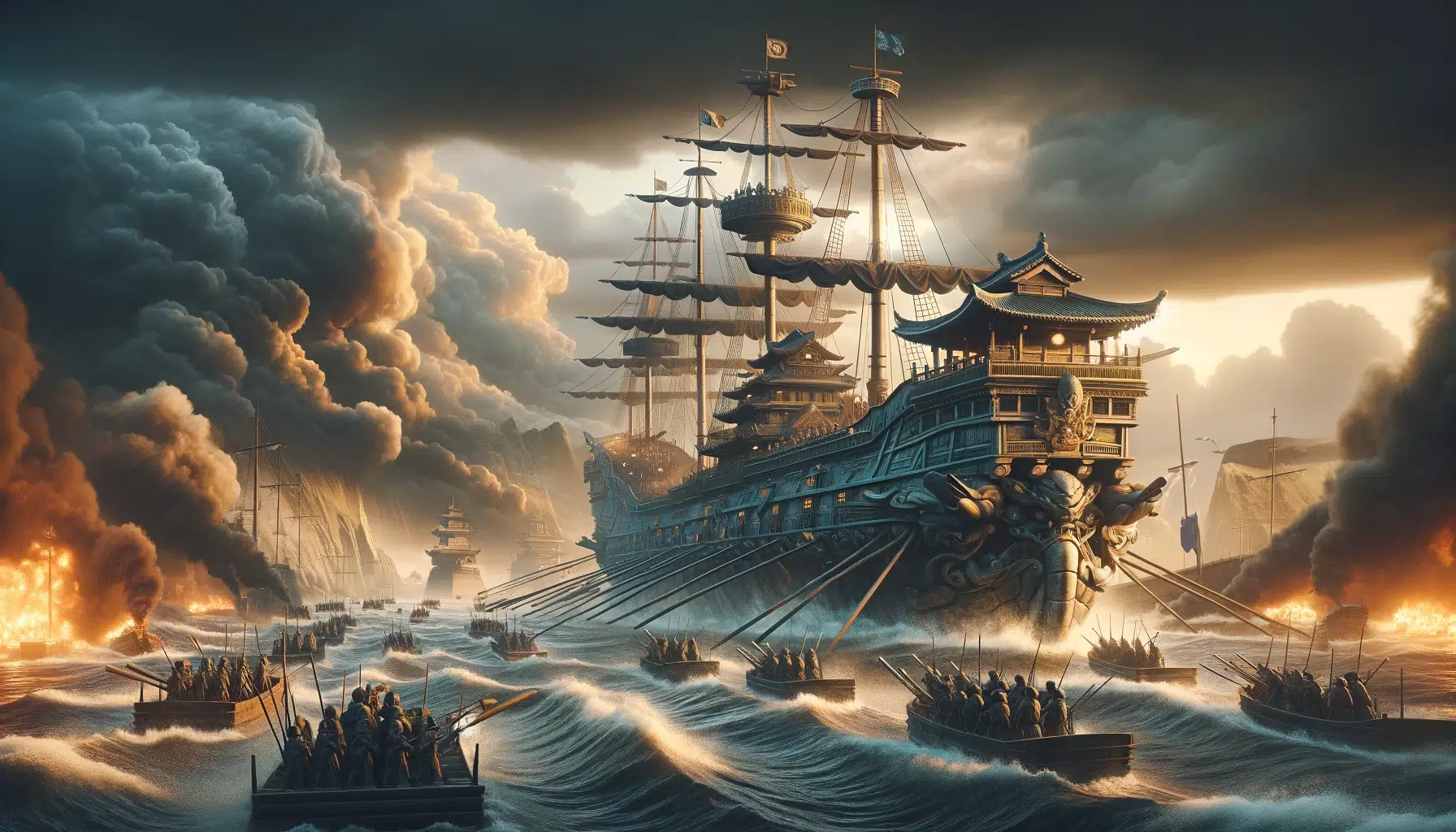
One of his most significant contributions was the development of the turtle ship, considered the first ironclad battleship in history.
The turtle ship was a formidable vessel that featured a covered upper deck equipped with armor plates, spikes, and knives.
This design served multiple purposes – it provided protection against enemy projectiles, discouraged boarding attempts, and instilled fear in the hearts of the enemy forces.
The unique structure of the turtle ship made it an impenetrable fortress on water, greatly enhancing its effectiveness in battle.
However, Yi Sun-Sin’s innovations extended beyond vessel design.
His strategic planning was another key element of his success in naval warfare.
Yi’s knowledge of the Korean coast and his understanding of the advantage offered by sea tides allowed him to plan his attacks meticulously and exploit any weaknesses in the enemy’s defenses.
By capitalizing on favorable tides and carefully executing his maneuvers, Yi was able to achieve remarkable victories and turn the tide of the war.
Challenges and Triumphs of Yi Sun-Sin
Yi Sun-Sin encountered numerous challenges throughout his illustrious career, which encompassed political intrigues and regional rivalries within the Korean military.
Despite enduring false accusations and demotions, he consistently rebounded and accomplished remarkable triumphs that solidified his legacy as a legendary naval commander.
| Challenges | Triumphs |
|---|---|
| Political intrigues within the Korean military | Strategic genius and unwavering courage during the Japanese invasion of Korea |
| Regional rivalries affecting support and resources | Successful defense of his homeland against Japanese forces |
| False accusations and demotions | Resilience and continuous achievements |
Undoubtedly, Yi Sun-Sin’s most significant challenge arose during the Japanese invasion of Korea.
As the Japanese forces sought to conquer the region, Yi’s strategic genius and unwavering courage played an instrumental role in defending his homeland and repelling the invaders.
Political Intrigues
Yi Sun-Sin had to confront political intrigues within the Korean military that posed significant challenges to his authority and effectiveness. Despite these obstacles, he maintained his unwavering dedication to the defense of his country. His ability to navigate through the treacherous waters of political rivalries showcases his resilience and determination to protect Korea from external threats.
Regional Rivalry
The regional rivalries prevalent during Yi Sun-Sin’s time further complicated his mission of defending Korea. Limited support and resources created additional hurdles for him to overcome. Nevertheless, his strategic brilliance and tactical genius allowed him to overcome these obstacles and achieve remarkable triumphs.
Yi Sun-Sin’s indomitable spirit, coupled with his exceptional military acumen, enabled him to overcome the challenges he faced throughout his career. His enduring legacy as a national hero and one of history’s greatest naval commanders is a testament to his unwavering bravery and unwavering dedication to the defense of his homeland.
Yi Sun-Sin’s Legacy Beyond his Military Achievements
Yi Sun-Sin, a legendary naval commander and military strategist, has left an indelible mark on Korean history. He is revered as a national hero and hailed as one of the greatest naval commanders of all time. Through his innovative tactics, strategic vision, and exceptional personal qualities, Yi Sun-Sin distinguished himself as a remarkable leader.
Yi Sun-Sin’s legacy extends far beyond his military achievements. His unwavering dedication to defending his homeland against the Japanese invasions of Korea has inspired admiration and reverence. His brilliant mind and unwavering courage led to numerous victories, even in the face of significant challenges.
The impact of Yi Sun-Sin’s innovations in naval warfare, such as the development of the turtle ship, the first ironclad battleship, cannot be overstated. His strategic planning and understanding of the Korean coast and sea tides were instrumental in his triumphs. His legacy lives on through landmarks, awards, films, and documentaries that aim to preserve the memory of his heroic exploits.
Yi Sun-Sin’s remarkable career as a naval commander and military strategist continues to be an inspiration to not only the people of Korea but also to admirers worldwide. His contributions to naval warfare and his extraordinary leadership have secured his place in history as a true naval legend.