Female Warriors in History Defying Gender Norms
Female warriors in history were brave women in ancient warfare who stood up and fought in wars, showing incredible courage and leadership.
These women warriors have led armies, resisted oppression, and inspired their people. Their stories highlight the strength and determination that women have shown in the face of adversity.
Learn more about some of the most famous female warriors in history, from Joan of Arc in France to Boudica in Britain. Appreciate their contributions to history and understand how they shaped the world we live in today breaking gender barriers.
Female Warriors in History: Military Leadership
Female warriors in history show exceptional strategic military leadership and tactics. They lead troops into battle and plan successful campaigns.
These female warriors in history used their intelligence and skills to outsmart their enemies. Their bravery inspires their soldiers and changes the course of history.
From queens to warriors, they face challenges head-on. Their leadership and tactical decisions leave a lasting impact on their nations.
These women prove that courage, determination, and intelligence are crucial in warfare, breaking gender norms and setting examples for future generations.
Joan of Arc (France)
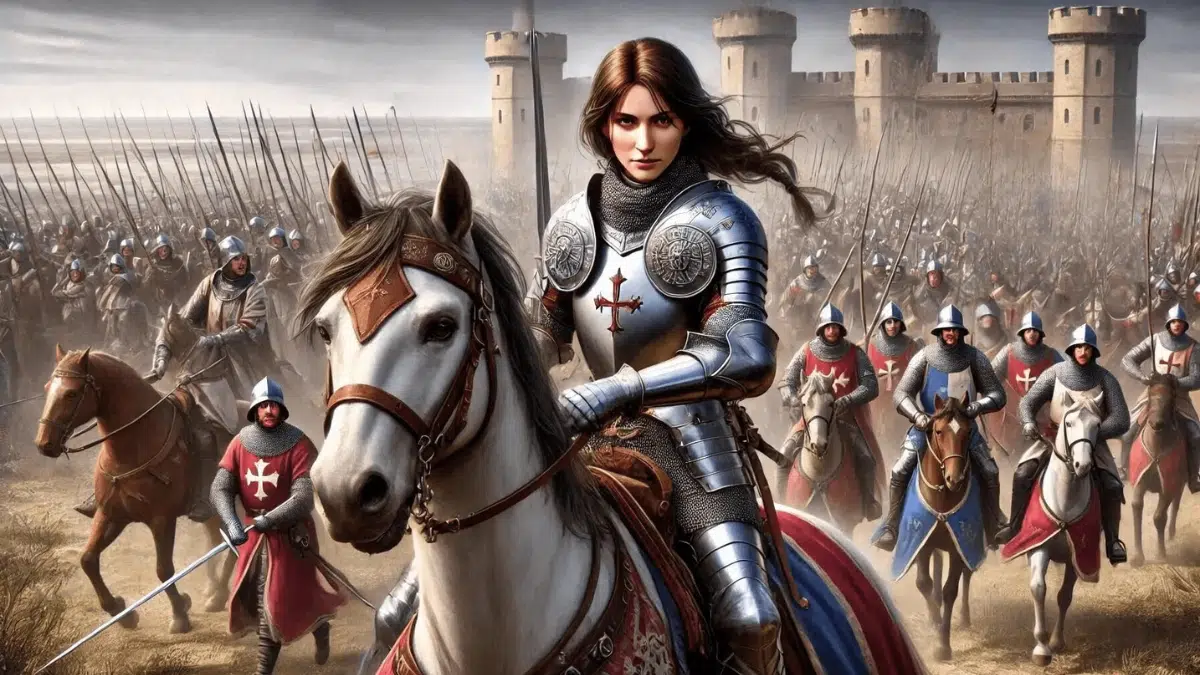
- Leds French forces to victory at the Siege of Orléans during the Hundred Years’ War
Joan of Arc, also known as the “Maid of Orléans,” was born around 1412 in France. She was a peasant girl who claimed divine guidance from saints to lead France to victory during the Hundred Years’ War.
At age 17, she convinces Charles VII to let her lead an army. She achieves a pivotal victory at the Siege of Orléans in 1429, which boosts French morale and leads to Charles’s coronation at Reims.
Her leadership helped to turn the tide of the Hundred Years’ War in favour of France. Captured by the Burgundians in 1430, she was sold to the English and tried for heresy. She would be burned at the stake in 1431 at age 19.
She inspires future generations to believe in their cause and fight for their country.
Canonized in 1920, she remains a symbol of French unity, resilience and patriotism.
Boudica (Britain)
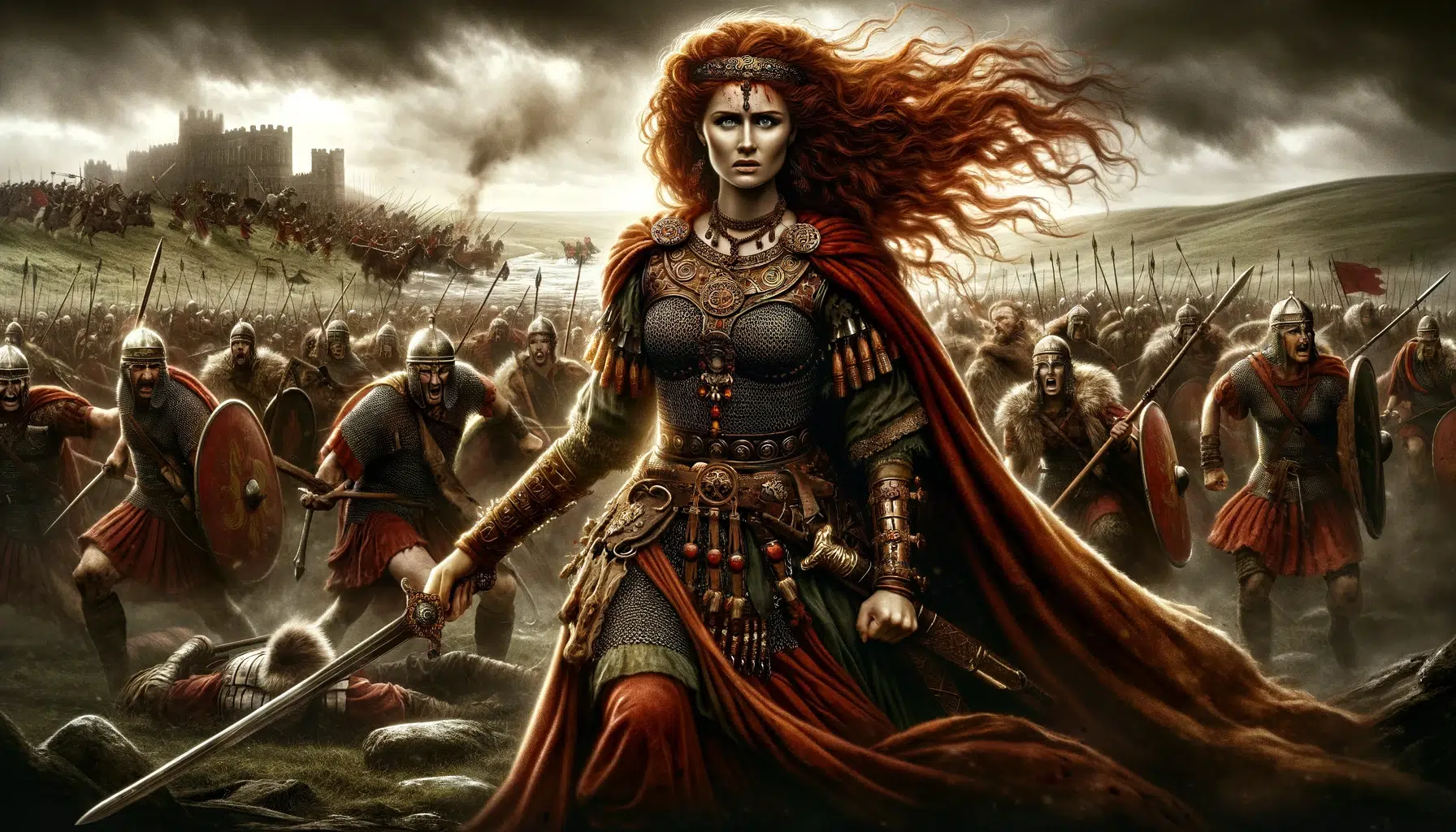
- Queen of the Iceni people led a revolt against Roman occupation in 60 CE
Queen Boudica, also known as Boudicca or Boadicea, was the warrior queen of the Iceni tribal people in ancient Britain. Following the death of her husband, King Prasutagus, the Romans annexed his kingdom, failing to honour their succession agreement.
They would flog Boudica, and rape her daughters, igniting her rebellion against Roman rule. Boudica unites the Iceni with other tribal groups, gathering a large army to revolt.
Her forces destroy several Roman settlements including Londinium (modern-day London). Boudica’s wins cause significant damage to the Romans.
Despite her eventual defeat, Boudica’s rebellion shocks the Roman Empire. Her forces were ultimately defeated by the Roman governor Suetonius Paulinus. Boudica’s death remains uncertain. Accounts suggest she either poisoned herself or died of illness.
She is a symbol of resistance against oppression in British history.
Learn more about: Boudica: Celtic Warrior Queen Who Defied Rome
Lakshmi Bai (India)

- Queen of Jhansi and leader in the Indian Rebellion of 1857
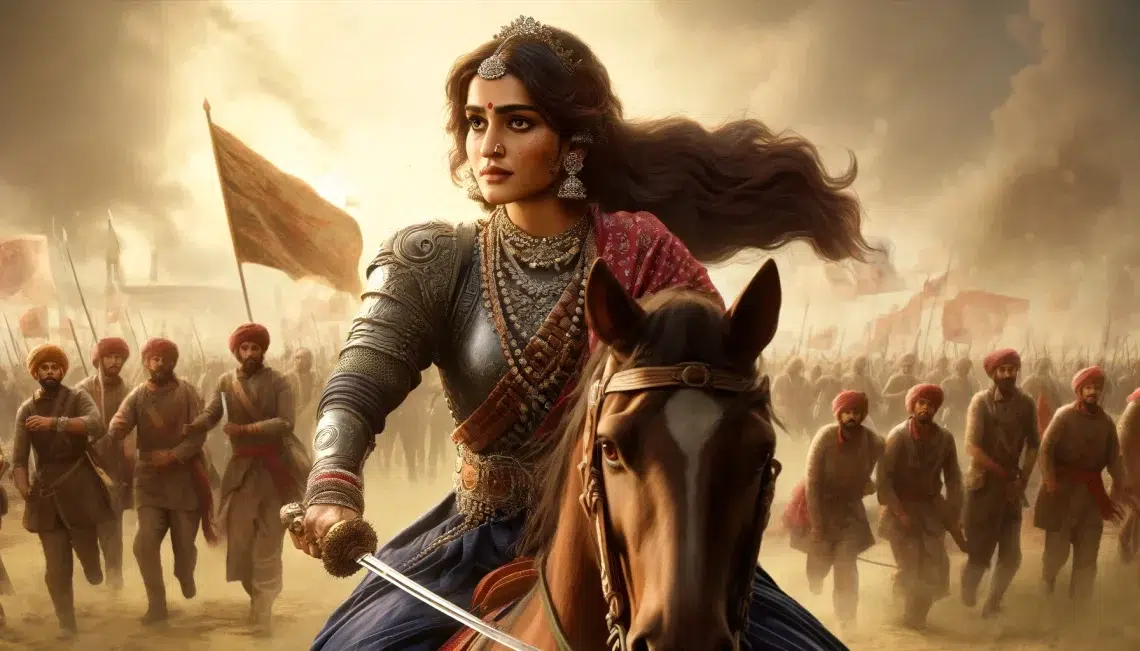
Lakshmi Bai, also known as the Rani of Jhansi, was born as Manikarnika Tambe in 1828, in Varanasi, India.
She would receive training in martial arts, horseback riding, and sword fighting, which was unusual for women of her time. She married Maharaja Gangadhar Rao of Jhansi in 1842 and became Lakshmi Bai.
After her husband’s death in 1853, the British East India Company annexed Jhansi. They would refuse to recognize her adopted son as the heir under the Doctrine of Lapse.
Lakshmi Bai became a key figure in the Indian Rebellion of 1857, leading her troops with remarkable bravery. She defended Jhansi against British forces but had to flee to Gwalior.
There she continued to fight until her death on June 18, 1858. Her legacy as a symbol of resistance and courage endures in Indian history and culture.
Zenobia (Syria)
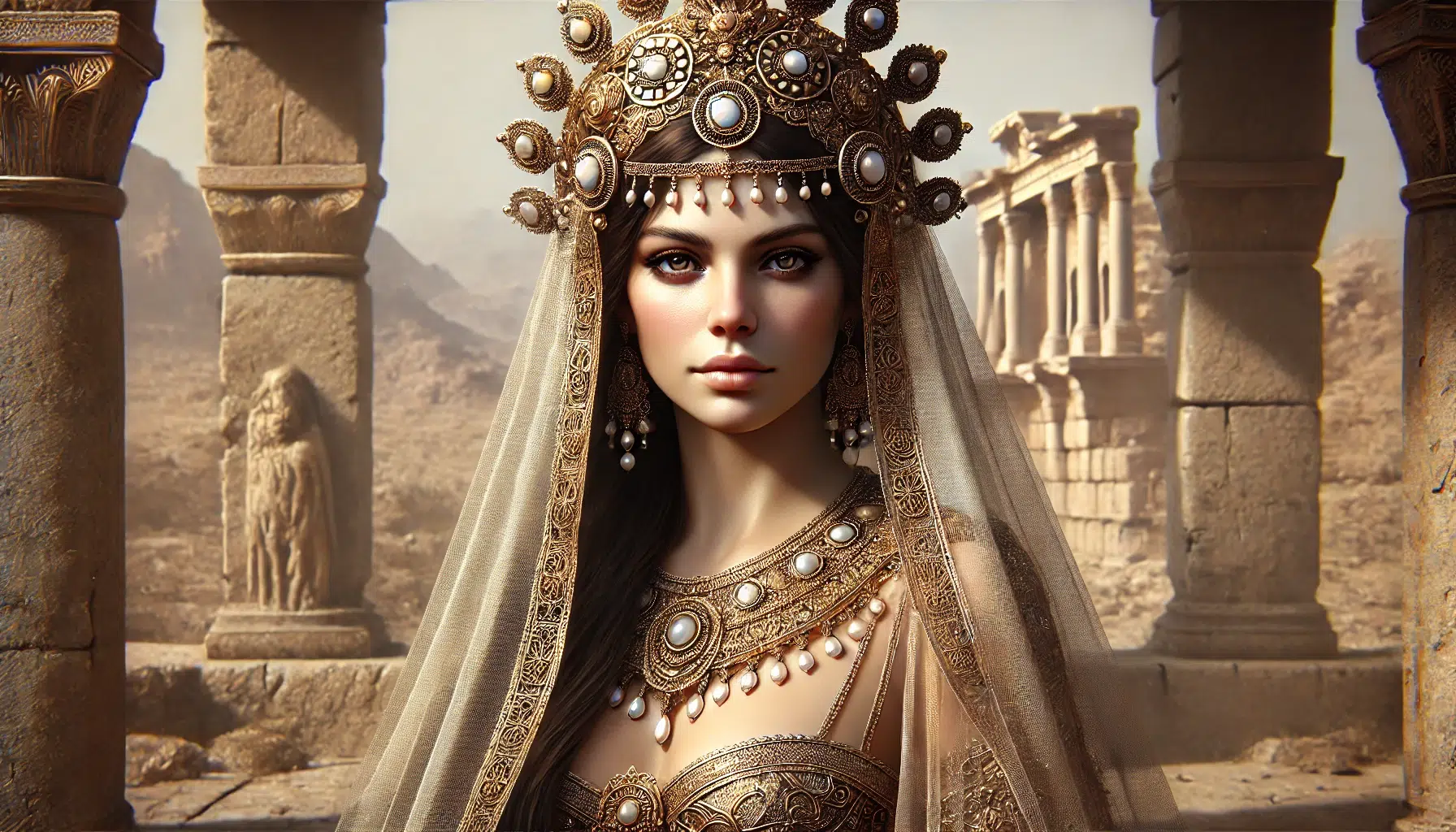
- Queen of the Palmyrene Empire led a rebellion against the Roman Empire
Zenobia, born around 240 CE, was the queen of the Palmyrene Empire in Syria.
She became regent for her young son after the death of her husband in 267 CE. Zenobia is renowned for her ambitious expansion of the Palmyrene Empire. This would include conquering Egypt and much of Asia Minor.
Her reign was a blend of Roman, Persian, and local cultures, promoting intellectual and religious diversity.
In 272 CE, Roman Emperor Aurelian launches a campaign against Zenobia. After initial resistance, she was captured while fleeing to Persia. Zenobia is taken to Rome and paraded in Aurelian’s triumph.
Her fate is uncertain, with some accounts suggesting she lived out her days in a villa near Rome. Zenobia remains a symbol of strength and defiance against imperial power.
Learn more about: Queen Zenobia: Rebel Warrior and Syrian Archer
Tomyris (Modern Central Asia)
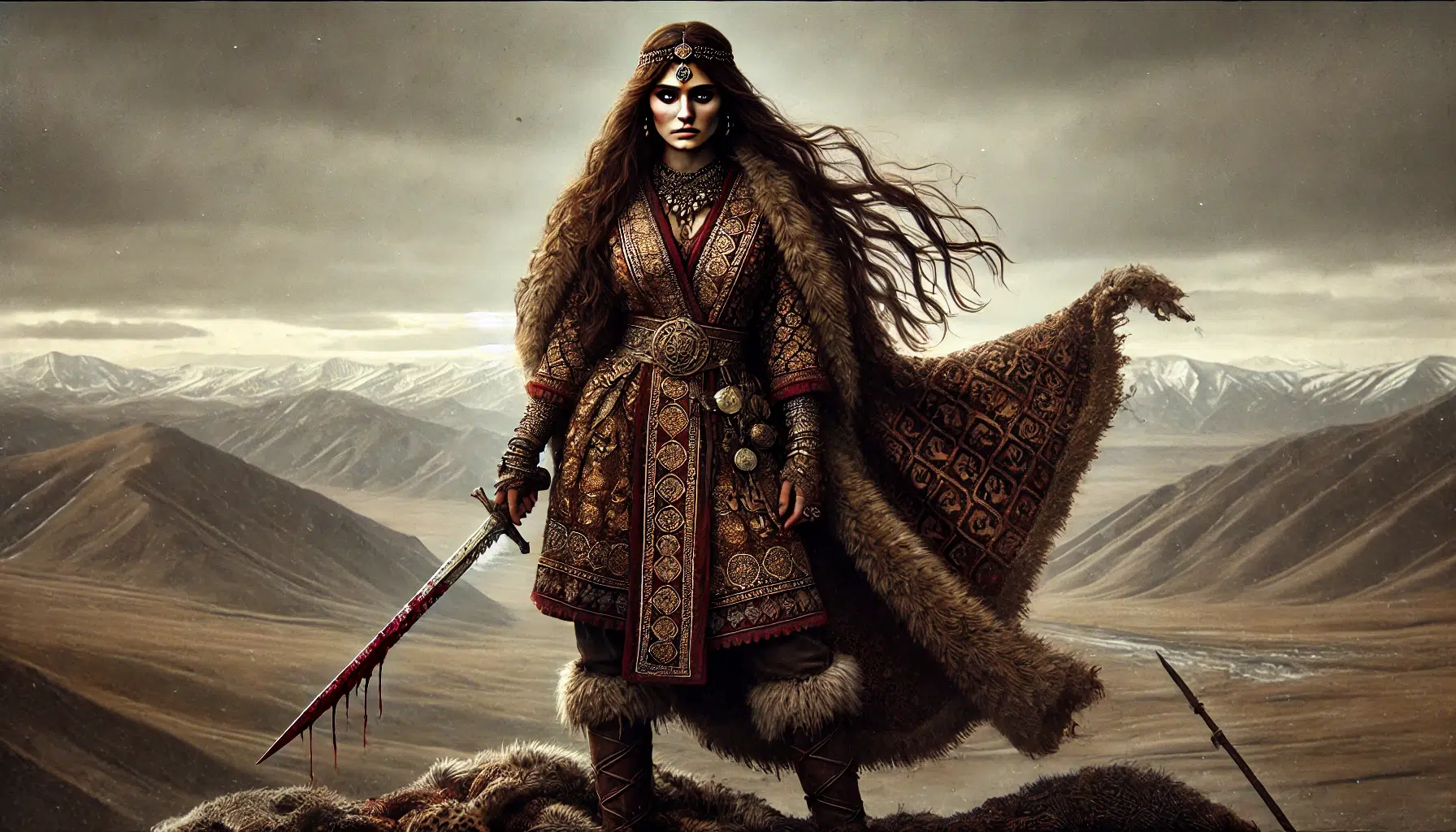
- Queen of the Massagetae known for defeating Cyrus the Great
Tomyris was a 6th-century legendary queen of the Massagetae, a nomadic Scythian tribe in Central Asia.
She is most famous for her confrontation with Cyrus the Great of Persia. She rejected Cyrus’s marriage proposal, seeing it as a ploy to conquer her kingdom. When Cyrus attacks, Tomyris would prepare her people for battle. Her son led the first wave but falls into a Persian trap. He would die, causing great sorrow for Tomyris.
Tomyris vows to defeat Cyrus and avenge her son. In the fierce battle that follows, Tomyris and her warriors fight bravely. They defeat the Persian army and kill Cyrus in 530 BCE. She had Cyrus’s head placed in a bag of blood, declaring, “Drink your fill of blood!”
Tomyris’s story has been celebrated in art and literature as a symbol of resistance and vengeance. She shows incredible leadership and courage. Tomyris remains a symbol of resistance and power, admired throughout history.
Learn more about: Tomyris: Queen Who Defeated Cyrus the Great
Artemisia I of Caria (Turkey)
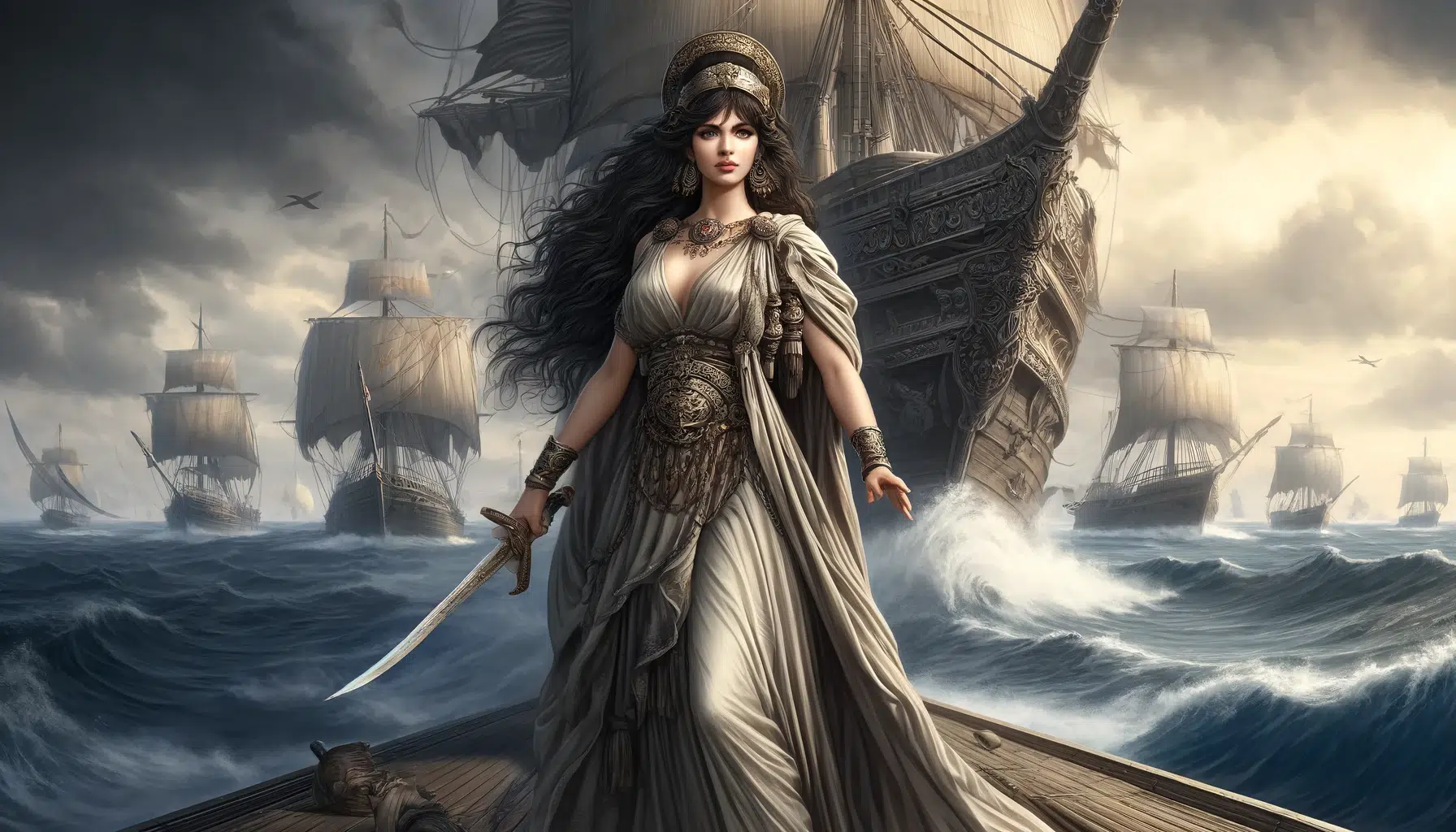
- Naval commander for Persia during the Greco-Persian Wars
Artemisia I of Caria in the 5th century BCE, was the queen of Halicarnassus, a Greco-Carian city-state in what is now southwestern Turkey.
She ruled over Halicarnassus, Kos, Nisyros, and Kalymnos, and was a notable ally of Persian King Xerxes I during the Greco-Persian Wars.
Artemisia is best known for her role in the naval battles of Artemisium and Salamis in 480 BCE. She commanded five ships and demonstrated exceptional bravery and strategic judgement.
Despite advising Xerxes against engaging in the naval battle of Salamis, she fought valiantly when the battle ensued. Herodotus, the historian, praises her for her intelligence and leadership.
After the Persian defeat, Xerxes entrusts her with the care of his illegitimate sons, sending her to Ephesus. Artemisia’s legacy endures as a symbol of female leadership and military prowess in ancient history.
Margaret of Anjou (England)
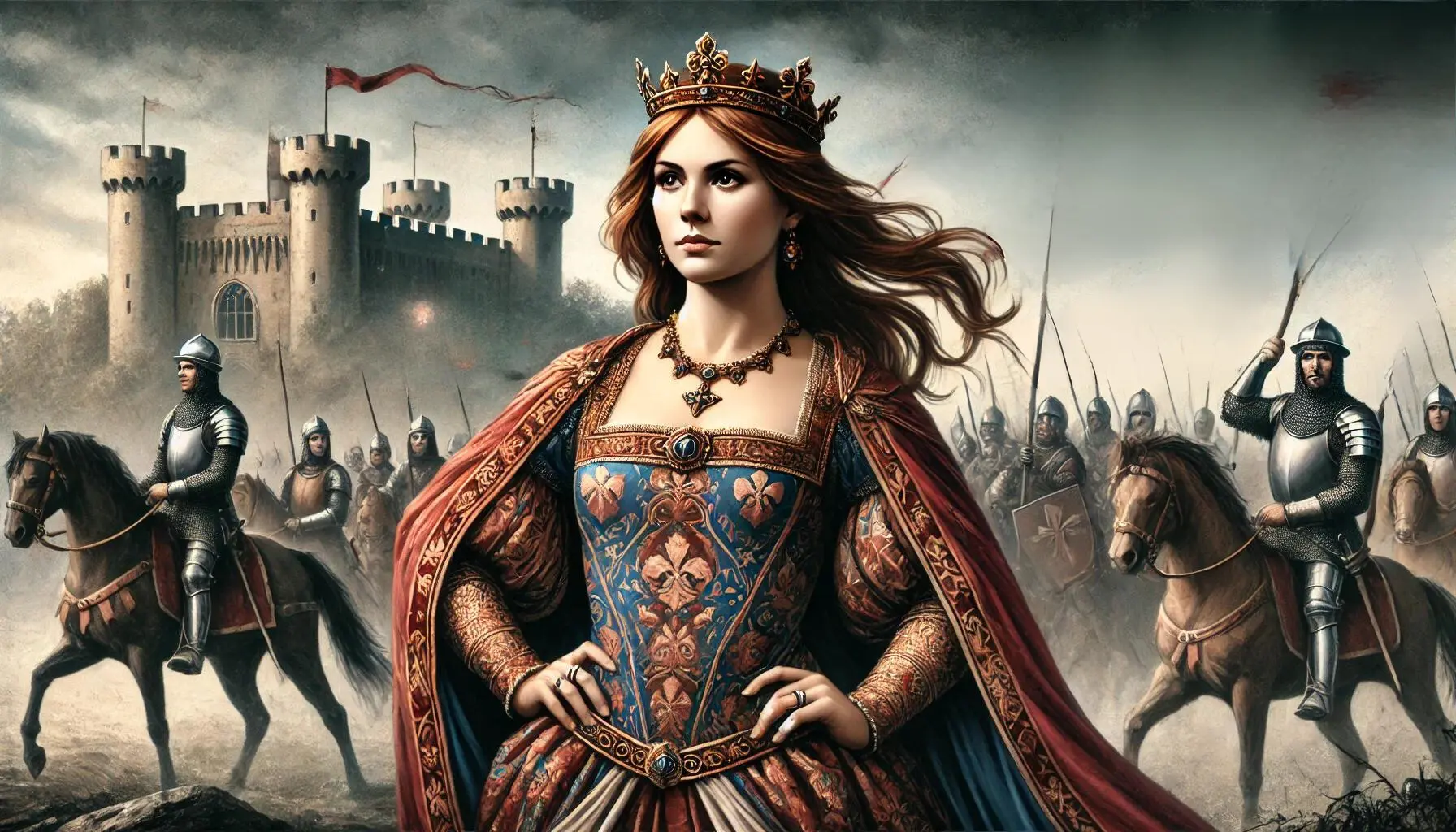
- Revolutionary leader who led Lancastrian forces during the Wars of the Roses
Margaret of Anjou, born in 1430, in the Duchy of Lorraine, was the queen consort of England. Her marriage to King Henry VI in 1445 was part of a truce in the Hundred Years’ War.
Margaret plays a crucial role in the Wars of the Roses, a series of conflicts between the houses of Lancaster and York. With Henry VI struggling with mental illness, she would lead the armies and engage in battles. Margaret’s ambitious nature saw her with victories at the Battle of Wakefield and the Second Battle of St Albans.
Her forces were defeated at the Battle of Towton in 1461. She allied to restore Henry VI to the throne in 1470. However they were defeated again at the Battle of Tewkesbury in 1471 with her son Edward being killed.
Captured and later ransomed by King Louis XI of France, Margaret would spend her final years in France, dying in 1482.
Laskarina Bouboulina (Greece)
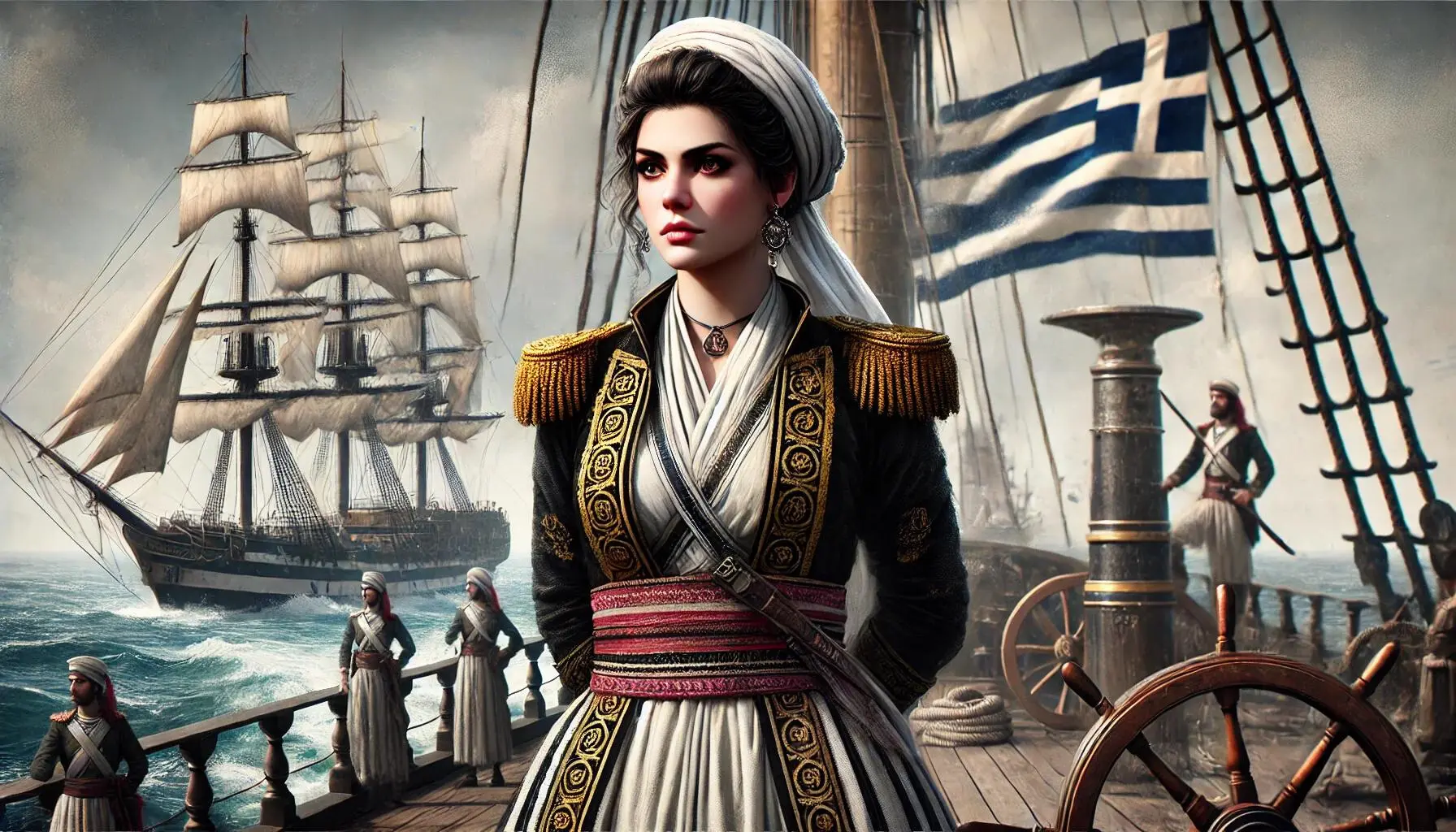
- Strategic naval commander during the Greek War of Independence against the Ottoman Empire
Laskarina Bouboulina, born on May 11, 1771, in a Constantinople prison, was a prominent Greek naval commander and a heroine of the Greek War of Independence in 1821.
After inheriting a substantial fortune from her two deceased husbands, she used her wealth to support the Greek independence movement. Bouboulina joined the Filiki Eteria, a secret society aiming to overthrow Ottoman rule.
She would finance the construction of her own warship, the Agamemnon, equipped with 18 cannons. She played a crucial role in several key naval battles, including the blockades of Nafplion and Monemvasia.
Bouboulina was known for her strategic judgement and bravery, often leading her fleet personally. Despite her significant contributions, she faces hardships, including imprisonment and exile during the Greek civil war.
Bouboulina was killed in 1825 during a family feud. Posthumously, she was honoured by Tsar Alexander I of Russia with the rank of Admiral. Thus making her the first woman to hold such a title in naval history.
Learn more about: Laskarina Bouboulina: The Courageous Greek War Naval Admiral
Trieu Thi Trinh (Vietnam)
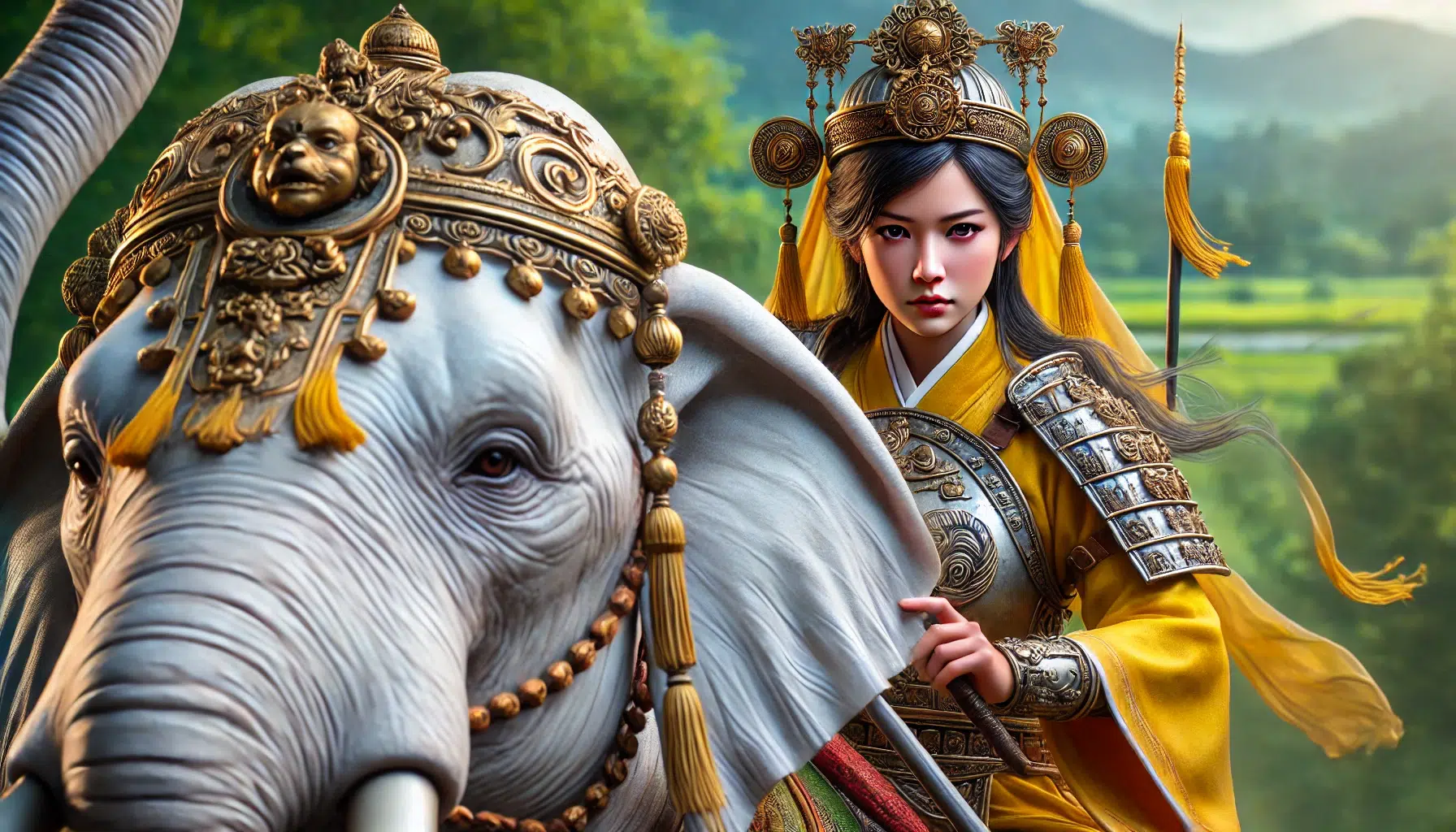
- Warrior who led a rebellion against the Eastern Wu dynasty becoming national hero in Vietnam
Trieu Thi Trinh, also known as Lady Trieu or Ba Trieu, was a legendary Vietnamese warrior born in 226 CE in northern Vietnam.
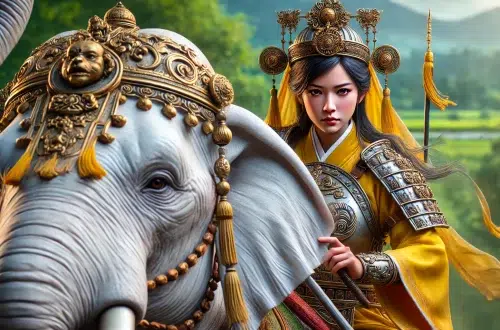
Orphaned early, she is raised by her brother. At 19, she leads a rebellion against the Chinese Eastern Wu dynasty’s oppressive rule. Trieu is famed for her fierce combat skills, often riding into battle on an elephant, wielding dual swords, and wearing golden armour.
She leads her forces to over 30 victories, instilling fear in her enemies with her commanding presence and strategic prowess.
Despite her efforts, the rebellion was ultimately quashed in 248 CE. Facing defeat, Trieu takes her own life rather than be captured.
Her bravery and defiance have made her a national hero in Vietnam, inspiring future generations of resistance fighters. Temples and monuments in her honour still stand, and she is celebrated for her unwavering spirit and leadership against foreign domination.
Learn more about:
- Lady Triệu: Vietnam’s Legendary Warrior Queen
- Trưng Sisters: Brave Warrior Queens of Ancient Vietnam
Pantea Arteshbod (Persia)
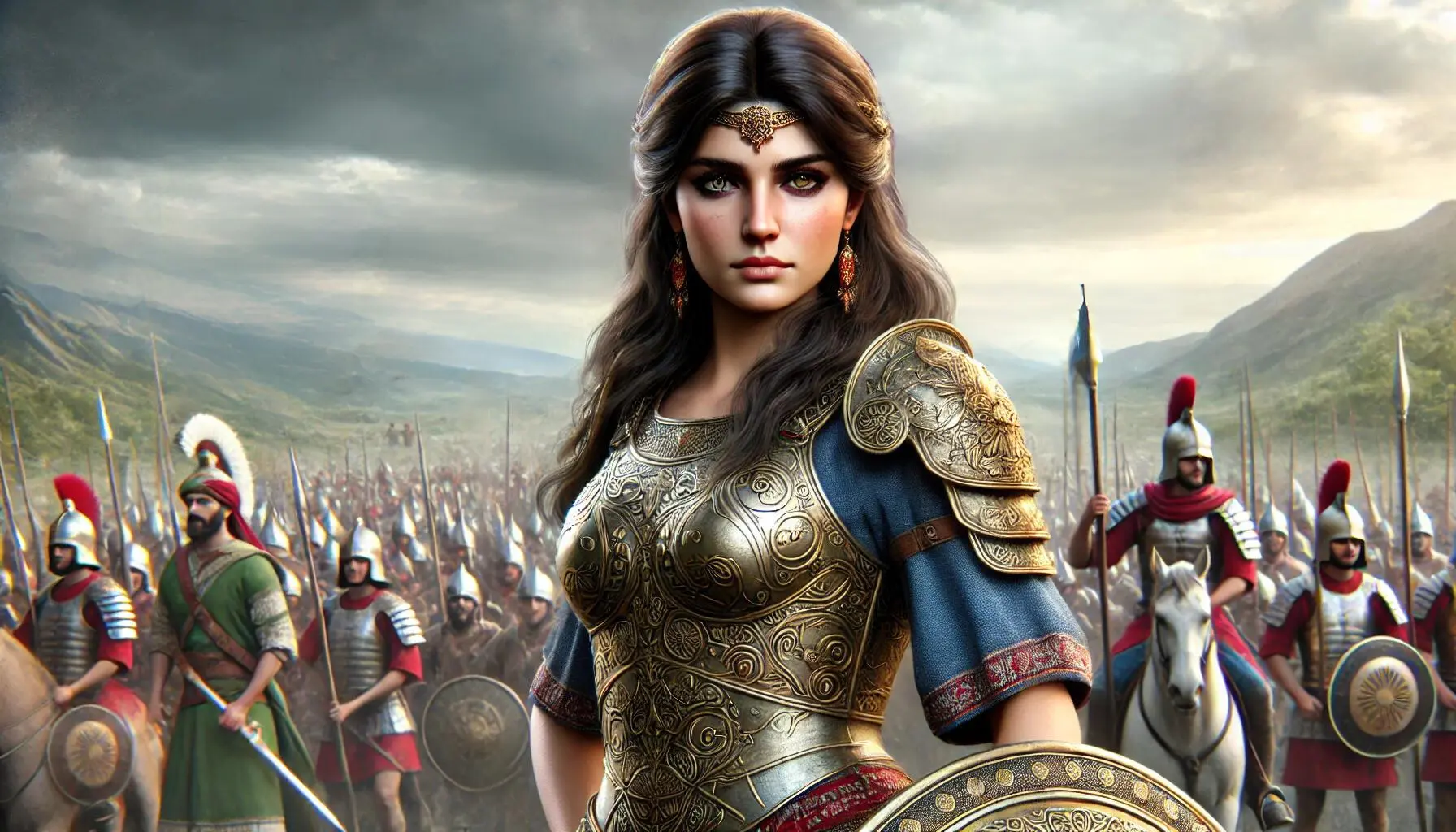
- Persian Lieutenant Commander of the army of Cyrus the Great
Pantea Arteshbod, a prominent Persian military commander, flourished around 539 BCE during the reign of Cyrus the Great.
She played a significant role in the Battle of Opis and was instrumental in establishing and commanding the elite unit known as the Persian Immortals alongside her husband, General Aryasb.
Pantea was also tasked with maintaining law and order in Babylonia after its conquest. Her leadership and strategic skills were exceptional, and she remains a notable example of female military prowess in ancient Persia. This demonstrates that women could hold high-ranking positions in the Persian army.
Fu Hao (China)
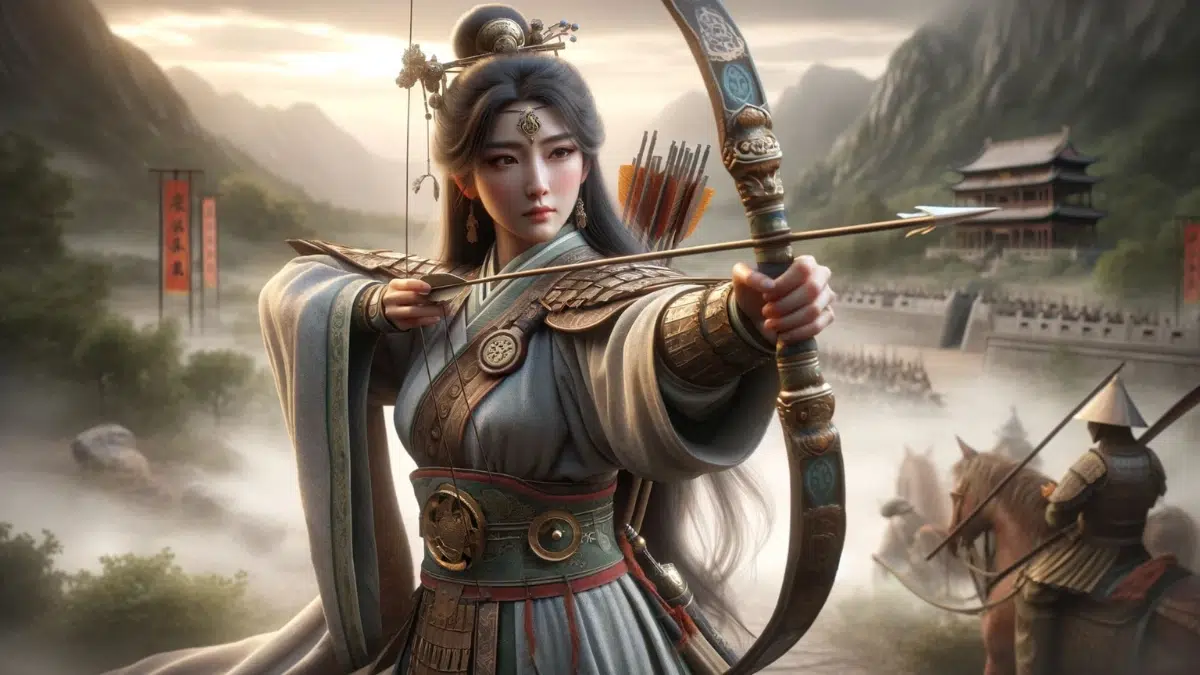
- A military general and high priestess during the Shang Dynasty led numerous military campaigns
Fu Hao, a prominent figure in the Shang dynasty (c. 1200 BCE), was one of King Wu Ding’s many wives and held the titles of military general and high priestess.
She commanded up to 13,000 troops and leads successful military campaigns against neighbouring tribal people, including the Tufang and Qiangfang. Fu Hao is also responsible for conducting important religious rituals and sacrifices, as evidenced by oracle bone inscriptions.
Her tomb, discovered intact in 1976 at Yinxu, contained over 1,600 artifacts. It includes bronze weapons, jade objects, and evidence of human and animal sacrifices. This discovery provides significant insights into her life and status.
Learn more about: Lady Fu Hao: China’s Pioneering Female Archer
Yaa Asantewaa (Ghana)
- Leds the Ashanti rebellion against British colonialism
Yaa Asantewaa, born on October 17, 1840, in Besease, was the Queen Mother of Ejisu in the Ashanti Empire, now part of modern-day Ghana.
Appointed by her brother, Nana Akwasi Afrane Okese, she played a pivotal role in the Ashanti resistance against British colonialism.
In 1900, she led the War of the Golden Stool, also known as the Yaa Asantewaa War, after the British demand the sacred Golden Stool, symbolizing Ashanti sovereignty.
Asantewaa rallied her people, famously declaring that if the men would not fight, the women would. Despite initial successes, the Ashanti were ultimately defeated, and she was captured and exiled to the Seychelles, where she died in 1921.
Yaa Asantewaa remains a symbol of resistance and empowerment, celebrated for her leadership and defiance against colonial rule.
Queen Amina (Nigeria)

- Expanded the territory of the Hausa people to its largest borders through her military conquests
Queen Amina, also known as Aminatu, was born around 1533 in Zazzau (now Zaria), Nigeria. She was the daughter of King Nikatau and Queen Bakwa Turunku.
Amina was named Magajiya (heir apparent) at age 16 and trained extensively in military and political affairs. After her brother Karama’s death in 1576, Amina ascended the throne and ruled for 34 years until her death in 1610.
Amina is renowned for her military prowess and strategic decisions. She leads an army of 20,000 soldiers, expanding Zazzau’s territory significantly through numerous successful campaigns.
She introduces military innovations such as protective armour and builds fortified walls around her cities, known as “Amina’s walls,” many of which still stand today.
Her reign ensures the dominance of Zazzau in regional trade, connecting it with Egypt, Mali, and beyond. Amina’s legacy as a warrior queen and a symbol of female empowerment endures in Nigerian history and culture.
Learn more about: Queen Amina: The Warrior Queen of Nigeria
Female Warriors in History: Diplomats
Female warriors in history often serve as diplomats, negotiating peace and advocating for their people. Figures like Nancy Ward and Nzinga of Ndongo and Matamba use their diplomatic skills to protect and empower their communities. Their efforts highlight the crucial role of women in achieving political and social change through diplomacy.
Nancy Ward (Nanyehi) (United States)

- Cherokee war leader and key peacemaker in several treaties
Nancy Ward, also known as Nanyehi, was a prominent Cherokee leader born around 1738 in Chota, Tennessee. She earned the title of Ghigau or “Beloved Woman” after demonstrating exceptional bravery during the 1755 Battle of Taliwa. There she led the Cherokee to victory following her husband’s death.
As a Beloved Woman, she held significant influence, leading the Women’s Council and having a vote in the Cherokee General Council.
Ward advocated for peaceful coexistence with European Americans and plays a crucial role in diplomatic relations. She marries an English trader, Bryant Ward, and adopts the name Nancy Ward.
She is credited with introducing dairy farming to the Cherokee. This is a skill she learned from a captured settler, Lydia Bean, whom she saved from execution.
Throughout her life, Ward worked tirelessly to protect Cherokee lands and culture, speaking out against land cessions and striving for peace. She died in 1822 near Benton, Tennessee, leaving a legacy as a peacemaker and a powerful female leader.
Learn more about:
Nzinga of Ndongo and Matamba (Angola)
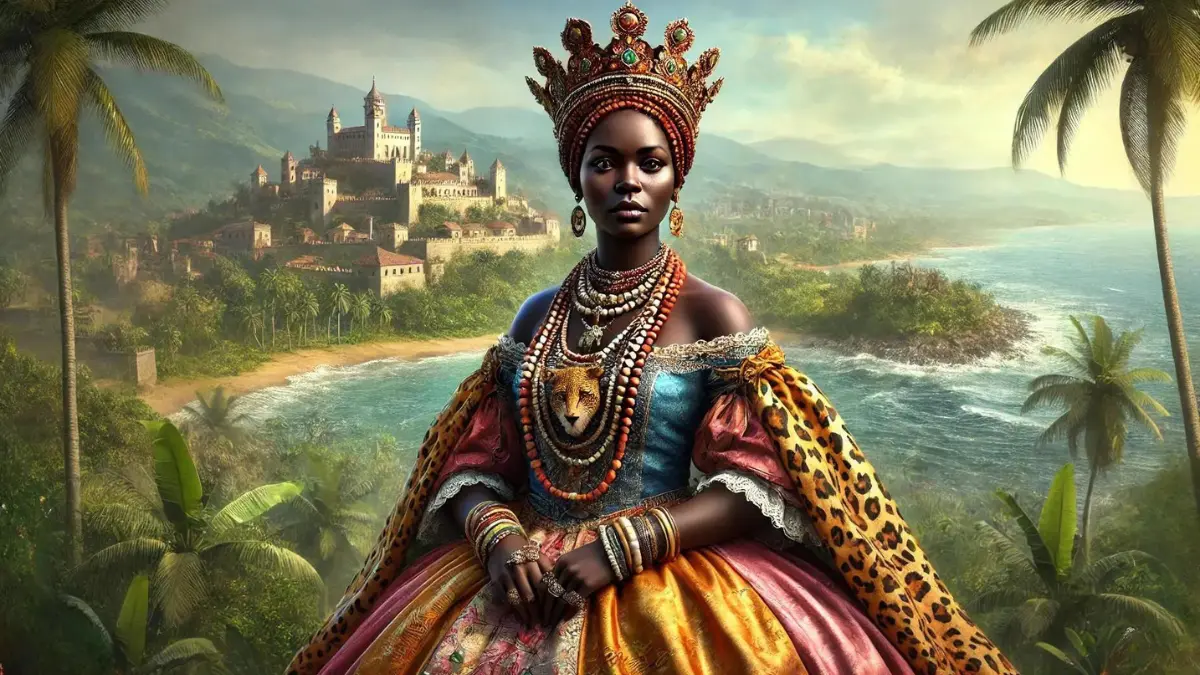
- Queen and military leader in present-day Angola celebrated for her resistance against colonization
Queen Nzinga of Ndongo and Matamba, born around 1583, was a formidable ruler and military strategist in what is now Angola.
She ascended to power in 1624. This was during a period of Portuguese encroachment and the expansion of the African slave trade.
Nzinga initially engages in diplomacy. She would negotiate with the Portuguese and convert to Christianity, taking the name Ana de Sousa. However, after the Portuguese betray her, she leads a resilient resistance against them.
Nzinga formed strategic alliances with the Dutch, and uses guerrilla tactics to reclaim and defend her territories. She relocates her people to Matamba, where she establishes a new power base and continues her resistance.
Nzinga’s reign was marked by her use of both diplomacy and military prowess, maintaining her kingdom’s sovereignty until her death on December 17, 1663. Her legacy endures as a symbol of resistance and empowerment in Angolan and African history.
Learn more about: Queen Nzinga: Diplomatic Genius Defied Europe
Female Warriors in History: Fierce Warriors in Battle
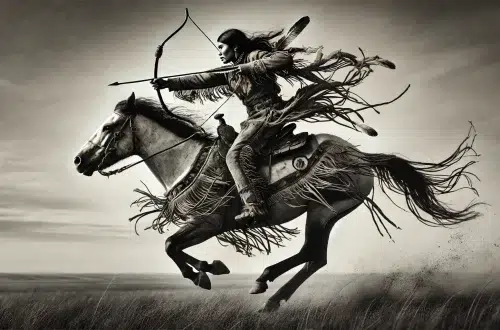
Female warriors in history are fierce warriors who lead and inspire. They display incredible bravery and skill in battle, from Lozen to Tomoe Gozen. These heroic women, like Khutulun, Mai Bhago, and Jeanne Hachette, fight valiantly, leaving a lasting legacy of courage and strength in history.
Lozen (United States)

- Apache warrior and leader who is a symbol of resistance and strength among Native Americans
Lozen, born around 1840 near Ojo Caliente in present-day New Mexico. She was a revered warrior, prophet, and healer of the Chihenne Chiricahua Apache.
She was the sister of Chief Victorio and plays a crucial role in the Apache resistance against US and Mexican forces.
Lozen has extraordinary skills in horseback riding, shooting, and strategic warfare. She also possesses a unique spiritual ability to detect enemy movements, which she used to protect her people.
During the late 19th century, Lozen fights alongside her brother Victorio and later Geronimo in the Apache Wars. She is instrumental in several key battles and is known for her bravery and tactical decisions.
After Victorio’s death in 1880, Lozen continues to lead and support her people. This includes helping a pregnant woman escape American soldiers by stealing horses and evading capture.
Captured alongside Geronimo in 1886, Lozen is imprisoned and eventually dies of tuberculosis in Alabama in 1889. Her legacy endures as a symbol of resistance, courage, and the breaking of traditional gender roles within her community.
Learn more about: Lozen: Spirit of a Female Apache Archer
Tomoe Gozen (Japan)

- Female samurai who fought in the Genpei War
Tomoe Gozen was a renowned onna-musha (female warrior) from the late Heian period of Japan. She served under Minamoto no Yoshinaka during the Genpei War (1180-1185).
She was celebrated for her exceptional skills in archery, swordsmanship, and horseback riding. Tomoe was described as both beautiful and fierce, often leading troops into battle.
She plays a significant role in the Battle of Awazu in 1184, where she famously beheads Honda no Morishige of Musashi. Despite Yoshinaka’s defeat, Tomoe’s bravery and martial prowess became legendary, immortalized in the Tale of the Heike.
Her legacy endures as a symbol of female strength and warrior spirit in Japanese history.
Learn more about: Tomoe Gozen: Female Samurai Archer
Khutulun (Mongolia)

- Mongol noblewoman and warrior, daughter of Kaidu and cousin of Kublai Khan
Khutulun, born around 1260, was a Mongol noblewoman and the great-great-granddaughter of Genghis Khan.
Renowned for her exceptional skills in horseback riding, archery, and wrestling, she was the favourite daughter of Kaidu, a powerful Central Asian ruler.
Khutulun famously challenged suitors to wrestling matches, amassing thousands of horses from defeated opponents. She plays a crucial role in her father’s military campaigns, often capturing enemy soldiers herself.
Despite her father’s wishes to name her his successor, her male relatives oppose it. Khutulun’s legacy endures as a symbol of female strength and warrior prowess. She inspires various cultural depictions, including the character Turandot in Western literature and opera.
Learn more about: Khutulun: Mongolian Warrior Princess Legend
Mai Bhago (India)
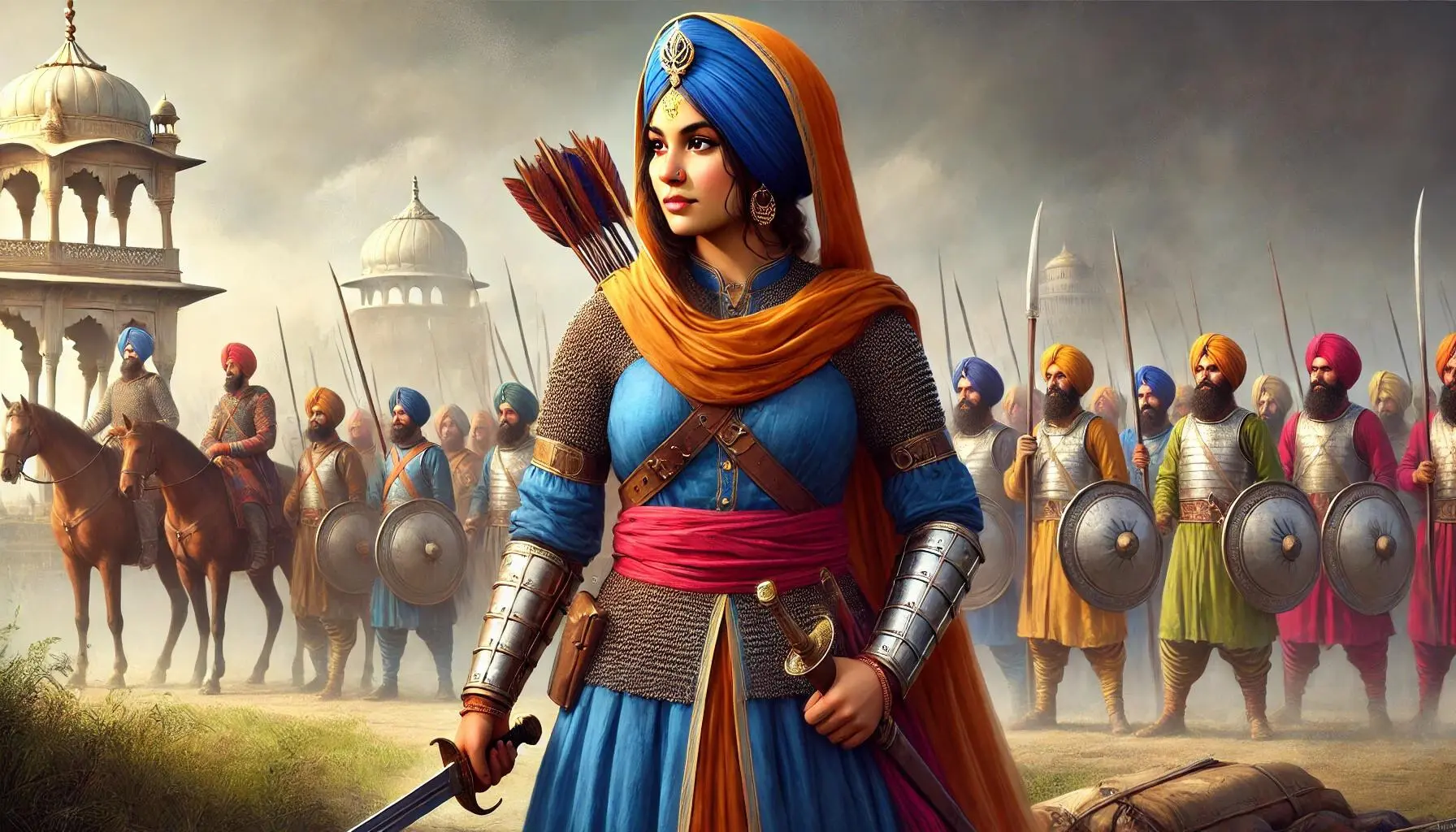
- Sikh warrior saint who led Sikh soldiers against the Mughals in 1705
Mai Bhago, also known as Mata Bhag Kaur, was a legendary Sikh warrior born in the late 17th century in Jhabal Kalan, Punjab.
She is renowned for rallying 40 Sikh deserters, known as the Chali Mukte, to return to battle. This is to defend Guru Gobind Singh during the Mughal siege of Anandpur Sahib in 1705.
She leads them in the Battle of Muktsar. They fight valiantly against overwhelming Mughal forces, ultimately sacrificing their lives.
Mai Bhago was the sole survivor and later serves as Guru Gobind Singh’s personal bodyguard. After the Guru’s death, she retires to Janwada in Karnataka. There she lives a life of meditation and teaching until her death. Her legacy endures as a symbol of bravery and devotion in Sikh history.
Jeanne Hachette (France)

- French heroine of 15th century who defended Beauvais against Burgundian troops in 1472
Jeanne Hachette, born Jeanne Laisné around 1454, is celebrated for her heroism during the Siege of Beauvais on June 27, 1472.
When Charles the Bold, Duke of Burgundy, attacks the town, Jeanne, then 18, leads the women of Beauvais in its defense. Armed with a hatchet, she famously attacks a Burgundian soldier planting a flag on the battlements. She throws him into the moat and rallies the defenders.
Her bravery is recognized by King Louis XI, who grants her the right to marry her chosen suitor, Colin Pilon, and exempts them from taxes.
Jeanne Hachette’s legacy is honoured annually in Beauvais with the “Fêtes Jeanne Hachette” festival.
Female Warriors in History: Unique Trailblazers
Female warriors in history can be unique trailblazers, such as pirates Ching Shih and Grace O’Malley. These women defy conventions, leading with courage and cunning on the high seas. Their extraordinary lives and daring exploits showcase the diverse roles women play in shaping history and challenging societal norms.
Ching Shih (China)
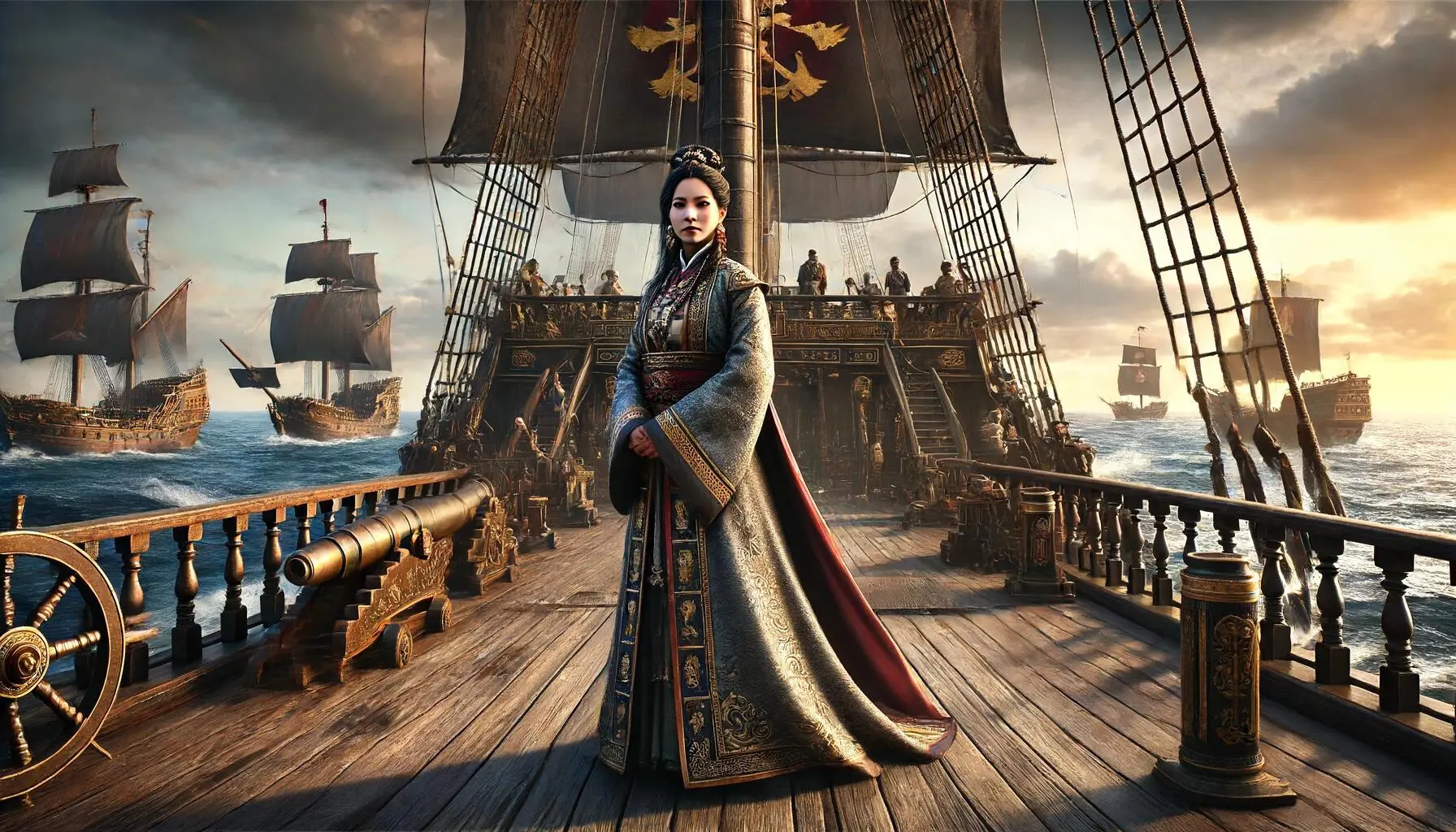
- Successful female pirate commanding the Red Flag Fleet, including hundreds of ships and thousands of pirates
Ching Shih, born in 1775 in Guangdong Province, China, was a former prostitute who became one of history’s most successful pirates.
She would marry pirate leader Zheng Yi in 1801. After his death in 1807, she took command of the Red Flag Fleet. The Fleet would grow to over 1,800 ships and 80,000 pirates.
Ching Shih implemented a strict code of conduct, ensuring discipline and loyalty among her crew. She successfully resists attacks from the Qing dynasty, British, and Portuguese navies.
In 1810, she negotiates a pardon with the Chinese government, allowing her to retire with her wealth. She died in 1844, leaving a legacy as an unparalleled pirate leader.
Learn more about: Ching Shih: Famous 19th Century Chinese Pirate
Grace O’Malley (Ireland)

- Irish pirate queen with a significant maritime legacy commanding ships and men in a male-dominated field
Grace O’Malley, also known as Gráinne Ní Mháille, was an influential Irish chieftain and pirate queen born around 1530 in County Mayo, Ireland.
She was the daughter of Eoghan Dubhdara Ó Máille, a powerful seafaring clan leader. From a young age, O’Malley demonstrates a keen interest in maritime activities. She eventually commands a fleet of ships and engages in piracy and trade along the Irish coast and beyond.
O’Malley would marry twice, first to Donal O’Flaherty and then to Richard Bourke. Through these marriages she consolidates her power and influence. She becomes a formidable political and military leader, defending her territories against English encroachment.
In 1593, she famously meets with Queen Elizabeth I, negotiating the release of her imprisoned family members and securing certain concessions. However many of her requests remain unmet.
Grace O’Malley died around 1603, leaving behind a legacy as a fearless leader and symbol of resistance against English rule. Her life continues to inspire Irish folklore, literature, and historical studies.
Female Warriors in History: Supporting Women
Female warriors in history often support efforts by empowering others. They establish training centers, promote rights, and advocate for social changes.
Their contributions, from creating female warrior centers to advancing women’s rights, significantly impact history. These efforts highlight their crucial roles beyond the battlefield, shaping the future for women.
Mochizuki Chiyome (Japan)

- Founded a school for female ninjas (kunoichi) for the Takeda clan
Mochizuki Chiyome, a 16th-century Japanese noblewoman. She is famous for allegedly establishing an all-female ninja (kunoichi) group in service of the Takeda clan.
After her husband, Moritoki Mochizuki, died in the Battle of Kawanakajima in 1561, she is approached by Takeda Shingen to recruit and train women as spies and assassins.
Chiyome creates a network under the guise of a sanctuary for war orphans, prostitutes, and displaced women. She trains them in espionage, disguise, and combat.
These kunoichi infiltrate enemy territories by posing as maids, entertainers, or shrine maidens, gathering intelligence and executing covert missions.
While her existence is debated among historians, with some suggest she might be a myth, Chiyome’s legend endures. It highlights her role in Japan’s Sengoku period as a symbol of female empowerment and cunning warfare.
Empress Dowager Cixi (China)
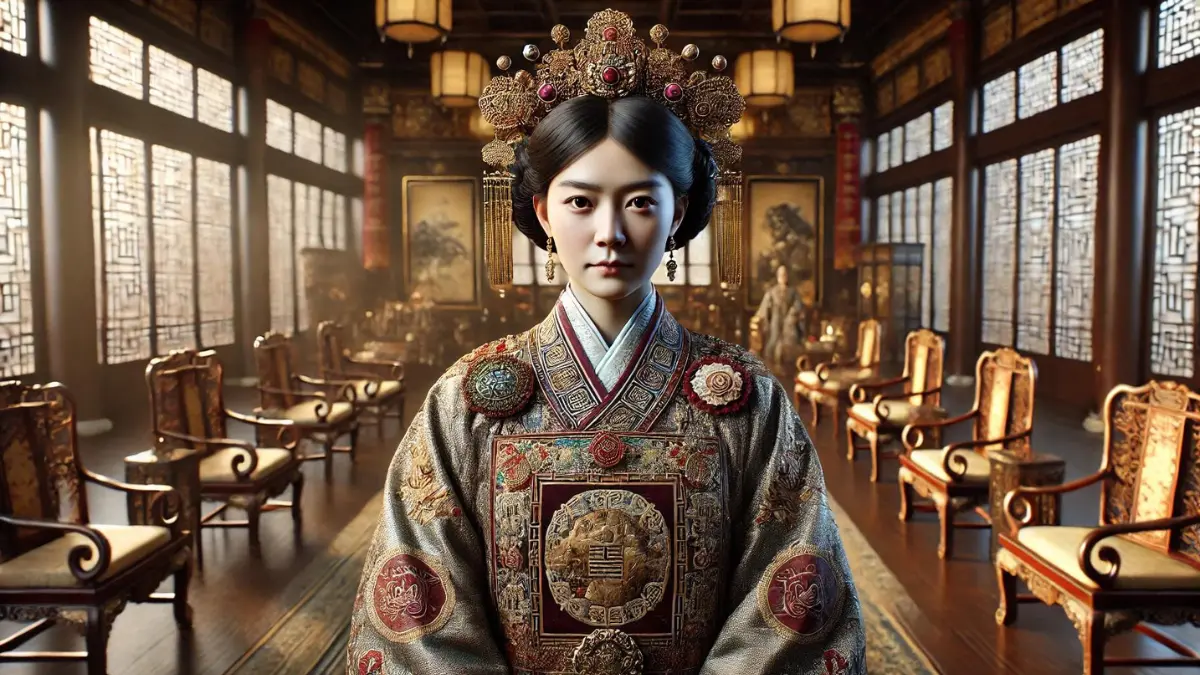
- Conservative Empress of China supporting military reforms and promoting women’s rights
The Empress Dowager Cixi, born on November 29, 1835, was a Manchu noblewoman who became one of the most powerful figures in late Qing dynasty China.
Initially a low-ranking concubine of Emperor Xianfeng, she rose to prominence after giving birth to his only son, the future Emperor Tongzhi.
Following Xianfeng’s death in 1861, Cixi orchestrates a coup against the regents and assumes power as co-regent with Empress Dowager Ci’an. She effectively rules China for nearly 50 years. She would oversee significant events like the Taiping Rebellion, the First Sino-Japanese War, and the Boxer Rebellion.
Cixi’s rule is marked by both modernization efforts and conservatism. She supports the Self-Strengthening Movement, which aimed to modernize China’s military and infrastructure. However she also resists radical reforms, notably reversing the Hundred Days’ Reform in 1898.
Despite controversies and accusations of despotism, Cixi implements significant changes. These changes include abolishing foot-binding and promoting women’s rights.
She died on November 15, 1908, a day after the death of the Guangxu Emperor, whom she allegedly poisoned to maintain control. Her legacy remains complex, blending modernization achievements with a reputation for ruthless power consolidation.
Théroigne de Méricourt (France)

- Activist and fighter during the French Revolution advocating for women’s rights
Théroigne de Méricourt, born Anne-Josèphe Terwagne on August 13, 1762, in Marcourt, Belgium, was a prominent figure in the French Revolution.
Initially a singer and courtesan, she became a revolutionary, advocating for women’s rights and political equality.
Known for her fiery speeches and participation in political clubs, she earned the nickname “Amazon of Liberty.” She was falsely accused of leading the Women’s March on Versailles and was imprisoned by the Austrians in 1791.
After her release, she would continue her activism but faces severe backlash from radical Jacobins. In 1794, she was declared insane and spent her remaining years in asylums, dying in 1817.
Her legacy endures as a symbol of early feminist struggle and revolutionary zeal.
Female Warriors in History Continue To Influence Generations
The stories of these remarkable female warriors in history highlight their bravery, leadership, and resilience. They stood against oppression, led their people with courage, and left an indelible mark on history.
From Joan of Arc’s pivotal role in the Hundred Years’ War to Boudica’s fierce rebellion against Roman rule, these women inspire us to fight for justice and stand up for what we believe in.
These women in ancient warfare continue to resonate, reminding us of the strength and determination inherent in all women. By remembering their contributions, we honour their impact and celebrate their enduring influence on our world.
Learn more about: