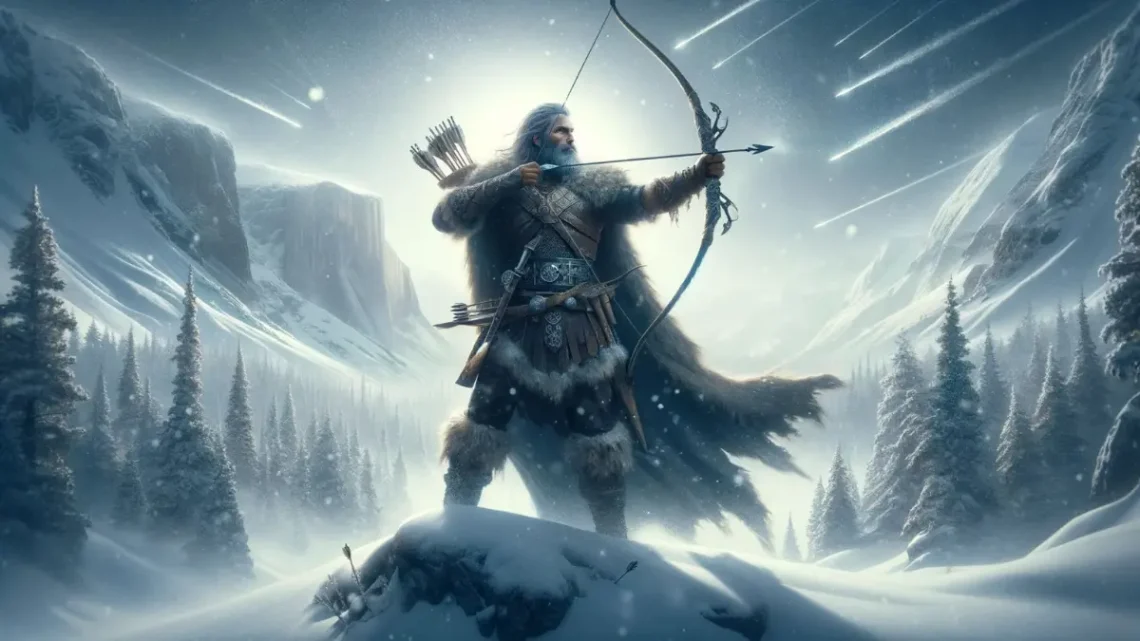
Ullr: The Norse God of Archery and Winter
![]() Introduction to Ullr: The Enigmatic Norse Deity
Introduction to Ullr: The Enigmatic Norse Deity
In the pantheon of Norse mythology, few figures are as mysterious as Ullr. Revered as a winter deity, he is also celebrated as the god of archery, hunting, and skiing.
His name, which may mean “glory” or “magnificent,” underscores his esteemed status among the Norse gods. While references in surviving texts are limited, they suggest a deity who was once held in high regard. Artifacts and place names indicate that his worship was widespread, particularly in Sweden.
Ullr’s characteristics and legends render him a fascinating, albeit elusive, component of Norse lore.
Unveiling Ullr: Historical Significance and Worship
Ullr, a somewhat enigmatic deity, held a notable place in Norse mythology.
Primarily worshipped during the Viking Age, Ullr’s domain included archery, hunting, and winter sports. Skiers, in particular, looked to him, deeming him a patron for their snowy escapades.
Evidence of Ullr’s worship is compelling. Place names throughout Scandinavia, often sites of ancient worship, bear his name, indicating a once widespread veneration.
Historical records are sparse. There are references in the Prose Edda and various sagas hint at a god held in high esteem. Moreover, artifacts like the Thorsberg chape—a piece embossed with Ullr’s imagery—provide tangible ties to his ancient worshipers.
Ullr’s festivals would predominantly occur at the onset of winter. This would be a time for asking for his favour in the challenging months ahead.
Bows and Skis: The Domains of the God Ullr
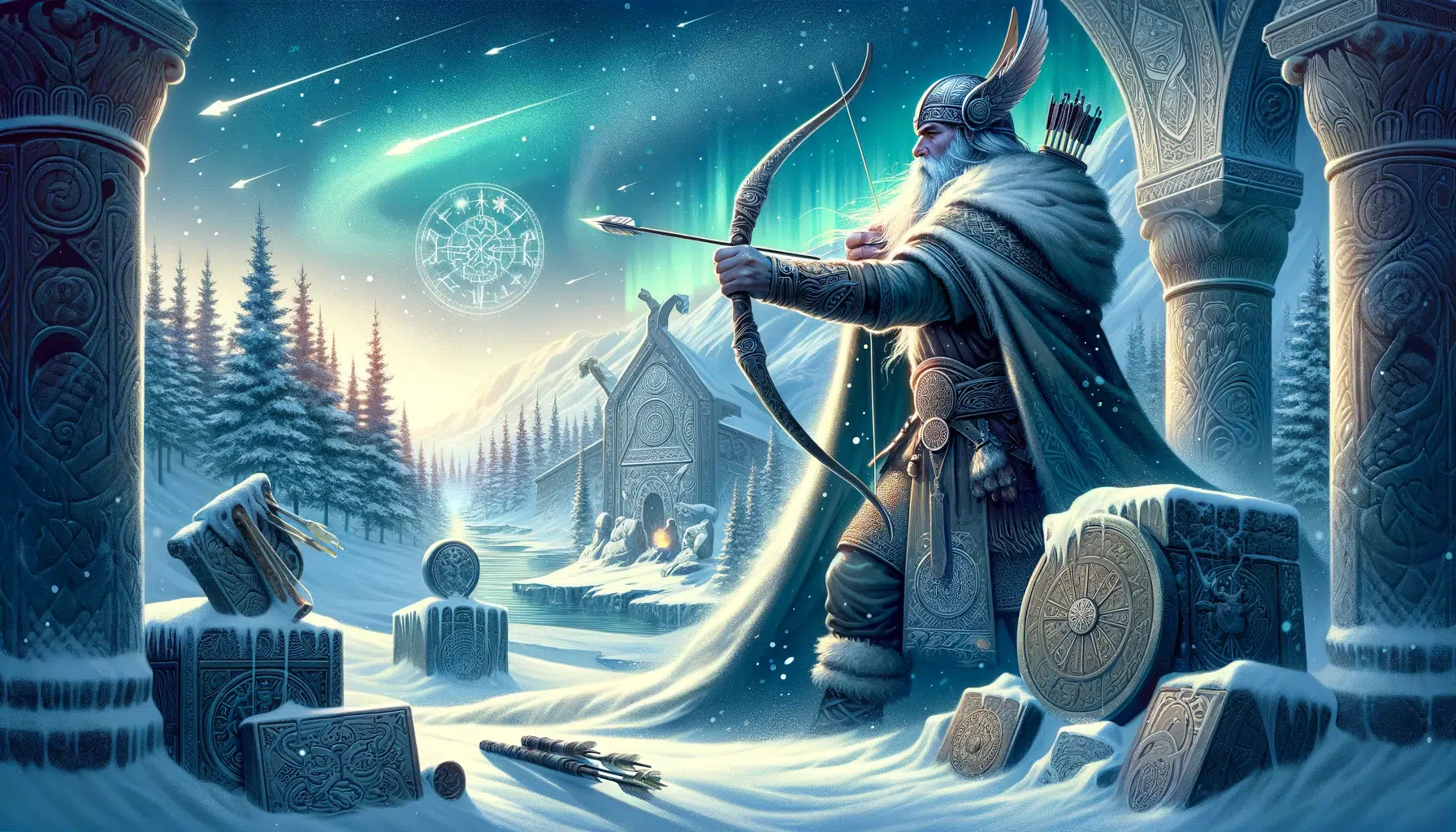
Ullr, often depicted with a bow and on skis, stands as the Norse god intimately associated with winter, hunting, and archery. Scandinavian lore holds Ullr as a skilled archer, with unmatched prowess in precision and stealth.
His name, whispering through snow-draped pines, conveys messages of snow-covered landscapes, the thrill of the hunt, and the silent glide of skis.
- Bows symbolize Ullr’s mastery over hunting, his ability to strike a target with flawless accuracy, reaffirming his dominion over the wild.
- Skis represent not only his supremacy in winter travel but also his role as a revered deity in winter sports, guiding and protecting those who traverse his frost-bound realms.
- Winter, Ullr’s elemental domain, showcases his influence over the coldest season, offering a unique connection to those seeking solace or adventure in the snow’s embrace.
In honouring Ullr, ancient practitioners may have sought his blessings for bountiful hunts or safe passage across icy landscapes, echoing the god’s sovereignty in these intertwined spheres of the ancient Norse world.
Learn more about: Famous Archers in History: Legends of the Bow and Arrow
Ullr in the Eddas: Literary References and Poetic Sagas
Ullr’s presence within the Norse Eddas is elusive yet noteworthy.
The Grímnismál, a poem in the Poetic Edda, hints at his importance through mentions of his dwelling, Ydalir.
The Prose Edda, written by Snorri Sturluson, provides more detail, asserting Ullr’s excellence in archery and skiing, and naming him a son of Sif, stepson to Thor.
Regarded as a skilled hunter and warrior, Ullr is often invoked for aid in duels. His associations with winter landscapes underscore his role as a guardian of hunters traversing snowy terrains.
- Grímnismál references Ullr’s home
- Prose Edda offers details on lineage and skills
- Invoked for assistance in duels
- Guardian of winter hunting expeditions
Separating Fact from Fiction: Common Myths Surrounding Ullr
Many myths exist about Ullr, often resulting from misinterpretation or poetic license.
Here are some common ones:
- Myth: Ullr is the son of Freya.
- Fact: Although some sources reference Ullr as Freya’s son, most Eddic poems suggest that Ullr is the son of the god Sif and stepson to the thunder god Thor.
- Myth: Ullr is only a minor deity without significant worship.
- Fact: Archaeological evidence reveals a considerable cult following, with many locations named in his honour, implying that Ullr held substantial importance.
- Myth: Ullr’s domain is singularly focused on winter.
- Fact: While strongly associated with winter, Ullr also represents archery and shield-bearing, indicating a broader scope of patronage.
The Symbolism of Ullr in Norse Mythology
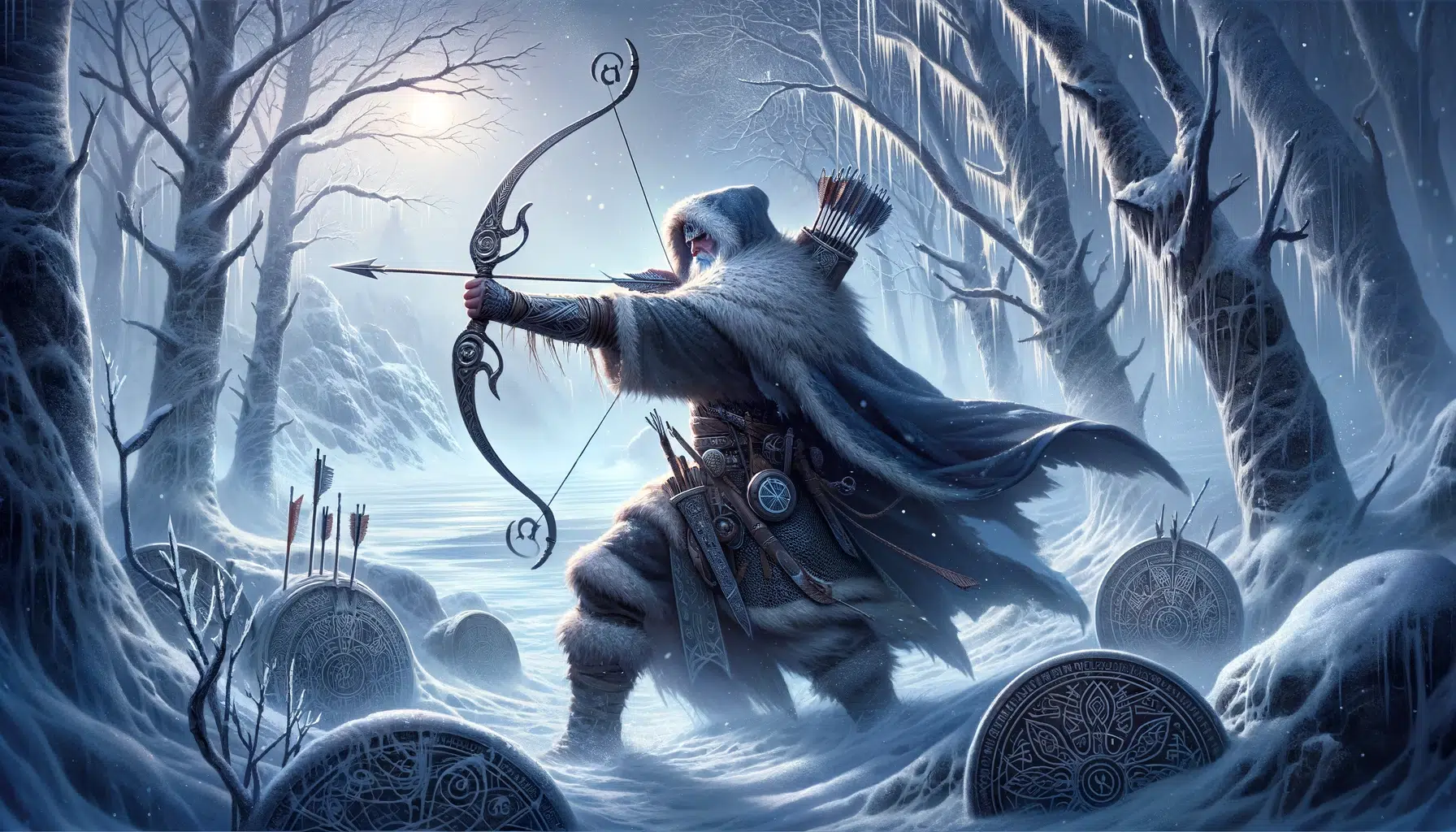
Ullr, the Norse god of archery and winter, is a figure cloaked in symbolic importance. His representation extends beyond literal cold, embodying the harsh, challenging aspects of survival.
Ullr’s prowess in archery and skiing symbolizes precision, focus, and the ability to navigate difficult terrain with grace and skill. As a god often invoked in duels, Ullr embodies the ideals of honorable combat and fair play.
His association with the shield further denotes defense and protection. Resonating through the sagas, Ullr’s symbolical presence weaves together themes of resilience, skillful mastery, and the maintaining of peace through strength.
Role in the Changing of Seasons
Ullr, the Norse deity associated with winter, archery, and skiing, holds a significant place in the mythology surrounding seasonal changes.
Regarded as a son of the grain goddess Sif and stepson of the thunder god Thor, Ullr thrives in the cold, his dominion flourishing when the landscape transforms under ice and snow.
In these frosty months, his prowess and connection to winter suggest an influence over the season’s onset and retreat.
During the winter solstice, when nights are longest, Ullr’s presence is most intensely felt, a period of his greatest power.
As the seasons turn, and daylight begins to expand, it is believed that Ullr gradually relinquishes his hold, paving the way for spring deities to awaken the earth with warmth and growth.
Thus, Ullr embodies the essential seasonal rhythm, his cycle of influence lending structure to the ancient Norse understanding of the year.
Ullr and Other Deities of Winter and Archery
Ullr, the lesser-known Norse deity, shares the domain of winter with more widely recognized figures across various mythologies.
In Greek myth, Artemis, goddess of the hunt, showcases remarkable archery skills akin to Ullr’s.
Similarly, the Roman counterpart Diana wields a bow and is associated with the moon, often ventured into wintry landscapes in her narratives.
The Slavic god Veles, connected to magic, is also linked with wintry forests and hunting, paralleling Ullr’s roles.
Comparatively, in the Finnish epic Kalevala, the hero Lemminkäinen exhibits prowess in both archery and survival through frigid conditions, reflecting the multifaceted aspects of Ullr’s character.
Each deity embodies the harshness and beauty of winter and the skill of the archer, resonating deeply with the human experience of the natural world.
Presence in Contemporary Culture
- In Scandinavia, Ullr’s name adorns winter sports clubs and equipment, honoring his legacy through activities that celebrate cold-weather prowess.
- Festivals like the Ullr Fest in Breckenridge, Colorado, see skiers and snowboarders donning Viking helmets and calling on the god’s spirit for snow-filled fun.
- “Ullr” is a popular name for businesses and products related to skiing and outdoor winter sports, symbolizing a connection with adventure in harsh conditions.
- Video games and comics occasionally feature characters inspired by Ullr, drawing on his mythos to convey winter themes and archery skills.
- A trend in neopaganism has seen a revival of Ullr worship, with believers looking to the deity for inspiration and protection in winter outdoor pursuits.
The Annual Ullr Fest
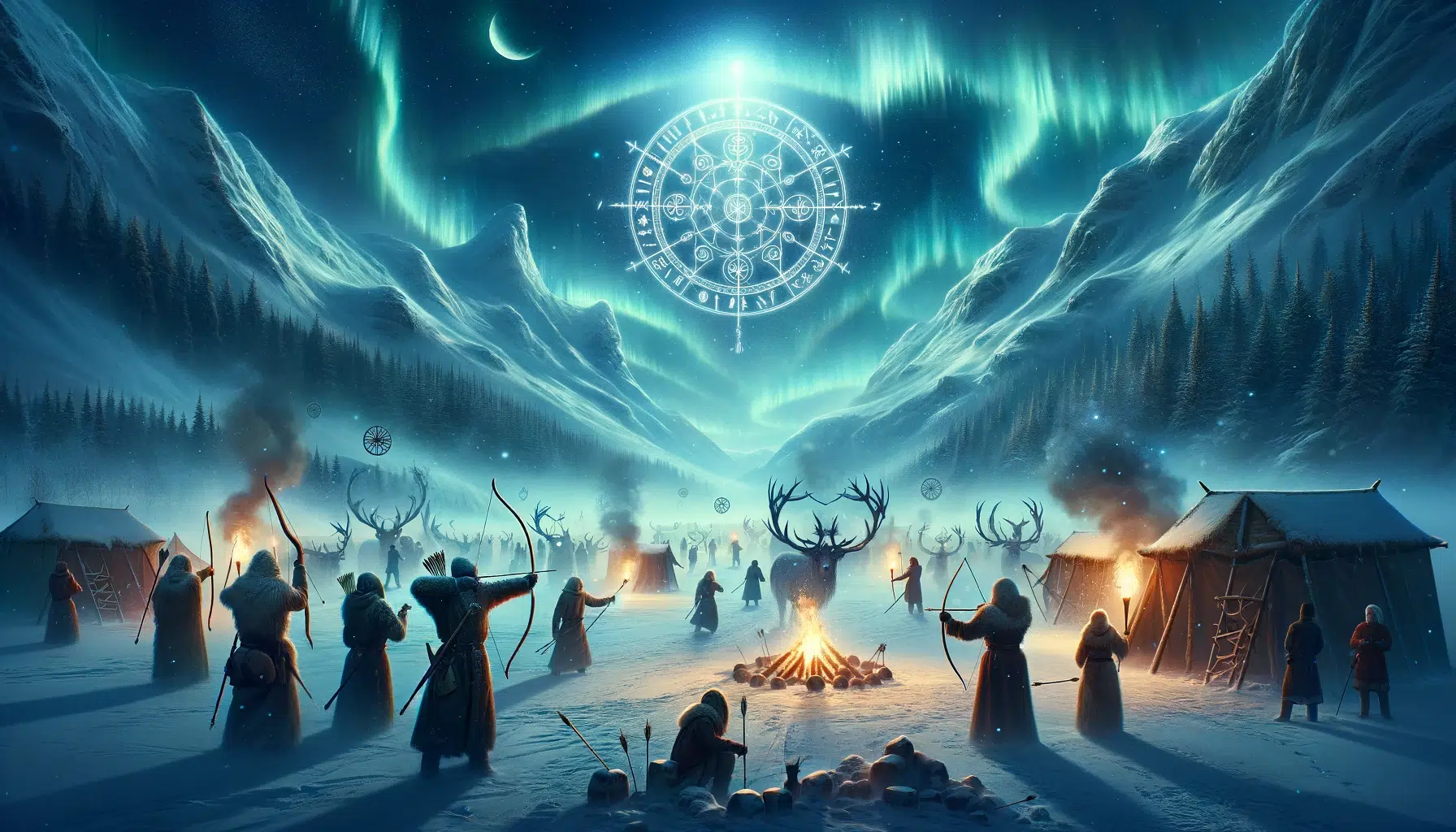
Each year, winter enthusiasts gather to honour Ullr, the Norse god of winter, through the Ullr Fest.
This festival, typically held in mountain communities such as Breckenridge, Colorado, is marked by various traditions and activities that reflect Ullr’s association with snow sports and archery.
Attendees often:
- Don festive Viking attire, complete with horned helmets and faux furs.
- Engage in a vibrant parade featuring skis, snowboards, and other winter gear.
- Compete in archery contests, celebrating Ullr’s status as a skilled bowman.
- Offer toasts with mead or other traditional Norse beverages.
- Take part in winter sports competitions, embracing the snowy conditions Ullr is believed to bring.
- Conclude with a communal bonfire, symbolizing an appeal to Ullr for abundant snow and successful hunts.
Ullr in Art and Iconography
Historical Norse art does not depicts Ullr often, overshadowing him with more prominent deities.
Yet, where he appears, he is portrayed as a skilled archer and skier.
Viking Age visuals are scarce, but medieval manuscripts sometimes illustrate him with winter motifs and hunting equipment.
Stone carvings, such as the Böksta Runestone, show a figure on skis, believed by some to represent Ullr.
The Gallehus Horns, gold relics from the 5th century, feature imagery possibly connected to him.
Through the ages, Ullr’s iconography embraced the attributes of an elite warrior – bow, skis, and sometimes, a shield – embodying the silent hunter and winter’s sovereign.
The Legacy of Ullr
Ullr’s legacy runs deep.
This Norse deity’s association with winter and archery represents a profound respect for the season’s challenges and gifts.
Ancient peoples often depended on hunting for survival, especially during the barren winters, and Ullr was a divine embodiment of these critical skills.
Winter was also a time of reflection and bonding within communities, with tales and legends shared by the firelight.
Ullr’s mythos captures this blend of endurance, skill, and the social fabric that sustained our ancestors through the harsh, cold months.