Types of Nymphs in Greek Mythology: Nature’s Divine Spirits
In the world of Greek mythology, beauty and nature walk hand in hand. Among the gods, heroes, and monsters, there exists another realm of beings—ethereal, graceful, and deeply tied to the earth’s features.
These are several types of nymphs: nature deities who dwell in forests, mountains, rivers, and seas.
Greek nymphs are more than just beautiful maidens in ancient stories. They are guardians of springs, caretakers of groves, and companions to gods and mortals alike. Each type of nymph reflects the landscape she inhabits, from freshwater springs to the depths of the ocean.
Their myths often tell tales of love, pursuit, transformation, and divine intervention.
Quick Facts of Nymphs in Greek Mythology
How are nymphs born and are they immortal?
Some nymphs are born from the union of gods, others from natural events. The Meliads were born from ash trees that grew where Uranus’s blood fell. Many are daughters of river gods, sea deities, or Titans.
Most nymphs are long-lived but not truly immortal.
They can live for thousands of years, but their lives are often tied to the life of their tree, spring, or other feature.
What do nymphs look like?
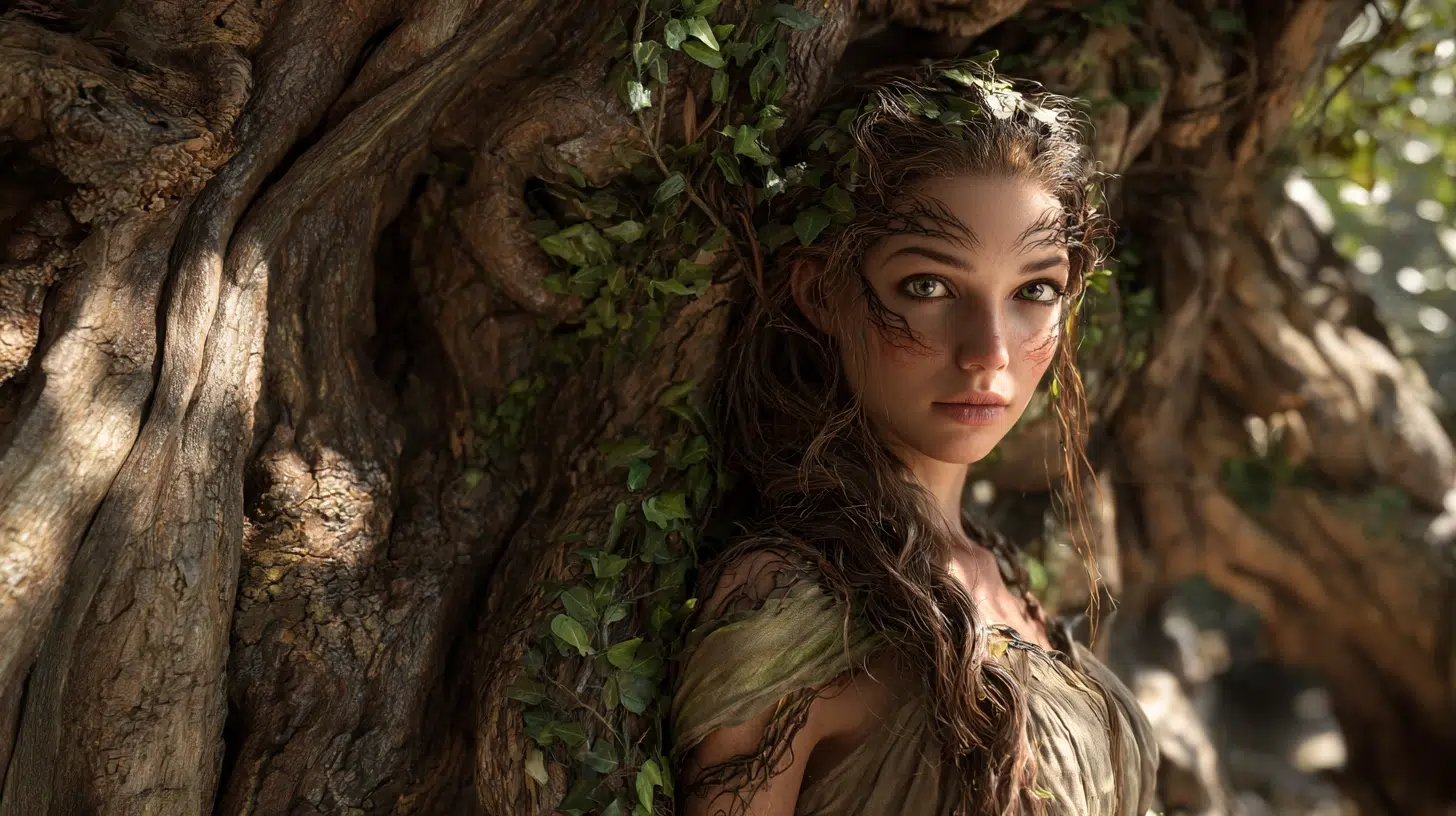
Nymphs are usually depicted as beautiful young women with features reflecting their domain. Water nymphs have flowing hair and sea colours, while forest nymphs with earthy tones and leaf-like adornments.
Most Greek nymphs do not have wings. However, some later artistic depictions, influenced by other traditions, gave certain flower or air spirits delicate, fairy-like wings.
In classical Greek mythology, nymphs are almost always female. Male nature spirits exist, but they are called by other names, such as satyrs, river gods, or sileni.
What do nymphs do?
Nymphs protect and nurture the natural feature they inhabit like forests, rivers, mountains, or meadows. They may guide travellers, bless crops, inspire art, or appear in myths involving gods and heroes.
Nymphs are not inherently evil. They can be kind and helpful, but also vengeful if disrespected or if their natural domain is harmed.
1. Types of Nymphs – Water Nymphs
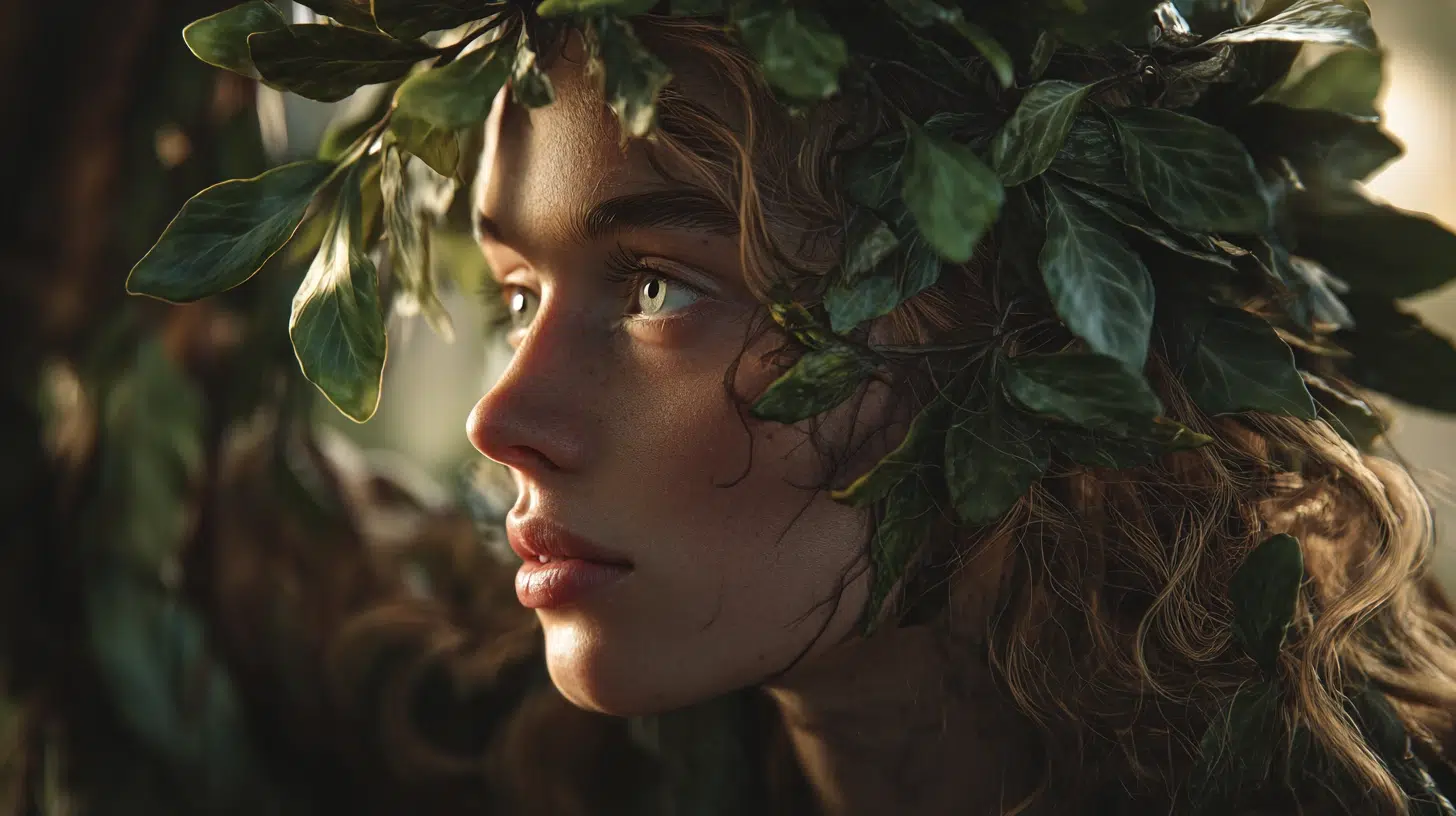
Water nymphs are among the most frequently mentioned in Greek myths. They embody the lifegiving and sometimes treacherous nature of water, whether in springs, rivers, or seas.
Naiads – Spirits of Freshwater
Naiads are nymphs who preside over freshwater sources—rivers, streams, lakes, and springs. They are often depicted as youthful and alluring, with an air of mystery.
They are deeply tied to their waters, which often have life-giving or healing properties. Known for their beauty, Naiads could be benevolent, offering aid to travellers, or dangerous, luring mortals into the depths.
They frequently appeared in the company of gods such as Artemis or Pan and were honoured in rural festivals. Naiads could inspire poets and artists, and many towns claimed a resident Naiad as their protector. Their personalities varied widely, from nurturing caretakers of the land to fierce defenders of their domains.
Myth of Arethusa and Alpheus
A pursuit across land and sea ends with transformation and escape.
Arethusa was a devoted companion of Artemis. A Naiad and follower of Artemis, she bathed in a secluded stream. The river god Alpheus fell in love with her and pursued her.
To escape, Artemis transformed Arethusa into a spring. Her waters flowed beneath the sea, emerging on the island of Ortygia, safe from her pursuer.
Famous Naiads
- Daphne – A Naiad (in some versions) pursued by Apollo. To escape, she prayed to her father, the river god Peneus, who transformed her into a laurel tree.
- Creusa – Daughter of the river god Cephissus, she became the wife of King Xuthus and mother of Ion, an ancestor of the Ionian Greeks.
- Aegina – Daughter of the river god Asopus, abducted by Zeus and taken to an island that now bears her name.
- Hylas’s Companions – In the myth of Hylas and the Argonauts, Naiads were so enchanted by his beauty that they pulled him into the water, causing his disappearance.
- Byblis – In some traditions, considered a Naiad who fell in love with her twin brother Caunus. When rejected, she wandered until she collapsed, transforming into a spring.
Nereids – Nymphs of the Sea

Nereids are the fifty daughters of Nereus, the “Old Man of the Sea,” and Doris. They inhabit the Mediterranean’s sparkling depths, often seen riding dolphins or sea creatures.
Known for their kindness to sailors, they could calm storms, guide ships, or bring warnings of danger. Nereids were frequent companions of sea gods like Poseidon and often appeared in myths involving great voyages, including those of Jason and the Argonauts.
While some Nereids preferred the safety of the deep, others interacted freely with mortals, forming friendships and even romances. Their beauty and grace made them enduring symbols of the ocean’s bounty.
Myth – Thetis and Achilles
Thetis, a sea goddess and Nereid, married the mortal Peleus.
Their son Achilles was destined for greatness but also early death. To protect him, Thetis dipped him in the River Styx, making him nearly invulnerable.
Except for his heel, which would become his fatal weakness.
Other Famous Nereids
- Amphitrite – Wife of Poseidon and queen of the sea. She initially fled his advances but was persuaded to marry him by the dolphin Delphinus, who was rewarded with a place in the stars as the constellation Delphinus.
- Galatea – Loved by the Cyclops Polyphemus in Sicilian myth. She rejected him for the mortal Acis, but Polyphemus killed Acis in a jealous rage. Galatea transformed her lover into a river god.
- Psamathe – Known for shape-shifting into a seal to avoid King Aeacus, with whom she bore the hero Phocus
- Doris – Sometimes counted among the Nereids, though more often described as their mother and the wife of Nereus
- Thalia – A joyful Nereid, often mentioned in Homeric epics as part of the sea deities aiding heroes like Achilles
- Eulimene – A lesser-known Nereid whose name means “good harbour,” symbolizing safety for sailors
Oceanids – Daughters of Oceanus and Tethys

The Oceanids are the three thousand daughters of the Titans Oceanus and Tethys.
Unlike the sea-bound Nereids, Oceanids preside over a vast range of domains—rivers, springs, clouds, rain, and even abstract concepts like prophecy or memory.
Many served as companions to goddesses or protectors of sacred places. They were immortal and benevolent, often connected to the nurturing aspects of water.
Some Oceanids, like Metis (wisdom) and Dione (divine authority), were woven into major myths involving the Olympian gods. Their influence extended to both the natural and divine worlds, linking earth, sky, and sea in the ancient Greek imagination.
In most sources, Leuce is usually described as Hades’ first love.
According to the myth, Leuce was an Oceanid, the daughter of Oceanus. Hades loved her deeply, and when she eventually died in the Underworld, he transformed her into a white poplar tree in the Elysian Fields as an eternal memorial to her beauty and their bond.
Other famous Oceanids
- Clytie – She was a water nymph or oceanid in some versions before transforming into a sunflower
- Metis – Goddess of wisdom and cunning counsel. First wife of Zeus, who swallowed her while she was pregnant with Athena to prevent a prophecy from coming true.
- Dione – Sometimes considered the mother of Aphrodite in certain traditions. Associated with oracular power at Dodona
- Clymene – Linked to the tragic myth of her son Phaethon, who lost control of the sun chariot
- Electra – Mother of Iris (the rainbow messenger) and the Harpies by the sea god Thaumas
- Eurynome – Associated with grace and beauty; sometimes described as a Titaness who nurtured Hephaestus
- Pleione – Mother of the Pleiades and Hyades, important star clusters in Greek astronomy and mythology
2. Types of Nymphs – Tree and Forest Nymphs
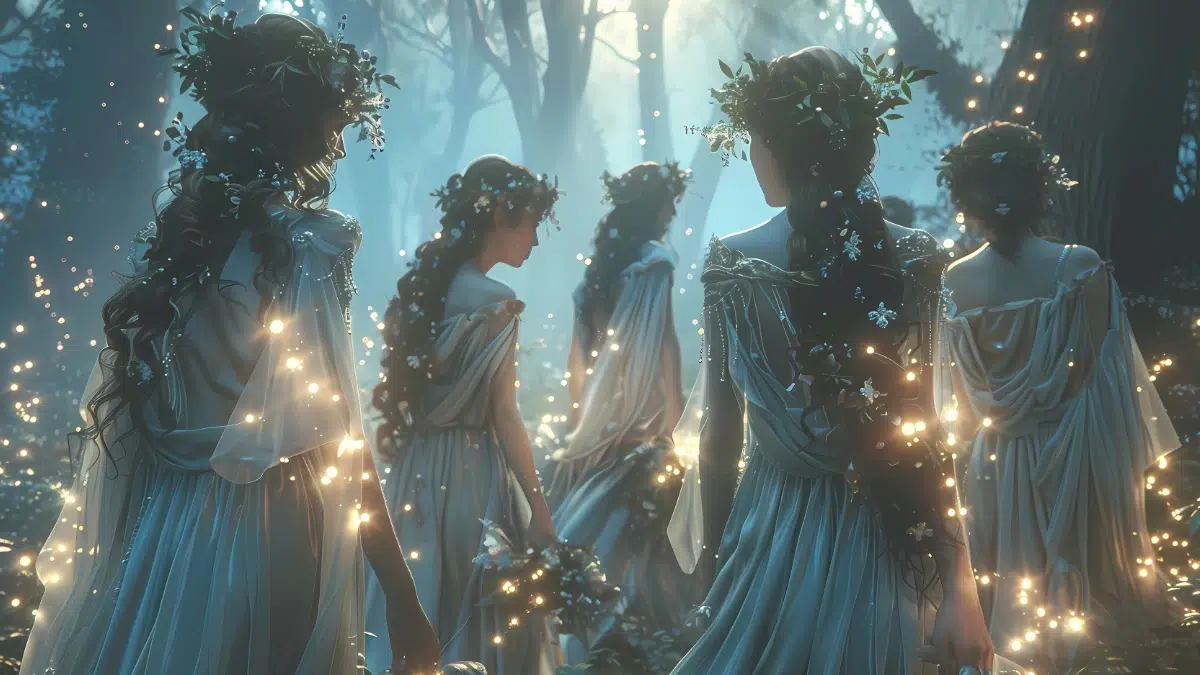
Tree and forest nymphs are the heart of Greece’s green landscapes. They live within their trees or watch over wooded realms, deeply connected to the life cycles of plants.
Dryads – Spirits of All Trees
Dryads are nature spirits tied to trees, particularly oaks, though the term is often used for all tree nymphs. They dwell in forests, groves, and sacred woodlands, guarding the life around them.
Shy and elusive, they tend to avoid mortals unless provoked or approached with respect.
In myth, Dryads could bless those who honoured the forest or punish those who harmed it. Their lifespans are closely connected to their trees—when the tree dies, the Dryad fades.
While some served as companions to gods like Artemis, others lived in peaceful solitude, blending into the dappled shade of their leafy homes.
Myth of Eurydice and Orpheus
Eurydice, sometimes described as a Dryad, married the musician Orpheus. After she died from a snake bite, Orpheus braved the Underworld to retrieve her.
Hades allowed her return on one condition: Orpheus could not look back at her. Near the surface, he turned—losing her forever.
Famous Dryads
- Eurydice – Wife of Orpheus, central to one of mythology’s most famous love stories
- Pitys – Pursued by Pan, transformed into a pine tree to escape
- Dryope – Turned into a tree after unknowingly harming a nymph disguised as a plant
- Phigalia’s Oak Dryads – Known for protecting sacred groves dedicated to Artemis
Hamadryads – Bound to a Single Tree
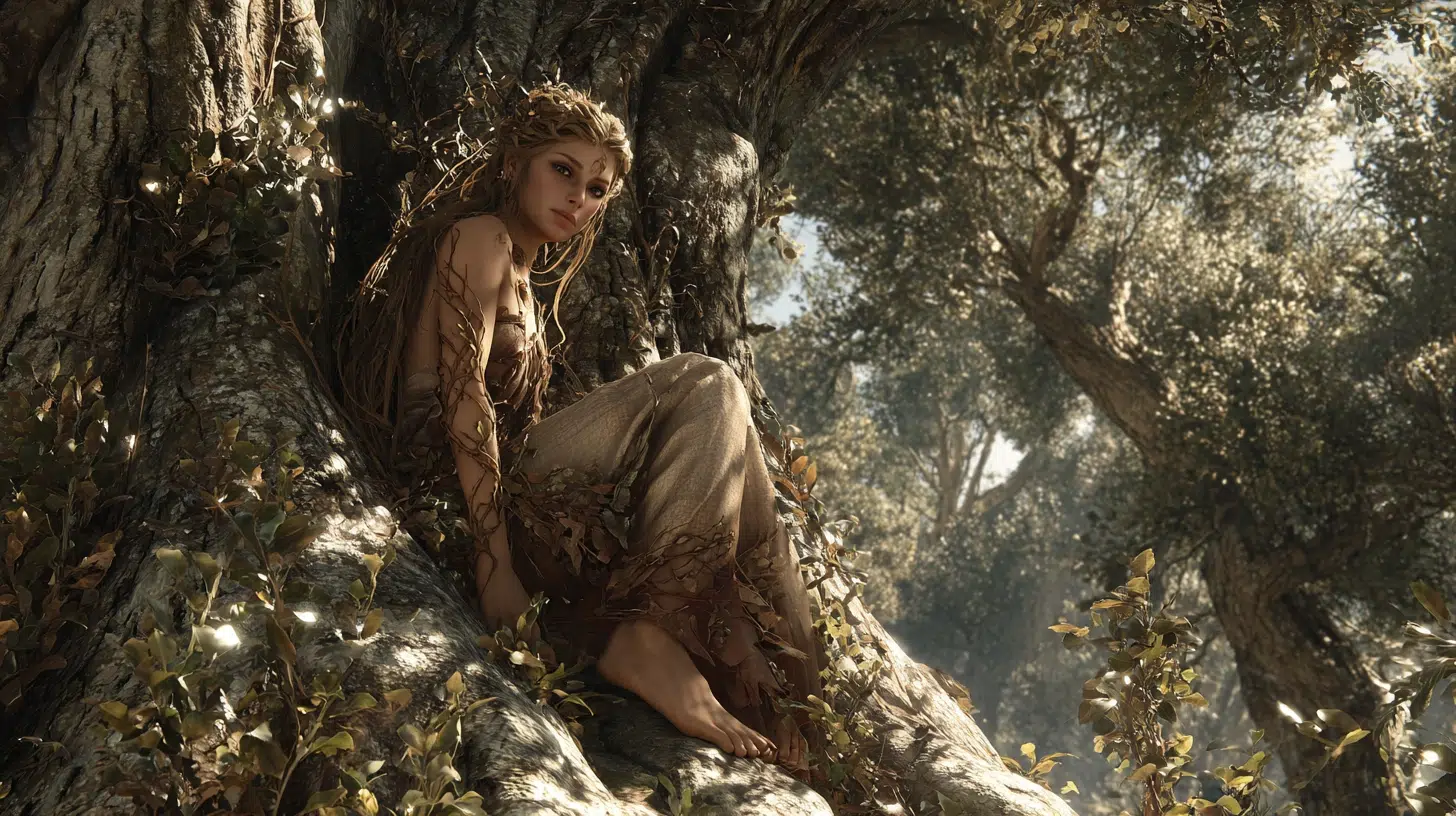
Hamadryads are unique among tree nymphs because their lives are bound to a specific tree.
If the tree is harmed, the Hamadryad suffers or dies. This deep connection made them powerful symbols of the bond between humans and nature. They were often protectors of sacred groves, appearing in myths to plead for the safety of their trees.
Revered by farmers and foresters, Hamadryads inspired rituals to ensure the health of the forests.
Unlike other nymphs, they rarely wandered far from their trees, embodying both the beauty and vulnerability of the natural world.
Myth – The Plea to Hermes
One Hamadryad begged Hermes to protect her oak when men came to cut it down.
Touched by her devotion, Hermes intervened, scaring away the loggers and saving both tree and nymph.
This story reflects the ancient respect for sacred trees and their guardians.
Famous Hamadryads
- Hamadryas – The namesake of the group, associated with oak trees
- Phigalian Hamadryad – Guardian of an oak in a grove sacred to Artemis
- Erato – In some accounts, a Hamadryad linked to mountain forests
- Unnamed Oak Hamadryad of Hermes’ Myth – Protector of the tree saved by the god’s intervention
Meliads – Nymphs of the Ash Trees
Meliads are nymphs born from the blood of Uranus after Cronus struck him down.
They sprang from the ash trees that grew where the blood touched the earth.
In Greek tradition, ash wood was often used for spear shafts, linking the Meliads to warriors and the Bronze Age of man.
Unlike other tree nymphs, they were less associated with peaceful groves and more with the raw, untamed energy of early human history. Fierce protectors of their forests, Meliads were also believed to watch over newborns placed under ash branches for protection against evil spirits.
Myth – Birth of the Meliads
When Cronus overthrew Uranus, the blood of the sky god fell to earth.
From it, the ash trees grew, and the Meliads were born. They became guardians of both the forests and the warriors who fashioned weapons from their trees.
Famous Meliads
- Spear-Mothers of the Bronze Age – Collective term for those linked to warrior culture
- Nymphs of Mt. Othrys – Associated with the strong ash groves of the Titans’ mountain
- Guardians of Infant Rituals – Meliads who protected newborns under ash branches in folk customs
3. Types of Nymphs – Mountain and Meadow Nymphs
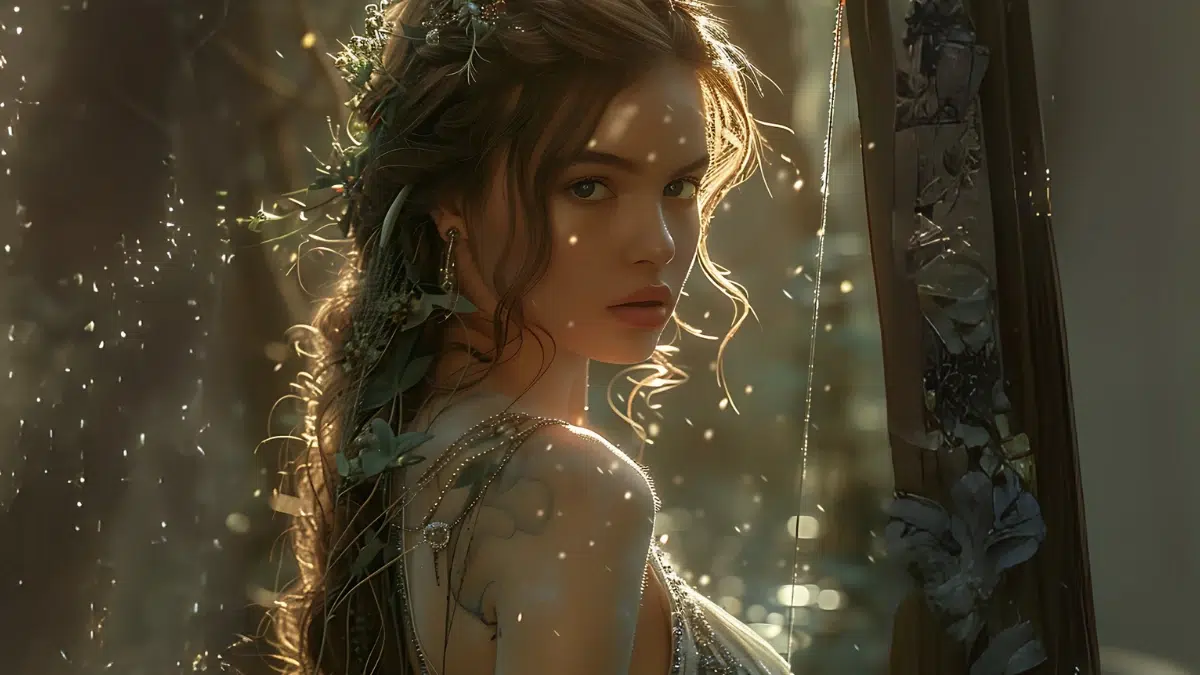
High peaks, grassy fields, and secluded valleys all have their guardians. Mountain and meadow nymphs represent the wilder, more untamed aspects of the land.
Oreads – Spirits of Mountains and Grottoes
Oreads are nymphs who dwell in mountains, rocky slopes, and caves. Their personalities often reflect the rugged and unpredictable landscapes they inhabit—wild, free, and sometimes fierce.
They are closely tied to hunting deities, especially Artemis, who is often accompanied by Oreads on her hunts. Each mountain range could have its own Oread, named for the peak she guarded.
Oreads were skilled in moving across treacherous terrain and were sometimes linked to sudden rockslides or mountain storms. In myths, they might guide travellers through dangerous passes or hide them in secluded grottoes away from pursuing enemies or unwanted attention.
Myth of Echo and Narcissus
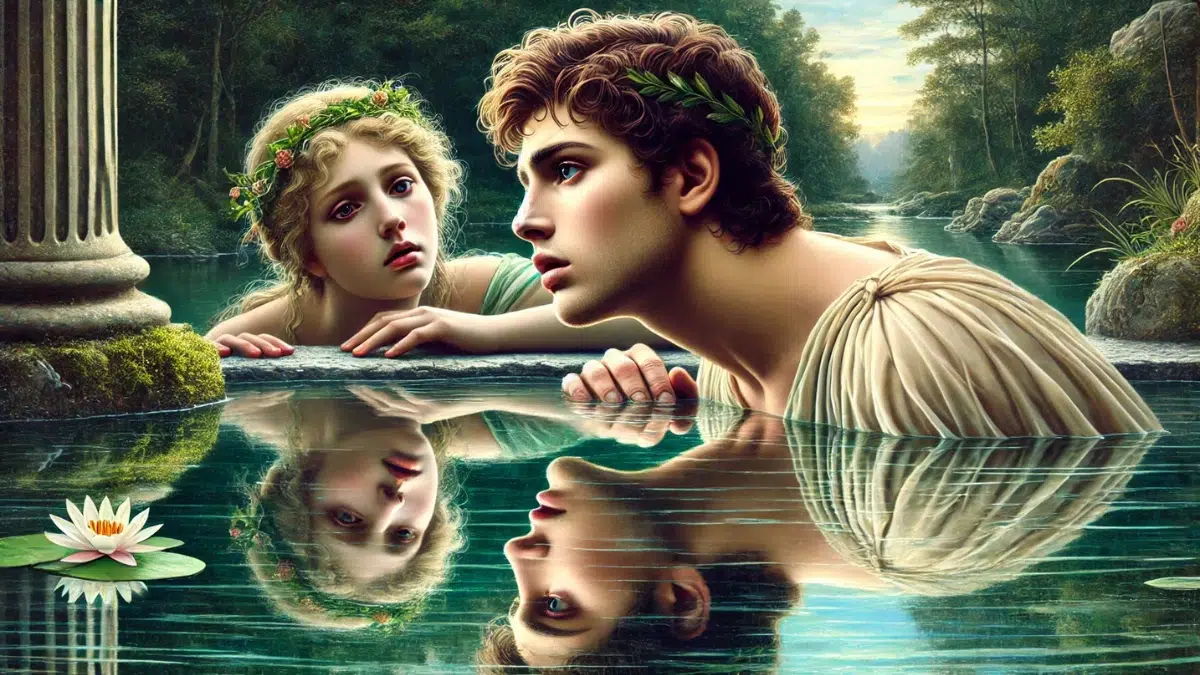
Echo, often described as an Oread, was cursed by Hera to only repeat the words of others.
She fell in love with Narcissus, but he rejected her. Heartbroken, she faded away until only her voice remained, echoing among the mountains she once roamed.
Famous Oreads
- Echo – Known for her unreturned love for Narcissus
- Callisto – A companion of Artemis, described as a mountain-dwelling huntress before Zeus seduced her and Hera transformed her into a bear
- Pitys – Pursued by Pan and transformed into a pine tree to escape him
- Kyrene – A huntress Oread loved by Apollo, taken to Libya to rule a city
- Ida and Adrasteia – Oreads of Mount Ida who cared for the infant Zeus
Leimakids – Nymphs of Meadows
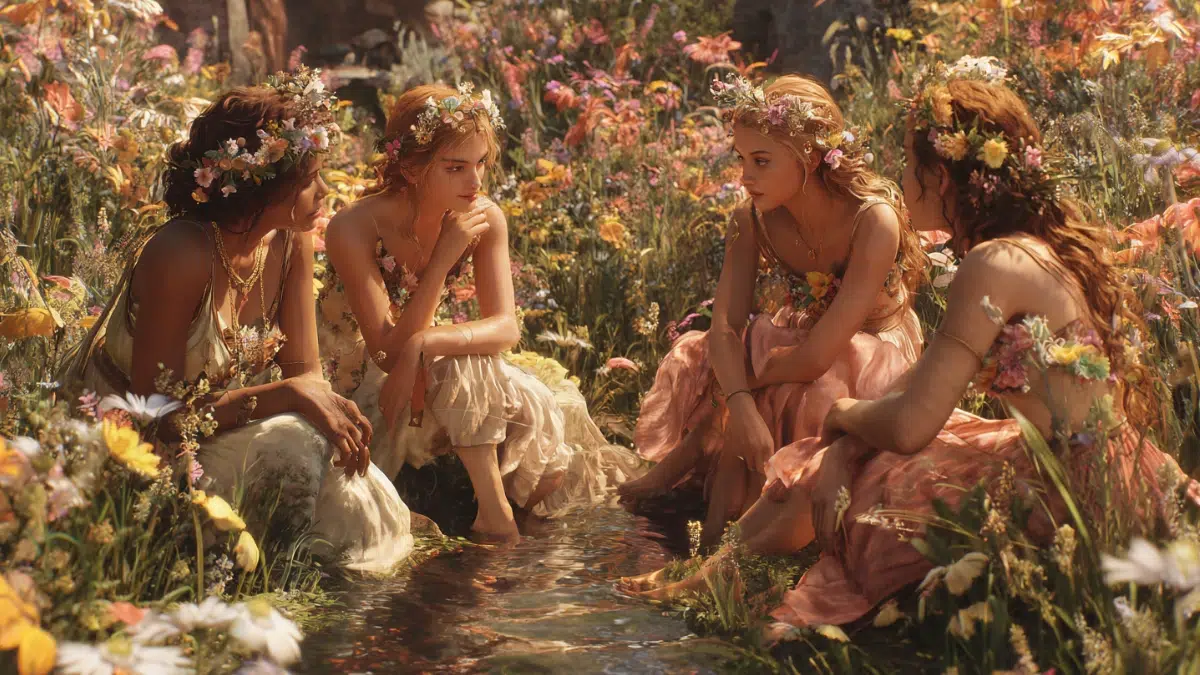
Leimakids are nymphs who inhabit open, flower-filled meadows.
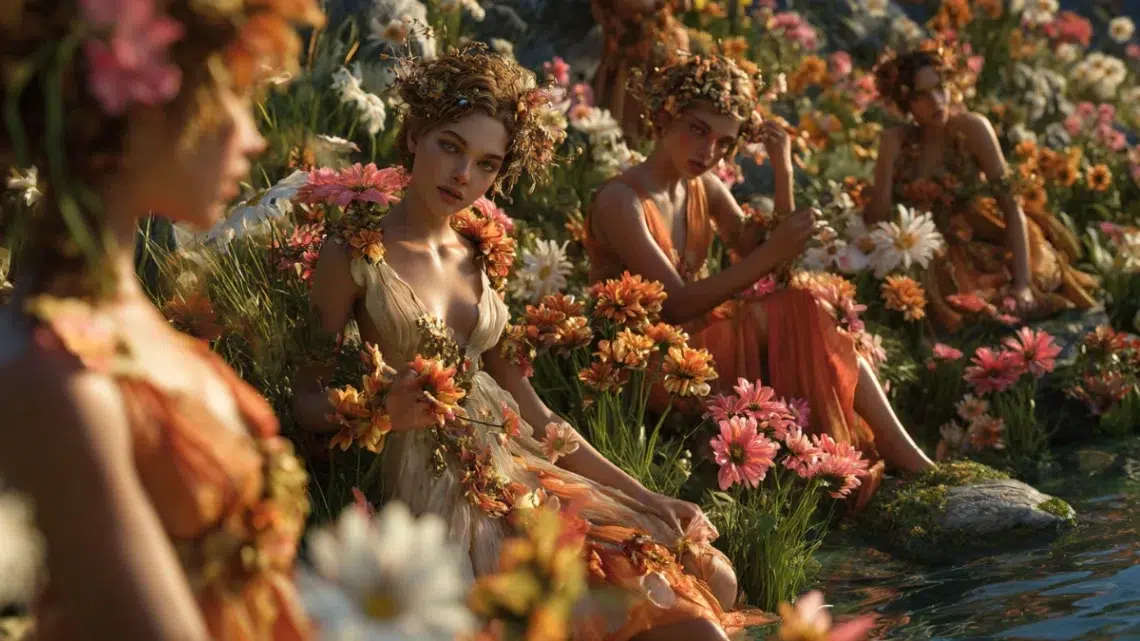
They embody the beauty and renewal of spring, often depicted dancing among wildflowers or resting beside clear streams. Gentle and welcoming, they were thought to bring fertility to the land and inspire poets and musicians.
Meadows under their care were said to stay lush and vibrant, untouched by drought. Leimakids often mingled with other nature spirits, such as Napeae or Alseids, and sometimes played in the retinues of gods like Hermes or Pan.
While less prominent in major myths, they are celebrated for representing joy, abundance, and the soft charm of pastoral life.
Myth – Festival of the Meadows
In rural traditions, meadows blessed by Leimakids were used for spring festivals honouring deities like Demeter and Persephone.
Villagers believed the nymphs joined in the dances, ensuring a fertile season ahead and protecting crops from misfortune throughout the year.
Famous Leimakids
- Anthousa – “Flower-blossom,” known for protecting rare blooms
- Euthenia – Associated with abundance and prosperity
- Chloris (in some traditions) – Linked to the fresh green of spring growth
Napaeae – Nymphs of Valleys and Dells
Napaeae are nymphs who dwell in sheltered valleys, glens, and shaded dells.
They prefer secluded places, often hidden from human eyes, where streams trickle and wildflowers grow. Gentle and reserved, they symbolize peace, refuge, and the untouched beauty of nature.
Napaeae are often associated with fertility and abundance, as valleys tend to be fertile lands rich with life. They occasionally appear in myths as attendants to greater deities or as protectors of hidden sanctuaries.
Their quiet, harmonious nature makes them less famous than other nymphs, but they remain an essential part of the Greek mythological landscape.
Myth – Sanctuary of the Valleys
In one tale, a group of Napaeae sheltered a wounded hunter from Artemis’s wrath.
Hiding him deep within their valley, they tended his injuries until he could safely leave, protecting him from divine punishment.
4. Types of Nymphs – Special or Myth-Specific Nymphs
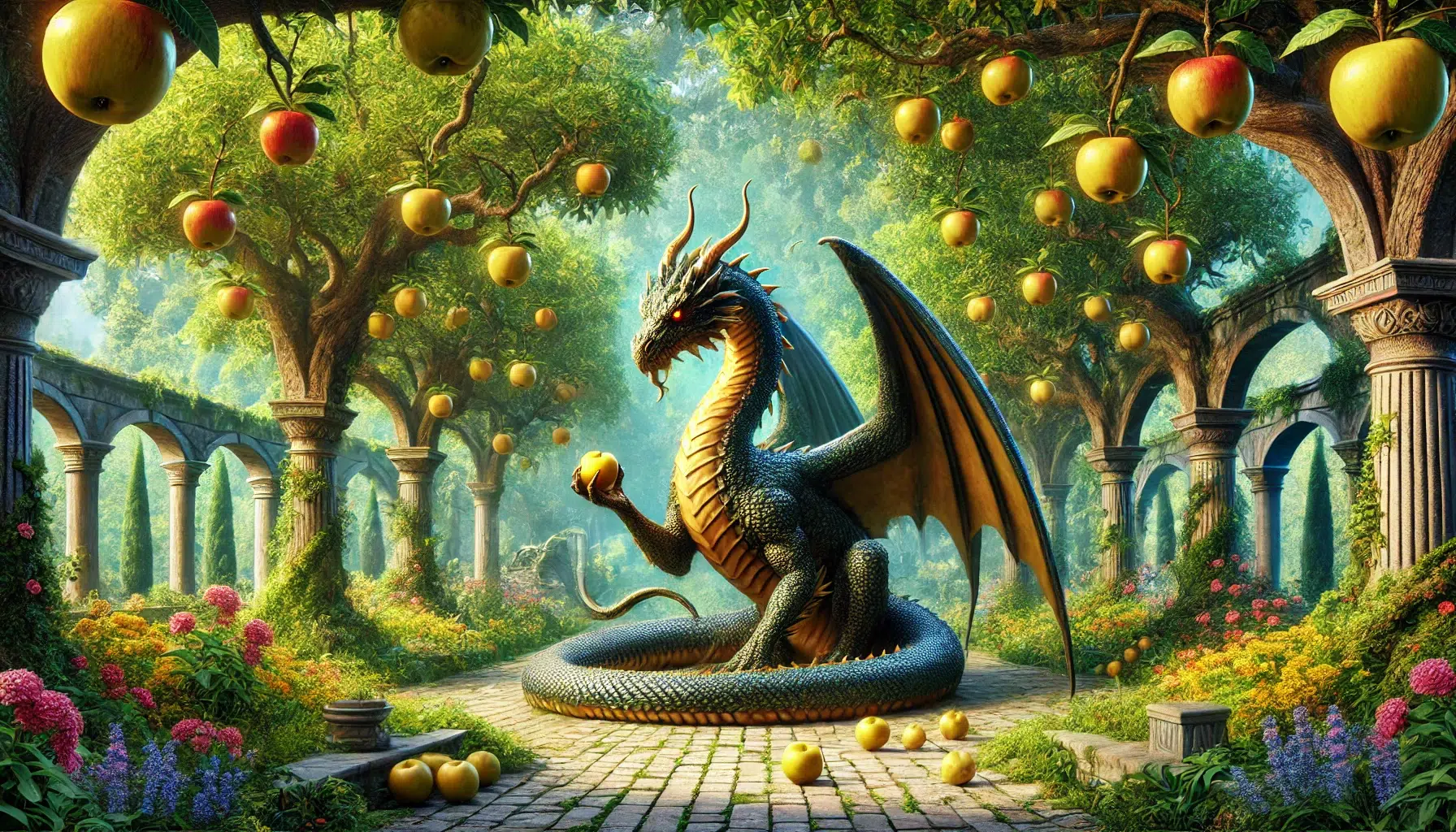
These type of nymphs have roles so unique that they stand apart from the rest, often guarding treasures or serving specific gods.
Hesperides – Guardians of the Golden Apples
The Hesperides are nymphs who tend a magical garden at the far western edge of the world.
Known as the “Daughters of the Evening” or “Nymphs of the West,” they care for golden apple trees that grant immortality.
The garden is a place of beauty and danger, as it is also guarded by the hundred-headed dragon Ladon. The Hesperides’ role is both protective and symbolic—they represent the allure of distant treasures and the challenges required to attain them.
They appear in several myths, often tempting heroes with the promise of rare rewards hidden in their secluded paradise.
Myth – Heracles’ Eleventh Labour
For his eleventh labour, Heracles was tasked with retrieving the golden apples of the Hesperides.
In one version, he sought advice from Nereus, captured the giant Atlas, and tricked him into bringing the apples while Heracles held up the sky in his place.
Famous Hesperides
- Aegle – Associated with radiant light
- Erytheia – Linked to the colour red and the western sunset
- Hesperia – Namesake of the group, connected to the evening star
- Arethusa (in some traditions) – Sometimes counted among the Hesperides in later myths
Lampads – Torchbearers of Hecate
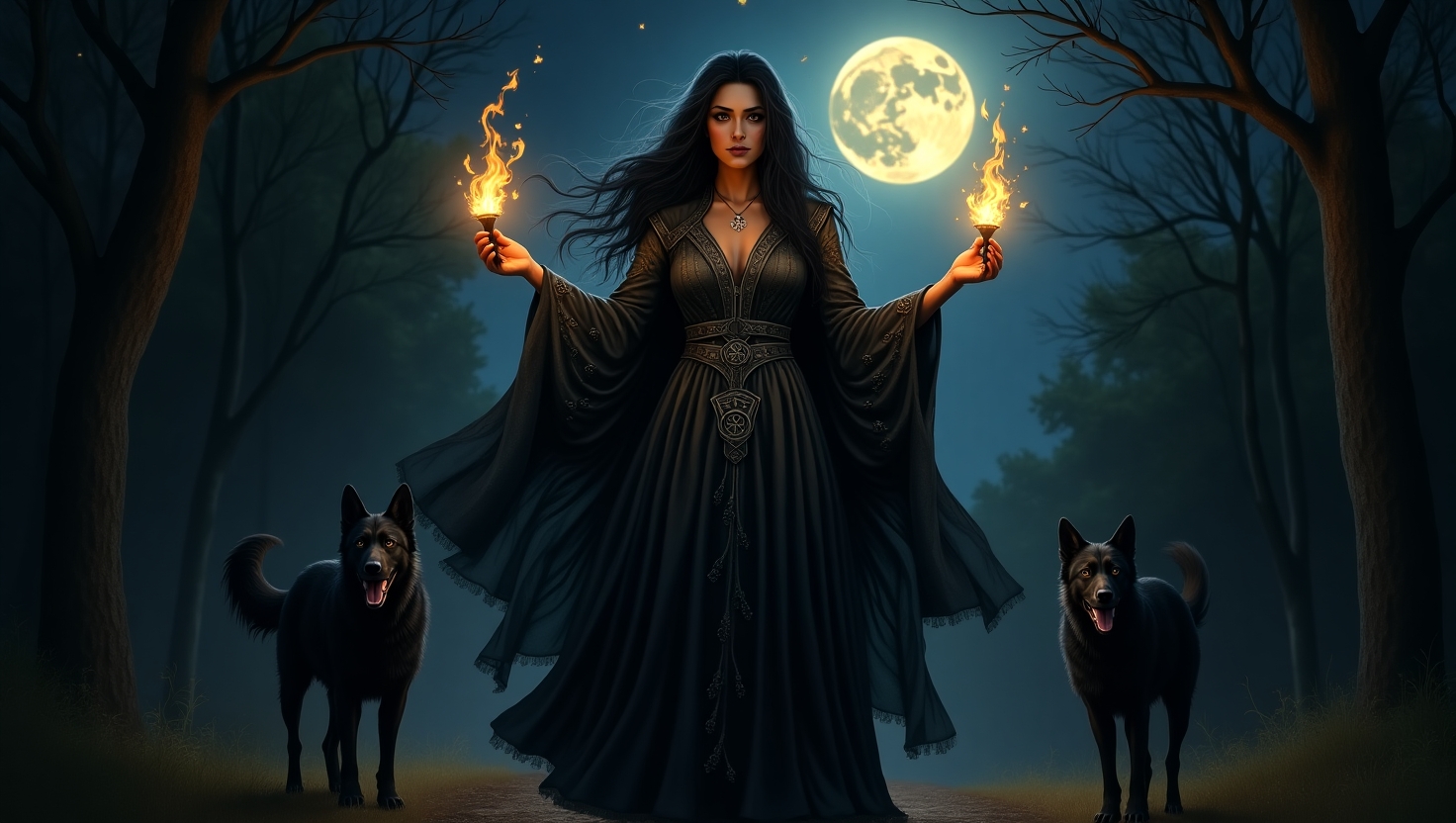
Lampads are underworld nymphs gifted to the goddess Hecate by Zeus. They carry torches, lighting her way as she travels between the mortal world and the realm of the dead. Their flickering lights were believed to both guide and bewilder travellers at night.
In some accounts, Lampads could enchant mortals with madness or fear, reflecting the eerie, unpredictable nature of the underworld. They are closely tied to moonlit rituals, crossroads, and magical ceremonies.
Though not as widely known as other nymphs, Lampads are vital to Hecate’s image as a liminal goddess who moves freely between worlds.
Myth – Guiding the Lost
In one tale, Lampads guided a hero through the underworld’s shadows to reach Hecate’s temple.
Their torches revealed the path yet also hid dangers in the dark, a reminder that help from the dead’s realm always comes with a cost.
Famous Lampads
- Nyxara – Associated with the darkest nights
- Aulopia – Said to lure travellers with her light
- Phosphoria – Named for her bright, guiding torch
Alseids – Spirits of Groves
Alseids are nymphs who inhabit and protect sacred groves. These groves were often dedicated to gods and goddesses, serving as places of worship, prophecy, and ritual.
Alseids ensure the peace and sanctity of these spaces, keeping them lush and vibrant. They were believed to bless those who respected the grove and punish those who desecrated it.
Alseids often appeared during seasonal festivals or when called upon in prayer. While not as prominent in famous myths, they held a vital place in Greek religious life, bridging the mortal and divine through the sacredness of the natural world.
Myth – The Forbidden Grove
In one story, an arrogant warrior cut down a tree in an Alseid’s grove.
The nymph cursed him, and his weapons failed in battle. This tale served as a warning to honour sacred places and their guardians.
Famous Alseids
- Kalliste – Known for her beautiful grove dedicated to Apollo
- Theris – Protector of a healing spring within her grove
- Eukleia – Linked to groves where oaths were sworn
Conclusion
From rushing rivers to silent forests, there are types of nymphs in Greek mythology that embody the beauty and mystery of the natural world. Each types of nymph reflects the landscape she inhabits, carrying its power, secrets, and dangers. Their myths remind us that nature is both a place of refuge and a realm of divine influence.
By exploring these many kinds of nymphs, we see how deeply the ancient Greeks connected their environment to the divine. Whether aiding heroes, guarding treasures, or transforming in the face of danger, nymphs remain some of mythology’s most captivating figures.