Tomyris: Queen Who Defeated Cyrus the Great
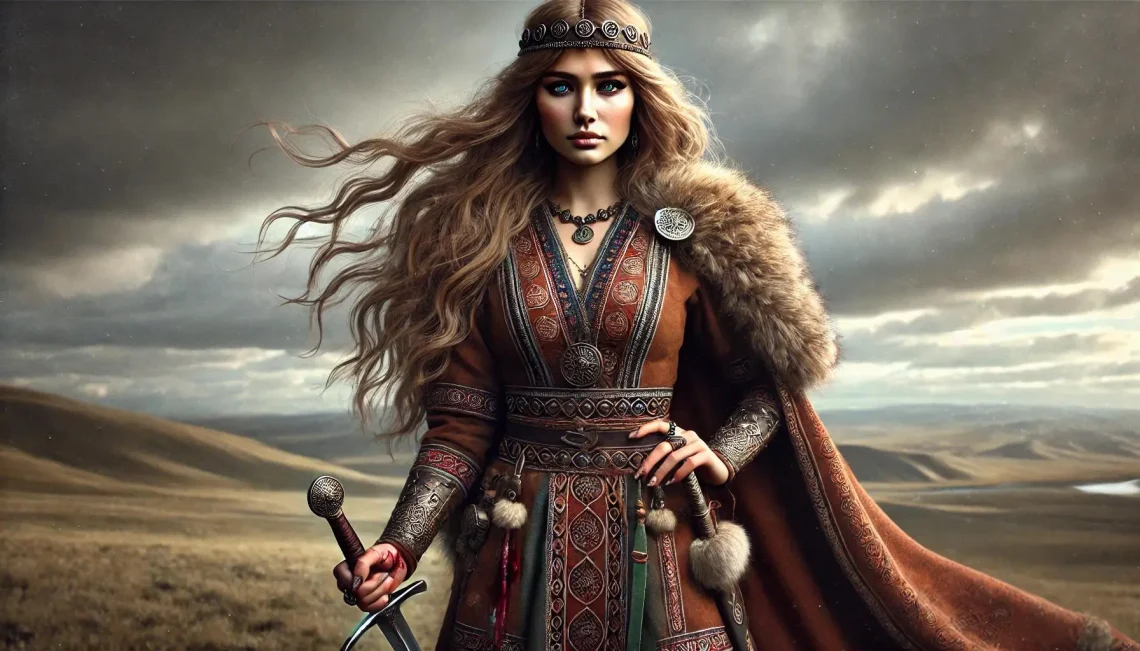
Tomyris, queen of the Massagetae, is a legendary figure celebrated for her fierce leadership and strategic prowess.
Leading her nomadic tribal people in Central Asia around 530 BC, she famously defeats Cyrus the Great of Persia. This avenging her son’s death with a dramatic act of retribution.
Her story, told by historians like Herodotus, highlights themes of justice and vengeance. Tomyris’s legacy endures in modern culture, inspiring films, video games, and monuments.
Her tale of resilience and strength continues to captivate, making her a timeless symbol of courage and determination.
Early Life and Background of Tomyris
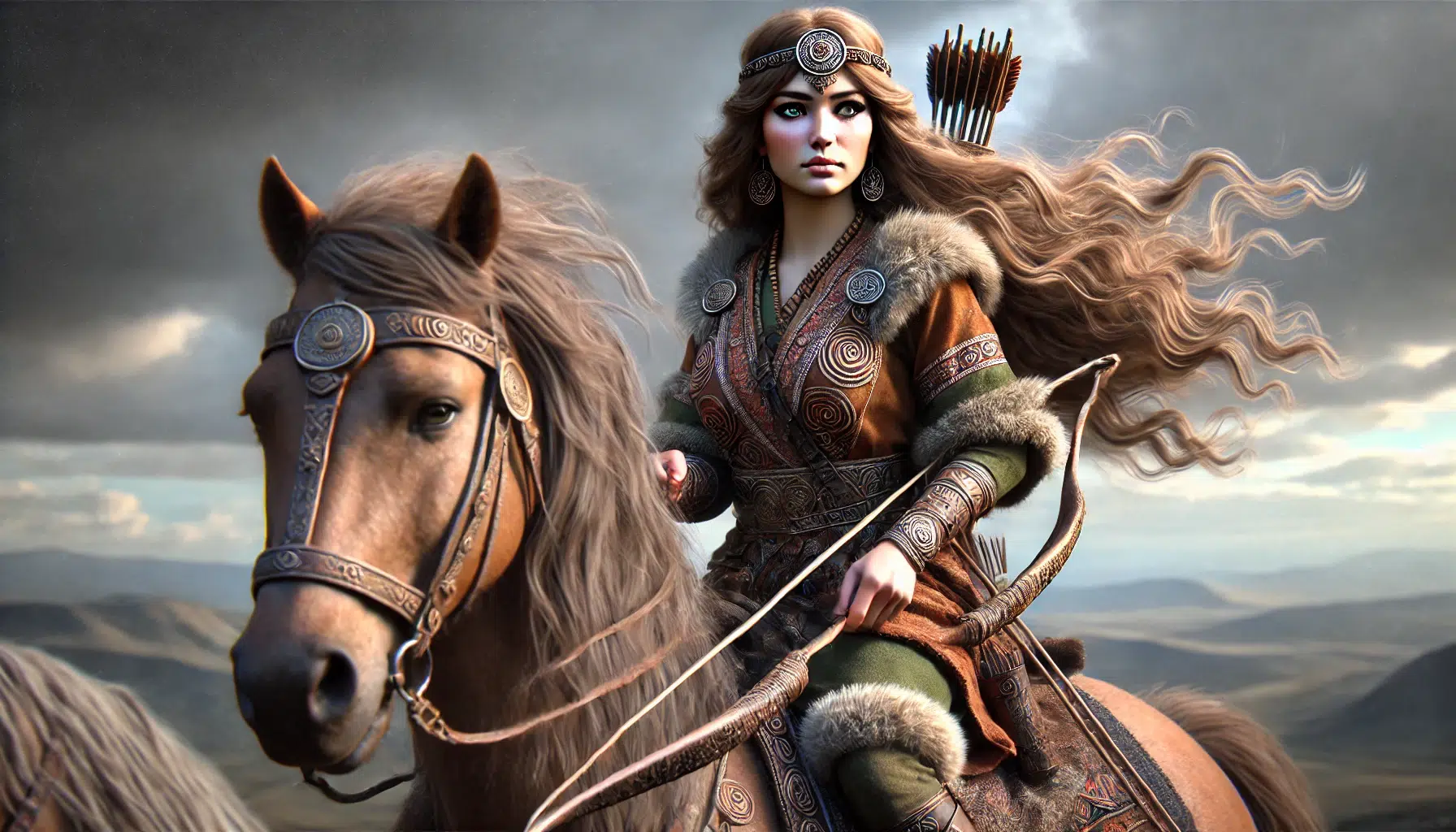
The early life of Tomyris is shrouded in mystery, but various historical and legendary accounts provide some insights into her origins and rise to power.
She was born into the Massagetae tribal people, a group known for their fierce warrior culture and nomadic lifestyle. The Massagetae inhabited the region around the Caspian Sea, an area that is part of modern-day Kazakhstan, Uzbekistan, and Turkmenistan.
They are known for their skills in horseback riding and archery, which were essential for their survival and warfare.
Tomyris became queen after the death of her husband, whose name is not recorded in historical texts. As a widow, she assumed leadership of the Massagetae, a role that required both military acumen and political savvy.
Her ascent to power was significant, as it demonstrates the respect and authority she commanded within her people. Her leadership is characterized by a strong sense of justice and a fierce determination to protect them.
The Massagetae People
The Massagetae were a formidable force in the ancient world. They were part of the Scythian cultural sphere and shared many customs and traditions with other nomadic tribal people of the Central Asian steppes.
The Massagetae were known for their egalitarian society, where both men and women could hold positions of power and influence. This cultural backdrop likely played a role in Tomyris’s acceptance and effectiveness as a leader.
Their way of life was centred around mobility and warfare. They live in yurts, move with their herds, and rely on their skills in combat to defend their territory and resources. The Massagetae are also known for their unique burial customs and religious practices, which included elaborate rituals to honour their dead.
The Conflict with Cyrus the Great
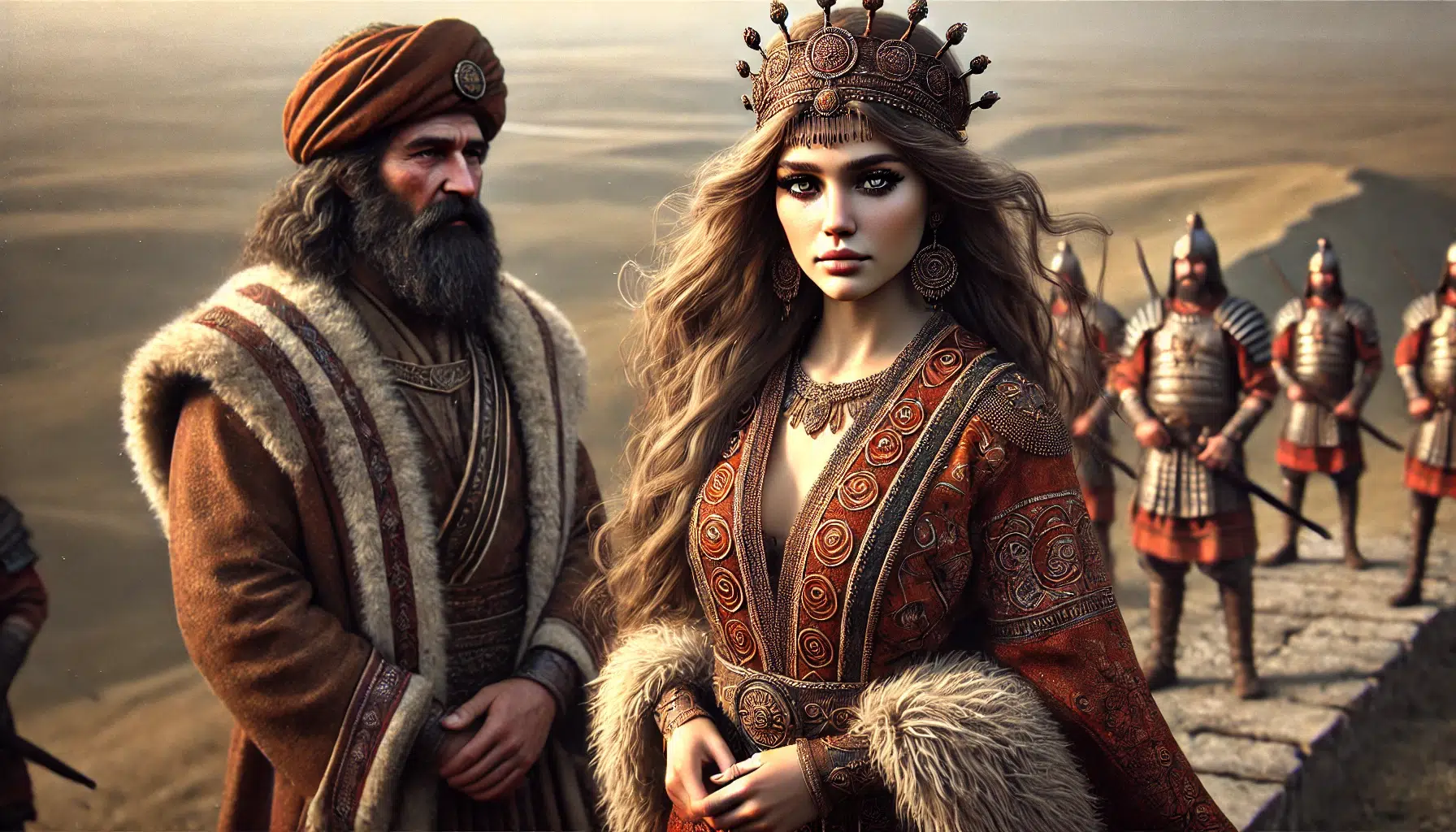
The conflict between Tomyris and Cyrus the Great, founder of the Achaemenid Persian Empire, is one of the most dramatic and poignant episodes in ancient history.
This confrontation, taking place around 530 BC, ends in the death of Cyrus and cements Tomyris’s legacy as a formidable warrior queen.
Initial Meeting and Battle
The conflict began with Cyrus’s expansionist ambitions. After successfully conquering vast territories across West and Central Asia, Cyrus set his sights on the lands of the Massagetae, known for their fierce independence and warrior culture.
Cyrus proposed marriage to Tomyris, likely as a strategic move to gain control over her territory. Tomyris, perceiving his true intentions, rejected the proposal outright.
Following the rejection, Cyrus decided to invade the Massagetae.
The Battle Strategies
The initial phase of the conflict involved strategic maneuvers and deceptive tactics.
Cyrus initially attempts to cross the Araxes River, which is the boundary between their territories. Tomyris warns him to desist, but Cyrus ignores her advice and presses on with his invasion plans.
In response, Tomyris offers to withdraw her forces three days’ march into her territory. This to allow Cyrus to cross the river and fight on her terms, or to let him fight on his side of the river.
Cyrus chose the latter option, setting the stage for the ensuing conflict.
Cyrus employs a cunning strategy to weaken the Massagetae.
He crossed the Araxes River by constructing a bridge of boats and fortified his position with towers on the pontoons. Cyrus sets up camp on the Massagetae’s side, pretending to retreat.
He leaves behind a lavish banquet with large quantities of wine. This is a beverage unfamiliar to the Massagetae, who primarily drank fermented mare’s milk.
When the Massagetae discover the abandoned camp, they celebrate their apparent victory by indulging in the wine. This leads to their vulnerability. Intoxicated and unprepared, they are ambushed by Cyrus’s forces.
Many were captured many, including Tomyris’s son, Spargapises. Shamed by his capture, Spargapises pleads with Cyrus for permission to end his own life, which Cyrus grants.
Spargapises then takes his own life, deepening Tomyris’s resolve for revenge.
The Fierce Battle
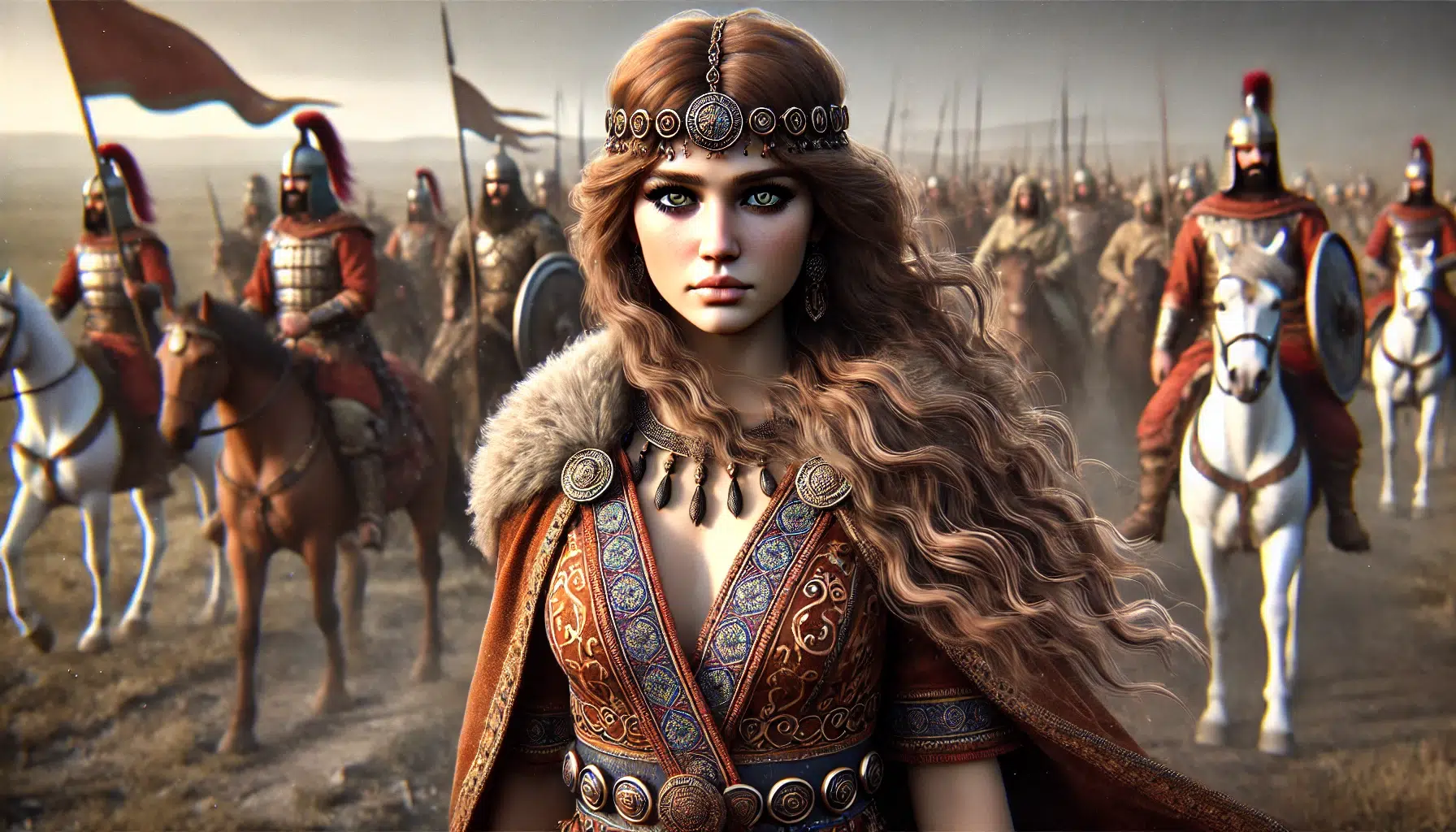
Enraged by the death of her son, Tomyris vows vengeance against Cyrus. She sends him a message, condemning his deceitful tactics and swearing to give him his fill of blood.
She raises her army and confronts the Persians in a fierce battle. Herodotus would describe it as the most intense one fought between non-Greeks.
The Massagetae, driven by their queen’s vow and their desire for vengeance, fight with exceptional ferocity using lances and daggers in close combat.
Despite the Persians’ numerical superiority and the vastness of their empire, the determination and fighting spirit of the Massagetae give them an edge.
The battle is brutal, with heavy casualties on both sides. Ultimately, the Massagetae triumph, and Cyrus is killed in the battle, marking a significant defeat for the Persian Empire.
Tomyris’s Act of Vengeance
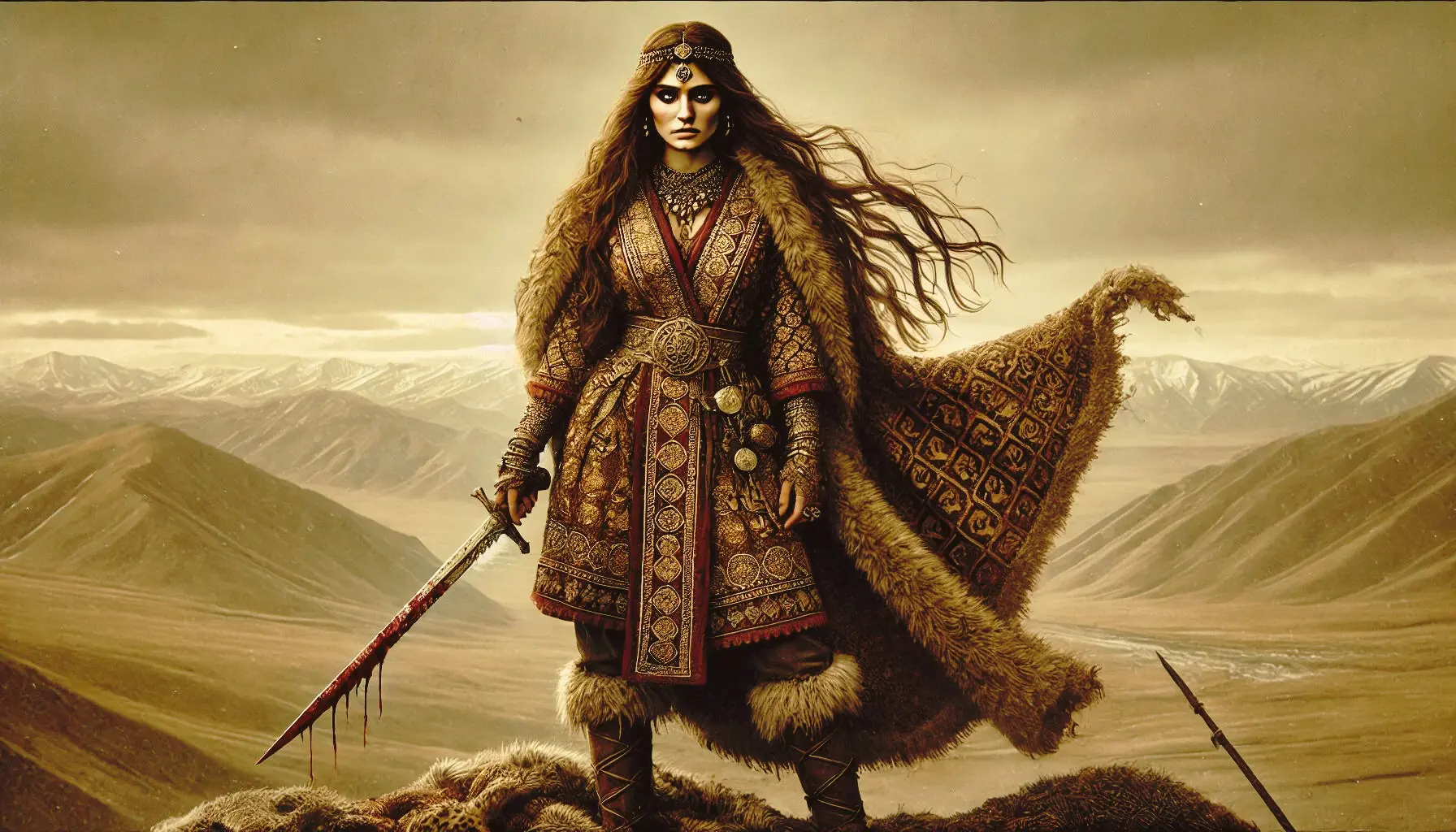
Following the battle, Tomyris has her soldiers search the battlefield for Cyrus’s body. When they find it, she enacts a gruesome form of retribution.
According to Herodotus, Tomyris severes Cyrus’s head and places it in a bag or vat filled with human blood, declaring,
“I live and have conquered you in fight, and yet by you am I ruined, for you took my son with guile. Thus I make good my threat, and give you your fill of blood”.
This act of vengeance is symbolic and underscores Tomyris’s fulfillment of her vow. It also serves as a powerful message to any future adversaries about the consequences of underestimating her and her people.
This symbolic gesture underscores her victory and the fulfillment of her vow to avenge her son.
Learn more about other fierce warrior women:
- Boudica: Celtic Warrior Queen Who Defied Rome
- Lozen: Spirit of a Female Apache Archer
- Tomoe Gozen: Female Samurai Archer
- Women in Archery in Different Cultures
- Women in Ancient Warfare Defying Gender Norms
Impact After the Battle
The Immediate Aftermath of the Battle
The immediate aftermath of the battle between Tomyris and Cyrus the Great is marked by the decisive victory of the Massagetae over the Persian forces.
The death of Cyrus, one of the most powerful rulers of the ancient world, sends shockwaves through the Persian Empire. Tomyris’s act of vengeance—placing Cyrus’s severed head in a bag of blood—was both a symbolic and literal fulfillment of her vow to avenge her son’s death.
This gruesome act underscored the severity of the defeat and the personal nature of the conflict.
The Impact on the Persian Empire and the Massagetae
The death of Cyrus the Great created a significant power vacuum in the Achaemenid Persian Empire. Cyrus had been a unifying force, expanding the empire through a series of successful military campaigns.
His death leads to a period of instability and uncertainty. Cambyses II, Cyrus’s son and successor, faces the daunting task of consolidating power and maintaining the vast territories that Cyrus had conquered.
The loss of their leader in such a humiliating manner also had psychological repercussions, diminishing the perceived invincibility of the Persian military.
For the Massagetae, the victory over Cyrus is a monumental achievement. It not only secures their independence but also elevates Tomyris to legendary status among her people and beyond.
The defeat of one of the most powerful empires of the time by a relatively smaller and less organized people highlights the prowess and strategic capabilities of the Massagetae.
This victory likely bolstered their reputation and deterred future invasions, at least for a time.
Tomyris’s Enduring Legacy in Art and Literature
Tomyris’s legacy has endured through the ages, celebrated in various forms of art, literature, and popular culture.
During the Renaissance, Tomyris became a popular subject in European art. Artists like Rubens, Allegrini, and Luca Ferrari depict scenes of her triumph over Cyrus, often focusing on the dramatic moment of her receiving or displaying Cyrus’s severed head.
In literature, Tomyris is included among the “Power of Women” theme, which celebrates women who triumphed over men in various ways. Eustache Deschamps and William Shakespeare are among the notable figures who reference her in their works.
In Kazakhstan, Tomyris is revered as a national heroine. Her story is celebrated in literature and commemorated in various forms, including coins issued in her honour. This modern recognition reflects her enduring significance as a symbol of resistance and empowerment.
Historical Accounts and Interpretations of Events
Herodotus, the Greek historian, provided one of the earliest and most detailed accounts of Tomyris’s victory over Cyrus. This narrative has been a primary source for understanding her life and the significance of her actions.
Other ancient historians, such as Ctesias and Strabo, also referenced Tomyris, though their accounts varied in detail and emphasis.
Herodotus’s Version of Events
Herodotus, often referred to as the “Father of History,” provides a vivid and detailed account of the conflict between Tomyris and Cyrus the Great in his work, The Histories.
According to Herodotus, the following series of events unfolded.
Cyrus wanted to expand his empire, so he proposed marriage to Tomyris. She saw through his intentions and rejected him, leading Cyrus to prepare for an invasion. Tomyris gave him a choice: fight on her terms or his side of the river.
Cyrus set a trap and ambushed the Massagetae while they were drunk and unprepared, capturing Spargapises, who then took his own life. Enraged by her son’s death, Tomyris vowed to avenge him. She sent a message to Cyrus, condemning his deceit and promising to give him his fill of blood.
She led her forces into a fierce battle, killing Cyrus. In a final act of retribution, Tomyris placed Cyrus’s severed head in a bag filled with human blood.
Ctesias Account of Events
Ctesias, a Greek physician and historian who served in the Persian court, offers a somewhat different account of the events:
According to Ctesias, Cyrus’s conflict with the Massagetae occurs earlier in his career, rather than at the end of a long reign.
In his version, Cyrus captures the king of the Saka (another name for the Massagetae), which prompts the queen, Tomyris, to rally her troops and defeat Cyrus.
Ctesias describes a scenario where Tomyris raises a great army of men and women, defeats the Persians, and then trades Persian prisoners for her captured husband. This version emphasizes the involvement of both genders in the battle and portrays Tomyris as a strategic leader who successfully negotiates the release of her people.
Strabo’s Interpretation
Strabo, a Greek geographer and historian, provides additional context but less detailed narrative.
His account focuses more on the geographical and ethnographic aspects of the Massagetae. He notes their location and customs but does not provide a detailed narrative of the battle between Tomyris and Cyrus. His account is based on earlier sources, possibly including a revised version of Hecataeus’s work.
Comparison and Contrast of Historian’s Accounts
| Aspect | Herodotus’s Account | Ctesias’s Account | Strabo’s Account |
|---|---|---|---|
| Timing of Conflict | End of Cyrus’s reign | Early in Cyrus’s career | Not specified |
| Deception Tactics | Emphasized (wine trap) | Not mentioned | Not detailed |
| Capture of Spargapises | Central to narrative | Not mentioned | Not detailed |
| Tomyris’s Vengeance | Detailed (head in blood) | Defeats Cyrus, trades prisoners | Not mentioned |
| Role of Women | Tomyris as sole leader | Both men and women involved | Not specified |
| Geographical Focus | Detailed battle narrative | Focus on strategic exchange | Ethnographic and geographical details |
Tomyris in Popular Culture
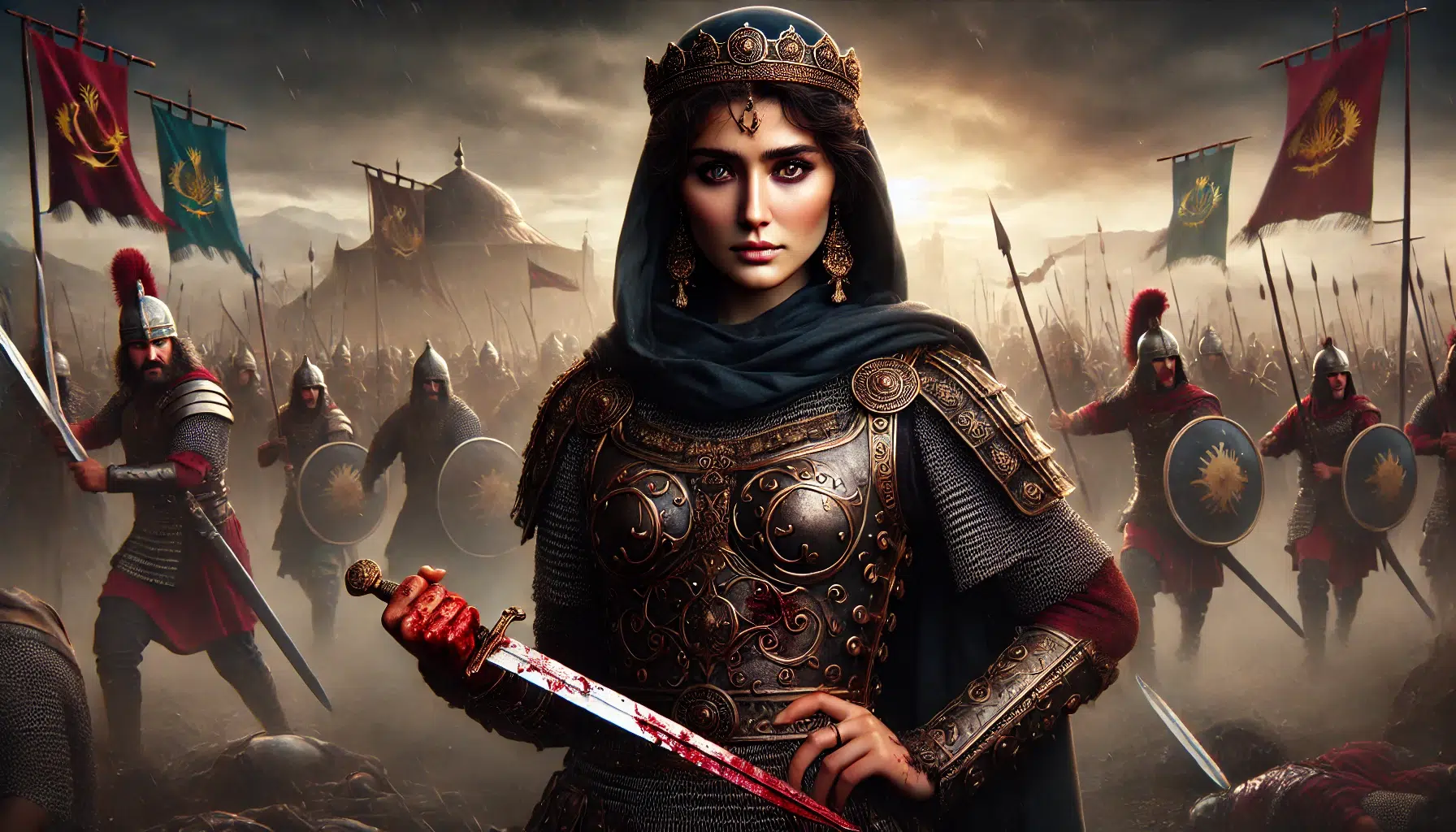
Tomyris has left an indelible mark on popular culture, inspiring various forms of media, monuments, and even astronomical naming. Her story of bravery and vengeance against Cyrus the Great continues to resonate, making her a symbol of strength and justice.
Tomyris in Modern Depictions and Games
In contemporary culture, Tomyris has been portrayed in various media.
In the popular 4X strategy video game Civilization VI, Tomyris is featured as the leader of the Scythian civilization.
Her inclusion in the game highlights her strategic prowess and warrior spirit, allowing players to experience her leadership and military tactics in a virtual setting. Her unique abilities in the game often focus on cavalry units and combat bonuses, reflecting the historical strengths of the Massagetae.
The 2019 Kazakhstani film Tomiris dramatizes the life and exploits of Queen Tomyris. The film portrays her rise to power, her strategic battle against Cyrus the Great, and her ultimate act of vengeance.
The film was well-received in Kazakhstan and brought her story to a wider audience, emphasizing her role as a national heroine.
Monuments and Honours Named After Tomyris
In the capital of Kazakhstan, Nur-Sultan (formerly Astana), a monument dedicated to Queen Tomyris stands as a symbol of freedom and strength. This monument, also known as the Mother Earth (Jer Ana) monument, celebrates her legacy and is a popular site for both locals and tourists.
It reflects the high regard in which she is held in Kazakhstan, where she is considered a national heroine.
In Shymkent, Kazakhstan, a street is named after Tomyris, further cementing her legacy in the country’s cultural and geographical landscape.
Asteroid 590 Tomyris: Named After Her
Discovered on March 4, 1906, by the German astronomer Maximilian Wolf at Heidelberg, asteroid 590 Tomyris is named in honour of the legendary queen.
This celestial naming serves as a testament to her enduring legacy and the impact of her story on various fields, including astronomy
Conclusion
Tomyris’s victory over Cyrus the Great and her subsequent actions had profound implications for both the Persian Empire and the Massagetae.
Her legacy as a powerful and determined leader has been immortalized in history, art, and culture. This makes her one of the most enduring figures of ancient history.
Her story continues to inspire and captivate audiences, highlighting the timeless themes of justice, vengeance, and the strength of the human spirit.