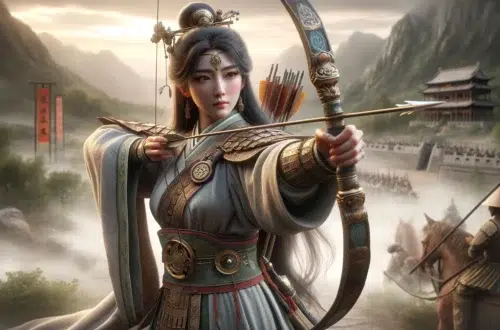
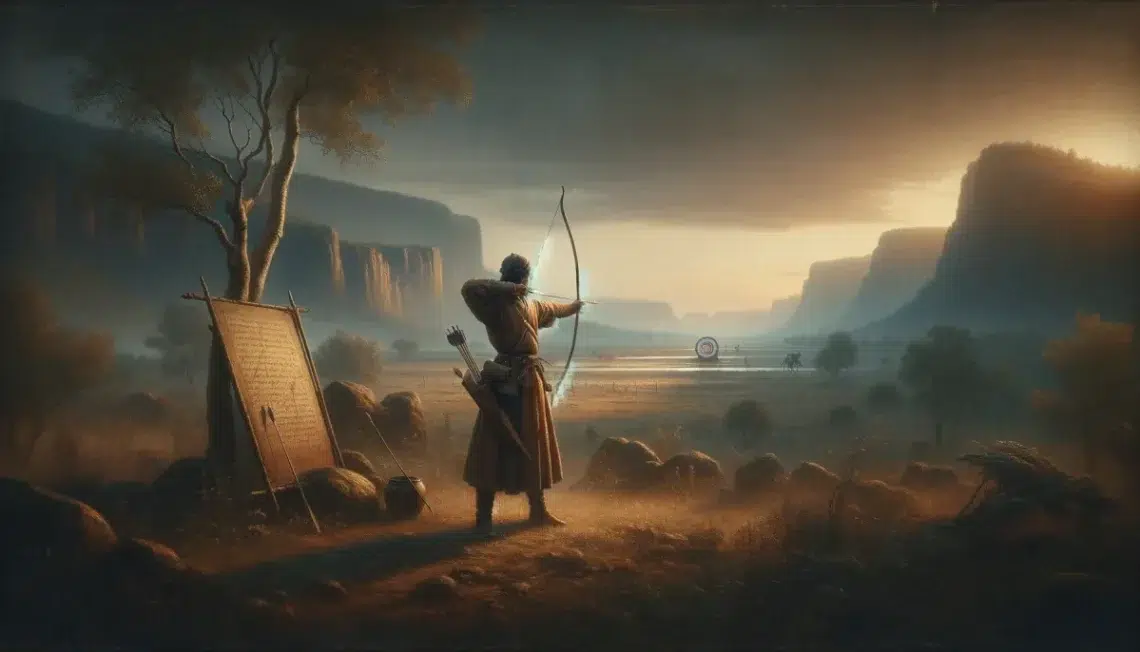
The Timeless Art of Traditional Archery
Archery has been an integral part of human history for thousands of years. Traditional archery refers to the art and discipline of using a bow and arrows without the assistance of modern technology. This pure form of archery relies heavily on skill, instinct, and an intimate understanding of the bow and arrow dynamics.
The Evolution of Archery: From Survival to Sport
Rooted deeply in the diverse cultural fabric of many societies, traditional archery encompasses a wide range of styles:
- Longbow:
- classic English longbow, known for its tall, D-shaped cross-section
- requires great strength and technique
- Recurve Bow:
- characterized by its curving limbs that turn away from the archer
- stores more energy and delivers arrows at higher speeds
- Horse Bow:
- compact and powerful bow
- designed for use on horseback
- plays a significant role in the warfare and hunting practices of nomadic cultures
- Flatbow:
- A wide, almost rectangular limb design,
- indigenous to many Native American peoples
Through traditional archery, enthusiasts connect with the past, where the bow served not only as a tool for survival through hunting but also as a weapon in combat.
It was essential to the livelihood and protection of ancient civilizations, and as such, archery has been revered and celebrated in numerous myths, legends, and historical accounts.
Traditional Archery Techniques
In contrast to modern archery, traditional techniques do not rely on detailed calculations and precision equipment.
Instead, they are built upon a foundation of:
- Muscle memory
- Intuitive shooting
- Personal experience
- Patience and practice
The goal of traditional archery is not merely to hit a target but to master the harmony between archer, bow, and arrow.
This pursuit of perfection and unity encapsulates the spirit and enduring allure of traditional archery.
Early Hunting and Survival

Archery, an ancient practice with its roots entwined with the dawn of civilization, has undergone a profound transformation over millennia. Initially developed for survival, the bow and arrow were pivotal for human subsistence.
Early humans relied on these early tools for hunting game and defending territory.
Skilled archers were celebrated for their vital role in providing food and security.
As civilizations evolved, so did the role of archery. It shifted from a necessity of life to a martial skill.
In ancient Egypt, China, Greece, and Rome, archers were esteemed members of the military, their prowess determining the fates of empires. Historical depictions show pharaohs and emperors embracing the bow as a symbol of might.
With the advent of gunpowder, archery for combat waned, paving the way for its emergence as a sport.
England’s longbowmen transitioned from battlefield heroes to sportsmen, with competitions held as early as the 16th century. The once lethal instrument began to find a new place in society, now focused on accuracy and skill over lethality.
Modern Sport
In the 19th century, archery became institutionalized as a modern sport, with the founding of the Grand National Archery Society in England in 1861. The Olympics included archery in 1900, further endorsing its status as a competitive sporting discipline.
Today, archery’s popularity has not dwindled; it thrives as both competitive sport and recreational hobby.
The timeless art, now adorned with technological advancements, endures, offering a blend of tradition and innovation. The bow, which once ensured human survival, now bonds enthusiasts to their cultural heritage through this disciplined practice.
Traditional Archery Bow Types and Their Cultural Significance
Traditional archery boasts a rich tapestry of bow types, each offering a glimpse into the cultures from which they originate.
Bows are deeply integrated into the identities and histories of many societies, often associated with both survival and spiritual symbolism.
1. Longbow
- The quintessential English longbow, made famous during medieval conflicts such as the Hundred Years’ War,
- was a symbol of English military might.
- Its simplicity and long range were prized, with its use encouraged by royal mandates and linked to English victory tales.
2. Recurve Bow
The recurve holds significance in Mongolian and Middle Eastern cultures. It was a key military asset for horseback warriors like the Mongols, allowing for swift, powerful shots.
3. Flatbow
Indigenous peoples of North America favored the flatbow for its wide limbs that distribute stress more evenly.
These bows reflected the connection between the hunter and the natural world, often revered as a sacred tool within Native American tradition.
4. Kyudo Bows
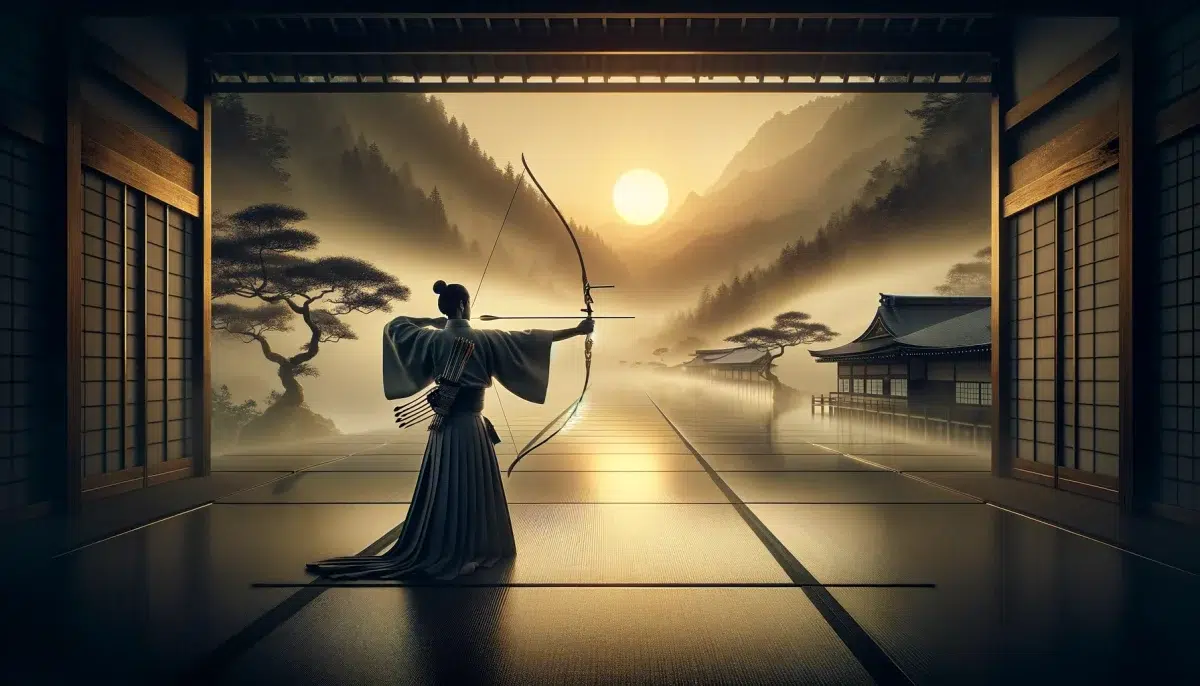
In Japan, the art of Kyudo, or “the way of the bow,” transforms archery into a meditative and philosophical pursuit.
The asymmetrical bows used in Kyudo, Yumi, represent a balance between human and nature and facilitate a spiritual journey for the archer.
Through their varied forms and uses, these bows convey more than just practical utility; they are emblematic of their respective cultures, encapsulating centuries of tradition, warfare, innovation, and artistry.
Craftsmanship of Arrows Through Ages
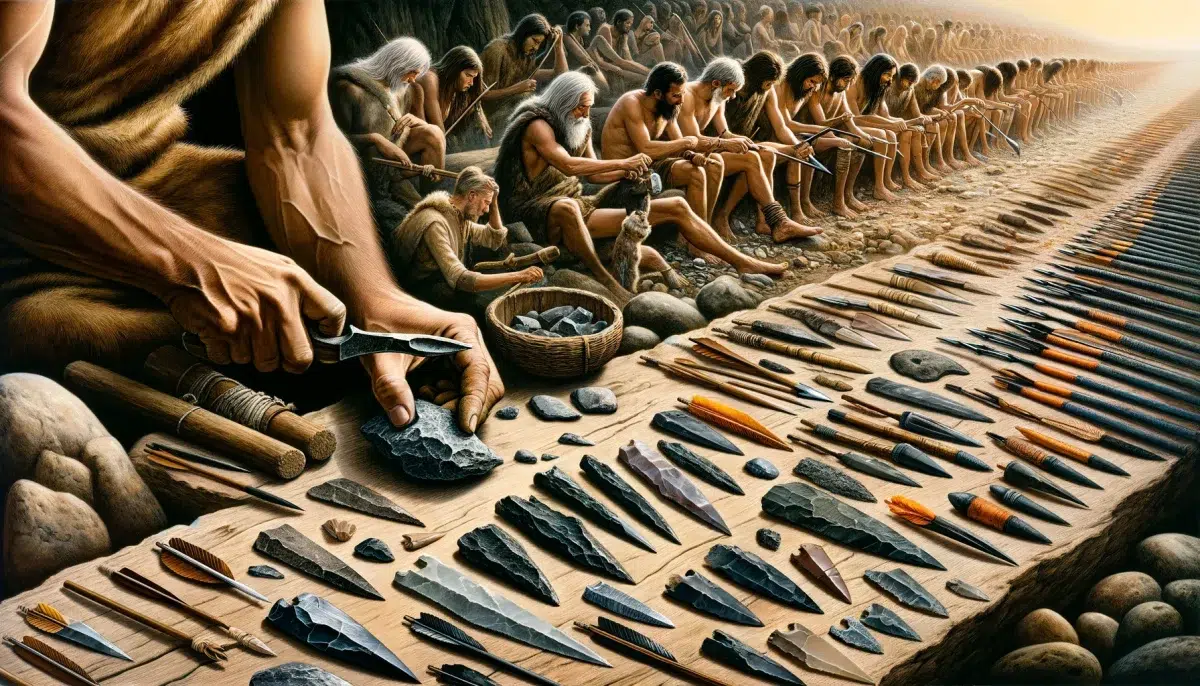
The evolution of arrow materials reflects human innovation in hunting and warfare throughout history.
Initially, early humans utilized readily available materials, such as wood, reeds, or bamboo for arrow shafts.
These were often paired with stone, bone, or metal tips known as arrowheads, with feathers or plant fibers serving as fletching to stabilize flight.
Stone Age to Bronze Age
During the Stone Age, flint, obsidian, and other hard stones were shaped into arrowheads using a technique called knapping.
The Bronze Age introduced metalworking skills, leading to the creation of bronze and eventually iron arrowheads, which offered improved durability and penetrating power.
Middle Ages to Renaissance
With the advent of the Middle Ages, arrows became more specialized.
Longbows and crossbows required differently crafted arrows to maximize their potential, with bodkin points designed to pierce armor and broadheads meant for hunting.
Skilled fletchers and bowyers became essential craftsmen during this period.
Industrial Age to Present
The industrial revolution brought about new materials such as aluminum and carbon fiber, revolutionizing arrow production. Today, arrows are precision-engineered for various forms of archery, from Olympic sports to traditional practices that still honor age-old methods.
Throughout all periods, craftsmanship has been paramount.
Meticulous care in selecting straight shafts and attaching fletching at just the right angle affects an arrow’s accuracy and efficiency.
Today, traditional archers often blend ancient techniques with modern materials, ensuring that the legacy of arrow making continues to be a testament to both heritage and advancement.
Archers in History: Notable Figures and Traditions
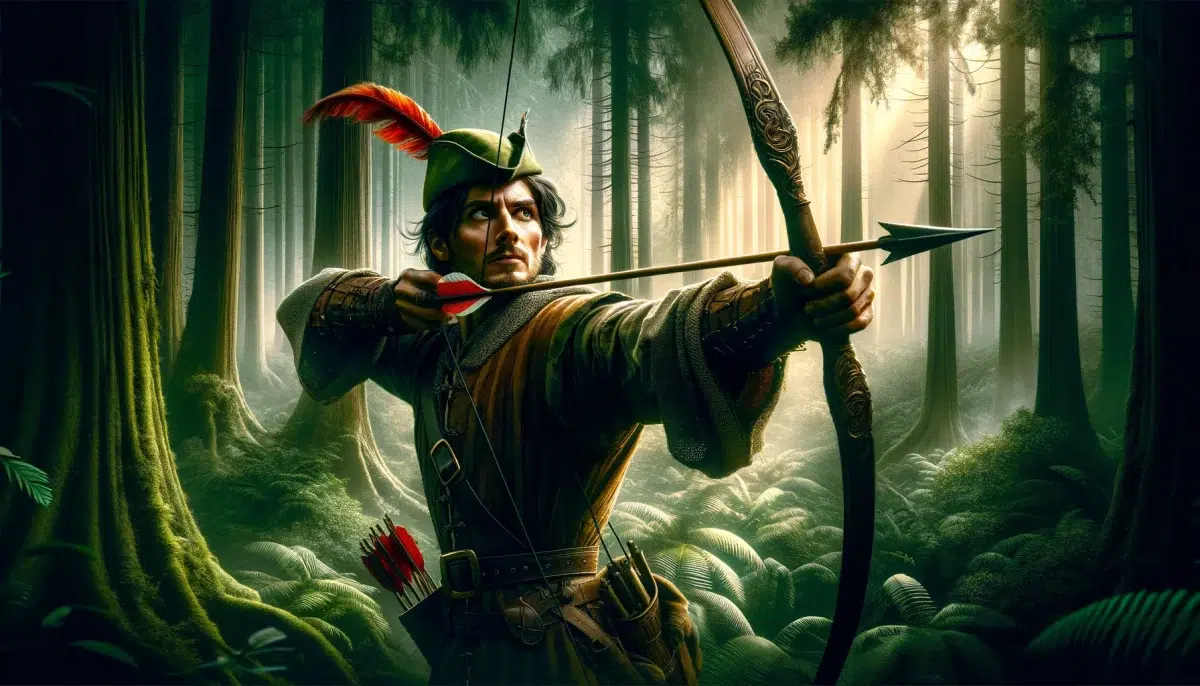
Throughout history, archery has both shaped and been shaped by the figures who mastered it and the varied traditions that emerged around the world.
In ancient Egypt, archers were revered and heavily featured in their iconography, often associated with the gods.
On the plains of Mongolia, the legendary figure of Genghis Khan utilized highly skilled horseback archers to build an empire that stretched across Asia.
- England’s Influence: The English longbowman became a pivotal military figure during the Middle Ages. The Battle of Agincourt in 1415 demonstrated the devastating effectiveness of the longbow, cementing the archers’ place in military history.
- Legendary Figures: Perhaps the most iconic archer in folklore is Robin Hood, the legendary hero of English ballads who was said to have exceptional skill with the bow. Though his existence is still debated, his impact on the perception of archery is unquestionable.
- Japanese Tradition: Kyudo, the Japanese way of the bow, is a discipline where archery is considered a form of physical, moral, and spiritual development. A Kyudo practitioner, or kyudoka, seeks perfection in every aspect of the shot, not just accuracy.
- Eastern Influence: The composite bow, used extensively by the Ottoman and Persian empires, reflected the importance of archery in Eastern warfare and hunting traditions.
- Recreation and Sport: Archery was revived as a competitive sport during the 19th century, in part due to the efforts of organizations like the United Kingdom’s Grand National Archery Society, formed in 1861, and it was included in the Olympic Games since 1900.
Despite the advent of modern warfare, the legacy of archers in history endures through practice, competition, and cultural celebrations that continue to honor the timeless art of traditional archery.
The Art of the Bow: Crafting and Maintenance
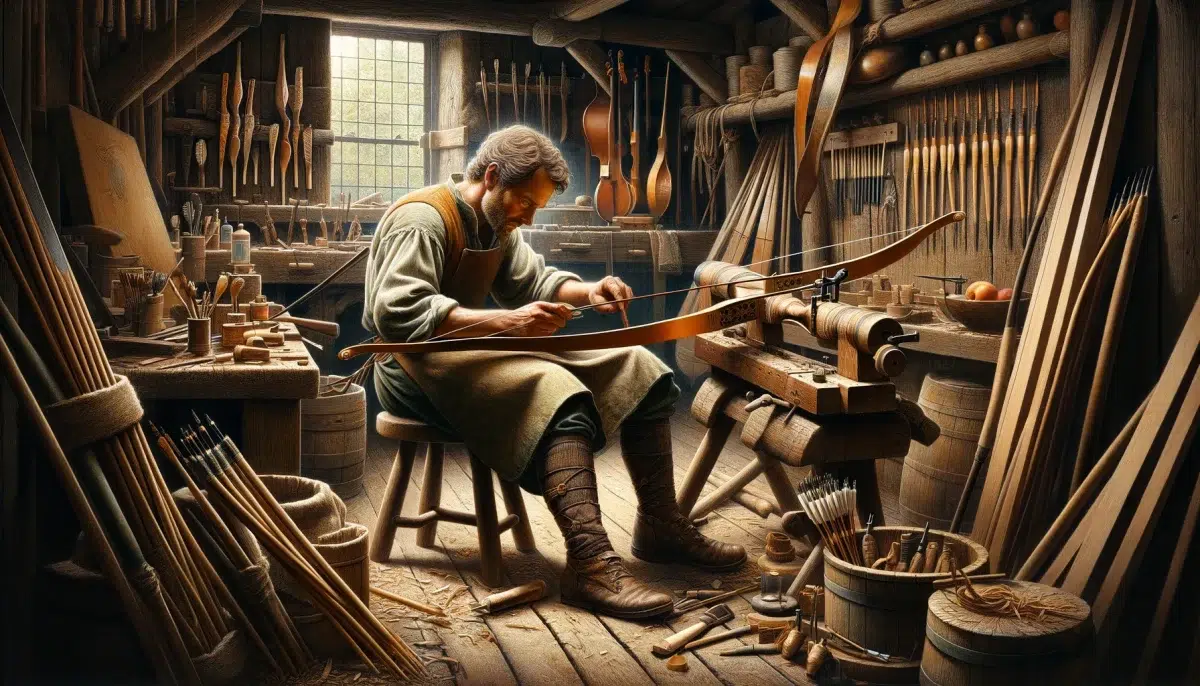
The bow, a true extension of the archer, is both a piece of art and a functional tool.
Its creation begins with the careful selection of materials.
Traditional bows are commonly crafted from woods such as yew, ash or hickory, chosen for their elasticity and strength.
A bowyer, an artisan who specializes in making bows, combines time-honored techniques with a deep understanding of woodcraft.
Crafting a Bow
Crafting a bow requires an array of steps:
- Wood Selection: The ideal piece of wood must be free of knots and have a straight grain.
- Shaping: Using tools like drawknives and spokeshaves, the bowyer methodically carves the wood into a tapering shape, ensuring even flexibility.
- Tillering: The process of tillering involves bending the bow to refine its curve, ensuring it bends evenly throughout its length.
- Finishing: The bowyer applies sealants to protect the wood from moisture and environmental damage.
Maintenance of Your Bow
Maintenance is as important as the crafting process:
- String Care: Regularly waxing the bowstring extends its life and preserves its performance.
- Wood Inspection: Bows should be checked for cracks or splinters, with any damage repaired promptly to maintain structural integrity.
- Storage: Proper storage away from heat or excessive moisture prevents warping and decay.
Through this meticulous assembly and upkeep, every bow retains a story — a testament to the bowyer’s craft and the archer’s dedication to the sport. Archers uphold their connection to history and the natural world, ensuring the timeless art of traditional archery lives on.
Archery Competitions and Modern Day Communities
Archery, an ancient practice, continues to thrive in modern times through competitions and community engagement.
Traditional archery competitions are often characterized by a focus on historical accuracy and the appreciation of the sport’s heritage.
Archers participate in events like field archery, where they navigate woodland courses, aiming at targets set at various distances and elevations.
This format tests the archer’s skill in an environment similar to hunting scenarios of the past. Another popular style is target archery, conducted on flat open ranges with marked distances, akin to what might have been seen in medieval contests and fairs.
Today, there are numerous archery organizations worldwide, such as the World Archery Federation and local clubs, which organize regular tournaments and provide guidelines to preserve the sport’s traditional aspects.
Competitions are often divided into categories based on the type of equipment used:
- Longbows
- Recurve bows
- Barebow
Modern day communities also widely adopt the 3D archery competition format, in which life-size models of game animals serve as targets, offering a more lifelike practice experience.
In addition to formal competitions, archery finds a place in cultural festivals and historical reenactments, where enthusiasts gather to celebrate and educate others about the tradition.
Archery clubs often conduct workshops and training sessions, fostering camaraderie and the sharing of techniques among members. Social media and online forums also play a significant role in connecting archers globally, allowing for the exchange of knowledge and experiences relating to traditional archery.
These activities not only promote the sport but also facilitate a deeper understanding and respect for the discipline, ensuring that the timeless art of traditional archery persists in the modern era.
The Spiritual and Philosophical Aspects of Archery
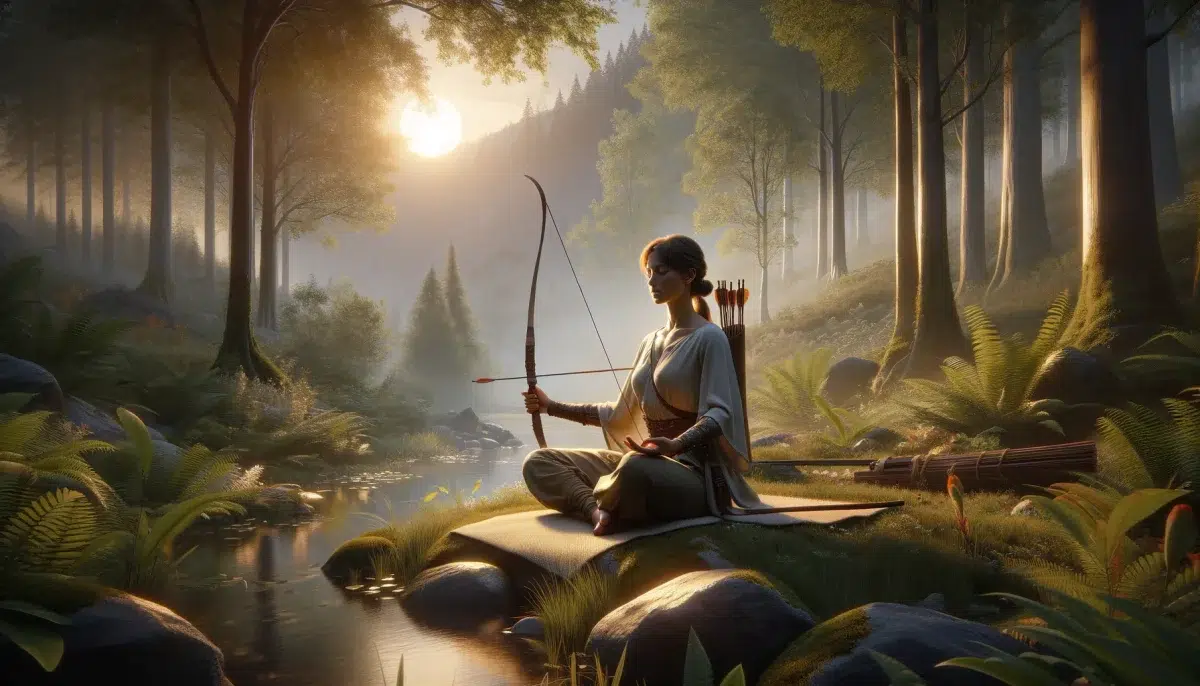
Archery has long been more than a mere physical discipline. It embodies a rich tapestry of spiritual and philosophical elements across various cultures.
In traditional societies, archery went beyond hunting or warfare.
It was a pursuit that demanded mindfulness, inner peace, and self-mastery, aligning it closely with spiritual practice.
- In Zen Buddhism, for example, archery is not just about hitting a target, but about achieving a state of mushin, or “no-mindedness.” To release the arrow truthfully is to release the ego, clearing the mind of obstructive thoughts and emotions.
- In various indigenous cultures, the bow and arrow symbolize the harmonious balance between the human spirit and natural forces. Shooting an arrow in these traditions can represent the individual’s intent. The energy projects into the universe, with each shot reflecting a spiritual journey.
- Philosophically, traditional archery often illustrates the concept of the “flow state,” where archers become fully immersed in the action, experiencing a form of profound absorption and concentration that elevates their practice to a meditative art form.
- This connection between the archer, the bow, and the arrow often serves as a metaphor for the unity of being. Individuals seek personal truth and a path of virtuous action. The ritual of drawing the bow is equated to preparing the mind and soul for a moment of clarity and purpose.
The serene dedication required in perfecting the skill of archery mirrors the tenets of stoicism, promoting discipline, control, and the pursuit of an inner calm in the face of life’s challenges.
Traditional archery therefore allows practitioners to explore deeper meanings of existence and self-knowledge, where every shot is a moment of learning and inner reflection.
Learn more about: Zen Archery: Centering the Mind
Preserving Archery Traditions: Education and Practice
Traditional archery is not only a sport but also a living history that connects us to cultures and practices of the past. Ensuring that these techniques and traditions continue to thrive requires both education and practice.
Preservation efforts focus on teaching new generations the skills and wisdom that have been passed down through centuries.
Archery Educations
Firstly, education plays a pivotal role.
Organizations and enthusiasts conduct workshops and seminars aimed at imparting the foundational knowledge of traditional archery, including the history, different styles, and cultural significance.
Such educational initiatives often include:
- Demonstrations of traditional bow-making techniques
- Classes on the fabrication and use of various types of traditional arrows
- Lectures on the historical context of archery across different civilizations
Engage in Regular Training in Traditional Archery
Moreover, practice is fundamental.
Archers are encouraged to engage in regular training to hone their skills and maintain the physical discipline required for traditional arching. Experienced archers often mentor beginners, offering guidance on posture, aiming, and the mental focus necessary for mastery.
Practice sessions often involve:
- Regular target practice to improve accuracy and technique
- Participating in traditional archery competitions to foster community and challenge skills
- Engaging in hunting with traditional bows, which some communities consider a rite of passage
Communities often hold festivals and tournaments that celebrate traditional archery, attracting enthusiasts from around the world.
Such events not only showcase the beauty and skill involved in traditional archery but also reinforce the communal aspects of the tradition, creating a vibrant forum for exchange and continuity.
Preserving traditional archery is thus a dynamic process that combines sharing knowledge with the active development of skills.
By nurturing both the educational and practical aspects, the art of traditional archery remains a testament to human ingenuity and cultural heritage.
Why Traditional Archery Remains Relevant Today
Traditional archery continues to hold its ground in a world where technology has massively transformed sports and pastimes.
Its relevance is woven into the fabric of historical appreciation, mindfulness, and the inherent challenge that it presents.
- Cultural Heritage: Traditional archery is a conduit to the past. It connects individuals to the archery traditions of various cultures and civilizations, fostering a sense of continuity and preservation of heritage.
- Mindfulness: Archery requires focus, control, and calm, aligning it with the current emphasis on mindfulness and meditation. Practitioners often find tranquility in the concentration that archery commands. Learn more about: Enhancing Focus with Mindful Archery Practices
- Physical and Mental Discipline: This form of archery is as much about mental fitness as it is about physical prowess. It offers a holistic workout, demanding stability, poise, and strength, which resonate with contemporary fitness ideologies.
- Connecting with Nature: Traditional archery often takes place outdoors, offering a route to connect with nature. In an age where urban living predominates, this aspect is increasingly valuable for mental health and well-being.
- Simplicity and Accessibility: Unlike modern archery with its reliance on technology, the traditional form offers simplicity. There’s an allure to using equipment that humans have used for millennia, and moreover, it’s often easier and less expensive to get started.
- Sporting Challenges: Competitions and events keep traditional archery alive as a sport. They also provide challenges that modern sports lovers crave, such as distance shooting and hitting challenging targets.
Traditional archery’s continuity is assured not only by its rich history but by its adaptability to modern values of mental health, cultural legacy, and the primal joy of mastering a bow and arrow.
It remains a discipline that is timeless, engaging, and forever rooted in the human spirit to conquer challenges.