
The Fall of Icarus: Greek Myth of Wings and Warning
A Boy, Wings, and a Warning
The myth of Icarus captures the tension between freedom and restraint. It tells of a boy who flies too high, ignoring advice, and pays the price. His father, Daedalus, a skilled inventor, creates wings for their escape from captivity. These wings, made of feathers and wax, come with a warning—fly too low and the sea will soak them; fly too high and the sun will melt them.
Icarus chooses the thrill of flight over caution. His downfall becomes a symbol for many things: ambition, disobedience, and the risks of ignoring limits.
This ancient Greek myth remains powerful today. It sparks questions about responsibility, choices, and what it means to go too far. In this post, we explore the story, its themes, and how people interpret Icarus in the modern world.
The Myth of Icarus

Daedalus, a brilliant inventor, lives in Crete under King Minos. He designs the famous Labyrinth, a maze so complex that no one can escape it. Inside the Labyrinth, the king hides the Minotaur—a creature born from a terrible secret. Queen Pasiphaë, cursed by the gods, births the half-man, half-bull beast. Daedalus helps her, building the wooden cow that makes this possible.
When the king learns Daedalus aided the queen, he grows furious. Though Daedalus built the Labyrinth to trap the Minotaur, Minos no longer trusts him. To protect the secret, he locks Daedalus and his son Icarus in a high tower, surrounded by guards and sea. Minos ensures they cannot leave by land or sea.
Escape seems impossible. Land and sea routes are guarded. Daedalus decides they must fly.
Gathering Feathers and Wax
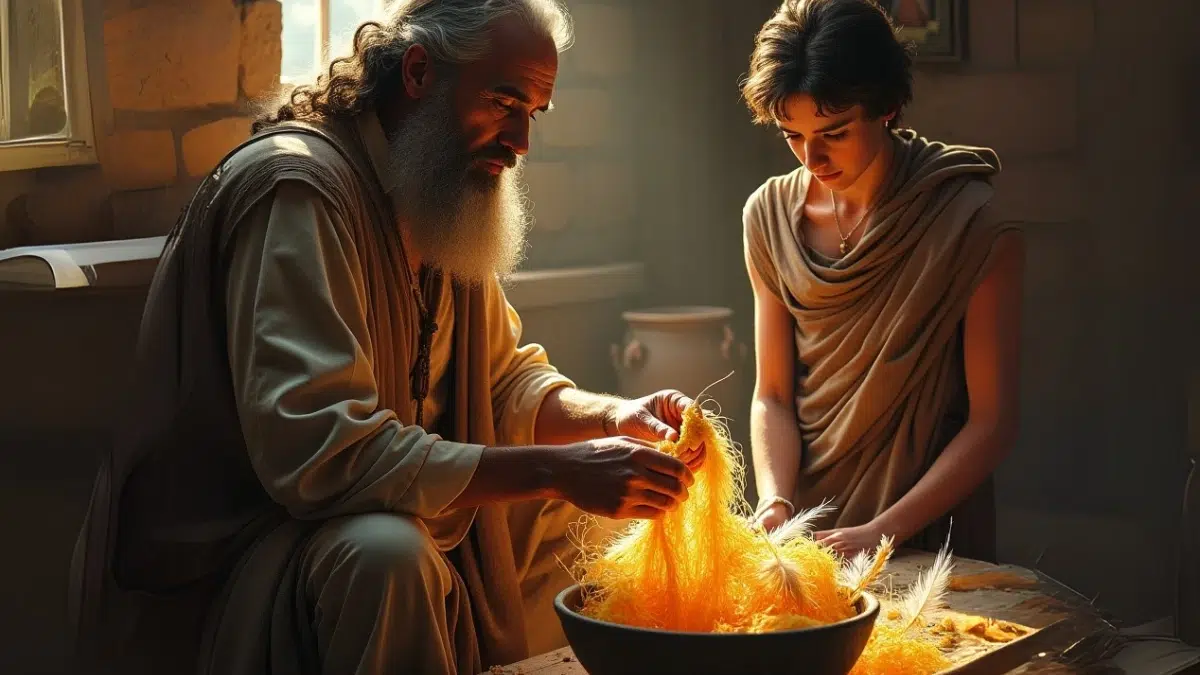
But Daedalus watches the sky and notices seabirds nesting on the cliffs and ledges nearby. Over weeks, he collects fallen feathers that drift in through the window or stick to the tower ledges. He gathers feathers—some large for strength, others small for shape.
He also fashions traps using bread crumbs and bits of cloth, catching birds to pluck loose feathers without killing them. Slowly, he gathers what he needs.
For wax, he burns driftwood and shapes clay containers to collect sap and beeswax from candles used in the palace. Some say he bribes a young guard with carvings in exchange for bits of wax. Mixing the wax with oil, he softens it and rolls it into threads.
Using thin twine, wax, and careful layering, Daedalus fashions two sets of wings, one for him and one for Icarus. The invention looks fragile, but Daedalus trusts his skill. He mimics the shape of bird wings, layering feathers by size—small ones for flexibility, larger ones for lift. He tests the wings on the rooftop, adjusting the curve for balance.
Icarus Takes Flight

Before they leave, Daedalus gives Icarus clear instructions: fly between the extremes.
If he flies too low, sea spray will soak the wings. If he flies too high, the sun will melt the wax.
Icarus nods, excited but restless.
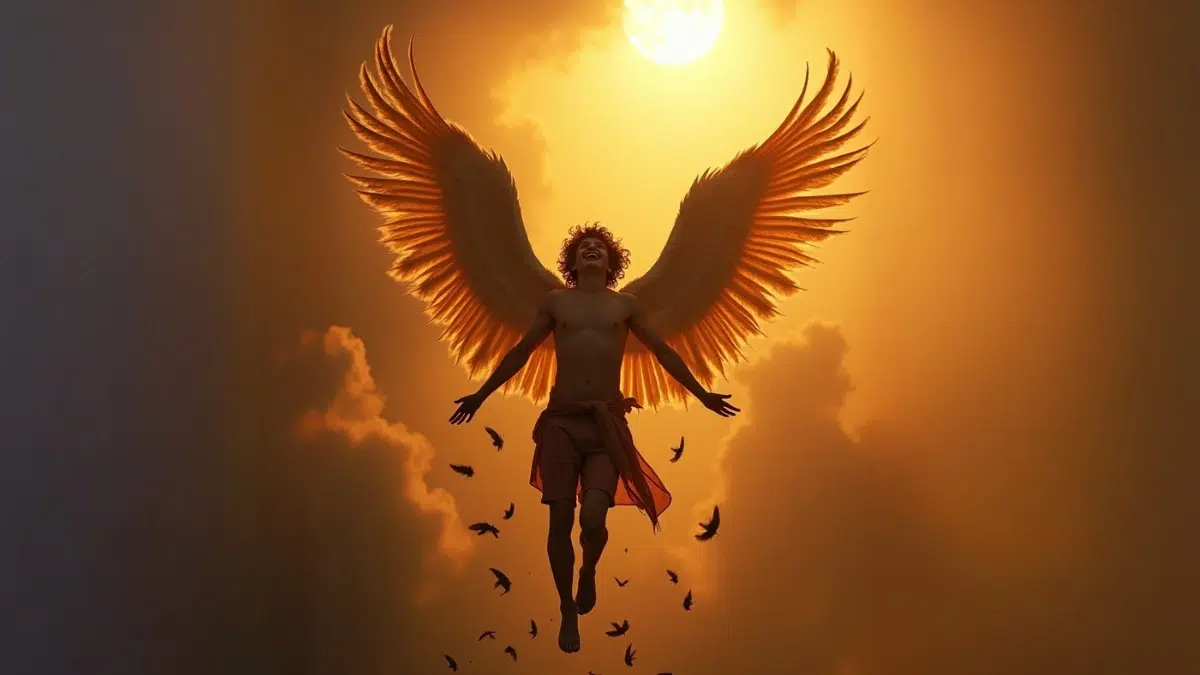
They take off at dawn. The wind lifts them. Below, the Aegean Sea sparkles. Birds fly beside them. Icarus laughs, thrilled by freedom. He rises higher, swept up by joy and pride.
But the sun draws near. The wax softens. Feathers loosen. Daedalus shouts, begging him to come down, but it’s too late. The wings break apart. Icarus flails, then falls. He crashes into the sea.
Daedalus reaches land safely. But he weeps for his son. The waters where Icarus drowned become the Icarian Sea, named in his memory.
The myth leaves a deep mark. It warns against arrogance and reminds us that freedom must walk with caution. Icarus’s fall becomes a symbol not just of failure, but of ambition, risk, and tragic beauty.
Themes and Interpretations
The myth of Icarus carries powerful messages about balance, ambition, and the danger of ignoring wisdom. Daedalus warns his son to fly a middle course—not too close to the sea, not too close to the sun.
This idea of moderation reflects the Greek concept of sophrosyne, or self-control. Icarus ignores this warning. His joy turns into recklessness, and his fall becomes a timeless symbol of hubris—excessive pride or overconfidence.
Some view Icarus as a dreamer who chooses freedom over fear. His flight shows courage, curiosity, and the thrill of pushing limits. He wants to soar higher, reach farther, and break free from the rules set before him. His fall becomes a reminder that daring alone is not enough. Wisdom must guide action.
Anne Sexton Modern Interpretation
Ovid tells the myth of Icarus with clarity and focus. His version centres on Daedalus’ invention and Icarus’ fall. The lesson is clear: obey wisdom. Ovid’s Icarus acts out of pride, soaring too high and ignoring his father’s warnings. The tragedy lies in his youthful arrogance and the irreversible consequence of ignoring limits.
But modern poets see more beneath the surface.
-
Anne Sexton (1928–1974) was a Pulitzer Prize–winning American poet. She often reimagined myths through a feminist and psychological lens, using them to explore themes of identity, emotion, and defiance.
Anne Sexton, in her poem To a Friend Whose Work Has Come to Triumph, challenges Ovid’s moral. She praises Icarus for trying. His fall isn’t failure—it’s flight.
She paints him as a hero, choosing joy and freedom over fear and caution. Sexton shifts the tone from tragic to triumphant, valuing passion over obedience. As a 20th-century American poet she challenges this view.
In her poem To a Friend Whose Work Has Come to Triumph, she reframes Icarus as a symbol of bravery. He doesn’t fall in failure—he soars in freedom. For Sexton, his leap matters more than the outcome.
Elizabeth Gilbert’s Take on the Myth
- Elizabeth Gilbert (born 1969) is a bestselling American author, most known for Eat, Pray, Love. In Big Magic, she explores the creative process and uses myth symbolically to encourage courage and self-expression.
Elizabeth Gilbert, a contemporary author known for Big Magic, builds on that spirit. While not writing directly about Icarus, she uses myth as metaphor. To Gilbert, fear kills creativity. Taking bold chances—like Icarus—is essential to living a full, expressive life.
She echoes Sexton’s spirit: fear limits creativity. Risk and failure are part of daring. Like Icarus, artists must leap—even if they fall. The myth becomes a call to live boldly.
Ovid’s Traditional Version
- Ovid was a Roman poet (43 BCE – 17 CE), best known for Metamorphoses, a collection of mythological stories. His version of Icarus is the oldest and most widely referenced.
Ovid, a Roman poet, presents Icarus as a warning. The tale in Metamorphoses emphasizes hubris and the tragic cost of ignoring wise counsel. Icarus flies too high, disobeys his father, and dies—his fall serving as a lesson in restraint.
In contrast, Ovid’s version is more traditional, warning against excessive ambition. Sexton and modern voices flip that view. They value risk, even ruin, if it means living fully.
These interpretations show how one myth can inspire different truths—caution, courage, or creativity.
What Does the Myth of Icarus Teach?
The myth of Icarus teaches more than one lesson, depending on how it’s told.
In Ovid’s version, the message is clear: listen to wisdom, avoid extremes, and respect limits. Icarus ignores Daedalus’ careful advice to fly the middle path. His pride—or joy—leads him too close to the sun. The result? A deadly fall. It’s a warning about reckless ambition and disobedience.
But modern retellings challenge that. Sexton and Gilbert flip the meaning. They see Icarus not as foolish, but as bold. To them, he embraces freedom and dares to reach for greatness—even if it costs him everything. His flight becomes a symbol of passion, creativity, and choosing to live fully.
The myth also reflects parent-child tension. Daedalus builds the wings but cannot control his son’s choices. Icarus, like many youth, must test boundaries on his own.
This makes the myth timeless. It speaks to freedom, failure, ambition, and the cost of dreaming big.
Learn more about Greek myths:
- Most Popular Greek Myths in Greek Mythology
- Famous Greek Myths: Love, Conflict and Tragedy
- Greek Myths About the Stars: Orion to Sagittarius
Conclusion: A Myth That Still Soars
The myth of Icarus survives because it speaks to everyone. His flight shows the risk of ignoring advice—but also the thrill of chasing dreams.
Whether seen as a warning or a bold act of freedom, Icarus continues to inspire. His fall reminds us that choices have consequences. His rise shows the beauty of aiming high.
Writers, artists, and thinkers keep returning to this myth. Each generation finds new meaning in his wings, his fall, and his fire.
Some say he flew too close to the sun. Others say he flew higher than anyone dared.
Either way, his story lives on.