

Skadi: Norse Goddess of Winter and Mountains
In the pantheon of Norse mythology, Skadi stands as a formidable figure, embodying the harsh, untamed essence of winter and mountain wilderness.
Known as the goddess of winter, skiing, and hunting, she is often depicted as a resilient and independent deity.
Her domain is the icy peaks and frigid landscapes of the north, where she reigns with an iron will and a spirit as indomitable as the windswept blizzards she commands.
The tales of Skadi, born from the primordial giants, the Jotnar, resonate with themes of nature’s might and the endurance of those who brave the cold.
Mythological Origins: The Tale of Skadi
In the lore of the Norse, Skadi is the daughter of the frost giant Thjazi. After her father’s death, Skadi armed herself and marched to Asgard, seeking restitution.
Death of Thjazi
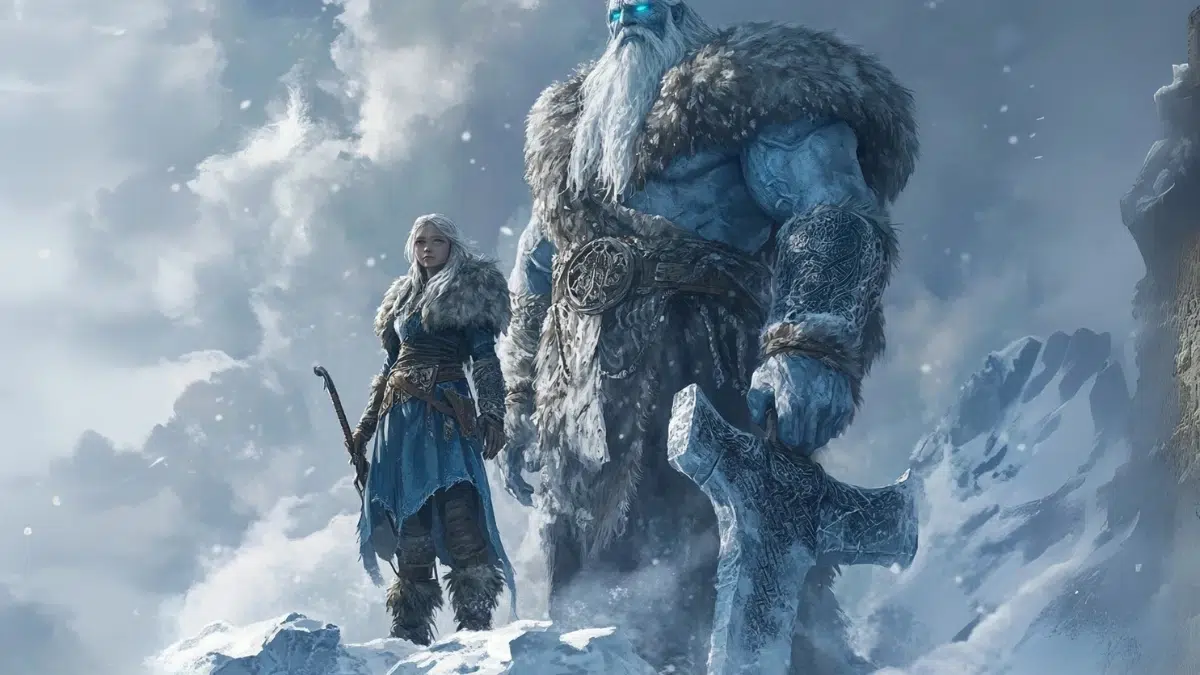
Idunn is the Norse goddess who guards the golden apples of youth. These magical apples keep the gods young and strong. Without them, the gods grow old and weak.
Thjazi tricks Loki into helping him kidnap Idunn. He wants the apples for himself. Loki lures Idunn out of Asgard, and Thjazi, in the form of a giant eagle, swoops down and carries her away.
Without Idunn, the gods start to age. They grow desperate and force Loki to bring her back. Loki borrows a falcon cloak, flies to Jotunheim, turns Idunn into a nut, and escapes with her.
Thjazi chases them in eagle form. The gods build a fire wall at Asgard’s gates. As Loki crosses, the gods light the fire. Thjazi flies too close and burns. He crashes and dies.
The gods kill Thjazi to protect Idunn and restore their youth.
Skadi Plot Revenge
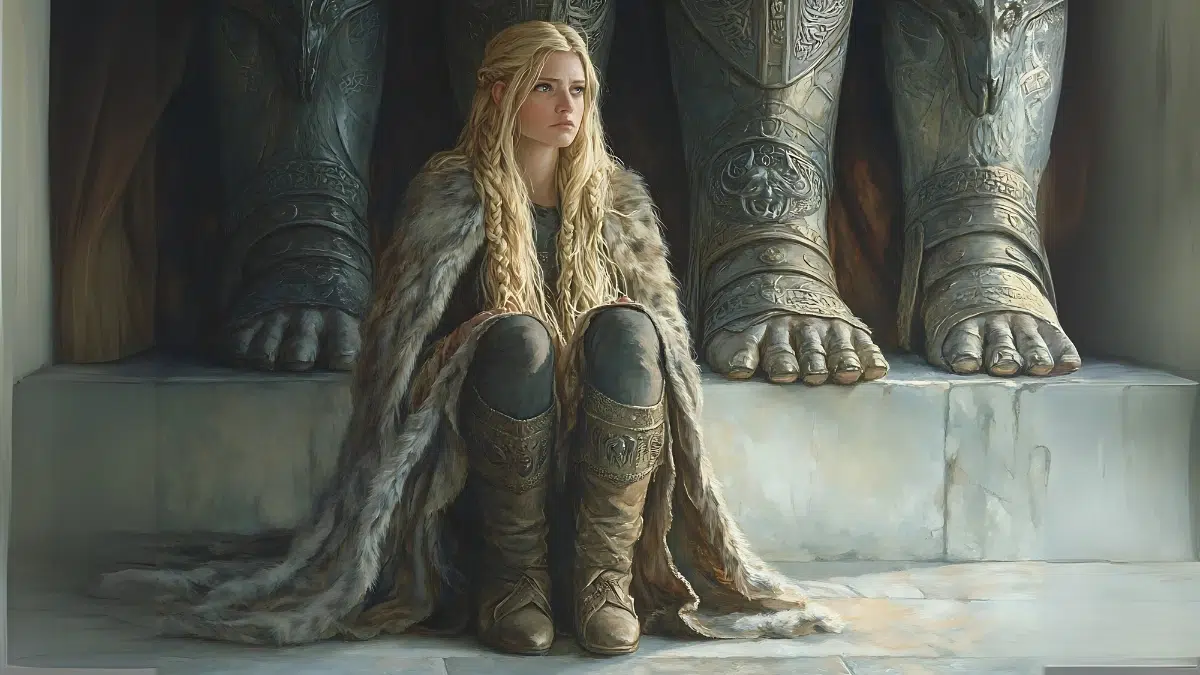
After Thjazi’s death, Skadi mourns his lose but she refuses to stay silence.
She arms herself with bow and skis, then marches to Asgard for justice. The Aesir see her iron will and courage and offer peace.
First, Odin sets Thjazi’s glowing eyes among stars, honouring her loss. Next, the gods force Loki to make her laugh; he ties a goat to himself and tumbles, and Skadi smiles.
Finally, they grant her a husband. She must pick by feet alone, without seeing the faces. Skadi hoped for Baldur, the most handsome god. Smooth, gleaming toes catch her eye, and she chooses Njord, calm god of wind and sea.
Skadi imagines shared adventures, yet their worlds differ. Njord loves salty breezes, soft sand, and gull cries. Skadi breathes thin alpine air, hears wolves, and feels snowflakes on lashes. They agree to split time: nine nights in Noatun by the shore, nine nights in Thrymheim under icy peaks.
Sea fog chills Skadi’s bones; mountain howls keep Njord awake. Comfort slips away. Homesickness grips them each night they stay away. They part as friends. Njord stays with rolling waves; Skadi returns to shining slopes.
Skadi’s spirit guides winter hunters and protects wanderers lost in blizzards. In clear night skies, Thjazi’s eyes still watch, reminding all of family bonds and fair justice. Skadi’s story shows strength, choice, and respect between rivals. She teaches that compromise matters, but staying true to yourself matters more.
Skadi’s Domain: The Winter Wilderness and Mountainous Majesty

In Norse mythology, Skadi reigns over realms resonant with unyielding frost and towering peaks.
Her domain embodies the extreme elements of nature: the stark wilderness of winter and the lofty splendor of mountains.
As the goddess associated with skiing and hunting, Skadi’s territory is the snow-covered highlands where cold winds sculpt the landscape.
Her presence is felt in the eerie silence of snowfalls and the jagged skylines of craggy ranges.
Ancient tales depict Skadi’s abode in the highest reaches, inaccessible to mortals, a testament to her supremacy and solitude in her frostbitten fortress amid frozen lakes and crevassed glaciers.
Family Ties: Skadi in the Norse Pantheon
Skadi, a jötunn or giantess, holds a unique position in the Norse pantheon, connected by her familial lineage and her marriage to the god Njord.
As a daughter of the giant Thiazi, Skadi’s heritage aligns her with the primal forces of nature, often standing in opposition to the Aesir, the main people of Norse gods.
Despite the natural enmity between giants and gods, Skadi’s marriage to Njord, a Vanir god associated with the sea, wealth, and fertility, is a symbol of the attempted unity between these two divine families.
This alliance, however brief, showcases the intricate web of relationships in Norse mythology, where alliances are strategically formed and often serve as bridges between differing realms and powers.
Skadi’s prominence in these myths highlights her status as both an outsider and an integral member within the Norse divine hierarchy.
Symbols and Representations: How Skadi is Portrayed
In Norse mythology, Skadi is often depicted as a robust and resilient goddess, mirroring the harshness of her wintery realm. Her symbols and representations include:
- Bow and Arrow: Emblematic of Skadi’s prowess as a huntress
- Skis or Snowshoes: Illustrating her dominion over winter landscapes and her ability to traverse them with ease
- Mountains and Winter Scenes: Commonly shown in artwork to signify her strong association with these natural elements
- Wolves or Snow Animals: Frequently accompany her, highlighting her connection to the wild
- Armour: Symbolizing her warrior aspect, sometimes she is depicted donning armor or bearing a shield
Skadi’s Marriage to Njord: A Union of Land and Sea

In Norse mythology, Skadi, representing winter and mountains, sought recompense for her father’s death from the gods.
Her compensation took form in a marriage to Njord, the Vanir god embodying the sea and seafaring.
Their union symbolized the harmony between disparate elements – the stark highlands clasping hands with the vast, restless ocean.
However, differing natures led to discord; Skadi loved the icy mountains while Njord preferred the sea’s shore.
Eventually, the two dwelled apart, Skadi in the snowy peaks of Thrymheim and Njord along the softer coasts, portraying a poetic, albeit unsuccessful melding of frost and brine.
Tales of Vengeance: Skadi’s Role in Loki’s Punishment
In Norse mythology, Skadi’s demand for retribution against Loki is infamously severe.
Loki’s role in the death of her father, Thjazi, left Skadi anguished, fueling her desire for vengeance.
When the gods apprehended the trickster god for his numerous transgressions, Skadi actively participated in his grim punishment.
She was responsible for procuring the serpent whose venom would drip endlessly onto Loki’s face as he lay bound beneath it.
Skadi plays more than a passive role; she exacted her revenge with chilling resolve.
She became the frosty, relentless winter goddess. This episode highlights her ruthless nature.
It also establishes her as a formidable deity in the pantheon.
The Worship of Skadi: Rituals and Offerings
Within the ancient Norse tradition, adherents sought to honor Skadi, revered as the goddess of winter and mountains, through various rituals and offerings. Here are common practices:
- Outdoor Activities: As a goddess associated with winter sports, followers might engage in skiing or ice skating as a form of homage.
- Altar Creation: Devotees often set up altars in her honor, featuring elements such as ice, stones, and images of the huntress goddess.
- Sacrificial Offerings: Traditional offerings included game meats and furs, acknowledging her domain over hunting.
- Winter Festivals: Celebrations during the winter solstice were key, with feasting and toasting in Skadi’s name, inviting her blessing for the season.
- Invocation and Prayers: Worshippers offer prayers to invoke her protection and guidance, especially for those traversing her snowy domains.
These practices reflected a deep respect and a desire for harmony with the natural world that Skadi embodied.
Skadi’s Modern Influence: From Literature to Pop Culture
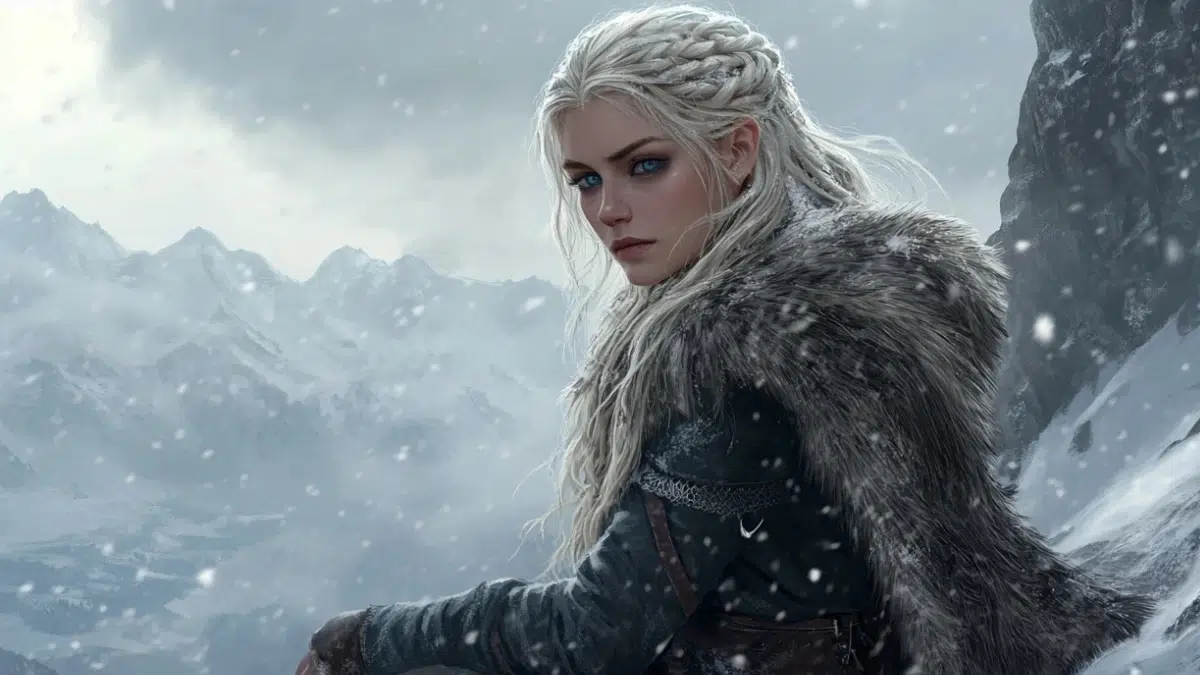
Skadi’s legacy extends far beyond ancient myth, intriguing contemporary minds.
In literature, she’s a favorite muse, inspiring characters resilient against nature’s harshness.
This goddess appears in comics, representing strength and winter’s ferocity, and influences video game characters designed with her likeness, often depicting her as a warrior or huntress with a strong connection to winter or mountainous landscapes.
Skadi’s traits resonate in modern ecological movements as well, symbolizing the untamed wilderness and the need for its preservation.
Her name even graces astronomical features, such as Saturn’s moon, Skathi, highlighting her enduring impact.
Retrieving Winter: The Seasonal Return of Skadi
As autumn wanes, signaling the impending end of the harvest season, a frost-tinged anticipation permeates the air.
This is the domain of Skadi, the mighty Norse goddess whose icy touch resurrects winter.
Readying her return, she garnishes nature with a prelude of crisper winds and a pale sun that heralds colder days.
- She cloaks the landscape in pristine snow, transforming it into her wintry kingdom.
- Mountains, her esteemed realm, gain an austere beauty, with peaks that glisten like diamonds against a stark blue sky.
- Creatures of all kinds adapt to her reign, displaying the resilience and quietude of nature’s cycle.
- Humans mark her arrival with tales and traditions, honoring the power and solemnity she brings with the snowflakes.
Each year, Skadi’s return is a time-honored rite, acknowledging the ebb and flow of the seasons and the enduring legacy of the goddess of winter.
Feminine Power and Independence: Skadi as a Role Model
Skadi, the Norse goddess of winter and mountains, epitomizes feminine strength and autonomy.
Descending from giants, she is characterized by fierce independence and a willful spirit.
Skadi chose her own path, famously demanding restitution from the gods for her father’s death.
She became a symbol of resilience, braving the loneliness of icy wilderness with proficiency in hunting and skiing.
Her story represents:
- The assertion of personal rights and justice.
- Profound self-reliance and mastery over challenging environments.
- The freedom to shape one’s destiny, undeterred by societal expectations.
Skadi’s legacy inspires a powerful vision of womanhood, unbounded by convention and thriving amidst adversity.
The Enduring Legacy of Skadi, Norse Goddess of Winter
Skadi’s legacy transcends the ancient texts, continuing to captivate the modern imagination.
Her spirit endures in the snowy landscapes of Scandinavia, where harsh winters reflect her character.
In contemporary media, Skadi inspires characters who embody independence and resilience, mirroring her own formidable nature.
As a symbol of winter and the mountains, Skadi remains a powerful figure in the celebration of northern cultures, undeniably shaping the enduring mythos of the Norse pantheon.
Learn more about Norse Mythology: