
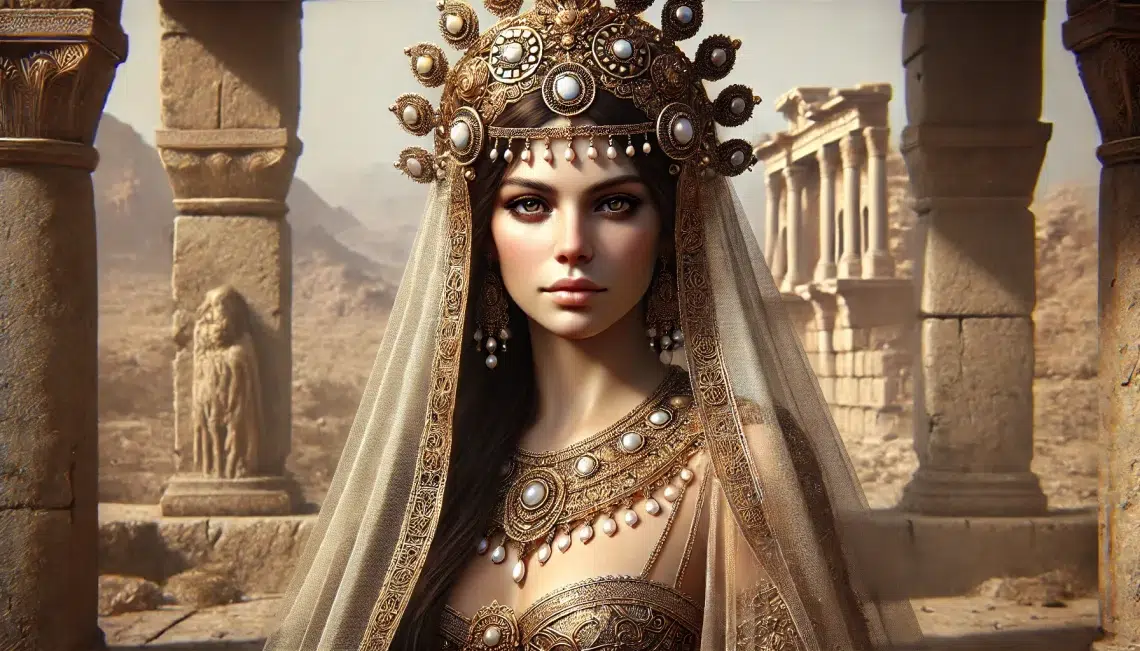
Queen Zenobia: Rebel Warrior and Syrian Archer
Queen Zenobia rules the Palmyrene Empire becoming famous for bravery and leadership. Her archery skills set her apart.
Born into nobility, Zenobia rises to power after her husband’s death. She expands her empire quickly. Her reign includes significant conquests and cultural development. Zenobia’s archery symbolizes her strength and leadership. She inspires her troops and secures her legacy highlighting her strategic mind and dedication to her people and empire.
Zenobia remains a symbol of resilience and power.
Early Life and Rise to Power
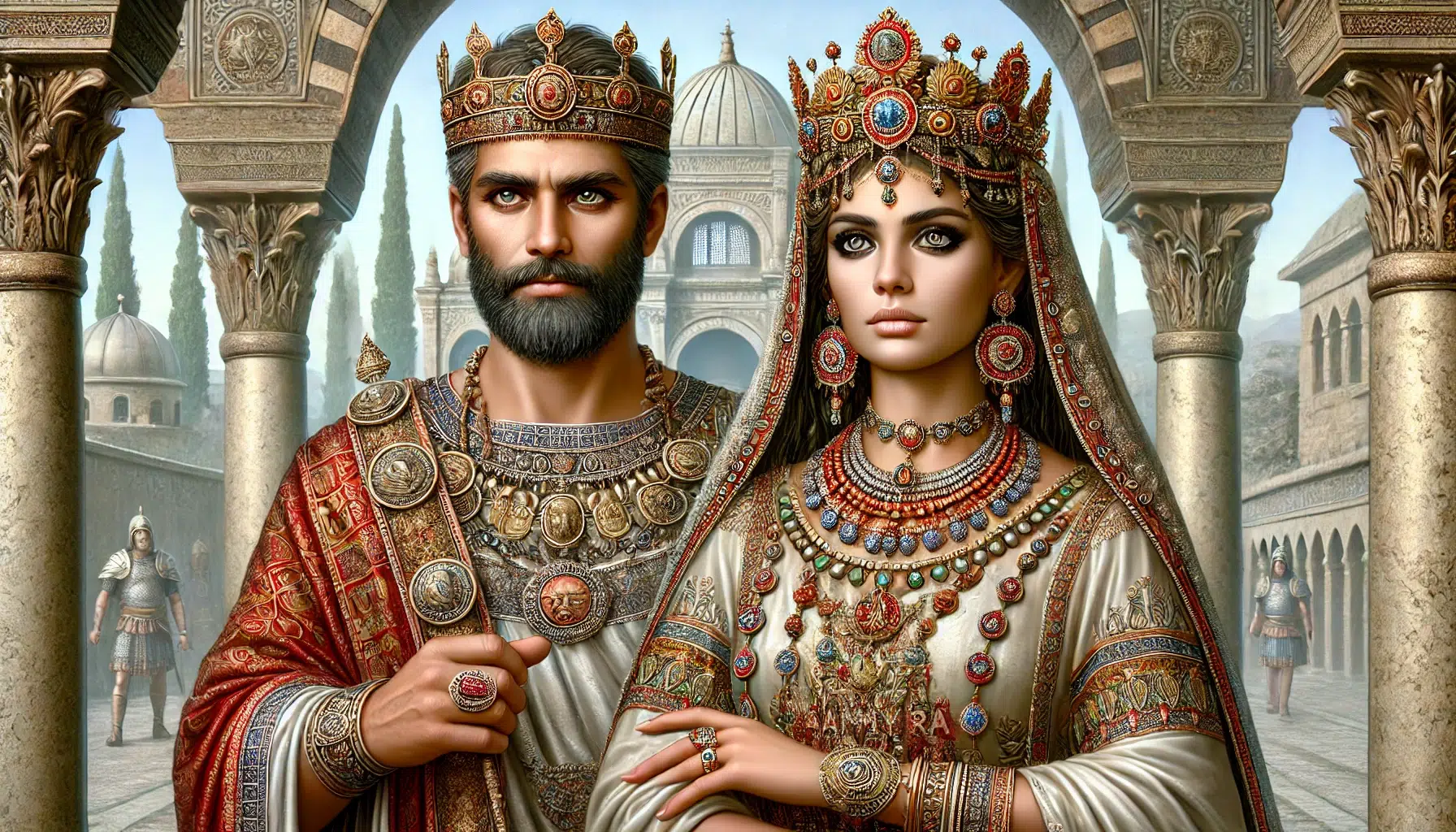
Zenobia was born into a noble family in Palmyra. Her intelligence and ambition became apparent early. She married King Odaenathus, the ruler of Palmyra, and gained influence in his court. Odaenathus respected her counsel and involved her in governance. Zenobia’s strategic mind and leadership skills impressed many.
When Odaenathus was assassinated, Zenobia assumed control. She acted decisively to secure her son’s succession. Queen Zenobia quickly consolidated power and began expanding the empire. She demonstrated strong leadership and commanded respect from her subjects and military.
Queen Zenobia’s Early Reign
Zenobia’s early reign focused on securing borders and stabilizing the region. She formed alliances with neighbouring peoples and kingdoms. These alliances helped strengthen her position and deter potential threats. Queen Zenobia also focused on building a robust military force. She recruited skilled soldiers and trained them rigorously, ensuring her army was disciplined and effective.
Her military campaigns were strategic and well-planned. Zenobia led her troops personally, inspiring them with her presence and skill. She expanded the Palmyrene Empire into Egypt, Asia Minor, and parts of Arabia. These conquests increased her power and influence significantly.
Queen Zenobia’s administrative skills matched her military prowess. She implemented fair policies and promoted economic growth. Trade flourished under her rule, bringing prosperity to Palmyra. She supported cultural and educational initiatives, fostering a vibrant and intellectual society.
Zenobia’s rise to power showcased her remarkable abilities. Her intelligence, ambition, and leadership qualities ensured her success. She transformed Palmyra into a powerful and influential empire. Her reign marked a period of significant growth and development.
Zenobia’s early life and rise to power set the stage for her illustrious reign. Her strategic mind and leadership skills made her a formidable ruler, admired and respected by many.
The Palmyrene Empire
The Palmyrene Empire was a short-lived empire centred around the city of Palmyra, located in modern-day Syria. It emerged during the Crisis of the Third Century in the Roman Empire, specifically from 260 to 273 AD.
Palmyra was a wealthy and influential city due to its strategic location on trade routes connecting the Roman Empire with Persia, India, and China.
The Palmyrene Empire formed when Queen Zenobia would declare independence from Rome and expand her control over the eastern provinces. At its height, the empire included territories in Syria, Egypt, and parts of Asia Minor.
Zenobia’s reign saw significant military, economic, and cultural achievements, though the empire eventually fell to Roman forces in 273 AD.
Reign of Queen Zenobia
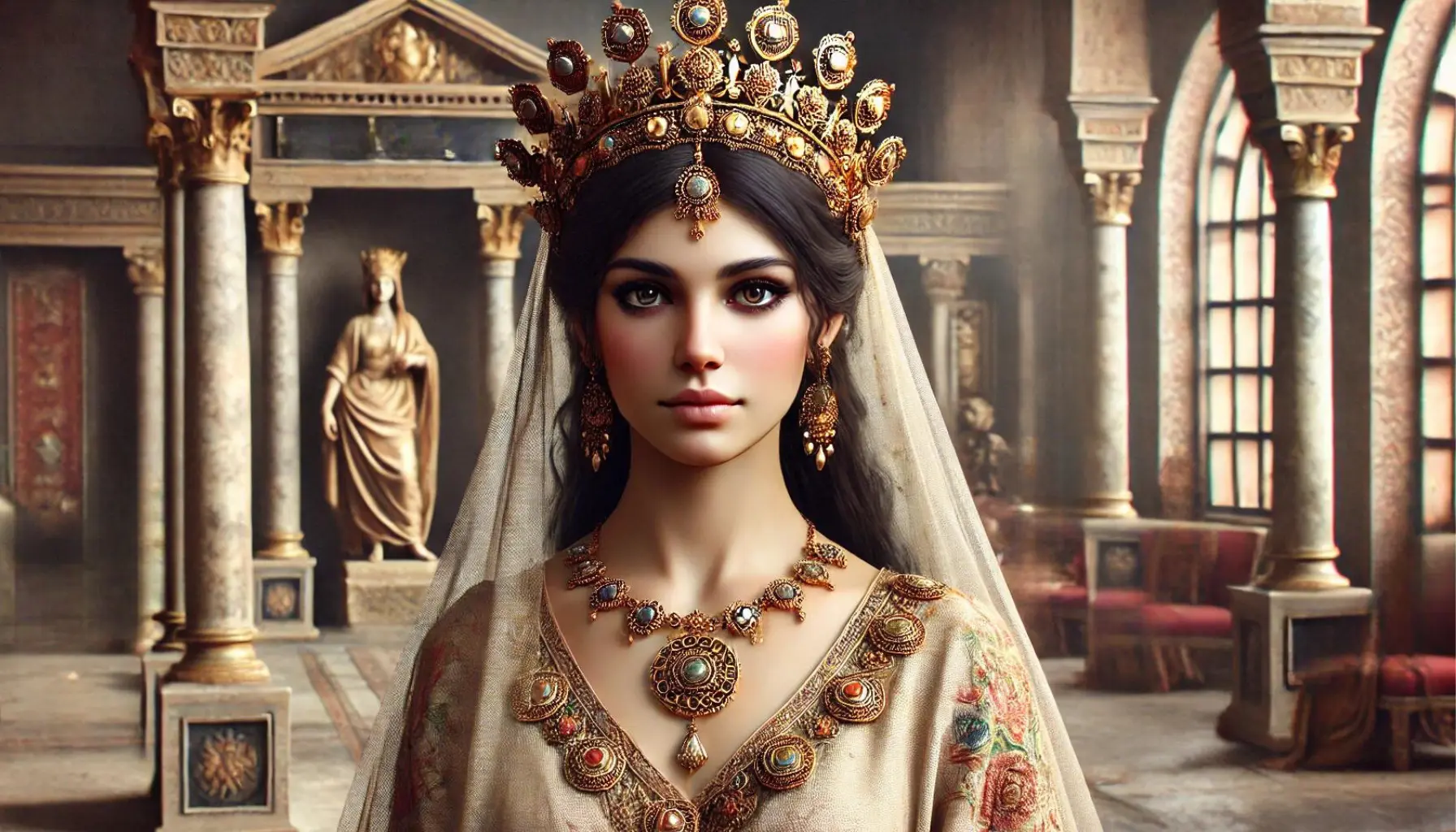
Zenobia’s reign saw remarkable achievements. As queen, she would lead the Palmyrene Empire to unprecedented heights. Her administration focused on expansion, cultural development, and economic prosperity.
Expansion of the Empire
Zenobia would embark on ambitious military campaigns, conquering Egypt, parts of Asia Minor, and regions in Arabia. These territories increase her empire’s power and influence. Her military strategies were precise and effective. Zenobia’s leadership on the battlefield inspires her troops. She often leads them personally, demonstrating bravery and skill.
Governance and Administration
Zenobia rules with wisdom and fairness. She implements policies that promote justice and stability. Her administration supports trade and commerce. This economic focus brought wealth to Palmyra allowing markets to flourish. The city became a hub of commercial activity.
Cultural and Intellectual Support
Zenobia values education and culture and encourages scholars, artists, and philosophers to thrive in Palmyra. Under her rule, the city becomes a centre of learning and cultural exchange.
Zenobia herself was well-educated, speaking multiple languages and engaging in intellectual pursuits. Her reign saw the construction of libraries and educational institutions, enriching Palmyrene society.
Her Religious Tolerance
Zenobia practices religious tolerance by respecting various faiths within her empire. This approach fosters harmony and unity among her diverse subjects. Her policies allow different religious groups to coexist peacefully, contributing to the empire’s stability.
Infrastructure and Development
Zenobia invests in infrastructure projects by improving roads, building public buildings, and enhancing city defenses. These developments facilitate trade and communication within the empire. The improved infrastructure supports economic growth and strengthens Zenobia’s control over her territories.
Diplomatic Relations
Zenobia continues to maintain diplomatic relations with neighbouring powers. She forms alliances and negotiates treaties to secure her empire’s borders. Her diplomatic skills complement her military strategies, ensuring Palmyra’s security and influence.
Zenobia’s reign exemplifies effective leadership. Her focus on expansion, governance, culture, and infrastructure transforms Palmyra into a thriving empire. She balances military ambition with wise administration. This earns respect and admiration from her subjects and beyond. Zenobia’s reign remains a testament to her remarkable abilities as a ruler.
Zenobia as an Archer
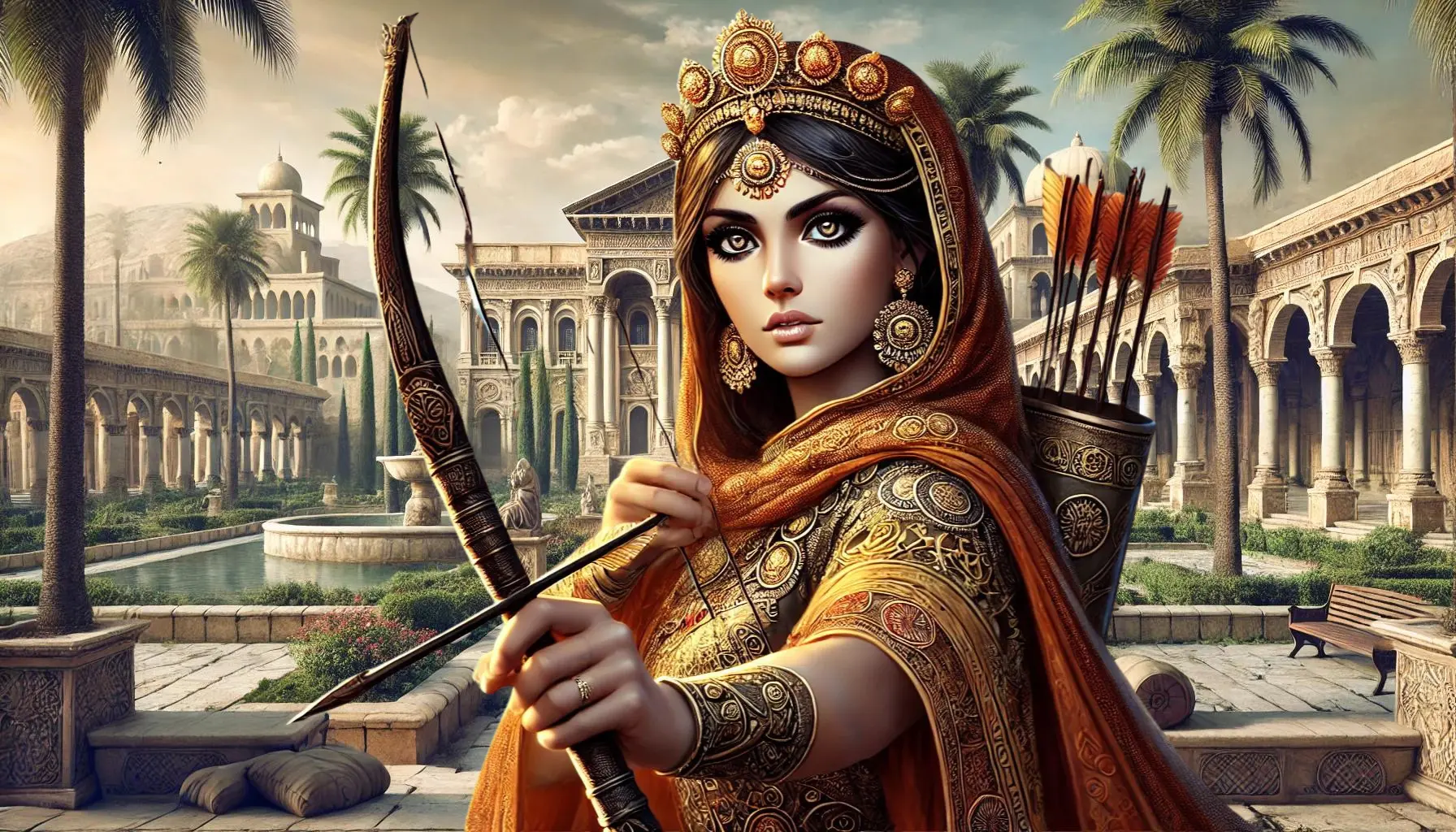
Queen Zenobia’s prowess in archery stands out in her legacy. Her skill with the bow symbolized her strength and leadership, setting her apart as a warrior queen.
Zenobia dedicated herself to mastering archery. She trained diligently from a young age, honing her skills with precision. Her rigorous practice sessions demonstrated her commitment to excellence. Zenobia’s proficiency with the bow earned her respect and admiration from her subjects and soldiers.
Cultural Significance and Symbolism of Queen Zenobia
Archery holds a special place in Palmyrene culture, symbolizing strength, precision, and leadership. By excelling in this discipline, Zenobia aligns herself with these values. Her mastery of archery showcases her as a strong and capable leader, reinforcing her authority and inspiring confidence in her people.
Zenobia’s bow became a personal symbol of her reign. It represents her strength, resilience, and unwavering determination. The image of Zenobia with her bow resonates deeply with her people, becoming an enduring symbol of her legacy.
Zenobia’s archery skills represent more than just physical prowess. They symbolize her strategic mind and disciplined nature. In battle, she led by example, demonstrating bravery and skill on the front lines. Her ability to wield the bow effectively mirrors her ability to govern and lead her empire.
Archery in Military Tactics and Inspirational Leadership
Zenobia’s archery inspired her troops. She often led them into battle, demonstrating her skills and boosting their morale. Her presence on the battlefield was a powerful motivator. Soldiers admired her courage and followed her commands with unwavering loyalty. Zenobia’s leadership through archery would strengthen the cohesion and effectiveness of her military forces.
Her archery skills play a crucial role in her identity as a leader. They symbolize her strength, strategic mind, and inspirational leadership. Her mastery of the bow reinforces her authority and left a lasting impression on her empire and history.
Zenobia integrated archery into her military strategies. She would use archers effectively in battles, employing their skills to outmaneuver and overpower enemies. Her understanding of archery’s tactical advantages would contribute to her successes in expanding and defending her empire. Zenobia’s strategic use of archers showcase her military knowledge and innovative thinking.
Queen Zenobia’s Military Campaigns and Battles
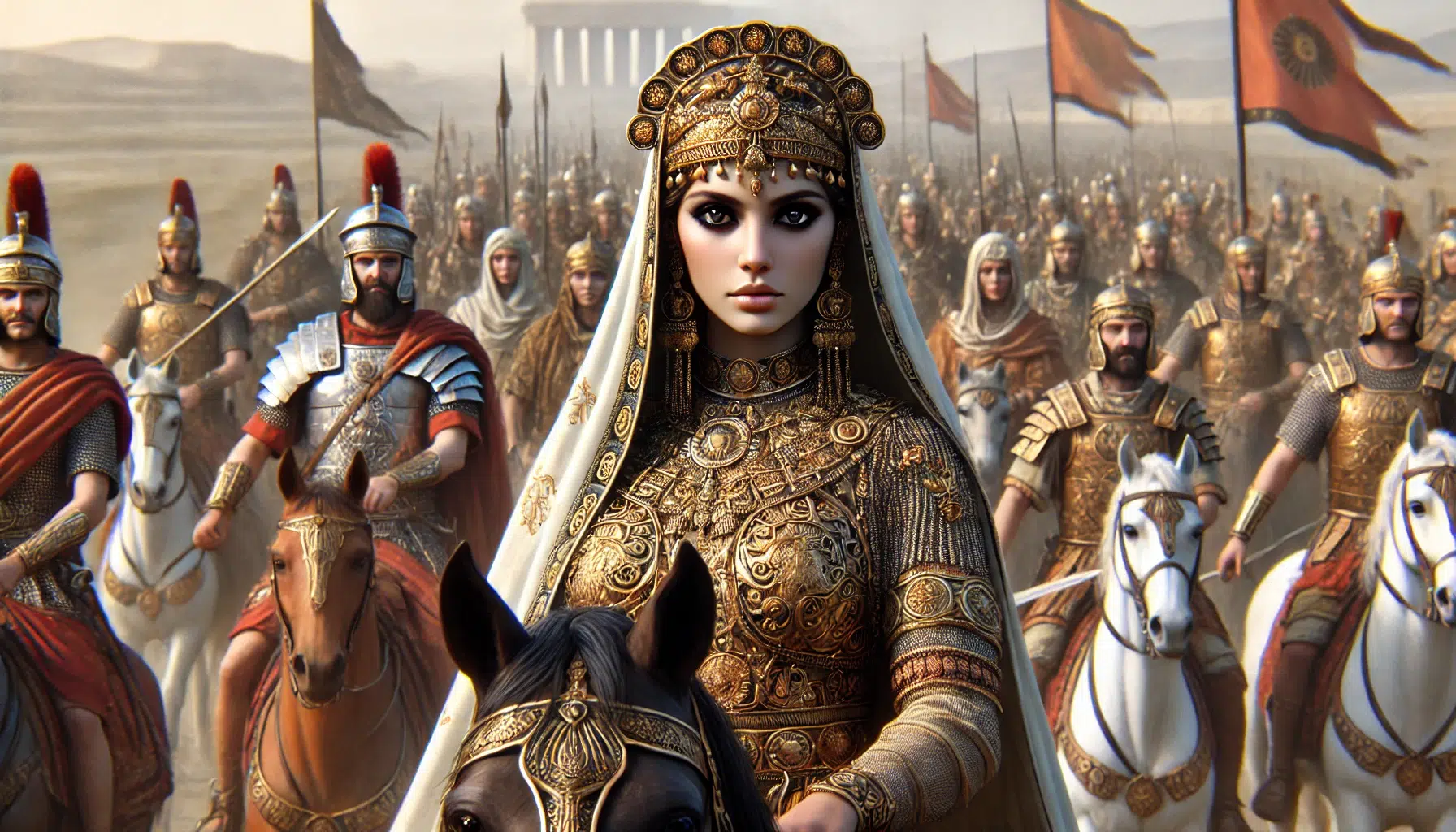
Queen Zenobia led many successful military campaigns. Her smart planning and strong leadership helped her win battles and grow her empire.
Zenobia uses archers cleverly in her battles. She has them weaken the enemy before sending in the rest of her troops. This strategy reduces her own casualties and increases her chances of winning. Zenobia knows the land well and uses it to her advantage, often outsmarting her enemies.
Queen Zenobia’s Conquest of Egypt
n 270 AD, Zenobia decided to conquer Egypt. Egypt was rich and important for trade. Zenobia saw a chance because Rome was weak there. She led her army to Alexandria, Egypt’s main city. Her soldiers fought and beat the Roman forces quickly. Taking Alexandria gave Zenobia control over Egypt’s wealth and grain. This made Palmyra richer and stronger.
With Egypt, Queen Zenobia also controlled key trade routes between the Mediterranean and the Red Sea. This helped Palmyra become an important trading center. Zenobia’s victory in Egypt showed her smart planning and leadership. Her success in Egypt made her one of the most powerful rulers of her time.
Zenobia’s conquest of Egypt marked a high point in her reign. It showed her ability to use both strategy and force to achieve her goals. The wealth and resources from Egypt helped Palmyra grow and thrive under her rule.
Expansion into Asia Minor
In 271 AD, Zenobia began expanding into Asia Minor. She targeted key cities for their strategic importance. Her army, disciplined and well-trained, moves quickly. They capture cities like Antioch and Tarsus, which increases Palmyra’s influence. These cities hold valuable resources and trade routes.
Zenobia’s forces use smart tactics to outmaneuver enemies. Her leadership inspires her troops, leading to swift victories. Controlling Asia Minor gives Zenobia more power and wealth. This region’s control strengthens Palmyra’s economy and military presence.
Zenobia also built strong alliances with local leaders. These alliances helped secure her new territories. She improved trade by controlling important routes, boosting Palmyra’s prosperity. Zenobia’s expansion into Asia Minor showed her strategic brilliance and determination.
Her conquests in Asia Minor mark a significant achievement in her reign. They highlight her ability to lead and expand her empire effectively, showcasing her remarkable leadership and tactical skills.
Campaigns in Arabia
In 272 AD, Zenobia launched campaigns in Arabia. She aimed to secure vital trade routes. Her army moved through key areas like Petra and Bosra. Zenobia formed alliances with local tribal people, ensuring their support. These alliances helped her control important caravan routes making Palmyra an important trade centre.
Her forces faced harsh desert conditions but adapted well. Zenobia’s campaigns boosted Palmyra’s economy by securing these trade routes. Controlling Arabia increased Palmyra’s wealth and influence. Zenobia’s efforts in Arabia showed her strategic thinking and ability to lead in challenging environments, further solidifying her reputation as a powerful and capable ruler.
Downfall and Captivity of Queen Zenobia by the Romans
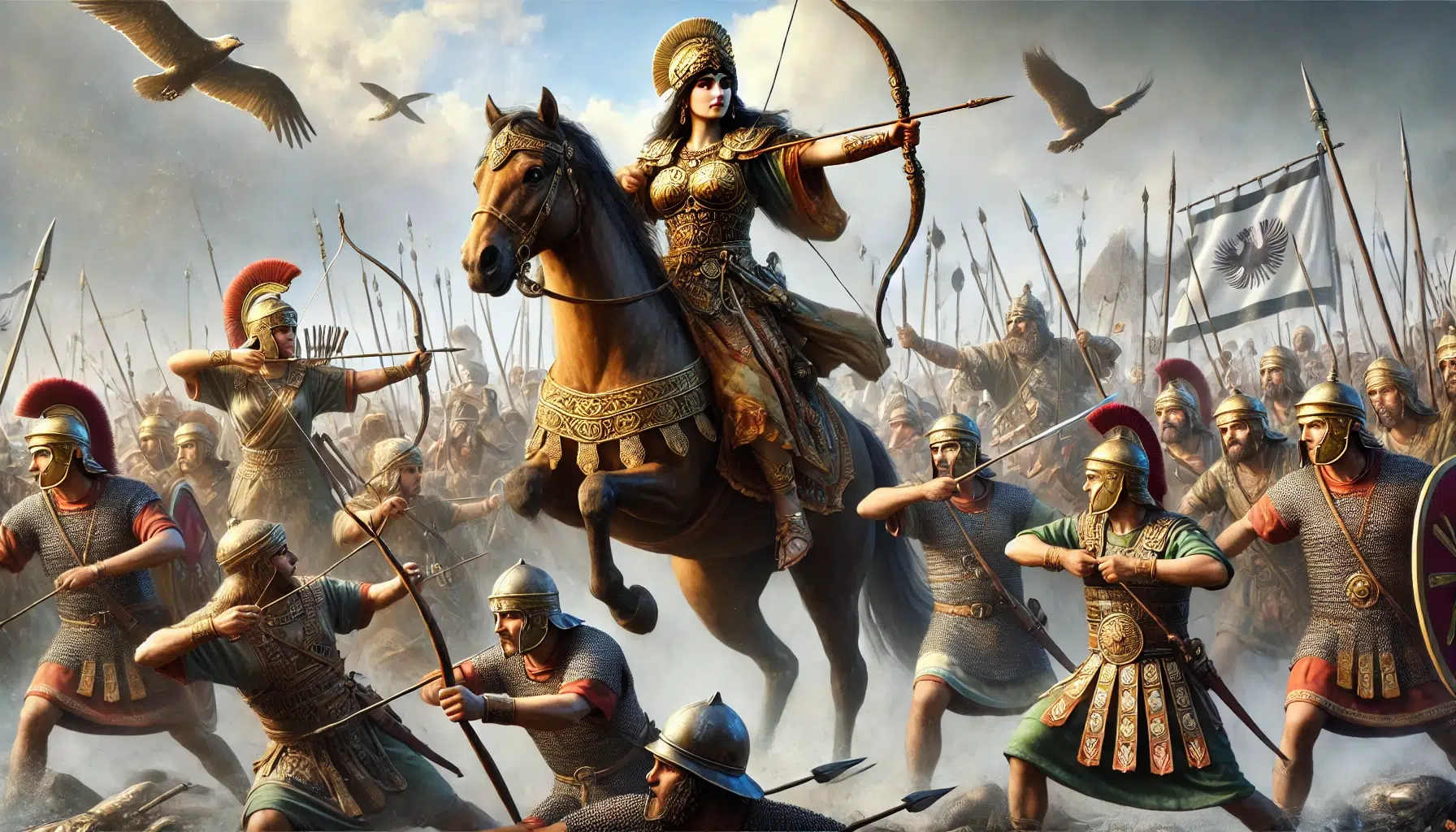
Zenobia’s success caught Rome’s attention and Emperor Aurelian decides to fight back.
In 272 AD, Emperor Aurelian decides to reclaim the territories Zenobia controls. He leads a powerful Roman army against her. Zenobia prepares her defenses, focusing on key cities like Emesa and Palmyra. Despite her efforts, Aurelian’s forces advance steadily.
At the Battle of Emesa, Zenobia’s army fought bravely. Zenobia personally led her troops, demonstrating her courage and determination. Her archers and cavalry would play crucial roles in the battle. However, the Romans, with their superior numbers and tactics, gain the upper hand. Zenobia’s forces eventually retreated to Palmyra, her capital.
Queen Zenobia Defends Palmyra
In Palmyra, Zenobia organizes a determined defense. She hopes to hold out against the Romans and rally support. Aurelian’s army surrounds the city, cutting off supplies and reinforcements. The siege puts immense pressure on Zenobia and her people. Despite the dire situation, Zenobia refuses to surrender easily. She continues to inspire her troops and citizens, urging them to resist the Roman assault.
As the siege dragged on, food and resources dwindled. The people of Palmyra face severe hardships. Aurelian offers Zenobia terms of surrender, but she remains defiant. Eventually, the situation became untenable. Zenobia attempts to escape to the Sassanian Empire, seeking refuge and assistance. However, Roman forces capture her near the Euphrates River.
Aurelian takes Zenobia back to Rome as a prisoner. In Rome, she faces a humiliating public parade as part of Aurelian’s triumph. Despite her defeat, Zenobia maintains her dignity and composure. Her resilience impresses many, even her captors.
Aurelian would spare Zenobia’s life, granting her a villa in Tibur (modern Tivoli). She lives there under comfortable conditions, away from political power. Zenobia’s downfall marks the end of Palmyra’s independence. Her captivity highlights her strength and resilience, even in defeat. Zenobia’s legacy as a courageous and capable leader endured, inspiring future generations.
Legacy and Cultural Impact of Queen Zenobia
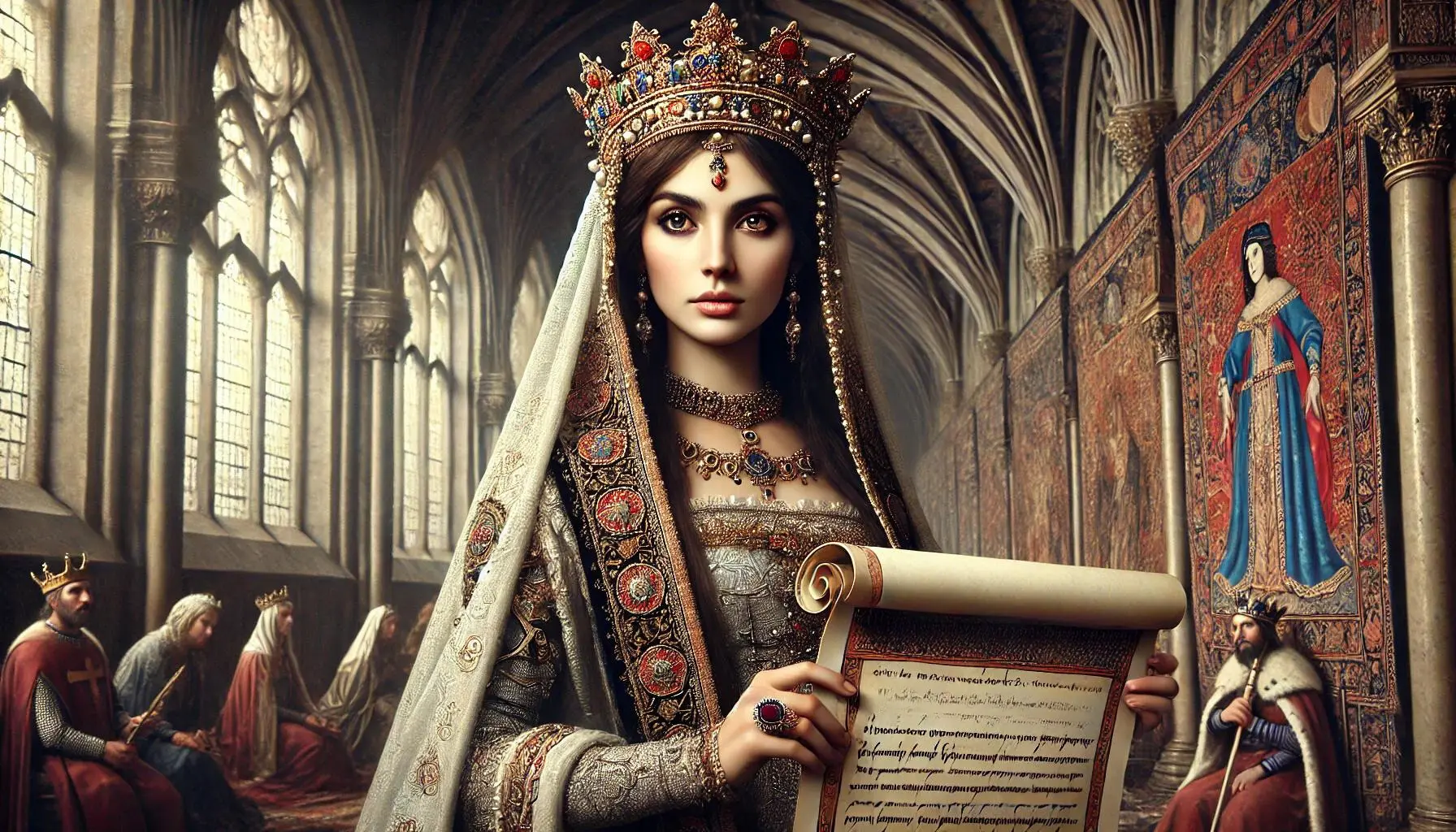
Zenobia’s legacy as a powerful and skilled leader endures. Her reign left a lasting impact on history and culture. As queen of Palmyra, she expanded her empire, demonstrating exceptional leadership and strategic prowess.
Zenobia’s achievements inspire admiration. Her successful military campaigns against Rome and other regions showcase her tactical brilliance. She remains a symbol of strength and resilience, especially for women in leadership.
Cultural depictions of Zenobia abound. Ancient writers like Zosimus and Vopiscus documented her reign, emphasizing her intelligence and bravery. In art, Zenobia appears in paintings and sculptures, often depicted with regal bearing and military attire.
Zenobia’s influence extends to literature. Authors like Geoffrey Chaucer and William Shakespeare referenced her in their works. Chaucer’s “The Monk’s Tale” praises her as a noble and valiant queen.
Zenobia also influenced modern popular culture. Books, films, and TV series depict her life and achievements. Her story resonates due to her defiance against Rome and her role as a female ruler in a male-dominated era.
Zenobia’s policies on trade, education, and religious tolerance had long-lasting effects. She promoted cultural and economic prosperity in Palmyra, creating a thriving center of commerce and learning. Her commitment to religious tolerance fostered harmony among diverse groups within her empire.
Zenobia’s legacy remains relevant today. She stands as a symbol of courage, intelligence, and resilience. Her life and reign continue to inspire and captivate people around the world, reflecting her enduring impact on history and culture.
Her Influence of Women in Warfare
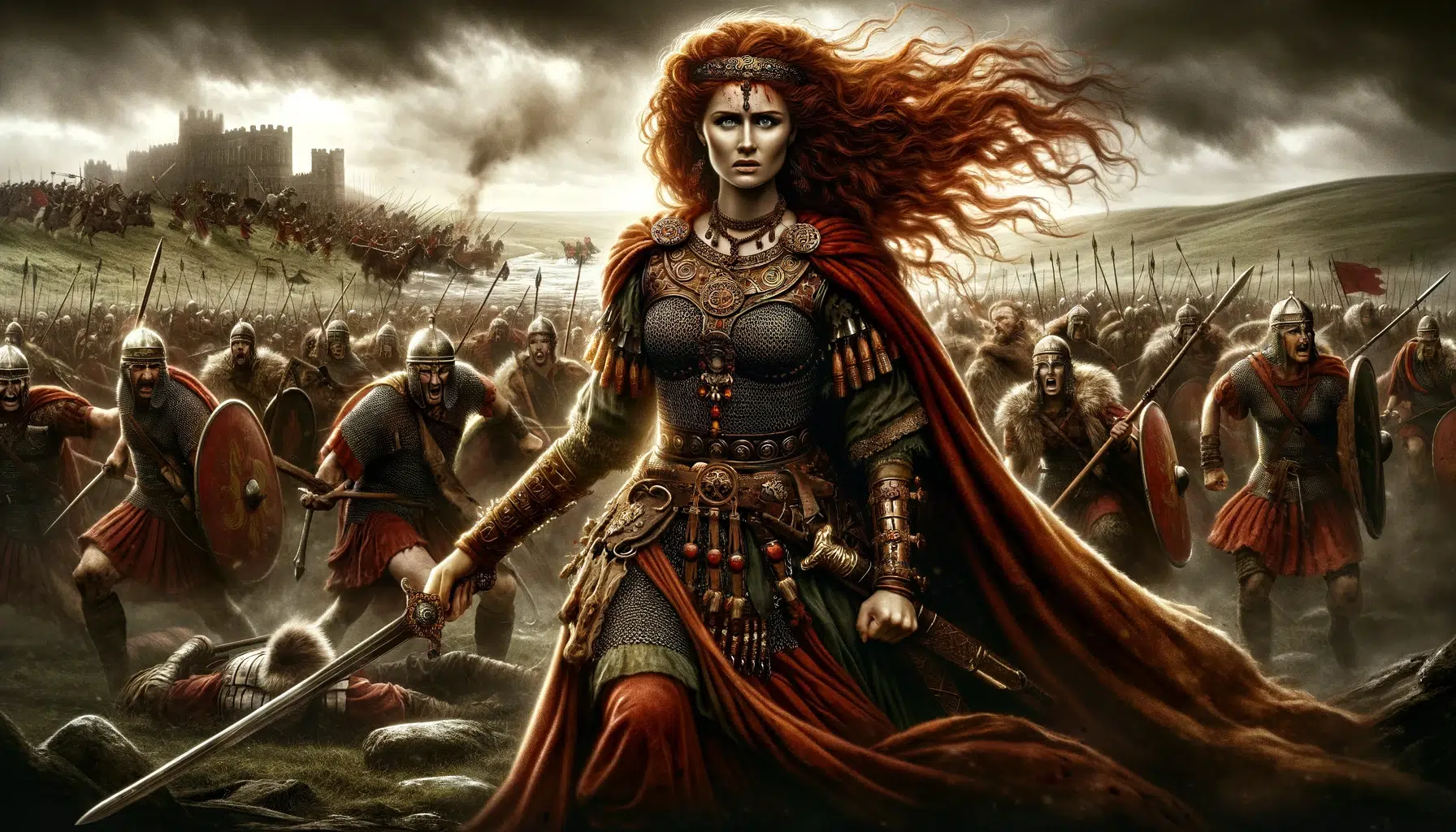
Queen Zenobia of Palmyra is a significant historical figure who influenced women’s roles in warfare and leadership.
Here are some key points about her influence:
Leadership and Command
- Military Leadership: Zenobia was known for her military acumen and strategic prowess. She personally led her troops into battle, which was unusual for women of her time.
- Strategic Alliances: She formed alliances and expanded her empire through both diplomacy and military strength, demonstrating that women could be effective leaders in warfare.
- Other examples include:
- Joan of Arc (France): Led French troops to several important victories during the Hundred Years’ War, claiming divine guidance
- Queen Boudica (Britain): Led a major uprising against the occupying Roman forces in AD 60/61
- Ching Shih (China): One of the most successful female pirates in history. She commanded the Red Flag Fleet, which at its height included hundreds of ships and thousands of pirates.
Inspiration for Future Generations

- Symbol of Strength: Zenobia’s courage and leadership have inspired countless women throughout history to pursue roles in the military and leadership positions.
- Role Model: She served as a role model for women in patriarchal societies, proving that women could lead armies and govern empires effectively.
- Other examples include:
- Queen Seondeok (Korea): the first female ruler of Korea, reigned from 632 to 647 and was known for her wisdom and leadership.
- Harriet Tubman (United States): Not only a conductor on the Underground Railroad but also served as a scout and spy for the Union Army during the Civil War
- Manuela Sáenz (South America): A revolutionary hero who supported Simón Bolívar in the struggle for South American independence
Cultural and Historical Impact

- Historical Recognition: Her story has been documented by numerous historians, ensuring her legacy as a warrior queen endures.
- Cultural Icon: Zenobia has become a cultural icon, representing women’s strength, intelligence, and capability in warfare and governance.
- Other examples include:
- Cleopatra (Egypt): Known for her political and military alliances with Julius Caesar and Mark Antony, significantly impacting Roman politics
- Tomoe Gozen (Japan): A samurai warrior who fought in the Genpei War, becoming a legendary figure in Japanese history
- Fu Hao (China): A military general and high priestess during the Shang Dynasty. She led numerous military campaigns and was buried with extensive military artifacts.
Breaking Gender Norms
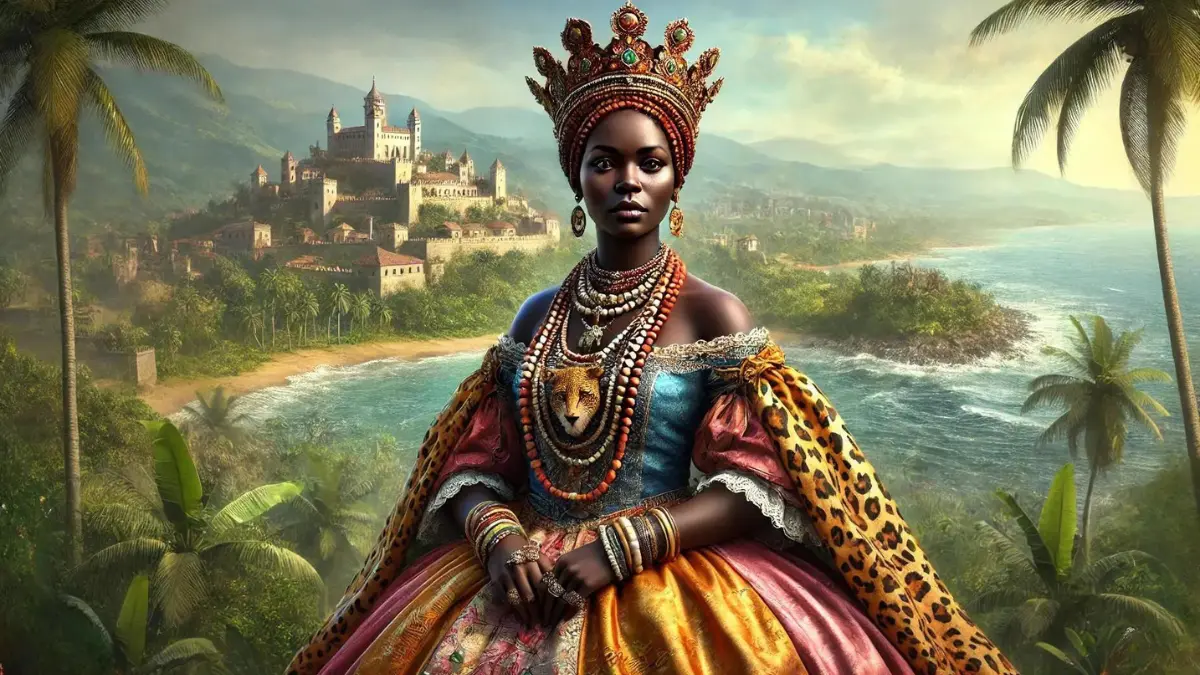
- Challenging Stereotypes: By taking on a traditionally male role, Zenobia challenged the stereotypes and limitations placed on women during her time.
- Encouraging Female Participation: Her success encouraged other women to take on active roles in defense and governance, paving the way for future female leaders and warriors.
- Other examples include:
- Mulan (China): A legendary figure who, according to Chinese folklore, disguised herself as a man to take her father’s place in the army
- Laskarina Bouboulina (Greece): A naval commander in the Greek War of Independence against the Ottoman Empire
- Queen Nzinga (Angola): A 17th-century ruler of the Ndongo and Matamba Kingdoms in what is now Angola. She fought against Portuguese colonization and slave trade.
Legacy in Warfare

- Military Tactics: Her innovative tactics and strategies are studied in military history, showcasing her significant contributions to warfare.
- Enduring Legend: Zenobia’s legend endures in literature, art, and popular culture, continually inspiring new generations to acknowledge the potential of women in warfare and leadership roles.
- Other examples include:
- Rani Lakshmibai (India): A leading figure in the Indian Rebellion of 1857, known for her bravery and leadership in battle
- Queen Amina (Nigeria): Expanded the territory of the Hausa people to its largest borders through her military conquests
Learn more about:
Conclusion
Queen Zenobia ruled the Palmyrene Empire with bravery and skill. Her military campaigns in Egypt and Asia Minor expanded her influence.
She excelled in archery, inspiring her troops. Despite her eventual defeat by Rome, she remained dignified and resilient.
Zenobia’s leadership promoted trade, education, and religious tolerance in Palmyra.
Her legacy endures as a symbol of strength and intelligence. Zenobia’s story continues to inspire and captivate people today, highlighting her significant impact on history and culture.
Her remarkable life reminds us of the power of determination and leadership.