
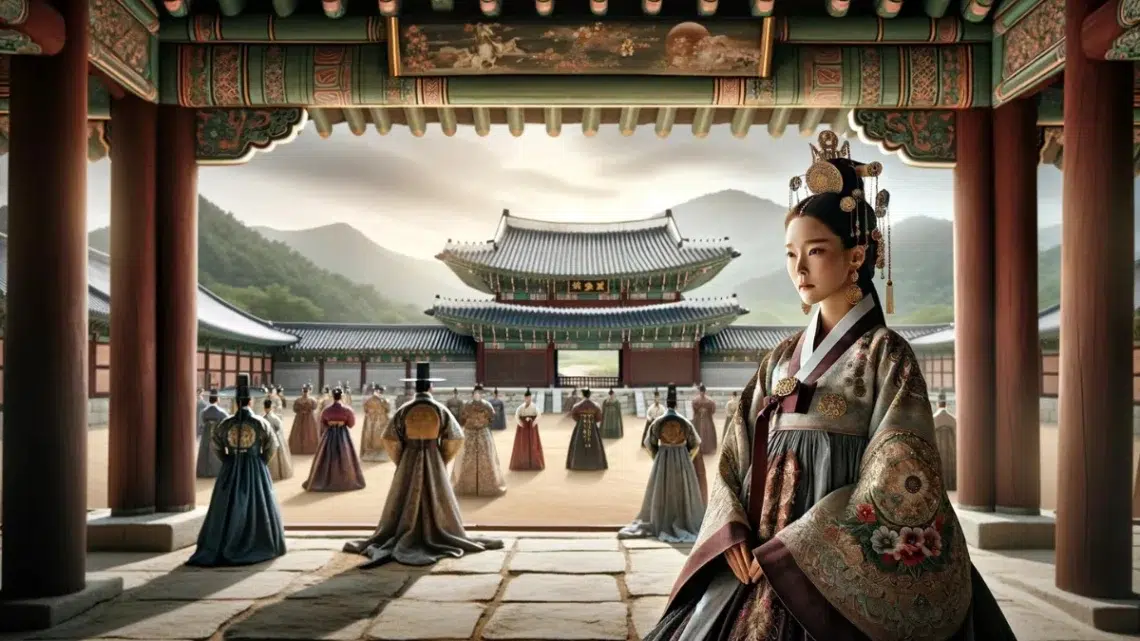
Queen Seondeok: Silla’s Legendary Female Monarch
Queen Seondeok of Silla was the first reigning queen in Silla. She was also the second female sovereign in recorded East Asian history.
Her influence and legacy spanned from 632 to 647, making her one of the most prominent monarchs in Korean history.
Key Takeaways:
- Queen Seondeok was the first reigning queen in Silla and the second female sovereign in recorded East Asian history
- Her reign marked a renaissance in thought, literature, and the arts in Silla
- Queen Seondeok made significant achievements in diplomacy and cultural advancement
- She championed Buddhism and its spread in Silla
- Queen Seondeok’s reign left a lasting impact on Silla and Korean history, inspiring future generations
The Life and Reign of Queen Seondeok
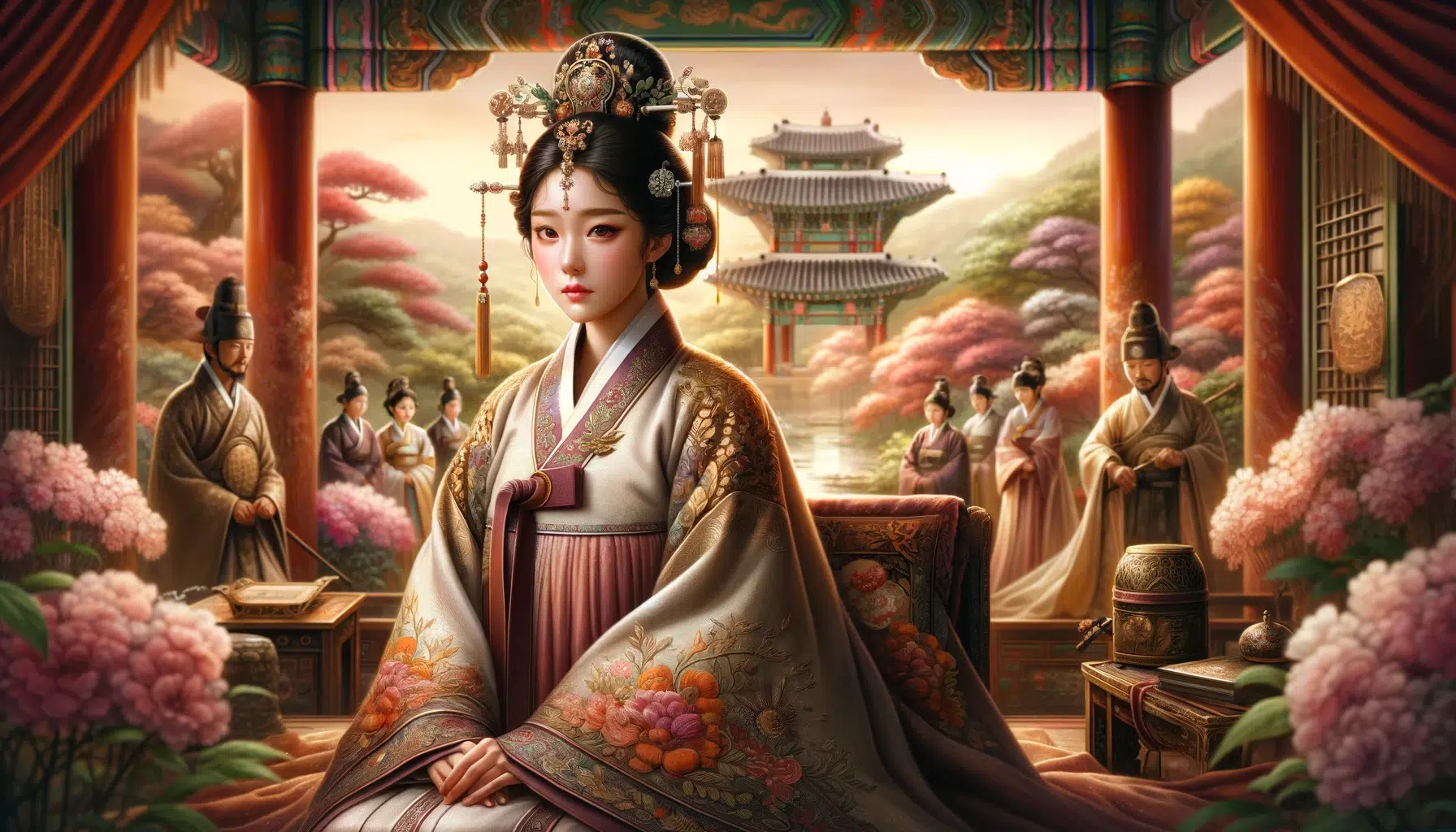
Queen Seondeok, born Princess Deokman, was a prominent figure in Korean history.
She was the daughter of King Jinpyeong and Queen Maya of Silla, a dynasty that reigned in the Korean Peninsula during the 7th century.
Queen Seondeok was known for her intelligence and accomplishments from a young age, earning her the respect and admiration of her people.
Princess Deokman’s remarkable qualities did not go unnoticed, especially when King Jinpyeong found himself without a male heir to pass the crown to.
Recognizing her intelligence and high-ranking status, he chose Princess Deokman as his successor.
In 634, she became the first queen regnant of Silla, and her reign lasted for 15 years, from 632 to 647.
During Queen Seondeok’s rule, she prioritized the welfare of her people, aiming to improve their lives and well-being.
She focused on the development of her kingdom, including diplomacy with the Tang Dynasty in China. Through diplomatic efforts, Queen Seondeok would establish a strong alliance with the Tang Dynasty.
This contributed to regional stability and prosperity.
| Key Aspects | Description |
|---|---|
| Born Name | Princess Deokman |
| Reign | 632-647 |
| Title | First queen regnant of Silla |
| Focus Areas | Welfare of her people, diplomacy, Buddhism, and cultural advancement |
| Legacy | Recognized as an influential female ruler in Korean history |
Queen Seondeok’s life and achievements continue to inspire and captivate audiences around the world.
Queen Seondeok’s Achievements and Contributions
During Queen Seondeok of Silla’s reign, she accomplished remarkable feats that left a lasting impact on Korean history.
Her diplomatic efforts and cultural advancements transformed Silla into a thriving kingdom.
Queen Seondeok was instrumental in the cultural advancement of Silla.
She sponsored the construction of Buddhist temples, including the iconic Hwangnyongsa pagoda.
These temples became important centers for religious and intellectual activities, and they helped promote Buddhism throughout Silla.
Queen Seondeok’s support for Buddhism not only enriched the spiritual lives of her people but also contributed to the overall cultural development of the kingdom.
In addition to her contributions to Buddhism, Queen Seondeok nurtured learning and the arts in Silla.
She encouraged the development of literature and thought, fostering a climate of intellectual growth and creativity.
Under her patronage, scholars and artists thrived, leading to significant advancements in various artistic fields.
Queen Seondeok’s dedication to diplomacy, Buddhism, and cultural advancement transformed Silla into a powerhouse of Korean history.
Her achievements continue to be celebrated, showcasing the incredible capabilities of a female ruler.
Learn more about other powerful female leaders: Lady Fu Hao: China’s Pioneering Female Archer
Diplomacy during Queen Seondeok’s Reign
Queen Seondeok faced tough times in the Silla Kingdom from political problems.
She had to deal with Goguryeo and Baekje. But she was skilled in diplomacy and strong in war. Thanks to her abilities, she kept Silla stable.
In her time, Queen Seondeok made friends with Tang Dynasty, a large empire in China.
This friendship gave Silla extra help and resources. It made Silla stronger in the region. She also sent people to China to learn how to fight better.
Queen Seondeok cared not just about fighting, but also about the arts and culture in Silla.
Queen Seondeok is also remembered for creating the Hwarang warriors.
They were fighters who also studied philosophy. They helped protect Silla and spread its culture.
Her support made her time a high point for art, learning, and thought in Silla.
Under Seondeok’s rule, Silla blossomed in many areas like art, books, and how they built things. She supported the arts and made cultural events happen.
This helped Silla become more creative and thoughtful.
Queen Seondeok and Buddhism in Silla
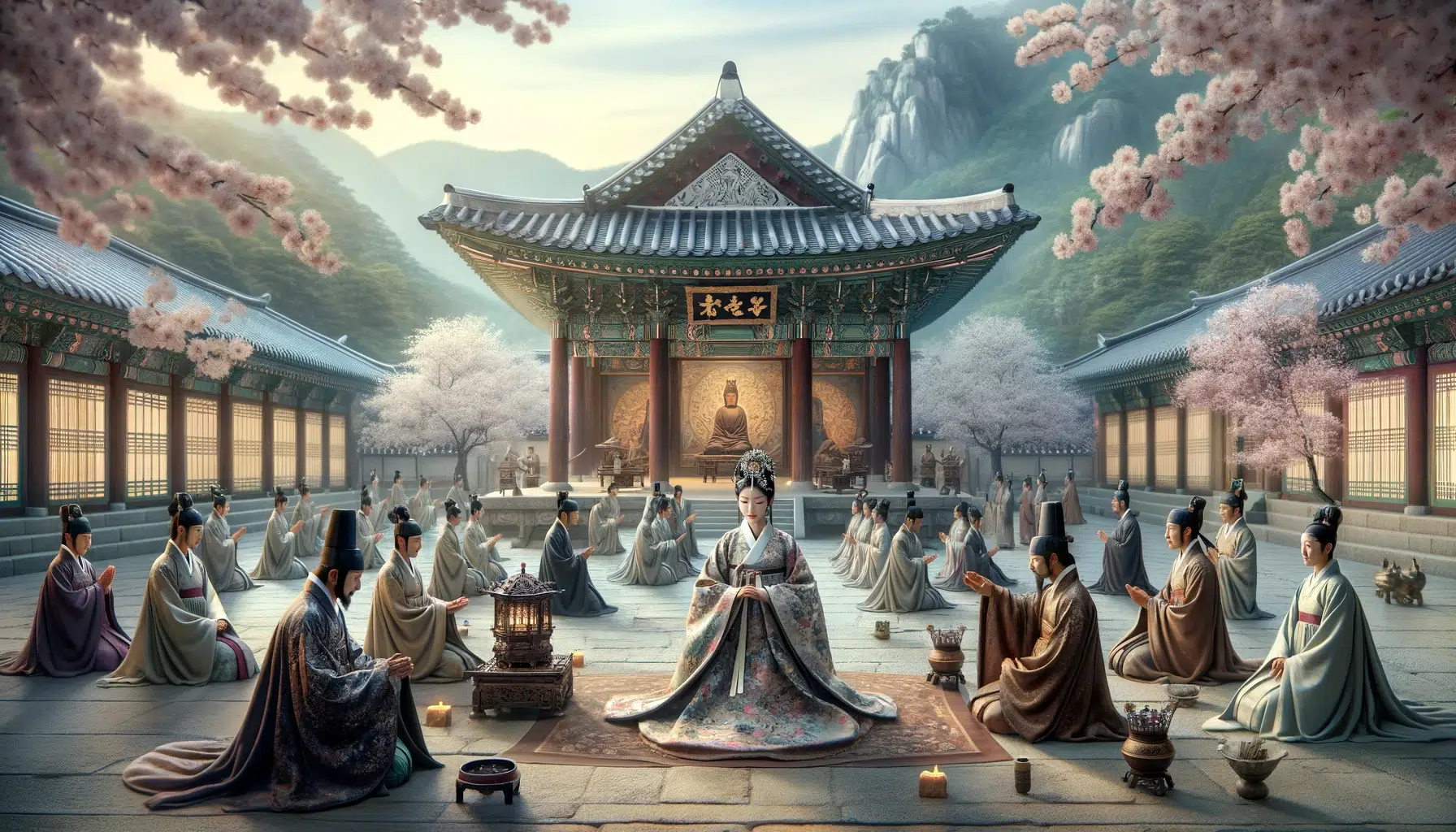
As a devoted patron of Buddhism, Queen Seondeok sponsored the construction of several Buddhist temples in Silla, providing support for the spread of the religion.
These temples served as centers of worship and cultural development, fostering a vibrant Buddhist community within the kingdom.
One notable temple that Queen Seondeok supported was the Hwangnyongsa.
This revered temple, located in Gyeongju, was renowned for its grandeur and architectural beauty.
Queen Seondeok’s patronage helped establish Hwangnyongsa as one of the most significant Buddhist sites in Silla.
The proliferation of Buddhism during Queen Seondeok’s reign had a profound impact on Silla society.
Through her encouragement of Buddhist culture, the religion became an integral part of the kingdom’s identity, shaping its values, beliefs, and artistic expressions.
The influence of Buddhism during her reign continued to shape Korean history long after her time as queen.
Queen Seondeok and the Spread of Buddhism in Silla
Queen Seondeok’s efforts to promote Buddhism in Silla were not limited to the construction of temples.
She actively encouraged the spread of the religion through her patronage of Buddhist scholars and the support of Buddhist teachings.
Under Queen Seondeok’s leadership, Buddhist thought and philosophy flourished in Silla, attracting scholars and intellectuals from neighboring regions.
The vibrant exchange of ideas contributed to the intellectual and cultural advancements of the kingdom.
Queen Seondeok’s influence extended beyond her borders through diplomatic relationships with international powers such as Tang Dynasty in China.
These alliances facilitated the exchange of Buddhist teachings and further strengthened the prominence of Buddhism in Silla and East Asia as a whole.
| Buddhist Temples Sponsored by Queen Seondeok | Location |
|---|---|
| Hwangnyongsa Temple | Gyeongju, Silla |
| Seokguram Grotto | Gyeongju, Silla |
| Gyeryongsa Temple | Wonju, Silla |
Her reign marked a significant period of Buddhist expansion in East Asia, leaving an indelible mark on Korean history.
Queen Seondeok’s Legacy and Influence
Queen Seondeok’s reign as the first reigning queen of Silla left an indelible mark on Korean history.
Diplomatic Acumen
Queen Seondeok demonstrated remarkable diplomatic skills during her reign.
Despite initial resistance and skepticism due to her gender, she established a strong alliance with Tang Dynasty in China.
This alliance helped Silla maintain stability in the region and defend against external threats.
Queen Seondeok’s diplomacy paved the way for fruitful cultural exchanges and mutual cooperation.
Queen Seondeok’s legacy as a trailblazing female ruler and her far-reaching influence in shaping Korean history cannot be overstated.
Her reign continues to be studied and admired, serving as an inspiration for future generations and a testament to the achievements and potential of women in positions of power.
During a turbulent period in Korean history, Queen Seondeok demonstrated exceptional leadership and diplomatic skills.
Her reign was characterized by successful alliances, skillful negotiations, and a focus on cultural development.
Historians have extensively studied and analyzed Queen Seondeok’s reign, providing valuable insights into the achievements and challenges faced by female rulers in East Asian history.
Wisdom and Benevolence
Queen Seondeok’s legacy is built upon her reputation for wisdom and benevolence.
She was renowned for her fair and just rule, ensuring the welfare and prosperity of her people.
Through her exemplary leadership, Queen Seondeok navigated the complexities of politics, forging alliances and maintaining stability.
There’s also a story about her seeing white frogs before an attack from Baekje. This showed her ability to understand strange signs allowing her to make good choices as a leader.
Even with tough times, people loved Queen Seondeok because she truly cared for them.
She was great at motivating and earning the respect of those she led. This made her an outstanding leader in Silla’s time.
Queen Seondeok wasn’t just good at reading signs like white frogs and poppies.
People believed she had a special gift for understanding the world.
Cultural Contributions
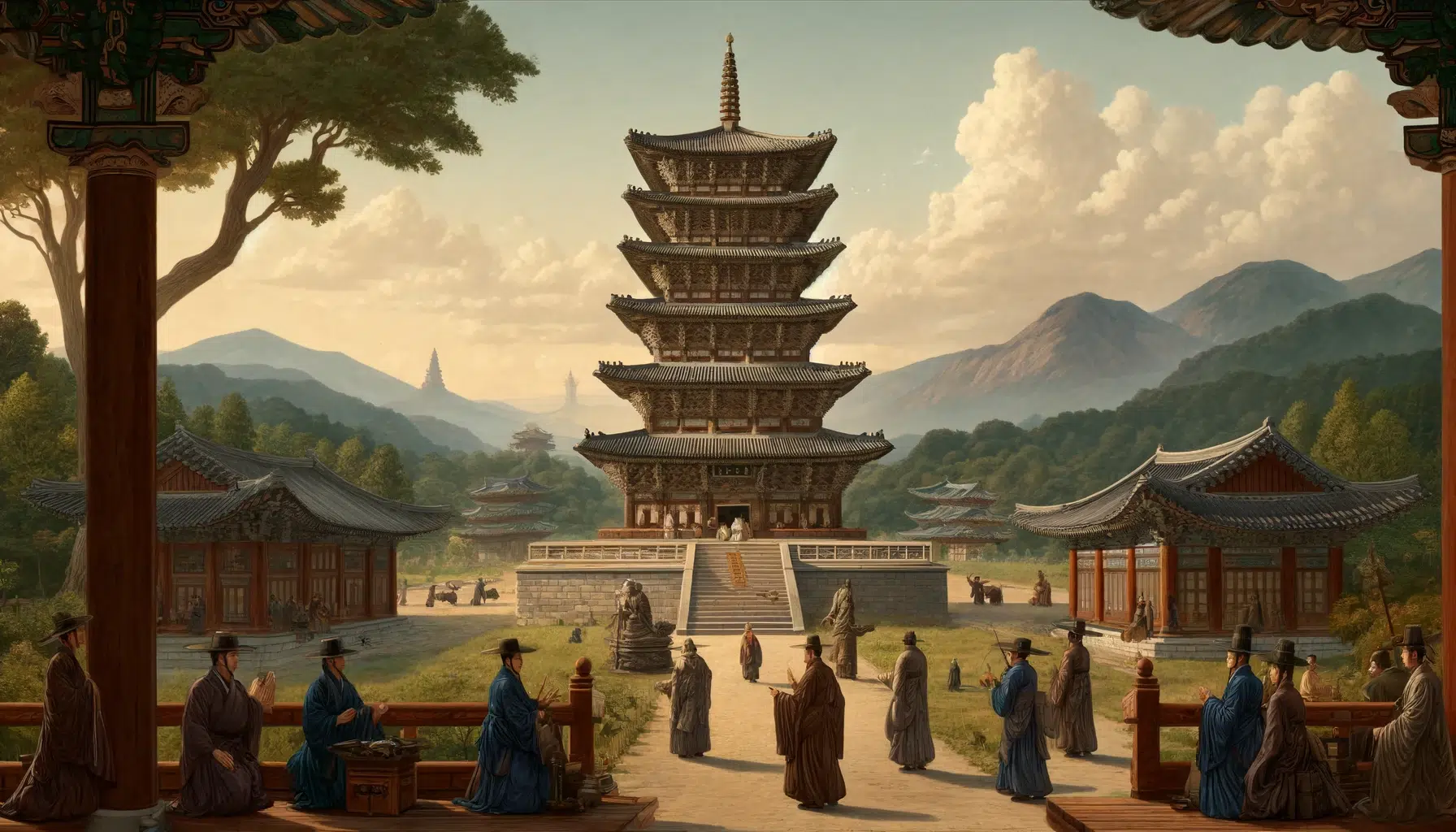
Queen Seondeok’s reign witnessed a flourishing of cultural advancements. She actively patronized the arts, literature, and architecture, elevating the cultural landscape of Silla.
Her support for Buddhism resulted in the construction of magnificent temples and the spread of Buddhist teachings throughout the kingdom.
One notable example is the Hwangnyongsa pagoda, which stands as a testament to Queen Seondeok’s devotion to Buddhism and her influence on the religious development of Silla.
Unifying the Three Kingdoms
Queen Seondeok’s reign marked a pivotal point in the unification of the Three Kingdoms of Korea.
During the Three Kingdoms period, the Korean Peninsula was divided and embroiled in constant power struggles.
Queen Seondeok played a vital role in the unification of the Three Kingdoms, paving the way for the formation of a strong and prosperous Silla Dynasty.
Under her leadership, Silla emerged as a dominant power in the region, uniting with Baekje and Goguryeo to establish a unified Korean state.
This achievement solidified her place in history as an exceptional ruler and strategist.
An Enduring Legacy
Queen Seondeok’s impact on Korean history extends far beyond her reign.
Her accomplishments and influence continue to shape the understanding of female leadership and the possibilities for women in positions of power.
Queen Seondeok’s leadership, wisdom, and cultural contributions have solidified her place as a revered historical figure.
Thus symbolizing the resilience, intelligence, and capabilities of women throughout history.
Family and Legacy
Queen Seondeok ruled without marrying or having children. However, she left a big impact beyond her time.
Her cousin, Kim Seung-man, became Queen Jindeok after her.
This kept the line of female rulers going in the Silla Dynasty. Thus, Queen Seondeok’s rule paved the way for other women to lead.
During Queen Seondeok’s time, Silla saw big changes. She is seen as hugely important in Korean history.
Her bravery and smart leadership are remembered by many. She truly inspired those who came after her.
| Succession of Ruling Queens in Silla Dynasty | Reign |
|---|---|
| Queen Seondeok | 632-647 |
| Queen Jindeok | 647-654 |
Depictions of Queen Seondeok in Popular Culture
One notable example is the widely acclaimed Korean drama series, “Queen Seondeok.”
This compelling drama brought Queen Seondeok’s story to a wide audience, shedding light on the challenges she faced and the remarkable accomplishments she achieved as a ruler.
The drama series “Queen Seondeok” played a pivotal role in raising awareness and fostering appreciation for Queen Seondeok’s historical significance and contributions.
It showcased her indomitable spirit, intelligence, and leadership skills, showcasing the complexity of her character and the impact she had on Korean history.
The success of “Queen Seondeok” not only entertained audiences but also ignited a renewed interest in Queen Seondeok’s life and reign.
It inspired individuals to delve deeper into the historical records and explore her achievements, opening up avenues for further research and discovery.
As a result, Queen Seondeok continues to inspire and captivate audiences, leaving an enduring legacy as one of the most remarkable female rulers in Korean history.
Learn more about other women archers: Women in Archery in Different Cultures
Conclusion
Queen Seondeok was the first queen to reign in Silla. Her time in power is very important in Korean history. She led the Silla Dynasty to new cultural heights.
Queen Seondeok worked hard to unify the Three Kingdoms of Korea. Thanks to her efforts, Silla became a strong and respected kingdom.
People still think of Queen Seondeok as a key figure in Korean history. Her work as a leader and supporter of progress lives on. She’s a big part of why South Korea’s culture is so vibrant today.