

Princess Ariadne: Love, Betrayal and Divine Rebirth
The story of Ariadne is one of love, betrayal, and divine redemption. She was a princess of Crete who fell in love with the Athenian hero Theseus. Her choice to help him defeat the Minotaur changed her life forever.

Though abandoned and heartbroken, Ariadne’s fate transformed when a god claimed her as his bride and placed her crown among the stars. Her tale bridges the mortal and divine, blending human emotion with cosmic reward.
Ariadne’s Family and the Curse
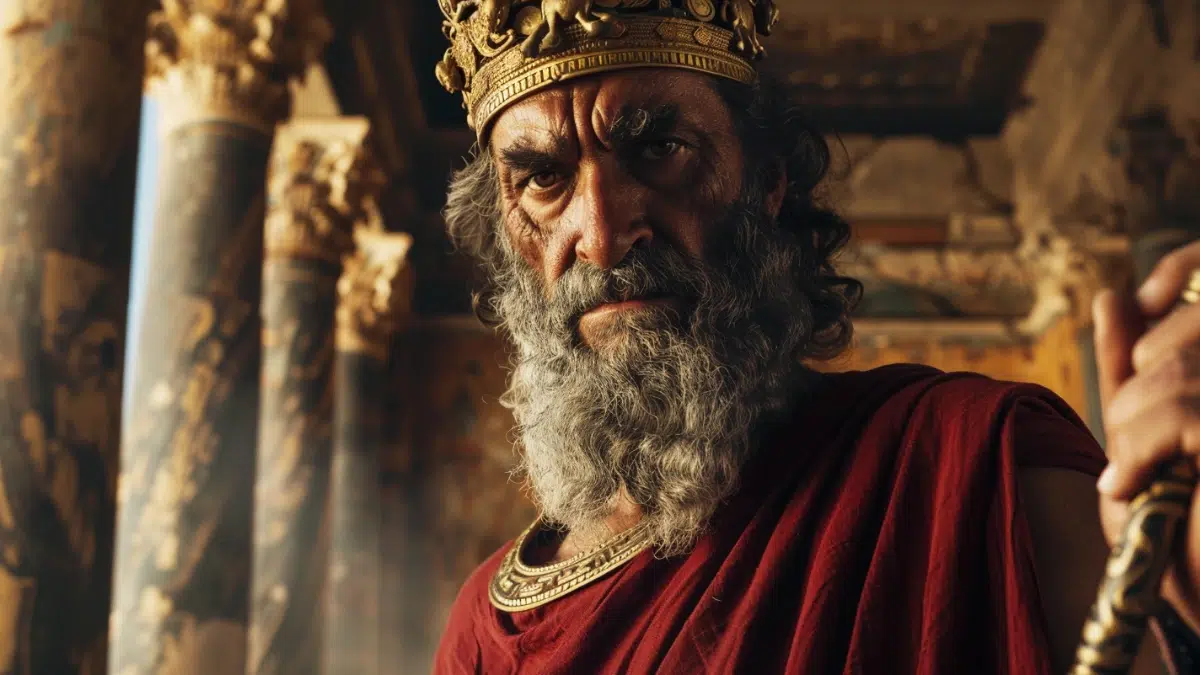
Ariadne was born a princess of Crete, the daughter of King Minos and Queen Pasiphae.
Her father, Minos, was the powerful ruler of Crete, known for his cunning and ties to the gods. Her mother, Pasiphae, was the daughter of Helios, the Titan god of the sun, giving Ariadne a divine lineage that connected her to both mortal and celestial realms.
Ariadne’s family was surrounded by strange and tragic tales.
The Curse and the Minotaur

Her half-brother was the Minotaur, a monstrous creature with the body of a man and the head of a bull.
His birth was the result of a curse from Poseidon.
Minos had prayed to Poseidon for a sign of his right to rule Crete. Poseidon sent a magnificent white bull from the sea, but Minos kept it instead of sacrificing it back to the god.
When Minos failed to sacrifice the bull, Poseidon caused Pasiphae to fall in love with the animal. From this unnatural union came the Minotaur, a living reminder of divine punishment and her family’s shame. A creature half-man, half-bull.
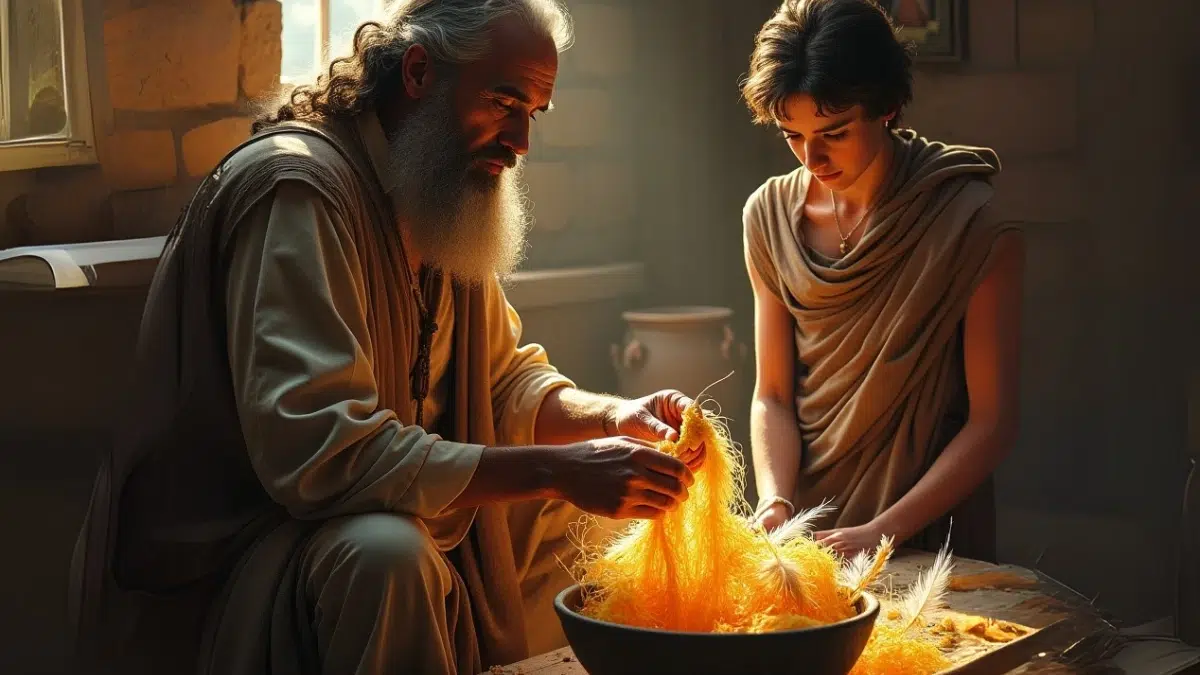
Ashamed but unwilling to kill it, Minos ordered the master craftsman Daedalus, the brilliant inventor, to build the Labyrinth. It was a massive inescapable maze beneath the palace of Knossos, to imprison the beast. Its twisting corridors were so complex that no one could escape once they entered.
After Athens lost a war to Crete, King Minos demanded tribute.
As punishment, he demanded a terrible tribute:
- every nine years, Athens sent seven young men and seven young women to Crete to be sacrificed to the Minotaur
This tribute reinforced Minos’s dominance and kept fear alive among his enemies.
Growing up in this world of power, curses, and fear, Ariadne lived in a palace that symbolized both grandeur and dread.
Her ties to the gods and the shadow of the Labyrinth set the stage for her fateful meeting with Theseus and her choice to betray her father for love.
Theseus and the Labyrinth

Theseus, prince of Athens, volunteered to end this cycle of suffering. Determined to end this horror he volunteered to be one of the tributes.
His mission was clear: kill the Minotaur and free Athens from Crete’s grasp. It was during this quest that Ariadne’s love—and her fateful betrayal of her father—forever changed her destiny.
He then sailed to Crete.
When Ariadne saw him, she fell in love instantly.
Defying her father, she gave Theseus a golden ball of thread to help him find his way out of the Labyrinth after slaying the beast.
With her help, Theseus killed the Minotaur and escaped. Ariadne fled Crete with him, betraying her father and leaving her home behind. Her love for Theseus bound her fate to his.
Ariadne’s Gift: The Golden Ball of Thread

Ariadne’s gift of the golden ball of thread is the most iconic part of her myth and shows her intelligence and courage.
When she fell in love with Theseus, she knew helping him defeat the Minotaur would mean betraying her father, King Minos. Still, her feelings for him were stronger than her loyalty to Crete.
The Labyrinth was a near-impossible maze designed by the inventor Daedalus. It twisted endlessly, trapping anyone who entered.
Even if Theseus killed the Minotaur, without a way to retrace his steps, he would be lost forever. Ariadne’s plan was both simple and brilliant: she gave him a ball of thread, known as a “clew”, and instructed him to tie one end at the entrance and unwind it as he ventured deeper.
This clever solution turned what was supposed to be a death trap into a path of escape.
With Ariadne’s guidance, Theseus killed the Minotaur and followed the thread back to the entrance, emerging victorious.
The golden thread thus became a symbol of foresight, ingenuity, and trust.
Some versions of the myth even say Ariadne received the thread from Daedalus himself, showing she used all her resources to protect Theseus.
In later traditions, the thread’s golden colour symbolized its divine or magical quality, linking Ariadne’s act to the gods.
This moment not only saved Theseus but sealed Ariadne’s fate.
By aiding him, she openly defied her father and chose love over duty. The ball of thread became more than a tool.
It marked the turning point where Ariadne stepped out of her father’s shadow. It set her life on a path that would lead from betrayal to heartbreak and, eventually, immortality.
Ariadne Abandonment on Naxos

After helping Theseus kill the Minotaur and escaping Crete together, Ariadne believed she had secured a new life with the man she loved.
Their ship sailed across the Aegean Sea back to Athens, when they stopped at the island of Naxos (Dia).
Exhausted from their journey, Ariadne fell asleep on the beach, dreaming of her future as Theseus’s bride.
When she awoke, Theseus was gone.
His ship had vanished over the horizon, leaving her alone.
Ancient myths offer different reasons for this shocking betrayal.
Early sources (like Plutarch) imply Theseus cared for Ariadne and intended to marry her but later abandoned her—possibly by choice, possibly under divine influence.
Some say Theseus abandoned her willingly, fearing the wrath of her father, King Minos, or deciding she was no longer useful to him.
Finding Love on Naxos

Others suggest the gods intervened—in certain versions, Athena appears to Theseus in a dream, commanding him to leave Ariadne because she was destined to wed the god Dionysus.
Regardless of the reason, Ariadne’s heartbreak was immense. Stranded on a deserted shore, she wept in despair, feeling the weight of her choices.
She had betrayed her family and kingdom for love, only to be left with nothing. The island of Naxos, surrounded by endless sea, became a symbol of her isolation and loss.
This moment of abandonment reveals the human side of Ariadne’s myth.
Her pain is raw and relatable—love turned to betrayal, trust shattered. Yet it also serves as the turning point in her story. In her darkest moment, her fate shifted from mortal tragedy to divine destiny.
It was here, on Naxos, that Dionysus found her. What seemed like a cruel ending became the beginning of her transformation—from a forsaken princess to an immortal bride crowned among the stars.
Dionysus and the Crown of Stars

Alone on Naxos and consumed by grief, Ariadne’s fate took an unexpected turn when she was discovered by Dionysus, the god of wine, festivity, and transformation.
In many versions of the myth, Dionysus either stumbled upon her by chance or was guided there by fate, knowing she was destined to be his bride.
He was struck by her beauty and sorrow, and unlike Theseus, he offered her compassion and love.
Dionysus comforted Ariadne and promised her a life far beyond her mortal pain.
He married her in a divine wedding surrounded by revelry, music, and celestial splendour. In this union, Ariadne transitioned from abandoned princess to goddess, her mortal suffering replaced by immortality and joy.
Dionysus’s love elevated her, symbolizing renewal and redemption after heartbreak.
The Northern Crown Constellation

As a symbol of their bond, Dionysus gifted Ariadne a jeweled crown, said to shine with heavenly light.
In some accounts, this crown was crafted by the god Hephaestus himself, making it a divine work of art.
After their wedding, Dionysus cast the crown into the heavens, where it became the constellation Corona Borealis, or the “Northern Crown.”
This celestial transformation immortalized Ariadne’s story. Her crown, still visible in the night sky, serves as a reminder that even after betrayal and loss, beauty and love can endure.
Through Dionysus, Ariadne was reborn, no longer defined by her abandonment but by her ascension to divinity.
Her story bridges the mortal and divine, showing how despair can give way to renewal. From the lonely shores of Naxos to the stars above, Ariadne’s journey reflects the enduring hope that even in our darkest moments, we may find light and transformation.
Ariadne’s transformation from mortal princess to goddess secured her place among the stars forever.
Greek myths about the stars:
- Greek Myths About the Stars: Orion to Sagittarius
- Orion Greek Mythology Hunter to Constellation
- Callisto: Betrayed Nymph Turned Constellation
Symbolism of the Star Connection
Ariadne’s myth represents betrayal, loss, and renewal. Her love for Theseus showed devotion and risk, while her abandonment exposed the fragility of mortal promises.
Yet, her union with Dionysus revealed a path to divine reward and immortality.
The crown shining in the night sky represents love redeemed after heartbreak.
It serves as a cosmic reminder of her journey from abandonment to divinity, giving hope of renewal after suffering.
The constellation Corona Borealis is still visible today in the northern hemisphere, tying her myth directly to astronomy.
It glimmers in the night sky, a celestial symbol of love and rebirth.
Ariadne’s journey from the Labyrinth to the heavens embodies the enduring hope that beauty can rise from sorrow.
Different Versions: How Did Ariadne Die?

Ariadne’s fate differs across Greek myths. In the most common version, she never truly dies.
After Theseus abandons her on Naxos, the god Dionysus finds her, marries her, and grants her immortality, placing her jeweled crown in the stars as the constellation Corona Borealis.
In other versions, Ariadne dies as a mortal:
- Killed by Artemis: Some myths say Artemis strikes her down, possibly at Athena’s request, then Dionysus rescues her from the Underworld and makes her immortal
- Natural Death: A few accounts state she died on Naxos and was honoured by Dionysus, who placed her crown in the heavens
Most traditions view Ariadne’s story as one of transformation—her “death” symbolizes the end of her mortal life and the beginning of her divine rebirth.
Athena Intervenes so Ariadne Fulfills Her Fate with Dionysus
In some late versions of the myth, Ariadne’s destiny is to marry Dionysus rather than remain with Theseus.
Athena, often depicted as a guiding force for heroes, intervened to ensure this fate unfolded.
By asking Artemis to strike Ariadne down, she essentially “removed” Ariadne from her mortal path so Dionysus could claim her and grant her immortality.
Athena supported Theseus and was closely tied to him in myth.
Her request for Ariadne’s death could be seen as protecting Theseus’s heroic destiny, removing a complication that might have tied him to Crete or challenged his future as king of Athens.
In many myths, “death” is a step toward divine elevation. By having Artemis kill Ariadne, Athena may have acted as an agent of fate—ensuring Ariadne’s mortal life ended so she could be reborn in Dionysus’s world as an immortal bride.
Conclusion
Ariadne’s tale weaves together passion, pain, and transformation.
From helping Theseus conquer the Minotaur to her heartbreak on Naxos and ultimate ascension with Dionysus, her myth reflects both human emotion and divine wonder.
Her place among the stars ensures her story will never be forgotten.