
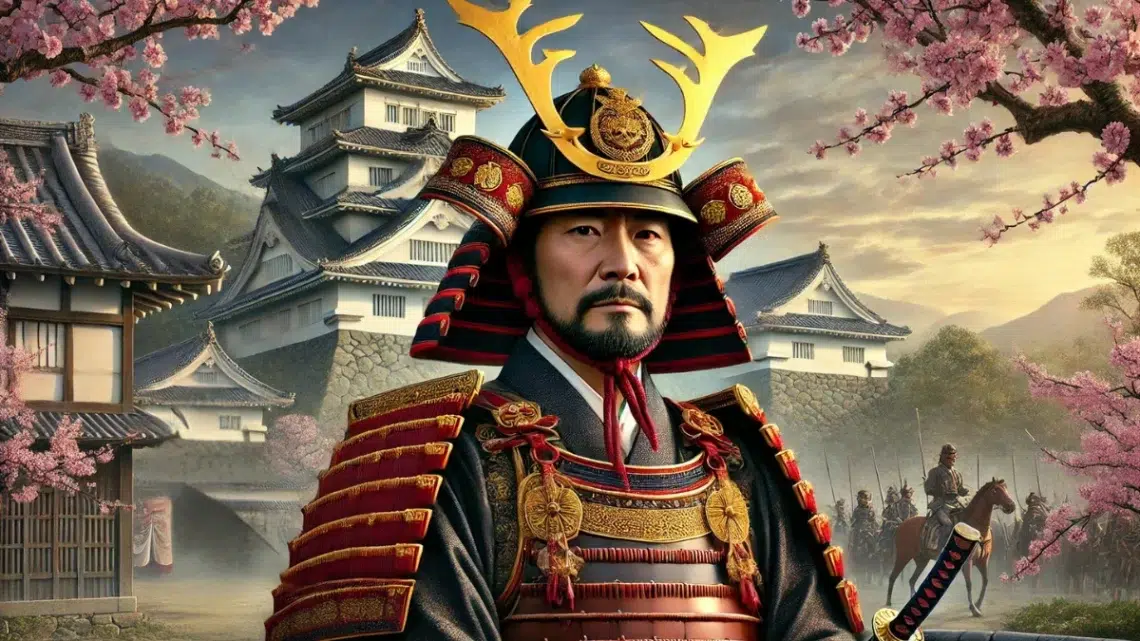
Oda Nobunaga: Japan’s Legendary 16th Century Unifier
Oda Nobunaga was a key figure in Japanese history, especially during the Sengoku period. He was known for his ambition and strategic skills. His goal was to bring Japan together under one rule.
His efforts set the stage for Japan’s unification. This marked a big change in Feudal Japan.
Oda Nobunaga changed the game as a Samurai leader. He brought new ideas to both war strategies and society. Scholars agree that he played a huge part in ending Japan’s long wars and bringing peace.
Learn more about samurai leaders:
- Miyamoto Musashi: Legendary Samurai Warrior
- Nakano Takeko: Female Samurai in Edo Period
- Tomoe Gozen: Female Samurai Archer
The Early Life of Oda Nobunaga
Oda Nobunaga was born in 1534, part of the lesser-known Oda clan in Japan’s Owari Province. His early life was full of bold actions that made people both curious and puzzled. This was his childhood in a place that shaped his future.
Japan in the 16th century was unstable, with constant power fights. This setting deeply influenced Nobunaga’s lineage and how he grew up, always fearing clan wars. Yet, Nobunaga showed great leadership skills and ambition, standing out in the Oda clan.
He did things that were daring and smart, hinting at his future success. Records from Owari Province highlight his strong will and leadership skills from a young age.
Knowing about Feudal Japan’s warrior class helps us understand Nobunaga’s unique approach. The strict social rules and high expectations made him tough and creative. These traits helped him in his goal to unite Japan.
Rise to Power
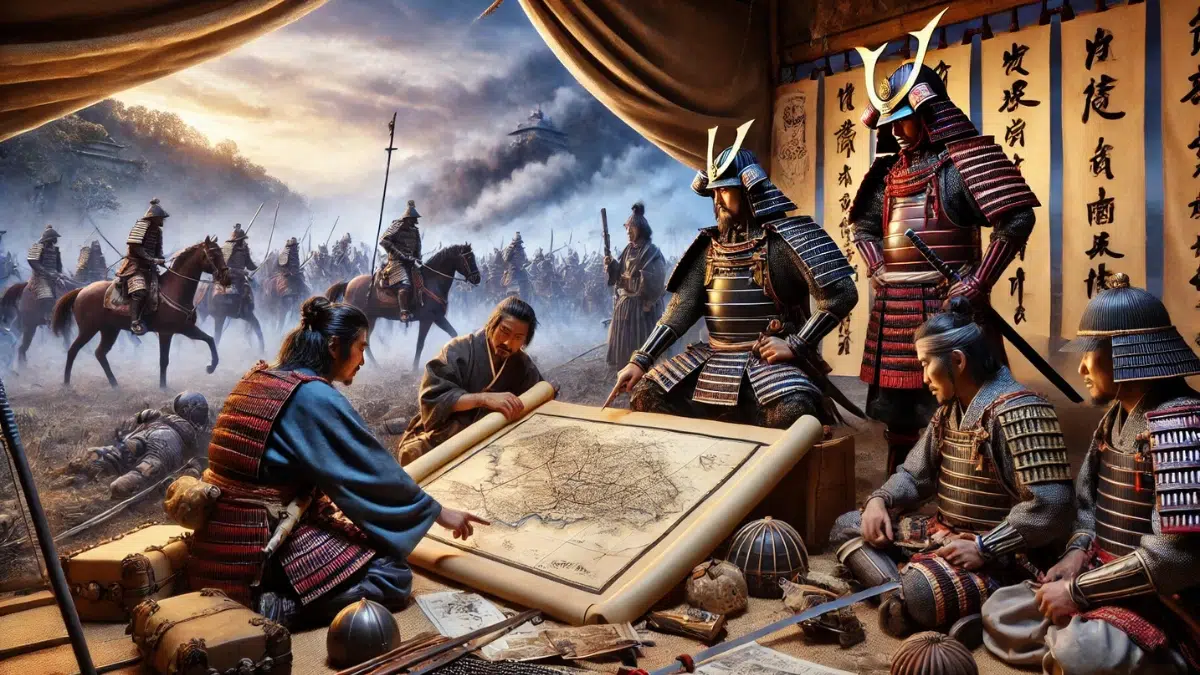
Oda Nobunaga started his journey to unite Japan with careful planning and forming key alliances. He made strong bonds through strategic marriages, which helped him gain power in the Sengoku period. These alliances made him stronger, preparing him for future victories.
His big win at the Battle of Okehazama in 1560 was a key moment. Even though he had fewer soldiers, Nobunaga’s smart samurai warfare tactics surprised his enemies. This victory proved he was a force to be reckoned with in Japan, defeating the Imagawa clan and showing his tactical skill.
After Okehazama, Nobunaga used his growing fame to take over more land. He expanded his influence by winning battles and making smart moves in Japanese politics. His use of new tactics like psychological warfare helped him keep control over central Japan.
Nobunaga’s rise to power was more than just about winning battles. His smart planning and forming alliances were key to his success. His new military strategies changed samurai warfare and helped set the stage for the unification of Japan under his successors.
- Military chronicles highlight the tactical brilliance at Okehazama.
- Feudal power dynamics analyses show Nobunaga’s political savvy.
- Studies on samurai strategies reveal the structure of his army’s effectiveness.
Military Strategies of Oda Nobunaga
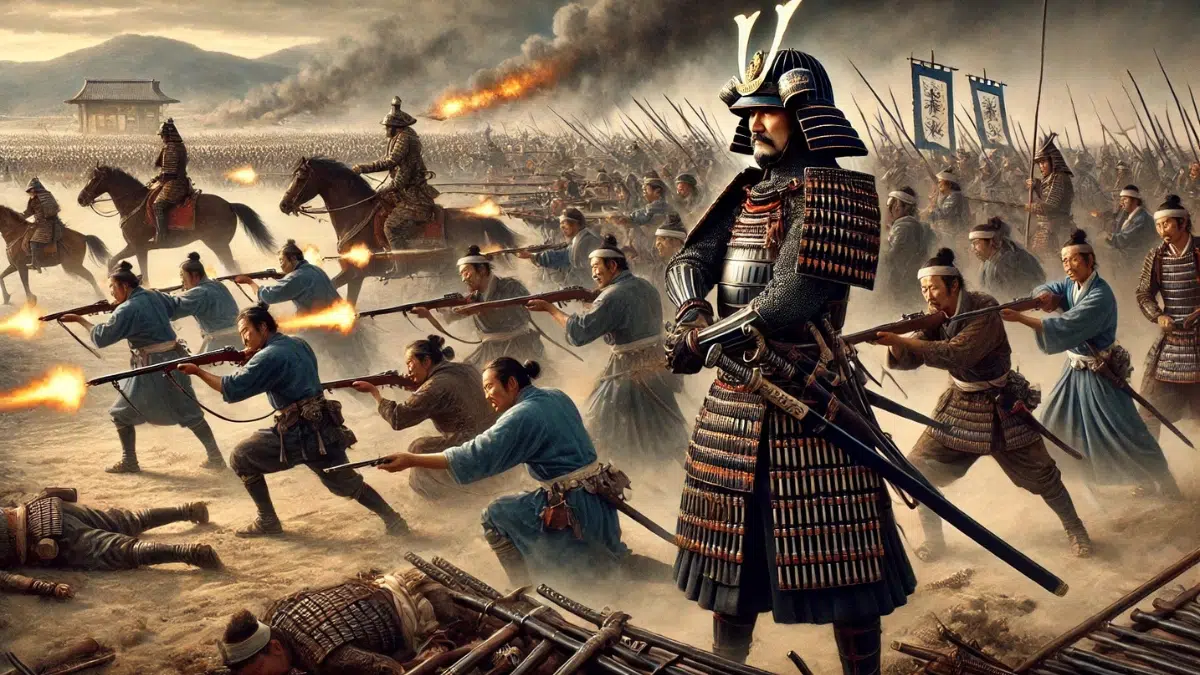
Oda Nobunaga changed the way battles were fought by using European firearms like matchlock guns. He made his army stronger by using new ways of fighting. This gave him an advantage in many battles, changing samurai fighting forever.
He used gun squads to keep firing without stopping. This made his army very powerful against sword fighters.
In battles like the Tensho Iga War, Nobunaga showed his smart thinking. He used tricks and surprise to break the enemy’s spirit. He was quick to make decisions and use his enemies’ weaknesses to his advantage.
Key parts of Nobunaga’s strategy were:
- Using matchlock guns for fast, coordinated attacks.
- Psychological tricks to lower enemy morale.
- New ways of fighting to beat traditional samurai.
- Planning big attacks for battles like the Tensho Iga War.
Studies of Nobunaga’s battles show how he changed the game. He made feudal combat better and set new standards in Japanese warfare.
Key Battles and Victories
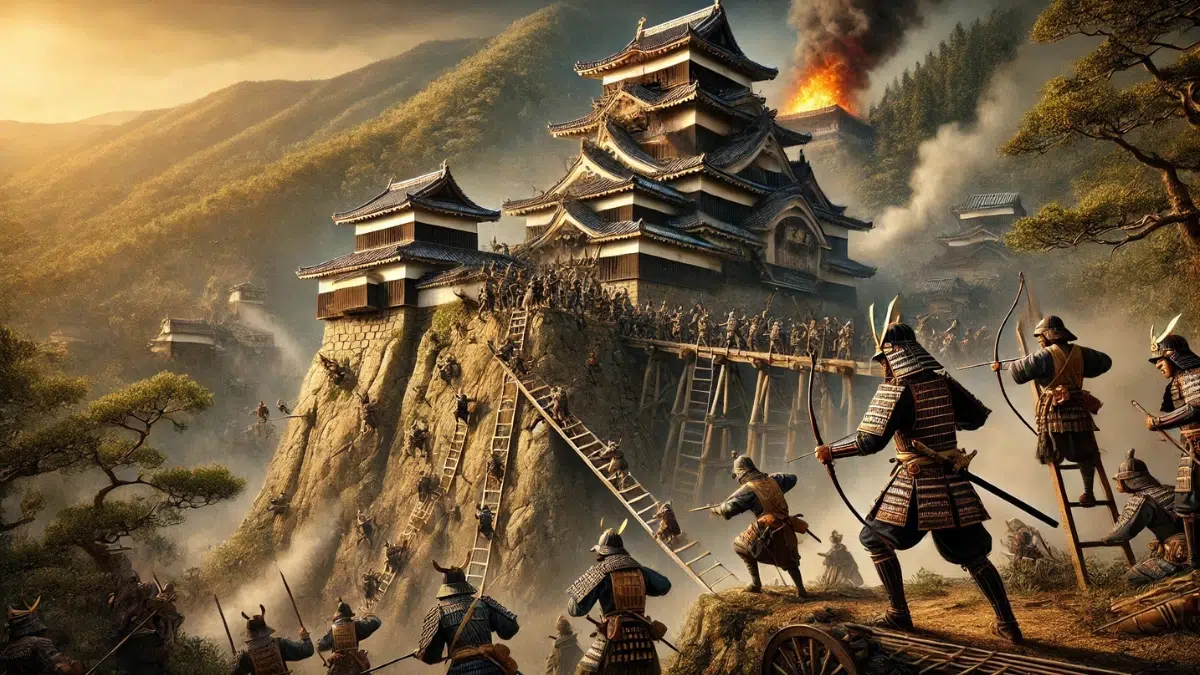
Oda Nobunaga showed his military strength in key battles. His smart moves changed the course of many fights. This led to Japan being united under one strong leader.
One of his big wins was the Siege of Inabayama Castle in 1567. This victory was a big deal for Nobunaga. It gave him control over the Mino Province, which helped him in his future battles.
Another big moment was the Siege of Nagashima. Nobunaga tried to take the fortress three times between 1571 and 1574. His hard work paid off, and the castle fell. This victory stopped the Ikko-ikki rebellions and made Nobunaga even more powerful.
The Battle of Anegawa in 1570 was a turning point. Nobunaga and his ally Tokugawa Ieyasu fought against the Azai and Asakura clans. This battle showed how good Nobunaga was at making allies and winning battles. It made him the top leader in the area.
The Honnoji Incident in 1582 is famous for Nobunaga’s death. But before that, he won many battles that made him very strong. His sudden death changed Japan’s politics a lot.
These battles and sieges changed Japan’s power structure. Nobunaga’s wins at the Siege of Inabayama Castle, the Siege of Nagashima, and the Battle of Anegawa were key. His death during the Honnoji Incident also had a big impact on Japan’s history.
Oda Nobunaga’s Political Reforms
Oda Nobunaga changed Japan’s politics in big ways. He made key reforms that changed the Japanese feudal system. One big move was the Sword Hunt edict. This aimed to take weapons from peasants to stop uprisings. It made him stronger and brought military power to him.
He also brought in the Rakuichi-rakuza policies to help trade grow. These policies removed old limits on merchants and craftsmen. This helped the economy and made trade better.
Nobunaga worked on making the economy stable for the future. He supported the arts and culture too. This was to help society move forward and create a strong national identity.
Records from his time tell us a lot about his reforms. Scholars have written about how these changes affected trade and social classes. Nobunaga’s actions set the stage for future leaders to improve Japan’s feudal system.
Impact on Japanese Society
Oda Nobunaga changed Japan’s social structure in big ways. Before him, Japan was divided and always at war. He brought peace and unity with his leadership.
During the Azuchi-Momoyama period, Nobunaga started a cultural rebirth. He supported Christianity, which brought new ideas and changed Japan’s religious scene. This led to a growth in arts, architecture, and trade.
While Nobunaga supported missionaries, it was more likely to undermine Buddhist institutions opposing him rather than genuine religious conviction.
Nobunaga made changes to Japan’s social order. He valued talent over family background, letting skilled people move up in society. This move slowly broke down the old class divisions.
Under Nobunaga, Japan saw big changes in how it was governed and its economy. These changes made the government stronger and the economy more stable. This set the stage for Japan to become one united country.
Studies show that Nobunaga’s reforms had a lasting impact on Japan. He encouraged new ideas and cultural exchange. This helped Japan move towards modern times.
Famous Castles and Architectural Innovations
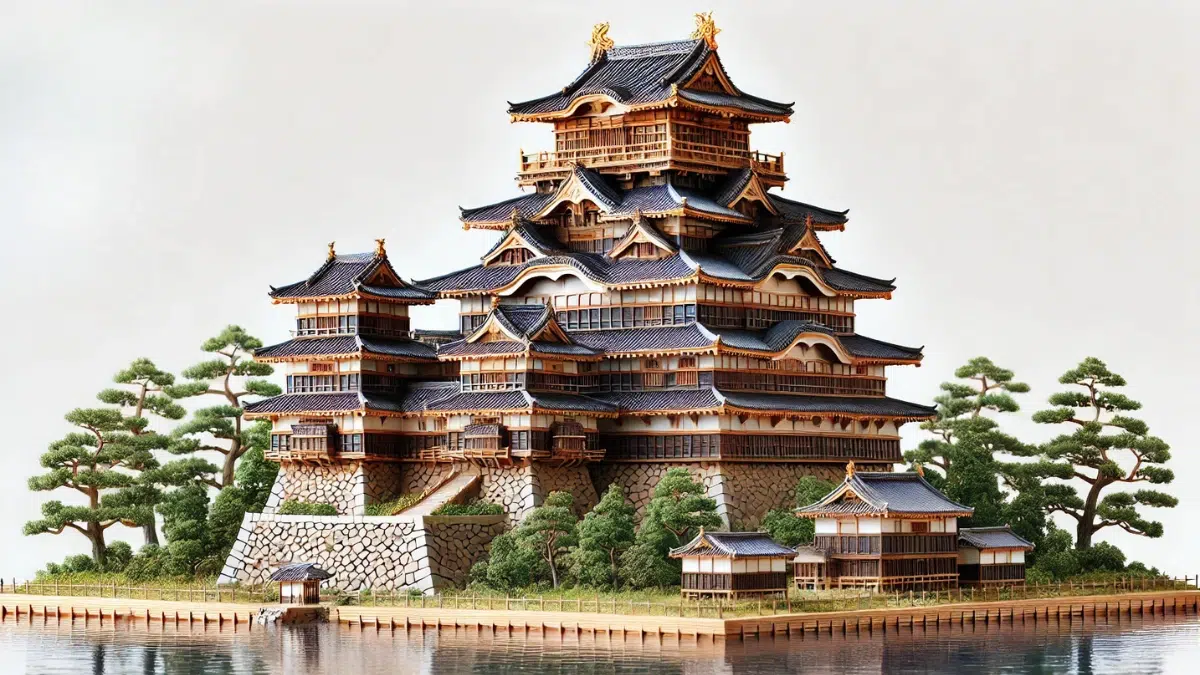
In the time of samurai and political battles, Oda Nobunaga built Azuchi Castle. This castle was a big step forward in Feudal Japanese architecture. It was not just a place to defend but also showed Nobunaga’s big dreams and new ideas.
Azuchi Castle changed the game with its stone base and detailed design. Nobunaga’s smart thinking made the castle tall, giving him an edge over enemies. It also showed how powerful he was.
Azuchi Castle was a pioneer in using a lot of stone, a trend that would spread in Feudal Japanese architecture. It had strong walls and complex gates, showing off Nobunaga’s advanced design skills. Plus, it was part of a plan to mix military strength with economic and social growth.
Azuchi Castle had a strategic role and was as much a symbol of power and governance as it was a military stronghold.
The design of Nobunaga’s castles was more than just about building. It showed his taste and his big sense of power. Every part, from the big moats to the fancy inside decorations, was made to look impressive and classy.
Oda Nobunaga’s work on Azuchi Castle and other castles changed Samurai strongholds for the better. His new ideas in architecture left a lasting impact on Feudal Japanese architecture. His work is still looked at today for its historical and cultural importance.
Oda Nobunaga’s Relationship with Other Daimyo
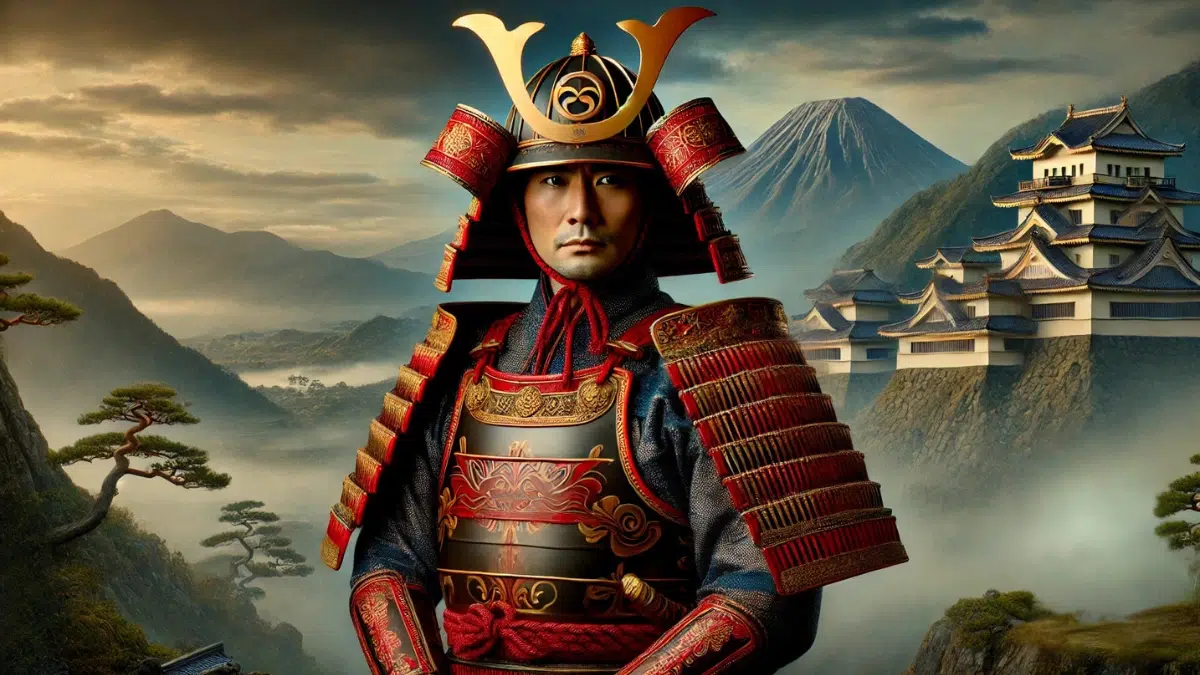
Oda Nobunaga lived in a time filled with complex alliances and rivalries among Japan’s feudal lords. He was a master at making and breaking alliances to grow his power. This was a key part of his strategy.
Nobunaga worked closely with daimyo like Takeda Shingen and Uesugi Kenshin.
Takeda Shingen and Uesugi Kenshin’s relationships with Nobunaga were largely adversarial. Shingen defeated Nobunaga at Mikatagahara (1573), and Kenshin consistently opposed him until his death in 1578.
His relationship with Takeda Shingen was both tense and strategic with Shingen being a strong military leader.
With Uesugi Kenshin, Nobunaga’s interactions were complex too. They were often enemies but sometimes made peace. This shows how Nobunaga could switch between fighting and making friends as needed.
Political marriages and hostage exchanges were common during Nobunaga’s time. These actions helped keep peace and were also a way for Nobunaga to gain power.
Looking at the records of alliances and conflicts shows how carefully Nobunaga planned his moves. Stories about his rivals give us deeper insights. The analysis of his diplomatic strategies during the Sengoku period shows how smart he was.
In the end, Oda Nobunaga’s relationships with other daimyo were a mix of strategic alliances, rivalries, and smart diplomacy. His dealings with Takeda Shingen and Uesugi Kenshin highlight his skill in navigating Japan’s complex political scene.
Legacy in Cultural and Popular Media
Oda Nobunaga’s legacy in media reflects Japan’s multifaceted perception of his life and actions, portraying him as both a hero and a villain. This duality stems from his revolutionary but ruthless approach to governance and warfare, which drastically changed Feudal Japan.
In heroic depictions, Nobunaga is often celebrated as a visionary leader who broke traditional feudal norms, unified warring states, and laid the foundation for modern Japan.
Films like Oda Nobunaga (1992) and dramas such as Nobunaga Concerto highlight his military genius and progressive policies, including his support for trade and Christianity, which introduced new cultural ideas to Japan. These portrayals emphasize his boldness and innovative spirit, painting him as a transformative figure in history.
Conversely, other representations focus on his ruthless methods, including the suppression of Buddhist monasteries like Mount Hiei, where his forces killed thousands, including civilians.
In such portrayals, Nobunaga appears as a tyrant who prioritized power over humanity, embodying an almost Machiavellian figure. This darker view is prevalent in Japanese folklore and some historical dramas, where his ambition and use of extreme violence overshadow his achievements.
The contrasting depictions reflect Japan’s ongoing struggle to reconcile Nobunaga’s revolutionary contributions with his controversial methods. His character serves as a lens through which Japanese society examines themes of ambition, sacrifice, and morality, making him a complex and enduring figure in cultural memory.
Oda Nobunaga’s Death and Its Aftermath
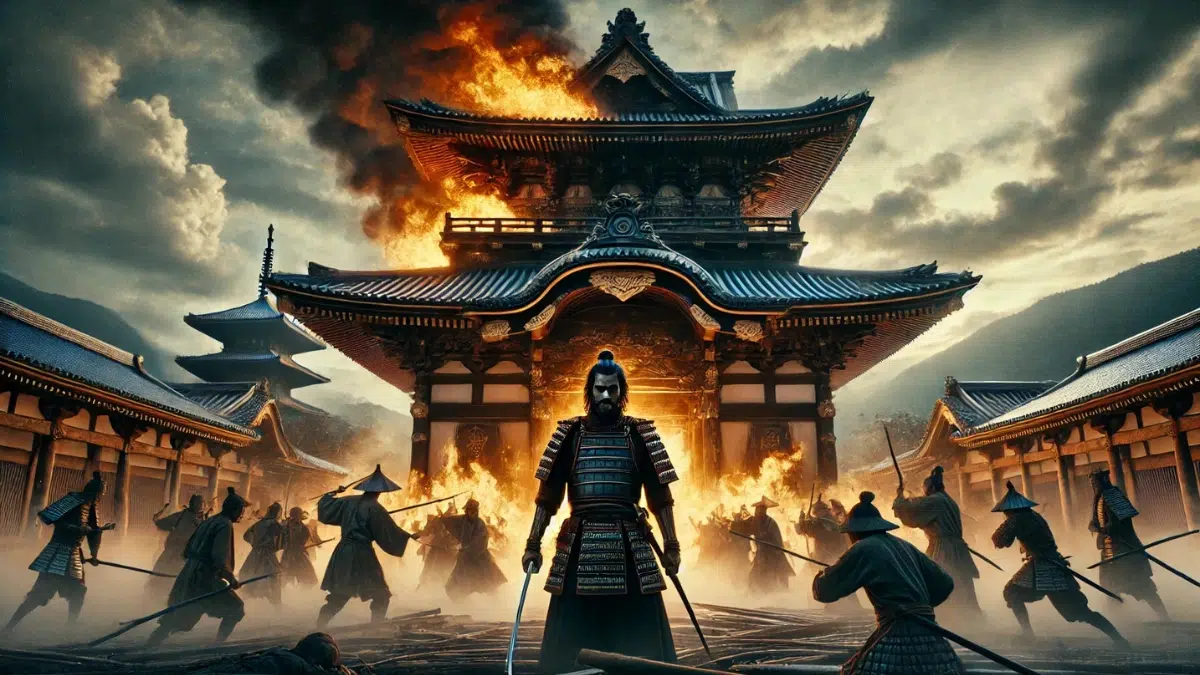
Oda Nobunaga’s death in 1582 was a shocking event in Japanese history. He was killed by his general Akechi Mitsuhide at the Honnoji Temple in Kyoto. This betrayal changed Japanese politics forever.
The Honnoji Incident had big effects on Japan’s power structure. Nobunaga’s death led to a power struggle among samurai and daimyos. His loyal general, Toyotomi Hideyoshi, quickly took charge and kept Nobunaga’s goals alive.
Many wonder what would have happened if Nobunaga had not died. Some think his push for unity would have made Japan stronger. Others believe internal issues might have stopped him.
Stories from that night show the chaos and betrayal. Experts help us see why Nobunaga’s death was so important. They also talk about what might have happened to Japan after him.
- Akechi Mitsuhide’s betrayal drastically altered the trajectory of Japanese politics.
- Toyotomi Hideyoshi’s role in stabilizing the nation and continuing Nobunaga’s legacy was pivotal.
- The speculation around potential futures creates rich academic discourse on Nobunaga’s historical impact.
Significance of Oda Nobunaga’s Unification Efforts
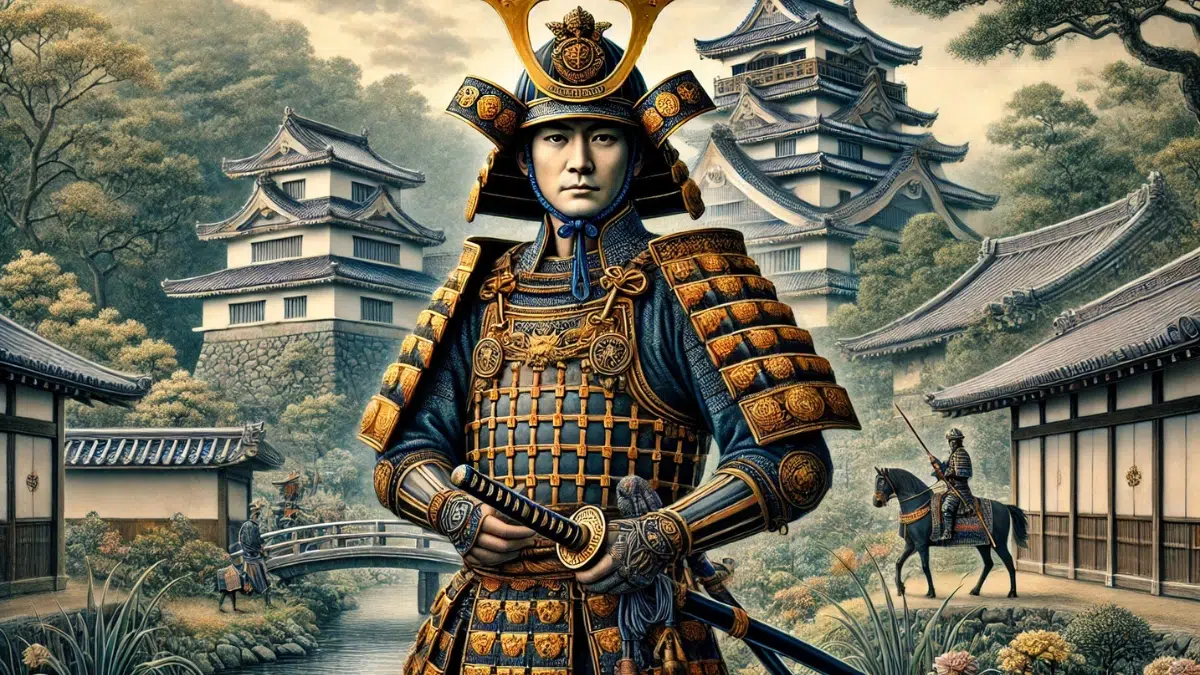
Oda Nobunaga played a huge role in the Warring States period, also known as Sengoku Japan. His efforts started a big change in Japanese history. He moved Japan from being divided into many small areas to a single, strong country.
Nobunaga’s work helped set the stage for leaders like Toyotomi Hideyoshi and Tokugawa Ieyasu.
While Nobunaga laid the groundwork for unification, it was Toyotomi Hideyoshi and Tokugawa Ieyasu who completed this process. Nobunaga’s efforts were foundational.
His new ways of leading and his military plans helped bring different areas together. This was key to creating a strong, united Japan.
His work also made Japan more centralized. He brought powerful lords under one rule, making it easier to manage the country. This was a big step towards a unified Japan, similar to what Qin Shi Huang did in China.
Nobunaga did not fully achieve centralized governance or unity, and his methods, while innovative, were distinct from Qin’s legalist centralization.
Nobunaga’s ideas still affect Japan today. His focus on good government, making big changes, and building strong alliances is still important. Scholars see his impact as huge, not just for his time but also for today’s politics.
To sum up, Nobunaga’s work in the Warring States period was crucial for Japan. His efforts helped create a strong, centralized government. This is still important in understanding Japan’s past and present.
Conclusion
Oda Nobunaga’s journey through Feudal Japan history is a key chapter. It shows his strategic brilliance and his complex methods. He united different regions, setting the stage for Japan’s unification.
His military tactics and political reforms changed Japanese governance. Through key battles and alliances, he moved Japan towards a stronger government. His dealings with other leaders showed his smart political moves.
Even though he died suddenly, Nobunaga’s impact is still studied by scholars. His legacy has influenced culture and media, making him a lasting figure. By looking at his strategies, leaders today can learn about visionary leadership and power dynamics.
Nobunaga’s life shows the big steps he took towards unifying Japan. His story is full of both great achievements and controversy. This makes him a key figure in Feudal Japan’s history.