Norse Mythology Gods and Legends
Norse mythology is full of Viking myths and ancient Scandinavian stories. These stories from before Christianity show us the beliefs and legends of the Norse people, especially the Vikings. They tell of gods, goddesses, and mythical creatures that tried to explain the world and our place in it.
These stories have left a lasting mark on modern stories and popular culture. From the epic tales of Odin and Thor to the magical stories of Yggdrasil and Ragnarok, Norse mythology is a key part of ancient stories that have captivated people for centuries.
Origins of Norse Mythology
The roots of Norse mythology go back to the Proto-Norse language period. This was when many myths and legends started to form. Archeological finds, language studies, and historical records show a deep folklore among Germanic peoples. This folklore later became the myths of the Viking Age.
Norse mythology starts as stories told from person to person. People begin writing them down only after the Norse regions convert to Christianity.
This led to important texts like the Edda and various sagas. These writings give us a peek into the myths that shaped the culture and spirituality of Scandinavia.
The Viking Age was a time of big changes for Norse mythology. Old beliefs and stories, based on the Proto-Norse language, became more organized and spread widely. This era moved from just oral stories to written mythology. It helped keep these ancient tales alive and their impact strong.
The Pantheon and Norse Mythology Gods
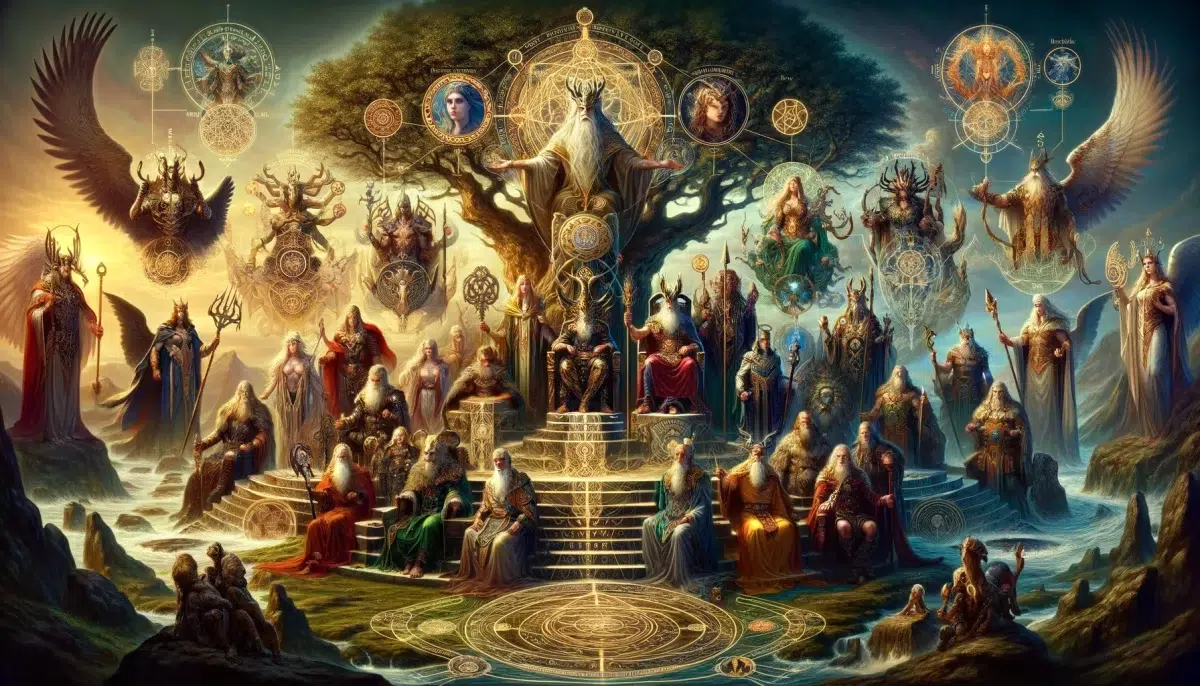
It is vital to gain a comprehensive understanding of the Norse pantheon.
The pantheon encompasses a hierarchy of powerful gods. These woven relationships are rich in symbolism and shape the divine realm.
The Hierarchy of the Norse Pantheon
At the forefront of the Norse pantheon is Odin, the Allfather and chief of the gods. As the ruler of Asgard, the realm of the gods, Odin holds supreme authority and wisdom. People revere him as the creator, preserver, and destroyer. Thus embodying the cyclical nature of existence.
Alongside Odin stand other prominent gods, each with their distinctive roles and powers.
One of the intriguing aspects of the Norse pantheon is the interconnectedness of its gods. The relationships between gods shape the narrative and provide insight into their individual powers.
For instance, Odin, as the Allfather. He is not only the father of Thor but also the father of Baldur, the god of light and purity. This family connection showcases the strength of the bloodline and underscores Odin’s role as a progenitor of gods.
Freya, on the other hand, is the sister of Freyr, the god of prosperity, fertility, and abundance.
Their bond highlights the importance of these intertwined domains within Norse mythology.
Symbolism in the Norse Pantheon
Symbolism plays a significant role in understanding the gods and their place within the Norse pantheon. Each deity possesses distinctive symbols and attributes that represent their powers and spheres of influence.
Odin’s symbols include his spear Gungnir, his ravens Huginn and Muninn, and his one-eyed visage. Reflecting his wisdom, knowledge, and role as the guiding force of thought.
His hammer, Mjölnir, recognizes Thor, symbolizing his power over thunder and lightning. The iconic necklace Brísingamen often depicts Freya, symbolizing her captivating allure.
Major Gods and Goddesses in Norse Mythology
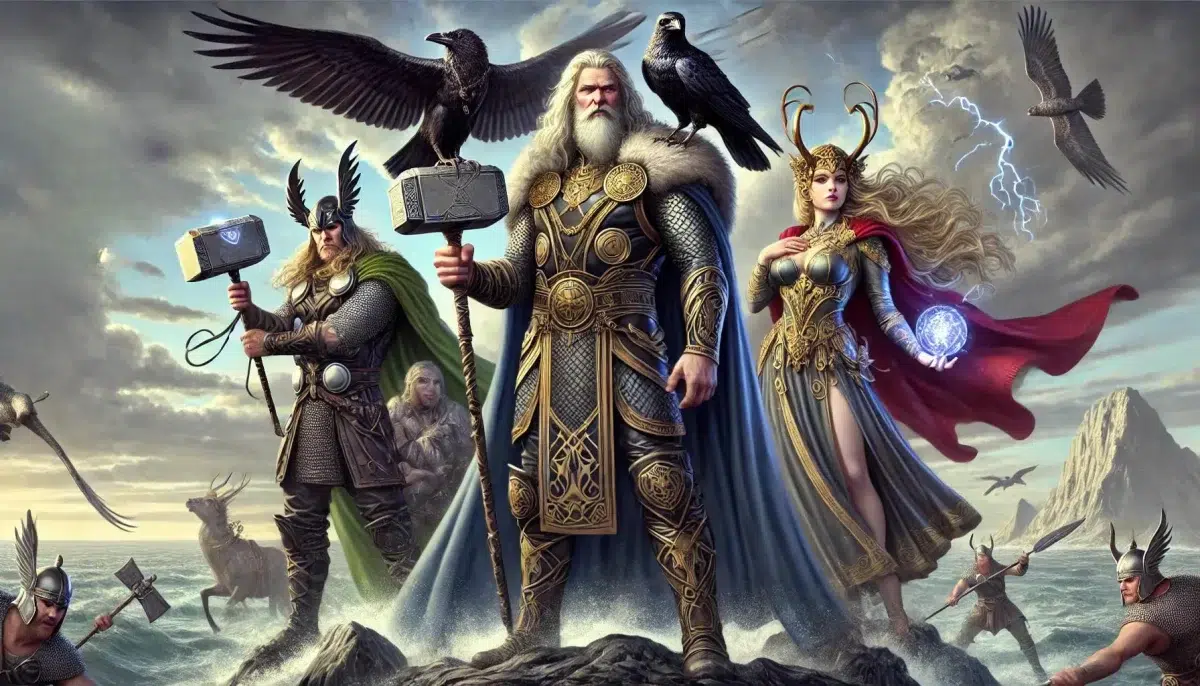
Norse mythology has gods, each with their own traits and roles.
The Aesir and Vanir gods are important in Norse myths. The Aesir, like Odin and Thor, focus on power and leadership. The Vanir, including Freyja, have connections to fertility and wealth.
The Aesir and Vanir were initially in conflict, known as the Aesir-Vanir War. This war ends in a truce, leading to an exchange of hostages to ensure peace. As a result, some Vanir gods, such as Njord, Freyr, and Freyja, integrate into the Aesir pantheon, and the two groups of gods begin to coexist.
Their conflicts and peace show the value of working together in Nordic culture.
Comparison of Aesir and Vanir
| Aspect | Aesir | Vanir |
|---|---|---|
| Primary Attributes | Associated with war, order, and governance | Associated with fertility, nature, wealth, and magic |
| Notable Gods | Odin, Thor, Frigg, Balder, Tyr, Heimdall, Loki | Njord, Freyr, Freyja |
| Realm | Asgard | Vanaheim |
| Cultural Reflection | Reflects Viking chieftain society, emphasizing social contracts and order | Reflects a closer connection to nature and magic, with a freer approach to love and relationships |
| Conflict | Known for the Aesir-Vanir War, which ended in a truce and exchange of hostages | Engaged in the Aesir-Vanir War, resulting in integration with the Aesir |
| Integration | After the war, some Vanir gods became part of the Aesir pantheon | Integrated into the Aesir pantheon post-war, with gods like Njord, Freyr, and Freyja living in Asgard |
| Magic | Less associated with magic, but some gods like Odin practiced seidr | Highly associated with seidr magic, particularly Freyja |
These gods and goddesses form the core of Norse mythology, each playing crucial roles in the myths and legends that have been passed down through the ages.
Odin: The Allfather and Chief of the Gods

Also known as Wotan in Old High German, Odin stands as the mightiest of all Norse mythology gods.
Revered as the Allfather and Chief of the Gods, Odin holds a position of immense power and wisdom in the divine pantheon. He embodies a complex blend of traits that make him one of the most enigmatic figures in Norse mythology.
Often depicted as a tall, older man with a long beard and a single eye, Odin possesses a sense of awe-inspiring presence that demands respect.
His missing eye symbolizes the price he paid for attaining supreme wisdom and knowledge.
As the god of battle and war, Odin’s association with ravens and wolves. This reflects his connection to battlefields and his desire for knowledge and victory.
Two ravens, Huginn (meaning “thought”) and Muninn (meaning “memory”), serve as his loyal companions. Flying across the realms to gather information and report back to him.
The most famous tale about Odin is his self-sacrifice on Yggdrasil, the World Tree. This was to acquire the runes of wisdom.
Odin would hang from the tree for nine days and nights without food or water. He endured tremendous suffering to gain insight into the secrets of the universe.
This act solidified his status as the god of knowledge and the pursuit of wisdom.
The Role of Odin as One of the Norse Mythology Gods
Odin’s influence extends beyond mere knowledge and wisdom. As the Allfather, he played a pivotal role in shaping the world and the lives of both gods and mortals.
Odin presides over Valhalla, the great hall of fallen warriors. This is where he prepares for the epic battle of Ragnarok.
At the thunderous final battle, Odin leads the charge. He is backed by his army of Valkyries and chosen warriors. Odin rides his eight-legged steed, Sleipnir, across the skies. Thus overseeing all realms and maintaining balance in the cosmos.
He is also the god of poetry. Inspiring artists to create masterpieces through the magic of language and storytelling. Odin’s thirst for knowledge and desire to maintain order and balance make him a revered and complex figure.
Thor: God of Thunder and Protector of Mankind
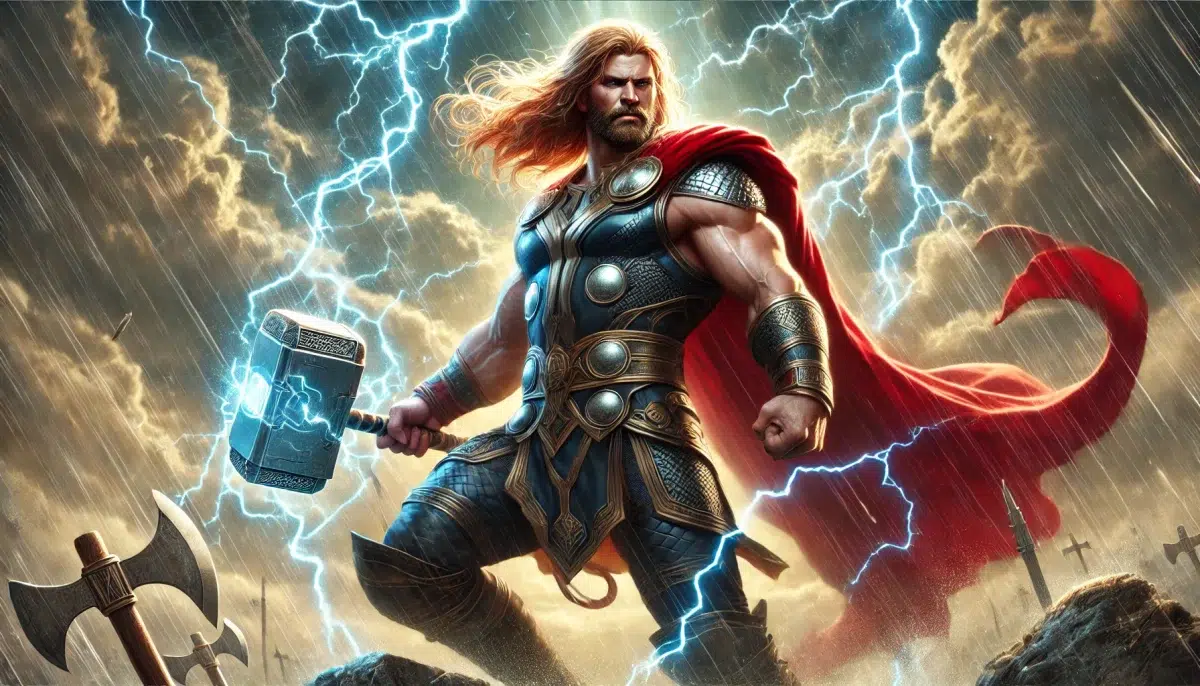
In Norse mythology gods we encounter the mighty Thor, the fearless deity known as the God of Thunder. Thor has immense strength, and plays significant role as the protector of humankind.
Thor, son of Odin and Jord, possesses incredible physical power.
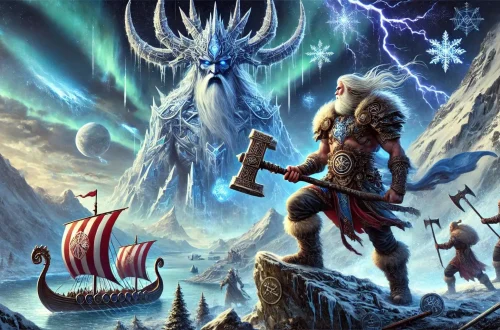
Artists often depict him with his mighty hammer. The Mjolnir can cause thunderstorms and strike lightning bolts across the sky.
People revere him as the defender of Asgard, the home of the Norse gods, and Midgard, the realm of humans.
Thor’s unwavering determination and undying loyalty establish him as a formidable ally. And mostly a force to be reckoned with.
Thor has many epic battles against giants, creatures, and other gods.
Various legendary tales showcase his courage and strength. He valiantly defends humanity and ensures order and balance between the gods and mortals.
As the “Protector of Mankind”, Thor is not only a fearsome warrior but also a symbol of hope. Thus inspiring mortals to be courageous in the face of adversity and to face challenges head-on.
Thor’s adventures and heroics have had a significant impact on popular culture.
From Marvel comics to blockbuster movies, his mythical presence continues to captivate audiences around the world. He continue to be one of the most beloved Norse mythology gods.
Key Attributes of Thor, Norse Mythology God:
- Incredible physical strength
- Mighty hammer – Mjolnir
- God of Thunder and lightning
- Protector of Asgard and Midgard
- Defender of humanity
Freya: Goddess of Love, Fertility, and Battle
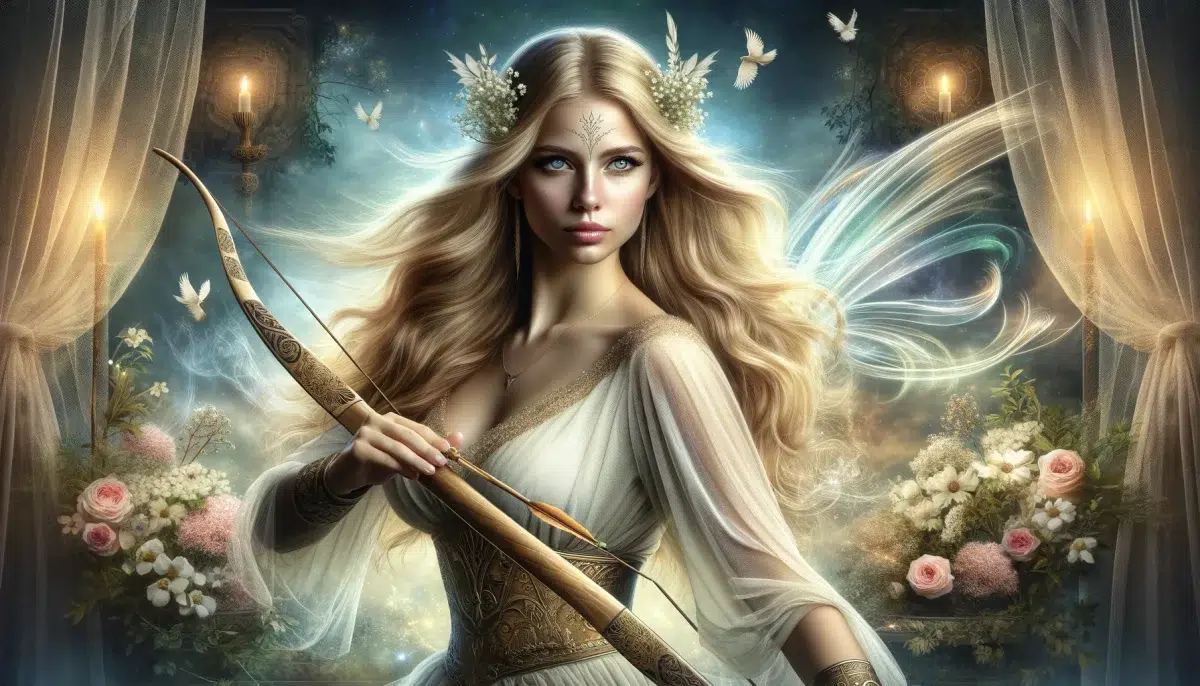
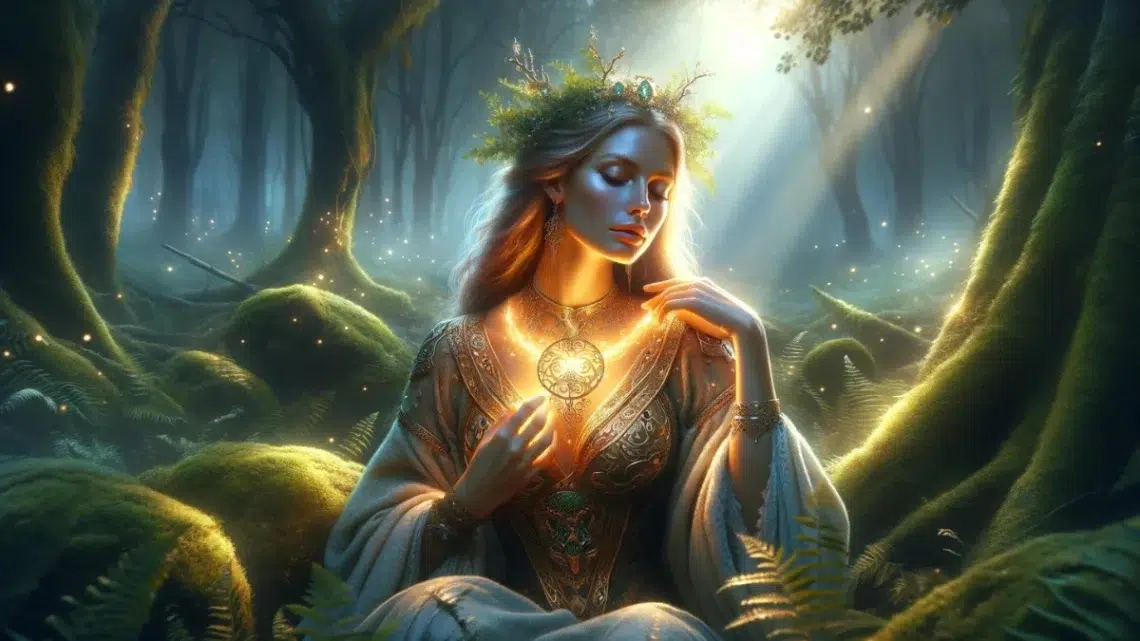
Freya (Freyja), the goddess of love and fertility, commands beauty and power. She is part of the Vanir and influences love and war. Her stories mix love and war, showing her complex nature.
Among the Norse mythology gods, Freya holds a position of power and admiration. She embodying strength, beauty, and passion.
As the goddess of love, Freya blesses mortals with her presence. Which brings joy, desire, and longing to their hearts. Her influence spreads far and wide, enchanting all who encounter her.
In the realm of fertility, people revere Freya as the bringer of plenty. She is also and the protector of the sacred bond between a mother and her child.
What sets Freya apart from other Norse gods is her connection to battle.
Known as the Valkyrie, she guides fallen warriors to the afterlife. Ensuring their glory in the halls of Valhalla. Freya’s association with battle highlights her multifaceted nature. Thus encompassing both nurturing love and fierce determination.
In Norse mythology, Freya’s beauty and captivating presence are renowned. Many tales revolve around her, weaving a tapestry of passion, power, and resilience.
Her strength in the face of adversity and loyalty to her ideals make her an inspiration for all. Mortals and gods alike.
Freya’s Unique Powers
Freya possesses a myriad of unique powers that set her apart from the other Norse mythology gods. Her most notable attributes include:
- Seidr Magic: Freya’s skill is in a form of magic known as seidr. She can see into the future, manipulate events, and wield influence over the forces of nature
- Falcons and Cats: Freya is often depicted with falcons and cats. These animals represent her connection to both the skies and the earth
- Brísingamen: Freya wears a legendary necklace called Brísingamen. This powerful artifact enhances her beauty, wisdom, and charm
Freya’s unique powers and connection to various realms make her a captivating goddess. She rides a chariot pulled by cats. Freyja also leads the Valkyries, guiding fallen warriors to Valhalla.
Frigg: Queen of Asgard
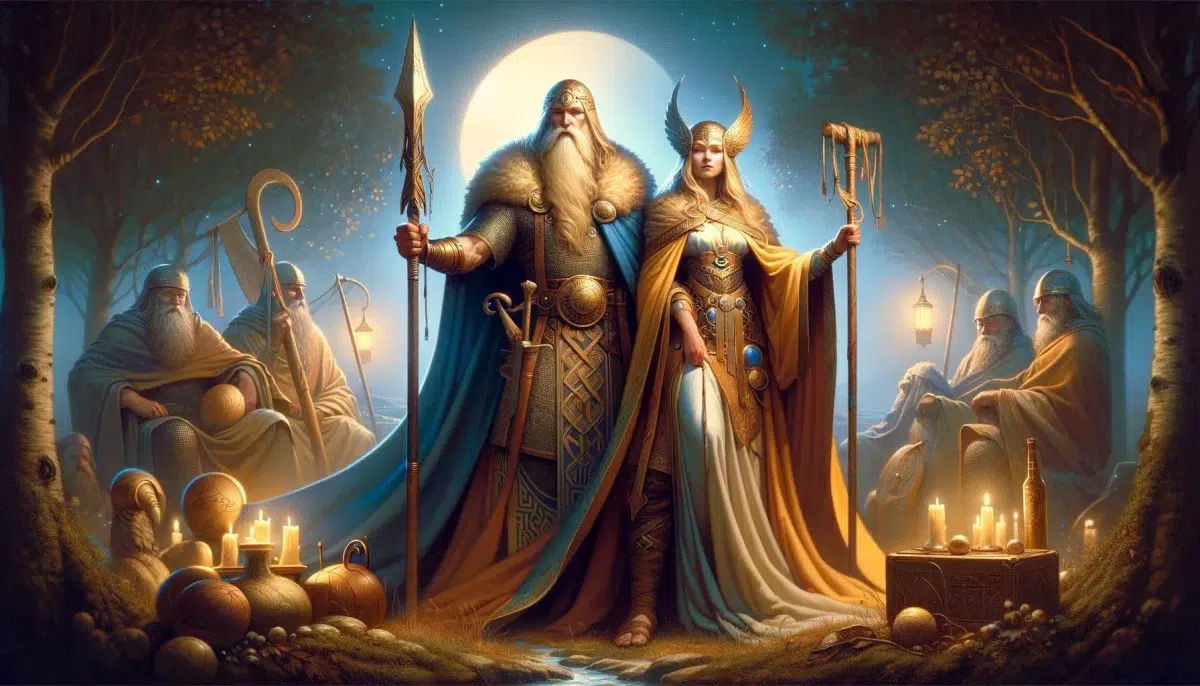
Frigg, Odin’s wife and the queen of Asgard, embodies wisdom and foresight. She knows the fate of all beings but rarely reveals it. Frigg weaves the clouds and controls the weather.
She is the goddess of marriage, family, and fertility. She watches over marriages and motherhood, offering protection and guidance.
Frigg’s palace, Fensalir, stands as a sanctuary of peace. Her love for her son Balder drives her to protect him from harm. Frigg’s presence brings comfort and stability to the gods. Her wisdom and compassion make her a revered figure in Norse mythology.
Ullr: Norse God Of Winter
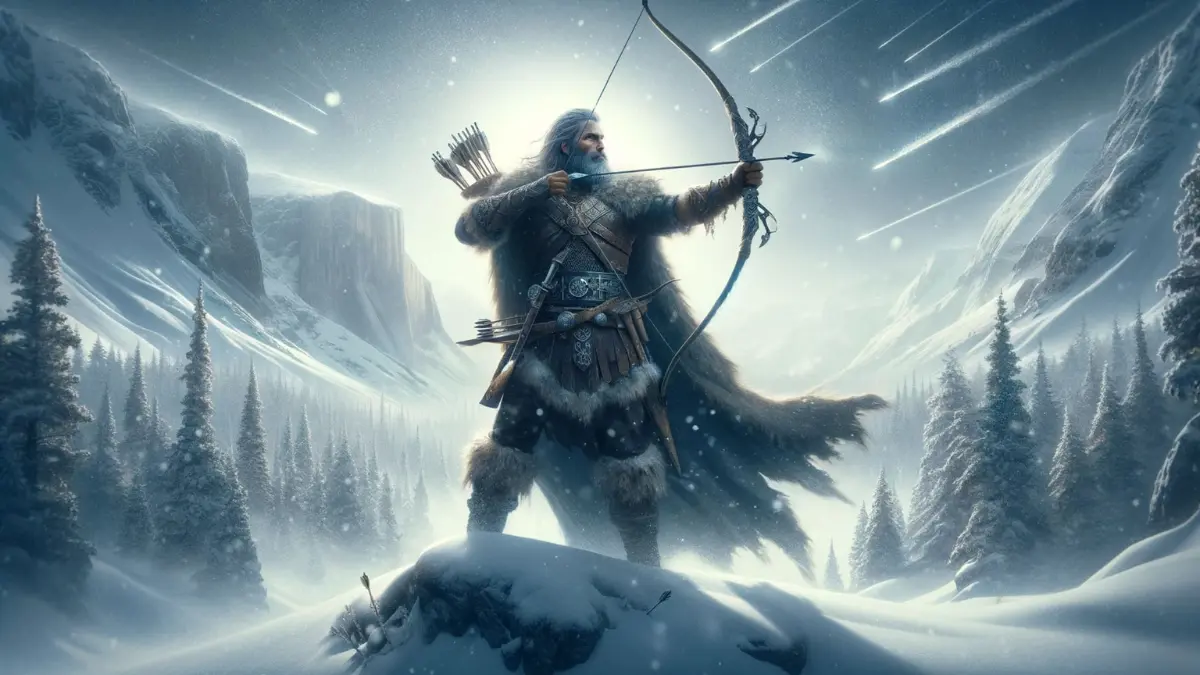
Ullr, the Norse god of winter, skiing, and archery, stands out for his unmatched skill. He glides effortlessly across snowy landscapes, embodying grace and precision.
Ullr wields a powerful bow, never missing his mark. He often competes in archery contests, always emerging victorious.
As a protector of hunters, Ullr ensures their success in harsh winters. His connection to winter sports makes him a favourite among skiers and athletes. Ullr’s presence brings both fear and admiration, highlighting his importance in Norse mythology.
His legacy continues to inspire those who seek mastery in archery and skiing.
Loki: The Trickster God
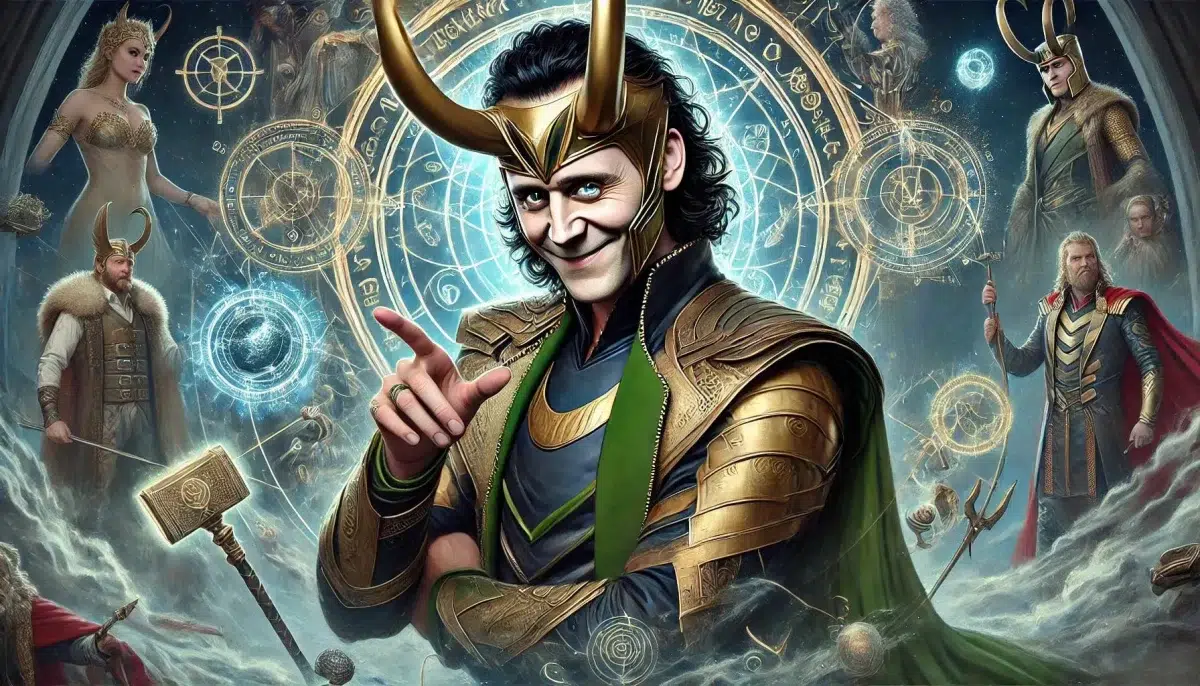
Loki, the trickster god, excels in cunning and mischief. He often causes trouble for gods and mortals alike. Loki can shape-shift into various forms, using his abilities to deceive. His cleverness allows him to solve problems and escape danger.
Loki’s relationship with the gods fluctuates between ally and antagonist.
He fathered several monstrous children, including the wolf Fenrir, the serpent Jörmungandr and the goddess Hel. Loki’s actions often lead to significant events in Norse mythology.
His unpredictable nature keeps everyone on edge. Despite his trickery, Loki plays a crucial role in the mythological tales. His actions often change the course of events for gods and humans.
Goddess Skadi: Archery Huntress
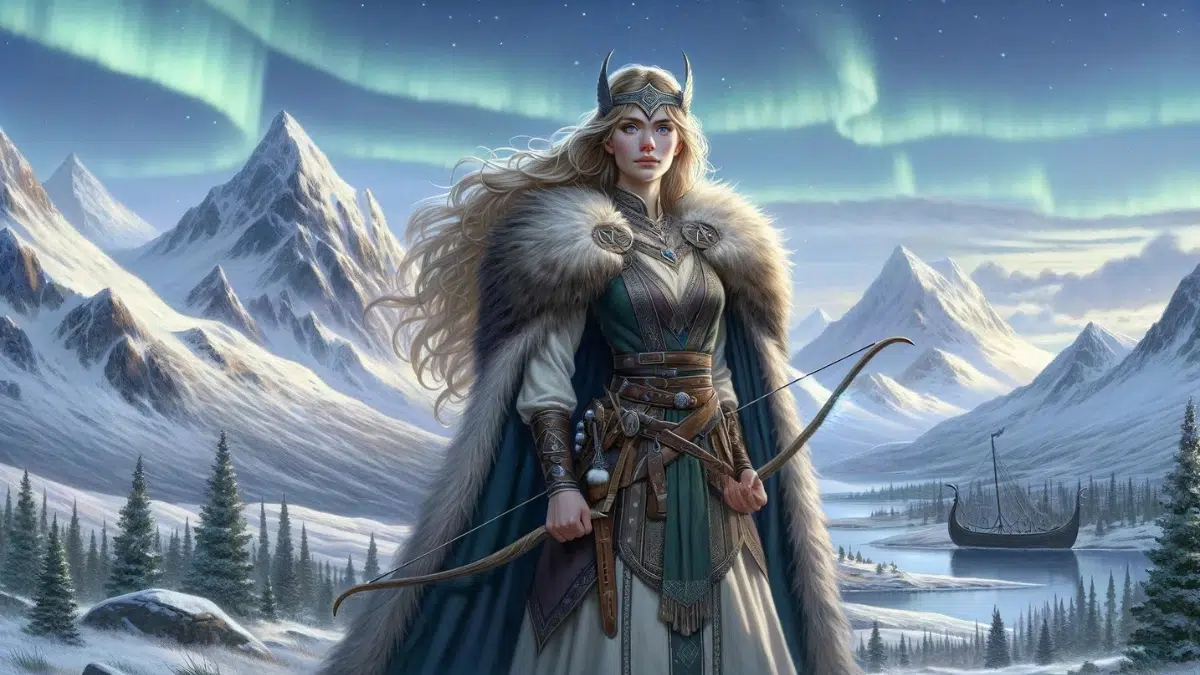
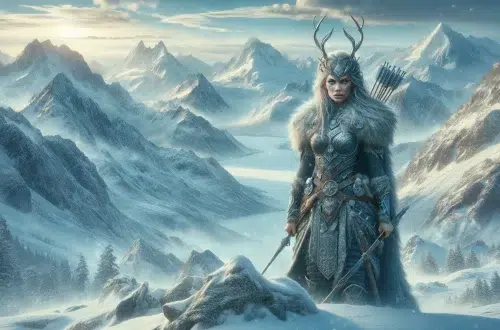
In Norse mythology, Skadi stands tall as a potent symbol within archery.
Daughter of a giant and an embodiment of strength and wilderness, she is widely revered as the huntress goddess.
Skadi’s domain spans the mountains, where she is most at home on skis, bow in hand, hunting her prey.
Skadi’s influence touches archers who seek precision and the fortitude to overcome the harshest conditions.
To invoke her spirit, archers would aim not just for mastery over the bow but also for harmony with the natural world.
Skadi encapsulates the rugged discipline of the archer, anchoring the sport in a heritage of resilience and focused will.
Other Notable Norse Gods
Balder, the son of Odin and Frigg, is the god of beauty, innocence, peace, and rebirth. He is beloved by all the gods and is associated with light and purity. His death, orchestrated by Loki, is one of the pivotal events leading to Ragnarök.
Tyr is the god of war and justice. He is known for his bravery, having sacrificed his hand to bind the wolf Fenrir. Tyr is associated with law and heroic glory.
Heimdall is the guardian of the Bifrost, the rainbow bridge connecting Asgard to Midgard. He possesses keen senses and is ever-watchful, ready to sound the Gjallarhorn to alert the gods of impending danger.
Njord is the god of the sea, wind, and wealth. He is a member of the Vanir people of gods and is associated with seafaring and prosperity. Njord is the father of Freyja and Freyr.
Vidar is the god of vengeance and silence. He is known for his strength and is foretold to avenge Odin’s death during Ragnarök by killing Fenrir.
Learn more about:
Understanding Norse Mythology Gods
Norse mythology gods provide us with an understanding of their world. From Odin, to Thor, and the enchanting Freya, these gods captivate and inspire.
The gods of Norse mythology have left a lasting impact on both ancient and modern cultures.
Their stories reflect the eternal struggle between good and evil. They note the complexities of human nature, and the importance of honour, bravery, and sacrifice.
Their myths and legends provide a glimpse into their understanding of the world. Their reverence for nature, and their unwavering devotion to their gods.