
Morrigan: Celtic Goddess of War, Fate and Death
The Morrigan, a goddess representing war, fate, and death, derives from Old Irish meaning “great queen” or “phantom queen.” Morrigan’s ability to shape-shift has her transforming into various forms. She symbolizes both life and death, showing her complex nature.
Introduction to Morrigan: Goddess of War and Fate
Morrigan guides warriors in battle, inspiring them and ensuring their bravery. She predicts the outcome of conflicts and decides the fate of soldiers. Her presence on the battlefield both terrifies and empowers.
Morrigan also embodies a triple goddess, with three aspects: Badb, Macha, and Nemain. These represent war, sovereignty, and prophecy.
Morrigan’s connection to fate makes her a significant deity. She weaves the threads of destiny. Morrigan’s influence extends beyond battlefields, affecting the lives of everyday people and shaping their destinies.
Her stories reflect her multifaceted character. She is a warrior, a prophetess, and a powerful force in the universe. Morrigan’s legacy endures, symbolizing strength, transformation, and the mysteries of fate.
By understanding Morrigan, we gain insight into ancient Celtic beliefs. She embodies the powerful forces that shape our lives. Morrigan’s influence remains strong, inspiring us to face challenges with courage and honour.
As one of the Tuatha Dé Danann, she is deeply embedded in the mythological history of Ireland.
Origins of Morrigan Goddess
The earliest mention of the Morrigan dates back to around 750 BC. However it is believed that her stories originate from much older oral traditions.
As the “Great Queen” her authority among the gods and her role in the pantheon of the Tuatha Dé Danann is emphasized. Her alternate translation, “Phantom Queen,” highlights her connection to the supernatural and her role foreshadowing of death.
Tuatha Dé Danann
The Tuatha Dé Danann, translated as “People of the Goddess Danu,” are a significant and enigmatic race in Irish mythology. They are depicted as a supernatural race with divine attributes, known for their extraordinary abilities and profound influence on the mythological landscape of Ireland.
Symbolism of the Morrigan Goddess
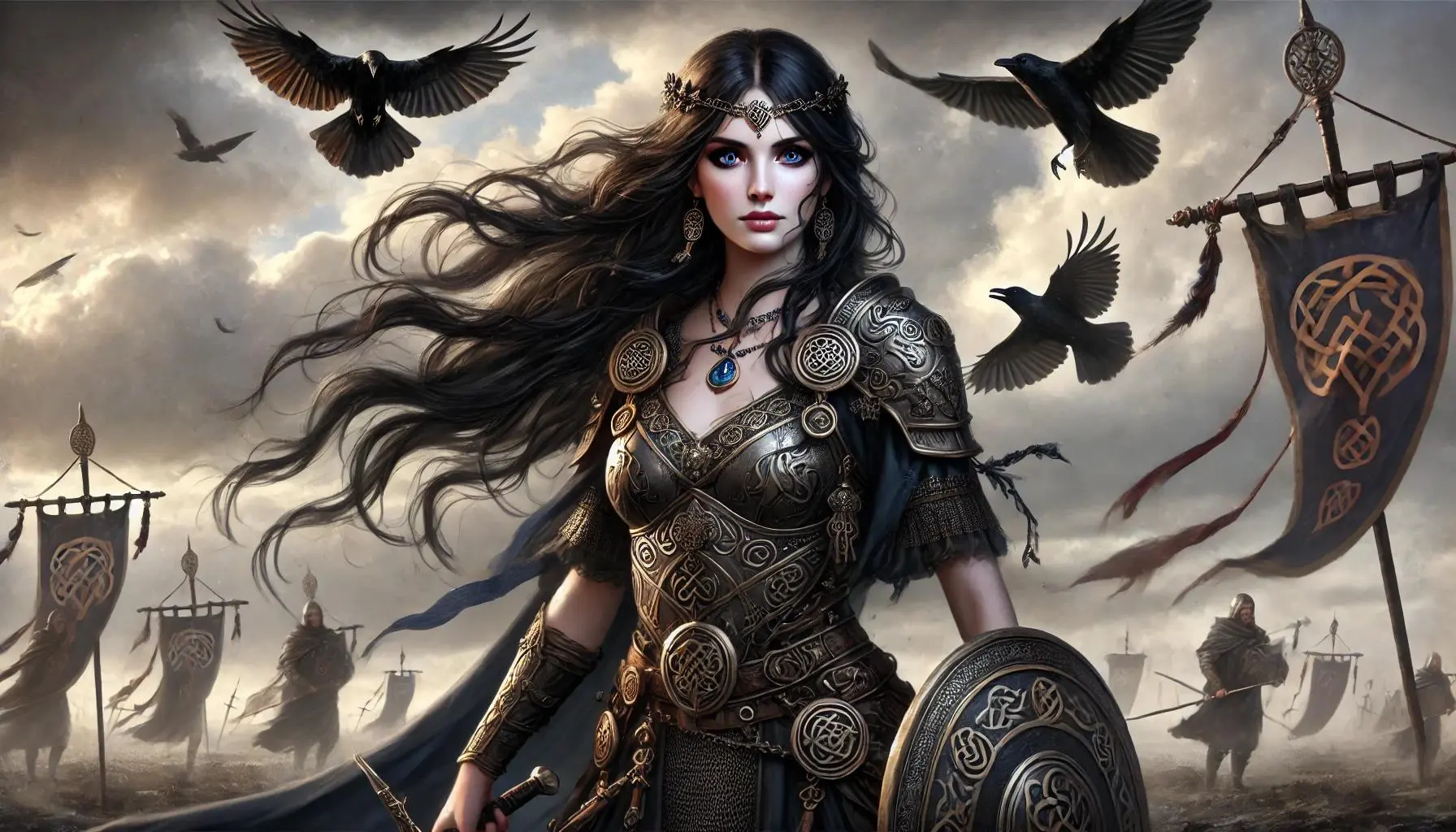
The Morrigan stands as a complex and multifaceted deity, often appearing in various forms reflecting her diverse roles and attributes.
She frequently appears as a beautiful yet formidable woman, embodying both allure and terror. The Morrigan also takes the form of a crow or raven, birds symbolizing war, death, and prophecy in Celtic mythology.
One of the Morrigan’s notable abilities is shape-shifting. She transforms into various animals, including crows, ravens, wolves, and eels, as well as different human forms.
Rich in symbolic meaning, the Morrigan represents various natural and elemental forces.
Primarily associated with war, fate, and death, she predicts and influences battle outcomes. Her presence on the battlefield, often as a crow or raven, foretells death and destruction. She incites warriors to fight bravely and strikes fear into their enemies.
Her connection to crows and ravens defines her. These birds, often seen on battlefields scavenging the dead, link closely with death and prophecy. The crow or raven symbolizes the Morrigan’s ability to foretell death and act as a harbinger of doom.
Other symbols linked to the Morrigan include the cauldron, representing prophecy and fate, and the colour red, signifying the bloodshed of war. These symbols underscore her role as a powerful and fearsome deity presiding over the cycles of life and death.
Cultural Significance of Morrigan Goddess
The Morrígan stands as a central figure in Irish mythology. Her influence deeply embeds in Ireland’s mythological landscape, especially in regions tied to ancient Irish lore and the Tuatha Dé Danann, her mythical race of deities.
As a Tuatha Dé Danann member, she connects to ancient and sacred sites these deities inhabit. The Tuatha Dé Danann associate with the sídhe (fairy mounds), believed to be entrances to the Otherworld.
These locations, scattered across Ireland, serve as portals to realms beyond the physical world, where the Morrígan and other deities exert their influence.
Rathcroghan, also known as Cruachan, ranks among the most significant archaeological and mythological sites in Ireland. Located in County Roscommon, it is believed to be the ancient capital of Connacht.
Rathcroghan houses over 240 archaeological sites, including burial mounds, ringforts, and ceremonial inauguration sites. The Cave of the Cats (Oweynagat), the entrance to the Otherworld, is closely associated with the Morrígan.
Another significant location tied to the Morrígan is the site of the Battle of Mag Tuired (Moytura). The Morrígan plays a crucial role in this battle, using her powers to influence the outcome and ensure victory for the Tuatha Dé Danann.
Mythological Roles and Legends of Morrigan
Morrigan Goddess of War and Fate
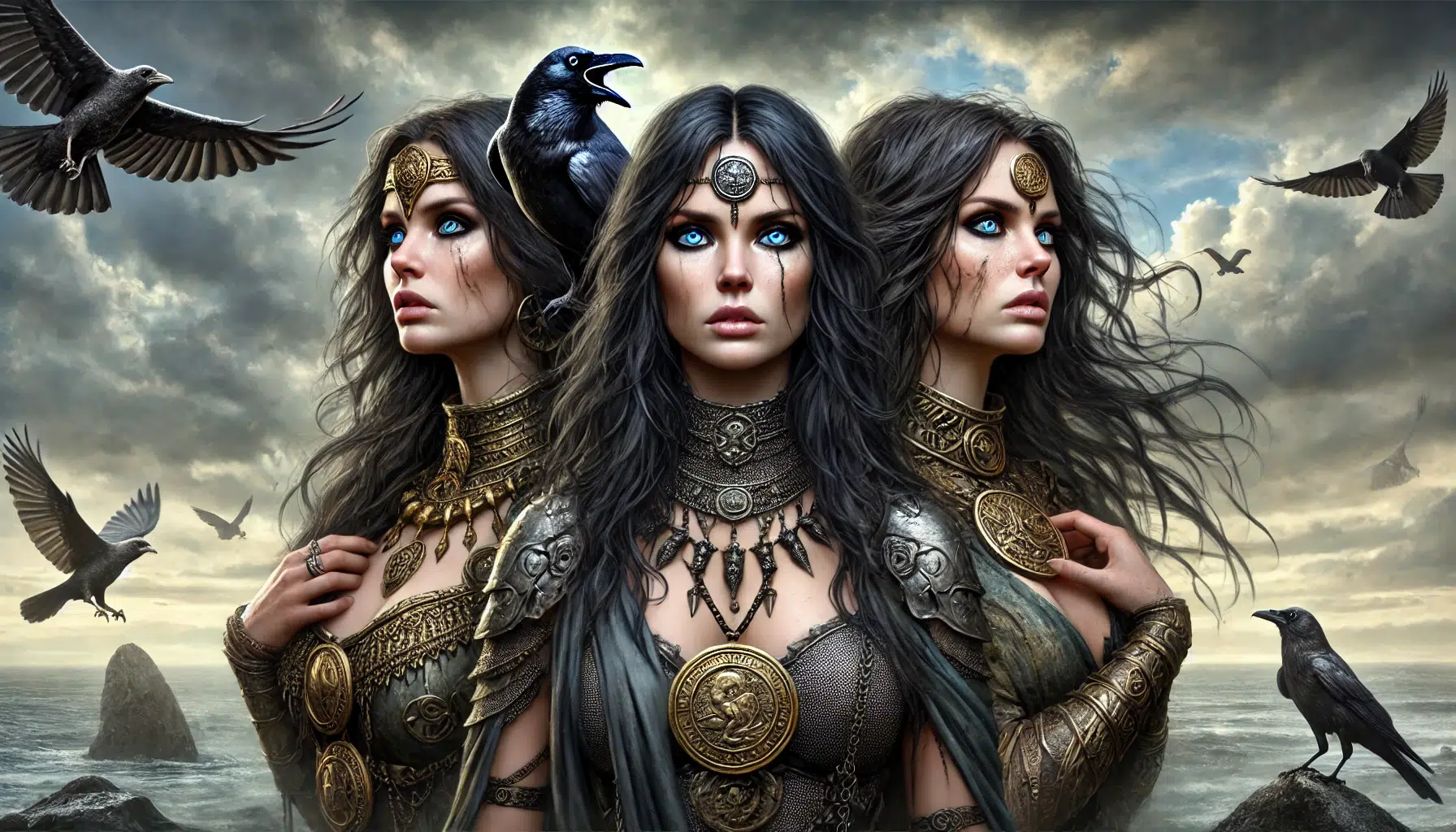
The Morrígan is primarily the goddess of war and fate. She wields significant influence over the outcomes of battles and the destinies of warriors.
As a harbinger of doom, she appears before or during battles to foretell the death and destruction that will ensue. She frequently takes the form of a crow or raven, symbols of death and prophecy, to deliver her ominous messages. Her presence on the battlefield is a warning of the fate of warriors, whether it be victory or defeat. By appearing in these forms, she serves as a reminder of the inevitability of death and the transient nature of life.
The Morrígan not only predicts the outcomes of battles but also actively participates in them by inciting warriors to fight with greater ferocity. She encourages and inspires warriors, filling them with a berserk rage that makes them formidable opponents.
She can also strike fear into the hearts of enemies, causing confusion and panic. Her ability to influence both sides of a conflict underscores her role as a powerful and impartial force of fate and war
Triple Goddess Aspect
The Morrígan is often described as a triple goddess, embodying three distinct but interconnected aspects: Badb, Macha, and Nemain (or Anand).
In her triple form, the Morrígan is represented by three sisters, each with unique attributes and roles.
- Badb – associated with prophecy and fate, often appearing as a crow to foretell death
- Macha – linked to sovereignty and war, embodying the strength and power of a warrior queen
- Nemain – connected to the frenzied chaos of battle, inciting terror and confusion among enemies
Together, these sisters represent the multifaceted nature of the Morrígan’s power and influence.
This triadic form allows her to embody different aspects of war, fate, and sovereignty simultaneously, making her a more complex and versatile deity.
The concept of the triple goddess also highlights the interconnectedness of life, death, and rebirth, themes central to Celtic mythology.
Guardian of the Dead
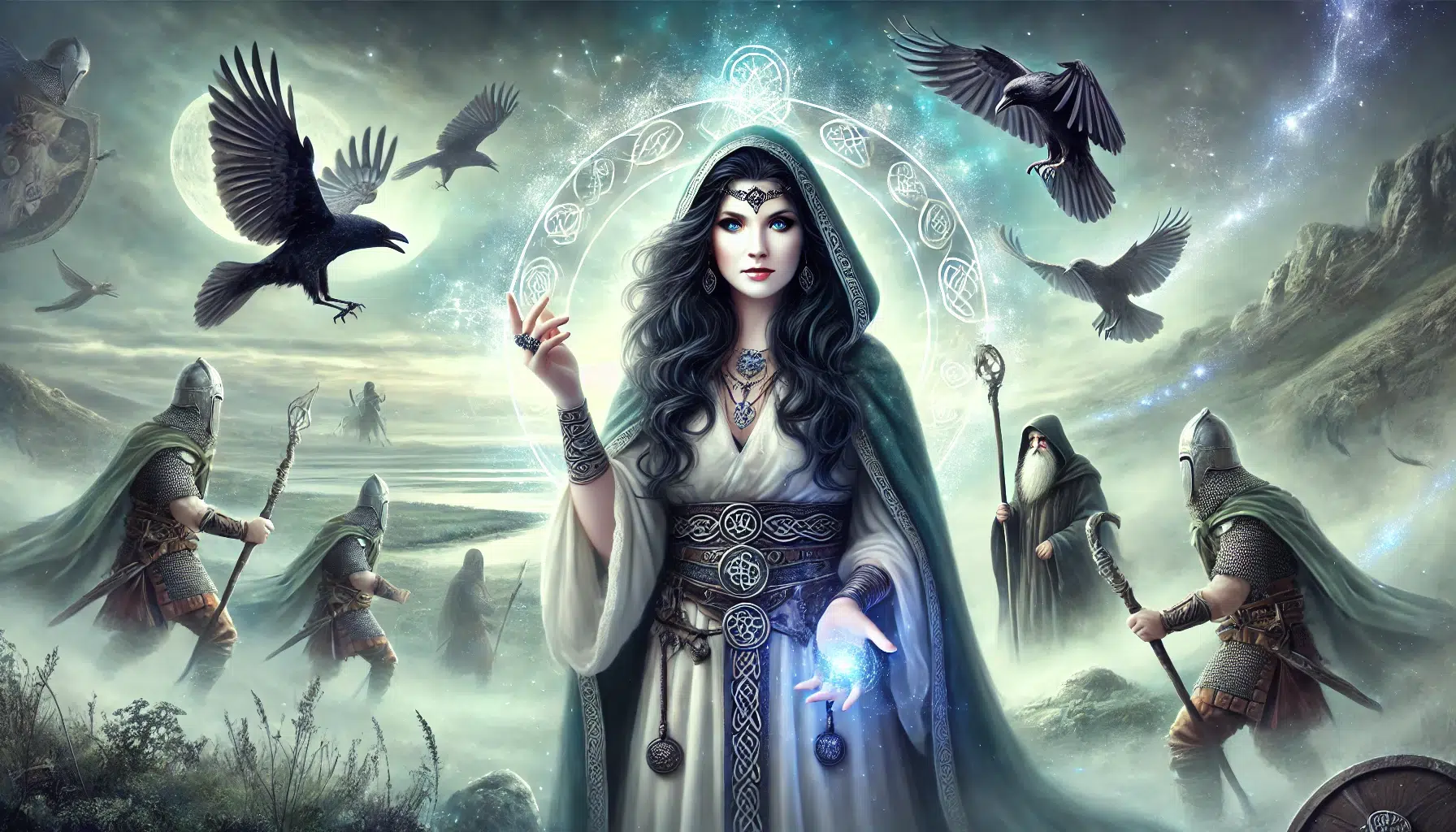
In addition to her roles in war and fate, the Morrígan is also revered as a guardian of the dead, guiding and protecting the souls of deceased warriors.
The Morrígan’s association with death extends beyond the battlefield. She is believed to guide the souls of fallen warriors to the Otherworld, ensuring their safe passage and protection.
This role underscores her connection to the cycle of life and death facilitating the transition to the afterlife. Her presence as a guardian of the dead highlights her nurturing and protective aspects.
Morrigan Goddess Connections to Other Celtic Deities
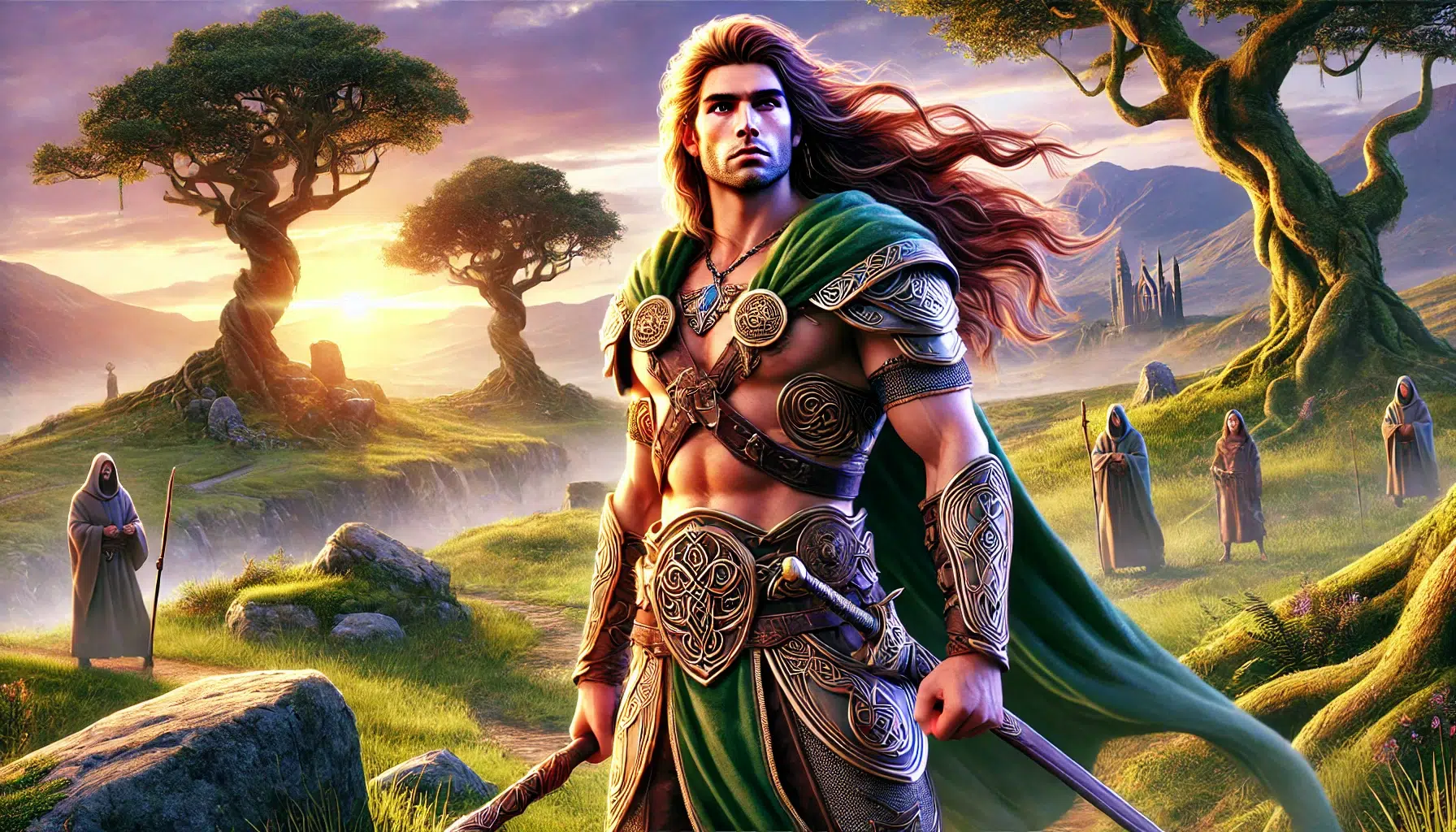
The Morrigan’s interactions with other deities and figures in Celtic mythology highlight her complex role and her influence across various mythological narratives.
The Dagda – Father God of Tuatha Dé Danann
One of the most significant relationships in Irish mythology is between the Morrígan and the Dagda. Their union symbolizes the powerful alliance between sovereignty (the Morrígan) and fertility (the Dagda). This relationship is vividly depicted in the Second Battle of Mag Tuired.
Lugh – Hero and God in Irish Mythology
The Morrígan also has significant interactions with Lugh. In the Second Battle of Mag Tuired, she aids Lugh by using her prophetic abilities and magical powers to weaken the Fomorian forces. Her support is crucial in securing the Tuatha Dé Danann’s victory.
Ernmas and Her Daughters
The Morrígan is one of the daughters of Ernmas, a figure in the mythological cycle. Her sisters include other land goddesses such as Ériu, Banba, and Fódla, who personify Ireland itself. This connection emphasizes her role as a guardian of the land and its people.
Neit – A War God
In some traditions, Badb and Nemain, aspects of the Morrígan, are said to be the wives of Neit. This association further underscores the Morrígan’s deep connection to war and battle, as well as her role in inciting and influencing conflicts.
Banshee – Supernatural Being
The Morrígan sometimes has links to the banshee (bean sídhe) known for wailing to foretell death. This connection highlights her enduring association with death and prophecy, bridging ancient mythology and more recent folklore.
Learn more about:
- Athena Goddess of Wisdom & Strategic Warfare
- Scáthach – Mystic Warrior Goddess of Celtic Lore
- Boudica: Celtic Warrior Queen Who Defied Rome
Legends and Stories of Morrigan Goddess of War and Fate
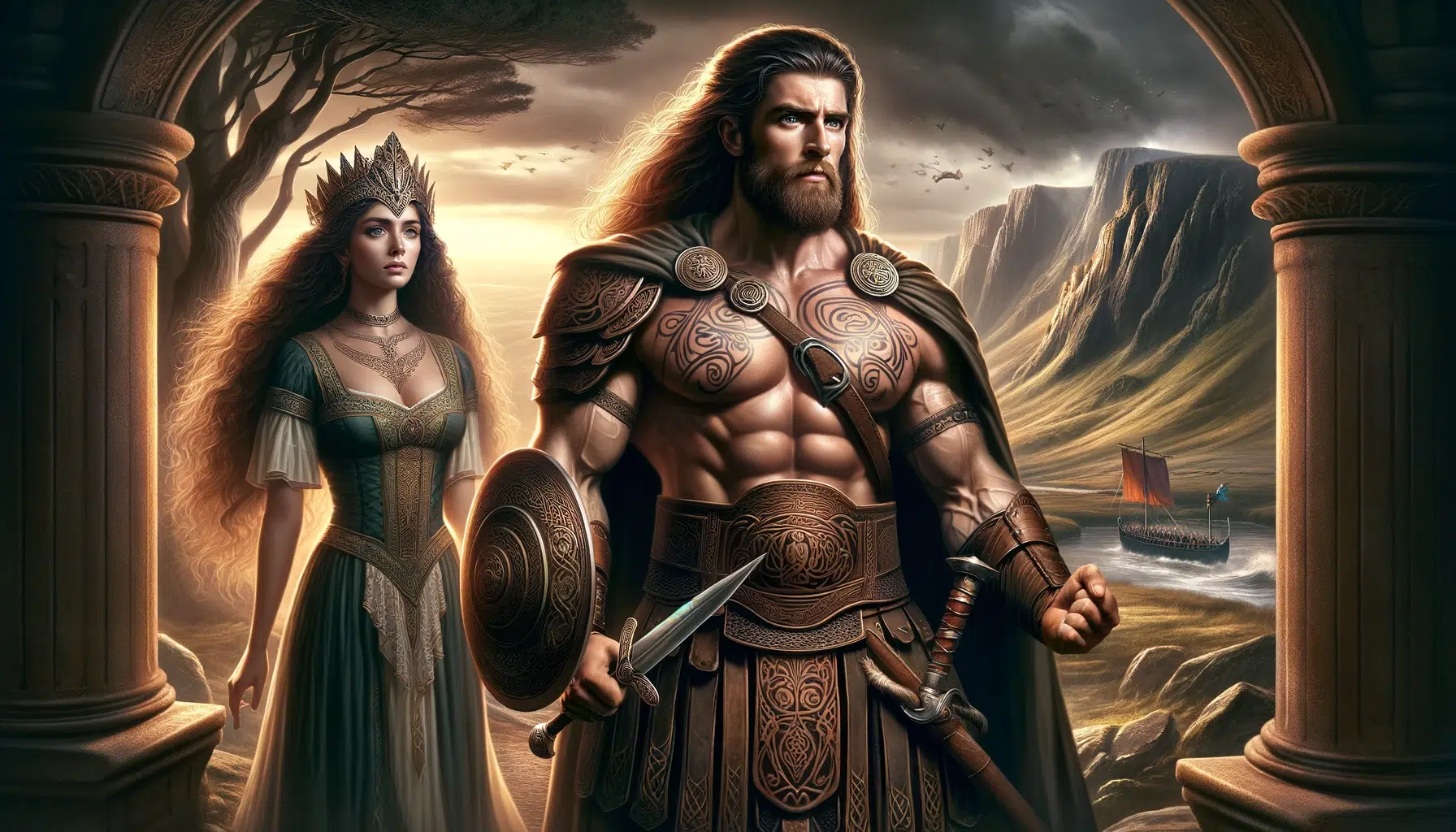
Myth: The Morrigan Goddess and Cú Chulainn
The relationship between the Morrígan and Cú Chulainn is one of the most complex and intriguing aspects of Irish mythology. Their encounters are filled with themes of prophecy and fate.
The Morrígan first encounters Cú Chulainn during the events of the Táin Bó Cúailnge (“The Cattle Raid of Cooley”), where Queen Medb of Connacht invades Ulster to steal the prized bull Donn Cuailnge.
As Cú Chulainn defends Ulster, the Morrígan appears to him in various forms, each encounter laden with symbolic meaning.
In one notable episode, the Morrígan approaches Cú Chulainn disguised as a young woman, offering her love and assistance in battle. Cú Chulainn, unaware of her true identity and dismissive of her offer, rejects her.
Angered by his refusal, the Morrígan vows to hinder him in his upcoming combats. She transforms into an eel to trip him, a wolf to stampede cattle across his path, and a white, red-eared heifer leading the stampede. Despite her efforts, Cú Chulainn manages to wound her in each form and overcome his adversaries.
Later, the Morrígan reappears to Cú Chulainn as an old woman with the same wounds he had inflicted on her animal forms. She is milking a cow and offers Cú Chulainn three drinks of milk.
Unaware of her identity, he blesses her after each drink, inadvertently healing her wounds. When he realizes her true identity, he expresses regret, acknowledging that he would not have healed her had he known who she was.
This interaction underscores the Morrígan’s dual nature as both a helper and an adversary.
Omen of Death
One of the most poignant encounters between the Morrígan and Cú Chulainn occurs as he approaches his final battle.
Cú Chulainn sees the Morrígan washing his bloody armour in a ford, a traditional omen of death. This vision foretells his impending demise, reinforcing the Morrígan’s role as a harbinger of fate and death.
Despite the ominous warning, Cú Chulainn proceeds to battle, where he is mortally wounded.
In his final moments, Cú Chulainn ties himself to a standing stone to die upright, a testament to his warrior spirit. A crow, often associated with the Morrígan, lands on his shoulder, signaling his death to his enemies.
Myth: The Battles of Mag Tuired
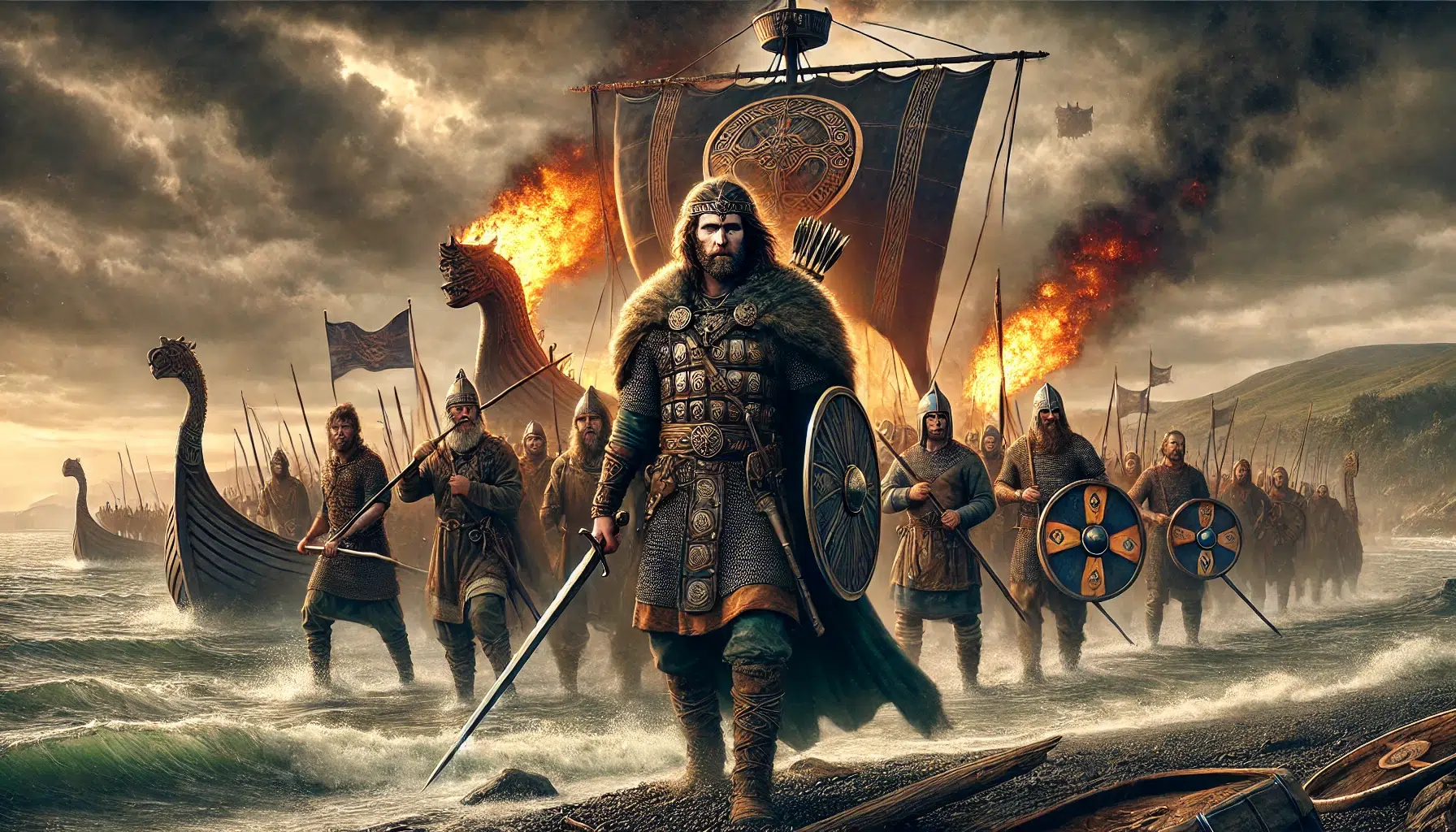
The Battle of Mag Tuired, or Cath Maige Tuired, is a cornerstone of Irish mythology, consisting of two significant battles fought by the Tuatha Dé Danann.
The First Battle of Mag Tuired
The first battle, known as Cét-chath Maige Tuired (“The First Battle of Mag Tuired”), took place in County Mayo. This battle narrates the arrival of the Tuatha Dé Danann in Ireland and their conflict with the Fir Bolg.
The Tuatha Dé Danann, led by their king Nuada, arrive in Ireland from the northern islands. They burn their ships upon landing, signifying their intention to stay and conquer the land. Their arrival was foreseen in a dream by the Fir Bolg king, Eochaid mac Eirc.
Initial negotiations between Sreng, the champion of the Fir Bolg, and Bres of the Tuatha Dé Danann failed, leading to a battle.
The conflict lasted for four days, during which Nuada lost his right hand to Sreng. Despite this, the Tuatha Dé Danann gained the upper hand.
A truce was called, and the Fir Bolg were given the option to leave Ireland, share the land, or continue fighting. They chose to fight but eventually accepted a portion of the land, leading to a peace agreement.
The Second Battle of Mag Tuired
The second battle, known as Cath Dédenach Maige Tuired (“The Last Battle of Mag Tuired”), was fought near Lough Arrow in County Sligo.
This battle is more famous and detailed, depicting the Tuatha Dé Danann’s struggle against the oppressive Fomorians.
After their initial victory, the Tuatha Dé Danann fell under the harsh rule of the Fomorians, led by Balor of the Evil Eye and his grandson Bres, who became king of the Tuatha Dé Danann through his mother, a Tuatha Dé Danann woman.
The Tuatha Dé Danann, led by Nuada (now with a silver hand crafted by the healer Dian Cecht and the smith Credne), prepared for a decisive battle to free themselves from Fomorian rule.
The young hero Lugh, who possesses multiple talents and is prophesied to be their saviour, plays a crucial role in rallying the troops and planning the battle.
The battle showcases the Tuatha Dé Danann’s magical and martial abilities. Goibniu the smith, Luchta the carpenter, and Credne the brazier work tirelessly to produce weapons that were magically restored each day. Dian Cecht and his children healed the wounded in the Well of Slaine, ensuring that the Tuatha Dé Danann warriors could return to the fight rejuvenated.
The battle was marked by significant events, including the death of Ruadan, the son of Bres and Brigid, who was killed after wounding Goibniu.
The climax of the battle saw Lugh slaying Balor with a sling stone, fulfilling the prophecy and leading to the defeat of the Fomorians. The victory restored sovereignty to the Tuatha Dé Danann and marked the end of Fomorian oppression.
Significance in Irish Mythology
The Battle of Mag Tuired is rich in symbolic and cultural significance. It highlights the themes of rightful rule, the struggle against tyranny, and the use of both martial and magical prowess to achieve victory.
The battles emphasize the importance of unity, bravery, and the guidance of prophetic figures like Lugh and the Morrígan, who played crucial roles in the Tuatha Dé Danann’s success.
Myth: The Encounter with the Dagda
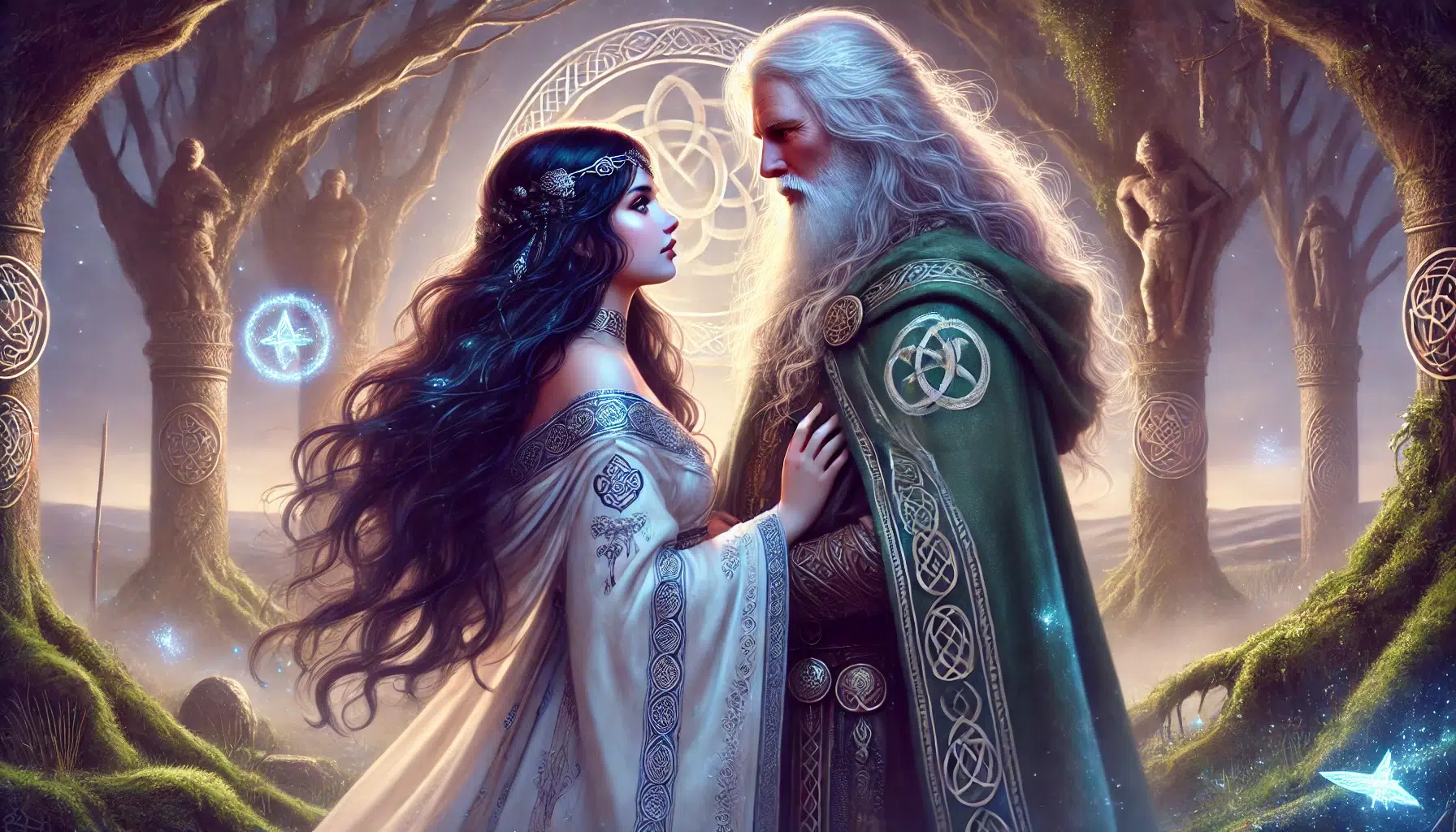
The encounter between the Morrígan and the Dagda symbolizes the union of life and death, fertility, and the cyclical nature of existence.
The encounter takes place during Samhain, a festival marking the end of the old year and the beginning of the new. Samhain is a time when the spirits of the Otherworld are believed to be more accessible.
The Morrígan and the Dagda meet by the River Unshin near Ballymore. The Morrígan is washing herself in the river, tying her to themes of purification and transformation.
The Dagda, the chieftain and father figure of the Tuatha Dé Danann, approaches the Morrígan to seek her aid in the upcoming battle. She agrees to assist him, but in return, she demands a tryst.
Their union is not merely a physical act but a powerful ritual that symbolizes the merging of life and death.
The Dagda’s role as a fertility god and the Morrígan’s association with death highlight the cyclical nature of life. Death leads to rebirth and renewal.
Their union is believed to ensure the fertility of the land and the prosperity of the people. This act is a ritualistic guarantee of a bountiful harvest and the well-being of livestock. Thus, crucial for the survival and success of the community in the coming year.
Following their union, the Morrígan provides the Dagda with crucial information about the Fomorians’ plans. She foretells the outcome of the battle and offers her support. Her prophecies and direct intervention in the battle reflect her role as a goddess of fate and war.
Learn more about Celtic Mythology:
- Celtic Mythology Gods & Legends in Archery
- Cailleach: Ancient Celtic Goddess of Winter
- Cu Chulainn: Tale of Ireland’s Greatest Hero
Art and the Morrigan Goddess of War and Fate
The Morrígan has been a subject of fascination in Celtic art and literature for centuries.
In ancient Celtic art, the Morrígan is frequently depicted as a crow or raven, often perched on a battlefield or near a warrior. These images symbolize her role as a harbinger of death and her presence during times of conflict.
The Morrígan appears in various medieval Irish texts, such as the Lebor Gabála Érenn (The Book of the Taking of Ireland) and the Cath Maige Tuired (The Battle of Mag Tuired).
These texts describe her interactions with other deities, her role in battles, and her prophetic abilities. In these stories, she is portrayed as a powerful and enigmatic figure, capable of influencing the fate of individuals and entire armies.
Influences of Morrigan Goddess in Popular Culture
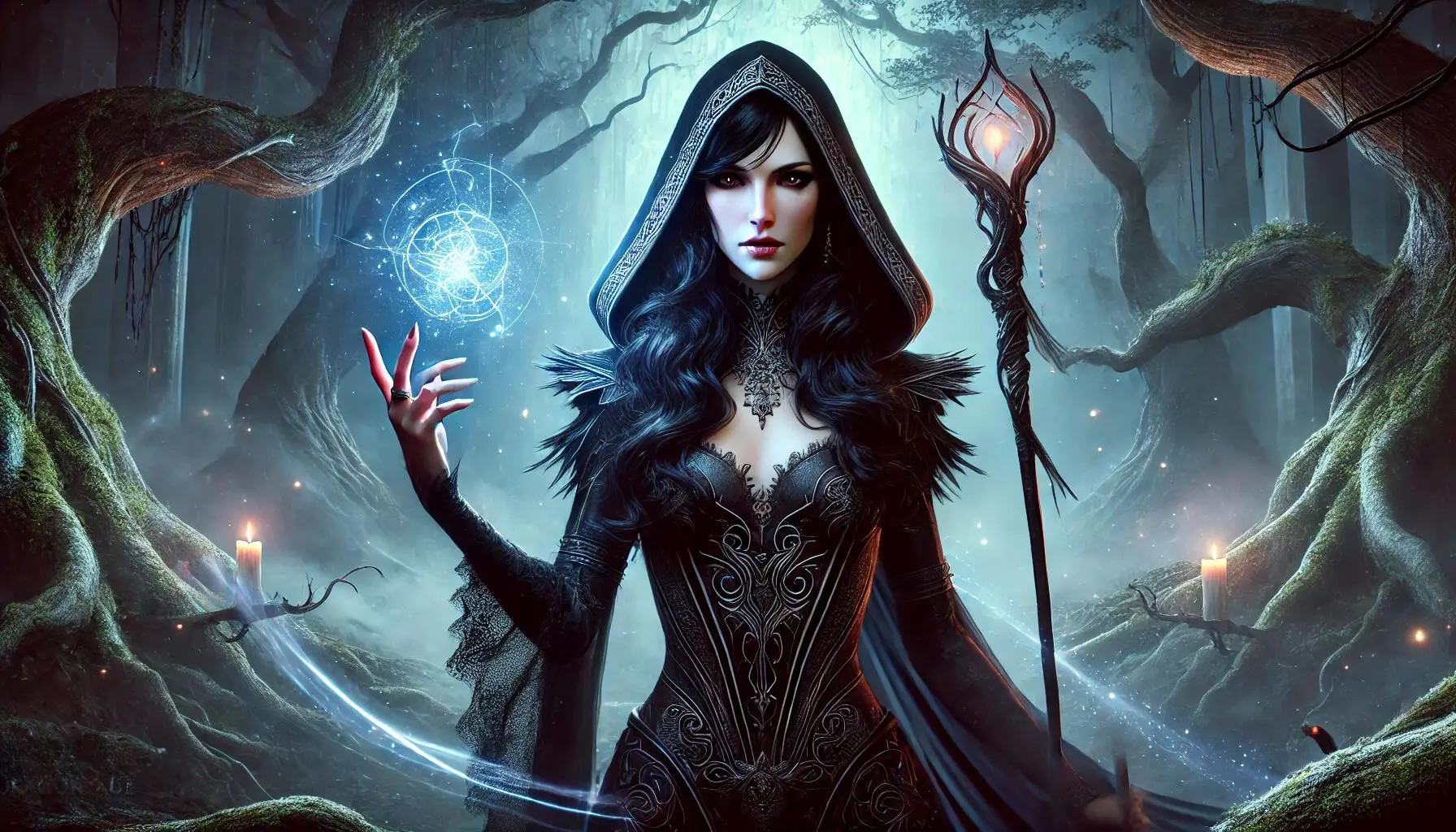
The Morrígan continues to inspire modern artists, writers, and creators, who reinterpret her myths and symbols for contemporary audiences.
Artists today often depict the Morrígan in ways that emphasize her mysterious and powerful nature. These depictions can be found in various media, including paintings, digital art, and sculptures.
Modern representations may blend traditional Celtic motifs with contemporary styles, creating a fusion that honours her ancient roots while appealing to modern sensibilities. Websites like Etsy feature a wide range of Morrígan-inspired art, from intricate jewelry to detailed illustrations.
The Morrígan has also made her way into popular culture, appearing in novels, video games, and television series.
For example, in the video game series Dragon Age, a character named Morrigan is heavily inspired by the goddess, embodying her traits of shape-shifting, prophecy, and a connection to dark magic.
Similarly, in literature, authors often draw upon the Morrígan’s myths to create complex characters and storylines that explore themes of power, fate, and transformation.
Conclusion
Morrígan, the goddess of war and fate, plays a vital role in Celtic mythology. She represents strength, transformation, and destiny. Her presence inspires warriors and shapes their fates.
Morrígan’s influence extends beyond battlefields, affecting the lives of all people. She weaves the threads of destiny, showing her power and complexity.
By understanding Morrígan, we gain insight into ancient beliefs and values. Her stories teach us about courage, honour, and the mysteries of life.
Morrígan’s legacy endures, inspiring us to face challenges with bravery and resilience. She reminds us of the powerful forces that shape our lives and destinies. Morrígan’s impact remains strong, symbolizing the eternal struggle between life and death.