A Closer Look at the Mongolian Bow
Traditional Archery and its Global Resurgence
Traditional archery has a rich history that stretches across continents and millennia, including the Mongolian Bow. It is deeply embedded in the folklore, culture, and warfare of various civilizations.
Modern archery relies heavily on technology with equipment like compound bows and optical sights. Unlike modern archery, traditional archery roots start with simplicity and essence.
Practitioners use recurve or longbows that lack modern enhancements, providing an early and instinctual experience.
In recent years, there has been a significant revival of this ancient art form. It came from the desire to connect with cultural heritage and seek a more organic form of the sport.
Globally, this renaissance is characterized by:
- An increase in traditional archery clubs and societies
- The establishment of events and competitions dedicated to traditional styles
- A surge in craftsmanship and sales of traditional archery equipment
- Renewed interest in traditional archery as depicted in media and popular culture
Cultures renowned for their archery, as in Mongolia, see a particular resurgence in international interest.
Respect for the Mongolian Bow
The Mongolian bow is a symbol of the nation’s historic might and a technical marvel of its age. Enthusiasts worldwide now celebrate and study the Mongolian bow.
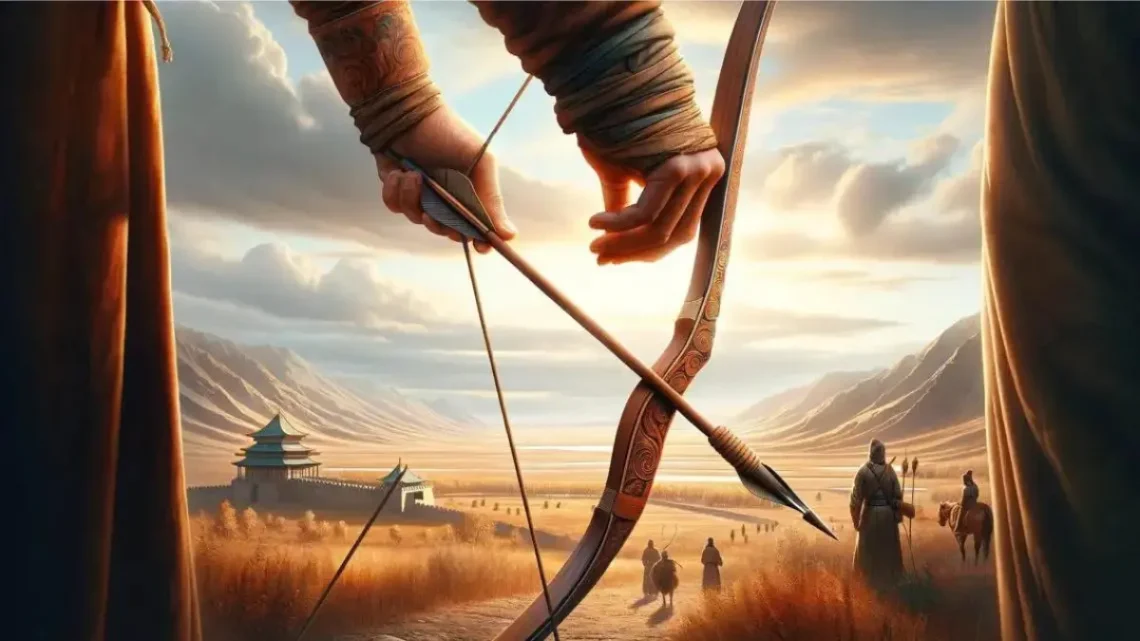
This bow is known for its unique recurve design and impressive power. It played a significant role in the military conquests of the Mongol Empire.
The reasons for this resurgence are manifold. Many appreciate the skill and discipline traditional archery requires, viewing it as a form of meditation and physical exercise.
Others are drawn to the sense of authenticity and connection to the past. For some, the appeal lies in the sustainable and eco-friendly nature of the equipment. Traditional bows and arrows are often made from natural materials.
Traditional archery’s rise in popularity demonstrates a profound respect for the history of the sport. A growing community are eager to keep ancient traditions alive in the modern era.
The Rich Heritage of Mongolian Archery
Mongolian archery stands as a testament to the prowess and resilience of the nomadic warriors from the steppes of Central Asia.
The tradition dates back thousands of years, with the bow considered a symbol of strength and survival.
Genghis Khan
Genghis Khan and his Mongol hordes famously used the composite recurve bow to devastating effect across the Eurasian landmass. This allowed them to topple empires and establish one of the most extensive empires in history.
Distinct from its Western counterpart, the Mongolian bow is a composite creation. It uses a sophisticated mix of materials like wood, horn, and sinew. These materials, bound together by robust fish bladders and adhesives, allow for a short, yet exceptionally powerful, weapon perfectly suited to horseback warfare.
Mongolian archery remained a cornerstone of the region’s culture, even beyond its military applications.
Naadam Festival
The Naadam Festival is a lively celebration showcasing Mongolia’s three “manly sports” of:
- wrestling
- horse racing
- and archery
This illustrates the enduring significance of archery.
Modern Naadam still sees archers dressed in traditional “deel” garments that have roots in Genghis Khan’s military. They must compete not only in accuracy but also in the artistry of the shot.
Spirituality and the Mongolian Bow
Additionally, the bow’s role in Mongolian society extends to spiritual dimensions.
Local lore venerates the instrument as a guardian and a bringer of good fortune, a tradition echoed in the care and respect shown by archers towards their bows.
Such cultural reverence ensures the continuity of craftsmanship required to produce these intricate weapons, preserving the legacy for future generations.
In modern times, the World Archery Federation and the Mongolian Archery Association work tirelessly to maintain and propagate the art of Mongolian archery globally.
This heritage sport, with its deep roots and global resonance, continues to define and elevate Mongolia’s cultural identity on the world stage.
Learn more: Famous Archers in History: Legends of the Bow and Arrow
Understanding the Mongolian Bow
The Mongolian bow, revered for its efficiency and resilience, is an exemplar of traditional craftsmanship melding form and function.
This composite bow was historically used by the nomadic warriors of the Mongolian steppes. This was notably the army of Genghis Khan, is characterized by its distinctive reflexed design, where the limbs curve away from the archer when unstrung.
Mongolian Bow Design
At its core, the Mongolian bow’s design is a product of careful selection of materials, each chosen for their complementary properties:
- Horn on the belly, the side facing the archer, storing energy with its ability to compress.
- Wood as the core, providing the necessary springiness.
- Sinew on the back, the side facing away from the archer, offering tremendous tension capabilities.
Craftsmanship of Mongolian Bow
The crafting process of a Mongolian bow is a time-honored tradition, often taking months to complete as the materials must be shaped and then allowed to cure properly. The recurved shape, which folds into a ‘C’ when strung, generates additional force, allowing such a compact bow to rival the power of much longer bows.
Moreover, the bow’s ‘ears’ or ‘siyahs’ extend from its tips, increasing the leverage and hence the speed of the arrow—this translates into a flatter trajectory, a key advantage in the open terrain.
These siyahs also help to stabilize the bow during release, making it forgiving to shoot despite the high tensions it operates under.
The artistry of the Mongolian bow extends to its decoration, too.
Often, bows are adorned with intricate designs that reflect the rich cultural legacy of the Mongol peoples, becoming not just a weapon but also a piece of heritage.
The Art of Making a Mongolian Bow
The Mongolian bow is a composite bow, traditionally crafted from a complex mix of materials chosen for their specific properties and performance in variable conditions.
Here are the materials and techniques involved in its creation:
Materials Used in Making a Mongolian Bow
- Horn: The horns reinforces the interior curve of the bow, therefore increasing its ability to store energy when the bow is drawn.
- Wood: A wooden core, usually from birch or juniper, forms the central part of the bow, offering flexibility and strength.
- Sinew: A sinew uses the back of deer or sheep on the outer curve to resist tension when the bow is drawn.
- Glue: Traditional adhesives made from fish bladders or the hides of animals bond the materials together. This glue is highly effective but sensitive to moisture.
- Leather and Birch Bark: These materials cover and protect the bow from the elements, as well as for decorative purposes.
Techniques Required to Create a Mongolian Bow
- A final step is the stringing of the bow with materials like silk or animal sinew.
- The craftsman carves the wood into the desired shape, featuring a flat belly and a rounded back, to accommodate the other materials.
- He boils and shapes the horn strips to fit perfectly against the wood, then glues them into place.
- He applies layers of sinew to the back of the bow, carefully gluing and stretching each layer. This process takes days as the sinew must dry slowly.
- He then wraps the bow in leather or birch bark, adding additional layers to protect it from the weather.
- Finally, he strings the bow with materials like silk or animal sinew.
Through this meticulous process, the Mongolian bow is shaped into a highly efficient weapon renowned for its resilience and remarkable shooting range.
Craftsmen toil with precision to produce these bows to maintain the rich heritage associated with Mongolian archery.
Mongolian Archery in the Modern World
Mongolian archery has transcended centuries, emerging in the modern world as more than a mere sport but as a vital channel for cultural expression.
In contemporary Mongolia, traditional archery is experiencing a cultural renaissance, invigorated by a collective desire to reconnect with historical roots.
Archery contests are now a central feature of the Naadam Festival, an annual event which celebrates the “Three Games of Men,” namely archery, wrestling, and horse racing.
- The Naadam Festival draws participants and audiences from across the nation, showcasing the skills of both male and female archers.
- Competitors don traditional Mongolian attire, adding to the authenticity and spectacle of the occasion.
- The bows used remain faithful to ancient designs, with craftsmen honoring time-honored techniques to create these cultural artifacts.
Archery clubs have proliferated in urban and rural regions, enabling enthusiasts to nurture their skills while forming communities bonded by shared passion:
- These clubs often engage in cultural exchange programs, allowing for the dissemination of Mongolian archery techniques globally.
- International competitions have surfaced, with Mongolian archers participating and gaining recognition worldwide.
Educational programs are also playing a crucial role in the archery revival:
- Schools increasingly incorporate archery into the curriculum to instill an appreciation for national heritage among the youth.
- Specialized workshops and seminars enlighten attendees about the history, craftsmanship, and artistry involved in traditional archery.
Notably, the spread of social media has allowed for the proliferation of Mongolian archery’s presence online, captivating audiences beyond the nation’s borders and inspiring a diverse array of people to partake in or support the rejuvenation of this storied practice.
Insights into Mongolian Traditions
In Mongolia, archery is more than just a sport or a means of hunting; it is a deeply embedded cultural tradition that has been passed down through generations.
The Mongolian bow, famously known for its excellent craftsmanship and unique recurve design, is a respected symbol of the nation’s rich history and resilience.
Archery is one of the “Three Manly Skills,” along with horseback riding and wrestling, central to the Mongolian way of life.
These skills were historically viewed as vital for survival and success in the harsh steppes of Central Asia.
Mongolian archers traditionally use a composite bow made from materials such as wood, horn, and sinew, constructed to withstand severe weather conditions.
The technique involved in wielding this bow has been honed over centuries, requiring exceptional precision and control.
The cultural importance of archery is vividly displayed during the Naadam Festival. This annual event celebrates these traditional sports.
- Archers dress in colorful, customary attire signifying their regional heritage.
- Competitions involve both accuracy and distance shooting, highlighting the archer’s skill and the bow’s versatility.
- Participation is inclusive, with men, women, and children all taking part, indicating the sport’s role in fostering community and continuity of tradition.
Mongolian archery is infused with ritual and symbolism.
The targets used in competitions often carry cultural significance, representing enemies of the past or obstacles to be overcome.
A unique aspect of Mongolian archery is the use of a specialized group of individuals to assist in the competition called “Uukhai” — cheerleaders who encourage archers with traditional calls and songs.
Ingrained in the fabric of Mongolian society, archery is not just practiced for leisure or competition. It cultivates patience, focus, and camaraderie, reflecting the enduring spirit and identity of the Mongolian people.
The Skills and Training of a Mongolian Archer
The Mongolian archer’s prowess is a result of a rigorous training regimen that begins in childhood.
Traditionally, Mongolian children are introduced to the art of archery as early as age five.
This not only allows them to develop their physical strength early on but also ingrains in them the mental discipline necessary for archery.
The training encompasses several core skills:
- Stance and Posture: Mongolian archery requires the archer to maintain a stable and balanced posture. Practicing proper stance ensures that they can shoot accurately while on foot or horseback.
- Bow Draw Technique: Mongolian bows demand a unique draw technique, emphasizing draw length and finger placement. This technique must be precise and consistent, with strength developed through repeated practice.
- Accuracy and Precision: Despite the power of Mongolian bows, precision remains a critical focus of training. Archers often practice at different distances to hone their accuracy, aligning their eyes, hands, and the bow harmoniously.
- Mental Focus: An often overlooked but vital component of archery is mental toughness. Focus is an essential skill that Mongolian archers build through meditation and breath control exercises.
- Horseback Archery: The ability to shoot from horseback is what historically set Mongolian archers apart. This skill requires an extraordinary level of coordination and balance, and it’s honed through dedicated practice involving both archery and horsemanship.
Mongolian archery training is a life-long process, with masters continually refining their technique and imparting wisdom to younger generations.
Survival and warfare pushed Mongolian archers to evolve their skills, leading to a rich tradition that has found renewed interest in contemporary times.
The training these archers undergo is not only a physical pursuit but a cultural learning experience that connects them to the gloried past of their ancestors.
Mongolian Bow in Modern Archery Contests
The resurgence of traditional archery has brought with it an increased interest in the Mongolian bow, which is now making its mark in modern archery contests.
Steeped in history, these bows are not mere relics; they’re functional pieces of art that are celebrated for their distinctive qualities.
Known for their composite construction, typically involving wood, horn, and sinew, Mongolian bows excel in providing high power and accuracy in a compact form.
Archers inclined towards traditional equipment gravitate towards these bows, drawing upon the same primal connection to heritage and skill that their ancestors did.
In the competitive arena, the Mongolian bow is a testament to the time-honored techniques that still rival modern technology.
- Flight Archery Competitions: Designed to maximize distance, Mongolian bows have an edge in flight archery contests where arrows are shot for maximum range.
- Historical Reenactments: Participants often use Mongolian bows to add authenticity to their portrayal and to connect with the ancient roots of the sport.
- Traditional Divisions: Many modern tournaments now feature traditional divisions, catering specifically to non-compound, non-recurve bows like the Mongolian bow.
- Skill Challenges: High-level archers compete in events that test precision and speed, often while mounted or during movement, disciplines where the Mongolian bow’s agility is advantageous.
In embracing the Mongolian bow, modern contests are not just about winning. They embody a reverence for archery’s expansive past. This blend of competition and historical appreciation ensures that the Mongolian bow is more than just a reminder of bygone days—it’s a thriving part of contemporary archery culture.
Mongolian Bow vs. Modern Equipment
The Mongolian bow is an emblem of ancient craftsmanship standing in contrast to modern archery equipment in several respects.
This traditional bow is known for its distinctive recurve design. It was a pivotal companion for the nomadic warriors of the Mongolian steppes.
Its construction is typically from horn and sinew bonded to a wooden core which results in a compact yet powerful weapon.
Contemporary Archery Bows
In comparison, contemporary archery bows commonly use sophisticated materials like carbon fiber, fiberglass, or aluminum.
The design of modern equipment is custom for specific archery disciplines, such as Olympic target archery, 3D archery, or bowhunting.
The use of advanced materials and technology results in higher precision and, often, ease of use.
A Comparative Analysis
Key differences between the two include:
- Materials and Construction: Mongolian bows are handcrafted using natural materials, while modern equipment is precision-engineered with the latest materials and manufacturing techniques.
- Design: The Mongolian bow’s recurve design allows for a shorter bow with high power, suitable for horseback use. Modern bows come in a variety of designs, including the recurve, compound, and longbow each tailored for their function.
- Technology: Modern bows incorporate advanced technology such as cams in compound bows, sight systems, stabilizers, and release aids to enhance performance.
- Maintenance: The natural materials of a Mongolian bow require careful maintenance and are sensitive to environmental conditions. In contrast, modern materials are more durable and require less upkeep.
- Performance: While the Mongolian bow is highly effective within its historical context, modern bows benefit from technological advancements that allow for greater accuracy, distance, and customization to the archer’s needs.
The resurgence of traditional archery highlights not only a romantic nostalgia for historical weaponry but also an appreciation for the skills and discipline required to master the Mongolian bow.
Archers who embrace traditional methods find value in connecting with the past and the raw simplicity of using a bow devoid of modern enhancements.
The design of modern equipment is to optimize performance and comfort, marking a significant evolution in the craft of archery.
The Influence of Mongolian Archery on Popular Media and Literature
Mongolian archery has been captivating the imagination of audiences worldwide, leaving a significant mark on both popular media and literature.
One of the most notable examples is the fantasy epic, “The Lord of the Rings” series by J.R.R. Tolkien, where the horse-riding archers of Rohan exhibit skills reminiscent of the famed Mongolian horseback archers.
The precision and prowess of the mythical elven archers in the same series draw parallels to the near-mythical status of Mongolian archers in history.
In cinema, films like “Mulan” and “The Eagle Huntress” showcase the powerful imagery of archers on the Asian steppes. These are clearly influenced by Mongolian archery techniques and its close relationship with nature.
The fast-paced scenes featuring archers in movies like “The Great Wall,” though fictional, are a testament to the enduring fascination with Mongolian bowmanship and its perceived effectiveness.
Literary works, both historical and fictional, often reference the unique aspects of Mongolian archery.
In Conn Iggulden’s “Conqueror” series, the prowess of Genghis Khan’s mounted archers is a central theme, illustrating their impact on the Mongol conquests.
The influence extends to interactive media as well. Video games such as the “Age of Empires” series featuring Mongol units whose archery skills play a crucial role in gameplay strategy.
Thematic elements of Mongolian archery have also trickled into graphic novels and comics. The combination of art and narrative brings to life the archers’ martial skill and cultural significance.
Mongolian archery in popular media and literature continues to grow as storytellers and creators draw inspiration from its rich heritage.
Efforts in Maintaining Archery Heritage
Traditional archery involving the Mongolian bow has seen a significant revival due to efforts to preserve this heritage.
Various organizations and individuals are undertaking initiatives to maintain the history and skills associated with traditional archery.
- Educational programs introduce younger generations to the art of making and shooting traditional bows, focusing on the historical and cultural significance.
- Archery festivals and competitions celebrate traditional techniques and encourage participation from both local and international enthusiasts. This foster a broader appreciation and deeper understanding of cultural archery practices.
- Craftsmen specializing in producing traditional bows and arrows using age-old methods receive support through grants. The promotion of their work to ensure these skills are not lost to time.
- Collaboration with historians and cultural experts allows for accurate representation and understanding of traditional archery within historical contexts. This helps to enrich the cultural tapestry for future generations.
- Establishing online communities and forums. Enthusiasts can share knowledge, techniques, and experiences, keeping the conversation about traditional archery alive and evolving.
These dedicated efforts aim to keep the heritage of traditional archery vibrant and accessible. This ensures that the ancient craft of the Mongolian bow continues to thrive in modern times.
Through education, celebration, craftsmanship, historical accuracy, and community engagement, the legacy of archery is being actively preserved and passed down. These new generations will appreciate its history and enjoy its practice.
Conclusion: The Future of Mongolian Archery and Traditional Practices
The trajectory of Mongolian archery points towards a vibrant future. It is bolstered by a combination of national pride, cultural revival, and international interest.
As Mongolia cements its place on the global stage, the distinct character of its traditional archery practices are celebrated.
- The government of Mongolia continues to provide institutional support for traditional archery. It recognizing its importance as a cornerstone of Mongolian heritage.
- Integrating educational programs aims to introduce young Mongolians to the art of the bow from a young age. This also ensures that the skills and traditions continue to pass down to the next generation.
- International competitions and cultural exchanges serve as platforms for showcasing Mongolian archery. This promotes cross-cultural understanding and fostering global appreciation for this ancient art.
- Including traditional Mongolian archery in events like the Olympics, may further raise its profile and encourage its sustainability.
- Advances in archery equipment, while staying true to traditional designs, enhance the sport’s appeal by improving performance and accessibility.
- Cultural tourism centered around traditional Mongolian festivals and events offers a sustainable model for economic and cultural vitality.
- Protection of cultural heritage by organizations such as UNESCO recognizes Mongolian archery thus preserving it on a world stage.
Mongolian archery is on an upward arc with a harmonious blend of respect for the past and adaptive innovations.
This poises archery to not only to survive but to thrive as the cultural identity of a nation. Thus ultimately inspiring a global audience with its enduring legacy.