
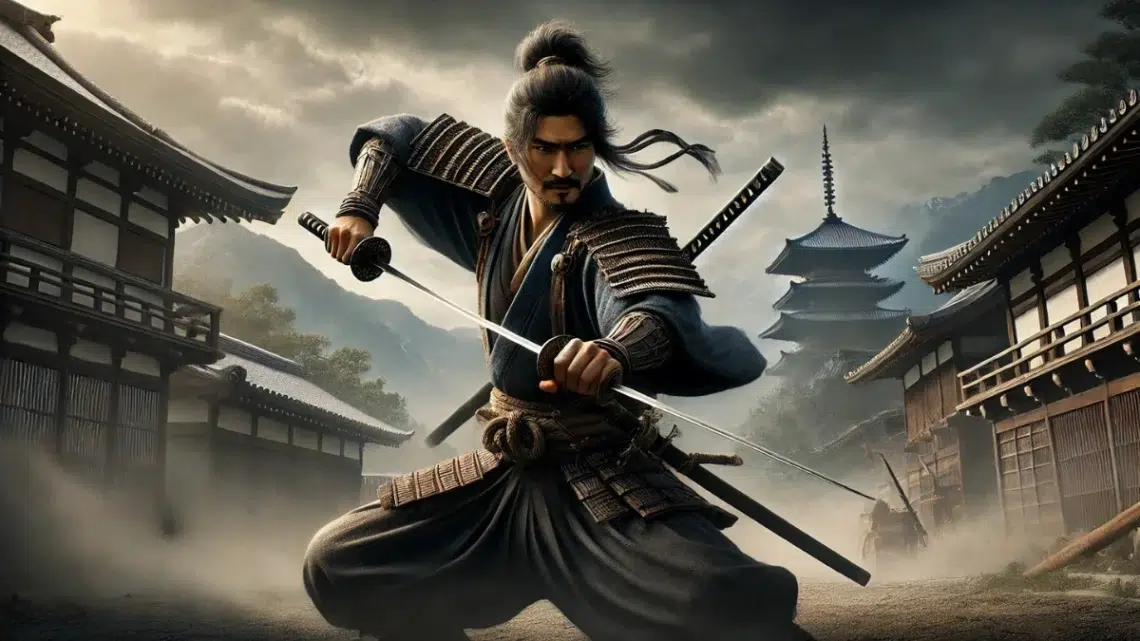
Miyamoto Musashi: Legendary Samurai Warrior
Imagine a lone warrior, undefeated in battle, who mastered not one but two swords: Miyamoto Musashi.
Miyamoto Musashi, Japan’s most famous swordsman, lived by his own rules and created a legacy that transcends time. But was his expertise limited to the blade?
While his duels became legend, Musashi’s life holds even more secrets. In the world of samurai legends, Miyamoto Musashi stands out as the ultimate martial artist. He is Japan’s most famous Musashi swordsman.
His life story is a key part of feudal Japan’s history. Musashi’s life shows the power of discipline and skill in martial arts.
Musashi made a big impact, not just in battle but also in philosophy and culture. His legend lives on in history books and has become a symbol of the warrior’s way. He changed how people think about combat and strategy. This makes him a cultural icon, influencing modern martial arts and inspiring many in popular culture.
His story mixes myth and reality, making his legacy as a martial artist and thinker last. Musashi’s life and skills are as sharp and lasting as the swords he used to fight with.
Learn more about other famous Japanese Warriors:
- Nakano Takeko: Female Samurai in Edo Period
- Tomoe Gozen: Female Samurai Archer
- Minamoto no Tametomo: Japan’s Fabled Warrior
The Life and Legend of Miyamoto Musashi
Miyamoto Musashi’s life is a tale of endless drive, strategic brilliance, and unmatched fighting skills. He was born in Harima Province, Japan.
His story is more than just about fights and duels.
It’s a journey of self-improvement and deep thought. As a rōnin, or masterless samurai, his life was a mix of reality and myth, making him a legendary figure.
From a young warrior to a famous duelist, Musashi’s rise is filled with stories and legends. His duels with other skilled fighters proved his strength, strategy, and deep thinking. These stories have made his legacy huge in Japanese culture and the image of the wandering samurai.
| Key Life Events | Impact on Legacy |
|---|---|
| Birth in Harima Province | Roots in a strategically significant region during the warring period |
| First duel at the age of 13 | Early demonstration of martial skill and bravery |
| Becoming a rōnin after Sekigahara | Embraced the path of a warrior-philosopher; explored various dimensions of martial arts |
| Writing “The Book of Five Rings” | Philosophical musings on strategy, tactics, and philosophy that influenced not only martial arts but also modern business and management practices |
The Book of Five Rings, written by Musashi, is a key historical text. It’s a guide to kenjutsu and strategy. Along with stories and duels, it highlights Musashi’s life as a legendary figure. His strategies and ideas are still studied around the world.
Miyamoto Musashi’s Early Years and Training
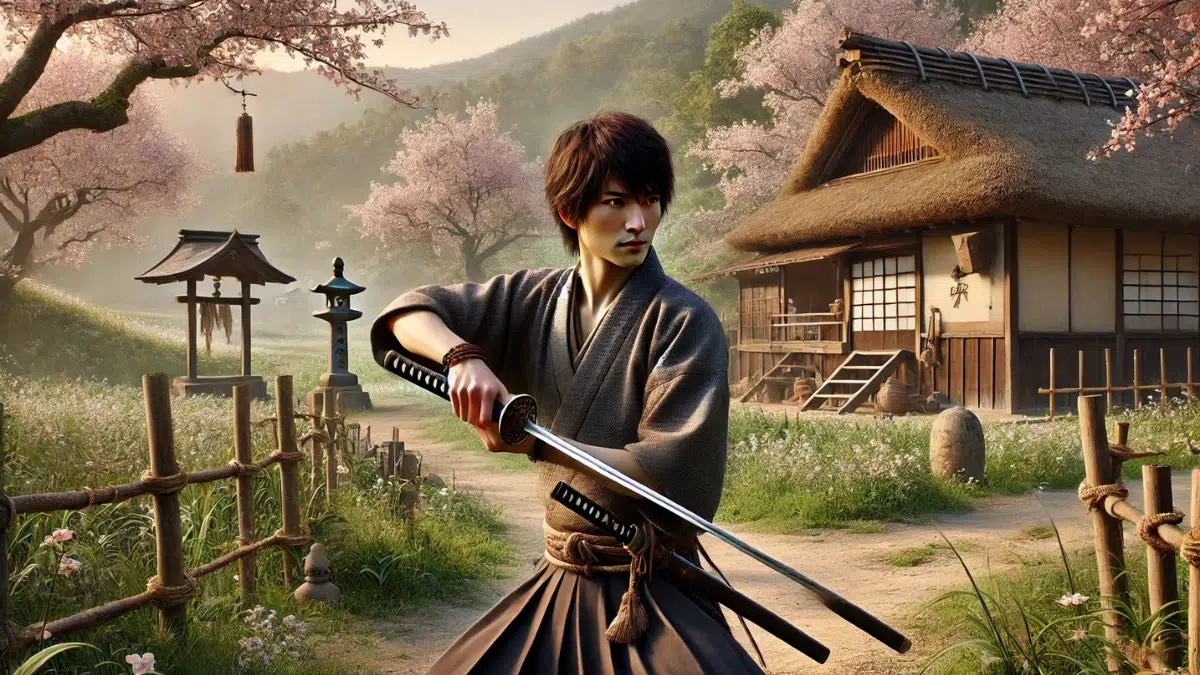
Miyamoto Musashi’s early life was deeply influenced by the Bushido code.
This period was crucial for his development as a young samurai. His experiences in feudal Japan set the stage for his future as a renowned swordmaster.
Musashi’s training was intense, focusing on kenjutsu, the core of the Bushido code. This phase was vital for him. It was not just about physical skills but also about spiritual and philosophical growth. These aspects later shaped his battle strategies and tactics.
- Physical Training: Musashi started his training early, focusing on building strength, agility, and endurance. These were key for any samurai.
- Weaponry Skills: He learned to use various weapons from a young age. But the katana became his go-to, making him famous in many duels.
- Strategic Mindset: Under the guidance of experienced warriors, Musashi developed strategic thinking. This laid the groundwork for his future successes in the military arts.
At 13, Musashi faced his first duel against Arima Kihei, a turning point in his career. Winning this duel showcased his skills and understanding of the Bushido code. It confirmed his training as a young samurai. It also established him as a powerful warrior at a very young age.
Musashi’s early life, deeply influenced by the Bushido code, shaped him as a warrior, philosopher, and artist. His experiences had a lasting impact on military strategy and Japanese culture.
The Way of the Sword: Musashi’s Duels and Battles
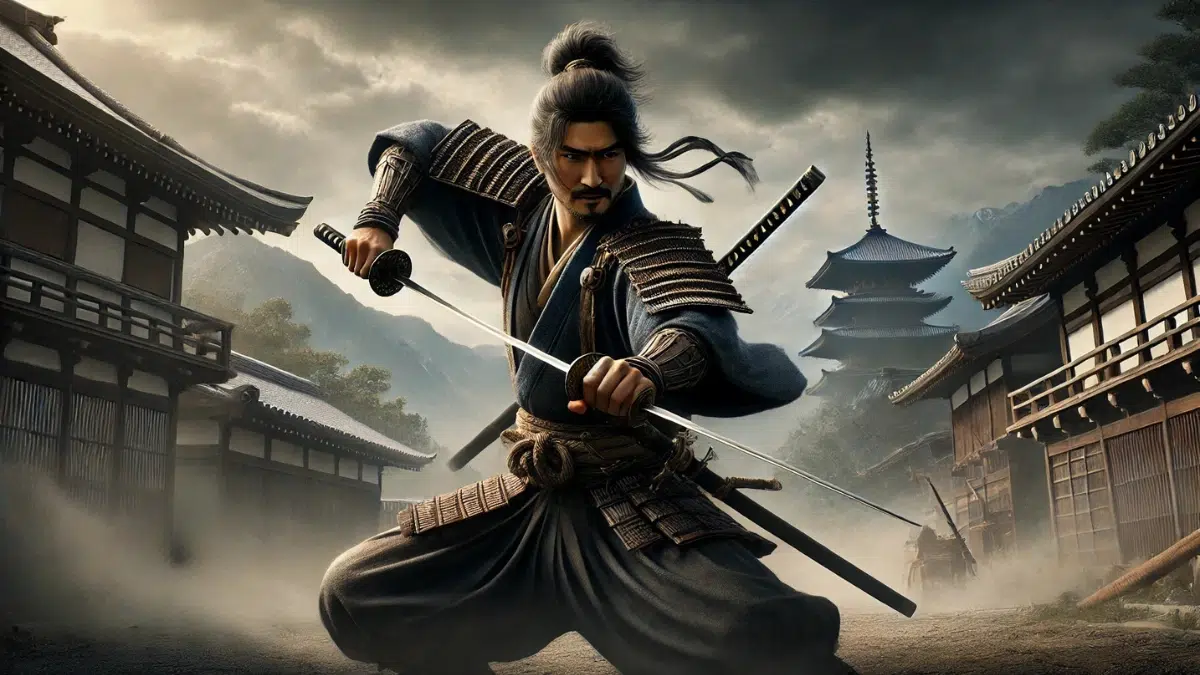
Miyamoto Musashi is known as a top samurai because of his wins in famous duels and his skill with swords. Each fight was a chance for him to improve his skills. These skills made him a legend in martial arts.
Miyamoto Musashi is known to have fought in over 60 duels throughout his life, and he remained undefeated in all of them.
These duels ranged from early battles, such as his first duel at age 13 against Arima Kihei, to famous encounters like his duel with Sasaki Kojiro.
In addition to individual duels, Musashi also participated in several battles during the feudal conflicts in Japan, including the Battle of Sekigahara in 1600, although his involvement in larger military campaigns is less documented compared to his duels.
The duel against Sasaki Kojiro was a key moment in Musashi’s career. It showed his strategic mind and sword skills.
- The duel with Sasaki Kojiro at Ganryu Island: Victory
- Techniques used: Musashi used a wooden sword, or ‘bokken’, made from an oar. This showed his unique approach and how he used his surroundings to his advantage. Arriving late to unsettle Kojiro was a tactic showing his deep understanding of psychology.
- First duel with Arima Kihei: Victory
- Techniques used: Basic Katana Strikes
- Battle of Sekigahara against various samurai
- Techniques used: Multiple Opponent Strategy
Musashi also fought in many skirmishes and big battles. These fights let him test and improve his combat strategies. Each battle proved his growing skills and strategic thinking against many foes.
Mastery of Kenjutsu and Kendo: Miyamoto Musashi’s Skills
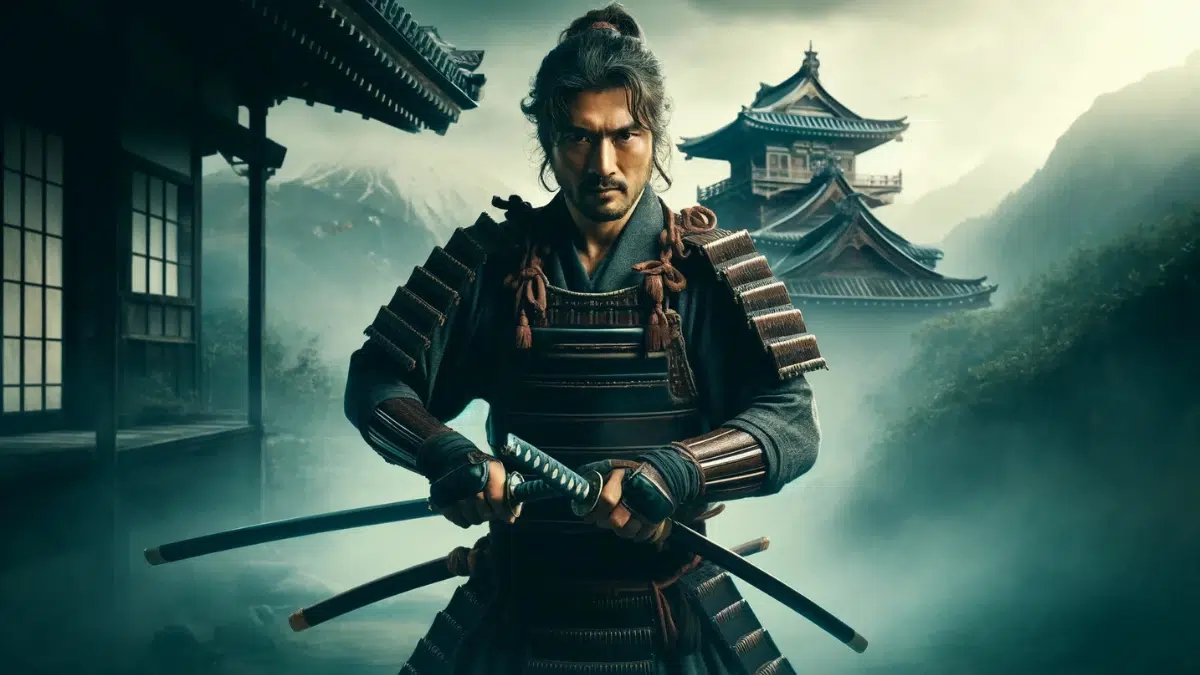
Miyamoto Musashi is a legend in Kenjutsu and Kendo.
He changed these martial arts with his unique way of handling swords. He made a clear difference between Kenjutsu, the art of sword fighting, and Kendo. Kendo focuses on making the human character strong through the katana’s principles.
Musashi’s big idea was the Niten Ichi-ryu technique, or “two heavens as one” style. This method uses two swords at once. It showed his amazing skill and strategy, setting new standards in sword fighting and fighting with two weapons.
- Kenjutsu: Focus on lethal techniques and application in actual combat scenarios.
- Kendo: Emphasizes spiritual growth, discipline, and ethical behavior through sword-fighting practice.
Musashi worked hard to master both the body and mind in combat. He used Zen Buddhist ideas to create unique martial arts techniques. His goal was to build a mindset that stays calm and precise in tough situations.
| Aspects | Kenjutsu | Kendo |
|---|---|---|
| Primary Focus | Technique and real combat application | Character and mental discipline |
| Fighting Style | Aggressive, with an emphasis on swift kills | Defensive, aimed at outlasting the opponent |
| Weapons Used | Real swords | Bamboo swords and protective gear |
| Philosophical Influence | Minimal, primarily tactical | Deeply rooted in Zen Buddhism |
Musashi blended physical strength with Zen ideas, changing Japanese martial arts. His impact is still felt in Kenjutsu and Kendo today.
The Book of Five Rings: Miyamoto Musashi’s Philosophy and Teachings
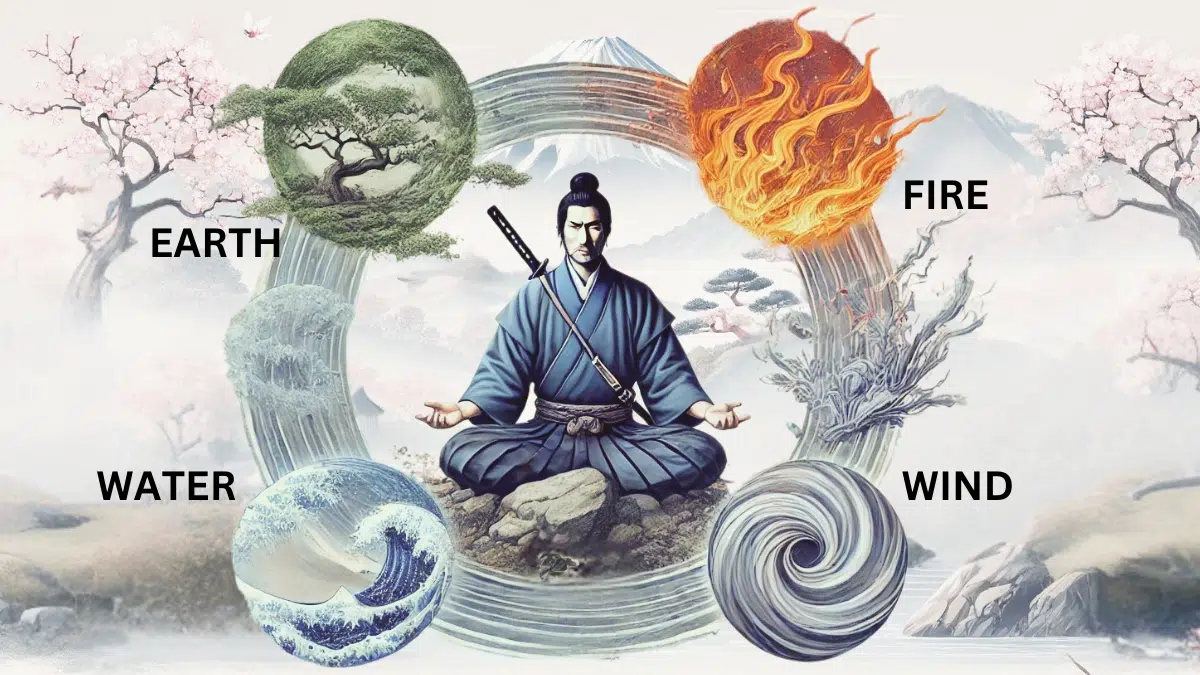
Miyamoto Musashi’s The Book of Five Rings is a key text. It’s not just about fighting. It teaches us about being adaptable and successful in life and business. Musashi’s ideas have shaped many areas, including leadership today.
The Book of Five Rings summary covers five main parts: Earth, Water, Fire, Wind, and Void. Each part uses elements from martial arts to explain life’s challenges. They help us think strategically.
- Earth: Focuses on basic tactics and understanding your surroundings.
- Water: Teaches us to be flexible and adapt like water.
- Fire: Shows the value of being proactive and taking action.
- Wind: Talks about understanding and beating your opponents’ tactics.
- Void: Emphasizes the power of intuition and instinct in strategy.
Musashi’s ideas go beyond martial arts. They apply to leadership, management, and personal growth. His teachings balance being ready, flexible, and insightful. This makes them useful in today’s complex work world. The Book of Five Rings keeps inspiring leaders and strategists worldwide.
Musashi’s Artistic Side: Beyond the Sword
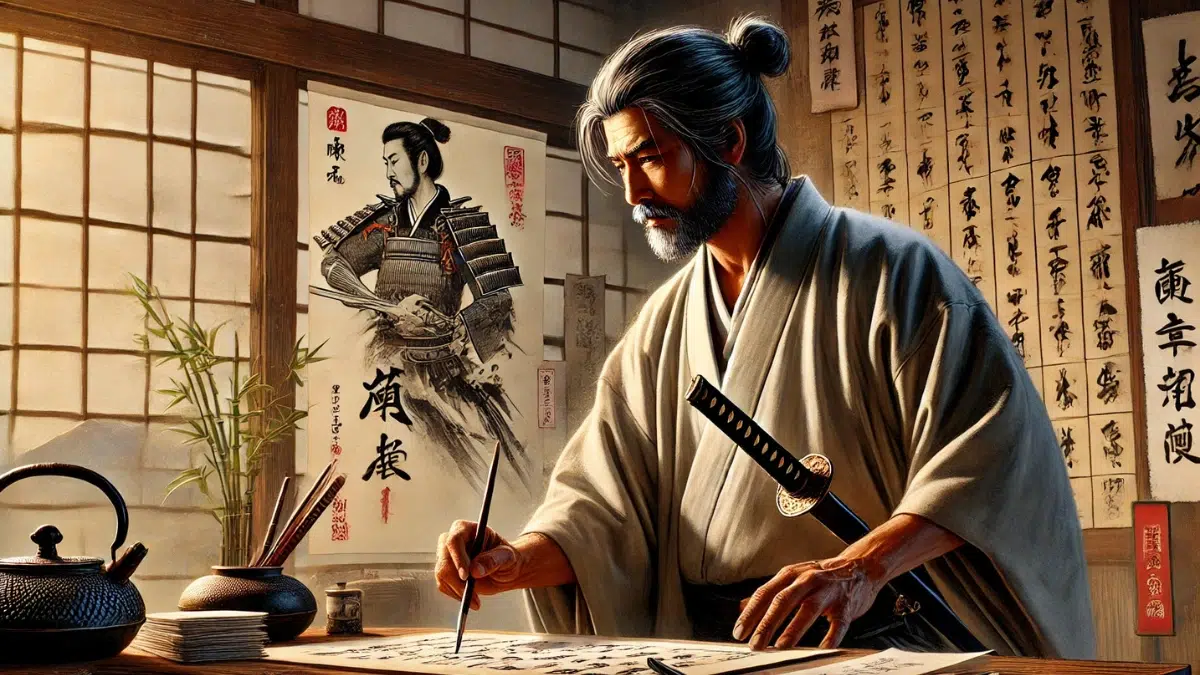
Musashi was known worldwide as a fierce warrior. But he was also a master of Japanese calligraphy and painting. This shows how he lived a life full of passion and discipline, both with a sword and a brush.
Musashi made many art pieces that are still loved in Japan today. His art was more than just pretty pictures. It was filled with the same careful planning and focus he used in fighting. Every brushstroke showed his deep thoughts and beliefs.
Through his art, Musashi left a big mark on culture. He was just as careful with his art as he was with his fighting strategies. His art is not just beautiful. It’s full of deep meanings, with every color and shape telling a story.
- Balance and Harmony: His art, like his fighting, was simple yet powerful. It showed the Zen idea of focusing on what’s really important.
- Control and Fluidity: Musashi’s calligraphy was all about control, but it looked natural. This shows his belief in mastering both control and spontaneity.
Here’s how Musashi’s skills in martial arts and art compared, showing how they influenced each other:
| Aspect | Martial Arts | Art |
|---|---|---|
| Philosophy | Strategy-centric, focusing on the opponent’s mindset. | Expression-centric, focusing on the natural flow of thoughts. |
| Technique | Precision in strikes, defensive positioning. | Precision in strokes, balance in composition. |
| Influence | Influenced combat tactics across various styles. | Influenced artistic styles, notably in Japanese calligraphy and painting. |
Musashi’s impact is more than just his fighting skills. His art has made a big cultural mark. His work inspires martial artists, artists, and cultural experts around the world.
Miyamoto Musashi’s Legacy in Japanese Culture
Miyamoto Musashi is known for his unmatched swordsmanship. His impact goes beyond Japanese history into cultural iconography. He inspires people worldwide with his samurai influence and deep thoughts.
Musashi is more than just a historical figure. He has inspired books, films, manga, and video games. These stories show different parts of his life, from his battles to his peaceful hobbies like painting and writing. This keeps him alive in today’s culture.
- Books like Musashi by Eiji Yoshikawa bring his life to life. They show his strategic and psychological depth.
- The Book of Five Rings by Musashi himself, share Musashi’s strategy and philosophy.
- Films such as Samurai Trilogy capture Musashi’s journey. They mix history with great storytelling, showing his battles and personal growth.
- In manga and anime, Vagabond by Takehiko Inoue gives a visual and philosophical look at Musashi’s quest for perfection, reflecting his tactics and life choices.
- Video games, including Brave Fencer Musashi, make his legend interactive and fun.
Musashi’s teachings, especially in The Book of Five Rings, are key for many martial arts today. These schools see Musashi as a warrior-philosopher. His strategies and insights go beyond just fighting.
Miyamoto Musashi is a lasting icon in Japanese and global culture. His life shows the strength of human spirit and the lasting impact of the samurai way.
The Final Years and Death of a Legend
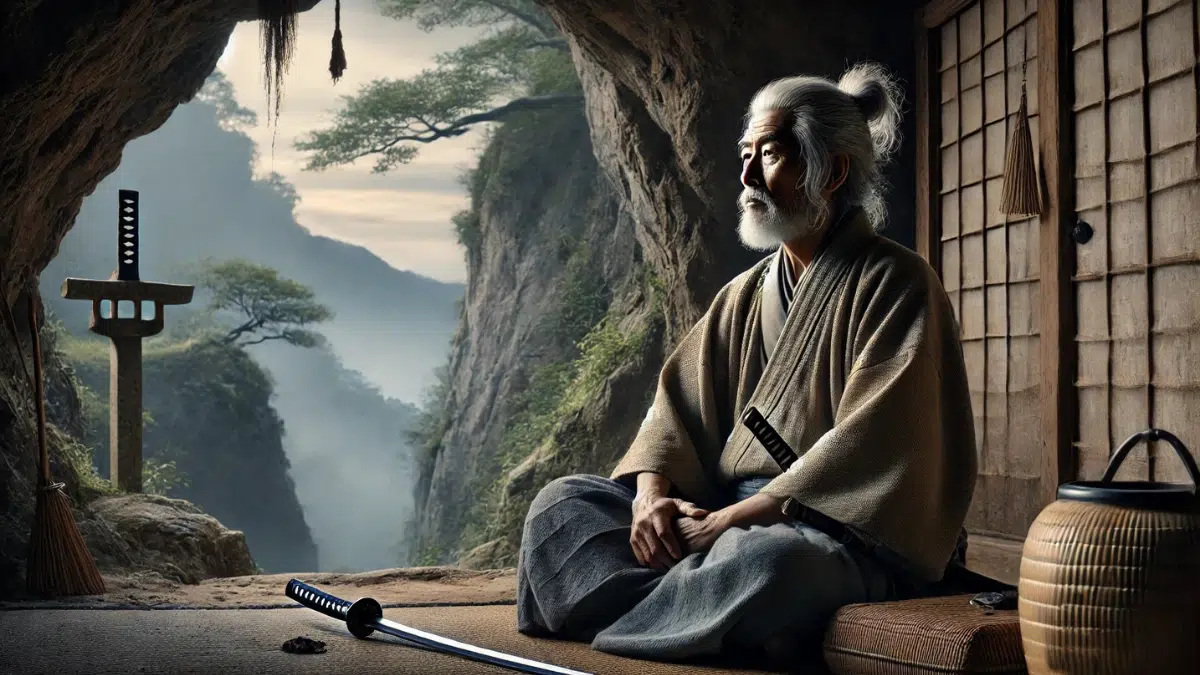
In his later years, the famous samurai Miyamoto Musashi lived in quiet, away from the world.
He spent his last days in Reigando cave, a place of peace and simplicity. There, he focused on his martial and philosophical thoughts.
During this time of solitude, Musashi wrote “Dokkodo” (“The Path of Aloneness”). This work is full of strict advice for warriors.
His death in 1645, in Reigando cave, marked the end of his life. But it also made him a lasting symbol in Japan, influencing many areas beyond martial arts.
- Musashi’s Death: He died in 1645, possibly from thoracic cancer, in the quiet Reigando cave. His teachings live on, making him a legendary figure in Japanese history.
- Samurai’s Last Years: Musashi’s later life was simple and reflective. He moved from active battles to a life of quiet thought.
- Reigando Cave: Located in Kyushu, Reigando was where Musashi chose to live in solitude. This cave played a big part in his final thoughts and teachings.
- Legacy End: Musashi’s impact goes far beyond sword fighting. His ideas have shaped Japanese culture, influencing strategy, honesty, and behavior.
Musashi’s story, marked by his death, has only grown more powerful over time. Each telling adds to the legend of the samurai who lived with wisdom and a sword.
Conclusion
Miyamoto Musashi’s life is a mix of martial skill, deep thought, and cultural impact. It goes beyond samurai wisdom into martial arts history. From his early days to his later years, Musashi’s life shows his wide skills and deep thoughts.
His work in kenjutsu and kendo helped shape martial arts. His book, “The Book of Five Rings,” shares strategic insights and warrior values. These ideas have lasted for centuries.
Musashi’s legacy is seen in martial arts and in personal growth. His story shows what hard work and constant improvement can do. Musashi lived like a true samurai, inspiring many to learn about martial arts and how to master any skill.
Today, Miyamoto Musashi’s ideas still affect us, even though we’re far from samurai times. His teachings help in many areas, from business to sports. They promote resilience and a focus on always getting better.
Musashi is still a guiding light in martial arts and strategy. His life story is a source of inspiration and wisdom for those aiming for excellence.


