
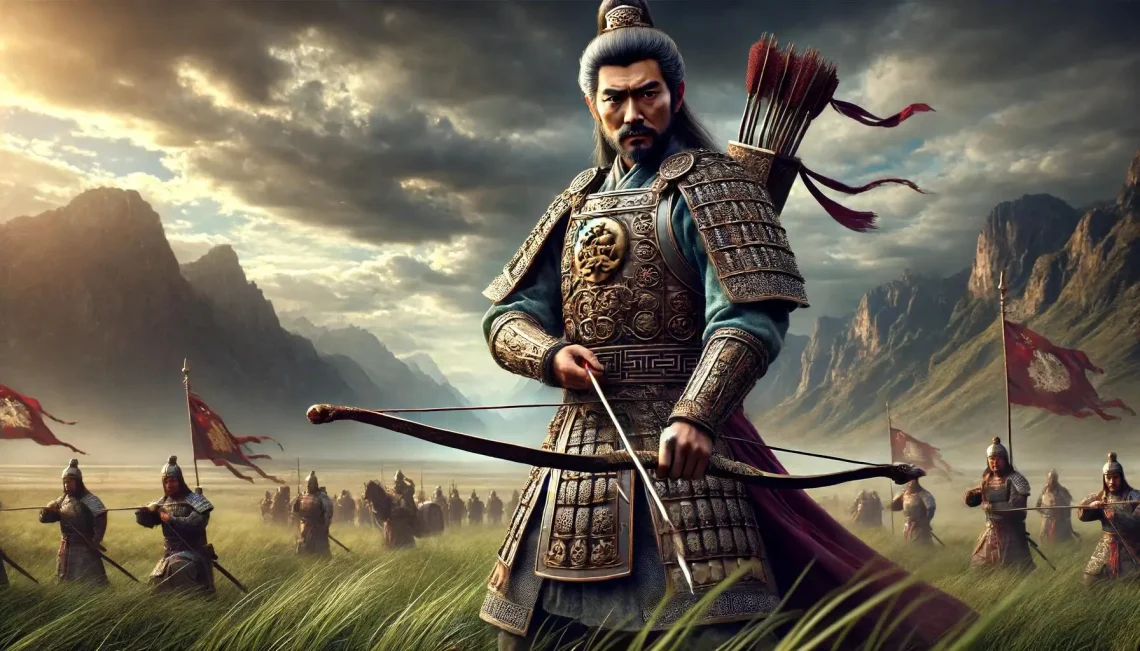
The Legend of Li Guang: Heroism Beyond the Bow
Li Guang was a legendary ancient Chinese general from Tianshui, Gansu.
He is well-known in history, especially during the Han Dynasty.
His bravery and military skills stood out, fighting against the Xiongnu nomads. Because of his talent in archery and smart thinking in battles, his enemies called him “The Flying General.”
Li Guang inspired his soldiers with his courage and leadership, turning situations in his favour.
At only 166 BC, he began his military journey, reaching a high rank of General of Cavalry by 157 BC.
His military career led him through many battles, one where he led his troops out of YanMen Pass against a larger Xiongnu army.
At 60 years old, he was still committed to protecting the frontier as the General of Vanguard for the Han Dynasty.
Sadly, Li Guang met a tragic end.
Yet, his legacy as a fearless warrior and skilled archer lives on, showing his lasting impact on Chinese martial tales.
Early Life of Li Guang: From Tianshui to Battlefields
Li Guang was born in Tianshui, Gansu, during the Han Dynasty.
He quickly became a key player in its military due to his courage and smart strategies. His rise started with battles against the Xiongnu people.
Li Guang impressed with his bold moves, earning him a title as General of Cavalry.
He played a big part in putting down the Wu and Chu rebellions early in his career. This showed he had what it takes to lead and win even in tough times.
As a result, his standing in the Han Dynasty’s military got stronger.
Li Guang worked in key roles like Governor of Shanggu and Yanmen, tasked with defending against Xiongnu threats.
Li Guang came from a family with a strong military background.
This might have pushed him towards a military path.
He faced and overcame many challenges, showcasing his skills and protecting his people against invasions.
These trials early in his life played a big role in his future as a respected leader in the Han military.
Li Guang and His Distinguished Archery Skills
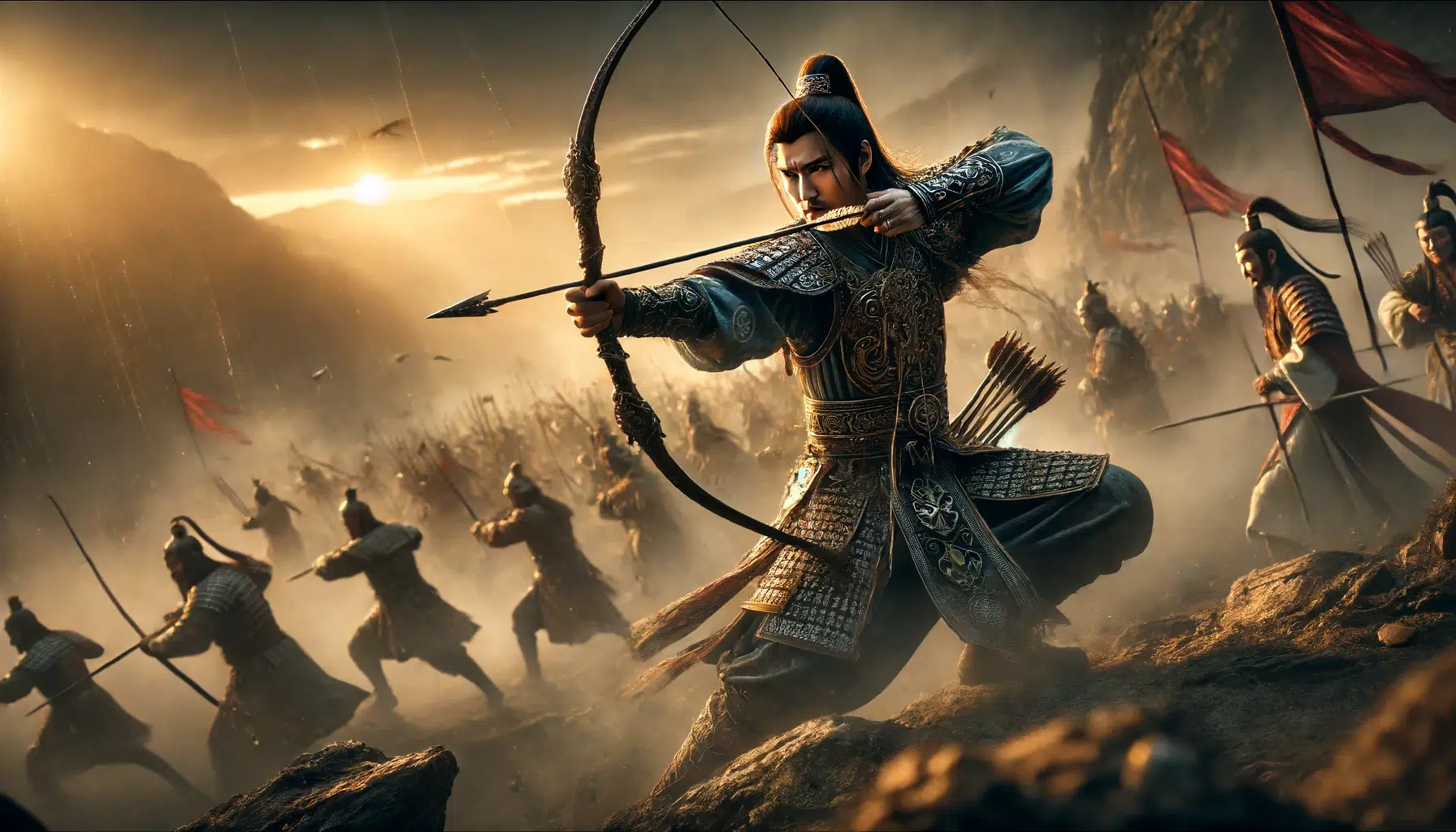
Li Guang is famous for his amazing archery skills in ancient China’s wars.
He was born in 184 BC in Tianshui, Gansu.
His archery talent was so great that he could shoot an arrow into a stone, showing his strength and earning him a legendary status.
His archery was key in many battles.
He could shoot with both precision and power.
This not only helped in fights but also scared his enemies. He fought many times against the Xiongnu, impressing his fellow soldiers and the emperor.
Li Guang often used his bow to create chaos and weaken the enemy’s spirit. His use of archery was crucial in ancient Chinese combat.
Even though he faced many hardships, like bad luck and political struggles, his archery skills are remembered in Chinese military history.
Learn more about:
Major Military Campaigns Against the Xiongnu
Li Guang’s feats in the Han Dynasty’s battles with Xiongnu stand out.
In the churn of military clashes, the Battle of Mayi in June 133 BC was key. Here, in Mayi, Bingzhou (now Shuozhou, Shanxi), the Han Empire and Xiongnu faced off.
The Xiongnu brought 100,000 skilled riders while the Han assembled 270,000 foot soldiers at Mayi and backed them with 30,000 at the Dai Prefecture.
The fight at Mayi ended without losses on either side.
But it spotlighted the frontier defense strategies.
Li Guang crafted a clever move, setting a trap with 300,000 Han troops, led by Wang Hui, to outflank the Xiongnu. General Wang Hui was faulted for the plan’s flop.
He was impeached and later, lost his life.
Sadly, their effort didn’t lead to a win. However, lessons from their tactics helped shape future Han military moves.
After Mayi, the Han Empire changed their way toward Xiongnu conflict.
They went from a defensive stance to attacking the Xiongnu directly.
This switch showed in campaigns by General Meng Tian in 215 BC and later, leading to a protectorate’s founding in 60 BC.
These key moments, guided by Li Guang’s strategies, underline the Han Dynasty’s adaptive frontier defense.
The Han-Xiongnu War, spanning from 133 BC to 89 AD, saw the Han’s tactics grow.
Driven by Xiongnu’s ever-present threat, the Han’s leaders evolved their strategies.
This war’s course weakened the Xiongnu, finally pushing them west after the Battle of the Altai Mountains in 89 AD.
By 151 AD, the Han’s relentless actions erased the Northern Xiongnu from history.
The Battle of Mobei: Triumphs and Tragedies
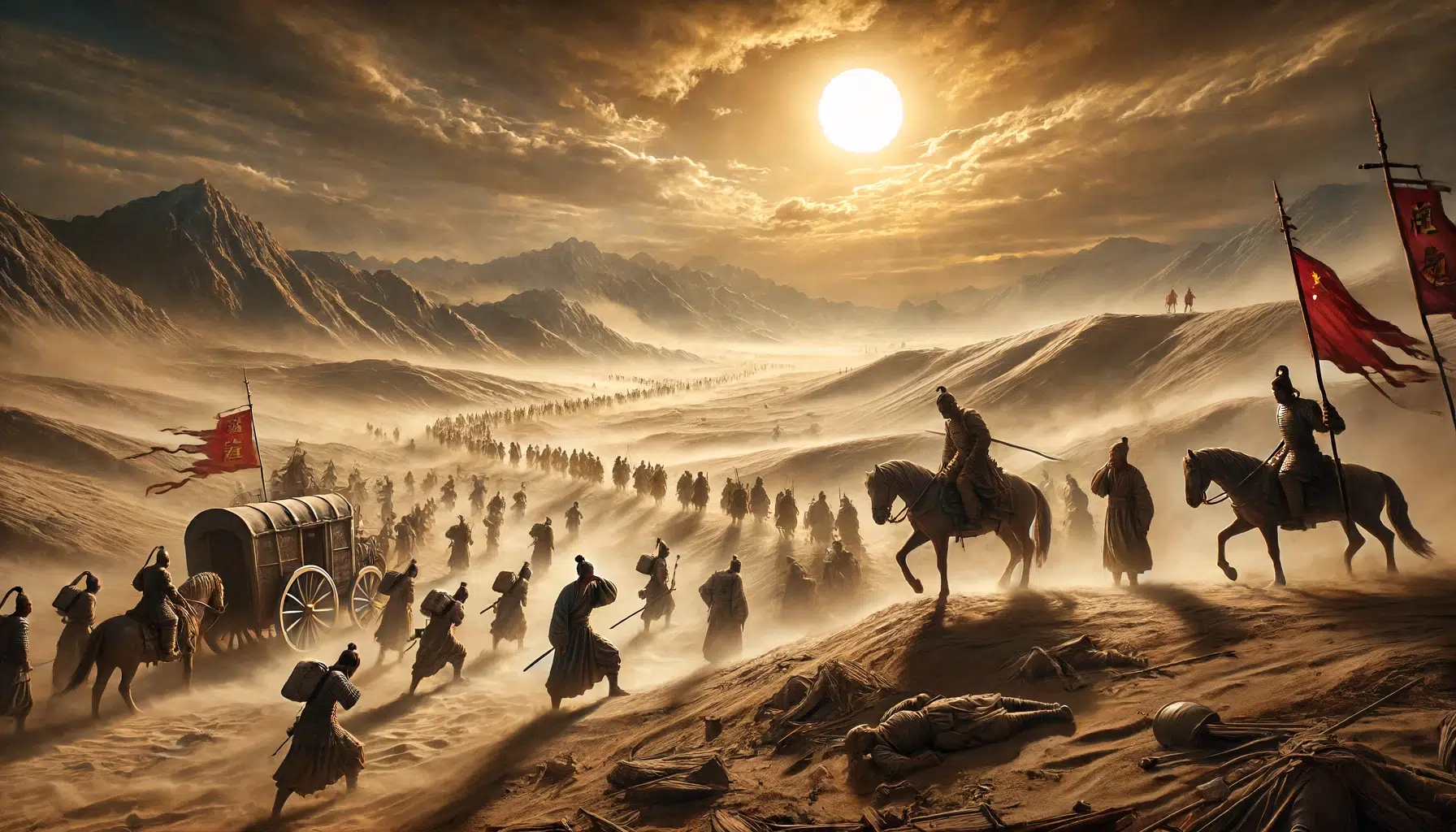
The Battle of Mobei was a key moment in Han Dynasty history.
It showed both bravery and the weaknesses of human nature in ancient Chinese wars. Li Guang, known for his courage, began a tragic path during this battle.
Even when surrounded by the Xiongnu, his leadership stood out.
But, Li Guang faced a downfall for not arriving in time to help the main Han forces.
He missed an important battle at Mobei due to getting lost in the desert.
This mistake led him to take his own life, missing the chance to win a key fight against the Xiongnu.
He took full blame for this, damaging his career.
He saw his mistake as too big to forgive himself and chose to die. This shows the mix of being a hero and facing tragedy.
Wei Qing’s leadership at Mobei was also crucial.
He was made General of Chariots and Cavalry and led successful missions against the Xiongnu.
His tactic in 127 BC trapped the enemies, leading to huge wins for the Han with very few losses.
These achievements made him Marquess of Changping and a notable figure in Han Dynasty military tales.
Looking at the Battle of Mobei, we see the complex nature and human aspects of ancient wars.
The stories of Li Guang and Wei Qing tell us about courage and clever war strategies during these times of conflict and change.
Li Guang: The Flying General
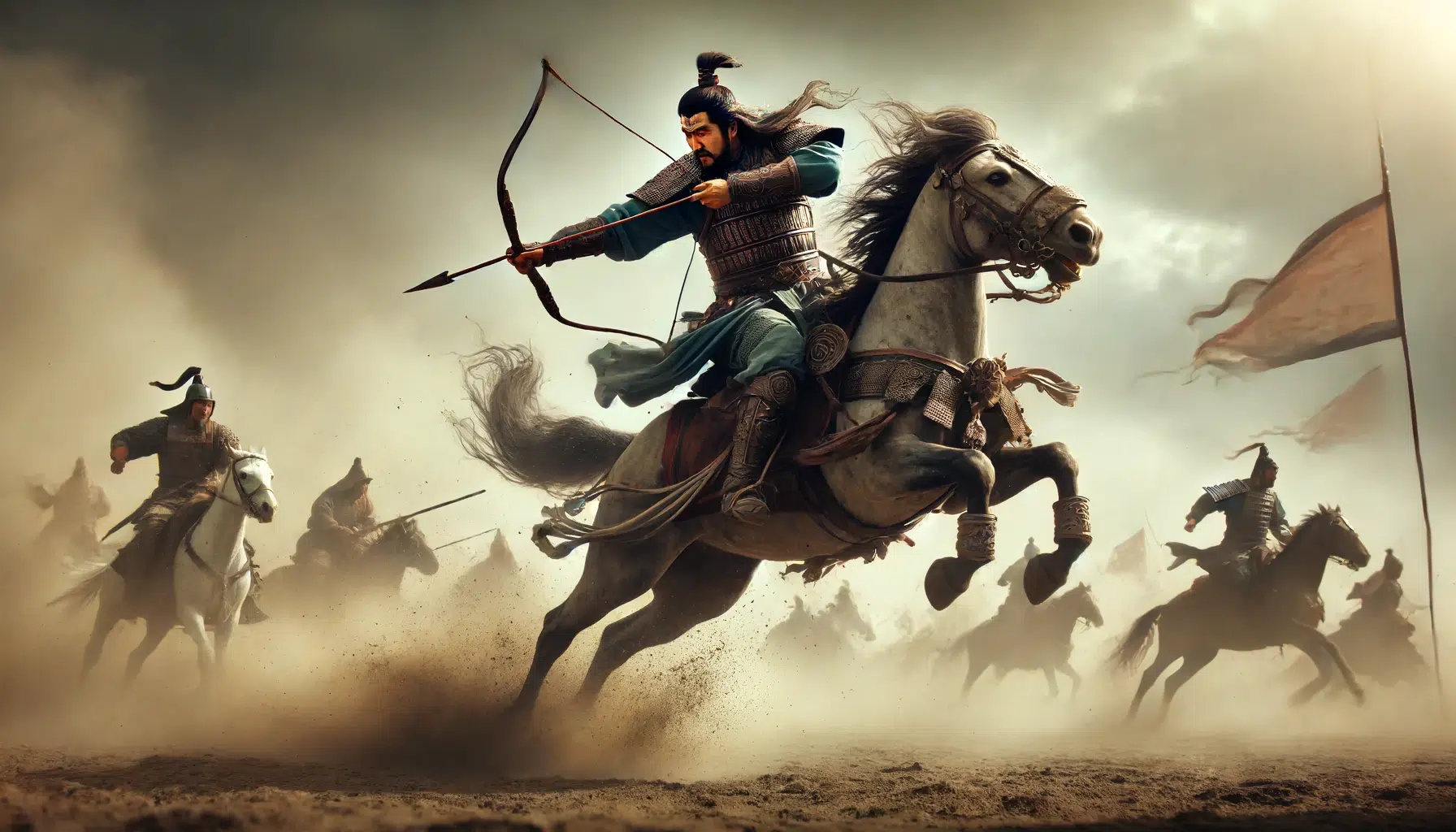
Li Guang was known as “The Flying General” for his brave acts and strong will.
He became famous for escaping the Xiongnu and winning many battles.
People talked about his incredible skills in riding and shooting for years.
Although he was quick and very smart in battles, Li Guang faced tough times later on.
He narrowly avoided being caught during a fight at Yanmen in 129 BC.
After many unlucky missions, the emperor told others not to trust him with important tasks because he seemed to bring bad luck.
Li Guang’s story sadly ended with his own decision to leave this world.
His military losses in 120 BC and missing a big battle in 119 BC brought him too much pain.
His son believed someone else was to blame for his father’s death, adding to the family’s grief.
Even with his tragic ending, Li Guang’s bravery and skill live on as a story to inspire many.
His name, “The Flying General,” reminds us of his bold adventures and the effect he had on his enemies.
Those memories have kept his heroism alive throughout Han Dynasty history.
The Rebellions of Wu and Chu: Li Guang’s Contributions
Li Guang played a key role during the Wu and Chu rebellions’ challenging times.
His smart strategies and strong leadership were vital.
He teamed up with Zhou Yafu to fight against these uprisings that posed a threat to the Han Dynasty.
These rebellions caused a lot of problems, and Li Guang’s skills were crucial for peace.
He managed to capture the enemy’s flag, a move that helped bring things back to normal.
Li Guang proved he was a skilled Chinese general, earning high respect for his role in ending the turmoil.
His Leadership Qualities
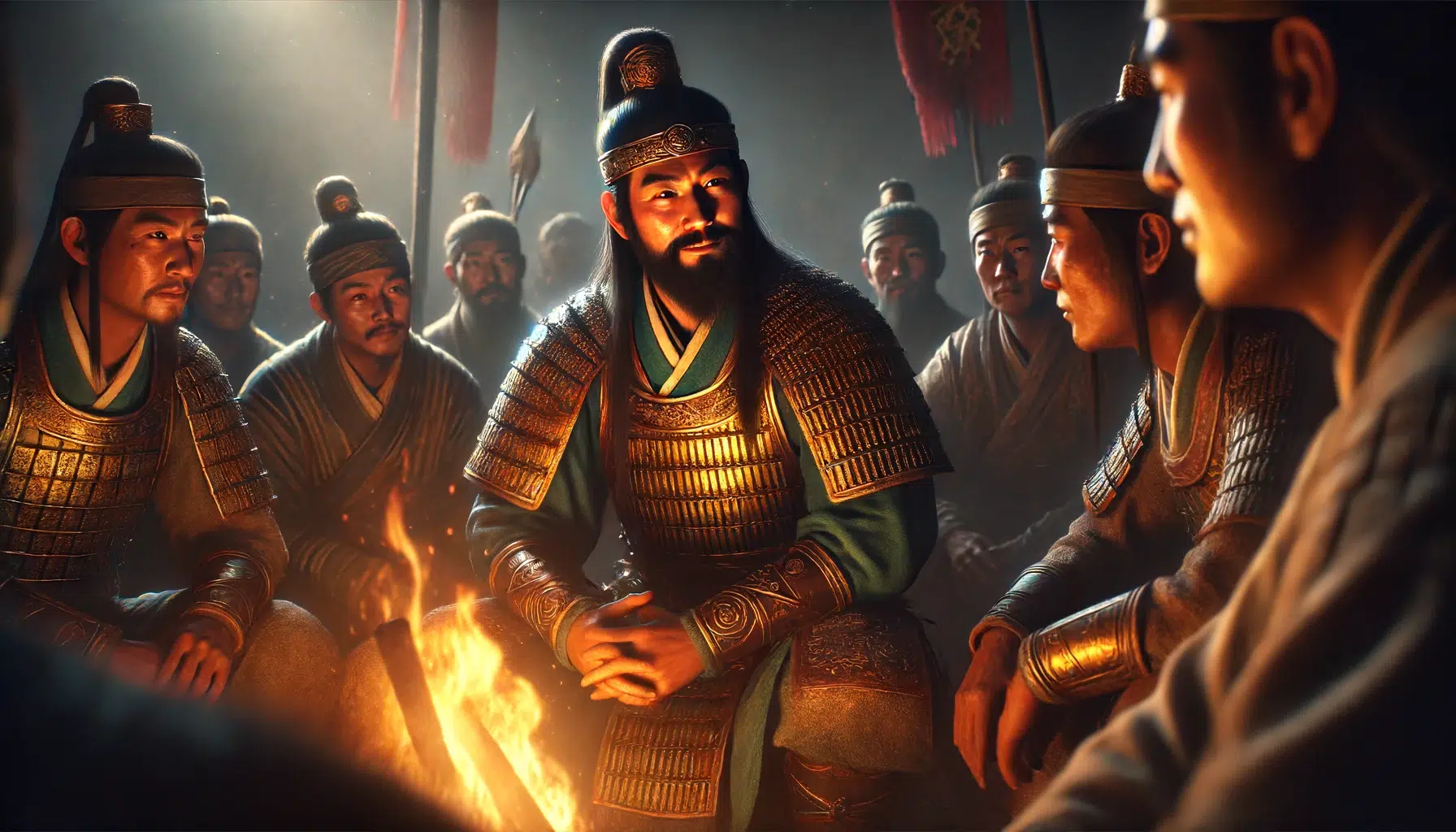
He was a great leader with wisdom and courage like the ancient Chinese military.
He led his troops with a mix of valor and heart.
This strong but kind approach gained him endless loyalty and respect. He showed that a good leader cares for their soldiers, boosting their spirits.
His actions inspired others to lead with both their minds and their hearts.
In the year 129 BC, Li Guang fought against the Xiongnu with Wei Qing and others.
They each led 10,000 horsemen. While Wei Qing is usually famous for his smart moves and big wins, like defeating the Xiongnu and taking their cattle, Li Guang did a lot too.
He showed how smart and agile thinking could help win battles.
Li Guang’s tactics made him stand out among the generals of his time.
Wei Qing was known for being great at riding horses and using a bow, keeping the loyalty of his soldiers.
But Li Guang was praised for his strong and flexible plans.
Both of them had different strong points, making them respected leaders.
Li Guang proved that being both smart and kind is key to being a great leader.
His legacy lives on in Chinese history, showcasing the best of leadership in old times.
Cultural Legacy: Poems and Stories of Li Guang
Li Guang’s legacy has transcended centuries, celebrated and immortalized through poems and stories. Many poets, especially during the Tang Dynasty, admired his deeds.
They wrote 444 poems about the area of Tianmu Mountain, showing Li Guang’s wide cultural impact.
Wang Changling, a key poet from the Tang Dynasty, praised Li Guang’s bravery.
His works are a testament to Li Guang’s significant influence. Li Guang remains a key figure in Chinese history and culture, remembered for his courageous acts.
Conclusion
The story of Li Guang shows us heroism mixed with human weaknesses.
He was a key general in the Han Dynasty, known for fights against the Xiongnu.
Despite making a tragic decision, his mix of bravery and flaws makes his story endure in Chinese history.
Known for his incredible archery and war strategies, Li Guang is a hero in many texts.
He inspired his time’s people and left a deep mark in history.
Seen as a brave symbol, his story still commands respect today, showing his big influence.
Looking back, Li Guang’s story is about both success and sadness.
It paints a full picture of a respected leader.
His tale in Chinese tales shows his lasting bravery and marks him in the colorful history that he helped create.


