
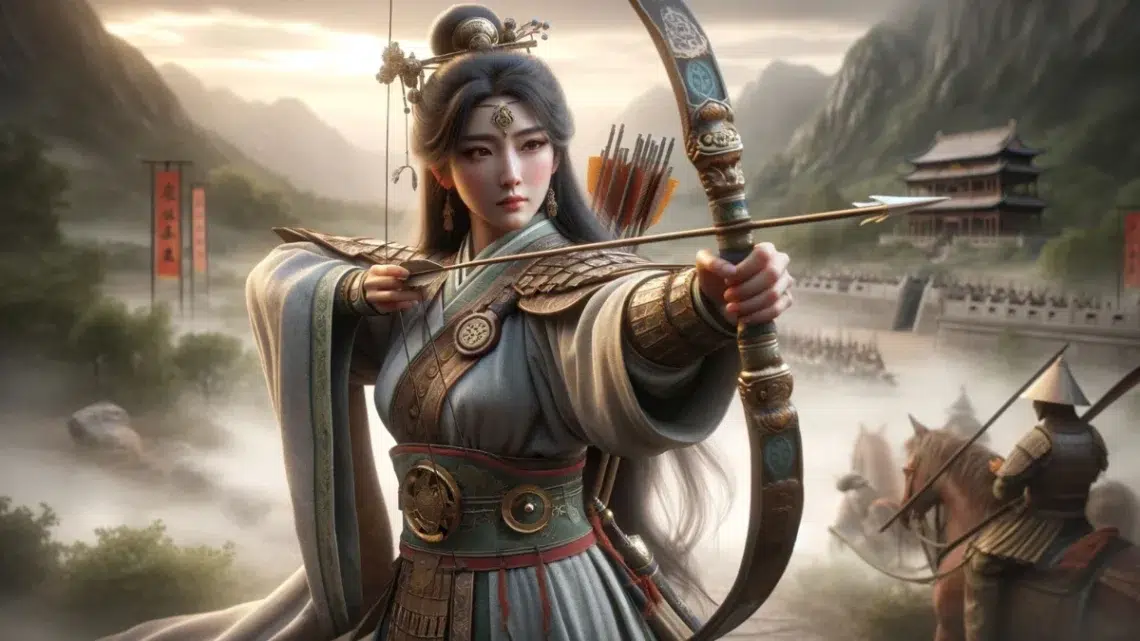
Lady Fu Hao: China’s Pioneering Female Archer
![]() The Enigmatic Legacy of Lady Fu Hao
The Enigmatic Legacy of Lady Fu Hao
In the annals of Chinese history, few women captivate the imagination as much as Lady Fu Hao. With a life shrouded in mystery, she rose in the ranks of the Shang Dynasty.
She would become not only a revered noble but also a formidable warrior and strategist. Lady Fu Hao’s significant influence in a male-dominated era is a testament to her exceptional abilities and indomitable spirit.
Her legacy was etched in oracle bone inscriptions and the contents of her sumptuous tomb.
It offers a tantalizing glimpse into the life of a woman who defied the conventions of her time and left an indelible mark on Chinese history.
The Shang Dynasty and its Prominence
The Shang Dynasty, reigning from approximately 1600 to 1046 BCE, represents a pivotal epoch in Chinese history.
Characterized by its advanced bronze metallurgy, the era witnessed the proliferation of sophisticated weaponry and ceremonial vessels.
Esteemed for introducing written script, the Shang’s oracle bones bear the earliest known Chinese characters.
A king governed the stratified society, extending his authority across centralized city-states.
The dynasty’s influence, marked by profound cultural and technological advancements, laid the groundwork for subsequent Chinese civilizations.
Unmasking Lady Fu Hao: Warrior, Priestess, and Consort

Lady Fu Hao, a figure shrouded by time but revealed through oracle bone inscriptions, was a multifaceted luminary in Shang Dynasty China.
As a consort to King Wu Ding, she wielded influence within the royal court, but her legacy extends far beyond her marital alliances.
Recognized as a warrior, Fu Hao commanded troops into battle, demonstrating profound strategic prowess.
Her victories fortified her status and expanded the Shang realm.
In addition to her martial skill, she presided over religious rituals as a high priestess, mediating between the tangible world and the divine.
This fusion of roles underscores Lady Fu Hao’s exceptional position in ancient Chinese history as a paragon of military, religious, and political agency.
Discovering the Tomb: An Archaeological Revelation
In 1976, an extraordinary discovery was made in Yinxu, the ruins of the ancient Shang city.
While excavating a group of large royal tombs, archaeologists stumbled upon the burial site of Lady Fu Hao.
Unlike other tombs plundered over time, hers remained intact.
The tomb was replete with treasures: over 1,600 artifacts, including jade objects, bone and ivory carvings, and bronze vessels.
Remarkably, researchers found a trove of weapons and tools specific to archery.
It highlights her prowess as a warrior and affirming her historic significance.
Lady Fu Hao: Evidence of Her Archery Skills
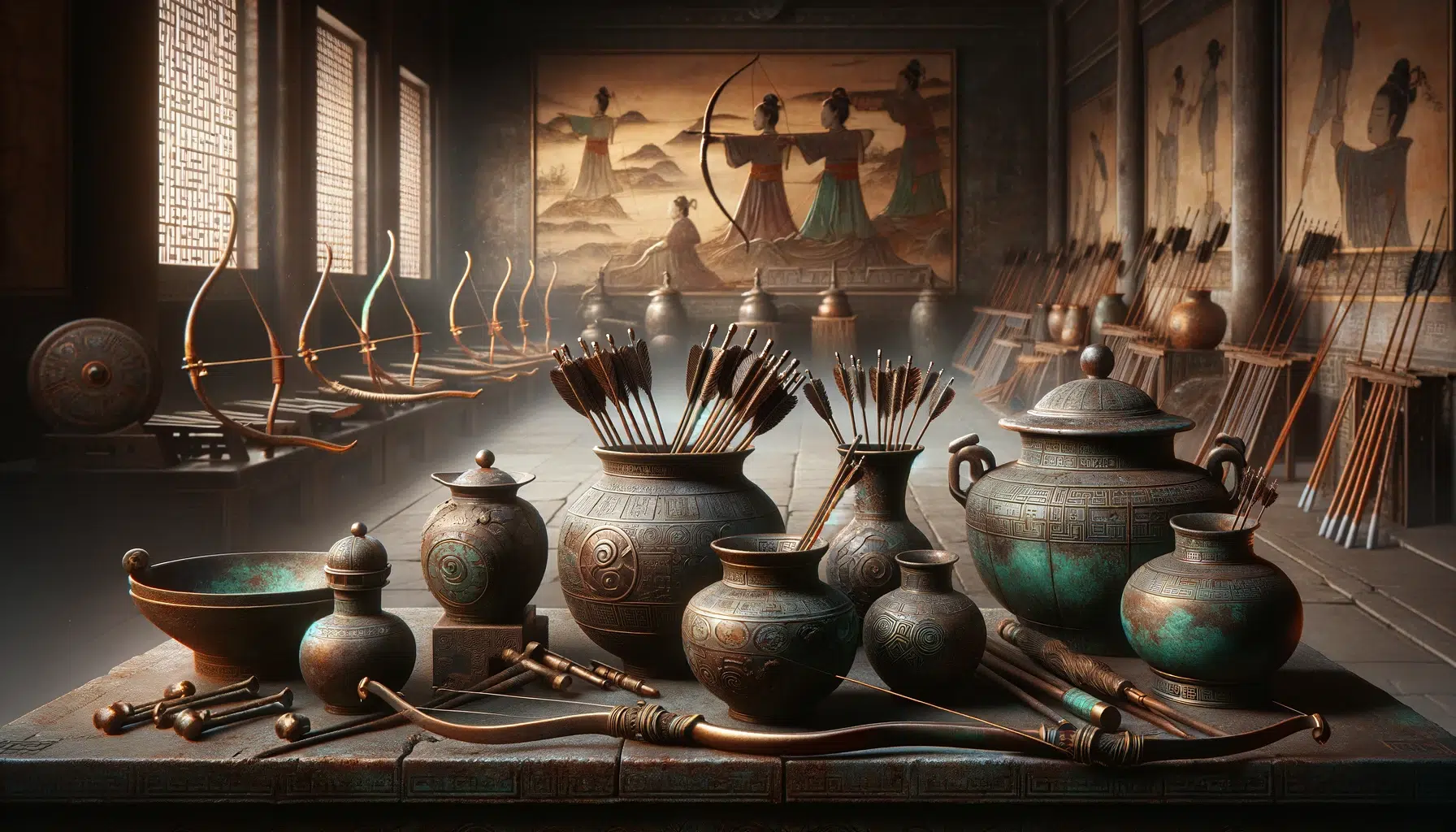
Inscriptions on oracle bones and bronze artifacts of the Shang Dynasty well-document Lady Fu Hao’s martial skills.
Specific signs point towards her proficiency in archery, an esteemed martial art in ancient China.
Artifacts including inscribed bows and arrowheads unearthed from her tomb indicate that archery was among her specialties.
Descriptions on oracle bones depict her participation in numerous hunting expeditions and military campaigns, which would have necessitated considerable archery competence.
These historical records collectively affirm Lady Fu Hao’s status as a formidable archer in her era.
Lady Fu Hao in Literature
Literature and ancient inscriptions provide tantalizing glimpses into Lady Fu Hao’s storied existence. Notably:
- The Shang Dynasty oracle bones bear inscriptions that reference her as a consort, mother, and warrior.
- Records of the Grand Historian, written by Sima Qian, include her exploits and contributions to the Shang polity.
- Various bronze inscriptions commemorate her military campaigns and roles in rituals, solidifying her influence in archeological records.
- Lady Fu Hao’s life has inspired numerous historical fiction works, dramatizing her prowess and leadership.
- Poetry and songs from later periods reference her, evidencing her lasting impact on Chinese culture and heritage.
Analysis of Lady Fu Hao’s Military Campaigns
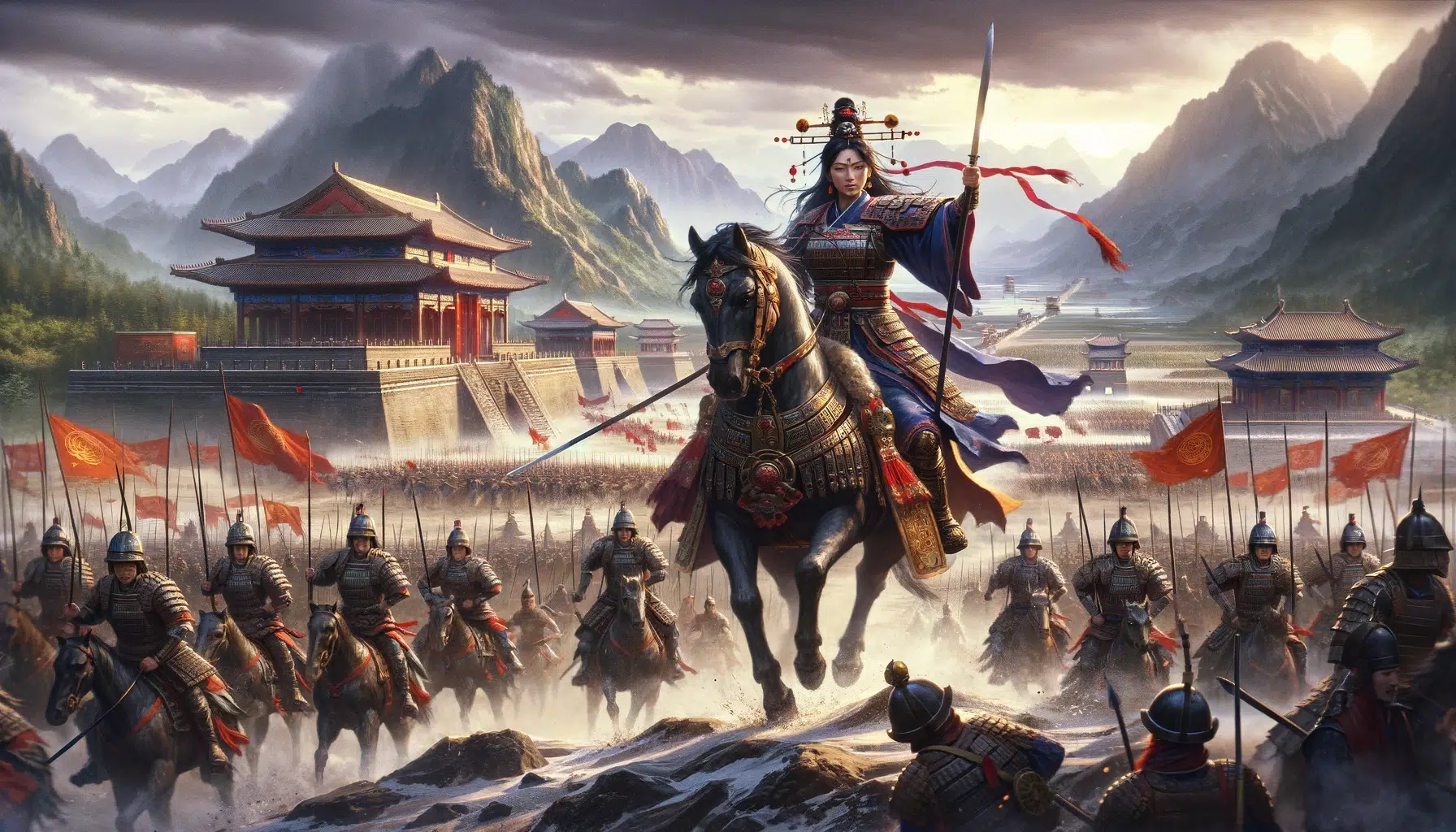
Lady Fu Hao’s military prowess is noted in the records on oracle bones and bronze inscriptions.
She successfully led several campaigns, a feat unprecedented for a woman in her time.
Her major triumphs include:
- Commanding over 13,000 troops, a remarkable number for any Shang general
- Effectively quashing peoples of the Tu-Fang, who had troubled the Shang for generations
- Leading a successful amphibious assault against the Zhou, a state that would later rise to prominence
- Securing borders against the aggressive neighbouring states of Qiang and Ba
- Maintaining internal order by suppressing revolts amongst her own folk
These campaigns not only expanded Shang territory but also reinforced Lady Fu Hao’s status as a military tactician and formidable warrior.
Spiritual Significance: Lady Fu Hao’s Role in Ritual Practices

Lady Fu Hao’s stature transcended the battlefield, extending into spiritual realms.
As a high priestess in Shang Dynasty China, she actively participated in ancestral worship ceremonies—vital for consulting the deities.
These rituals included divination practices using oracle bones, a process whereby cracks in animal bones or tortoise shells determined the will of the gods.
Her tomb revealed numerous ritual bronze vessels, evidence that she performed significant religious rites.
Thus, Lady Fu Hao’s legacy is deeply intertwined with the spiritual fabric of her time.
Gender Dynamics in Ancient China
In traditional Ancient Chinese society, strictly defined gender roles often restricted women’s active participation in military and political realms.
Typically, males assumed positions of power and women were largely consigned to domestic duties.
However, Lady Fu Hao stands as a striking exception to these social norms.
As a wife of King Wu Ding of the Shang Dynasty, she transcended traditional gender boundaries by taking on roles such as high priestess, military general, and tactician.
- She led numerous military campaigns, showcasing her strategic acumen.
- Excavations of her tomb revealed weapons and inscriptions, confirming her martial prowess.
- Despite the era’s patriarchal underpinnings, ancient inscriptions recognized and recorded her contributions, solidifying her exceptionality in Chinese history’s annals.
Lady Fu Hao’s legacy directly contradicts the prevalent gender dynamics of her time, indicating that societal norms were not insurmountable for women of exceptional capability and standing.
How Lady Fu Hao Inspires Women Today
Lady Fu Hao’s legacy transcends time, serving as a monumental inspiration for women in modern society. Her historical footprint empowers:
- Pioneering Leadership: Demonstrating that women can assume pivotal roles in leadership and strategy.
- Breaking Boundaries: Encouraging women to venture into fields traditionally dominated by men.
- Personal Empowerment: Showing that personal strength and expertise can cement one’s place in history.
- Educational Pursuits: Fu Hao’s life motivates women to explore history and archeology, enriching understanding of female historical figures.
- Cultural Recognition: Her story uplifts the heritage and contributions of historical women within cultural narratives.
Conservation Efforts for Lady Fu Hao’s Tomb
Devotion to safeguarding Lady Fu Hao’s final resting place has been critical to the preservation of her legacy.
Chinese authorities, recognizing the tomb’s heritage significance, have initiated conservation efforts designed to curb deterioration caused by natural wear and the passage of time.
These initiatives include:
- Environmental Monitoring: Installers placed sensors to track humidity and temperature in the tomb, aiming to prevent decay.
- Visitor Regulations: To reduce wear from tourism, strict visitor limits and guidelines have been enforced. This includes controlled access to the site and the provision of information on the significance of respectful behavior.
- Structural Reinforcement: Measures have been taken to reinforce the tomb structure, ensuring protection against seismic activity and other potential physical threats.
- Research and Documentation: Ongoing archaeological research is key to understanding the site’s needs, enabling precise conservation strategies. Additionally, detailed documentation helps in tracking changes over time, providing a comprehensive record for future preservation work.
Guardians are carefully preserving the story of one of China’s earliest and most formidable historical figures for future generations.
Reassessing the narrative of women in ancient history
The story of Lady Fu Hao serves as a vital reminder that women’s roles in ancient history were far more diverse and impactful than often acknowledged.
The discovery of her tomb and the relics within reveals that women could hold significant power and influence in early societies.
Fu Hao’s prowess as a female archer, military leader, and high priestess challenges the traditional narrative that has long marginalized women’s contributions.
By recalibrating our past understanding, we honour women like Fu Hao, whose stories were often overlooked or underestimated.