Kanati the Archer: Cherokee Tales of the Wind
Cherokee Folklore and the Legend of Kanati
Cherokee folklore is a rich tapestry of stories, beliefs, and cultural lessons that have been passed down through generations.
Integral to this heritage is Kanati, a figure revered in Cherokee myth as a skilled hunter and archer.
According to legend, Kanati is the provider for his people, using his exceptional abilities to master the wind and woodlands to sustain his community.
His tales are more than entertainment; they offer wisdom about living in harmony with nature and understanding the balance of the ecosystem.
The legend of Kanati serves to teach moral values and the importance of responsibility and skill in traditional Cherokee society.
The Cherokee Embodiment of Hunting and Skill
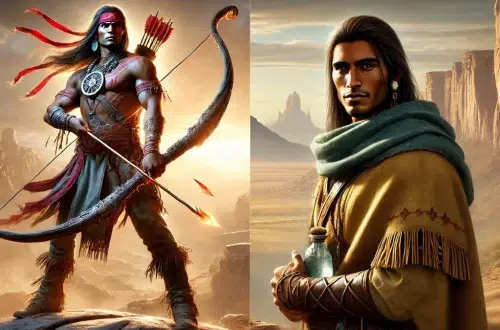
In Cherokee legends, Kanati is an esteemed figure of great prowess, an archer whose skills are unparalleled.
Kanati, whose name means “The Lucky Hunter,” serves not only as a cultural hero but also as the personification of hunting abilities and the virtues of patience, stealth, and precision.
His legend was passed down through generations, instilling values that are essential to survival and success in the Cherokee way of life.
Legends portray Kanati as:
- An adept hunter capable of moving through the forest with exceptional stealth.
- Skilled in using a bow and arrow, his marksmanship embodies accuracy.
- A teacher of hunting techniques and responsible stewardship of the land.
- A figure who maintains balance in the natural world, ensuring game animals are respected and preserved for future generations.
Additionally, stories of Kanati include his spouse, Selu, symbolizing the harmony between hunting and agriculture.
Together, they exemplified a complete life-sustaining system for the Cherokee people.
Symbolism Behind the Wind in Kanati Tales

In Cherokee mythology, wind is not merely air in motion; it embodies communication from the spirits.
The breath of the wind in Kanati tales signals messages from unseen realms, urging listeners to tune into wisdom beyond the physical world.
In stories where Kanati the Archer encounters the wind, it often represents change or transition, a herald of challenges or lessons to come.
This elemental force can cleanse or disrupt, symbolizing the dual nature of life’s trials.
Moreover, the wind’s inconsistency mirrors the unpredictability of existence, teaching the importance of resilience and adaptability.
Tales of Kanati: A Window into Traditional Cherokee Values
The Cherokee narratives of Kanati, the skilled hunter and father, serve as a rich source of moral and cultural instruction.
These stories highlight the importance of respect for both one’s community and the natural world.
Kanati embodies self-sufficiency, teaching the value of providing for one’s family through the virtues of effort and skill in hunting.
Moreover, tales of Kanati emphasize balance and harmony, crucial elements of the Cherokee worldview.
Sharing these stories has been a way to instill the ethos of responsibility, the sacredness of wildlife, and the significance of teaching these tenets to future generations, preserving a vital link to Cherokee heritage.
Kanati’s Relationship with Nature
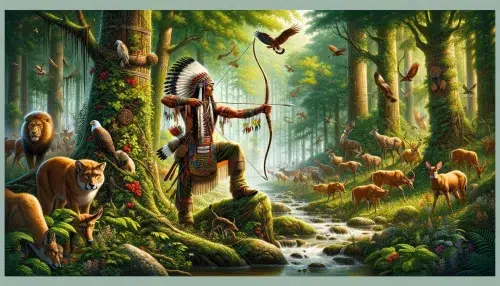
Kanati, a celebrated figure in Cherokee legend, is deeply interconnected with the natural world.
His name itself, evoking the Eastern cottontail or Great Hunter, signifies his mastery over the forest and its creatures.
Kanati’s sagas often depict him as an exceptional archer, whose skills are a metaphor for balance and harmony with nature.
His relationship with the elements, particularly the wind, is emblematic of his ability to listen and communicate with the earth.
Kanati’s tales do not just entertain; they impart the Cherokee reverence for nature and the belief that living in symbiosis with the environment is paramount.
Through these stories, Kanati becomes an embodiment of the wise stewardship of the land, teaching the value of respecting and understanding the rhythms of the natural world.
The Archery of Kanati: Lessons in Patience and Precision
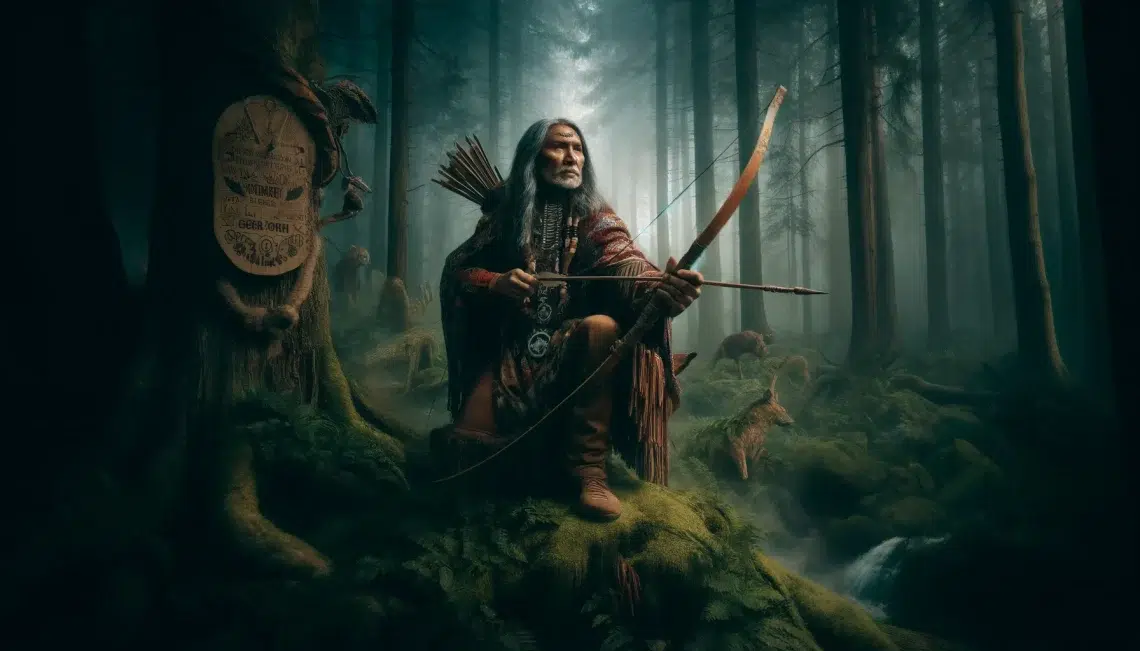
In the Cherokee tradition, Kanati is known not only for his prowess as a hunter but also for his mastery in archery, which requires immense patience and precision. Through tales of Kanati, key virtues are imparted:
- Patience – The tales often depict Kanati waiting silently, sometimes for long periods, underscoring the virtue of patience. Learning from Kanati’s tales, one understands that good things come to those who wait and prepare mindfully.
- Precision – Kanati’s ability to strike exactly where he intends is legendary. His precise shots are a metaphor for acting with intention in life, aiming carefully at one’s goals.
Kanati’s archery is a discipline that engages both body and mind, teaching that success is often a combination of internal focus and external skill.
Learn more about: Enhancing Focus with Mindful Archery Practices
The Role of Oral Tradition in Preserving the Tale of Kanati
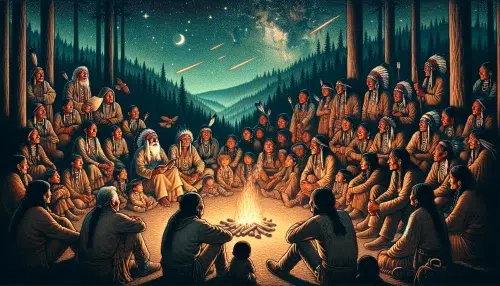
Oral tradition serves as the bedrock for sustaining Cherokee narratives, including the tales of Kanati, the skilled archer.
Rendered from one generation to another, these stories encapsulate cultural values and ancient wisdom.
Kanati’s adventures, narrated by elders through the spoken word, were not just entertainment but critical pedagogical tools, teaching survival skills and moral lessons.
Ensconced in the collective memory of the Cherokee, oral recounting ensured the continuity of Kanati’s legacy, enshrining his exploits in the communal psyche.
Thus, oral tradition has been indispensable in keeping the saga of Kanati vibrant and relevant across centuries.
Influence of Kanati Stories on Cherokee Culture
Cherokee culture remains deeply influenced by the tales of Kanati, the skilled hunter and archer from ancient lore.
These narratives:
- Serve as moral and educational guides, imparting values such as respect for nature, the importance of balance, and the virtues of courage and wisdom.
- Encourage the youth to embrace traditional roles and skills, reinforcing the enduring connection with their heritage.
- Inspire contemporary Cherokee artists, who integrate motifs from Kanati’s adventures into various forms of art, including pottery, painting, and literature.
- Inform cultural and spiritual practices, as Kanati’s stories are often invoked in ceremonies and communal gatherings, preserving a link to ancestral wisdom.
- Influence modern hunting practices, reminding hunters of the ethical approach to the relationship with wildlife, as originally taught by Kanati.
Interpretations of Kanati’s Adventures and Their Meaning
In contemporary contexts, Kanati’s tales resonate as allegories about balance and respect for nature.
They underscore the importance of skill and wisdom, emphasizing:
- Responsibility: Modern interpretations often view Kanati as a figure representing the responsibility one has in utilizing natural resources wisely.
- Stewardship: His adventures are seen as cautionary tales, highlighting the consequences of overexploitation.
- Cultural Retention: Kanati’s stories are tools for cultural preservation, vital for educating younger Cherokee generations about their heritage.
- Environmentalism: These narratives align with current environmental concerns, reminding society of the fragile relationship humans have with the ecosystem.
These insights gleaned from Kanati’s adventures are not just historical footnotes but living lessons relevant to contemporary life.
Environmental Ethics in the Story of Kanati the Archer
Cherokee folklore venerates the balance of nature, a theme embodied by Kanati the Archer.
In tales, Kanati exhibits profound respect for the environment, only taking what is necessary for survival.
His skilled archery represents not mere hunting but a deep connection to and understanding of the living world.
- Kanati’s restraint in hunting teaches the principle of sustainability.
- His actions serve as a moral guide for living harmoniously within the natural world.
- Traditional stories illustrate the consequences of greed and the virtue of conservation.
Kanati’s legacy is a poignant reminder that humans are caretakers, not conquerors, of the earth.
Kanati as a Trickster and Hero Figure
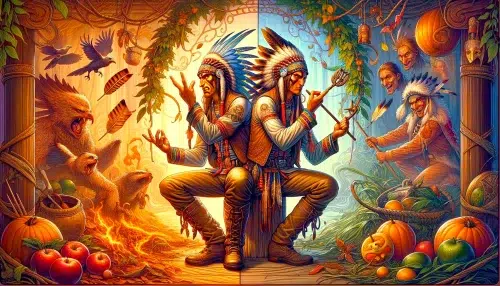
In Cherokee narratives, Kanati embodies a complex archetype, exhibiting traits of both the trickster and hero.
Historically, tricksters disrupt the familiar, often challenging norms through cunning or deceit, a role that Kanati sometimes plays.
He teaches lessons through his actions, reflecting the unpredictability of life.
Conversely, as a hero figure, Kanati symbolizes mastery and competences, particularly his exquisite skill as an archer.
He represents self-reliance, ensuring the Cherokee association with hunting and mastery over the wind.
Kanati’s duality offers rich insight into Cherokee values and the balance of wisdom with humor.
Insight into Cherokee Spirituality
Kanati’s journeys offer profound insight into Cherokee ideologies, emphasizing a deep connection with nature and the universe.
Through these stories:
- Kanati embodies the spiritual guide, teaching respect for all living entities, which is central to Cherokee belief systems.
- His adventures reveal the importance of balance and harmony within the cosmos, a core principle of Cherokee spirituality.
- The tales illustrate the reciprocal relationship between humans and the spirit world, stressing the consequences of disrupting natural order.
- They underscore the significance of personal responsibility and the community’s collective well-being in spiritual practice.
- Kanati’s experiences represent instructional parables, guiding moral conduct and upholding the people’s cultural values and spiritual customs.
Legacy of Kanati the Archer in Cherokee Tales
Kanati the Archer continues to hold a significant place in Cherokee culture, embodying the ideals of masterfulness, balance, and skill.
His narrative, woven into the fabric of Cherokee oral tradition, transcends generations, imparting wisdom and entertainment.
The archetype of Kanati serves as a touchstone for understanding human-nature relationships, personal responsibility, and the importance of maintaining harmony with the world.
His legacy, as alive today as it was centuries ago, resonates with the core values of the Cherokee people, proudly emphasizing resilience, respect, and the interconnectedness of all life.