
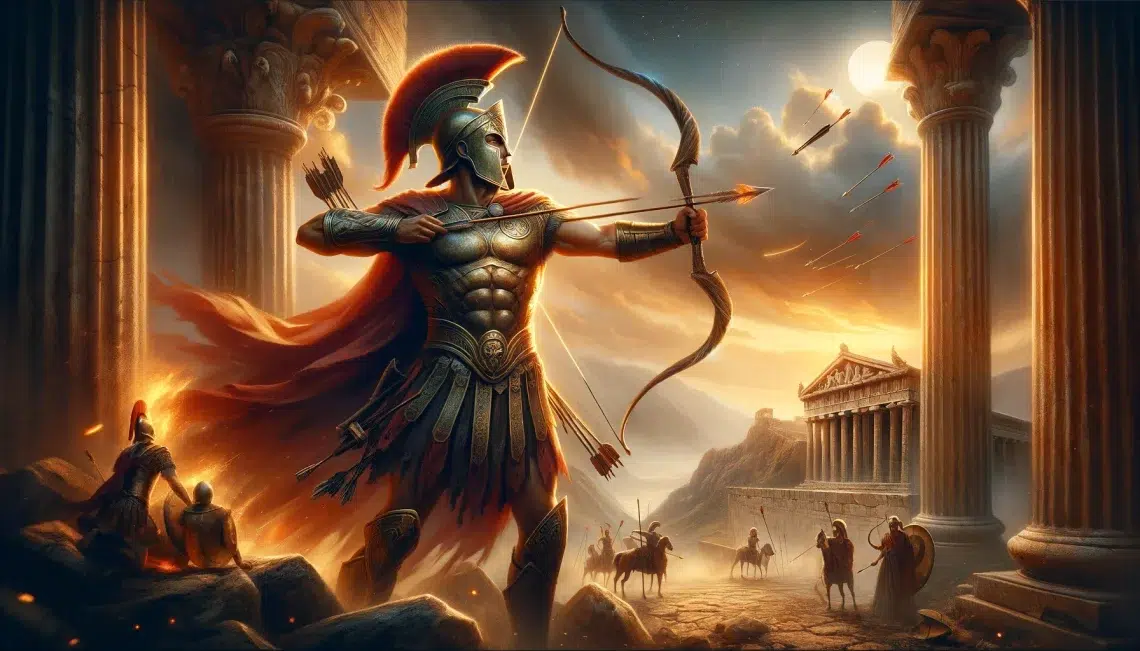
Hector of Troy: Legendary Trojan Warrior
Hector of Troy, the revered Trojan warrior, was the greatest defender of his city during the Trojan War in Greek mythology.
His valiant deeds and tragic fate have immortalized him as a symbol of heroism and honour.
Throughout the epic battles and duels he fought, Hector showcased unparalleled bravery and unwavering dedication to his family and city.
As the eldest son of King Priam and Queen Hecuba, Hector was destined to inherit the throne of Troy.
Married to Andromache, a princess from Cilicia, he embodies the virtues of a noble prince.
Key Takeaways
- Hector of Troy was the greatest defender of his city during the Trojan War.
- He was renowned for his bravery, loyalty, and unwavering dedication.
- Hector’s tragic fate serves as a reminder of the consequences of war.
- His story continues to captivate and inspire audiences in Greek mythology.
- Hector symbolizes valour, honour, and sacrifice.
The Life of Hector
Hector, the legendary Trojan Prince, was born as the eldest son of King Priam and Queen Hecuba of Troy.
As a Trojan prince, he bore the weight of destiny, poised to inherit the throne of Troy.
His commitment to his family and his city propelled Hector to become the greatest warrior of his time.
He was married to Andromache, a princess from Cilicia.
Hector’s love for his wife and their son, Astyanax, further fueled his determination to protect Troy from its enemies.
His unwavering devotion to both his family and his homeland set him apart as a noble and valiant figure in Greek mythology.
Family and Duty
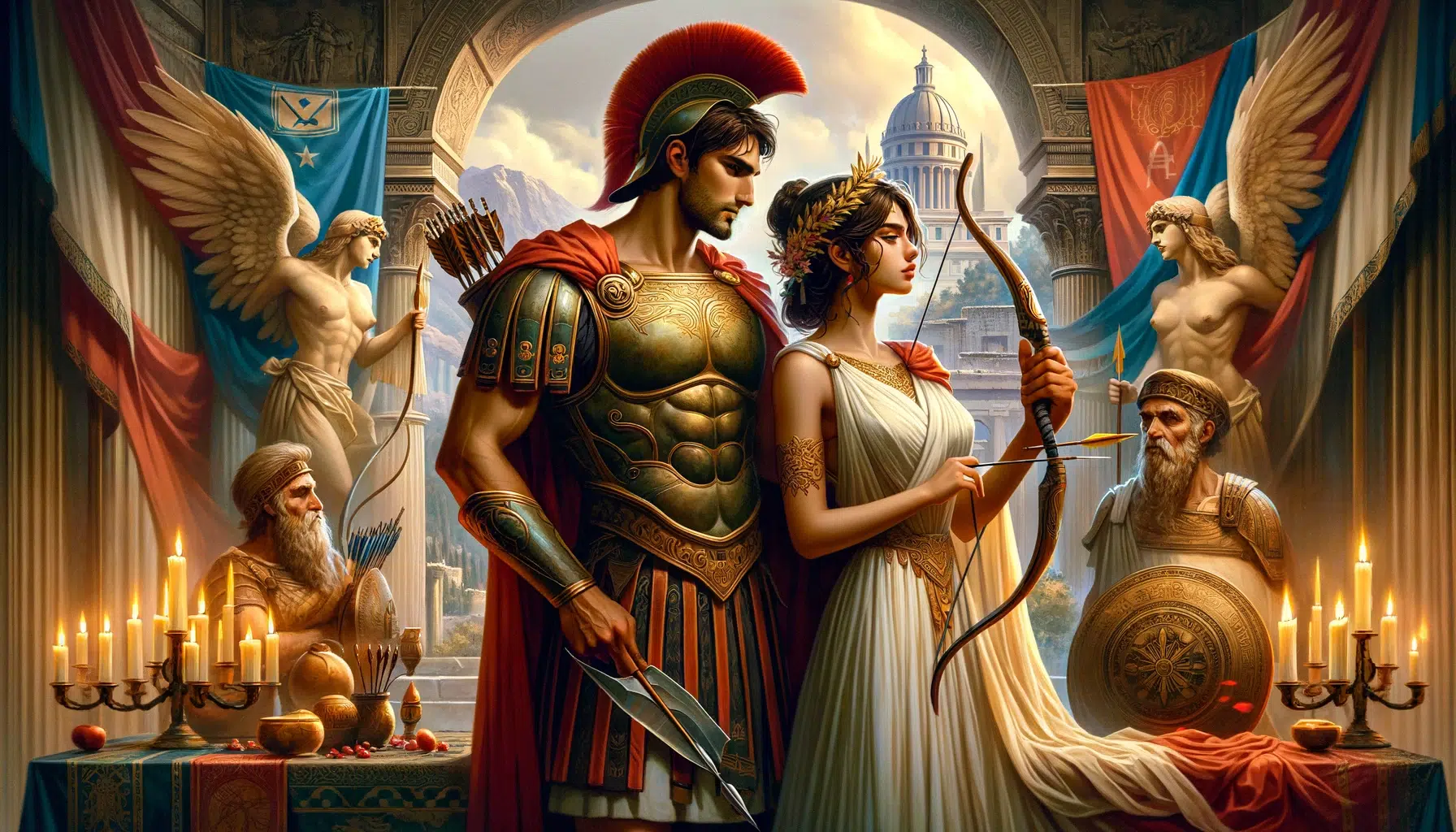
Hector’s marriage to Andromache solidified alliances between Troy and Cilicia.
Thus serving as a testament to his commitment to foster diplomatic relations for the betterment of his city.
Their union produced a son, Astyanax, who would later face a tragic fate as Troy fell to the Greeks.
| Trojan Prince | Troy | Andromache |
|---|---|---|
| Destined to inherit the throne of Troy | The majestic city of Troy, a symbol of power and sovereignty | Princess from Cilicia, wife of Hector |
| Married to Andromache, forming alliances and strengthening diplomatic ties | Devoted to protecting Troy from its enemies | Mother of Astyanax, heir to the Trojan legacy |
Hector in the Trojan War
The Trojan War, a ten-year fight between Greeks and Trojans, started when Paris of Troy took Helen, Menelaus’s wife.
Led by Agamemnon, the Greeks gathered famous heroes to get Helen back and defend their honour.
Hector stood out as Troy’s main protector, fighting bravely against the Greek attackers.
His fighting skills, bravery, and smart plans made him a tough enemy, respected by friends and foes.
The Battle for Troy
The Trojan War, a ten-year fight between Greeks and Trojans, started when Paris of Troy took Helen, Menelaus’s wife.
Led by Agamemnon, the Greeks would gather famous heroes to get Helen back and defend their honour.
Hector stood out as Troy’s main protector, fighting bravely against the Greek attackers.
His fighting skills, bravery, and smart plans made him a tough enemy, respected by friends and foes.
Learn more about Greek mythology:
- Achilles: Greek Warrior Hero’s Journey from Glory to Grief
- Apollo: Exploring the Archer God’s Myths and Legends
- Artemis: Ancient Greek Goddess of Archery
- Atalanta: Fabled Archer to Legendary Heroine
- Diana: Goddess of Hunt in Roman Mythology
- Gods and Archery in Greek Mythology Books
- God of Archery: Norse, Greek & Roman Mythology
- Hippolyta: Queen of the Amazons in Greek Mythology
- Legacy of Archers: Women in Greek Mythology
- Paris: Tragic Hero, Villain or Pawn of the Gods
- Penthesilea: Amazon Queen Who Died in Trojan War
- Philoctetes: The Legendary Greek Archer and Healer
A Legendary Hero
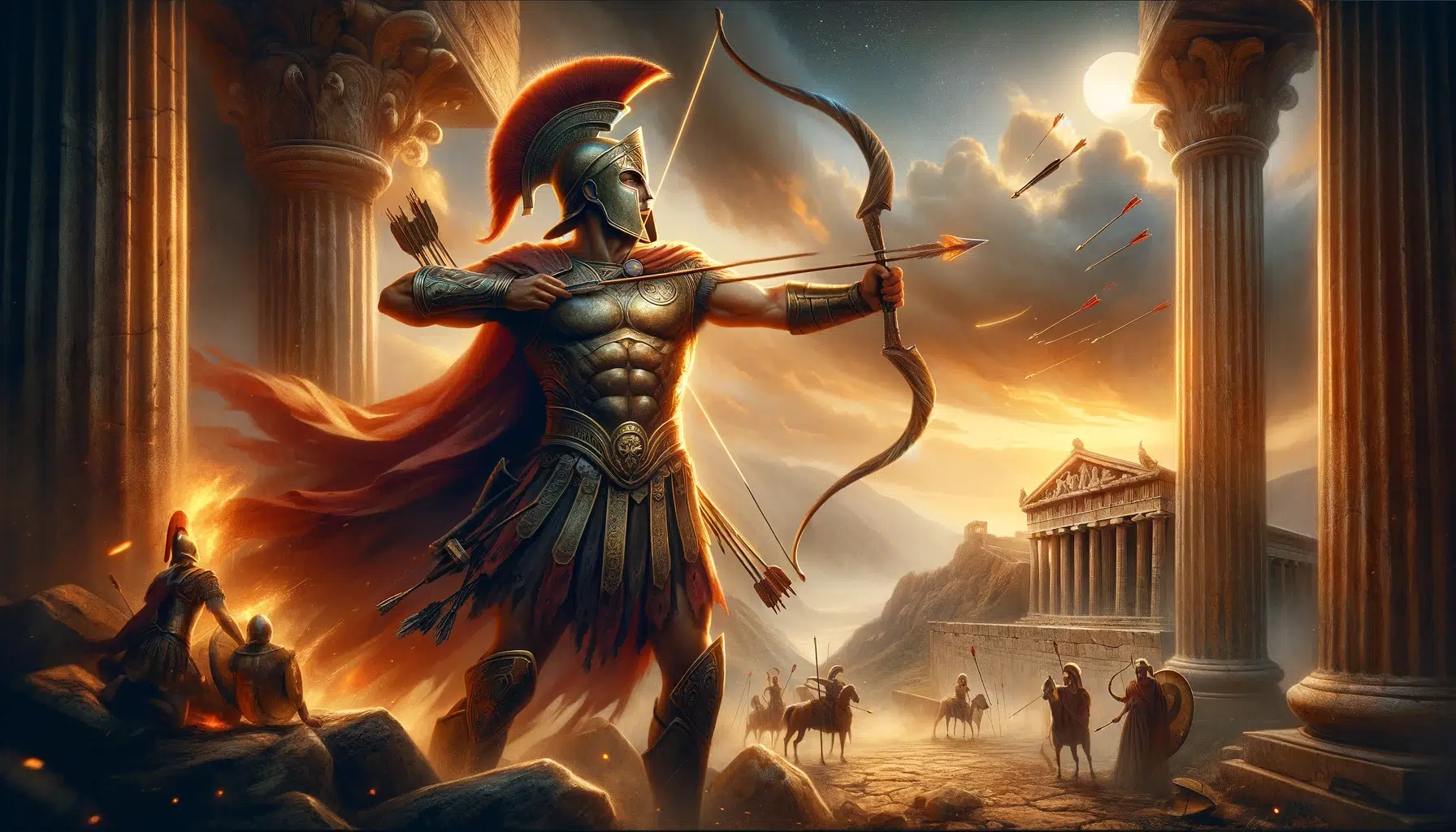
Hector’s heroism and contributions to the Trojan War have woven him into the fabric of ancient Greek mythology and history.
Legends recount his daring feats, his pivotal role in defending Troy, and his battles against renowned Greek heroes.
While fate ultimately dictated his tragic demise, Hector’s legacy lives on.
Inspiring generations with his unwavering courage, loyalty, and sacrifice in the face of overwhelming odds.
Hector’s Duels
Hector, the valiant Trojan warrior, participated in several duels throughout the duration of the infamous Trojan War.
These duels showcase his exceptional combat skills and unwavering determination in the face of formidable opponents.
Hector vs Protesilaus
One of Hector’s notable duels was against Protesilaus, the first Greek hero to set foot on Trojan soil.
In a fierce battle, Hector proved his prowess by slaying Protesilaus, sending a powerful message to the invading Greeks.
Hector vs Ajax
Another memorable duel involved Hector facing off against Ajax.
He was a highly skilled and formidable warrior among the Greek forces.
The battle between these two champions was intense and prolonged, with neither gaining the upper hand.
Their evenly matched combat showcased the strength and skill of both warriors.
Hector vs Achilles
However, it was Hector’s encounters with Achilles, his ultimate nemesis, that ultimately determined his fate.
Achilles, known for his unmatched strength and ferocity, was the most formidable opponent Hector faced in battle.
Despite Hector’s bravery and cunning, Achilles emerged victorious in their one-on-one combat.
Eventually leading to Hector’s tragic demise.
Hector’s Legacy and Reputation
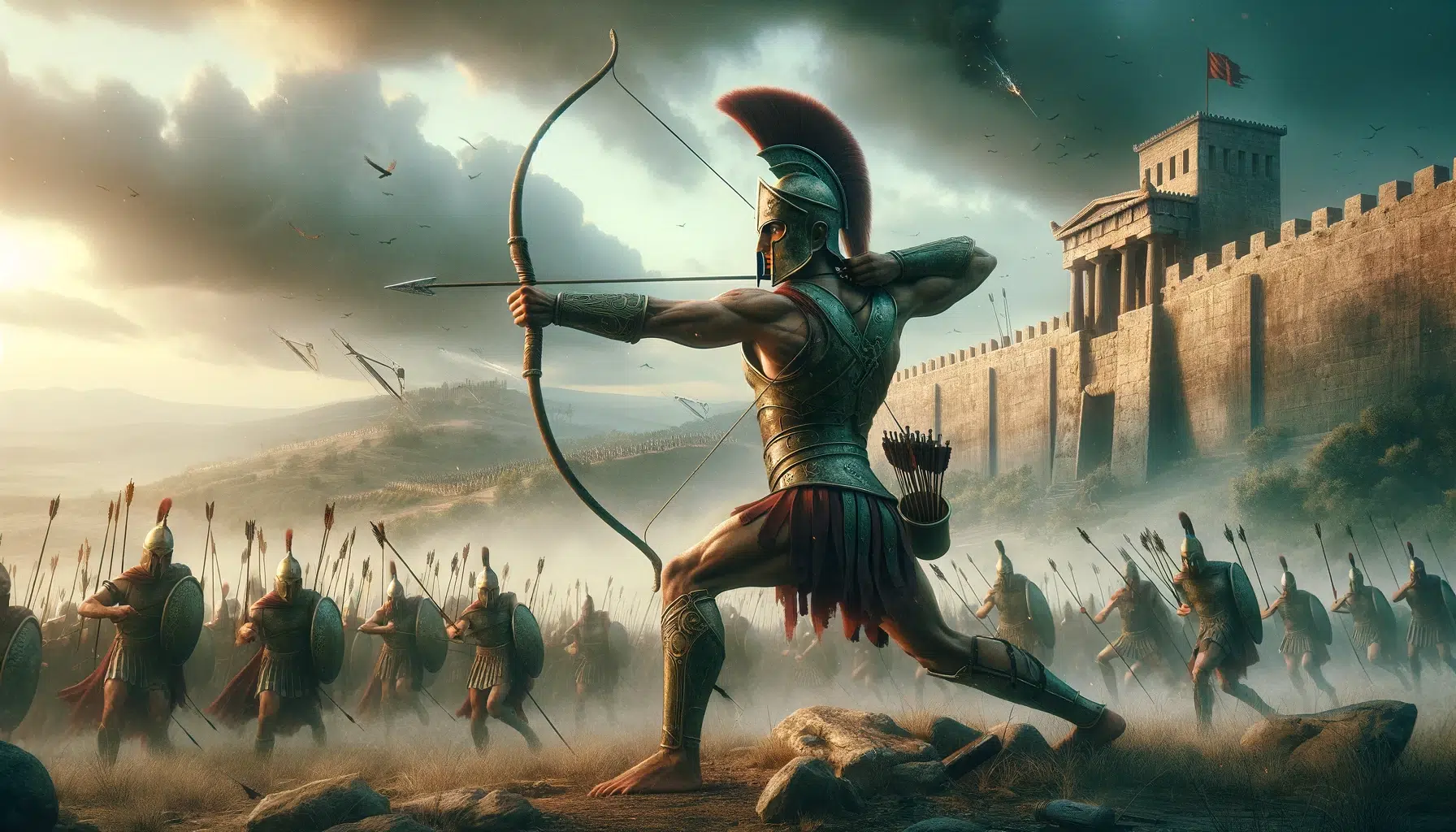
As Troy’s top warrior, Hector made a lasting impact on Greek culture with his bravery and amazing deeds.
Everyone respected him for his courage, respect for the gods, and strong sense of duty, including both Trojans and Greeks.
Widely known for his battle skills and bravery, Hector’s name as Troy’s best warrior was known all over Greece.
Even his foes respected him for his standout qualities.
Despite knowing tragedy was coming, Hector’s name stayed clean as a symbol of courage.
Both sides felt a big loss when Hector died too soon.
The ancient Greeks saw how special Hector was and knew his missing would change the Trojan War’s direction.
Hector’s loyalty to his city and family, his dedication, and his sad ending left a deep mark on Greek thought.
His story of being a hero still gets admiration and respect today.
Hector’s good nature reminds us all what makes a true hero, lasting through times and cultures.
Hector in Greek Mythology and Literature
Hector’s story has been immortalized in Greek mythology and literature.
He is a central character in Homer’s Iliad, where his epic battles and tragic fate are recounted.
Hector’s moral and courageous character has made him a symbol of heroism and honour in ancient Greek culture.
He has also been depicted in various works of art, including paintings, plays, and films, further cementing his legendary status.
Hector in Greek Mythology
In Greek mythology, Hector is revered as a legendary warrior and the greatest defender of Troy during the Trojan War.
His valiant efforts in defending his city against the Greek forces have made him an iconic figure in mythology.
Hector’s combination of physical strength, strategic prowess, and unwavering loyalty to his family and homeland have earned him a place among the most celebrated heroes of Greek mythology.
Hector in the Iliad
In Homer’s Iliad, Hector serves as a central figure around whom the epic narrative revolves.
As the leader of the Trojan forces, he embodies the ideals of bravery, honour, and sacrifice.
Hector’s encounters with the Greek heroes, such as Achilles and Ajax, are portrayed with great intensity and emotion.
This showcases his remarkable skill and unwavering determination on the battlefield.
Hector in Literature
Hector’s character and tragic fate have captured the imaginations of countless writers throughout history.
His noble qualities and the conflict between his duty as a warrior and his love for his family have been explored in various literary works.
From ancient times to modern literature, Hector’s story continues to resonate with readers.
Thus offering insights into the complexities of human nature and the timeless themes of honour and loyalty.
| Work | Description |
|---|---|
| Homeric Hymns | Hector is referenced in the hymn to Delian Apollo, highlighting his status as a revered hero in Greek mythology. |
| Works and Days | Hesiod’s poem references Hector as an example of a virtuous and honorable man. |
| Oresteia | Hector appears as a character in Aeschylus’ trilogy, interacting with the gods and providing insight into the impact of his death. |
| Troilus and Criseyde | Geoffrey Chaucer’s poem explores the tragic love story of Hector’s younger brother, Troilus, and his beloved Criseyde. |
| Andromache | French playwright Jean Racine’s tragedy focuses on the aftermath of Hector’s death and the trials faced by his wife, Andromache. |
Hector’s Last Stand and Death
Hector, the brave Trojan hero, faced Achilles, knowing he might lose.
Even though Hector asked to be buried with honour, Achilles killed him without pity.
Hector’s death was a key moment in the Trojan War, changing its direction.
Their fight was a big deal, showing two great warriors with different reasons for fighting.
Hector wanted to protect Troy and his family, while Achilles wanted to avenge his friend Patroclus.
Their battle was fierce, with both sides watching closely.
Hector and Achilles both fought hard, but in the end, Hector couldn’t beat Achilles.
Hector’s brave stand ended sadly, and his death left Troy weaker.
In the Iliad, Homer shows Hector’s death as a sad moment that reminds us how war brings loss and shows how fragile life is.
Hector’s fall made Troy’s defeat more likely.
Hector’s story reminds us of the costs of war and how it affects people and places.
His bravery and loyalty to Troy make him a hero whose story still touches people today.
The Funeral of Hector
After Hector’s death, the Trojans mourned the loss of their greatest defender.
The Iliad concludes with a 12-day truce granted by Achilles for the funeral rites of Hector.
During this period, the people of Troy paid their respects to their fallen hero.
Hector’s wife Andromache, his mother Hecuba, and Helen of Troy deliver heartfelt laments.
The funeral games held in honour of Hector showcase his significance as a beloved figure in Troy.
| Participants | Laments |
|---|---|
| Hector’s Wife – Andromache | Andromache expressed her deep sorrow for the loss of her husband and the father of her son, Astyanax. Her lamentation depicted the pain and the void left behind by Hector’s death. |
| Hector’s Mother – Hecuba | Hecuba, as a grieving mother, delivered a powerful lament for her fallen son. Her words conveyed both her pride in Hector and the heart-wrenching grief that consumed her. |
| Helen of Troy | Helen, whose actions had sparked the Trojan War, expressed remorse and sorrow for the loss of Hector. Her lamentation reflected her realization of the devastation caused by the war. |
Hector’s Significance and Legacy
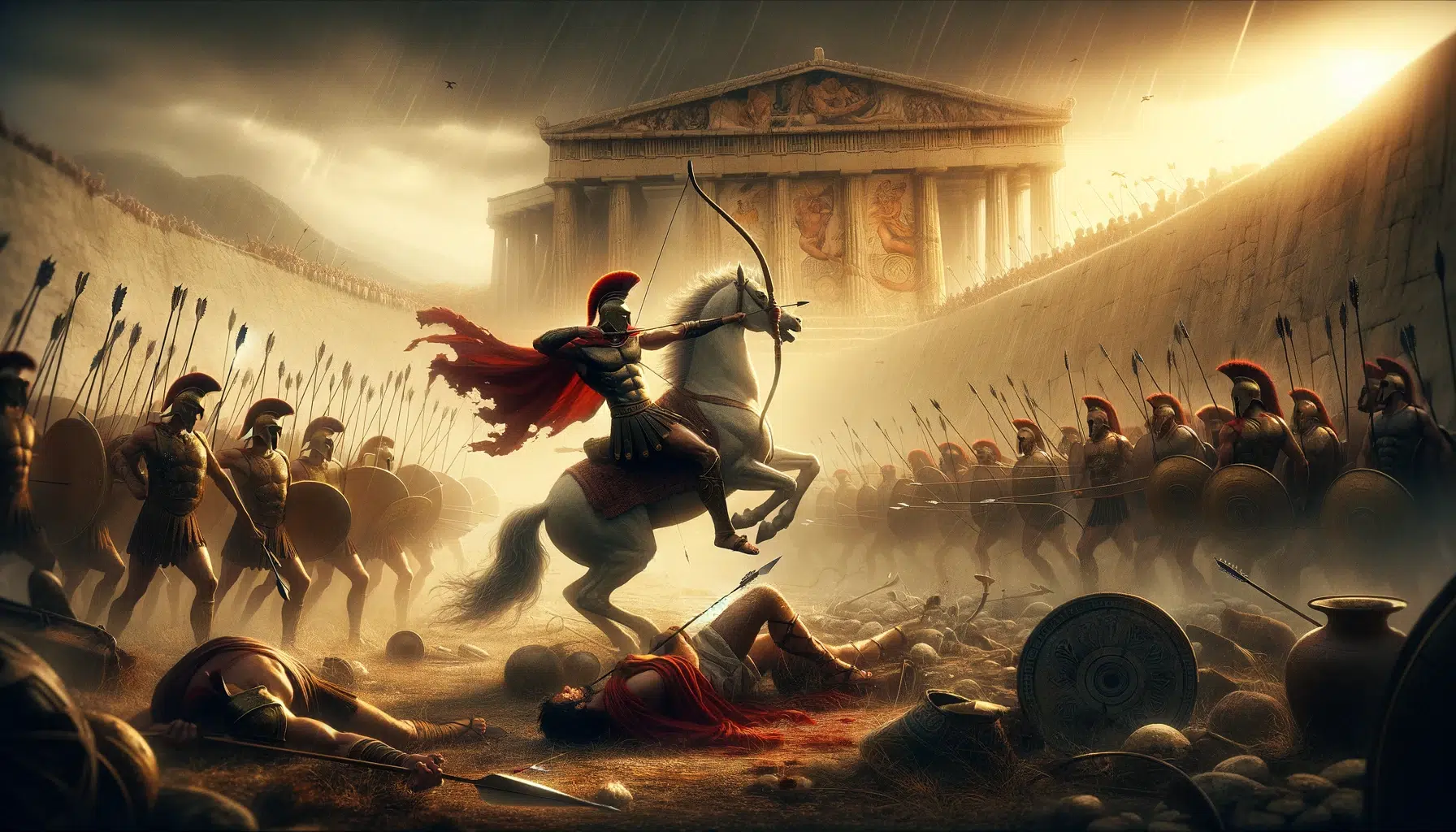
Hector is a key figure in Greek mythology, known for his noble qualities and sad fate.
Achilles kills him, showing us how war can quickly end lives and cause destruction.
Yet, Hector’s story lives on in old stories and art.
People remember him for his strong love for his city and family, his courage, and his loyalty to Troy.
In works like Homer’s Iliad, Hector wins our admiration.
He fights bravely, loves his wife Andromache deeply, and is a caring father to Astyanax.
His battles, especially with Achilles, show his bravery and honour.
Ancient art keeps Hector’s memory alive, picturing him as a great Trojan warrior in heroic poses.
Hector’s story is more than just about him. It touches on the sadness of war, the deep meanings of loyalty and duty, and shows how people can be great but also weak.
His tale reminds us that even the strongest can fall and that every choice has outcomes.
Hector’s life and death show the lasting power of myths and how they help us understand life better.
The Impact of Hector’s Death
Hector’s death deeply affects the Trojan War and changes its direction.
As Troy’s best defender, his fall makes the Trojan side weaker and gives the Greeks more courage.
Both Trojans and Greeks feel the impact of Hector’s death.
The Greeks see it as a key moment that helps them gain an upper hand in the war.
Achilles, who beats Hector in battle, feels victorious.
He wanted to avenge his friend Patroclus’s death and sees defeating Hector as proof of his strength and honour.
But Hector’s death doesn’t end his influence.
It makes the Trojans want revenge even more, pushing them to fight harder against the Greeks.
For the Greeks, losing Hector is bittersweet. They see how big their win is but also respect Hector’s skills and courage.
Hector’s death teaches both old and new audiences about the heavy costs of war and its sad outcomes.
It shows how one loss can change many things, reminding us of war’s true price.
Hector’s Heroic Deeds and Tragic Demise
Hector of Troy is a famous warrior from Greek mythology, known for his brave acts and sad end.
As Troy’s top fighter, Hector shows courage, honor, and the willingness to give everything for his city and family.
His amazing battles and lasting story still grab and move people today, showing how old tales help us understand bravery and life.
Hector’s role goes beyond fighting.
He stands for true loyalty to his city and family, showing how people act in tough times.
His story reminds us of the terrible costs of war and conflict.
By sharing Hector’s brave actions and sad fate, his story touches people everywhere, no matter the time or place.
Hector of Troy will always be seen as a hero of great courage, honour, and a strong spirit.


