
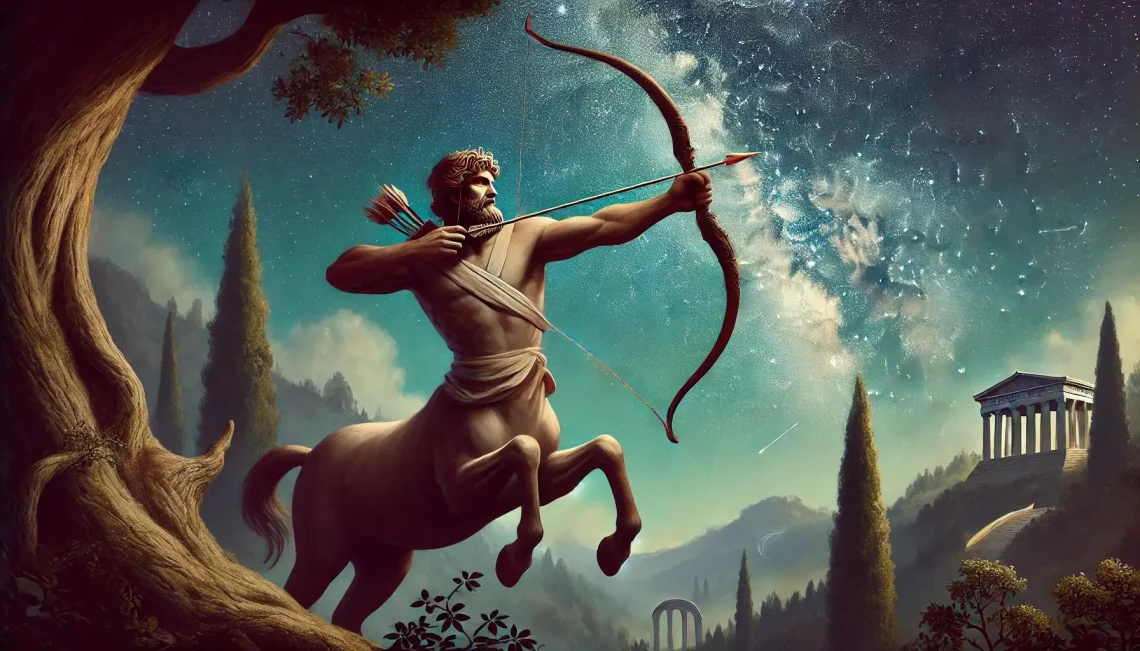
Greek Zodiac Signs and Myths: Aires to Pisces
Discover the mythology through these timeless Greek zodiac signs and myths that connect us to a tradition that spans thousands of years.
Introduction to Greek Zodiac Signs and Myths
The zodiac signs are more than just symbols in astrology; they are rooted in the rich tapestry of Greek mythology. Each sign tells a story, connecting the stars in our night sky to ancient legends of gods, heroes, and creatures.
The Greeks used these myths to explain the movements of the stars and planets, linking the celestial with the divine.
As you explore the myths behind the zodiac, you’ll discover tales of bravery, love, sacrifice, and transformation—each reflecting the qualities we associate with the zodiac signs today.
From Aries, the courageous ram, to Pisces, the elusive fish, these stories offer insights into the ancient world and the human experience.
Learn more about:
Aries: The Golden Ram
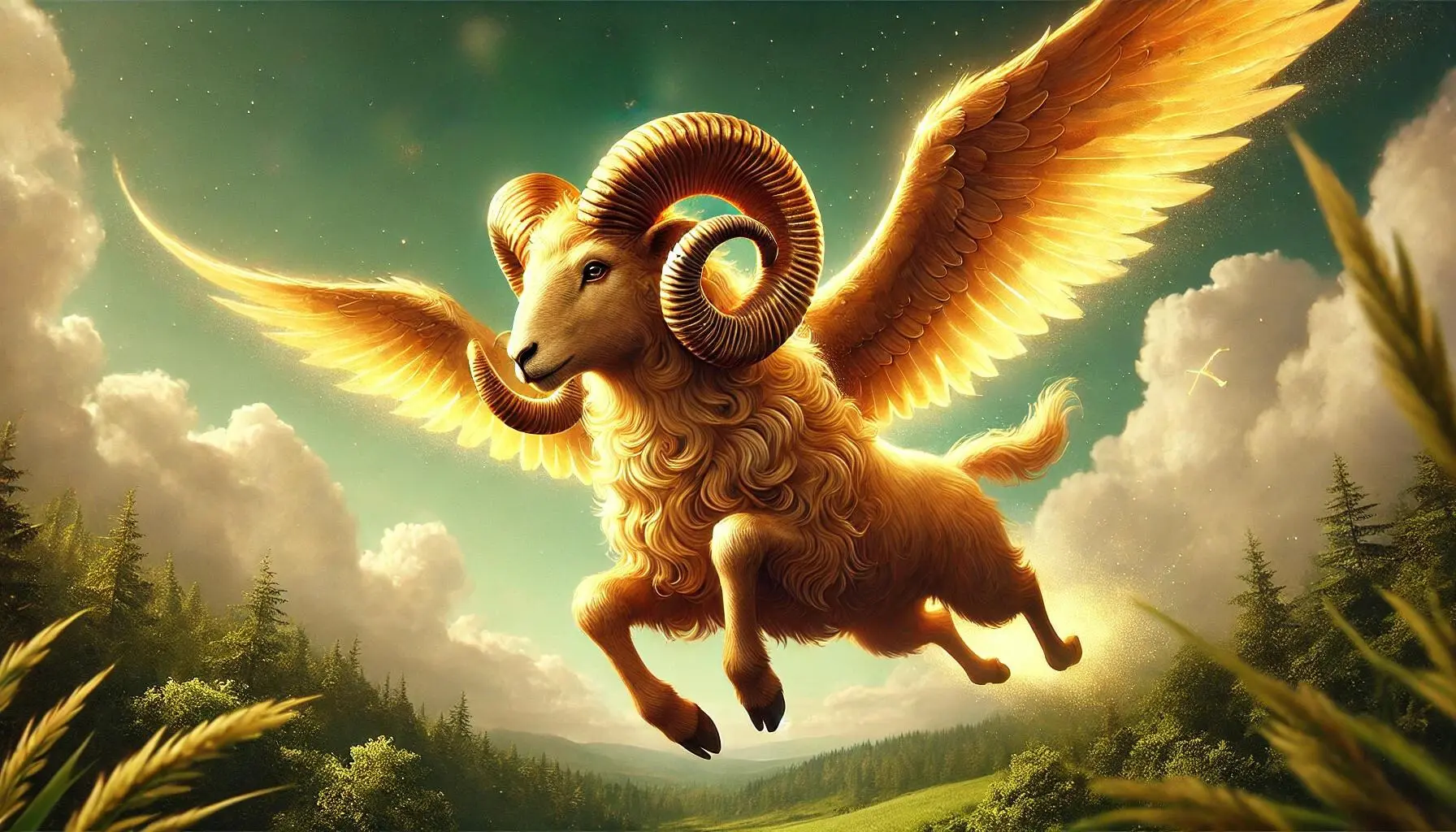
Greek Zodiac Signs & Myths: Aries
Aries represents the Golden Ram, Chrysomallos, a creature with a golden fleece that could fly and talk.
In Greek mythology, King Athamas’s second wife, Ino, convinces him to sacrifice his son Phrixus to end a terrible famine. As Phrixus faces death, the Golden Ram, sent by the god Hermes, swoops down and carries him and his sister Helle away to safety.
During the flight, Helle loses her grip and falls into the sea, which is named the Hellespont in her memory. Phrixus safely reaches the land of Colchis, where he sacrifices the ram to Zeus as a gesture of gratitude.
He then presents the Golden Fleece to King Aeëtes of Colchis, who hangs it in a sacred grove. The fleece later becomes the central object of the myth of Jason and the Argonauts, who embark on a dangerous quest to retrieve it.
To honour the ram’s bravery, Zeus places it among the stars as the constellation Aries.
Symbolism
Aries symbolizes courage, leadership, and the start of new ventures. The myth of the Golden Ram highlights themes of rescue, sacrifice, and the protective strength needed to overcome obstacles. Aries is also associated with the spring season, marking a time of renewal and new beginnings.
Viewing the Constellation
Aries is visible in the Northern Hemisphere from late autumn to early spring. The constellation is small but can be found near Taurus and Pisces. Its three brightest stars form a curved line, representing the ram’s head.
- The best time to view Aries: November, when it is high in the night sky, best observed under dark skies, away from city lights
- Aries Sign: Those born between March 21 and April 19
Taurus: The Bull of Heaven
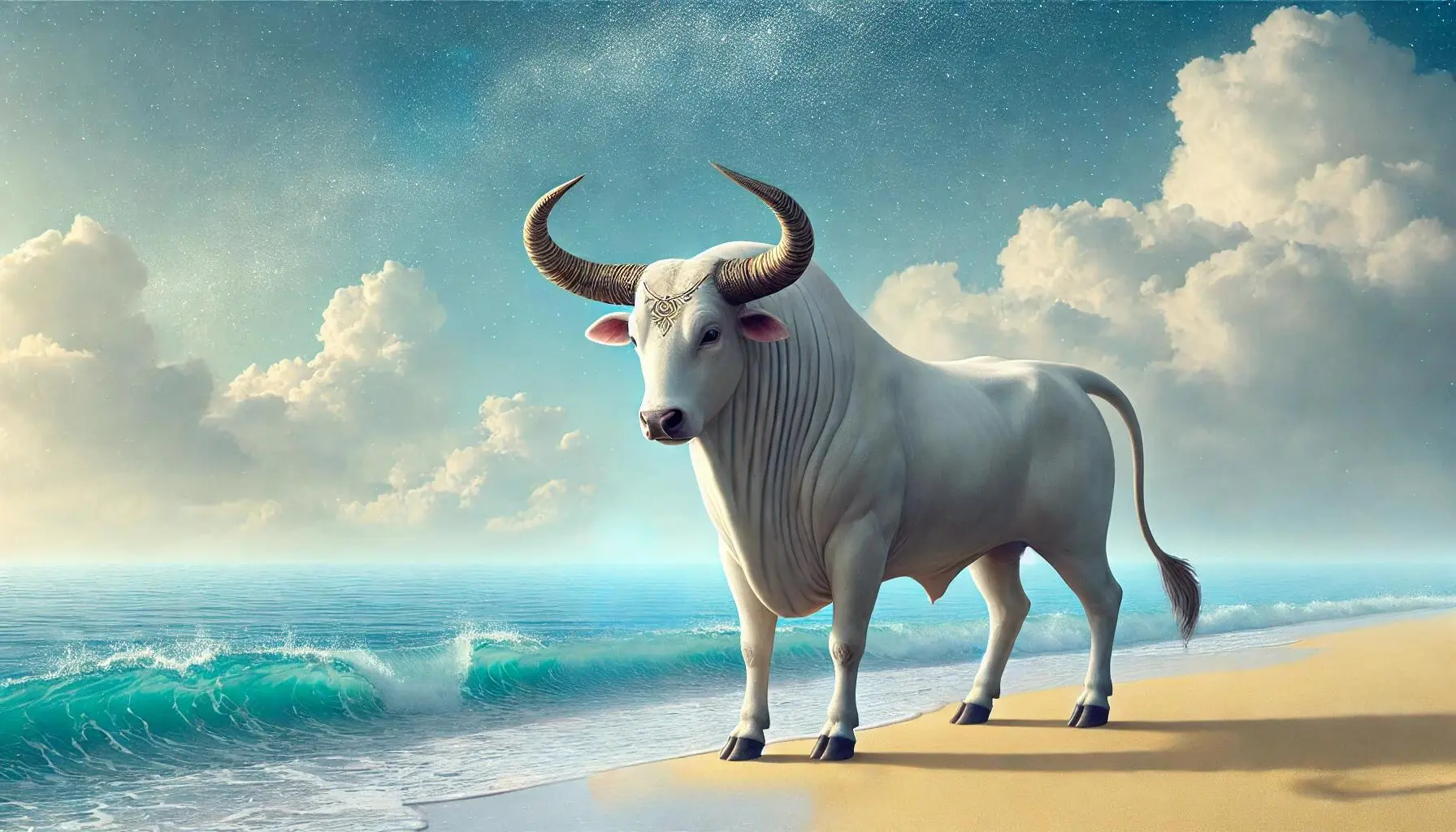
Greek Zodiac Signs & Myths: Taurus
Taurus represents the powerful bull that Zeus, the king of the gods, transforms into to carry out one of his many romantic pursuits.
In Greek mythology, Zeus becomes enamoured with Europa, a beautiful Phoenician princess. To win her trust, Zeus transforms himself into a stunning white bull with a gentle temperament.
While Europa plays on the shore with her companions, the bull approaches her, its presence both majestic and calming. Intrigued by its beauty and gentleness, Europa climbs onto its back.
Seizing the moment, Zeus charges into the sea, swimming across the waters with Europa clinging to his back. They travel all the way to the island of Crete, where Zeus reveals his true identity.
Europa becomes the mother of Minos, who later becomes the legendary king of Crete and the father of the Minotaur. To honour this event and his affection for Europa, Zeus places the image of the bull in the sky as the constellation Taurus.
Symbolism
Taurus symbolizes strength, stability, and sensuality. The myth of the bull and Europa reflects themes of power, love, and transformation.
Taurus is also associated with the earth element, emphasizing its connection to nature and the physical world, making it a symbol of grounding and perseverance.
Viewing the Constellation
Taurus is visible in the Northern Hemisphere during late autumn and winter. The constellation is easy to spot because of its bright red star, Aldebaran, which represents the bull’s fiery eye.
Taurus is located near Orion and the Pleiades, with its distinctive V-shaped pattern of stars forming the bull’s head. The constellation also contains the Hyades star cluster, adding to its visibility.
- The best time to view Taurus: January, when it is high in the night sky
- Taurus Sign: Those born between April 20 and May 20
Gemini: The Twins

Greek Zodiac Signs & Myths: Gemini
Gemini represents the twin brothers Castor and Pollux, known for their strong bond and bravery.
Castor is mortal, the son of Leda and King Tyndareus, while Pollux, the immortal son of Zeus, shares the same mother.
The twins, inseparable from birth, embark on many heroic adventures together, including the quest for the Golden Fleece with the Argonauts.
During one of their battles, Castor is mortally wounded, leaving Pollux devastated. Unable to bear the loss of his brother, Pollux begs Zeus to reunite them.
Touched by his son’s plea, Zeus allows Pollux to share his immortality with Castor. As a result, the twins take turns living in the heavens and the underworld.
To honour their bond, Zeus places them together in the sky as the constellation Gemini, symbolizing their eternal connection.
Symbolism
Gemini symbolizes brotherhood, loyalty, and the duality of life and death. The twins’ story reflects the power of love and sacrifice. Gemini also represents the balance between mortal and divine, highlighting the interplay between human and godly traits.
Viewing the Constellation
Gemini is visible in the Northern Hemisphere during the winter and early spring. The constellation is easy to find, with its two brightest stars, Castor and Pollux, representing the heads of the twins.
These stars shine brightly and are close together, making them stand out in the night sky. To find Gemini, look near Orion and Taurus, with Gemini located just above Orion.
- The best time to view Gemini: January and February when it is high in the sky
- Gemini Sign: Those born between May 21 and June 20
Cancer: The Crab
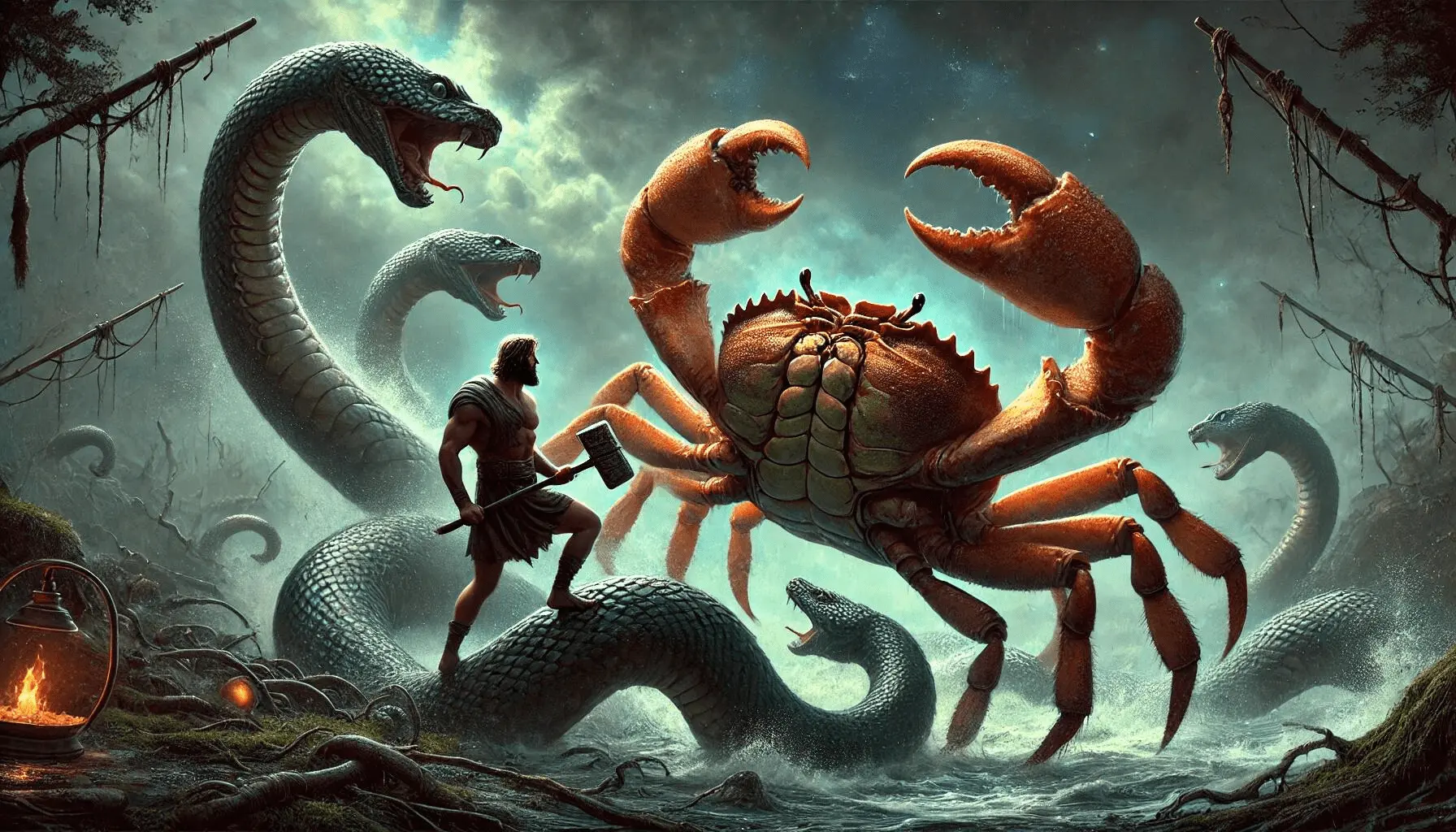
Greek Zodiac Signs & Myths: Cancer
Cancer represents the giant crab sent by Hera to help the Lernaean Hydra during its battle against Hercules.
In Greek mythology, Hera, the queen of the gods, despises Hercules, the son of Zeus and a mortal woman.
As Hercules fights the many-headed Hydra during his second labour, Hera sends Cancer to distract and weaken him. The brave crab clamps down on Hercules’s foot, attempting to aid the Hydra in its struggle.
However, Hercules, known for his immense strength, crushes the crab underfoot. Although Cancer fails to stop Hercules, Hera honours the crab’s loyalty and courage by placing it among the stars as the constellation Cancer.
Unlike other heroic creatures, Cancer’s story is one of devotion and sacrifice. The crab’s willingness to fight against overwhelming odds, even in the face of certain death, shows its dedication to its cause.
Hera’s recognition of this devotion ensures Cancer a place in the night sky.
Symbolism
Cancer symbolizes loyalty, protection, and tenacity. The crab’s efforts to defend the Hydra, despite knowing the odds, highlight the importance of courage and persistence.
Cancer also represents self-sacrifice and the value of standing by one’s beliefs. even in difficult circumstances. The constellation is a reminder of the quiet strength that comes from dedication and loyalty.
Viewing the Constellation
Cancer is visible in the Northern Hemisphere during late winter and spring. The constellation is faint and requires dark skies to see clearly. It is one of the most difficult zodiac constellations to locate. The constellation’s looks more like an upside-down letter Y than a crab.
It lies between the constellations Gemini and Leo, with its most recognizable feature being the Beehive Cluster, a group of stars within Cancer.
- The best time to view Cancer: March, when it is high in the sky and easier to spot
- Cancer Sign: Those born between June 21 and July 22
Leo: The Nemean Lion
Greek Zodiac Signs & Myths: Leo
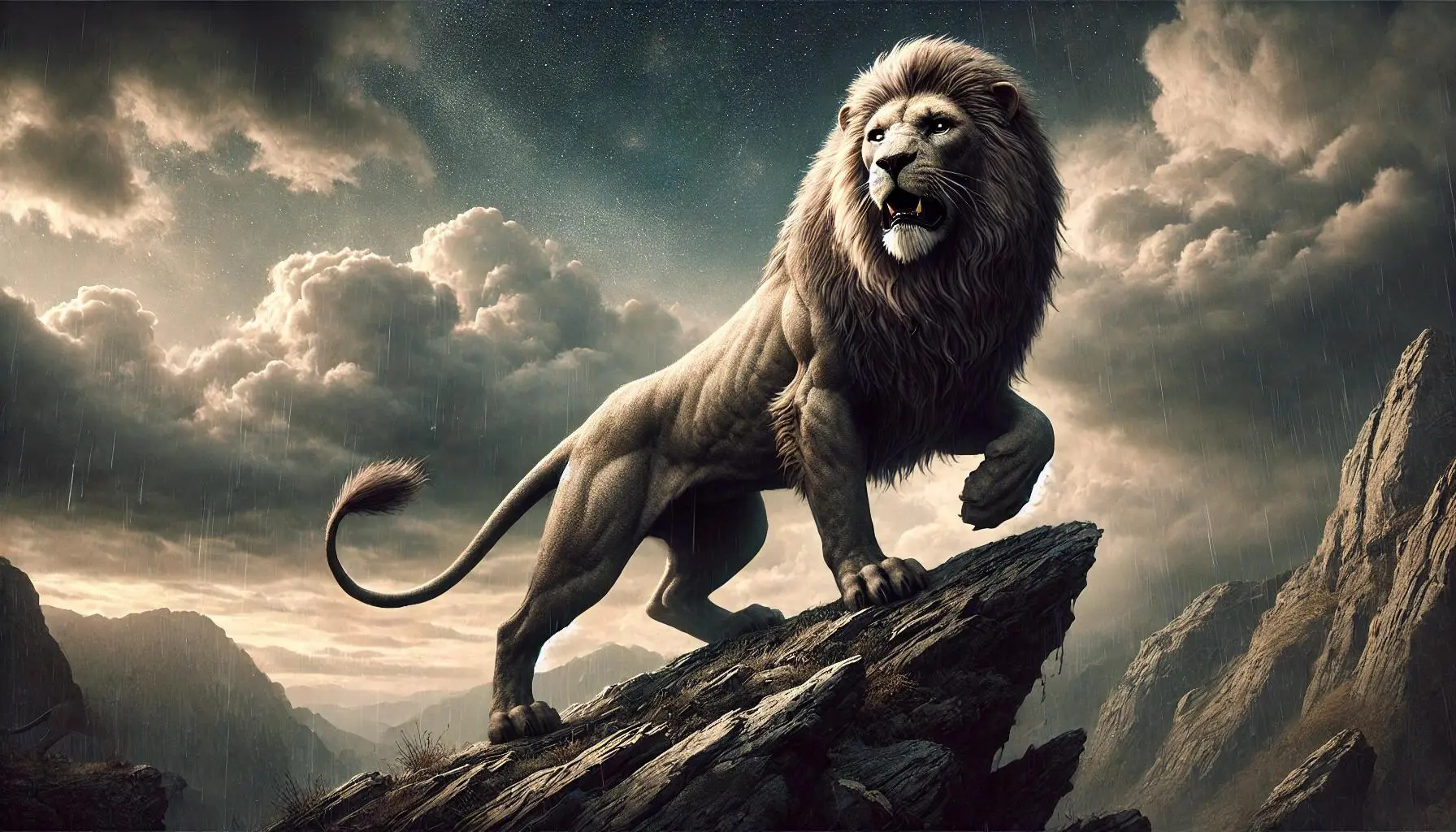
Leo represents the Nemean Lion, a fearsome creature that terrorized the region of Nemea.
In Greek mythology, the Nemean Lion had impenetrable skin, making it invulnerable to weapons.
As the first of his Twelve Labours, Hercules was tasked with slaying this powerful beast. After realizing that his weapons were useless, Hercules used his immense strength to wrestle the lion and strangle it to death.
Once the lion was defeated, Hercules skinned the beast using its own claws and wore its hide as a cloak, which protected him in future battles.
The lion’s image was placed in the sky by Zeus to commemorate Hercules’s victory and the creature’s formidable nature. Leo’s position in the zodiac reflects its significance in both the myth and the night sky, representing the courage and strength required to overcome seemingly insurmountable challenges.
Symbolism
Leo symbolizes bravery, strength, and leadership. The Nemean Lion’s indomitable nature reflects the idea of facing challenges head-on and conquering them with determination.
Leo also represents the power and nobility that come from overcoming difficult trials, making it a symbol of personal triumph.
Viewing the Constellation
Leo is visible in the Northern Hemisphere during spring. The constellation is easy to find, with its brightest star, Regulus, marking the lion’s heart.
Leo’s distinctive sickle-shaped pattern of stars forms the lion’s head and mane. Leo’s bright stars make it one of the most recognizable constellations in the night sky.
- The best time to view Leo: April, when it is high in the sky
- Leo Sign: Those born between July 23 and August 22
Virgo: The Maiden
Greek Zodiac Signs & Myths: Virgo
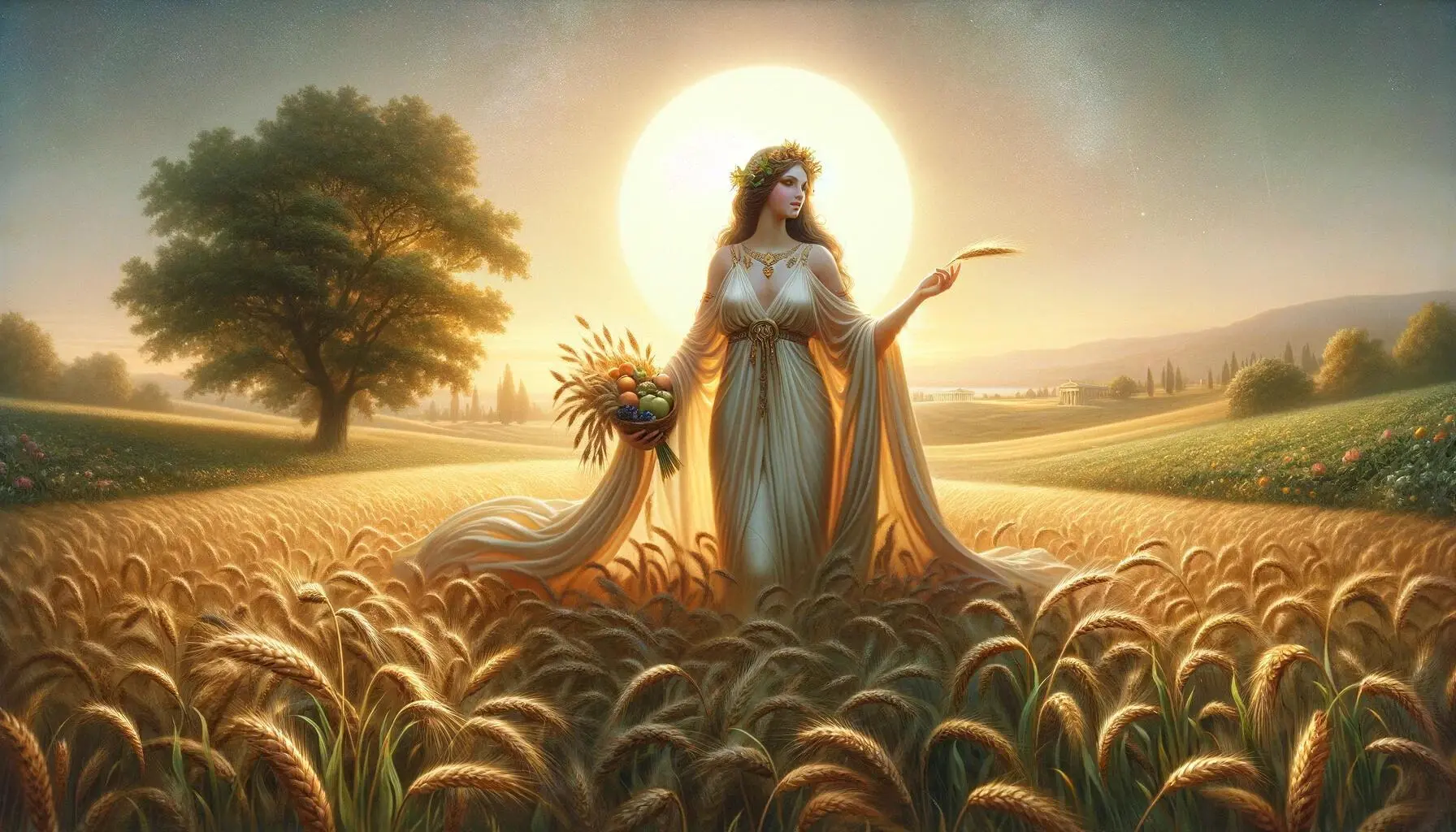
Virgo represents the goddess of the harvest. She is often linked to Demeter or her daughter Persephone. In Greek mythology, Hades, the god of the underworld, kidnaps Persephone.
Demeter, the goddess of agriculture and Persephone’s mother, searches for her daughter. During this time, Demeter’s sorrow causes the Earth to become barren. Plants stop growing, and winter begins.
Eventually, a deal is made. Persephone spends part of the year with her mother and part with Hades.
When Persephone is in the underworld, Demeter mourns, and winter covers the Earth. When Persephone returns, Demeter’s happiness brings spring and summer.
Virgo, as the Maiden, symbolizes the return of life and the renewal of nature. Her story explains the changing seasons and the balance between light and darkness.
Symbolism
Virgo symbolizes fertility, renewal, and the nurturing power of the Earth. The story of Demeter and Persephone shows the balance between life and death, joy and sorrow.
Virgo also represents the cycles of nature and the importance of caring for what we cherish. The constellation reminds us that life renews itself, and new beginnings are always possible.
Viewing the Constellation
Virgo is visible in the Northern Hemisphere during spring and early summer.
It is one of the largest constellations and lies between Leo and Libra. The brightest star in Virgo is Spica, which represents an ear of wheat. Spica connects Virgo to the harvest.
- The best time to view Virgo: May when it is high in the night sky
- Virgo Sign: Those born between August 23 and September 22
Libra: The Scales
Greek Zodiac Signs & Myths: Libra
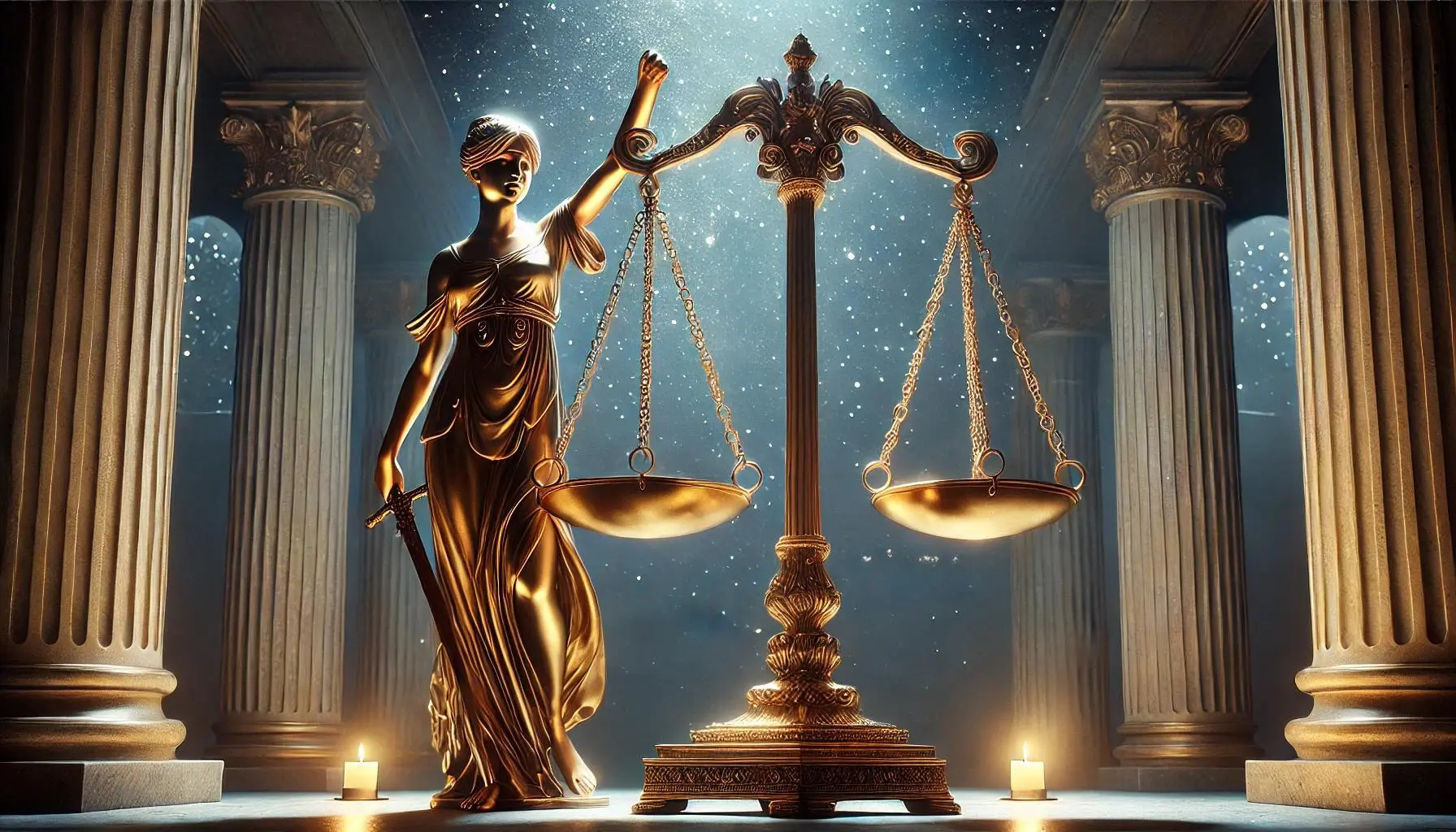
Libra represents the Scales of Justice, often associated with Themis, the goddess of justice and law.
In Greek mythology, Themis is one of the Titans and serves as an advisor to Zeus. She is often depicted holding a pair of scales, symbolizing fairness and the weighing of right and wrong.
The Scales in the sky represent balance, harmony, and the idea of justice prevailing.
Some myths also connect Libra to Astraea, the virgin goddess of justice, who was the last of the immortals to live with humans during the Golden Age.
As the world became more corrupt, Astraea left Earth and ascended to the heavens, where she became the constellation Virgo. The Scales, representing justice, were placed beside her as Libra, symbolizing the importance of fairness in human affairs.
Symbolism
Libra symbolizes balance, justice, and fairness. The scales represent the weighing of choices and the importance of making decisions that are fair and just.
Libra also symbolizes harmony and the need to maintain equilibrium in life. The constellation serves as a reminder of the importance of justice and the pursuit of truth.
Viewing the Constellation
Libra is visible in the Northern Hemisphere during late spring and early summer.
The constellation is located between Virgo and Scorpio. Libra’s stars are faint but form a simple shape resembling a set of scales.
- The best time to view Libra: June, when it is highest in the night sky
- Libra Sign: Those born between September 23 and October 22
Scorpio: The Scorpion

Greek Zodiac Signs & Myths: Scorpio
Scorpio represents the giant scorpion sent by Gaia, the Earth goddess, to kill the hunter Orion.
In Greek mythology, Orion, a great hunter, boasts that he can kill every animal on Earth. This arrogance angers Gaia, who sends a huge scorpion to stop him. The scorpion catches Orion off guard and stings him, leading to his death.
As a reward for its service, Gaia places the scorpion among the stars as the constellation Scorpio. Orion is also placed in the sky, far from Scorpio, so their eternal chase continues across the heavens.
The story of Scorpio and Orion teaches about pride, revenge, and the dangers of arrogance. Their battle plays out in the night sky, with Scorpio rising as Orion sets, showing their never-ending struggle.
The constellation’s position in the sky also highlights the ongoing conflict between these powerful figures.
Symbolism
Scorpio symbolizes power, danger, and the results of pride. The scorpion’s quick strike shows the importance of facing challenges directly.
Scorpio also represents transformation and rebirth, reflecting the cycle of life and renewal. The constellation reminds us of the dangers of arrogance and the need for humility.
It also symbolizes the idea of resilience, as the scorpion always finds a way to defend itself and strike back, no matter the odds.
Viewing the Constellation
Scorpio is visible in the Southern Hemisphere and lower Northern Hemisphere during late spring and summer.
The constellation is easy to recognize by its curving tail and bright red star, Antares, marking the scorpion’s heart. Scorpio lies near Sagittarius.
- The best time to view Scorpio: July when it is high in the sky
- Scorpio Sign: Those born between October 23 and November 21
Sagittarius: The Archer
Greek Zodiac Signs & Myths: Sagittarius
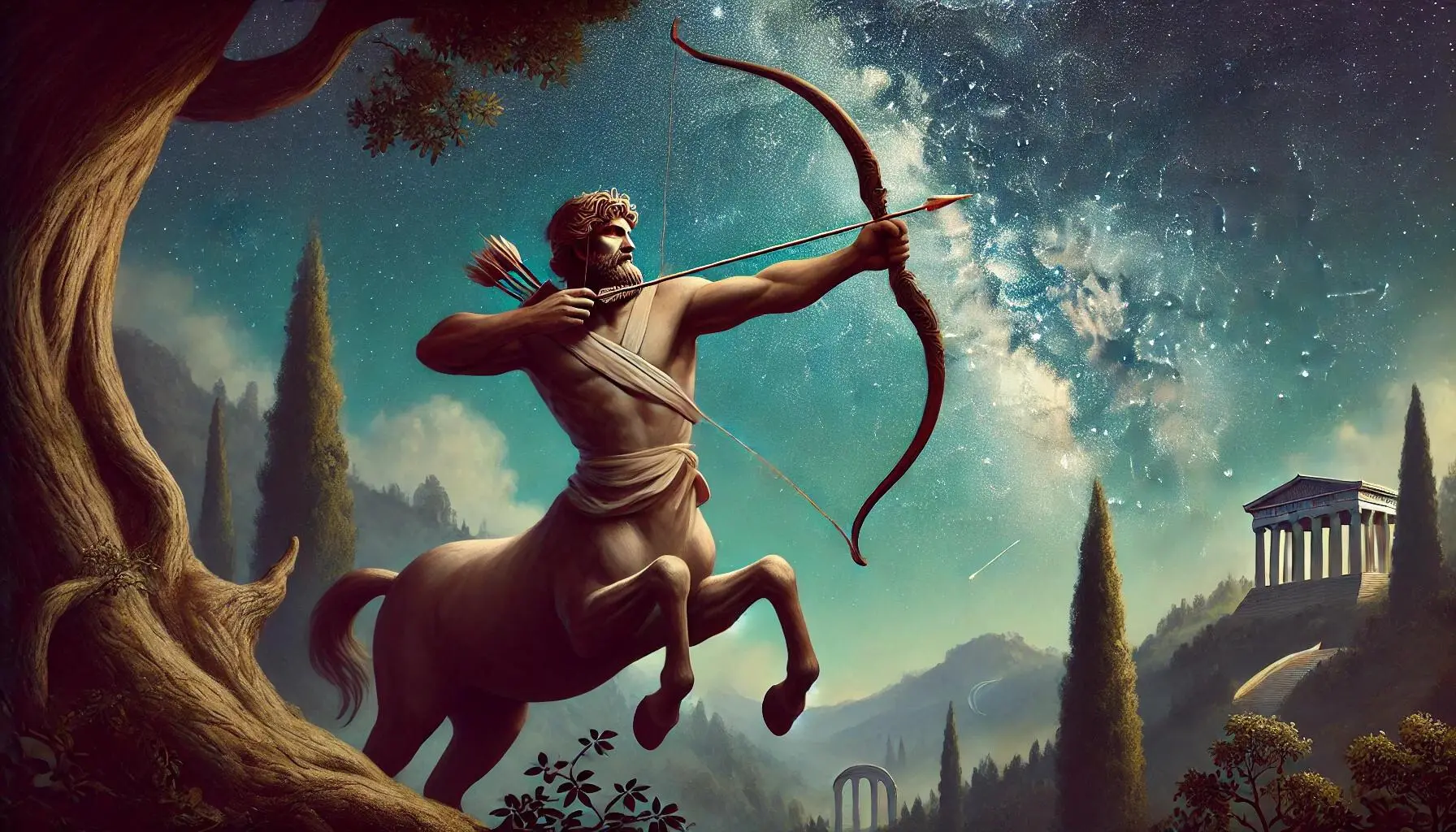
Sagittarius represents the centaur Chiron, known for his wisdom and skill in archery.
In Greek mythology, Chiron is different from other centaurs, who are often wild and unruly. Chiron is kind, wise, and a teacher to many Greek heroes, including Achilles and Hercules.
One day, Chiron is accidentally wounded by a poisoned arrow from Hercules. Since Chiron is immortal, he cannot die but suffers great pain. To end his suffering, Chiron gives up his immortality and trades places with Prometheus, who had been punished by Zeus.
Zeus honours Chiron by placing him in the sky as the constellation Sagittarius, where he draws his bow toward the stars. This story of Chiron shows the themes of wisdom, sacrifice, and the quest for knowledge.
Symbolism
Sagittarius symbolizes wisdom, teaching, and the pursuit of knowledge. The centaur’s aim at the stars represents the desire to reach higher goals and understand deeper truths.
Sagittarius also symbolizes the balance between our wild instincts and our noble aspirations. The constellation reminds us to seek knowledge, aim high, and strive for personal growth.
Viewing the Constellation
Sagittarius is visible in the Southern Hemisphere and lower Northern Hemisphere during summer.
The constellation is best known for its asterism, the Teapot, which looks like a small teapot in the sky. Sagittarius is located near the Milky Way, making it a rich area for stargazing.
- The best time to view Sagittarius: July and August when it is high in the sky
- Sagittarius Sign: Those born between November 22 and December 21
Capricorn: The Sea-Goat
Greek Zodiac Signs & Myths: Capricorn
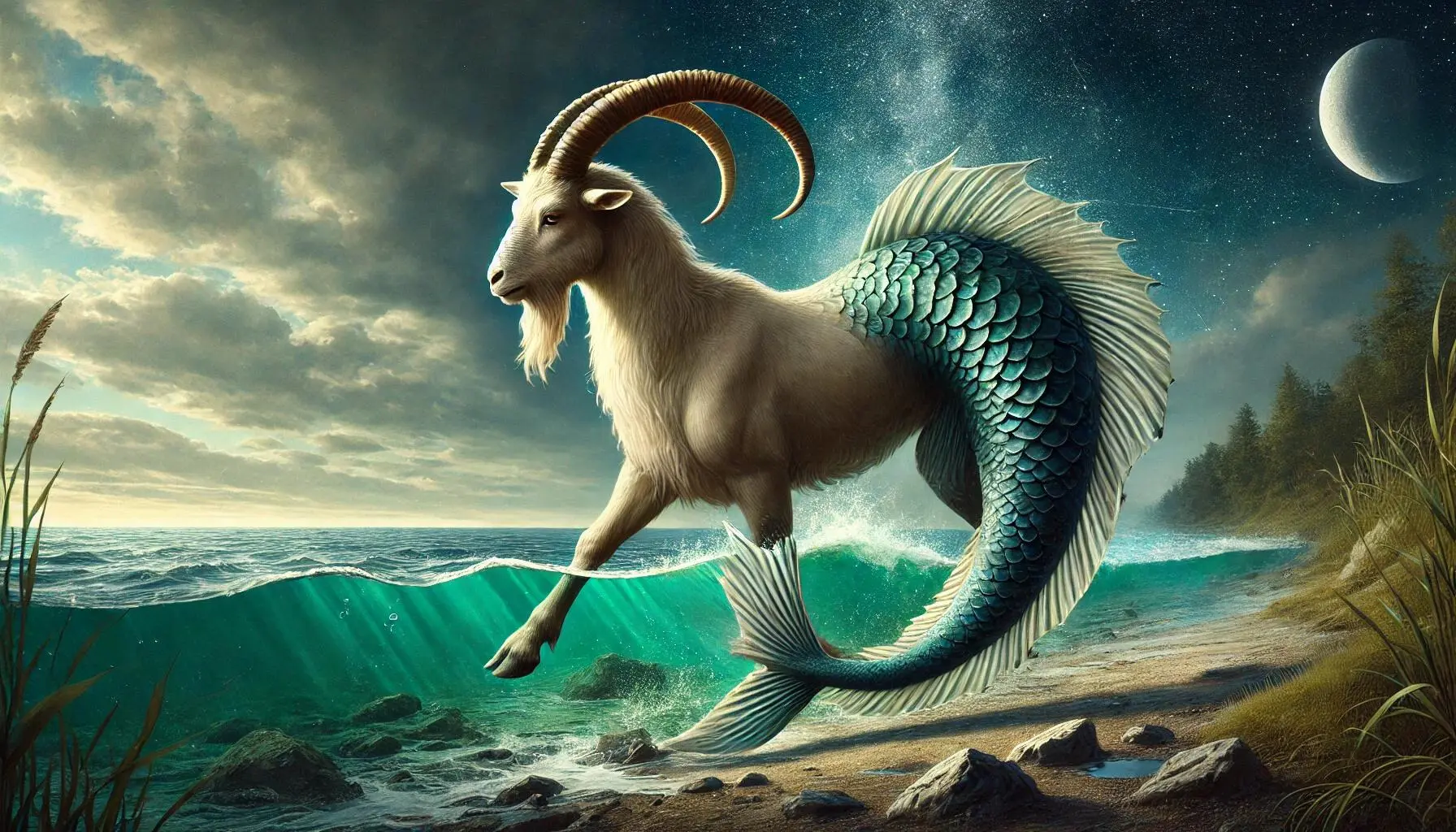
Capricorn represents the sea-goat, a creature with the front half of a goat and the tail of a fish.
In Greek mythology, the sea-goat is often linked to the god Pan, the god of nature and the wild. One day, as Pan lounges by the river, the monstrous Typhon attacks the gods. To escape, Pan dives into the river and transforms into a sea-goat.
However, the transformation is only half successful, leaving him with the body of a goat and the tail of a fish. Pan uses this form to swim away and blow a conch shell, warning the other gods of Typhon’s approach.
Impressed by his quick thinking, Zeus places Pan among the stars as the constellation Capricorn. This myth highlights themes of adaptability, survival, and the blend of different elements.
Symbolism
Capricorn symbolizes adaptability, resilience, and the balance between the physical and spiritual worlds. The sea-goat’s dual nature reflects the need to navigate both the material and emotional aspects of life.
Capricorn also represents determination and the ability to overcome challenges through resourcefulness. The constellation reminds us to adapt to changing situations and find strength in our unique qualities.
Viewing the Constellation
Capricorn is visible in the Southern Hemisphere and lower Northern Hemisphere during late summer and early autumn. The constellation is faint and can be difficult to spot without dark skies.
Capricorn lies near Sagittarius and Aquarius, and its shape resembles a faint triangle or fish’s tail.
- The best time to view Capricorn: September when it is highest in the night sky
- Capricorn Sign: Those born between December 22 and January 19
Aquarius: The Water Bearer
Greek Zodiac Signs & Myths: Aquarius
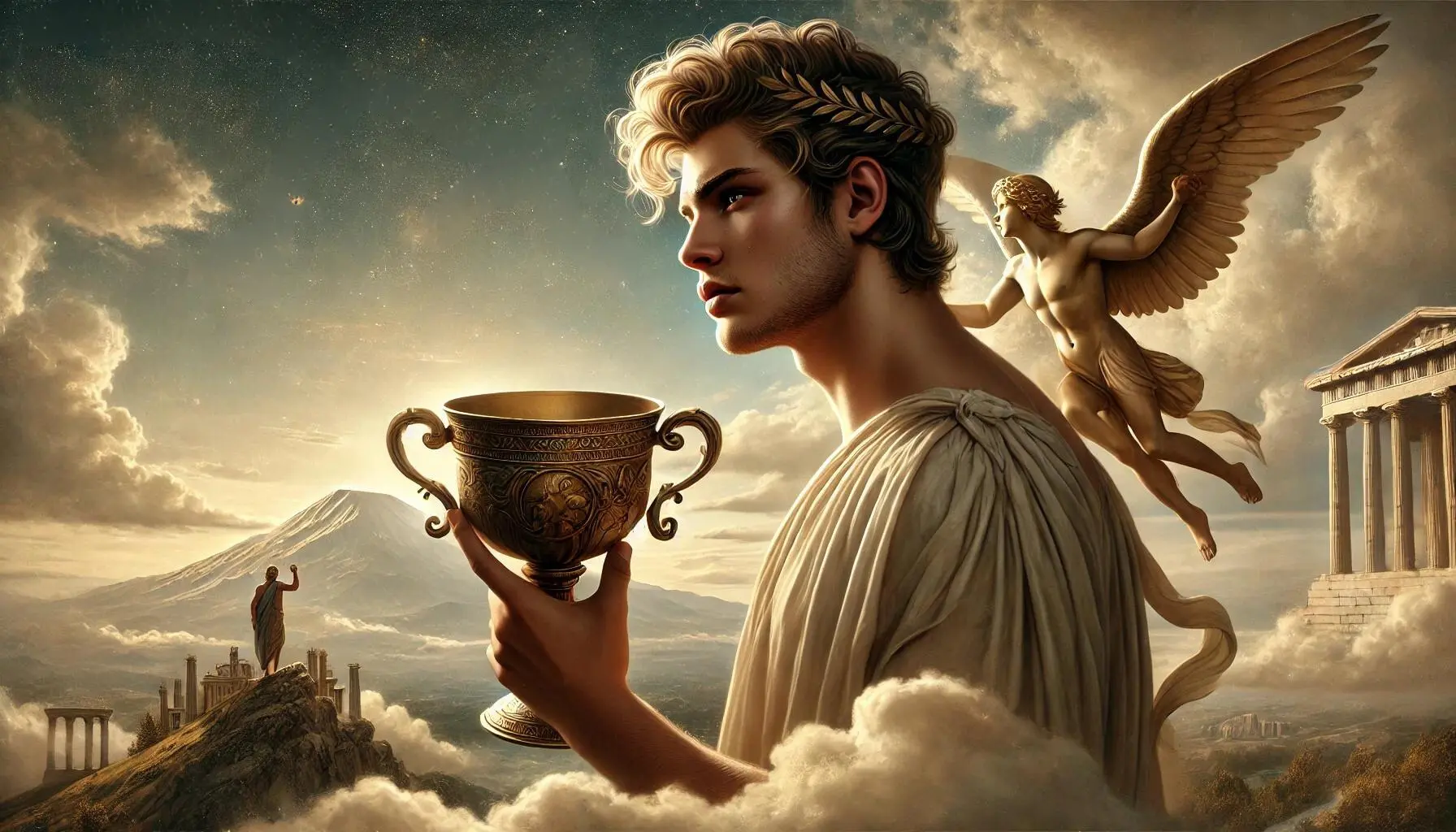
Aquarius represents Ganymede, a beautiful mortal youth who was taken to Mount Olympus to serve as the cupbearer to the gods.
In Greek mythology, Zeus, the king of the gods, becomes enchanted by Ganymede’s beauty and decides to bring him to the heavens. Transforming into an eagle, Zeus swoops down and carries Ganymede away to Mount Olympus. There, Ganymede is given the important role of serving nectar to the gods, replacing Hebe, the previous cupbearer.
In some versions of the myth, Ganymede also pours water for the Earth, causing the rivers and streams to flow. Zeus honours Ganymede by placing him in the sky as the constellation Aquarius, the Water Bearer.
This myth highlights themes of divine favour, beauty, and the connection between the heavens and Earth.
Symbolism
Aquarius symbolizes the flow of life and knowledge, as well as service to others. Ganymede’s role as the Water Bearer represents the nourishing power of water and its importance to life.
The constellation also symbolizes youth, beauty, and the idea of being chosen for a higher purpose.
Viewing the Constellation
Aquarius is visible in the Southern Hemisphere and lower Northern Hemisphere during early autumn.
The constellation is large but faint, requiring dark skies for clear viewing. It lies between Capricorn and Pisces, with its most recognizable feature being the Water Jar, an asterism that forms part of Aquarius.
- The best time to view Aquarius: October when it is high in the sky
- Aquarius Sign: Those born between January 20 and February 18
Pisces: The Fish

Greek Zodiac Signs & Myths: Pisces
Pisces represents the two fish that saved Aphrodite, the goddess of love, and her son Eros from the monstrous Typhon.
In Greek mythology, Typhon, a fearsome giant, attacked the gods, causing them to flee in fear. To escape, Aphrodite and Eros transformed into fish and jumped into the Euphrates River. To ensure they wouldn’t lose each other in the water, the two fish tied themselves together with a rope.
In some versions of the myth, the fish are sent by Poseidon, the god of the sea, to carry Aphrodite and Eros to safety. Grateful for the rescue, the gods placed the two fish in the sky as the constellation Pisces. This myth highlights themes of love, protection, and the instinct to survive in times of danger.
Symbolism
Pisces symbolizes compassion, intuition, and the deep connection between loved ones. The story of the two fish represents the bond between Aphrodite and Eros, showing the power of love and the instinct to protect those we care about.
Pisces also symbolizes adaptability and the ability to navigate through life’s challenges with grace.
Viewing the Constellation
Pisces is visible in the Northern Hemisphere during autumn and early winter. The constellation is large but faint, requiring a clear, dark sky for the best viewing.
Pisces lies between Aquarius and Aries, with its most recognizable feature being the Circlet, a small ring of stars that forms the head of one of the fish.
- The best time to view Pisces: November when it is high in the night sky
- Pisces Sign: Those born between February 19 and March 20
Conclusion: The Timeless Connection
Greek mythology and the zodiac signs are deeply intertwined, offering us a glimpse into the ancient world’s understanding of the cosmos.
These myths are more than just stories; they reflect the values, fears, and hopes of a civilization that looked to the stars for guidance.
By exploring the myths behind each zodiac sign, we gain a deeper appreciation for the symbols that continue to shape our lives today.
The stars have guided humanity for millennia, and these myths remind us of our enduring connection to the universe and the stories that bind us across time.