Beautiful Goddess Saraswati: Hindu Deity of Knowledge & Arts
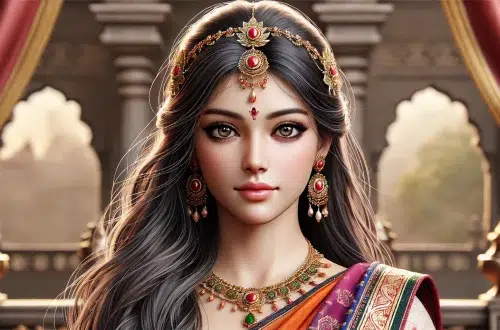
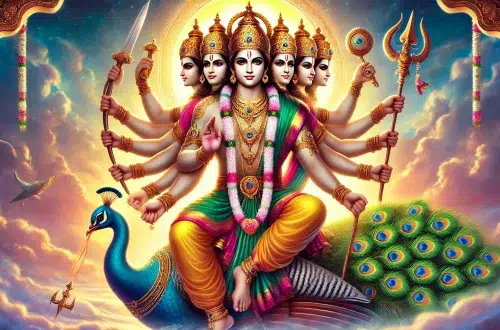
Beautiful Goddess Saraswati is seen as the goddess of wisdom and the arts in Hinduism. She is a key figure in Hindu beliefs, representing pure speech, intellect, and enlightenment. Saraswati is the goddess of learning, often shown with four arms. Each arm symbolizes the mind, intellect, alertness, and ego.
She sits on a white lotus, symbolizing the endless search for knowledge and spiritual growth. A swan or peacock by her side adds to her beauty and grace. Saraswati is Brahma’s wife, the creator god, making her crucial in the universe’s creation and order.
Her role in the universe’s creation links her to the trinity of gods that sustain and evolve the world. Saraswati inspires artists, musicians, and scholars, making her a powerful figure in art and creativity.
Introduction to Goddess Saraswati
Goddess Saraswati is a key figure in Hinduism, known for her roles in knowledge, wisdom, music, and arts. She is deeply important in Hinduism, representing both learning and creativity. Often shown sitting on a white lotus, she looks peaceful and calm. She holds sacred texts and musical tools, showing her many talents.
Saraswati’s story begins in ancient Vedic texts as a river goddess. Over time, she became a powerful being known for her wisdom and art. This change shows her growth from a river goddess to a major Hindu deity. She is often seen with a veena, symbolizing music, and a book, standing for knowledge.
Saraswati’s role in Hinduism goes beyond just being a symbol. Her influence touches many parts of life, from learning to making art. Her calm image shows the balance between knowledge and creativity. This balance inspires many followers. Saraswati’s story and growth show her special place and lasting importance in Hinduism.
Mythological Origins and Legends
Goddess Saraswati is a key figure in Hindu stories, known for her deep link to knowledge and arts. Her story comes from the ancient Vedic texts, where she’s seen as a powerful goddess. Saraswati is called a divine river goddess, symbolizing purity, wisdom, and eloquence.
Legends say Saraswati is the partner of Lord Brahma, the creator in Hindu belief. As Brahma’s partner, Saraswati was crucial in creating the universe. She stood for intelligence and creativity.
Stories from the Puranas show Saraswati giving wisdom and artistic skills to other gods. These stories highlight her key role in the universe and in human knowledge and art.
Saraswati is often shown with a Veena, books, and prayer beads, showing her rule over arts, learning, and spiritual growth. These stories tell of her beauty and her big impact on Hindu wisdom traditions.
These tales make Saraswati more than just a god. She’s seen as a guardian of knowledge, loved by those who seek wisdom and creativity. Her story in Hindu myths still inspires devotion and art today.
Symbolism of Goddess Saraswati
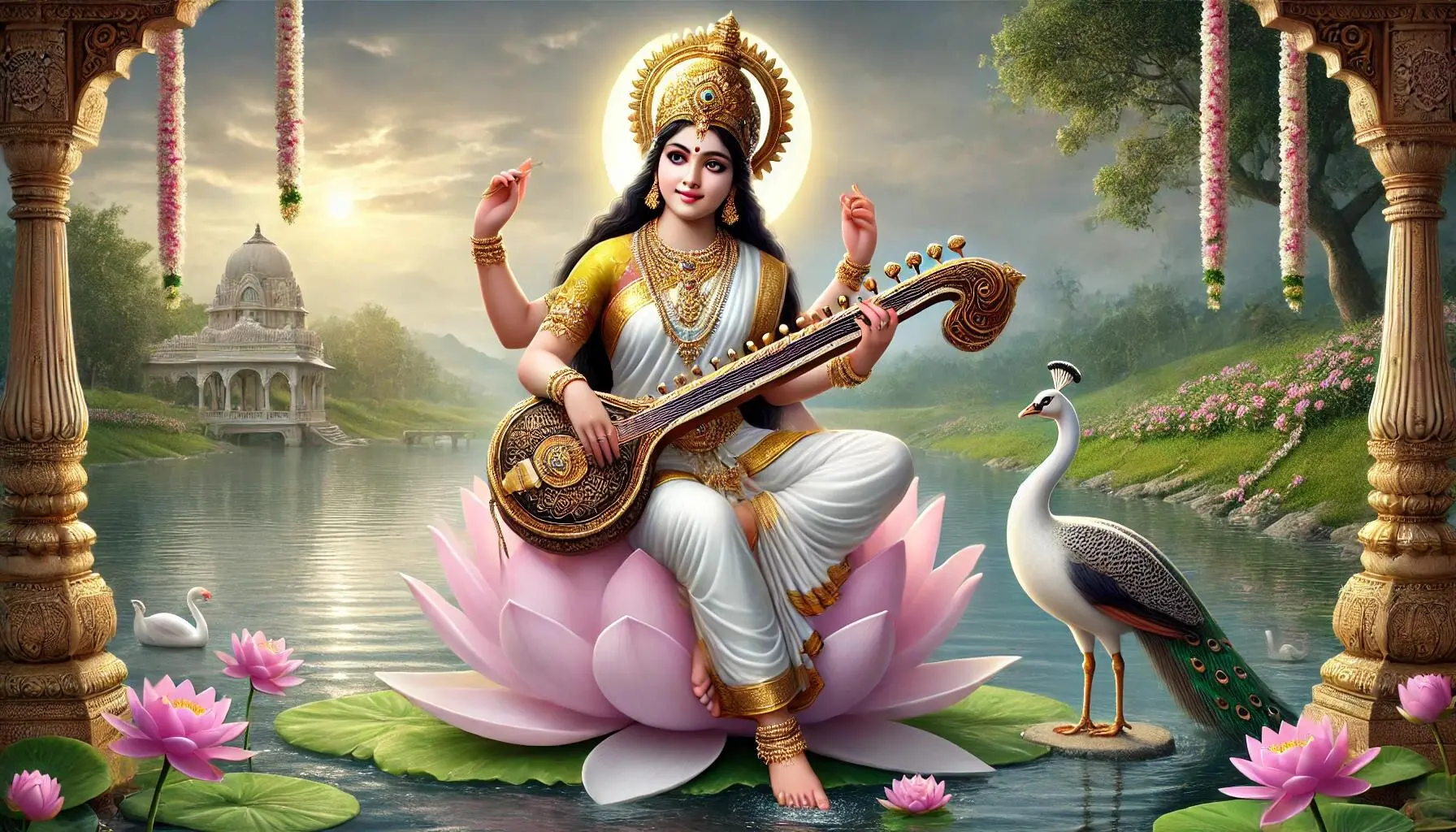
Goddess Saraswati is the goddess of knowledge and arts. She is shown with symbols that share deep spiritual and philosophical messages. Each symbol in her depiction highlights wisdom and creativity.
One key symbol is the white lotus she sits on. It stands for purity and seeking knowledge without worldly ties. The white lotus also means spiritual awakening, urging followers to look beyond the everyday.
She holds the veena, a musical instrument, in her hands. The veena stands for the arts and knowledge. It shows how Saraswati brings harmony through music and learning, showing the role of art in personal growth.
The swan at her feet symbolizes discernment. In Hindu stories, the swan can tell milk from water, showing the ability to know good from bad. This teaches followers to seek true wisdom.
A peacock is often seen with Saraswati, standing for beauty and aesthetics. The peacock shows the beauty in art and nature, reminding followers of the beauty in creation.
These symbols—white lotus, veena, swan, and peacock—teach us about the link between knowledge, art, beauty, and spiritual insight. They show how these elements work together.
Goddess Saraswati: Wisdom and Knowledge
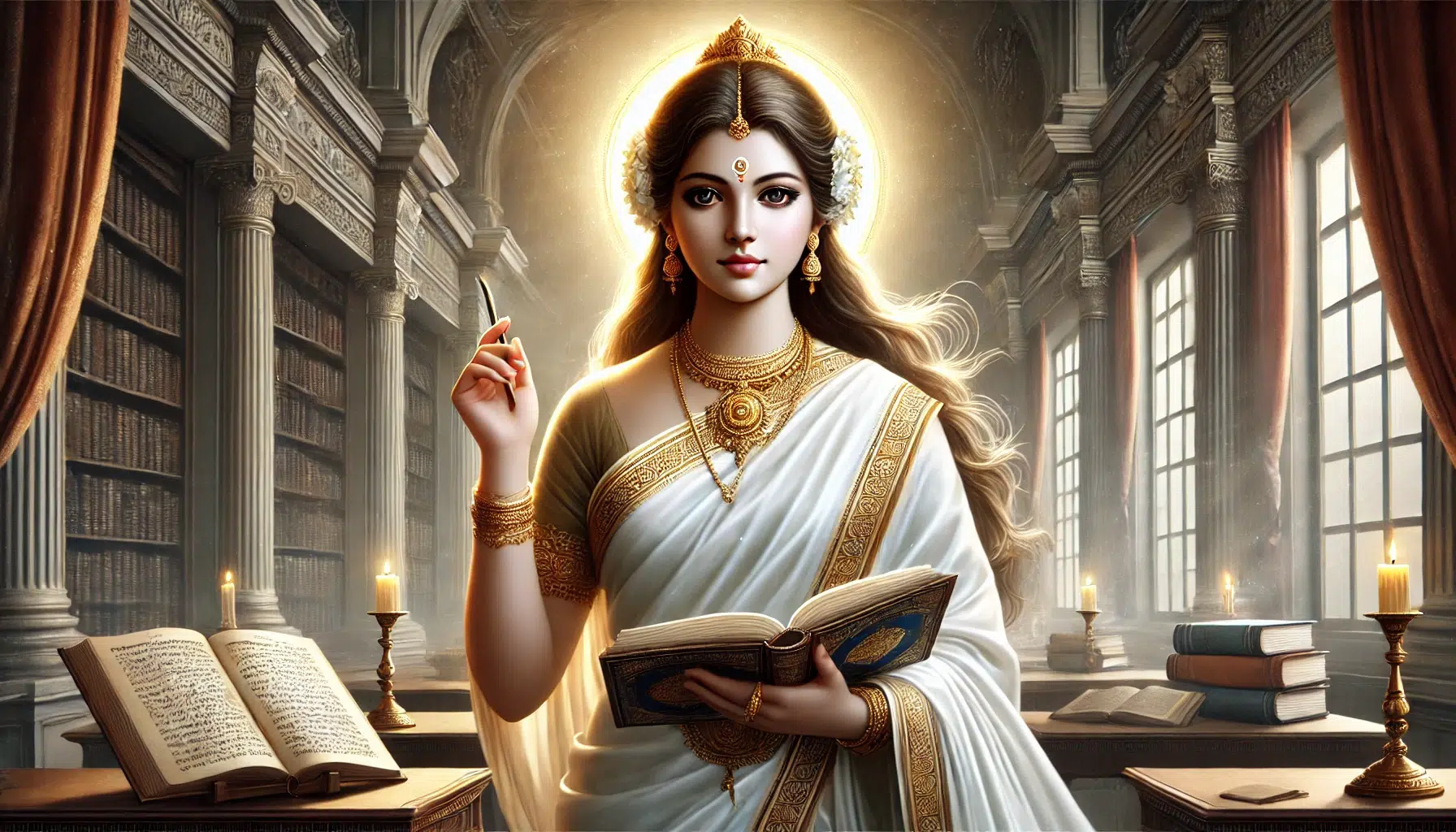
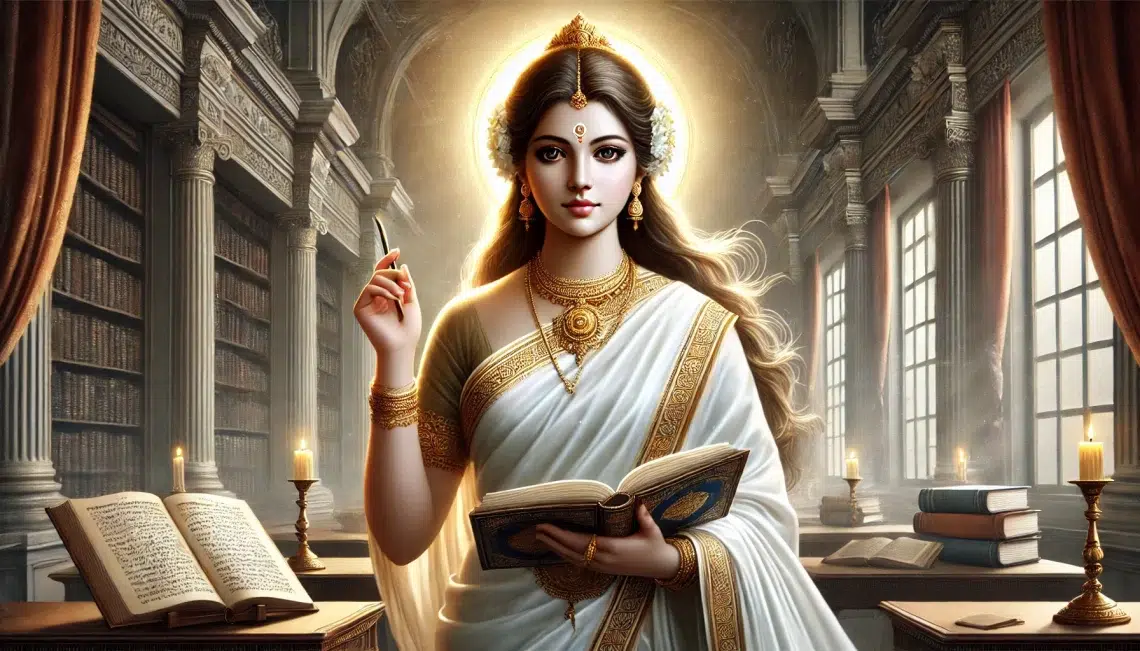
Goddess Saraswati is seen as the goddess of wisdom, knowledge, and learning. She gives scholars and artists the power to do great things in their fields. Saraswati holds sacred scriptures, showing her love for learning and seeking knowledge.
She is all about seeking knowledge and understanding. Her presence shows a strong commitment to learning and exploring the world.
In education, Saraswati is very important. Scholars ask for her help to become wise and do well in their studies. Artists also look to her for inspiration to be creative and make art.
But Saraswati is more than just about school or art. She is also the goddess of speech and being able to speak well. Goddess helps people communicate clearly and share their ideas well.
She also inspires musicians, dancers, and poets to create amazing works of art. Saraswati’s influence goes beyond just words and art. She helps people find a balance between the physical and spiritual worlds.
Through Saraswati, we learn to value both facts and spiritual insight. She teaches us to see the world in a complete way, combining our minds and spirits.
Myths and Stories Involving Goddess Saraswati
Goddess Saraswati is a significant deity in Hindu mythology, associated with knowledge, music, arts, and wisdom.
Creation of the Universe
In some myths, Saraswati helps create the universe with the god Brahma. She brings order out of chaos using her wisdom and knowledge. Saraswati is seen as the goddess of knowledge, music, and the arts. Her wisdom guides the creation of the world, making everything balanced and beautiful.
Brahma and Saraswati work together in this creation. Brahma is the creator, while Saraswati provides the intelligence and creativity needed for the task. Their partnership symbolizes the importance of wisdom in all creation.
Saraswati’s role in the creation myth shows her as a powerful and important deity. She represents the idea that knowledge and wisdom are essential for creating and maintaining order in the universe. This story also highlights the value of learning and the arts in our lives.
Saraswati and the River

In the myth of Saraswati and the River, the goddess Saraswati transforms into a river. She does this to escape a demon who chases her. By becoming a river, Saraswati not only saves herself but also brings life and fertility to the land.
The Saraswati River is considered sacred in Hinduism. Many people believe that its waters have purifying powers. Devotees often pray and bathe in the river to cleanse themselves of sins. They honour Saraswati as both a goddess of wisdom and as a life-giving river.
Saraswati’s transformation into a river symbolizes the flow of knowledge and the importance of purity. Her story teaches that wisdom can take many forms and that it nourishes life, just like water does. This myth also shows how Saraswati’s presence enriches the earth and supports the well-being of all living things.
Saraswati and the Vedas
In Hindu mythology, Saraswati is known as the goddess of wisdom and knowledge. She is closely linked to the Vedas, which are ancient sacred texts. People believe that Saraswati created the Vedas, giving humanity the gift of knowledge. She embodies the wisdom found in these scriptures and helps people understand their teachings.
Saraswati is often shown holding a book, symbolizing the Vedas. This shows her deep connection to learning and education. The Vedas cover a wide range of subjects, including philosophy, rituals, and science. Saraswati’s association with these texts highlights her role as a guide in these areas.
People who study the Vedas often pray to Saraswati for clarity and understanding. They see her as a source of inspiration and enlightenment. By honouring Saraswati, they hope to gain the wisdom needed to interpret the sacred texts. This relationship between Saraswati and the Vedas underlines the importance of knowledge in Hindu culture.
The Curse of Saraswati
In the myth of The Curse of Saraswati, the goddess Saraswati becomes angry with the god Brahma. Brahma acts inappropriately, and Saraswati reacts by cursing him. Due to her curse, Brahma loses the honour of being widely worshipped in temples. Unlike other major gods in Hinduism, Brahma has very few temples dedicated to him.
Saraswati’s curse shows her strong sense of justice and her powerful influence. It also highlights the idea that even gods must follow proper behaviour. Saraswati, as a goddess of wisdom, expects high standards and respect from everyone, including other gods.
This story teaches an important lesson about the consequences of one’s actions. It also reminds people that respect and proper conduct are essential, even in divine realms. The curse of Saraswati underscores the importance of honour and respect in relationships, whether among gods or humans.
Saraswati and the Musician
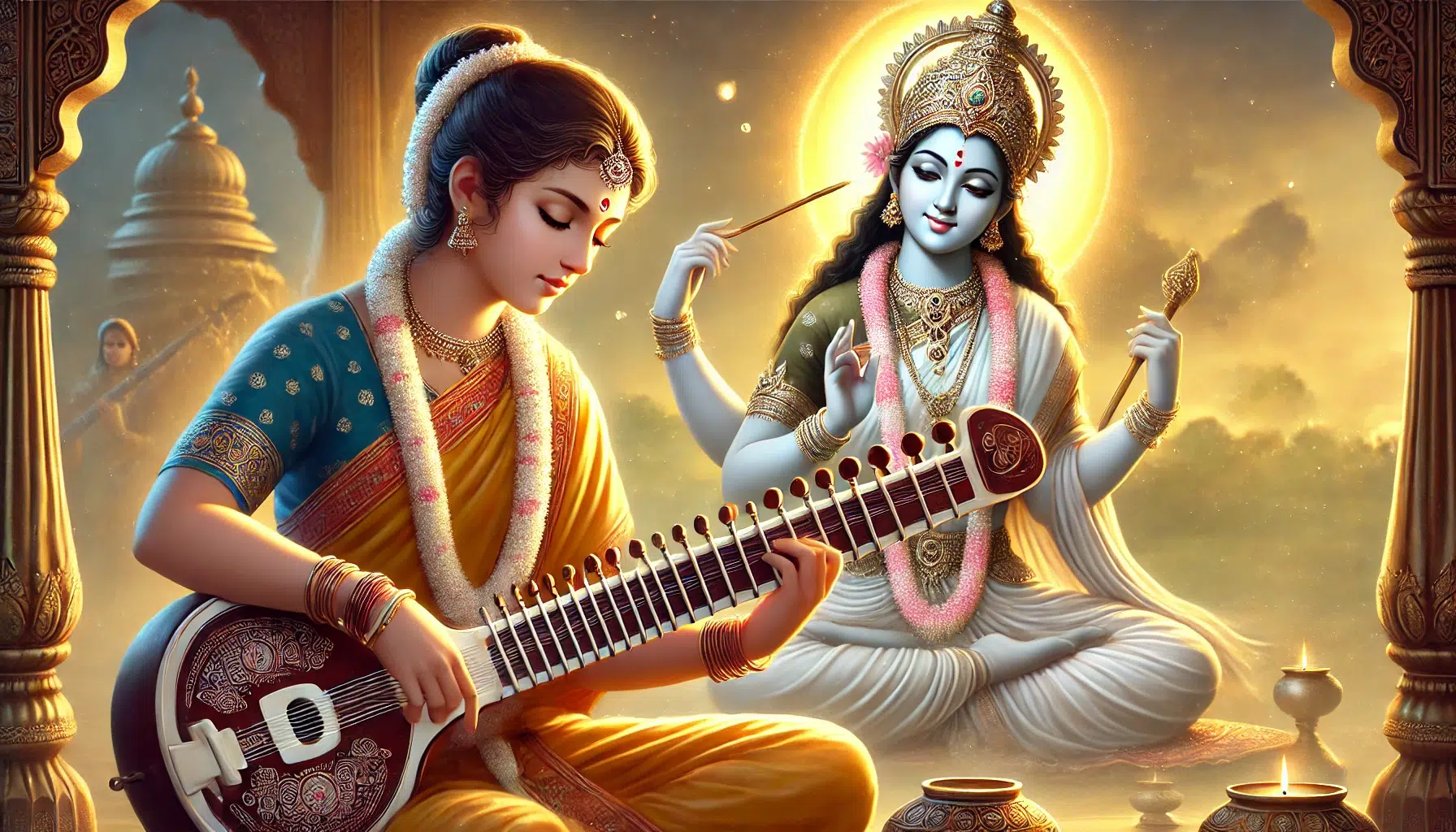
In the story of Saraswati and the Musician, a talented musician worships Saraswati, the goddess of music and wisdom. He dedicates his performances to her, hoping to earn her blessings. Saraswati, pleased with his devotion, grants him incredible musical skills.
With her blessings, the musician plays beautiful music that touches people’s hearts. He becomes famous and admired for his talent. Saraswati’s favour shows that dedication and respect for the arts can lead to great success.
The musician honours Saraswati by always remembering her role in his achievements. He understands that his talent is a gift from the goddess. This story highlights the importance of humility and gratitude. It also shows how Saraswati, as a goddess of the arts, inspires creativity and excellence. Her blessing to the musician reminds us that true talent often comes with a deep respect for the source of inspiration.
Saraswati Puja
In the myth related to Saraswati Puja, students and artists worship her for success in their educational and creative pursuits.
Saraswati Puja is a Hindu festival that honours the goddess Saraswati. It celebrates knowledge, music, and the arts. People worship Saraswati for wisdom and success in education and creativity.
During the festival, people place books, musical instruments, and art supplies near her idol. They pray for blessings and the ability to learn and create. Schools and homes decorate their spaces with flowers and colourful decorations.
Students and artists especially look forward to Saraswati Puja. They believe that worshipping her will help them in their studies and artistic endeavours. The festival often includes singing, dancing, and other cultural performances.
Saraswati Puja is a time for showing respect to teachers and scholars. It reminds everyone of the value of learning and the arts. The festival highlights the importance of knowledge and creativity in our lives. Celebrating Saraswati Puja helps people appreciate the power of education and the joy of artistic expression.
Saraswati and the Curses
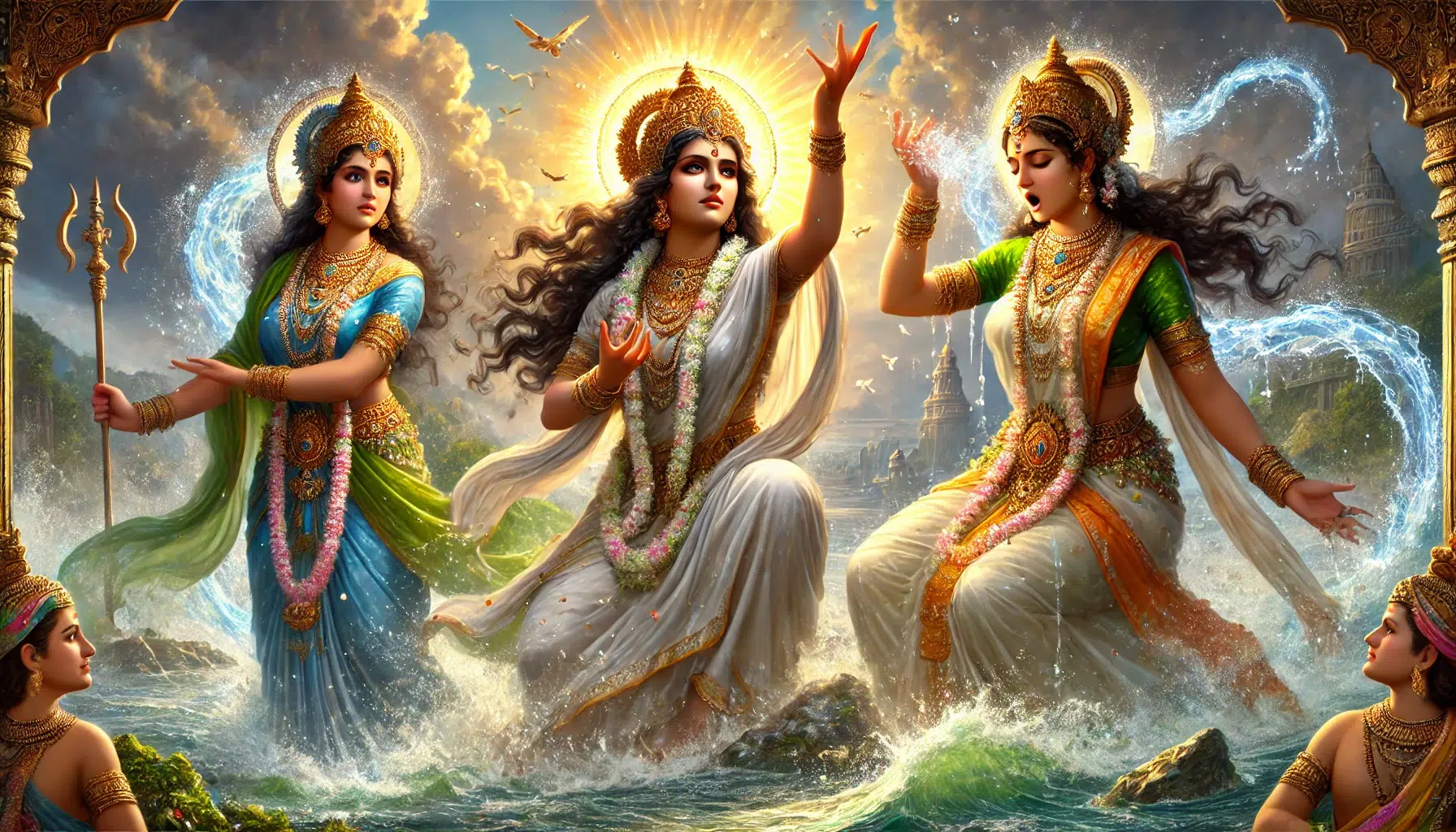
In the myth of Saraswati and the Curses, Saraswati curses Lakshmi and Ganga during a dispute. The argument starts over Vishnu’s attention, with each goddess wanting his favour. Saraswati becomes angry and curses Lakshmi and Ganga, turning them into rivers.
Lakshmi becomes the river Ganges, and Ganga becomes the river Yamuna. These rivers are sacred in Hinduism and play important roles in rituals. Despite the curse, the rivers are seen as blessings to the land, bringing life and fertility.
Saraswati’s actions show her powerful nature and her strong feelings. The story reminds us that even goddesses can have conflicts. It also shows how curses in mythology can have both negative and positive effects. While the curses turned the goddesses into rivers, they also brought important resources to the people. This myth highlights the complex relationships among the deities and the impact of their actions on the world.
The Arts and Creativity in Goddess Saraswati’s Domain
Goddess Saraswati plays a key role in the arts and creativity. She sparks imagination and innovation, serving as the divine muse for artists, musicians, poets, and performers. They seek her inspiration for their work.
As the patroness of the arts, Saraswati nurtures the soul and spirit of creative people. Her influence extends to music, poetry, drama, and fine arts. She guides creators with her divine presence.
The veena, a stringed instrument, symbolizes her connection to music and represents harmony and rhythm. Creating and performing music are divine expressions blessed by Saraswati.
In poetry, Saraswati’s impact is significant. She grants writers and poets eloquence and insight, helping them express deep thoughts and feelings. Each poem honours her gift of language.
Visual artists and painters draw inspiration from Saraswati to bring their visions to life. Her connection to fine arts highlights the beauty and creativity of the human spirit. She encourages artists to explore new forms and techniques.
Saraswati is the ultimate divine muse, inspiring and guiding people to reach their creative potential. Her presence motivates and innovates, making her a timeless figure of artistic reverence.
Rituals and Festivals Celebrating Goddess Saraswati
Goddess Saraswati is honoured across the Hindu world with many festivals and rituals. These events highlight her role as the goddess of knowledge, arts, and music. The main festivals are Saraswati Puja, Basant Panchami, and Vasant Panchami. Each has its own special rituals and cultural activities.
During Saraswati Puja, devotees perform rituals to honour her. These include chanting hymns, offering flowers, and reciting Saraswati Vandana, a devotional hymn. Homes and schools decorate with yellow flowers, symbolizing wisdom and knowledge.
Basant Panchami and Vasant Panchami, mainly celebrated in North India, welcome spring and honour Saraswati. On these days, children start their learning journey with Vidyarambham or Akshara Abhyasam. This ritual marks a lucky start and is a big part of the festival.
There are regional differences in how Saraswati Puja is celebrated. In West Bengal, it is a big event in schools and colleges. Students perform cultural programs, music, and dance to honour the goddess. In South India, Saraswati Puja is a key part of the Navaratri festival. It ends on the ninth day with Ayudha Puja, where people worship tools and instruments.
These festivals celebrating Goddess Saraswati highlight her as the bringer of wisdom and knowledge. They also bring communities together through cultural practices and educational activities. These celebrations let people of all ages take part in traditional practices, ensuring respect for Saraswati continues through the generations.
Comparisons with Other Deities of Knowledge

In many cultures, a god or goddess of wisdom and knowledge appears as a common figure. In Greek mythology, Athena symbolizes wisdom, courage, and skill in war. She often appears with an owl, representing deep insight and knowledge.
In Roman tradition, Minerva serves as a goddess of wisdom and judgment. Like Athena, she connects with arts, crafts, and war strategy. Both goddesses play important roles in their mythologies, highlighting the value of knowledge.
Thoth, an Egyptian god, represents knowledge, writing, and the moon. He is often depicted with the head of an ibis or a baboon, animals associated with wisdom.
His role in keeping the universe balanced and his gift of writing to humans shows his importance in Egyptian culture.
Comparing these wisdom deities shows they share many traits but also have unique ones. Saraswati, the Hindu goddess of knowledge, fits right in with these figures. She adds to the global story of divine wisdom across different cultures.
Conclusion
The beautiful Goddess Saraswati represents the goddess of learning. She symbolizes knowledge, arts, and wisdom. In Hindu traditions, she plays a big role in education and creativity.
Her festivals and rituals demonstrate her influence from ancient times to the present. Saraswati inspires many people, artists, and scholars, highlighting her lasting spiritual impact.
In today’s world, Saraswati appears in schools and art everywhere. By honouring her, people acknowledge her important role in spreading knowledge and art. Saraswati’s spirit serves as a guide for those seeking knowledge and creativity.