
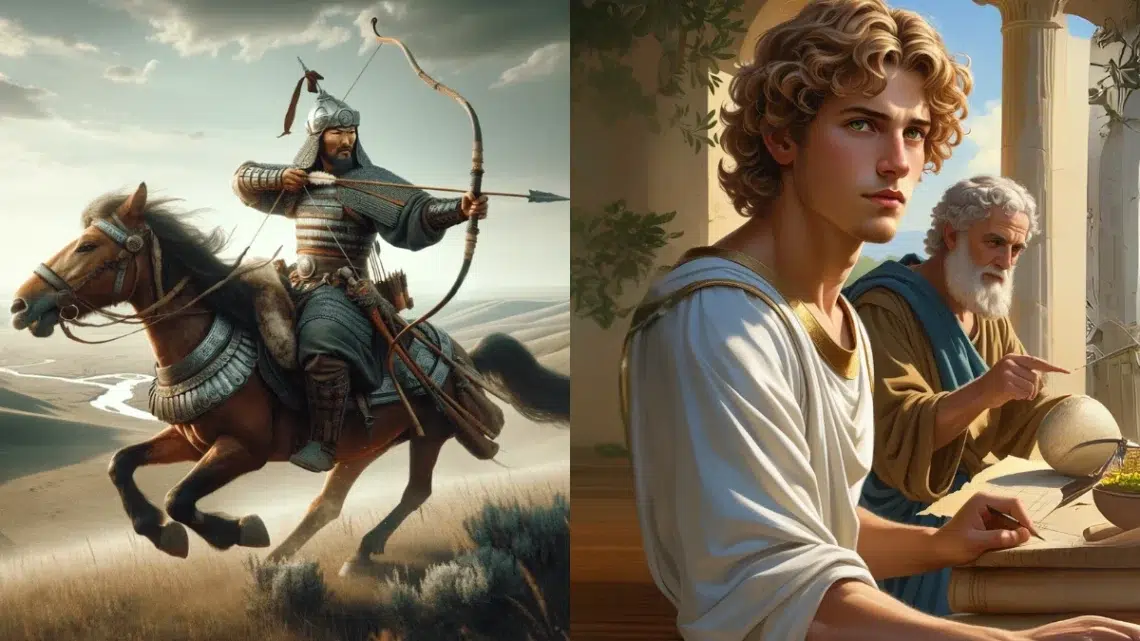
Genghis Khan vs. Alexander the Great: Battle of Empires
Genghis Khan and Alexander the Great both led huge armies. They each built powerful empires that changed the world. People still study their battles and strategies today.
Alexander came from Macedonia, near Greece. He became king as a teenager and started conquering lands right away. Genghis Khan grew up in Mongolia. He worked hard to unite tribes before leading attacks across Asia and Europe.
Both men ruled very different places, in very different times. But their stories have a lot in common. They faced big challenges and made bold choices. They each wanted to control the world around them.
Origins and Background
Alexander the Great was born in 356 BCE in a place called Macedonia. His father was a king, and his teacher was the famous thinker Aristotle. From a young age, Alexander trained for battle and learned about leadership.
Genghis Khan was born around 1162 in Mongolia. His real name was Temujin. Life on the steppe was hard. He hunted for food and protected his family. His father died early, so he had to survive on his own.
Alexander grew up in a palace. Genghis Khan grew up in the wild. One trained with books and soldiers. The other learned through struggle and war.
Even though their worlds looked different, both leaders became strong early. They each earned the trust of their people and used their power to take over new lands.
Alexander the Great and Genghis Khan’s Empire and Geography
Alexander the Great built an empire that stretched from Greece to India. He took over Egypt and large parts of Persia. His soldiers marched thousands of kilometres across mountains and deserts.
Genghis Khan’s empire became even bigger. It covered parts of China, Central Asia, the Middle East, and Eastern Europe. It became the largest land empire in history.
Alexander ruled warmer, southern lands with large cities. Genghis ruled colder, wide-open spaces with fast-moving warriors.
Alexander’s empire lasted only a short time after he died. Genghis Khan’s empire kept growing through his children and grandchildren.
When you compare Genghis Khan vs. Alexander the Great, their empires both changed the world. But one lasted longer and spread farther.
Alexander the Great and Genghis Khan Army Size and Strategy
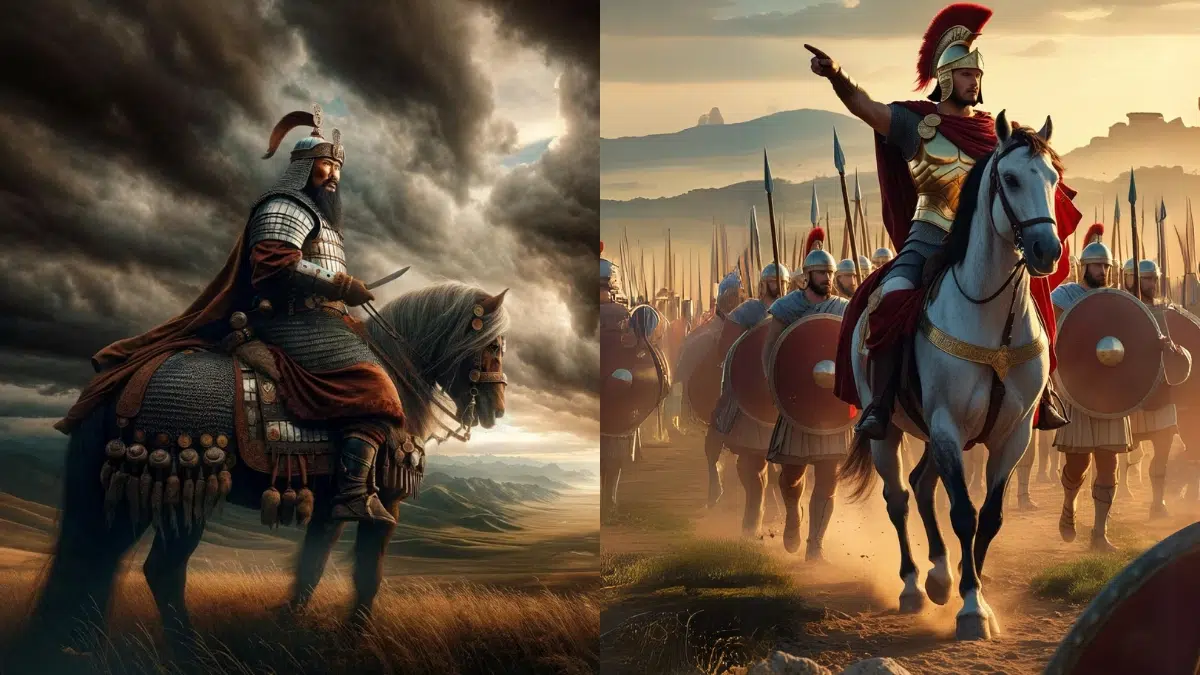
Alexander the Great led about 40,000 soldiers. They trained in tight groups called phalanxes. These soldiers held long spears and moved like one strong unit. Alexander also used fast horses and clever battle plans.
Genghis Khan led over 100,000 warriors. Most rode horses and used bows. They moved quickly and struck by surprise. His army used fake retreats to trick enemies.
Alexander’s army fought face to face in big battles. Genghis Khan’s army attacked fast and from far away.
Both leaders picked skilled fighters and trusted their top commanders. They also kept strict rules and clear plans.
When comparing Genghis Khan vs. Alexander the Great, both used smart strategies. But Genghis often won by using speed, surprise, and fear.
Military Campaigns and Successes of Alexander the Great and Genghis Khan
Alexander the Great never lost a battle. He won key fights at Granicus, Issus, and Gaugamela. These victories helped him defeat the Persian Empire. His soldiers marched more than 30,000 kilometres in under ten years.
Genghis Khan crushed his enemies across Asia. He defeated powerful kingdoms like the Jin, the Khwarezm Empire, and the Western Xia. He adapted to every type of enemy and used their ideas to make his army stronger.
Alexander built cities and spread Greek culture as he moved. Genghis focused on control, trade, and making people fear his name.
Both leaders changed the world with their conquests. But Genghis Khan’s campaigns covered more land and lasted longer through his children.
In the battle of Genghis Khan vs. Alexander the Great, both proved brilliant. One built fast, the other built wide.
Leadership and Legacy
Alexander the Great ruled with confidence and charm. He inspired loyalty in his men and led from the front. He believed in mixing cultures and wanted people from different lands to live together.
Genghis Khan ruled with clear laws and strict order. He listened to advice and promoted people based on skill—not family. He set up trade routes and a postal system across Asia.
Alexander died at age 32. His empire broke into pieces, and his generals fought for power. Genghis Khan lived longer and chose leaders from his own family. His sons and grandsons kept expanding the empire.
When you compare Genghis Khan vs. Alexander the Great, both were bold leaders. But Genghis left behind a stronger system that shaped the world for years.
Descendants and Lineage: Alexander the Great and Genghis Khan

Alexander the Great had one son, but the boy never ruled.
Alexander the Great died at age 32 in 323 BCE. His son, Alexander IV, was born after his death. He never got to know his father.
After Alexander died, his generals took over different parts of the empire. They split the land and fought each other. His son was later killed around age 13 or 14 during the wars between Alexander’s former generals. His family line ended quickly.
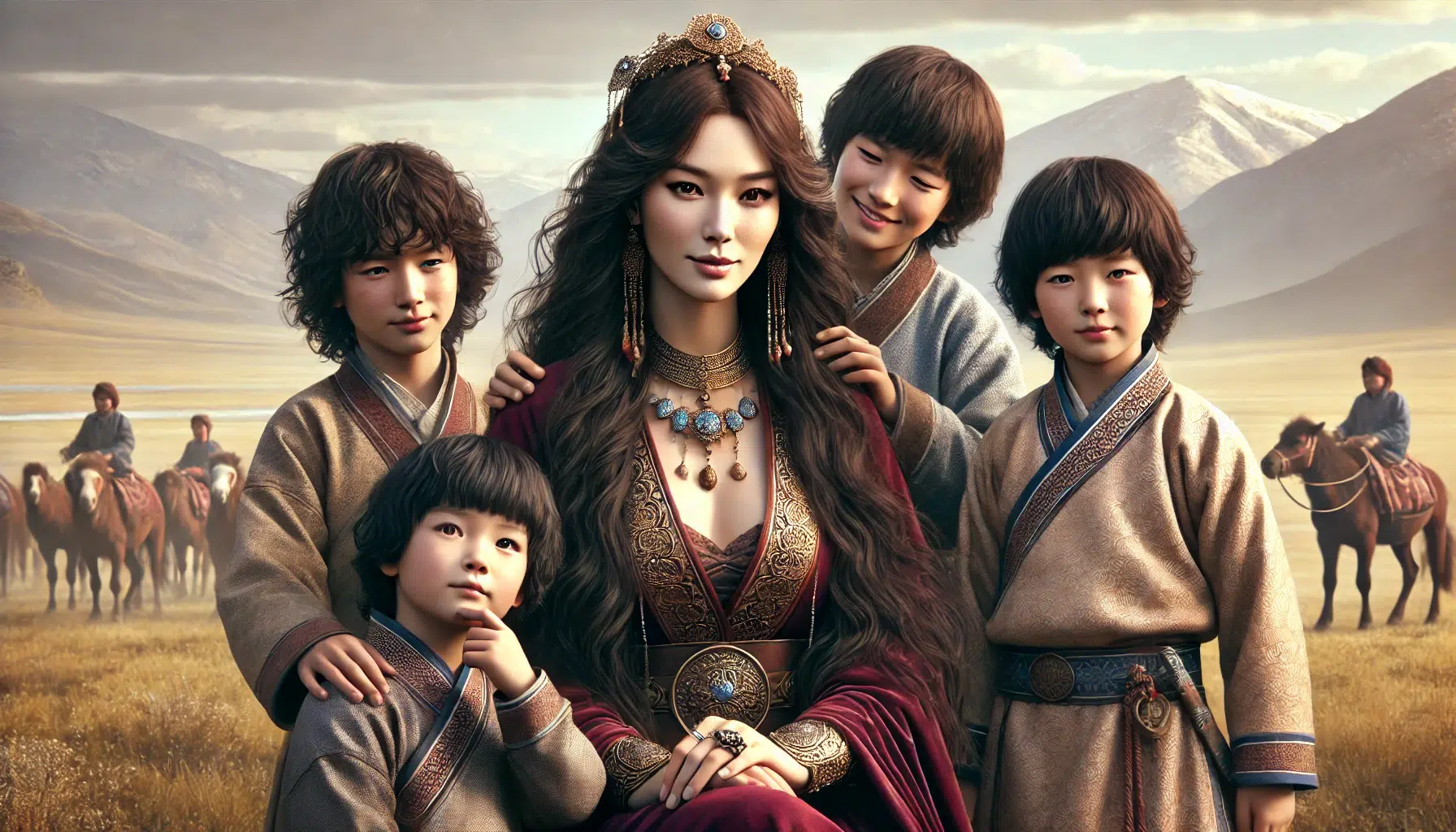
Genghis Khan had many children, especially with his first wife, Börte. He chose her sons to lead after him. His descendants ruled huge parts of Asia, the Middle East, and Eastern Europe for over a century.
Genghis Khan died in 1227 CE, and historians believe he was around 65 years old at the time.
Today, scientists believe over 16 million men carry Genghis Khan’s DNA. That makes him one of the most successful ancestors in history.
In the story of Genghis Khan vs. Alexander the Great, only one left a living legacy through family and bloodline. Genghis Khan passed on both power and his name.
Learn more about Genghis Khan’s descendants and army:
- Kublai Khan: Emperor & Grandson of Genghis
- Subutai: Mongol General for Genghis Khan
- Conqueror Bloodline: Genghis Khan’s Children
- Khutulun: Mongolian Warrior Princess Legend
Conclusion and Legacy
Genghis Khan and Alexander the Great both changed history. They built huge empires and led with skill and strength.
Alexander spread Greek culture, language, and ideas across three continents. He became a legend for his courage and vision. But his empire fell apart quickly after he died.
Genghis Khan created a system that lasted. His empire grew even more under his children and grandchildren. He connected East and West through trade, law, and order.
Both leaders left deep marks on the world. But when comparing Genghis Khan vs. Alexander the Great, one led longer, ruled wider, and left behind a family that shaped the world for generations.
Their stories continue to teach us about power, leadership, and what it takes to build—and keep—an empire.


