Famous Arrows from Mythology, History, Fiction and Gaming
Famous arrows appear in many stories from mythology, fiction, and gaming. These arrows often hold special powers or deep meaning. Some arrows symbolize bravery, while others bring destruction or love.
Legendary figures like Apollo, Cupid, and modern heroes like Lara Croft and Venti use famous arrows in their adventures. These arrows inspire us with their magic, skill, and connection to important moments.
Each arrow tells a unique story about strength, justice, or mystery. Whether in ancient myths or exciting games, these arrows show how small actions can make a big difference. Explore the most famous arrows and their unforgettable stories.
Famous Arrows from Greek Mythology
1. Hydra-Poisoned Arrows
- Figure: Heracles (Greek Mythology)
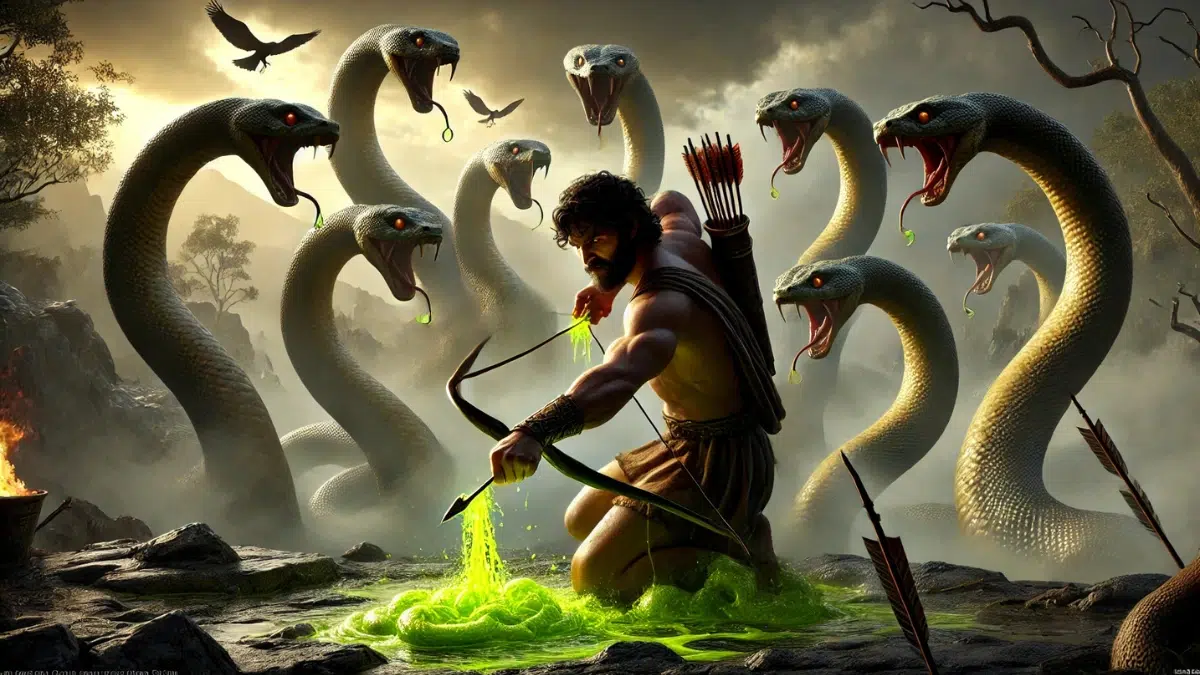
Heracles dipped his arrows in the venom of the Lernaean Hydra, making them lethal. These arrows were used in many of his labours, including slaying the Stymphalian birds.
The Hydra-poisoned arrows come from Greek mythology.
Heracles dips his arrows in the Hydra’s venom after defeating the monster. These arrows become incredibly dangerous because the poison kills anything it touches.
Heracles uses these arrows in many tasks, including defeating the Stymphalian birds and other fierce creatures. The poison makes the arrows unstoppable, showing Heracles’ cleverness and strength.
However, the arrows also cause great harm, even to Heracles himself. The poison spreads when his wife, Deianira, unknowingly uses it on a cloak. The Hydra-poisoned arrows remind us that even powerful tools can have dangerous consequences.
2. Cupid’s Arrows

- Figure: Cupid/Eros (Roman/Greek Mythology)
Cupid’s gold-tipped arrows ignite love, while his lead-tipped arrows create aversion. These arrows are central to tales of love and romance.
Cupid’s arrows come from Roman mythology. He uses them to make people fall in love. Cupid carries two types of arrows. Golden arrows make love bloom, while lead arrows cause rejection.
When Cupid shoots someone, their feelings change immediately. His arrows appear in many love stories, often creating unexpected relationships. Cupid’s actions show how love can feel magical and surprising.
His arrows also remind us that love can sometimes be complicated. Even though Cupid looks playful, his arrows have a big impact on the lives of gods and people. His stories continue to inspire tales about love today.
3. The Sun Arrows
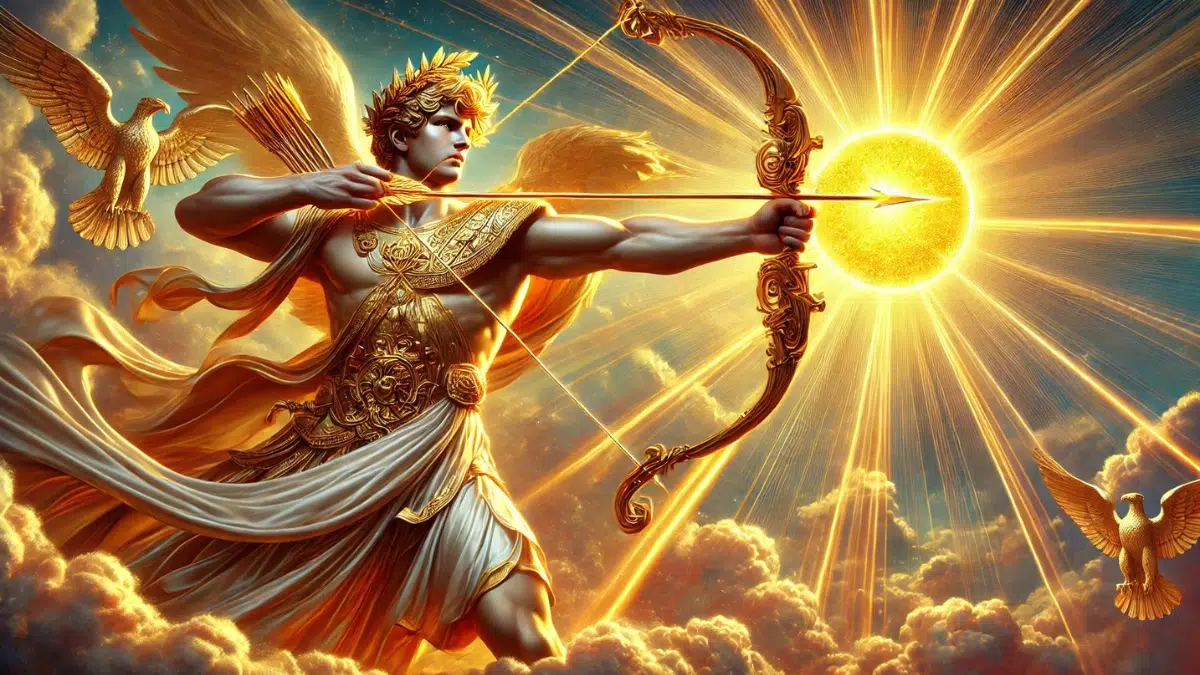
- Figure: Apollo (Greek Mythology)
Apollo, the sun god, fired golden arrows representing sunlight, often used to smite his enemies or bring plagues.
Apollo, the Greek god of the sun, carries powerful arrows called the Sun Arrows. These arrows represent light, truth, and healing.
Apollo uses them to fight darkness and bring balance to the world. His arrows also punish those who disrespect the gods. The Sun Arrows never miss their target, showing Apollo’s unmatched skill.
People see Apollo as both a protector and a punisher, depending on how he uses his arrows. The Sun Arrows remind us of the sun’s power to give life but also to cause harm. Apollo’s role as an archer makes him a symbol of precision and strength.
4. Moonlit Arrows
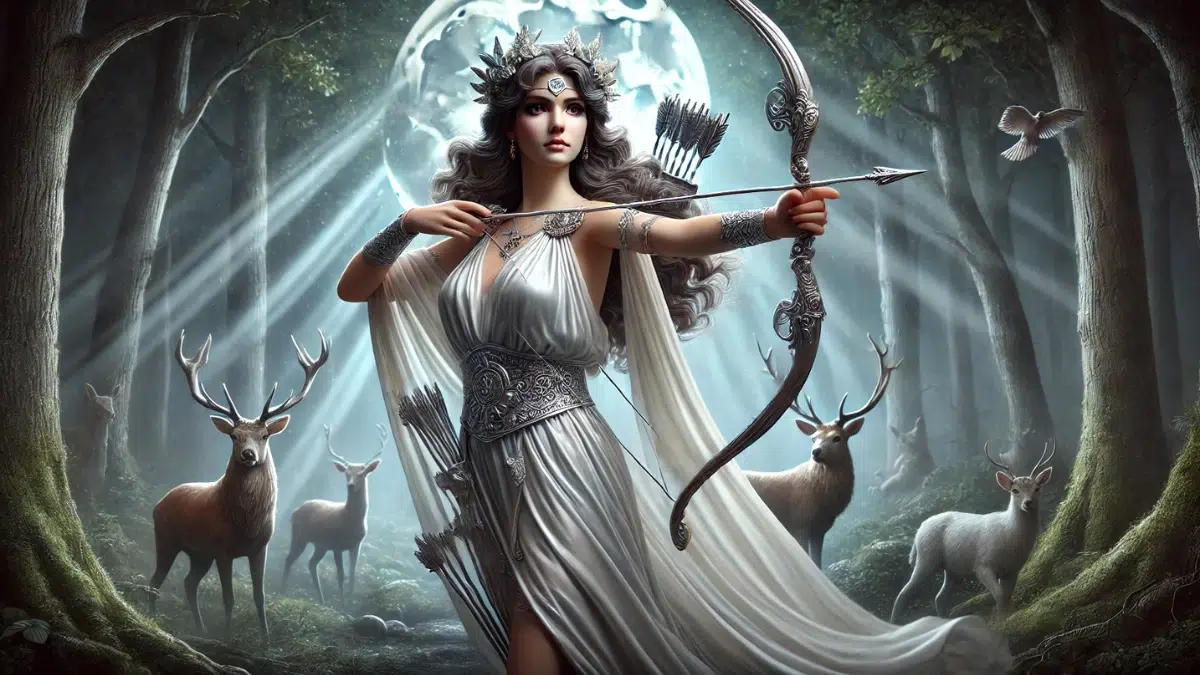
- Figure: Artemis (Greek Mythology)
Artemis, goddess of the hunt, carried silver arrows that represented the moon and were used for both hunting and vengeance.
Artemis, the Greek goddess of the moon and hunting, carries Moonlit Arrows. These arrows shine like moonlight and never miss. Artemis uses them to protect animals, punish wrongdoers, and defend herself.
Her arrows show her connection to nature and her role as a guardian. People believe Artemis hunts under the moon, using her arrows to guide and protect the wild. The Moonlit Arrows also represent her strength and independence.
Artemis inspires others to respect nature and follow their instincts. Her story shows how powerful and kind she can be while defending the balance of the natural world.
5. Paris’ Fatal Arrow
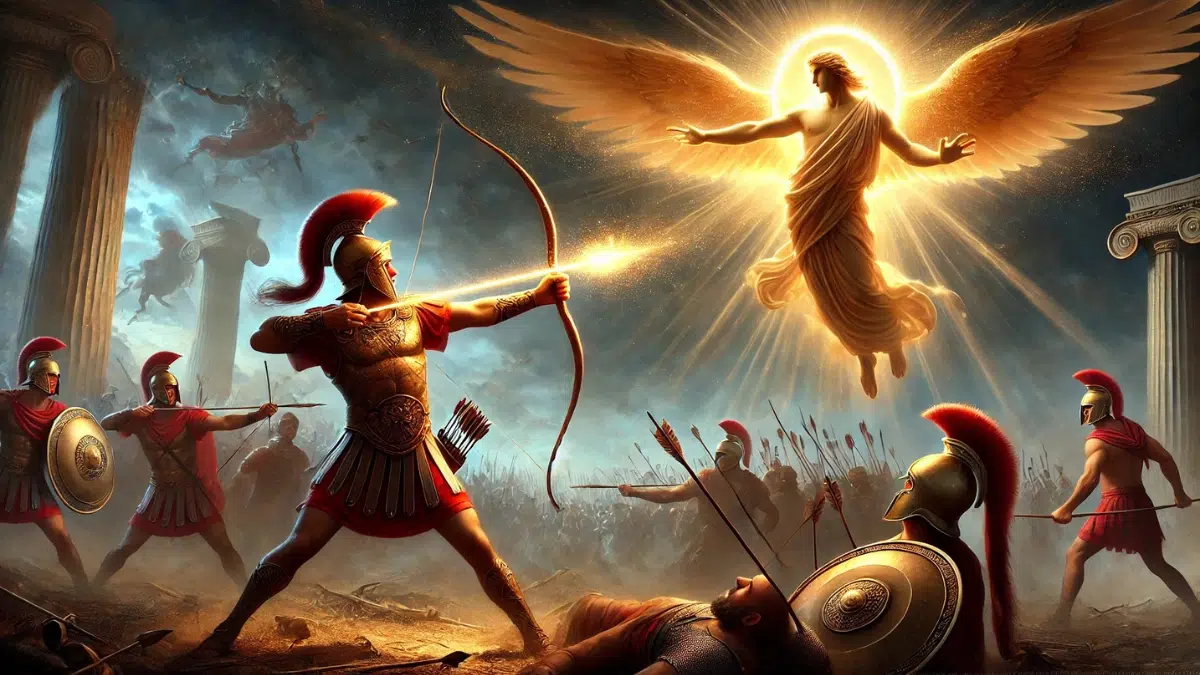
- Figure: Paris of Troy (Greek Mythology)
Guided by Apollo, Paris fired an arrow, guided by Apollo, that struck Achilles in his only vulnerable spot—his heel—during the Trojan War.
6. Nyx’s Star Arrows
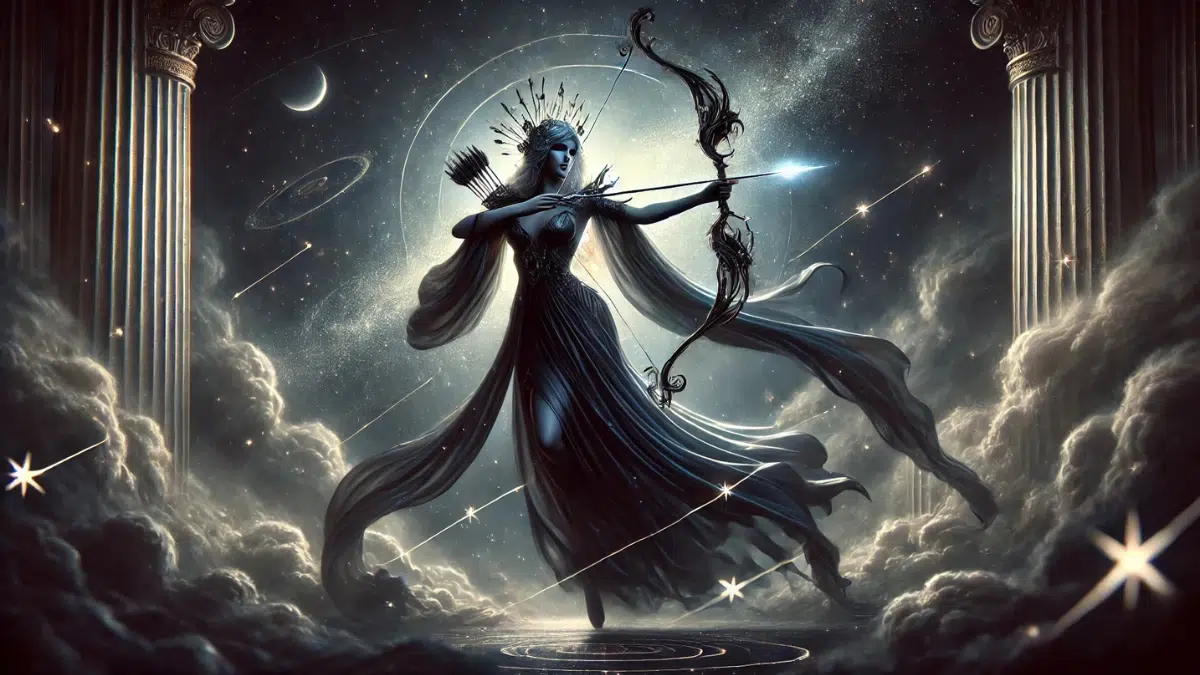
- Figure: Nyx (Greek Mythology)
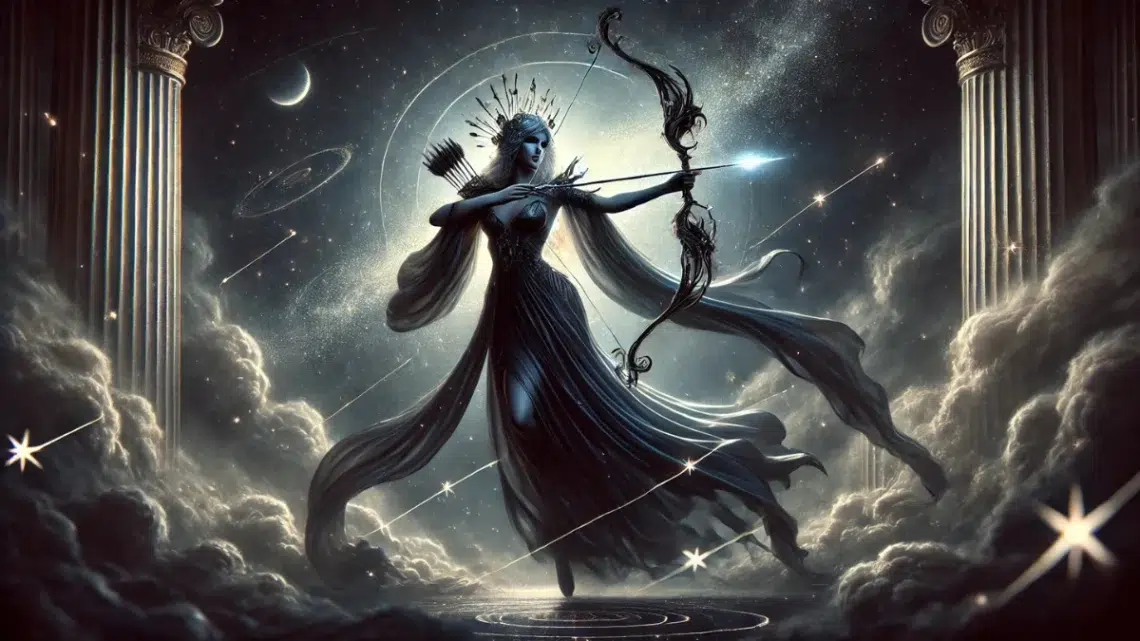
Nyx, the primordial goddess of the night, is often depicted in modern adaptations wielding arrows that embody starlight and night’s silence.
Nyx, the Greek goddess of the night, carries Star Arrows. These arrows shine like stars and represent the night’s power.
Nyx uses her arrows to protect the balance between light and darkness. Her arrows guide lost travellers and keep secrets hidden in the shadows. Each arrow symbolizes mystery, calm, and the strength of the night sky.
People see Nyx as a powerful figure who controls the stars and moon. The Star Arrows remind us of the beauty and mystery of the night. Nyx inspires awe and respect, showing how the night holds both protection and quiet strength.
7. Orion’s Hunting Arrows

- Figure: Orion (Greek Mythology)
Orion’s arrows are a symbol of his skill as a hunter, often depicted as silver arrows blessed by Artemis.
Orion, a great hunter in Greek mythology, carries powerful hunting arrows. These arrows help him track and hunt wild animals.
Orion’s arrows never miss, showing his amazing skill and precision. He uses them to protect the land and provide food. The arrows also reflect his close connection to nature and his role as a protector.
People admire Orion for his bravery and talent as a hunter. His arrows symbolize strength and a deep respect for the natural world. Orion’s story inspires those who seek adventure and reminds us of the bond between humans and nature.
Famous Arrows from Other Legends
1. Houyi’s Arrows
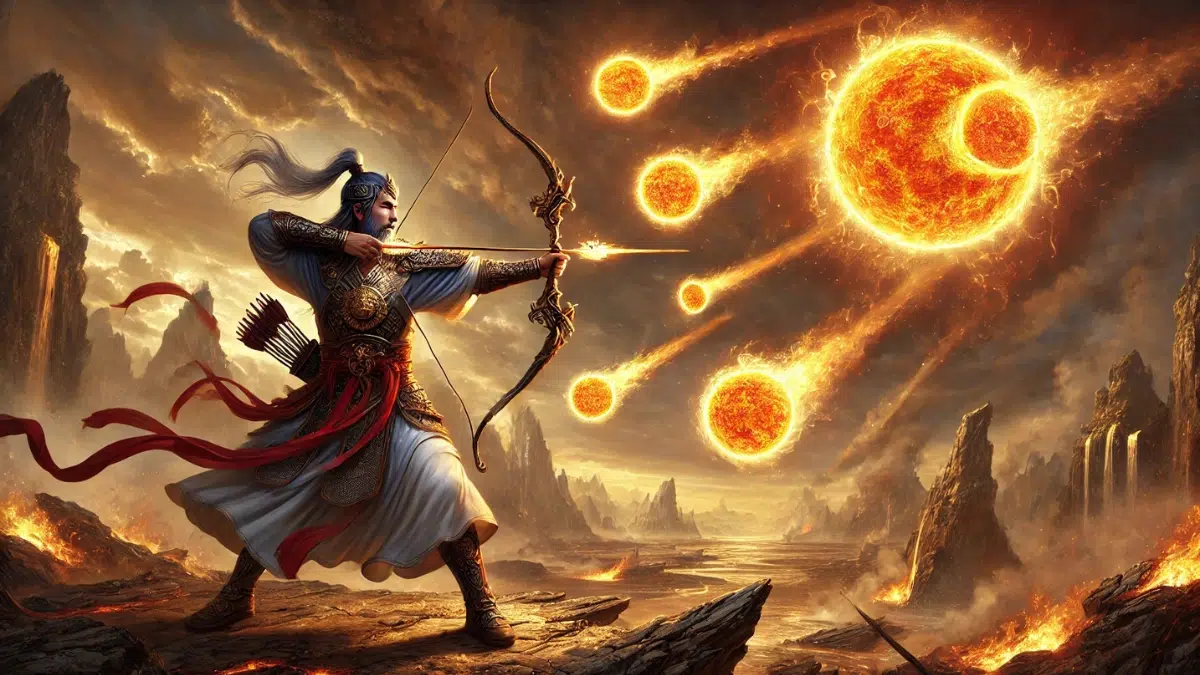
- Figure: Houyi (Chinese Mythology)
- Houyi used divine arrows to shoot down nine of ten suns that scorched the Earth
- These arrows saved humanity from devastation
Houyi, a legendary archer from Chinese mythology, carries magical arrows. He uses them to save the world from danger.
Houyi’s most famous story tells how he shoots down nine suns to stop them from burning the Earth. His arrows show his incredible skill and bravery, making him a hero to many.
Each arrow represents his strength and ability to protect others.
Houyi also teaches the importance of balance and harmony in nature. People admire his dedication to helping others and keeping the world safe. His story shows how courage and skill can create positive change.
2. Hiawatha’s Arrows Symbolize Peace
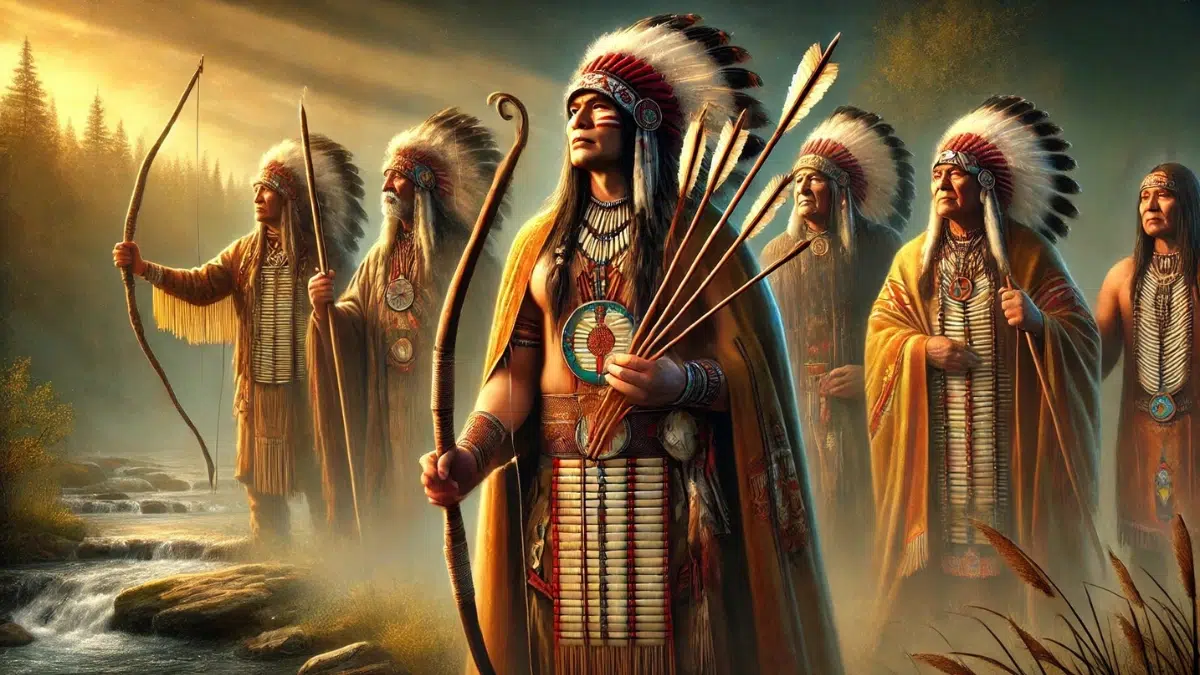
- Figure: Hiawatha (Iroquois Legend)
- Hiawatha’s arrows symbolize peace and unity in Iroquois Confederacy
- They were used to unite the five tribes under the Great Law of Peace
Hiawatha, a leader from Haudenosaunee (Iroquois) tradition, carries arrows that symbolize unity and peace. His arrows remind people to work together.
In his story, Hiawatha ties five arrows to show the strength of the Five Nations as one group. This bundle shows that unity creates power and protection.
Hiawatha uses his wisdom to teach others about cooperation and the importance of living in peace. His arrows stand for strength through teamwork and harmony.
Hiawatha’s story inspires people to come together, respect each other, and create a stronger, united community. His legacy teaches the value of peace and understanding.
3. Loki’s Mistletöin Arrow

- Figure: Loki (Norse Mythology)
- Loki crafted an arrow (or dart) from mistletoe, the only material capable of harming Baldr
- He used it to orchestrate Baldr’s death
Loki, the Norse trickster god, uses a mistletoe arrow to create chaos in the gods’ world.
He gives the arrow to Höðr, Baldr’s blind brother, during a game. Loki knows Baldr cannot be harmed by anything except mistletoe. Höðr shoots the arrow, which strikes Baldr and ends his life.
This act shocks the gods and creates sadness in Asgard. The mistletoe arrow shows Loki’s cleverness and his desire to cause mischief. It also reminds us how small things can create big problems.
Loki’s story warns about the power of trickery and the importance of trust among friends and family.
4. Takemikazuchi’s Lightning Arrows

- Figure: Takemikazuchi (Japanese Mythology)
- The Shinto god of thunder used arrows that could summon lightning to strike his foes, representing divine power and justice
Takemikazuchi, a Japanese thunder god, uses powerful lightning arrows. These arrows represent strength and control over storms. Takemikazuchi fires his arrows to protect people and defeat evil spirits.
Each arrow brings thunder and flashes of lightning, showing his divine power. The lightning arrows help Takemikazuchi remind others of the gods’ might and the importance of respecting nature.
People see him as a fierce protector who defends the balance of the world. His arrows symbolize courage, strength, and the unstoppable force of nature. Takemikazuchi inspires bravery and respect for the forces that shape the world around us.
Famous Arrows from Literature
1. Arjuna’s Divine Arrows
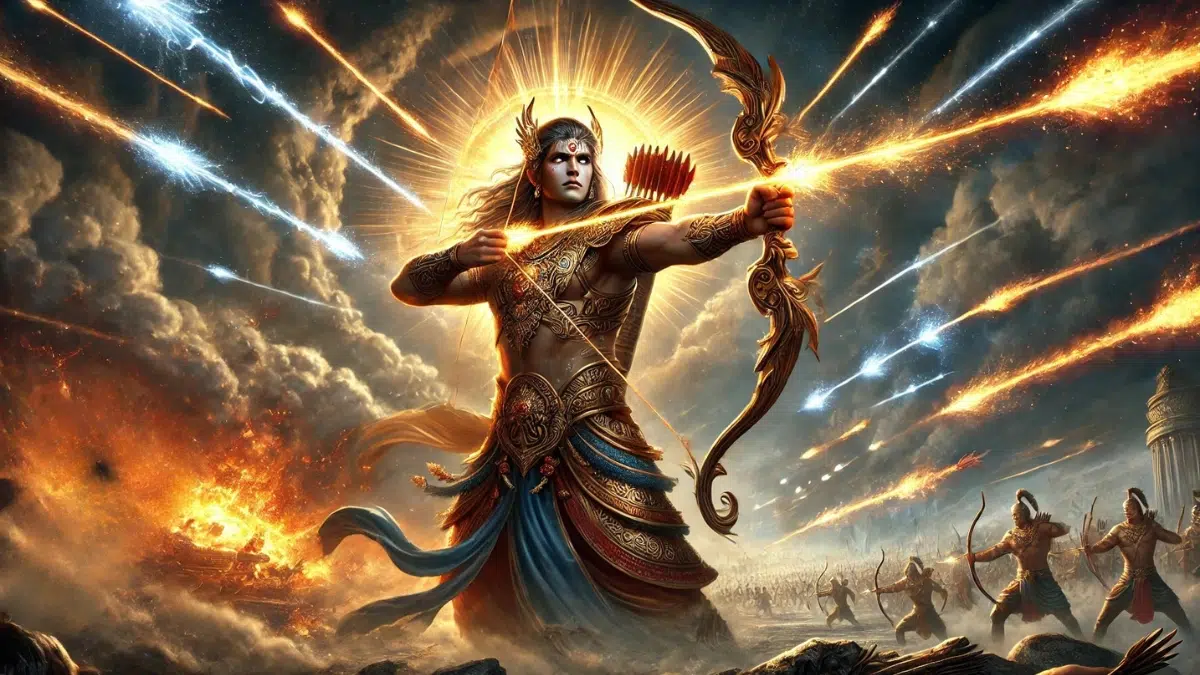
- Figure: Arjuna (Indian Epic – Mahabharata)
- Arjuna wielded celestial arrows, including those gifted by the gods
- His Narayanastra rained down fire and destruction on enemies
Arjuna, a hero from Indian mythology, uses divine arrows gifted by the gods. These arrows carry special powers for battle.
Arjuna’s arrows create fire, wind, or water, depending on the situation. He uses them to protect people and defeat evil forces. His arrows show his skill, focus, and bravery as a warrior.
Arjuna’s story reminds others to fight for justice and to use strength wisely. The gods trust him to handle these powerful weapons responsibly.
Arjuna’s divine arrows symbolize his connection to the gods and his duty to bring peace and balance to the world.
2. Draupadi’s Vengeance Arrows
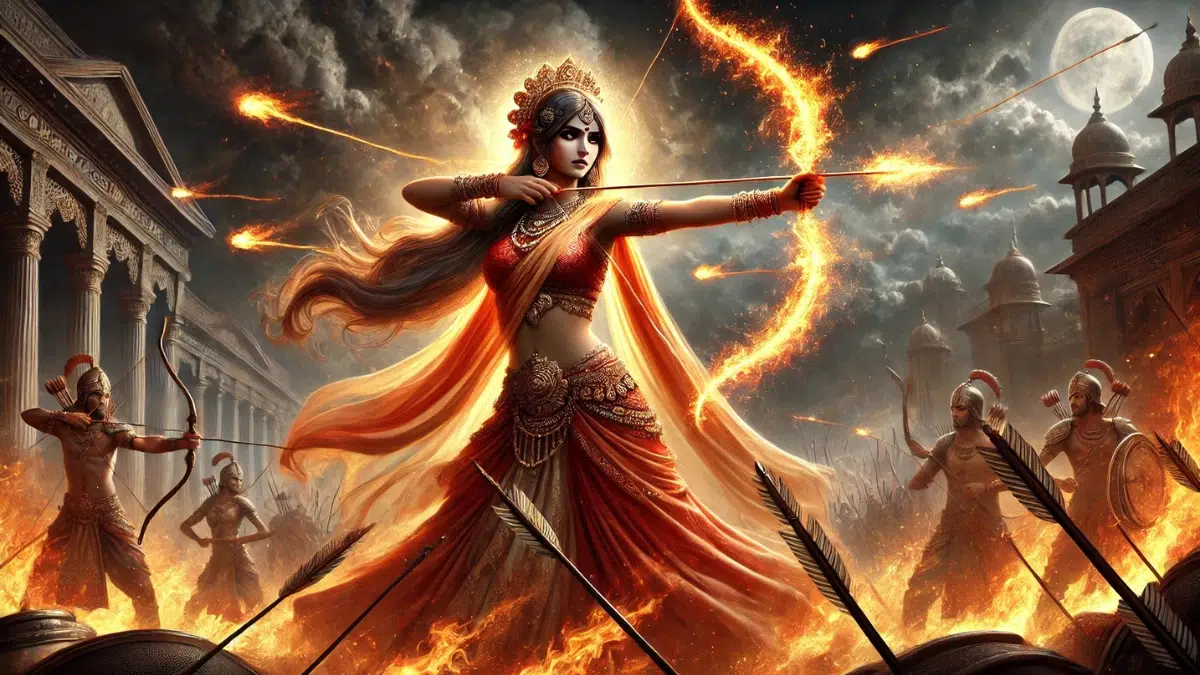
- Figure: Draupadi (Indian Epic – Mahabharata)
- Though not primarily an archer, Draupadi’s mythical depictions include her firing arrows of vengeance, symbolizing her wrath and strength after her dishonour.
Draupadi, a queen from Indian mythology, inspires the creation of vengeance arrows to seek justice. These arrows represent her anger and strength.
After her enemies insult her, Draupadi demands fairness and courage from her allies. The arrows carry her fiery determination to punish wrongdoers and restore balance.
Warriors, including her husband Arjuna, use these arrows in battles during the Mahabharata epic. The arrows remind others to stand up against injustice and defend what is right.
Draupadi’s story teaches the importance of courage, fairness, and using power responsibly to protect others and maintain harmony in the world.
3. Elven Arrows
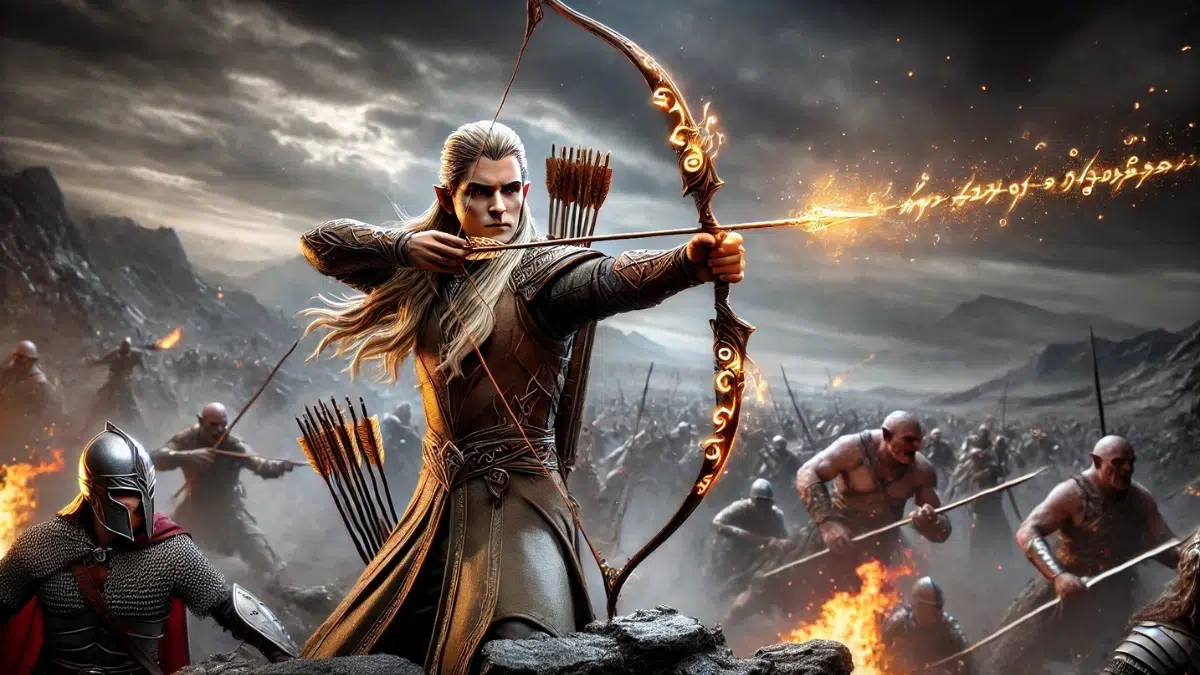
- Figure: Legolas (The Lord of the Rings – Fiction)
- Legolas’ arrows, crafted by Elves, are known for their precision and speed
- They were critical in battles against orcs and other dark forces
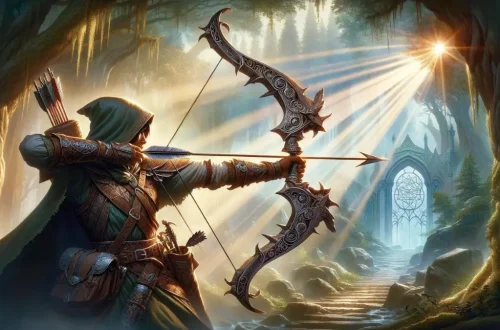
Elven arrows, found in fantasy stories, are light, strong, and incredibly accurate. Elves craft these arrows with great skill. The arrows often feature sharp tips and magical designs, making them powerful in battles.
Elves use them to protect forests, defeat enemies, and hunt for food. These arrows show the Elves’ connection to nature and their ability to fight with precision. Many tales describe Elven arrows as silent and unstoppable, perfect for stealthy attacks.
The arrows symbolize balance, skill, and the bond between Elves and their surroundings. Elven arrows inspire wonder with their beauty and strength in many magical stories.
4. Arrow of Lathar

- Figure: Bard (The Hobbit – Fiction)
- Bard used the Black Arrow, a legendary weapon forged by dwarves, to slay the dragon Smaug during the Siege of Esgaroth
The Arrow of Lathar appears in ancient legends as a powerful and mysterious weapon. This arrow never misses its target.
Lathar, a legendary hero, uses it to protect his people from danger and defeat powerful enemies. The arrow shines with a magical light, symbolising justice and hope. It also represents Lathar’s skill, bravery, and dedication to his mission.
The Arrow of Lathar reminds people to fight for what is right and protect those in need. Its story inspires others to stay strong and use their talents to bring peace and balance to the world.
Famous Arrows in Gaming
1. Frost Arrows
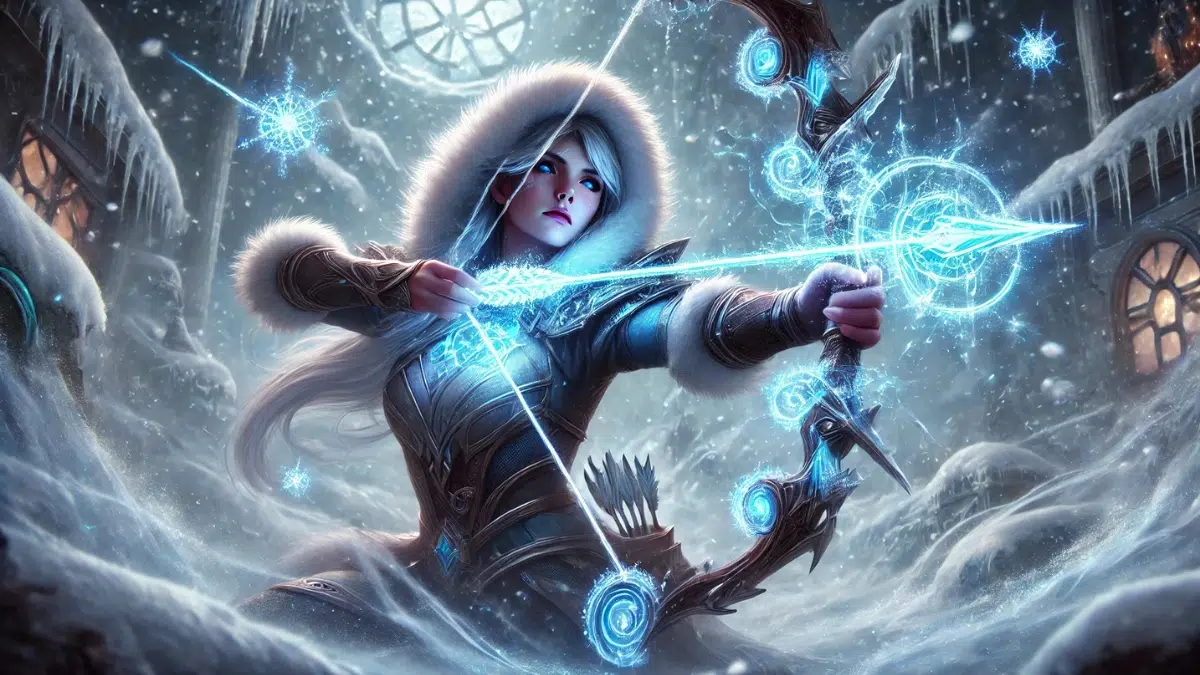
- Figure: Ashe (League of Legends – Video Game)
- Ashe’s enchanted frost arrows slow and damage enemies. Her ultimate ability, Enchanted Crystal Arrow, can stun opponents across the map
Ashe, a champion in League of Legends, uses Frost Arrows to slow and freeze her enemies. These arrows carry icy magic, stopping opponents from escaping. Ashe fires them with great precision, giving her team an advantage in battles.
Frost Arrows show Ashe’s connection to the cold and her role as a skilled leader. Players use these arrows to control fights and protect their team. The icy power of her arrows reminds players to stay calm under pressure. Ashe inspires teamwork and strategy, using her Frost Arrows to lead her allies to victory in the game.
2. Fire Arrows
- Figure: Lara Croft (Tomb Raider – Video Game)
- Lara Croft uses fire arrows to solve puzzles, destroy obstacles, and fight enemies, adding a fiery twist to her archery skills.
3. Shadow Arrows
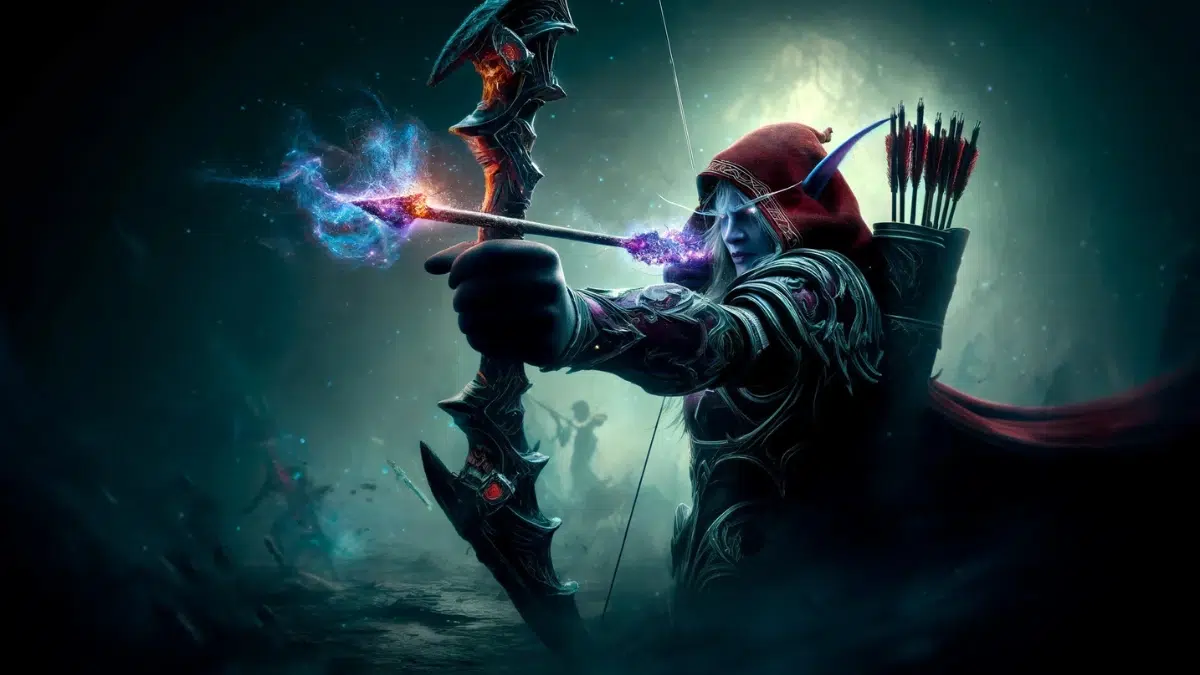
- Figure: Sylvanas Windrunner (World of Warcraft – Video Game)
- As a banshee queen, Sylvanas fires arrows imbued with dark magic, capable of tearing through both physical and spiritual planes.
Sylvanas Windrunner, a key figure in World of Warcraft, uses Shadow Arrows to defeat her enemies with dark magic. These arrows drain life and cause fear, giving Sylvanas an advantage in battle. She fires them with deadly accuracy, striking her enemies from the shadows.
Shadow Arrows show her connection to darkness and her role as a powerful leader. Players use them to weaken foes and control fights. The arrows symbolize Sylvanas’ cunning and her ability to fight against overwhelming odds. Shadow Arrows remind players of the strength found in strategy and the power of the unseen.
4. Wind Arrows
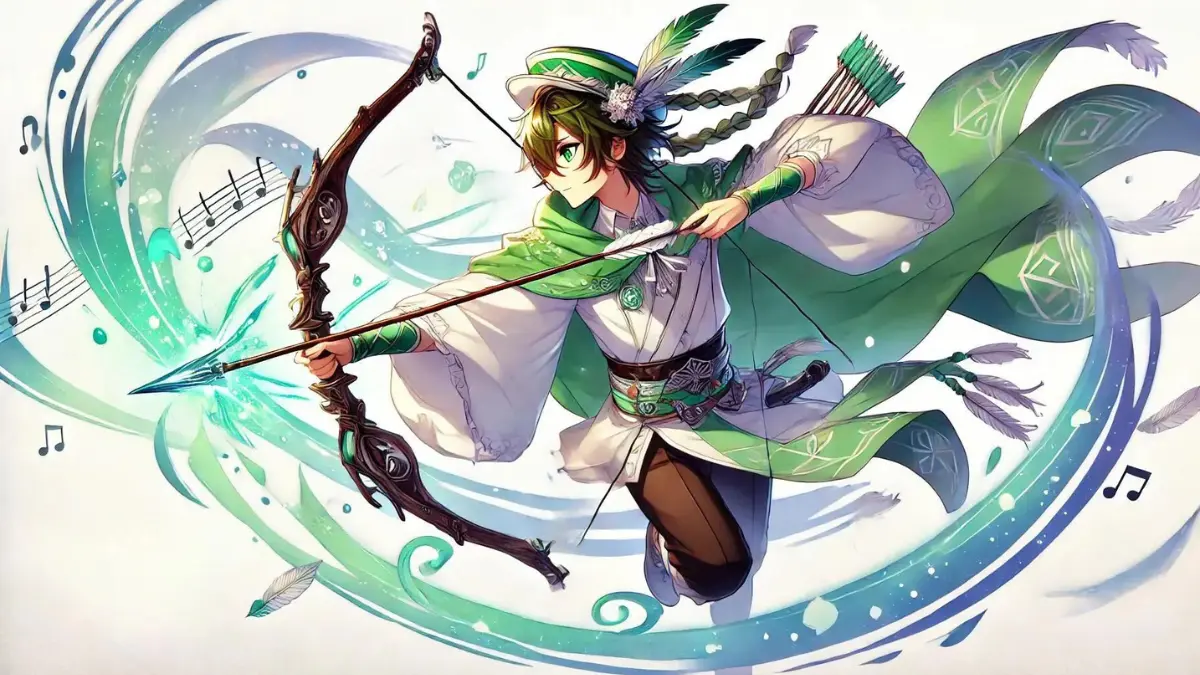
- Figure: Venti (Barbatos) (Genshin Impact – Video Game)
- Venti fires arrows imbued with Anemo (wind) energy, symbolizing his role as a free-spirited bard and god of the winds.
Venti, also known as Barbatos in Genshin Impact, uses Wind Arrows filled with Anemo energy to control battles. These arrows create powerful gusts, pushing enemies away or pulling them together.
Venti fires them with precision, keeping his enemies off balance. Wind Arrows symbolize his connection to freedom and the wind. Players rely on these arrows to protect allies and deal damage from a distance.
Venti’s Wind Arrows also represent his role as the Anemo Archon, watching over his people. The arrows inspire creativity and teamwork, showing how wind can bring both chaos and harmony to every situation.
Famous Arrows in History
1. Flaming Arrows
- Figure: Mongol Archers (Historical)
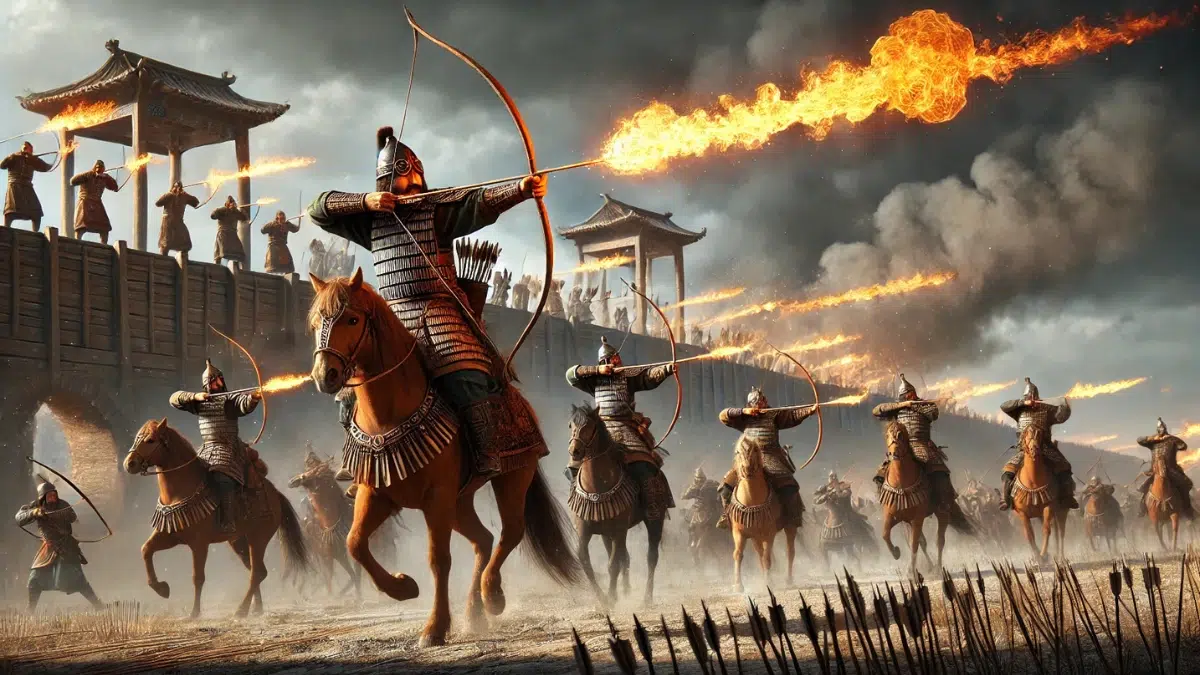
- Used by Mongol warriors, these arrows were lit before firing to set enemy structures and fields ablaze during invasions. Mongol archers used flaming arrows in sieges, creating chaos and destruction. These arrows were highly effective against wooden fortifications.
Mongol archers use flaming arrows to create chaos and destruction during battles. These arrows burn fiercely and spread fire quickly. Archers shoot them to set buildings, camps, or wooden defenses on fire.
Flaming arrows also confuse enemies and force them to retreat. The Mongols, known for their speed and skill, fire these arrows from horseback, making them even more dangerous.
Flaming arrows show the Mongols’ cleverness and ability to use the environment to win battles. These arrows remind us how fire can change the course of a fight and highlight the skill of Mongol archers in history.
2. Arrow of Parthian Archers
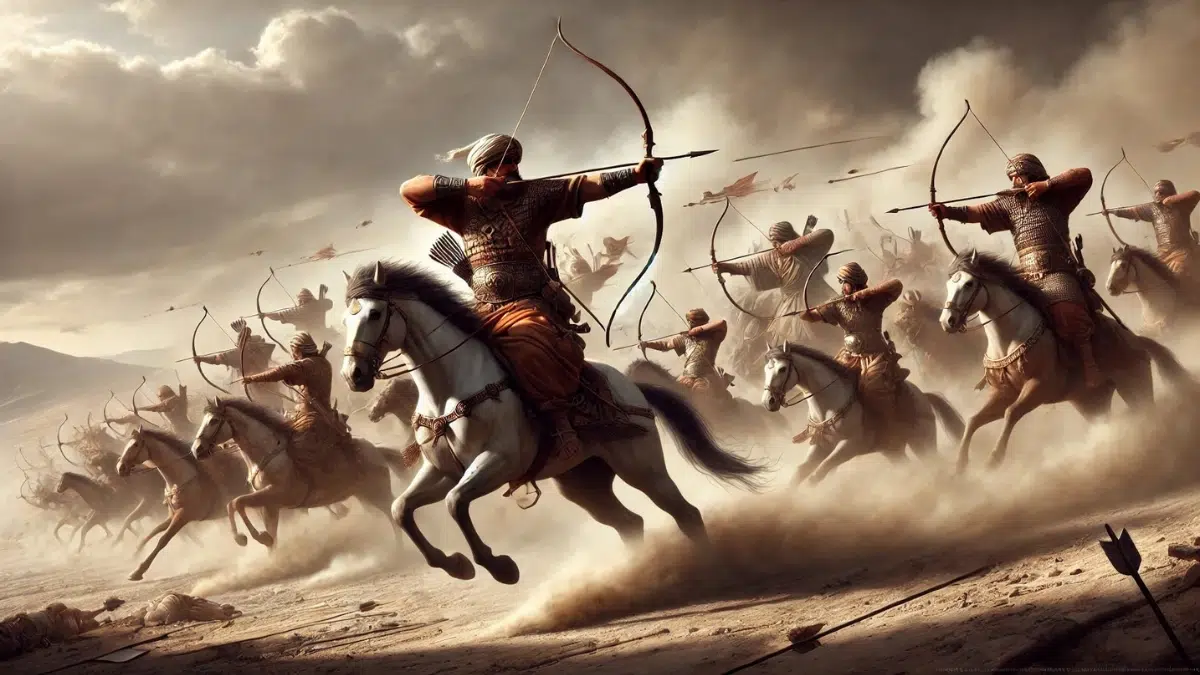
- Parthian archers mastered the “Parthian shot,” firing arrows accurately while retreating on horseback. Their skill helped them defeat many enemies, including Roman legions.
Parthian archers use their special arrows with incredible skill during battles. They master the “Parthian shot,” firing arrows while riding away. This tactic surprises their enemies and keeps them safe during fights.
Parthian arrows fly fast and hit their targets with great precision. The archers rely on strong, flexible bows to make their arrows more effective. These arrows show the Parthians’ bravery, cleverness, and control over their weapons.
The Parthian archers inspire others with their speed and ability to fight while moving. Their arrows symbolize their unique battle strategy and their powerful presence in history.
3. Bodkin Arrows (English Longbowmen, 1415)
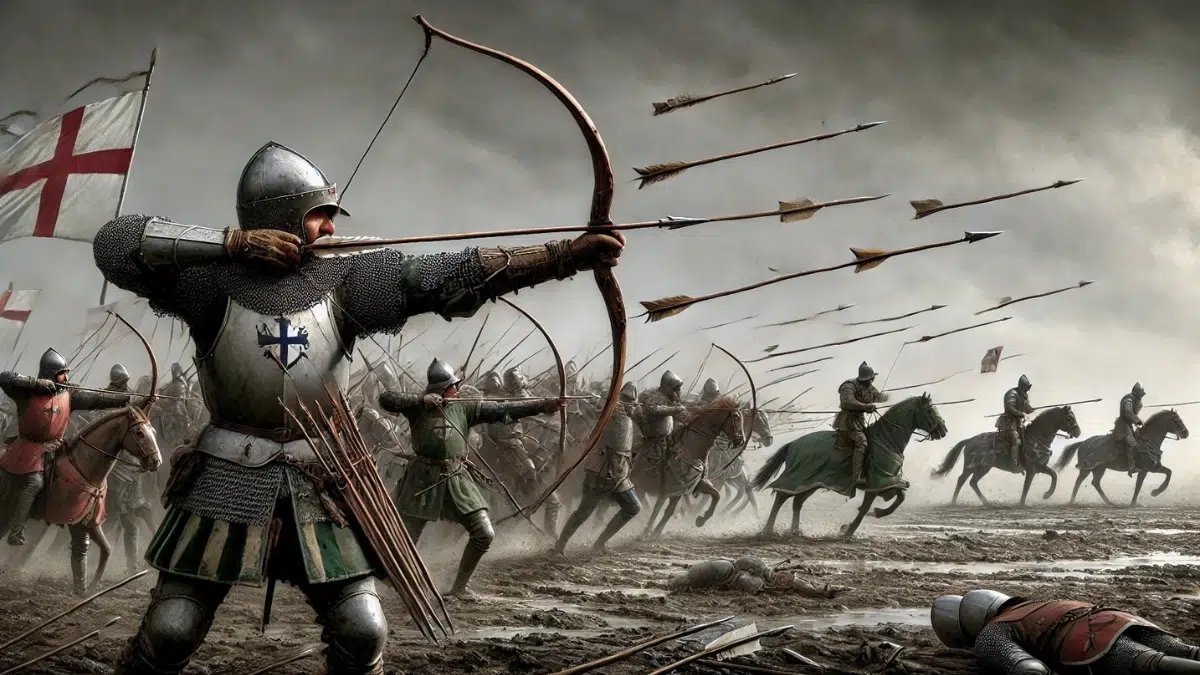
- Bodkin-point arrows were designed to pierce armour. These arrows played a key role in battles like Agincourt (1415), showcasing the power of the English longbow.
English longbowmen use bodkin arrows during battles like Agincourt in 1415. These arrows have sharp, narrow tips made for piercing armour. Longbowmen shoot them from powerful longbows, making them fly far and hit with great force.
Bodkin arrows break through chainmail and metal plates, giving the English army an advantage. Soldiers rely on these arrows to defeat heavily armoured knights and win important battles. Bodkin arrows show the skill and precision of English longbowmen. They remind us how innovation and practice can change the outcome of a fight and make a lasting impact in history.
4. The Arrow That Killed King Harold II (Battle of Hastings, 1066)
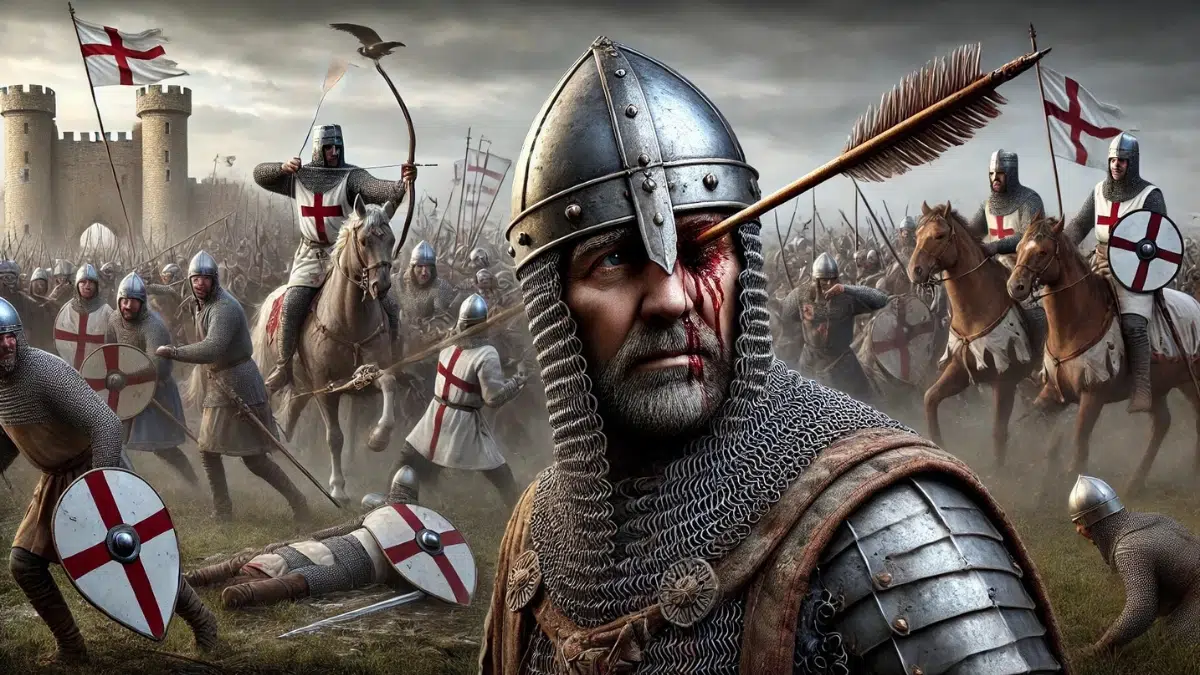
- During the Battle of Hastings, legend says King Harold II was struck in the eye by an arrow, leading to his death. This arrow became a symbol of the Norman conquest of England.
During the Battle of Hastings in 1066, an arrow fatally strikes King Harold II of England. This arrow hits him in the eye, ending his fight and changing history.
The Norman army, led by William the Conqueror, uses arrows to gain the upper hand. The arrow that kills Harold shows the power of archery on the battlefield. It also symbolizes the end of Anglo-Saxon rule in England.
This moment helps William become the new king. The story of this arrow reminds us how one shot can change the course of history and decide the future of a nation.