Cu Chulainn: Tale of Ireland’s Greatest Hero
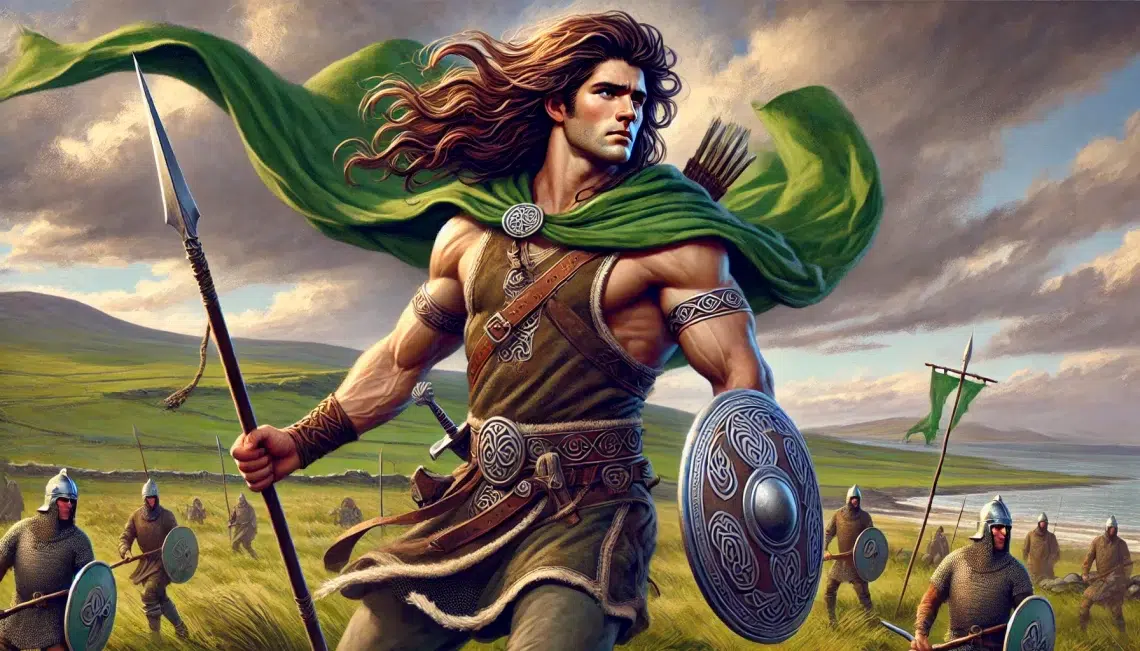
Cu Chulainn (Cú Chulainn), a legendary figure in Irish mythology, is known for his superhuman abilities, heroic feats, and tragic life story. His tale is part of medieval Irish legends and also celebrated in Scottish folklore.
Born as Sétanta, he was the son of the god Lugh and Deichtine, the sister of King Conchobar mac Nessa of Ulster.
Cú Chulainn, meaning “Hound of Culann,” earned his name after he killed a fierce guard dog in self-defense. He offered to take its place, marking the start of his legendary exploits.
Introduction to Cú Chulainn
From a young age, Cú Chulainn showed extraordinary abilities due to his superhuman strength, speed, and skill. His training under the warrior woman Scáthach in Scotland further enhanced his martial prowess.
Cú Chulainn’s life featured many heroic deeds, most notably his defense of Ulster at age seventeen. He fought against Queen Medb of Connacht’s armies during the epic Táin Bó Cúailnge (Cattle Raid of Cooley).
Cú Chulainn’s character is complex and compelling. His terrifying battle frenzy, ríastrad, transformed him into an unrecognizable monster, capable of immense destruction. Despite his formidable prowess in battle, his personal life was filled with tragedy and complexity.
Cú Chulainn’s legacy endures in both mythology and the cultural fabric of Ireland. His story, retold through generations, symbolizes heroism and resilience.
Origins and Early Life of Cú Chulainn
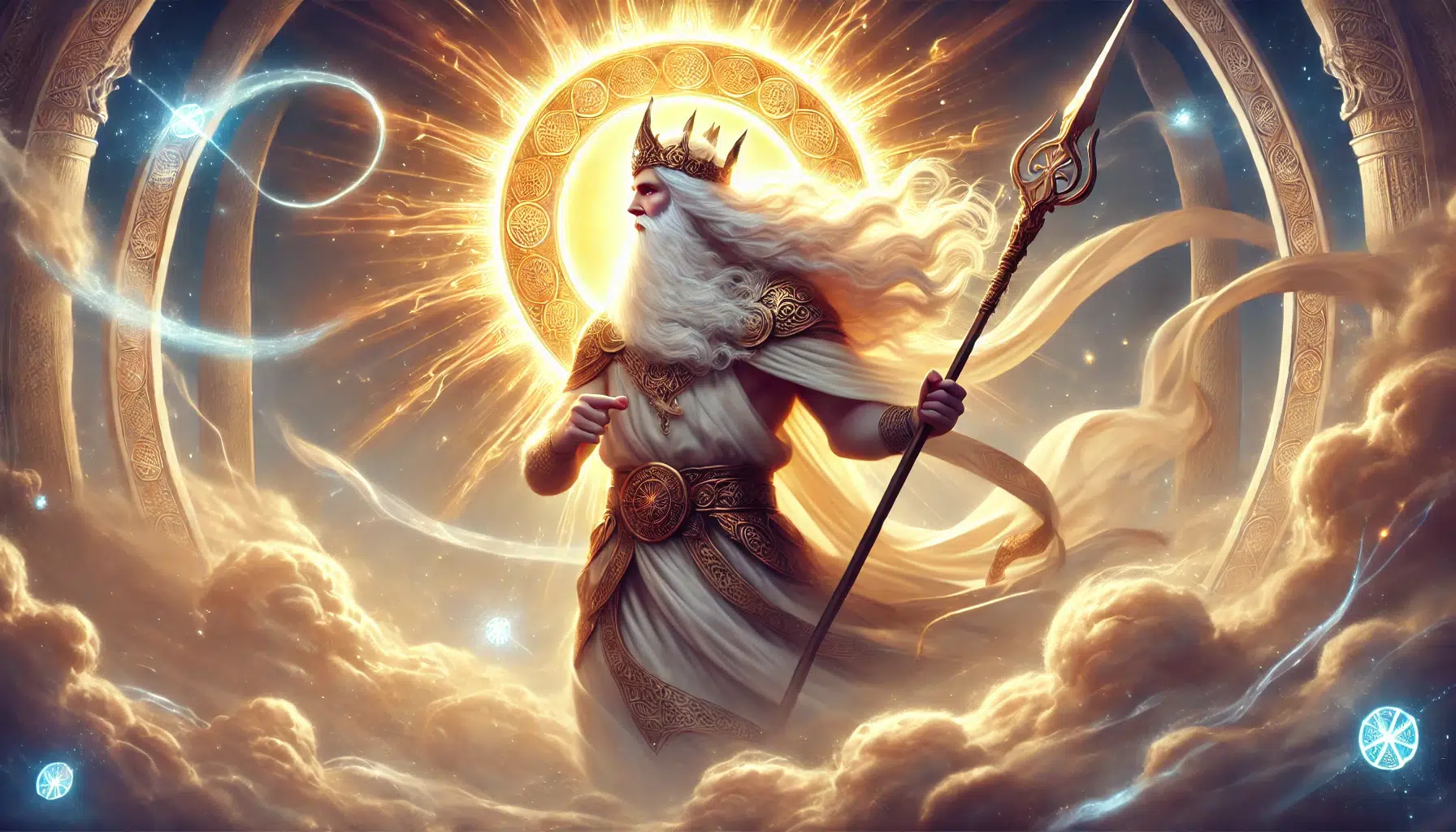
Cú Chulainn, originally named Sétanta, comes from both divine and mortal heritage. His father, Lugh, is a prominent deity associated with the sun and light. Lugh plays a significant role in various mythological battles and rules Ireland during a period of prosperity.
His mother, Deichtine, is the sister of King Conchobar mac Nessa of Ulster. The circumstances of his birth involve myth and magic. There are several versions, each highlighting his miraculous conception.
Myth: Conception of Cú Chulainn
In one myth, Deichtine assists in the birth of a boy while accompanying Conchobar and Ulster nobles on a hunt for magical birds. The next morning, the Ulstermen find themselves at Brug na Bóinde (Newgrange). The child and twin colts remain, while the house and its occupants disappear.
Deichtine takes the boy home, but he falls ill and dies. Lugh then appears to her. He reveals that the boy was his child and that he has placed another child in her womb, who would be named Sétanta.
Another version describes Deichtine disappearing from the Ulster capital. She reappears after three years in the form of a bird-flock. She and her maidens transform into birds and are hunted by the Ulstermen. They find shelter in a house where Deichtine gives birth to Sétanta.
Myth: Naming of Cú Chulainn
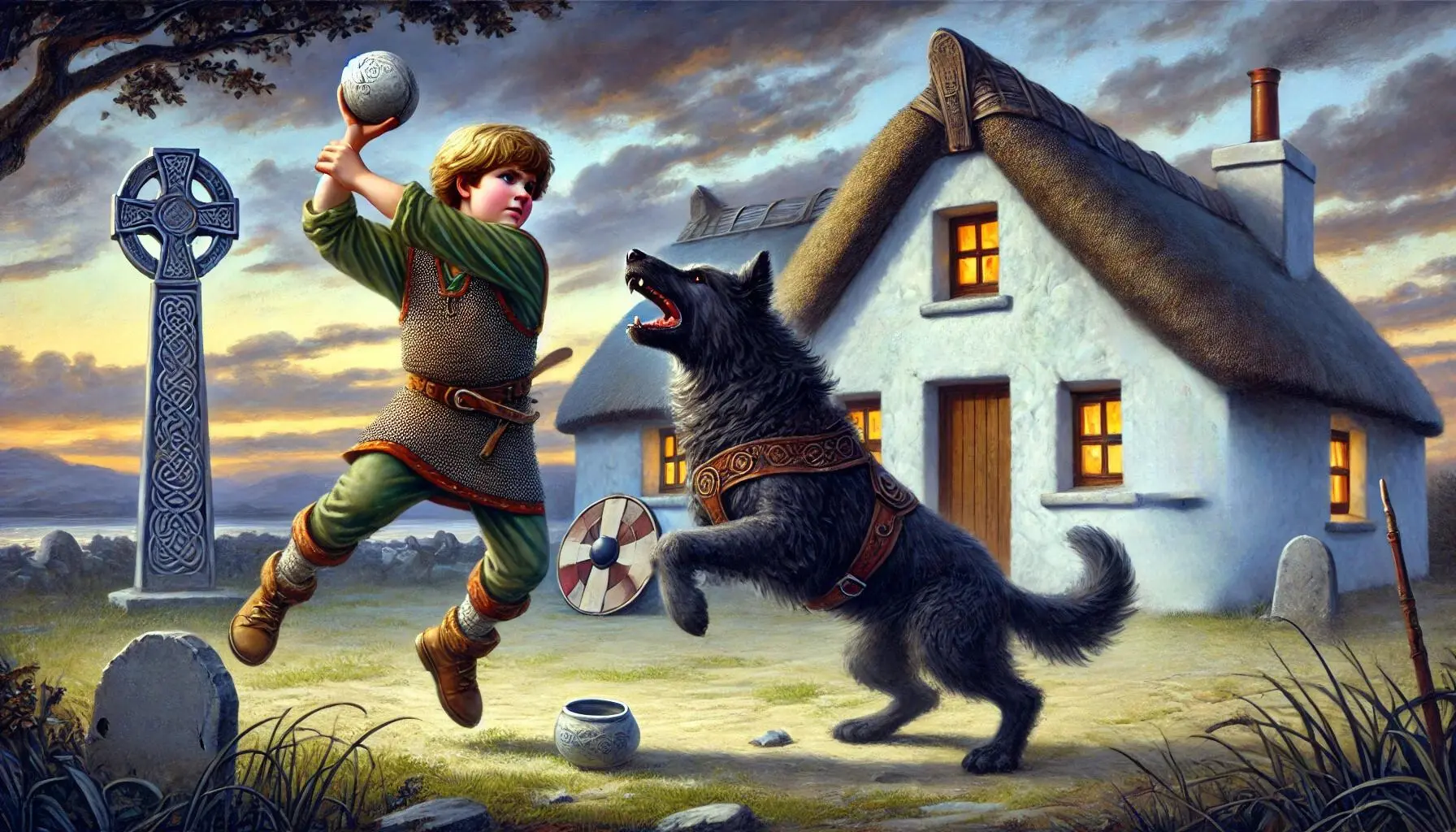
From a young age, Sétanta displays exceptional abilities. His superhuman strength, speed, and skill show even in his childhood games. When playing with other boys, he consistently outperforms them, demonstrating his natural prowess and competitive spirit.
Sétanta earns his famous name, Cú Chulainn, through an act of bravery and responsibility.
While still a boy, he accompanies King Conchobar to a feast at Culann’s house, a skilled smith. Arriving late, Sétanta is attacked by Culann’s fierce guard dog. He kills the dog in self-defence by driving a hurling ball down its throat.
Realizing the distress this has caused Culann, Sétanta offers to take the dog’s place until a replacement could be trained. This act of courage and honour leads the druid Cathbad to declare that Sétanta would henceforth be known as Cú Chulainn, meaning “Hound of Culann”.
Joining the Red Branch Knights
Cu Chulainn’s ambition to join the Red Branch Knights, the elite warriors of Ulster, shows from a very young age.
Some legends say he joins the Red Branch Knights as early as five years old due to his superhuman abilities. However, other accounts suggest he officially joins around age ten. This after demonstrating his prowess in a hurling match and impressing King Conchobar.
Before becoming a full-fledged knight, he joins the boys’ army called the Macra. Here, he further sharpens his skills in preparation for his future heroic deeds.
Prophecy and Destiny
A prophecy foretold that Cú Chulainn’s great deeds would bring him everlasting fame but that his life would be short. This prophecy loomed over his life, influencing his actions and the perception of those around him. Despite the foreknowledge of his tragic fate, Cú Chulainn embraced his destiny with courage and determination, becoming one of the greatest heroes in Irish mythology.
Cú Chulainn: Training and Abilities

Journey to Scáthach
Cu Chulainn’s journey to train with Scáthach was initiated by a challenge. When he sets out to court his future wife, Emer, her father, Forgall Monach, opposes the match. He suggests that Cu Chulainn should first prove his worth by training with the greatest warrior in the world—Scáthach.
Eager to enhance his skills, Chulainn embarks on the arduous journey to Scotland, with his companions Lóegaire and Conall Cernach. However, due to various challenges and magical illusions, he continues the journey alone.
Cú Chulainn’s training with Scáthach is one of the most significant episodes in his life.
Scáthach, often referred to as “The Shadow” or “Warrior Maid,” resides in Dún Scáith (Fortress of Shadows) on the Isle of Skye in Scotland. She is renowned for her unparalleled skills in combat and her ability to train the greatest warriors.

Myth: Training with Scáthach
Upon reaching Dún Scáith, Cu Chulainn impresses Scáthach by ambushing her and demanding to be her pupil. She agrees to train him, and under her tutelage, he learns numerous martial feats and techniques. These included:
- The Salmon Leap: An acrobatic leap that allowed him to jump great heights and distances.
- The Gáe Bulg Technique: The specialized use of the deadly spear Gáe Bulg.
- Other Martial Arts Skills: Various forms of combat, weapon handling, and strategic warfare.
Scáthach’s training was rigorous and comprehensive, preparing Cu Chulainn for the numerous battles he would face in his future.
During his training, Cu Chulainn also encounters Aífe, Scáthach’s rival and sister.
Aífe challenges Scáthach to single combat, and Cu Chulainn volunteers to fight on Scáthach’s behalf. Using his cunning, Cu Chulainn distracts Aífe by shouting that her chariot was falling off a cliff, and when she turned to look, he overpowers her.
He spares her life on the condition that she ceases her conflict with Scáthach and bears him a son. This son, Connla, would later play a tragic role in Cu Chulainn’s life.
Receiving the Gáe Bulg
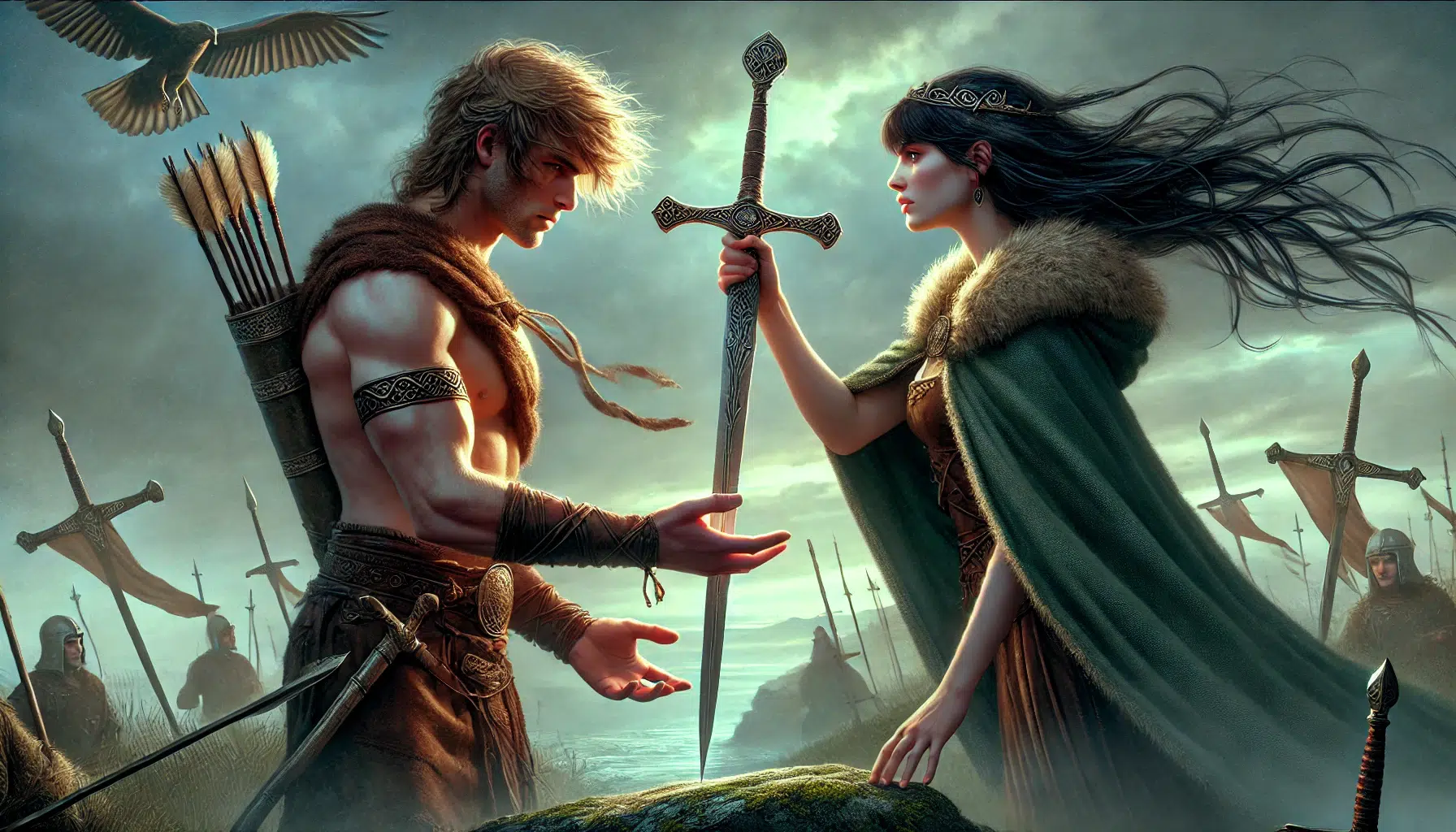
One of the most significant gifts Cú Chulainn receives from Scáthach is the deadly spear known as the Gáe Bulg. This weapon is unique and possesses extraordinary lethal capabilities.
The Gáe Bulg, also known as the “belly spear,” is crafted from the bones of a sea monster named Curruid, which had died in a battle with another sea monster. The spear’s construction and the materials used endows it with its deadly properties. According to legend, the spear had to be prepared in a stream and launched from the fork of the toes, making it a weapon that requires both skill and ritual to use effectively.
The Gáe Bulg was known for its devastating impact:
- Entry and Barbs: Upon entering a victim’s body, the spear would create a single wound, but once inside, it would release multiple barbs, tearing through the body and causing immense internal damage.
- Irretrievable: The barbs made it nearly impossible to remove the spear without causing further injury, often requiring the flesh to be cut away to extract it.
Cú Chulainn uses the Gáe Bulg in several critical battles:
- Against Ferdiad: During the Cattle Raid of Cooley, he fights his foster brother and best friend, Ferdiad, in single combat. Despite their close bond, the battle was fierce, and Cu Chulainn ultimately uses the Gáe Bulg to defeat Ferdiad, piercing his armour and causing fatal injuries.
- Against Connla: In a tragic turn of events, Cu Chulainn later uses the Gáe Bulg against his own son, Connla, whom he did not recognize. The spear’s lethal power leads to Connla’s death, only for Cu Chulainn to realize his son’s identity too late.
Ríastrad: Cú Chulainn’s Battle Frenzy
Ríastrad, often translated as “warp spasm” or “battle frenzy,” is a unique and terrifying state of transformation that Cú Chulainn undergoes during intense moments of battle.
This phenomenon is characterized by a complete loss of control. Cu Chulainn becomes an unrecognizable monster, unable to distinguish between friend and foe. The transformation is triggered by extreme emotional and physical stress, often in the heat of combat.
The ríastrad is vividly described in the Táin Bó Cúailnge (The Cattle Raid of Cooley). During a ríastrad, Cu Chulainn’s body undergoes dramatic and grotesque changes.
His body contorts in unnatural ways, with his joints and bones twisting and shifting. His feet and shins switch to the rear, and his heels and calves move to the front, creating a monstrous and hideous appearance.
Cu Chulainn’s facial features become distorted. One eye recedes deep into his head while the other protrudes outward. His mouth stretches grotesquely, revealing his internal organs as his cheeks peel back from his jaws.
Cu Chulainn’s hair stands on end, resembling a thorn bush. His skin undergoes a furious twist, making him appear even more fearsome. In this state, Cu Chulainn loses all sense of rationality and humanity. He is driven purely by a berserk rage, attacking anything and anyone in his path.
The ríastrad is often compared to the berserker rage found in Norse mythology. When warriors enter a trance-like fury that grants them superhuman strength and ferocity.
Cú Chulainn’s Romantic Adventures
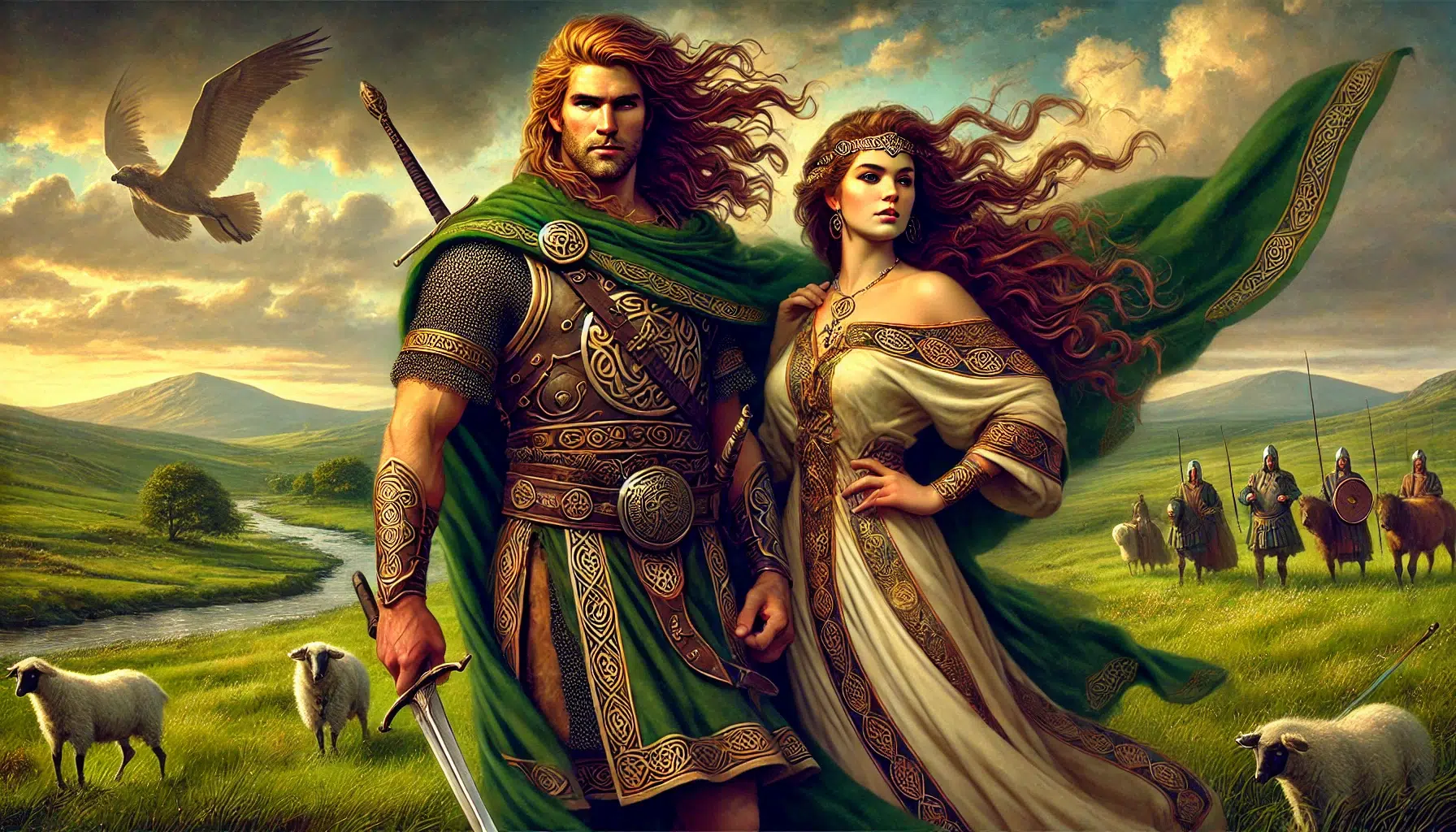
Cú Chulainn’s primary wife was Emer, though he had many other lovers. These included the warrior Aífe, Fand, and Derbforgaill, a Scandinavian princess.
Story of His Courtship and Marriage to Emer
Cú Chulainn’s courtship and marriage to Emer, the daughter of Forgall Monach, stand as one of the most romantic and adventurous tales in Irish mythology.
The Ulstermen, worried that Cú Chulainn’s beauty and prowess would lead him to steal their wives and daughters, searched all over Ireland for a suitable wife for him. However, Cú Chulainn would accept none but Emer, renowned for her beauty and virtues.
Cú Chulainn visited Emer at her father’s house in Lusk, County Dublin, and wooed her by trading cryptic riddles and displaying his wit and intelligence. Emer agreed to marry him but only when his deeds justified it.
However, her father, Forgall Monach, opposed the match. In an attempt to deter Cu Chulainn, Forgall suggested that he should train in arms with the renowned warrior-woman Scáthach in Scotland, hoping that the ordeal would be too much for him and that he would be killed.
Cu Chulainn accepted the challenge and traveled to Scotland, where he learned all the arts of war from Scáthach. During his training, he also slept with Scáthach’s rival, Aífe, leaving her pregnant with his son, Connla.
Meanwhile, Forgall offered Emer to Lugaid mac Noís, a king of Munster, but Lugaid refused her hand upon learning of her love for Cu Chulainn.
Upon returning from Scotland fully trained, Cu Chulainn found that Forgall still refused to let him marry Emer. In response, Cu Chulainn stormed Forgall’s fortress, killing twenty-four of Forgall’s men, abducting Emer, and stealing Forgall’s treasure.
Forgall himself fell from the ramparts to his death. An ally of Forgall’s, Scenn Menn, tried to stop the fleeing couple, but Cu Chulainn killed him in single combat at a ford.
Having proved his prowess, Emer now agrees to marry him.
Affair with Fand
Cu Chulainn’s numerous affairs challenged his marriage to Emer. Despite her patience and loyalty, Emer experienced jealousy, especially about Cú Chulainn’s relationship with the fairy woman Fand.
This affair appears in the narrative “Serglige Con Culainn” (“The Wasting Sickness of Cú Chulainn”). When Cú Chulainn fell in love with Fand, wife of the sea god Manannán mac Lir, Emer initially decided to kill her rival.
However, upon witnessing the strength of Fand’s love for Cú Chulainn, Emer magnanimously decided to give him up to her.
Touched by Emer’s gesture, Fand chose to return to her husband. Manannán ensured that Cú Chulainn and Fand would never meet again by shaking his cloak between them. Cú Chulainn and Emer then drank a potion to erase the affair from their memories.
Other Women of Cu Chulainn
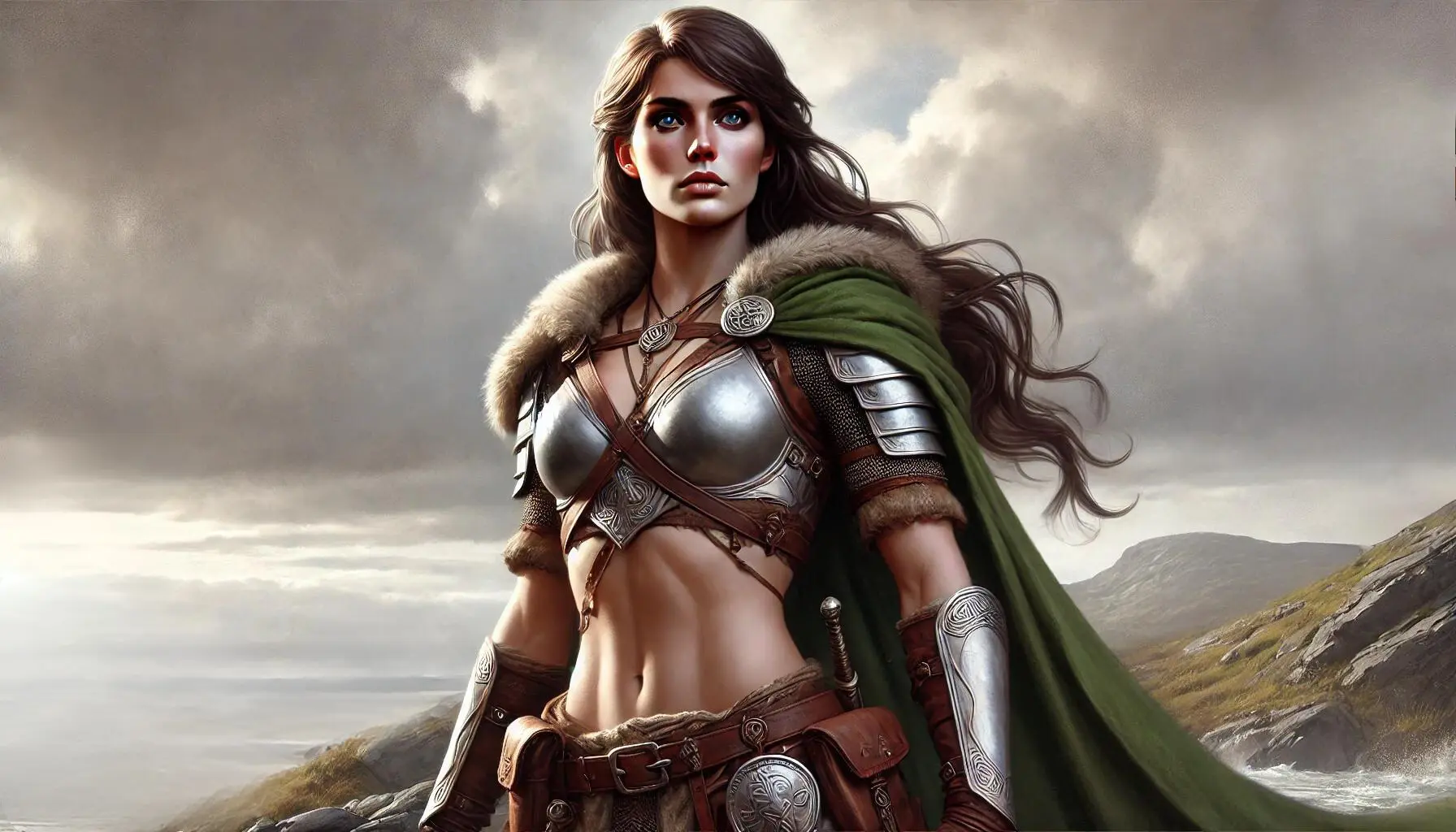
Cu Chulainn’s romantic entanglements extended beyond his marriage to Emer, involving several notable women:
Aífe
During his training with Scáthach, Cu Chulainn fought and defeated Aífe, Scáthach’s rival. They had a son named Connla. This relationship led to a tragic encounter later in life when Cú Chulainn unknowingly killed Connla in combat.
Derbforgaill
Cú Chulainn rescued Derbforgaill, a Scandinavian princess, from being sacrificed to the Fomorians. She fell in love with him and came to Ireland in search of him. However, due to a series of tragic events, Cu Chulainn could not marry her, and she was given to his foster-son Lugaid Riab nDerg.
Popular Myths Involving Cú Chulainn
Cú Chulainn, one of the most celebrated heroes in Irish mythology, is central to many captivating myths.
Myth: The Cattle Raid of Cooley (Táin Bó Cúailnge)

The Táin Bó Cúailnge, or The Cattle Raid of Cooley, stands as a central epic of the Ulster Cycle in Irish mythology. Often likened to Ireland’s Iliad, the tale revolves around Queen Medb of Connacht and her husband, Ailill, who covet the prized brown bull of Cooley, Donn Cuailnge, to match Ailill’s wealth.
Their quest to capture the bull leads to a war against Ulster, whose warriors suffer under a curse, leaving the young hero Cú Chulainn to defend the province single-handedly.
At just 17, Cú Chulainn engages in heroic combats, including a notable three-day duel with his foster brother, Ferdiad. Despite overwhelming odds, Cú Chulainn’s superhuman abilities and battle frenzy, known as ríastrad, enable him to hold off the Connacht forces. His relentless defence leaves him gravely wounded and exhausted.
The epic climaxes as Ulster warriors recover from the curse and join the battle, ultimately routing Medb’s army. Though the Connacht forces capture the brown bull, the bull later fights and kills Ailill’s white bull before succumbing to its injuries.
The Táin concludes with a fragile peace between Connacht and Ulster, immortalizing Cú Chulainn’s valour and the tragic costs of war.
Myth: The Tragic Death of Connla
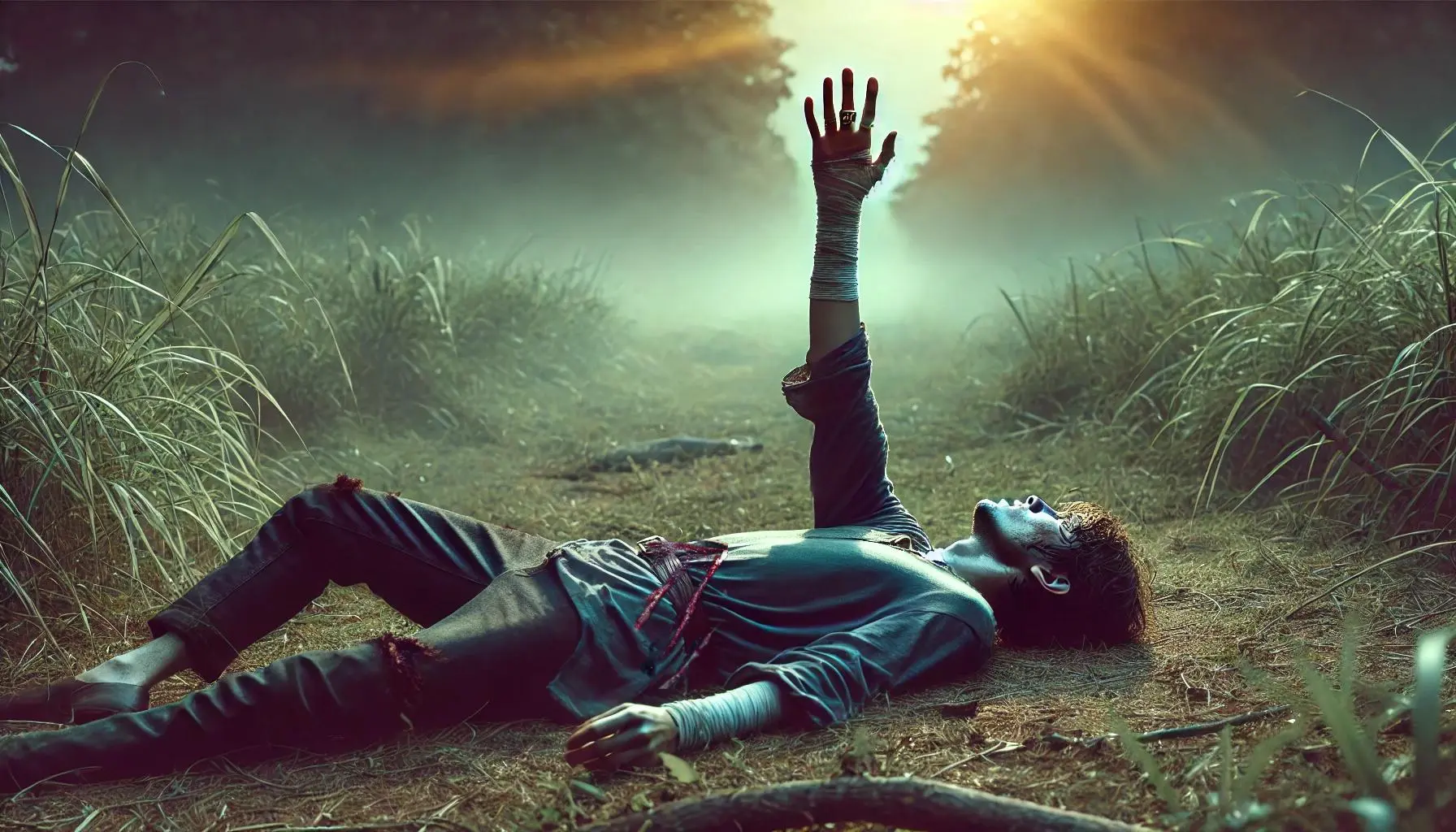
Connla’s tragic death is one of the most heart-wrenching tales in the Ulster Cycle of Irish mythology. Connla, the son of the great hero Cú Chulainn and the Scottish warrior woman Aífe, grows up in Scotland with his mother.
Before leaving Aífe, Cú Chulainn gives her a gold thumb-ring, instructing her to send their son to Ireland when he can wear it. He also imposes three geasa (prohibitions) on Connla: he must not turn back once he starts his journey, he must not refuse a challenge, and he must never reveal his name.
When Connla reaches the right age, Aífe sends him to Ireland. Arriving at Tracht Eisi, Connla’s martial prowess quickly draws the Ulstermen’s attention. Alarmed by the young warrior’s skills, King Conchobar sends several champions to confront him, but Connla defeats them all.
Finally, Cú Chulainn faces the mysterious youth. Despite his wife Emer’s warnings that the boy might be his son, Cú Chulainn, bound by honour and duty, engages Connla in combat.
The battle between father and son becomes fierce. Unaware of Connla’s identity, Cú Chulainn uses his deadly spear, the Gáe Bulg, to kill him. As Connla lies dying, he reveals his identity, showing the ring his father gave him.
Stricken with grief and horror, Cú Chulainn realizes he has killed his own son. This tragic event underscores themes of fate, honour, and the devastating consequences of misunderstandings and rigid adherence to warrior codes. Connla’s death remains a poignant reminder of the personal sacrifices and tragedies that often accompany heroism.
Myth: The Death of Cu Chulainn
Cú Chulainn’s death, one of the most poignant episodes in Irish mythology, involves a series of ominous signs. Ignoring numerous omens, including his horse Lia Macha crying blood and wine turning to blood, Cú Chulainn proceeds towards his fate.
He encounters three old women roasting a dog. Despite a geis (taboo) against eating dog meat, he partakes to honour their hospitality, losing half his strength.
Cú Chulainn’s final battle pits him against Lugaid mac Con Roí and the sons of Calatan. They seek revenge for their father’s death. Each son demands one of Cú Chulainn’s spears, which he grants by killing them.
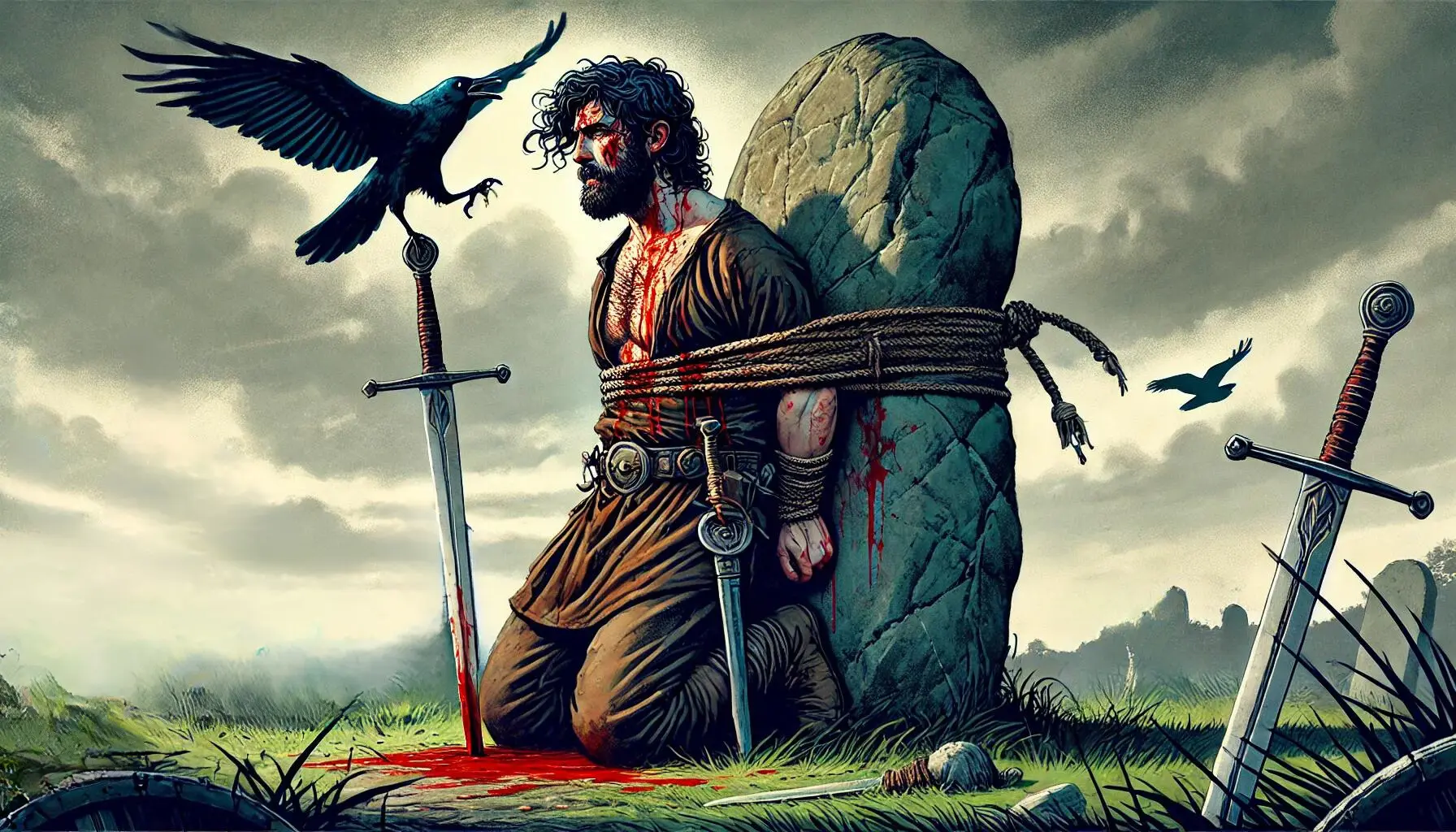
Lugaid uses these spears to mortally wound Cú Chulainn, striking his stomach and spilling his bowels. Determined not to die lying down, Cú Chulainn ties himself to a standing stone, sword in hand, to face his enemies even in death.
For three days, his enemies fear to approach him. The Morrigan, in the form of a raven, lands on his shoulder, signalling his death. When Lugaid tries to take Cú Chulainn’s sword, the hero’s grip slices off Lugaid’s hand.
Thus ends the life of Ireland’s greatest hero, symbolizing the tragic consequences of pride and the relentless pursuit of honour.
Myth: The Demonic Chariot of Cu Chulainn
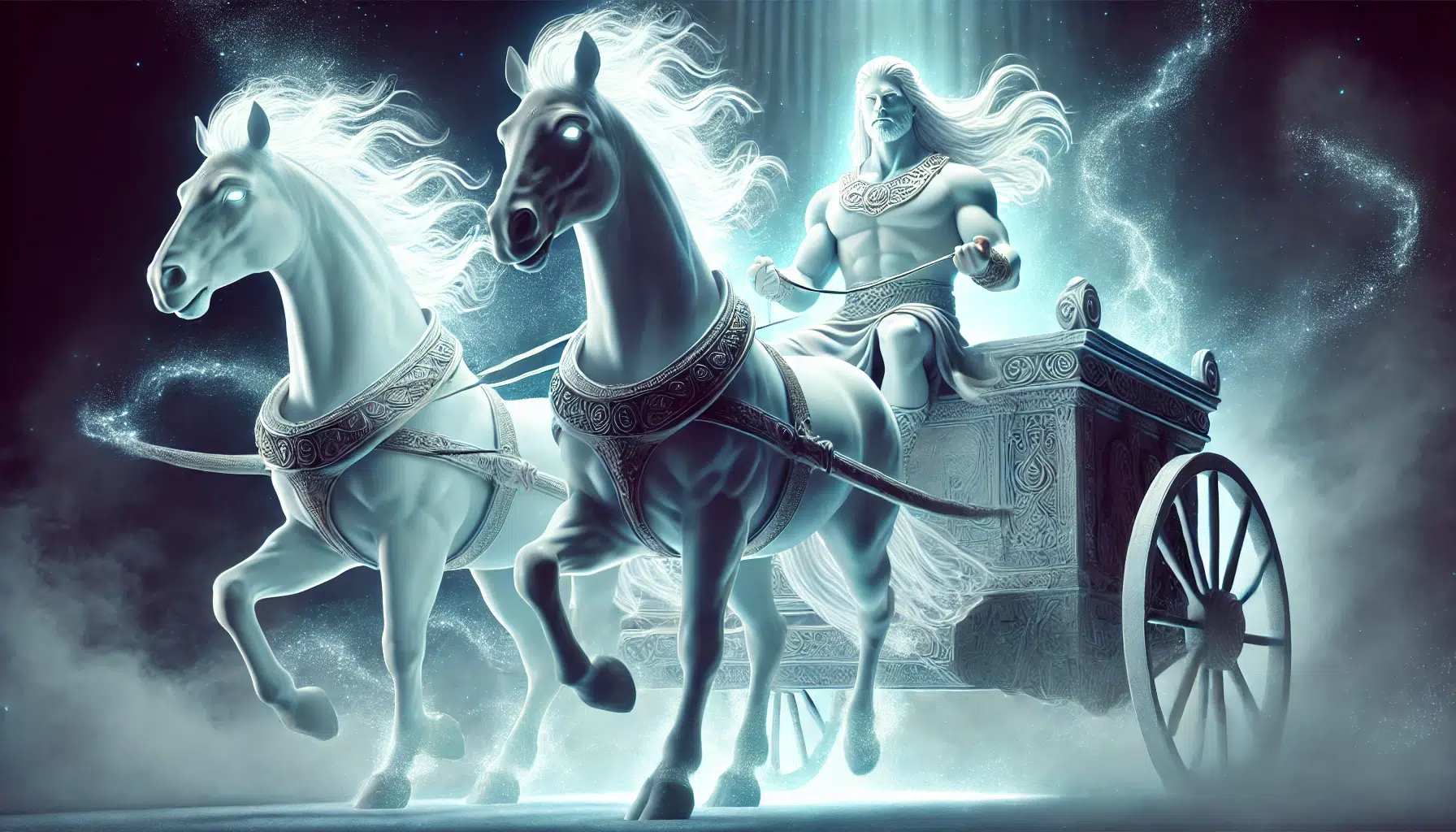
Saint Patrick attempts to convert King Lóegaire to Christianity by summoning Cú Chulainn’s ghost. Cú Chulainn appears with his chariot and horses, demonstrating Saint Patrick’s power. This encounter convinces King Lóegaire to convert.
This tale highlights Cú Chulainn’s enduring influence, even after death.
His legendary presence plays a crucial role in the king’s conversion, showcasing the hero’s lasting impact on Irish mythology and culture. This myth demonstrates how Cú Chulainn’s spirit aids in spreading Christianity. The story captures the hero’s power and the saint’s influence, intertwining myth and faith.
Cú Chulainn in Literature and Media
Cú Chulainn, the legendary hero of Irish mythology, leaves a lasting mark on modern culture. His tales continue to captivate audiences through literature, media, and video games.
Literature
Cú Chulainn’s exploits inspire many literary works, especially during the Celtic Revival in the late 19th and early 20th centuries.
Lady Gregory’s Cuchulain of Muirthemne (1902) retells many legends of Cú Chulainn, paraphrasing and romanticizing the tales. It gained popularity and support from the Celtic Revival movement. William Butler Yeats, who wrote the introduction, also created plays and poems based on Cú Chulainn’s legend.
Pádraig Pearse’s Mise Éire (1912) an Irish poem personifies Ireland as a mother who gave birth to Cú Chulainn, symbolizing the nation’s glory and aspirations for independence.
Samuel Beckett’s Murphy (1938) references Sheppard’s statue of Cú Chulainn, mocking the Irish Free State and its inhabitants’ attitudes.
Media, Television and Games
Cú Chulainn’s story appears in various media formats, including television and film.
The PBS Documentary, The Unbelievably Tragic Story of Cú Chulainn, explores his life and legend, highlighting his heroic deeds and tragic fate.
Cú Chulainn’s legendary status makes him a popular character in video games, where his heroic and mythical attributes shine.
- Shin Megami Tensei Series: Cú Chulainn appears as a powerful warrior and neutral ally, fighting alongside players regardless of alignment.
- Tir Na Nog (1984): In this ZX Spectrum and Amstrad CPC game, Cú Chulainn navigates the afterlife, solving puzzles and avoiding enemies.
- Smite: In this multiplayer online battle arena (MOBA) game, Cú Chulainn acts as a powerful warrior, excelling as a diving frontliner and bruiser.
Conclusion
Cú Chulainn’s life stands as a testament to heroism, love, and tragedy. His legendary feats and complex relationships showcase his superhuman abilities and deep emotions. Despite his many romantic entanglements, his marriage to Emer remains a central and enduring part of his story.
Cú Chulainn’s encounters with other women, like Fand and Aífe, reveal his multifaceted character and the challenges he faced. His legacy endures in Irish mythology, symbolizing courage, honour, and resilience.
As one of Ireland’s greatest heroes, Cú Chulainn’s story continues to captivate and inspire, reminding us of the timeless themes of love, loyalty, and sacrifice.
Learn more about Celtic history and mythology: