

Clytie: The Jealous Nymph Who Became a Sunflower
Clytie is one of Greek mythology’s most bittersweet figures. A water nymph and daughter of the Titan Oceanus, she is best known for her tragic love for Helios, the god of the sun.
Introduction to Clytie

Consumed by jealousy after losing him, Clytie’s heartbreak led to her transformation into a sunflower, forever turning toward the sun she adored.
Her story blends love, betrayal, and longing, showing how deep emotions could shape myths and nature alike. Ancient poets told her tale as both a warning about obsession and an explanation for why sunflowers follow the sun.
Though she appears only briefly in Greek myths, Clytie’s story captures a powerful image of unending devotion and loss.
Today, her name still evokes the image of a flower reaching toward the light, bound by a love that never fades.
Other Greek myths:
- Most Popular Greek Myths in Greek Mythology
- Famous Greek Myths: Love, Conflict and Tragedy
- Greek Myths About the Stars: Orion to Sagittarius
- The Fall of Icarus: Greek Myth of Wings and Warning
- Callisto: Betrayed Nymph Turned Constellation
Origins of Clytie

Clytie was a water nymph (naiad) and one of the many daughters of Oceanus, the Titan of rivers, and Tethys, a sea goddess.
Like her countless Oceanid sisters, Clytie was tied to the natural world and often linked to rivers and springs.
Her gentle beauty and divine lineage made her part of the vast retinue of nymphs who roamed the earth and waters, serving as minor deities connected to specific places.

Despite her serene origins, Clytie’s myth is defined not by her family ties but by her love for Helios, the radiant sun god.
Helios drove his golden chariot across the sky each day, bringing light to the world, and Clytie became enchanted by his brilliance.
Her admiration turned into deep, passionate love, but it was not returned in kind. Some versions suggest that Helios did once favour her but later abandoned her for another mortal or nymph, depending on the telling.
Her heartbreak and envy of her rival consumed her, driving her into despair.
This emotional intensity reflects the ancient Greek view of nymphs as beings of nature who were vulnerable to human-like feelings—love, jealousy, and longing—that could lead to dramatic consequences.
The Myth of Clytie and Helios

Clytie’s love for Helios began as admiration but soon became overwhelming devotion.
She watched him each day as he rode his blazing chariot across the sky, filling the world with light. Some accounts say that Helios once returned her affection, but his heart eventually strayed.

He abandoned Clytie for another woman—often named Leucothoe, a mortal princess—or another nymph, depending on the version of the tale.
Jealous and heartbroken, Clytie could not bear the betrayal.
In some retellings, she revealed Helios’ affair to Leucothoe’s father, leading to Leucothoe’s tragic death. Yet even after this act of vengeance, Helios rejected her completely, turning his favour away from her forever.
Devastated, Clytie retreated from the world. She sat alone on the ground, refusing food or water, staring endlessly at the sun god as he crossed the sky. For nine days, she neither ate nor moved, her gaze locked on Helios.
Her longing transformed her body: her limbs rooted into the earth, her skin turned to petals, and her face became the centre of a sunflower.
Even as a flower, she continued to follow Helios, turning her face toward his light from sunrise to sunset. Her transformation was both punishment and mercy—she would never again leave the sun she adored but could never truly have.
This myth not only explains why sunflowers follow the sun but also stands as a symbol of unreturned love and relentless devotion.
It warns of the consuming power of jealousy while portraying Clytie’s enduring love in a way that is both tragic and beautiful.
Symbolism of Clytie’s Transformation
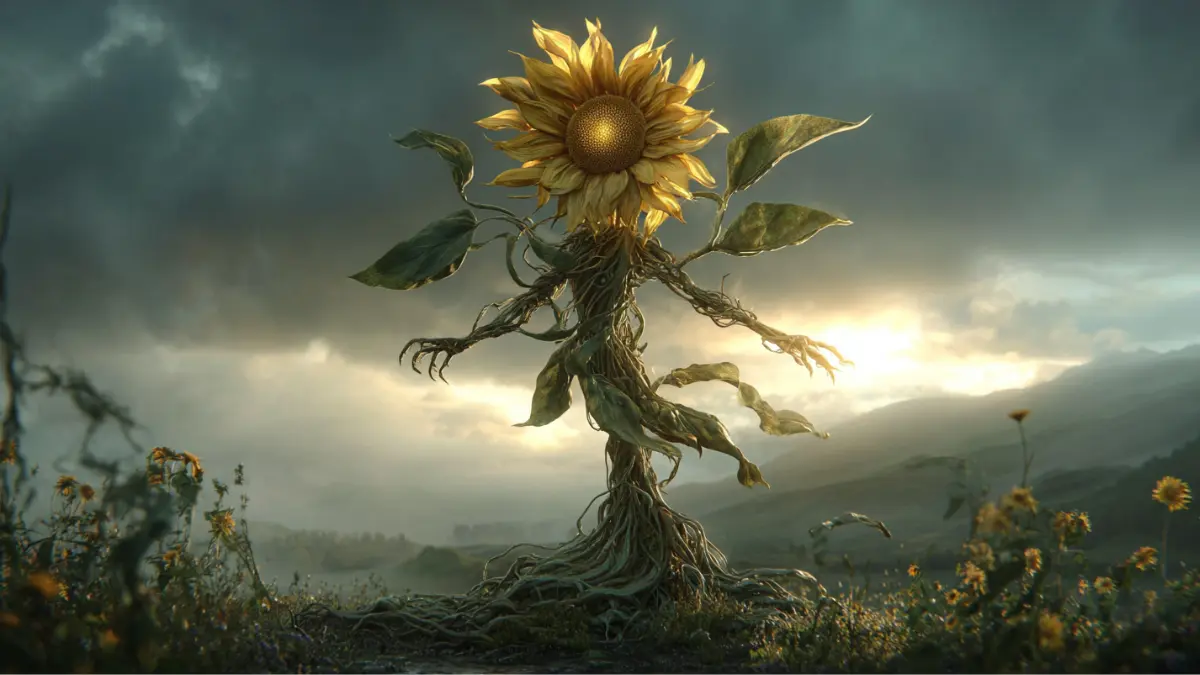
Clytie’s transformation into a sunflower holds deep meaning.
Her tale is often seen as a symbol of unrequited love, with her eternal gaze representing the pain of longing for someone who will never return affection.
In Greek culture, her story also reflected how intense emotions could transform both people and nature.
The sunflower’s habit of turning toward the sun mirrors Clytie’s endless devotion to Helios. This imagery connected her myth to themes of loyalty and fixation, but also served as a cautionary tale about passion unchecked by reason.
By linking her to a flower rooted in place yet reaching skyward, the myth shows her trapped between earth and the god she adored.
Her connection to Helios also tied sunflowers to light, life, and renewal, blending her tragic story with more hopeful symbols.
To the Greeks, nature often carried traces of divine myths, and Clytie’s fate explained both beauty and sorrow in the natural world.
Interesting Facts

Oceanid Lineage: Clytie was one of thousands of Oceanids, making her kin to many other water nymphs like Leuce.
Helios’ Betrayal: Some versions of the myth link her jealousy to Leucothoe’s death, showing the darker side of her love.
Sunflower Myth: Though sunflowers are native to the Americas, ancient Greeks used the heliotrope flower to tell her story. Over time, the sunflower became linked to her myth.
Symbol of Devotion: Clytie’s tale inspired art and poetry as an image of steadfast, if tragic, loyalty.
Nature’s Origins: Her story fits a common Greek theme where emotional tales explained natural phenomena, blending myth with the world around them.
Conclusion
Clytie’s story is a haunting mix of beauty and sorrow. Her love for Helios, her jealousy, and her eventual transformation into a sunflower show how powerful emotions could shape both myth and nature.
She became a symbol of unreturned affection and enduring devotion, forever turning her face toward the sun she could never reach.
Through her, the Greeks explained not only the behaviour of flowers but also the deep, often painful ties between love and longing.
Today, Clytie’s myth remains a poignant reminder of how passion and heartbreak leave lasting marks—even in the world of gods and nature.