
Ancient Chinese Mythology Gods, Legends and Myths
Chinese mythology gods is a rich tapestry of cultural history, folktales, and religious traditions that have been passed down through centuries in both oral and written forms. It encompasses a diverse array of myths derived from regional and cultural traditions across Greater China. These myths often feature extraordinary individuals and beings endowed with magical powers, unfolding in fantastical mythological realms or historical epochs.
Chinese mythology is an ancient and complex system of beliefs, combining Taoism, Buddhism, and folk traditions.
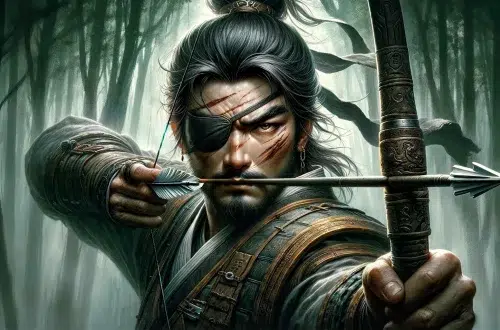
Learn more about: Chinese Archers from History and Mythology
Chinese mythology is deeply influenced by major belief systems like Confucianism, Taoism, and Buddhism. These beliefs adapted existing myths and added new elements to the stories.
Taoism includes myths about immortals and spiritual paradises.
Many stories feature Taoist concepts like immortality and the realms where immortals live.
Confucianism emphasizes myths that glorify benevolent rulers and moral virtues, such as the Three August Ones and Five Emperors, which align with Confucian ideals.
Buddhism assimilates and adapts many pre-existing myths into its teachings, blending them with Buddhist concepts and values.
Three Sovereigns of Chinese Mythology Gods and Demigods
The Three Sovereigns, also called the Three August Ones, are demigods or god-kings.
They use their supernatural abilities to improve people’s lives. They play a significant role in the early development of human civilization and introduce essential aspects of culture and technology.
Fuxi: God of Humanity
- Inventions: Fishing, hunting, and the domestication of animals
Fuxi is one of the oldest gods in Chinese mythology and a cultural hero. Fuxi, along with his sister and wife Nuwa, creates humanity. He teaches humans essential skills like fishing, hunting, farming, and medicine. He also invents Chinese writing.
Nuwa: Goddess of Creation
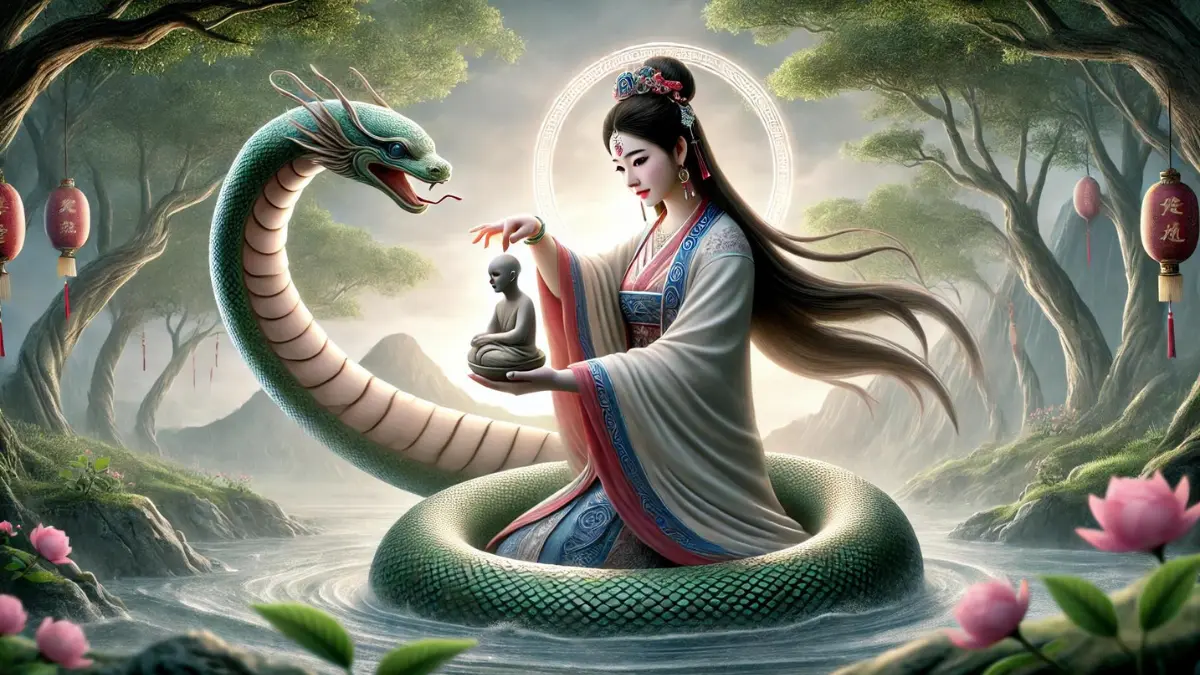
- Contributions: Creating humans from clay and repairing the sky after it was damaged
Nuwa is a goddess creating humanity in Chinese mythology. She shapes people from clay, giving them life and intelligence. Nuwa is also famous for repairing the sky after it cracks, using five coloured stones. This act saves the world from chaos and destruction.
Artisits depict her as a beautiful woman with a serpent’s tail. Nuwa represents balance and harmony, and she is honoured for her compassion and creativity. Her stories teach about the origins of life and the importance of protecting the natural world. Nuwa is a beloved figure in Chinese culture, symbolizing creation and protection.
Shennong: God of Medicinal Medicine
- Contributions: Introduced and taught people how to cultivate crops and use medicinal herbs
Shennong, the “Divine Farmer,” is an important figure in Chinese mythology. He is a sovereign who teaches people agriculture and herbal medicine. Shennong discovers various plants, herbs, and their medicinal properties.
He is a wise ruler who helps people learn how to cultivate crops and use plants for healing. Shennong also introduces the practice of tea drinking. His teachings greatly improve the quality of life for ancient people. He symbolizes knowledge, innovation, and the importance of agriculture and medicine in Chinese culture.
Five Emperors of Chinese Mythology
The Five Emperors are legendary sage-kings known for their moral character and wise rule. They are considered exemplary rulers who bring peace and prosperity to their realms.
Yellow Emperor (Huangdi)
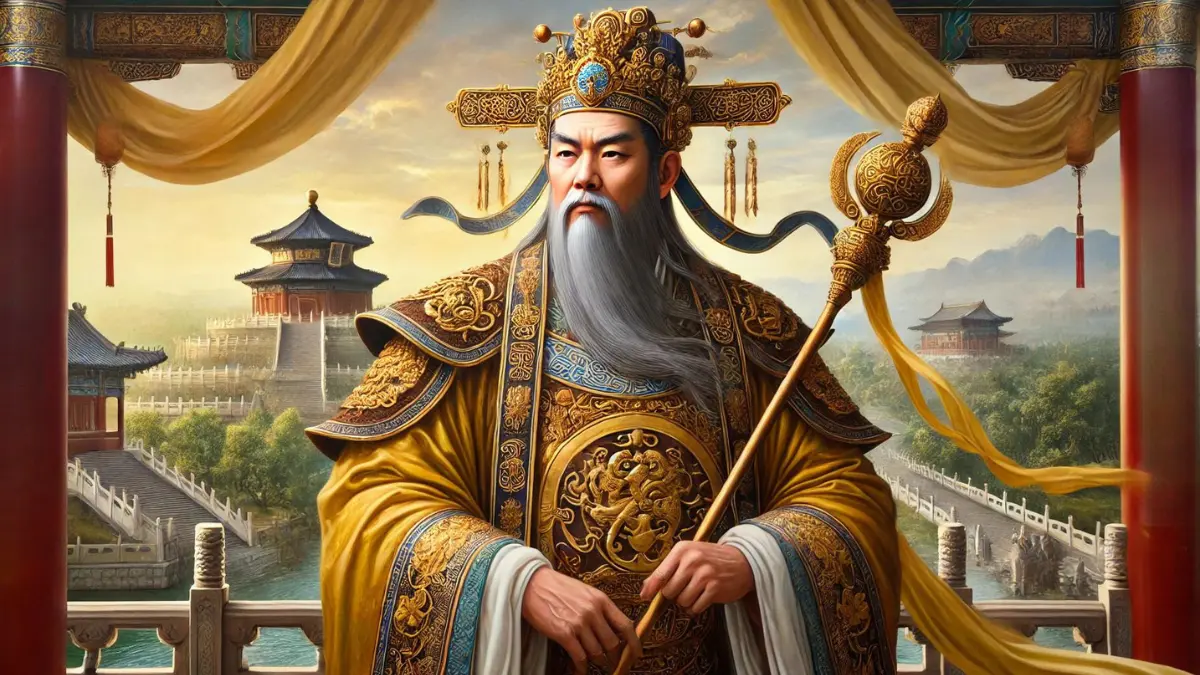
- Inventions: The compass, script, and medical practices
The Yellow Emperor, known as Huangdi, is a legendary ruler in Chinese mythology. He is one of the ancient Five Emperors and is credited with founding Chinese civilization. Huangdi ruled over 5,000 years ago and is known for his wisdom and leadership.
He introduces many important inventions and concepts, including the compass, calendar, and medicine. Huangdi also promotes the use of silk, built roads, and establishes a centralized government. Artists depict him as a wise and benevolent leader who helps shape Chinese culture and society.
Huangdi is also associated with the development of Taoism and is considered a key figure in its early history. He symbolizes unity, innovation, and the importance of governance and knowledge in Chinese culture.
Zhuanxu (Grandson of the Yellow Emperor)
- Contributions: Known for his efforts to unify the tribes and establish a stable government
Zhuanxu is a legendary figure in Chinese mythology and one of the Five Emperors. He is known for his wisdom and leadership. As a ruler, Zhuanxu brings order and stability to the land. He focuses on improving governance and establishes a strong central authority.
He also separated the realms of heaven and earth, ending the communication between humans and gods. Zhuanxu’s reign is associated with advancements in astronomy and music. He is remembered as a wise and just leader who contributed to the development of Chinese civilization. His story highlights the importance of strong leadership and innovation.
Emperor Ku (Great-grandson of the Yellow Emperor)
- Contributions: Promoted agricultural development and social stability
Emperor Ku is a legendary figure known for his wisdom and kindness. As a ruler, Emperor Ku promotes agriculture and education, helping people learn important skills.
He is also credited with improving communication by developing music and language. Emperor Ku focuses on building a peaceful and prosperous society, encouraging harmony among his people. He is often remembered for his dedication to the welfare of his subjects. Emperor Ku’s reign symbolizes the importance of education, culture, and benevolent leadership in Chinese history.
Emperor Yao
- Contributions: Instituted a calendar system and promoted moral governance
As a legendary ruler in Chinese mythology, Emperor Yao is known for his wisdom and virtue. Yao is famous for his humility and dedication to his people. He focused on justice, harmony, and good governance.
Yao works to improve the lives of his subjects, managing natural disasters and promoting fairness. He is remembered for choosing his successor based on merit rather than family ties, demonstrating his commitment to the common good. Yao’s reign symbolizes the importance of moral leadership and serving the people with integrity.
Emperor Shun (Successor to Emperor Yao)
- Contributions: Makes improvements to the government
Emperor Shun is a legendary figure in Chinese mythology celebrated for his humility. Despite coming from a poor family, Shun earns great respect for his hard work and strong moral character.
He focuses on justice and fairness, creating laws that help unite the people. Emperor Shun is known for his wise and compassionate rule, always putting the welfare of his people first. He chose his successor based on merit, demonstrating his commitment to good governance. Shun’s legacy highlights the importance of humility, fairness, and dedication to the public good.
Legacy and Cultural Impact
People consider the Three Sovereigns and Five Emperors foundational figures in Chinese mythology and history. Generations pass down their stories, and historians record them in various texts, including the Records of the Grand Historian by Sima Qian. These figures serve as paragons of virtue and wisdom, acting as moral exemplars in Confucian thought.
Chinese culture continues to celebrate these mythological figures, reflecting the values and ideals that shape Chinese civilization for millennia.
Creation Myths and Cosmology
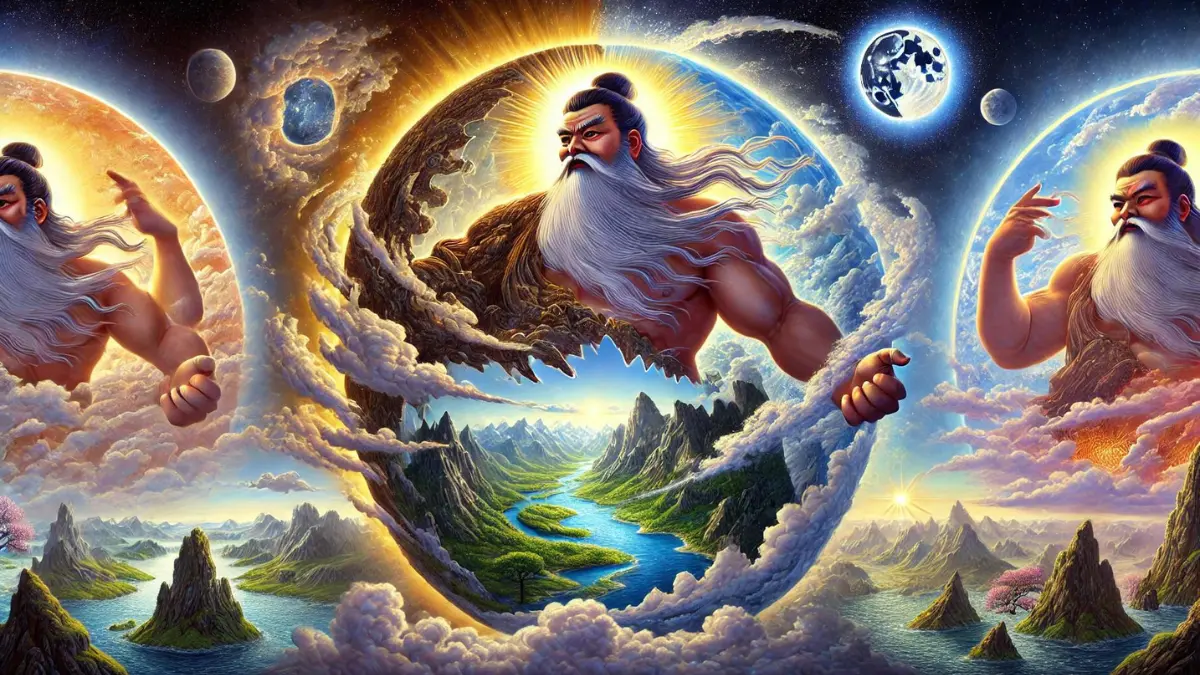
One of the central themes in Chinese mythology is the creation of the universe and the origins of deities and heavenly inhabitants.
Myth: The Legend of Pangu
The legend of Pangu is a creation myth in Chinese mythology. People believe Pangu created the world. He emerges from a cosmic egg that contained chaos. When he wakes up, he separates the yin and yang, forming the earth and sky.
Pangu grows taller each day, pushing the sky higher and the earth lower. After 18,000 years, Pangu’s body transforms. His breath became the wind, his voice thunder, and his eyes the sun and moon. His body forms mountains, rivers, and forests, while his blood became the oceans.
Pangu’s sacrifice brings order and life to the world. This legend emphasizes the importance of balance and creation. Pangu is honoured as the first being and creator in Chinese culture, symbolizing the birth of the universe.
Myth: The Story of Nuwa and Fuxi
The story of Nuwa and Fuxi is a famous myth in Chinese mythology. People consider Nuwa and Fuxi both brother and sister, as well as husband and wife. They create humanity. Nuwa, often depicted with a serpent’s tail, shapes humans from clay. She also repairs the sky after it is damaged, using stones of five different colours.
Fuxi, known for his wisdom, taught people essential skills like fishing, hunting, and writing.
Together, they established order and culture in the world. A great flood once threatened to destroy the world, but Nuwa saved it by repairing the sky with five coloured stones. Fuxi and Nuwa symbolize the origins of human civilization and the importance of balance and harmony. Their story teaches about the creation of life and the preservation of the world.
Ancient Chinese Mythology Gods and Goddesses

Besides the sovereign deities of Nuwa and Fuxi, there are many other gods. Chinese mythology features a pantheon of gods, goddesses, and legendary heroes, each with their own stories and significance.
Jade Emperor – Supreme Ruler
The Jade Emperor, also known as Yuhuang or Yudi, is a major deity in Chinese mythology. He is the supreme ruler of the heavens and all deities in Chinese mythology and presides over a celestial court. The Jade Emperor oversees the order of the universe, maintaining balance and harmony.
Artists often portray him as a wise and benevolent ruler, wearing imperial robes and a crown. People honour him during festivals, seeking his blessings for a prosperous year. The Jade Emperor symbolizes authority, justice, and the divine order of the cosmos.
Sun Wukong – The Monkey King
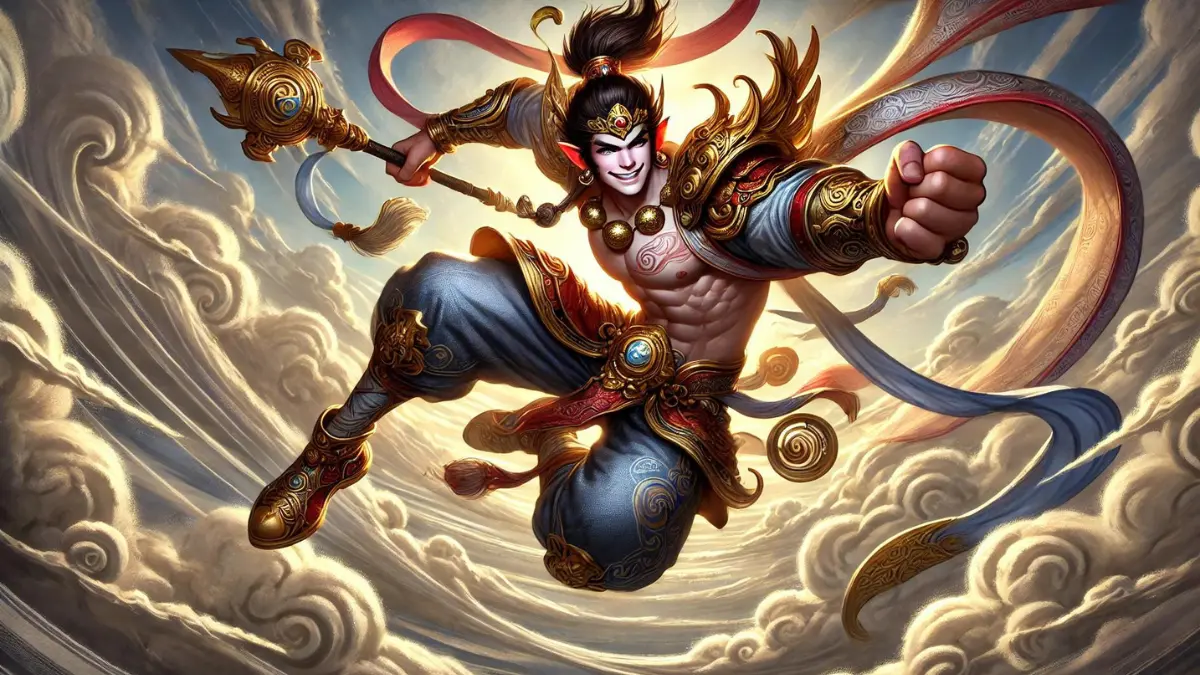
Sun Wukong, also known as the Monkey King, is a legendary character in Chinese mythology. He is famous for his strength, intelligence, and mischievous nature. Sun Wukong has many magical abilities, like changing shape and travelling quickly.
He gained immortality through various tricks and defied the gods. Despite his rebellious nature, he often helps others and fights for justice. Sun Wukong is a key figure in the classic Chinese novel Journey to the West. He symbolizes bravery, cleverness, and the quest for freedom.
Chang’e – Goddess of the Moon
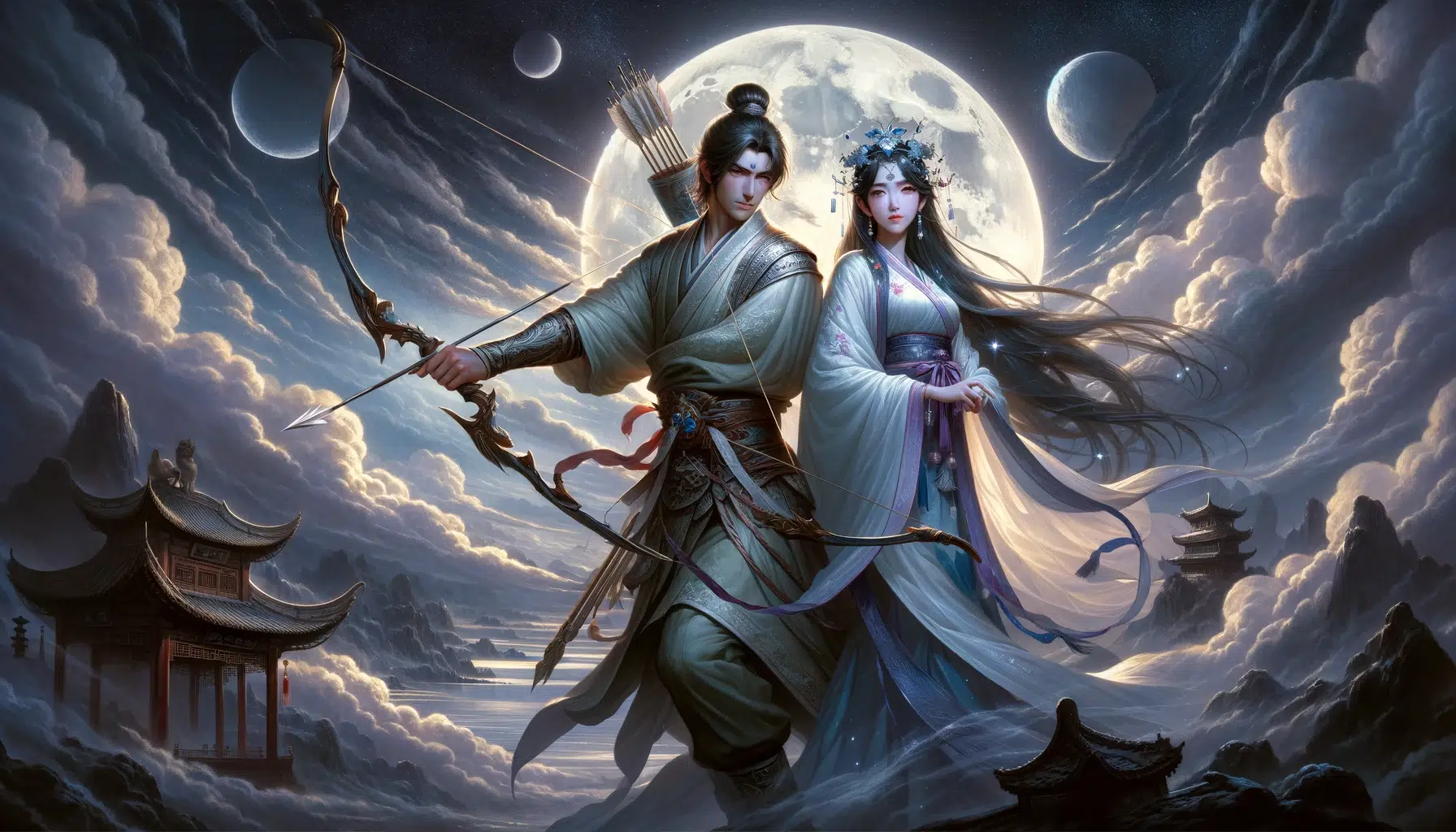
Chang’e is the moon goddess in Chinese mythology. She is beautiful and graceful. According to the legend, Chang’e drank an elixir of immortality and ascended to the moon, where she lives with a jade rabbit.
People honour her during the Mid-Autumn Festival by admiring the moon and eating mooncakes. Chang’e symbolizes beauty, love, and the longing for reunion. Her story is a popular tale in Chinese culture, reminding people of the importance of love and sacrifice.
Guanyin – Goddess of Mercy
Guanyin, the goddess of mercy, is inspired by the bodhisattva Avalokiteśvara. She represents compassion and kindness, offering comfort to those in need. Guanyin listens to the prayers of those who suffer and provides relief and hears the cries of the world, offering aid to those in need.
Artists depict her as a gentle figure with a serene expression, holding a vase of pure water. Many people pray to Guanyin for help and guidance in difficult times. She symbolizes mercy, compassion, and the power of loving-kindness.
Yan Wang – Ruler of the Underworld
Yan Wang is the ruler of the underworld in Chinese mythology. He oversees the judgment and punishment of souls after death. As the king of the underworld, Yan Wang decides the fate of each soul based on their actions in life.
He ensures that justice is served, rewarding the good and punishing the wicked. Many people honour him with offerings, seeking mercy or justice. Yan Wang symbolizes justice, fairness, and the moral consequences of one’s actions.
Xiwangmu – Queen Mother of the West
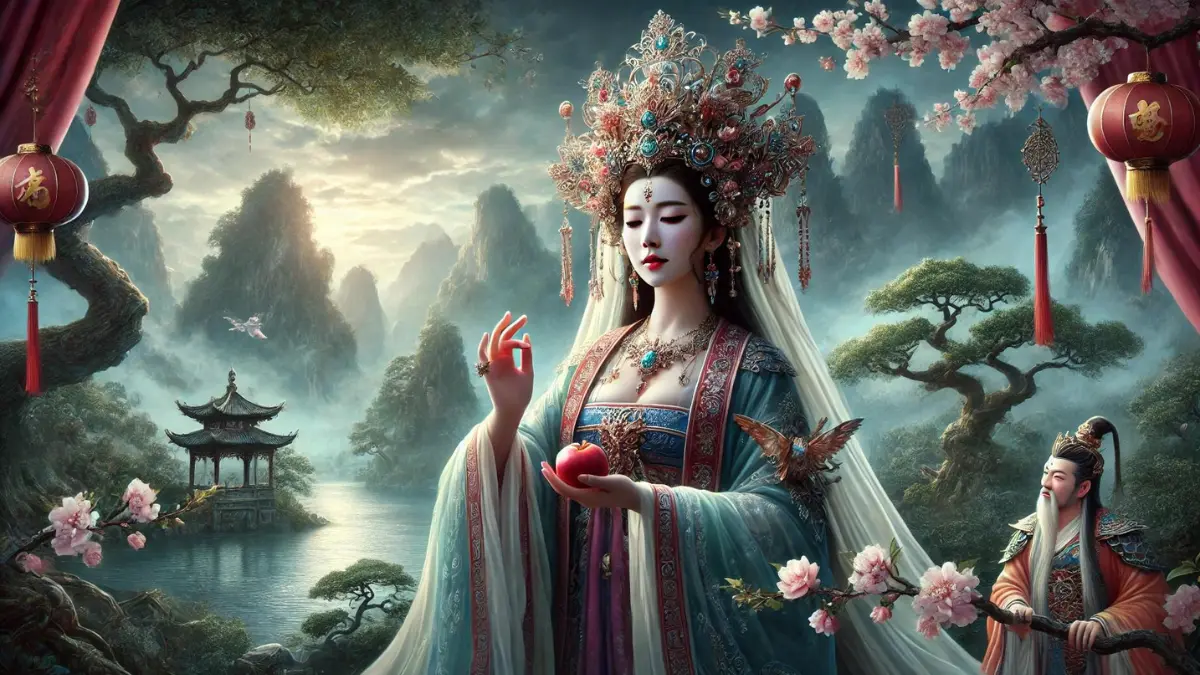
Xiwangmu is one of the oldest and most revered deities, associated with immortality, healing, and longevity. She resides in the Kunlun Mountains and is a guardian of nature’s secrets.
The Queen Mother of the West, known as Xiwangmu, is a powerful goddess in Chinese mythology. She rules over the western paradise and governs immortality. Xiwangmu is often associated with peaches of immortality, which grant eternal life.
Artist depict her as a regal figure with a headdress and a kind expression. Many people respect and honour her, seeking blessings of longevity and health. Xiwangmu symbolizes wisdom, compassion, and the mysteries of life and death.
Caishen – God of Wealth
Caishen is the god of wealth and prosperity in Chinese culture. People often worship Caishen during the Lunar New Year for good fortune. They believe Caishen brings success in business and financial matters.
Artists usually depict him wearing rich clothing and holding gold ingots, symbols of wealth. Many homes and businesses display his image to attract prosperity. People seek Caishen’s blessings for a prosperous and abundant life, making him a popular deity in Chinese traditions.
Mazu – Empress of Heaven
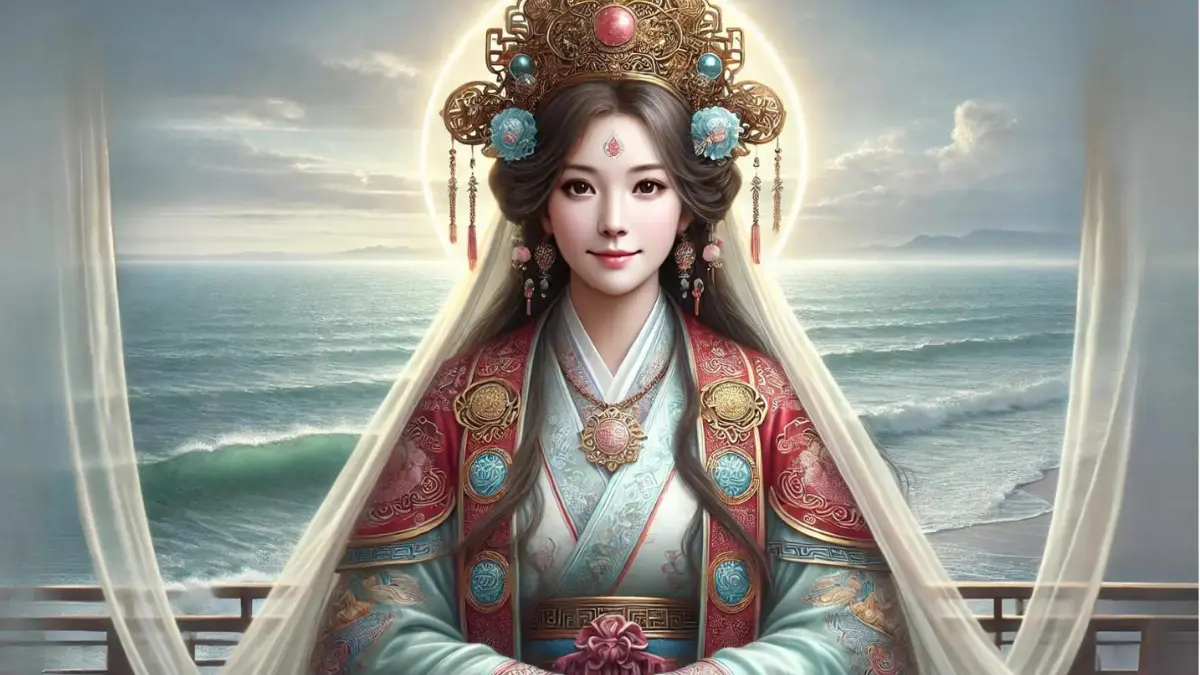
Mazu, known as the Empress of Heaven, is a popular goddess of the sea in Chinese culture. She protects sailors and fishermen, ensuring their safe travels. People often pray to her for good weather and calm seas. She is widely worshipped in coastal regions and is believed to provide safety and guidance to those at sea.
Mazu’s legend tells of her kindness and magical powers, helping those in need. Temples honour her, especially along the coast, where her worshippers seek her blessings. Mazu symbolizes compassion, safety, and guidance, making her a beloved figure in many communities.
Ba Xian – Eight Immortals
The Eight Immortals (Ba Xian) are famous figures in Chinese mythology. They represent different aspects of life and are symbols of good fortune. Each immortal has unique powers and carries special items that help them on their journeys.
They often appear in stories and legends, helping people and fighting evil. The Eight Immortals are popular in Taoist traditions and are often seen as protectors. They symbolize health, prosperity, and longevity, bringing blessings to those who honour them.
Mythical Creatures of Chinese Mythology
Chinese mythology is rich with mythical creatures that symbolize various aspects of nature and human qualities. Two of the most significant are the dragon and the phoenix. These creatures hold deep cultural, symbolic, and spiritual meanings in Chinese tradition.
Chinese Dragons (Lóng)

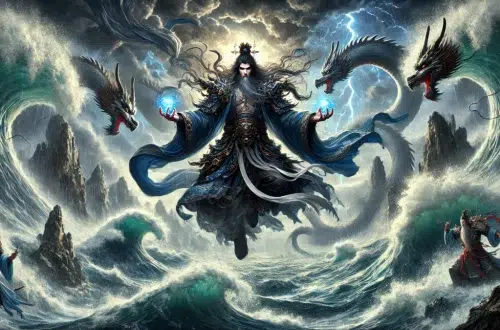
Chinese dragons symbolize power and authority. They control water, rainfall, typhoons, and floods, representing strength and good fortune. Unlike Western dragons, Chinese dragons are wise, benevolent creatures. They bring good luck and protect people.
Historically, the dragon symbolized the emperor’s power. The emperor, called the “Son of Heaven,” used dragon motifs in his throne, robes, and symbols. Chinese dragons are composite creatures, combining features like the body of a snake, fish scales, deer antlers, eagle claws, and a camel’s face. They often hold a flaming pearl, symbolizing wisdom, prosperity, and immortality.
Dragons play a significant role in Chinese culture. During Chinese New Year, people perform the dragon dance, which symbolizes good fortune and drives away evil spirits. Mythical Dragon Kings rule the seas and control the weather, often invoked for rain during droughts. In the yin-yang duality, dragons represent yang, the male, active, and positive force. They are often paired with the phoenix, symbolizing yin, the female, passive, and negative force.
Chinese dragons remain a powerful symbol of strength, wisdom, and cultural heritage, celebrated and revered in various traditions and art forms.
Chinese Phoenix (Fènghuáng)
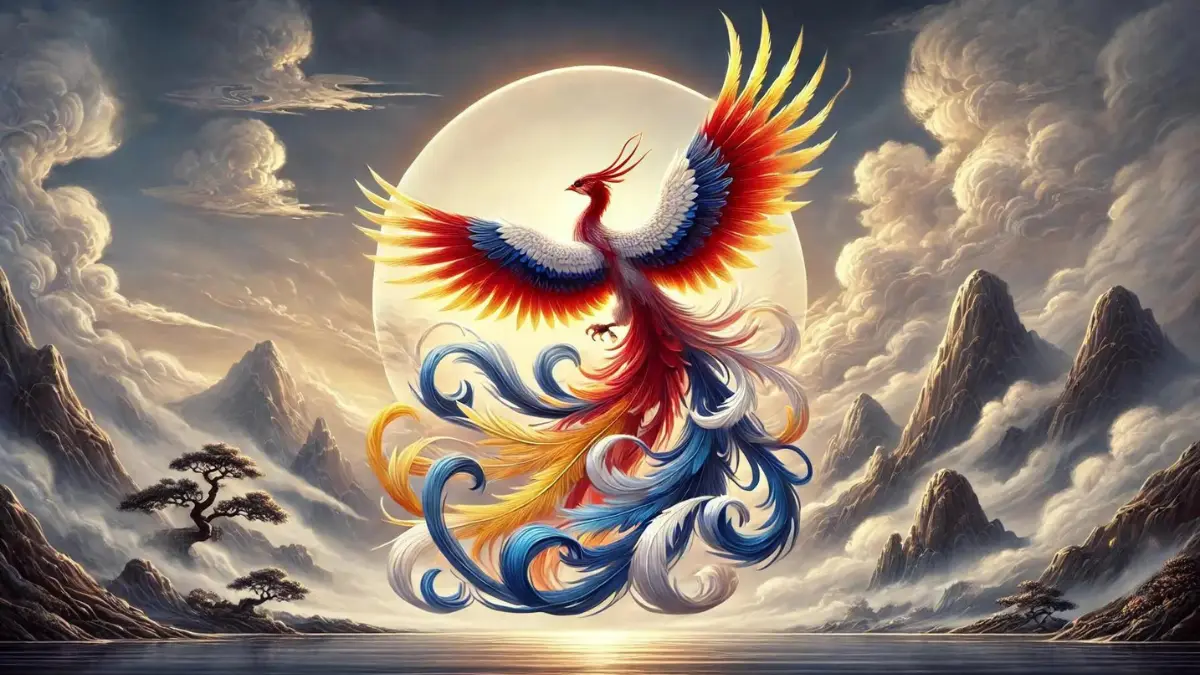
The phoenix, or fenghuang, is a symbol of high virtue, grace, and harmony in Chinese culture. It represents the union of yin and yang, often symbolizing peace and prosperity.
Today, it remains a popular symbol in art, literature, and architecture, representing nobility, beauty, loyalty, and majesty. The phoenix’s enduring presence in Chinese culture highlights its importance as a symbol of virtue and grace.
Comparison of the Dragon and Phoenix
| Aspect | Chinese Dragon (Lóng) | Chinese Phoenix (Fènghuáng) |
|---|---|---|
| Symbolism | Benevolent and wise, strength, authority, good fortune, control over water | Virtue, grace, harmony, peace, prosperity, rebirth and immortality |
| Association | Emperor, yang (male) | Empress, yin (female) |
| Physical Traits | Composite creature with parts of various animals, often depicted with a flaming pearl | Composite bird with parts of various animals, depicted in five sacred colours |
| Cultural Role | Protector, bringer of rain, symbol of imperial power | Harbinger of peace, omen of good fortune, symbol of marital harmony, and rebirth |
| Historical Use | Imperial iconography, dragon dance, dragon kings | Empress’s symbol, Confucian values |
Famous Myths and Legends in Chinese Mythology
Myth: The Butterfly Lovers
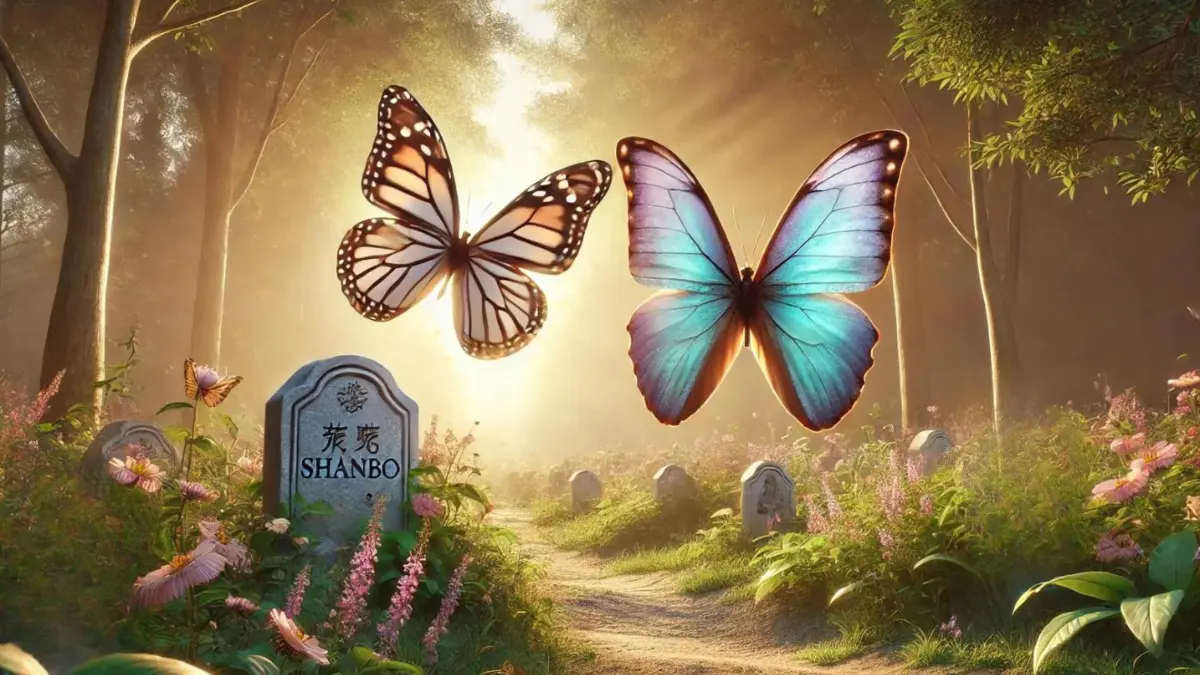
The myth of the Butterfly Lovers is a famous Chinese love story. It tells the tale of Liang Shanbo and Zhu Yingtai. Zhu disguises herself as a man to attend school, where she meets Liang.
They grow close as friends, but Liang doesn’t know Zhu’s true identity. When Zhu reveals her identity, they realize they love each other. However, Zhu is already betrothed to another and must marry him.
Heartbroken, Liang dies, and Zhu, in grief, on her wedding day, jumps into his grave.
They transform into butterflies and fly away together, free from earthly troubles. Their story symbolizes eternal love and the power of true devotion.
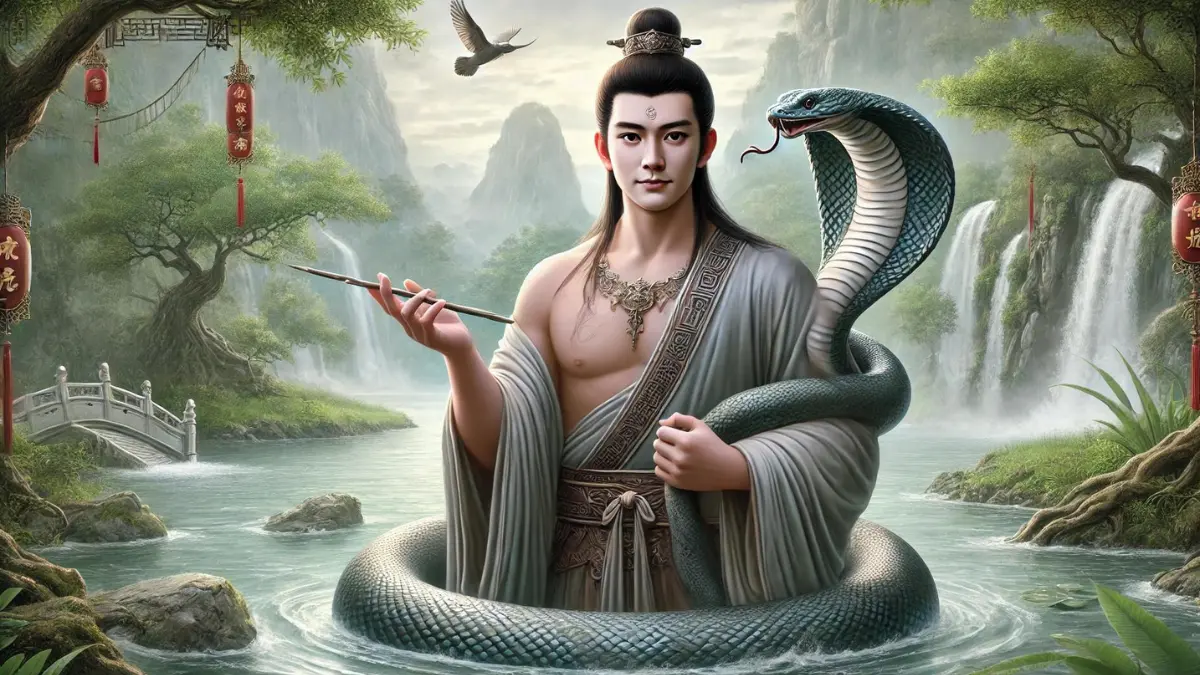
Myth: The Legend of the White Snake
The myth of Bai Suzhen tells the story of a white snake spirit who transforms into a woman. She meets and falls in love with a mortal man named Xu Xian. They marry and live happily together. A monk named Fahai discovers Bai Suzhen’s true nature. He disapproves of their relationship and tries to separate them.
The myth of Bai Suzhen is a beloved tale in Chinese culture.
Myth: The Moon Goddess Chang’e
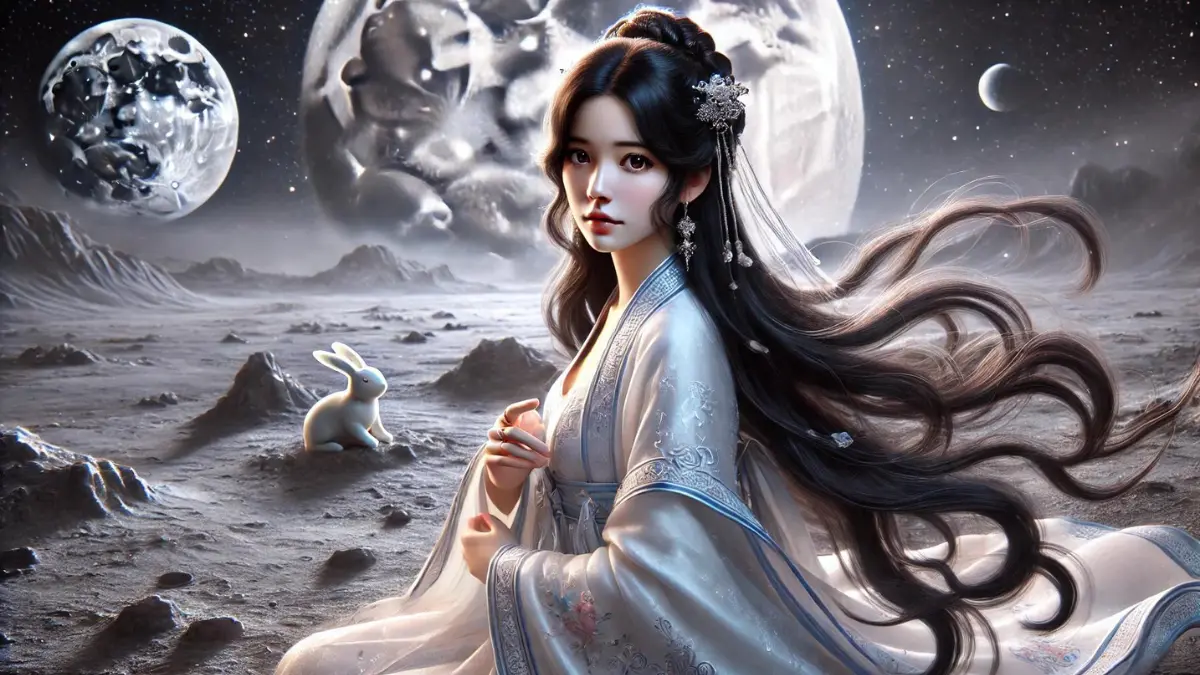
Chang’e is the goddess of the moon in Chinese mythology. She lives on the moon and artist often depict her with a rabbit. The myth says that Chang’e drinks an elixir of immortality, which makes her ascend to the moon. This act separated her from her husband, Hou Yi, who remained on Earth.
People honour Chang’e during the Mid-Autumn Festival, where they admire the full moon and enjoy mooncakes. Her story represents themes of love, sacrifice, and longing. Chang’e is a beloved figure in Chinese culture, symbolizing beauty and grace. Her legend continues to inspire art and literature.
Myth: The Weaver Girl and the Cowherd
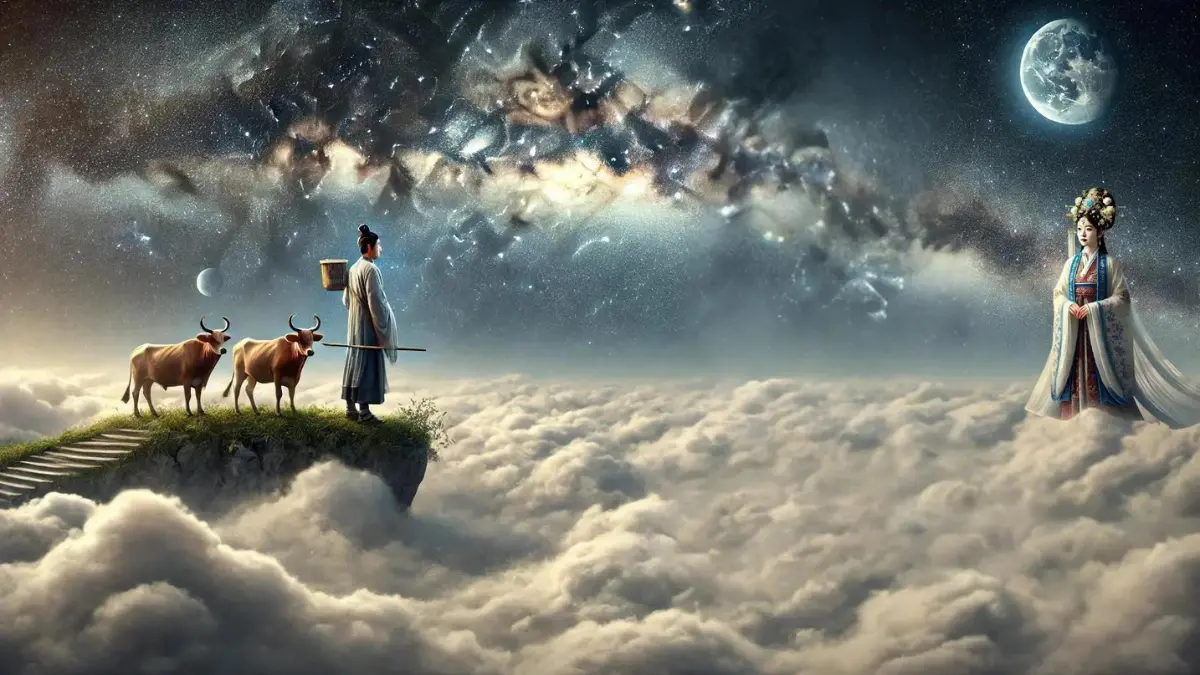
The myth of the Weaver Girl and the Cowherd is a popular Chinese love story. The Weaver Girl (Zhinu), a goddess, and the Cowherd (Niulang), a mortal, fell in love. However, the gods did not approve of their relationship. The Queen Mother of Heaven, creator of the Milky Way, would keep them apart. They would place the Weaver Girl on one side of the Milky Way and the Cowherd on the other.
Once a year, on the seventh day of the seventh lunar month, they reunite. Magpies form a bridge so they can meet. This day is celebrated as Qixi Festival, a day honouring love and devotion. Their story symbolizes the power of love and the sadness of separation.
Cultural Heroes in Chinese Mythology

Tale of Yu the Great
Yu the Great is a legendary ruler in Chinese history. He is famous for controlling the Great Flood that threatened to destroy the world. This disaster caused widespread damage and suffering. Yu used his intelligence and hard work to manage the floodwaters.
Instead of blocking the water, Yu redirected it by digging channels and canals. This strategy allowed the water to flow safely and saved many lives. Yu’s efforts made the land fertile again, enabling agriculture to thrive. He became a symbol of perseverance and leadership.
Yu the Great’s story teaches the importance of determination and serving others.
Legend of Hua Mulan
Hua Mulan is a legendary Chinese warrior. She disguises herself as a man to take her elderly father’s place in the army. Mulan serves bravely, earning respect and honour for her courage and skill. The Ballad of Mulan celebrates her story.
Mulan symbolizes filial piety (respect of parents and ancestors), courage, and devotion to family and country. Her tale has been adapted into films, operas, and literary works. She remains one of the most famous heroines in Chinese culture, inspiring many with her bravery and dedication.
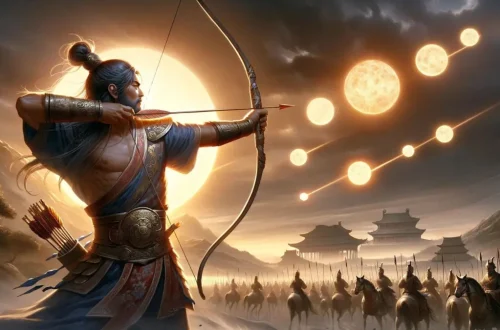
Myth: The Legend of Hou Yi and the Ten Suns

Hou Yi, also known as the Grand Archer, is a hero in Chinese mythology. He saved the world from scorching heat by shooting down nine of the ten suns. These suns appeared in the sky together, causing great suffering. Hou Yi used his exceptional archery skills to restore balance.
He left only one sun to provide light and warmth. His brave actions stopped the world from burning and saved many lives. People honour Hou Yi as a symbol of bravery and skill. His story is a reminder of the importance of using one’s talents to help others and protect the world.
Guan Yu
Guan Yu is a general during the late Eastern Han Dynasty and the Three Kingdoms period. He is known for his loyalty, righteousness, and martial skill. Over time, he becomes a symbol of these virtues and people worship him as a god of war and brotherhood.
His stories feature in the classic novel Romance of the Three Kingdoms. Guan Yu is a significant figure in Chinese folk religion, Taoism, and Buddhism. He represents loyalty and honour, and many admire him for his moral character. His legacy continues to inspire people to act with bravery and integrity.
Cangjie
Cangjie is a legendary figure in Chinese culture. According to myth, he had four eyes. He created Chinese characters by observing animal tracks and bird footprints. This creation helped record and share knowledge.
The writing system is one of China’s most important contributions. It allowed people to pass down history and stories. Cangjie’s work brought literacy and learning to many. He is honoured as a cultural hero.
His invention of characters gave the Chinese people a way to communicate and document their lives. This achievement has had a lasting impact on Chinese civilization. Cangjie’s contribution to writing is celebrated in Chinese culture.
Conclusion
Chinese mythology is rich with stories that explain the origins of the world, nature, and human society. It includes a wide range of gods, heroes, and legendary figures, each representing different values and lessons.
These myths often emphasize themes like harmony, justice, and respect for nature and family. Major belief systems like Confucianism, Taoism, and Buddhism influence them, shaping Chinese culture and thought.
These stories pass down important moral lessons and cultural traditions.
Chinese mythology continues to inspire art, literature, and festivals, reflecting the deep cultural heritage of China.