

The Legend of Awi Usdi: Understanding Cherokee Tales of the Little Deer Here's an overview: Introduction to Cherokee Mythology and the Significance of Awi Usdi An Ethnographic Look at Awi Usdi: Understanding the Little Deer Interpreting the Lessons of Awi Usdi: Environment and Ethics Awi Usdi in Cherokee Storytelling: The Role of Animals in Traditions Investigating the Symbolism: Awi Usdi as a Figure of Justice Comparing Cross-Cultural Animal Legends: Awi Usdi's Universal Themes Preservation of Cherokee Tales: The Importance of Oral Histories and Myths Introduction to Cherokee Mythology and the Significance of Awi Usdi Cherokee mythology is a vibrant tapestry of stories, beliefs, and traditions that define the cultural and spiritual framework of the Cherokee people. These narratives often serve as moral compasses, guiding individuals through the complexities of life and nature. A central figure in Cherokee lore is Awi Usdi, or the Little Deer. Through tales of Awi Usdi, the Cherokee convey profound respect for the animal kingdom, emphasizing the sacred bond between humans and nature. Lessons of harmony, balance, and ethical hunting practices are intrinsic to these legends, as they articulate deep ecological wisdom and a call for conscientious living. An Ethnographic Look at Awi Usdi: Understanding the Little Deer Ethnographic research reveals Awi Usdi, or Little Deer in Cherokee folklore, as a spiritual guardian of the wild. This deer spirit teaches respect for life through a lore that interweaves morality with nature's laws. Awi Usdi appears to hunters who lack reverence for their prey, reminding them of the importance of prayer and thanksgiving. The Cherokee perceive this interaction as a covenant, upholding a harmonious relationship between humankind and the animal kingdom. Rituals and stories about Awi Usdi offer insight into this crucial ecological balance, reflecting the tribe's deep environmental wisdom and ethical hunting traditions. Interpreting the Lessons of Awi Usdi: Environment and Ethics The Cherokee tale of Awi Usdi, the Little Deer, conveys deep environmental and ethical teachings. Key lessons include: Respect for Nature: Indigenous wisdom highlights living in harmony with the earth, acknowledging that every being has a role and purpose. Karmic Consequences: The story illustrates that actions against nature have ramifications, suggesting a moral obligation to take only what is needed. Stewardship: It underscores human responsibility to protect wildlife, embodying the concept of caretaking for future generations. Interconnectedness: Awi Usdi's narrative fosters understanding of the interconnected web of life, where animals, plants, and humans are intrinsically linked. Ethical Hunting Practices: The legend upholds ethical hunting principles, where hunters are reminded to pray and ask for forgiveness, highlighting a tradition of reverence. Through these perspectives, Awi Usdi's legend offers a timeless ecological ethic, teaching respect and sustainable practices for the natural world. Awi Usdi in Cherokee Storytelling: The Role of Animals in Traditions Within Cherokee storytelling, animals are not mere characters but symbols and teachers. Awi Usdi, the Little Deer, is a prime illustration. This creature represents respect and coexistence within nature. Through Awi Usdi's tales, the Cherokee convey crucial lessons: Respect for Life: Animals remind humans of the sanctity of life, with Awi Usdi often teaching hunters to honor the creatures they hunt. Cycles of Nature: Awi Usdi underscores the importance of understanding and participating in nature's cycles, not disrupting them. Moral Guidance: Stories of animals like Awi Usdi serve as parables for ethical conduct and community values. In these narratives, animals impart wisdom essential for maintaining balance in the world. Awi Usdi's role in these tales weaves a deeper connection between the Cherokee people and the animal kingdom, highlighting that every creature has a vital role in the tapestry of life. Investigating the Symbolism: Awi Usdi as a Figure of Justice In Cherokee narratives, Awi Usdi, the Little Deer, is emblematic of justice and harmony within nature. This mystical deer is not merely an animal but a guardian spirit ensuring ethical hunting practices. When a Cherokee hunter sought game: They must ask for permission from the spirits. Awi Usdi, as a representative, would offer an animal for sustenance. If the hunter wasted or disrespected the gift, Awi Usdi would avenge the spirit of the hunted. Thus, Awi Usdi is the balancer of the ecosystem, ensuring that respect and responsibility underscore every interaction within the forest. His presence reinforces the critical principle that one must only take what is needed and always with gratitude. This ethos of fairness is central to understanding the role of Awi Usdi in the Cherokee cosmology, serving as a foundational symbol of the community’s justice system and its interconnection with nature. Comparing Cross-Cultural Animal Legends: Awi Usdi's Universal Themes Cultural myths often share common themes despite geographical distances. The Cherokee legend of Awi Usdi, the Little Deer, reverberates with tales from different cultures. It accentuates a respect for nature, a common trope in animal folklore worldwide. For instance: In African myths, stories of Anansi, the spider, underline the wisdom and trickery found in nature. Native American Coyote legends also emphasize balance and respect between humans and the animal kingdom. Similarly, Asian dragon lore often represents power and natural forces, demanding respect and understanding. Each narrative, while distinct in characters and settings, converges on the reverence for life and the consequences of human actions on nature. Preservation of Cherokee Tales: The Importance of Oral Histories and Myths Cherokee oral histories and myths carry the essence of tribal culture, morality, and ancient wisdom, crucial for preserving identity. Oral traditions, like Awi Usdi's tale, serve as vital educational tools, instilling values and history in younger generations. They encapsulate the collective memory of the Cherokee people, binding them to their ancestral lineage and offering insights into their relationships with nature and each other. Such myths also enhance cultural continuity, ensuring that the richness of Cherokee heritage endures amidst the challenges of modernity.
History,  Mythology

Cherokee Legend of Awi Usdi: Little Deer

Cherokee Mythology and the Significance of Awi Usdi

Cherokee mythology is a vibrant tapestry of stories, beliefs, and traditions that define the cultural and spiritual framework of the Cherokee people.

A central figure in Cherokee lore is Awi Usdi, or the Little Deer. Through tales of Awi Usdi, the Cherokee convey profound respect for the animal kingdom.

The Cherokee People

The Cherokee people, among the largest Native American groups lived in the southeastern United States, including Georgia, North Carolina, South Carolina, and Tennessee. Mountains and valleys of the Appalachian region shaped their rich culture. The 1830s Trail of Tears relocated them to Oklahoma, a painful history chapter.

Their history, spanning thousands of years, saw European contact in the 16th century. Sequoyah who developed their written language in the 1820s, was known for diplomacy and complex societal structures.

Today, the Cherokee Nation, Eastern Band, and United Keetoowah Band thrive and preserve their heritage.

Understanding the Little Deer

 the serene and mystical essence of Awi Usdi, or Little Deer, from Cherokee folklore, portrayed as a spiritual guardian of the wild, highlighting its teachings on respect for life and the harmony of nature
Awi Usdi, or Little Deer, from Cherokee folklore

Ethnographic research reveals Little Deer in Cherokee folklore as a spiritual guardian of the wild. This deer spirit teaches respect for life through a lore that interweaves morality with nature’s laws.

Awi Usdi appears to hunters who lack reverence for their prey, reminding them of the importance of prayer and thanksgiving.

The Cherokee perceive this interaction as a covenant, upholding a harmonious relationship between humankind and the animal kingdom.

Rituals and stories offer insight into this crucial ecological balance, reflecting the people’s deep environmental wisdom and ethical hunting traditions.

Lessons of Environment and Ethics
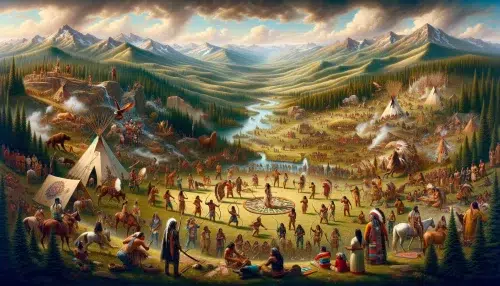
a panoramic and culturally rich view of the Cherokee Nation, showcasing the land with its people engaged in daily life and traditional practices, including archery, to highlight their deep connection to their ancestral land and cultural heritage

The Cherokee tale of Awi Usdi, the Little Deer, conveys deep environmental and ethical teachings. Key lessons include:

  • Respect for Nature: Indigenous wisdom highlights living in harmony with the earth, acknowledging that every being has a role and purpose.
  • Karmic Consequences: The story illustrates that actions against nature have ramifications, suggesting a moral obligation to take only what is needed.
  • Stewardship: It underscores human responsibility to protect wildlife, embodying the concept of caretaking for future generations.
  • Interconnectedness: Awi Usdi’s narrative fosters understanding of the interconnected web of life, where animals, plants, and humans are intrinsically linked.
  • Ethical Hunting Practices: The legend upholds ethical hunting principles, where hunters are reminded to pray and ask for forgiveness, highlighting a tradition of reverence.

Through these perspectives, Awi Usdi’s legend offers a timeless ecological ethic, teaching respect and sustainable practices for the natural world.

Teachings and Symbols in Cherokee Storytelling

Within Cherokee storytelling, animals are not mere characters but symbols and teachers.

Awi Usdi, the Little Deer, is a prime illustration. This creature represents respect and coexistence within nature.

Through Awi Usdi’s tales, the Cherokee convey crucial lessons:

  • Respect for Life: Animals remind humans of the sanctity of life, with Awi Usdi often teaching hunters to honor the creatures they hunt.
  • Cycles of Nature: Awi Usdi underscores the importance of understanding and participating in nature’s cycles, not disrupting them.
  • Moral Guidance: Stories of animals like Awi Usdi serve as parables for ethical conduct and community values.

In these narratives, animals impart wisdom essential for maintaining balance in the world.

Awi Usdi’s role in these tales weaves a deeper connection between the Cherokee people and the animal kingdom, highlighting that every creature has a vital role in the tapestry of life.

Learn more about: Legendary Archery Mythology

Investigating the Symbolism

In Cherokee narratives, Awi Usdi, the Little Deer, is emblematic of justice and harmony within nature.

This mystical deer is not merely an animal but a guardian spirit ensuring ethical hunting practices.

When a Cherokee hunter sought game:

  • They must ask for permission from the spirits.
  • Awi Usdi, as a representative, would offer an animal for sustenance.
  • If the hunter wasted or disrespected the gift, Awi Usdi would avenge the spirit of the hunted.

Thus, Awi Usdi is the balancer of the ecosystem, ensuring that respect and responsibility underscore every interaction within the forest.

His presence reinforces the critical principle that one must only take what is needed and always with gratitude.

This ethos of fairness is central to understanding the role of Awi Usdi in the Cherokee cosmology, serving as a foundational symbol of the community’s justice system and its interconnection with nature.

Awi Usdi’s Universal Themes

Cultural myths often share common themes despite geographical distances.

The Cherokee legend of Awi Usdi, the Little Deer, reverberates with tales from different cultures. It accentuates a respect for nature, a common trope in animal folklore worldwide.

For instance:

  • In African myths, stories of Anansi, the spider, underline the wisdom and trickery found in nature.
  • Native American Coyote legends also emphasize balance and respect between humans and the animal kingdom.
  • Similarly, Asian dragon lore often represents power and natural forces, demanding respect and understanding.

Each narrative, while distinct in characters and settings, converges on the reverence for life and the consequences of human actions on nature.

The Importance of Oral Histories and Myths

Cherokee oral histories and myths carry the essence of tribal culture, morality, and ancient wisdom, crucial for preserving identity.

Oral traditions, like Awi Usdi’s tale, serve as vital educational tools, instilling values and history in younger generations.

They encapsulate the collective memory of the Cherokee people, binding them to their ancestral lineage and offering insights into their relationships with nature and each other.

Such myths also enhance cultural continuity, ensuring that the richness of Cherokee heritage endures amidst the challenges of modernity.