Celtic Historical Myths: Ireland’s Legendary Kings
Introduction to Celtic Historical Myths
The Celtic Historical myths tell stories of Ireland’s legendary and historical kings. These myths blend history and fantasy, showcasing leaders who shaped Irish culture. Each tale explores themes of power, justice, and destiny, reflecting the challenges of leadership.
The Historical Cycle focuses on the deeds, decisions, and struggles of rulers. It highlights the balance between personal ambition and responsibility to the people.
These stories often involve sacred rules, called geasa, which guide or challenge the kings. The myths reveal the rewards of honourable leadership and the risks of ignoring sacred laws.
Key figures like Cormac mac Airt, Niall of the Nine Hostages, and Conaire Mór each face unique trials. Their stories connect deeply to Ireland’s cultural identity, offering lessons about loyalty, fairness, and courage.
The Celtic Historical Cycle myths inspire audiences to reflect on the qualities of great leaders and the lasting impact of their choices.
The Four Cycles of Irish Myths
Irish and Celtic myths mainly focus on Ireland but connect to Celtic cultures in Scotland, Wales, and western Europe. Irish myths survive best due to Ireland’s isolation and medieval scribes who preserved them in written form.
Mythological Cycle
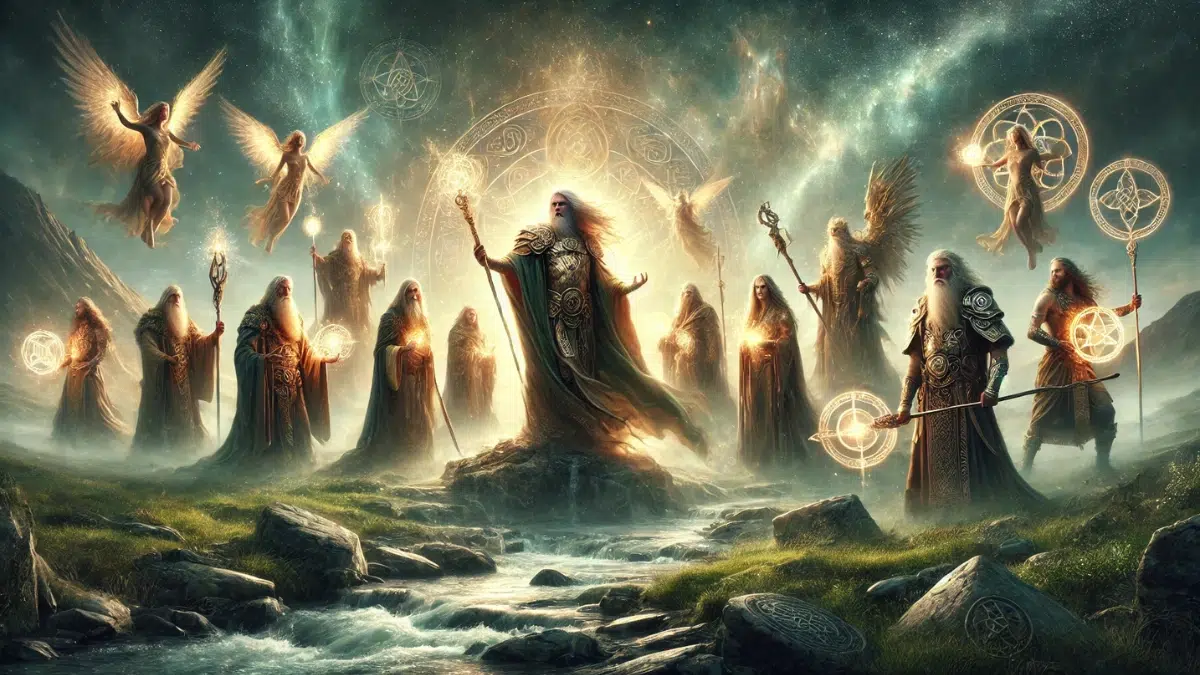
The Mythological Cycle focuses on Ireland’s gods and early inhabitants. These stories explore the origins of the Irish people and their connection to the divine.
Central figures include the Tuatha Dé Danann, a magical race with incredible powers. Key myths describe battles between the Tuatha Dé Danann and their enemies, the Fomorians. This cycle highlights themes of creation, magic, and the struggle for balance between light and darkness.
The Mythological Cycle contains the oldest Irish myths, dating back to Ireland’s pre-Christian Celtic era (about 1000 BCE–300 CE). These stories come from oral traditions and connect to early Irish beliefs.
The myths focus on the island of Ireland and its ancient people. The Tuatha Dé Danann, a magical race, show early Irish ideas about the cosmos, magic, and power. Christian monks later recorded these stories during the Middle Ages, often blending them with Christian themes.
Ulster Cycle
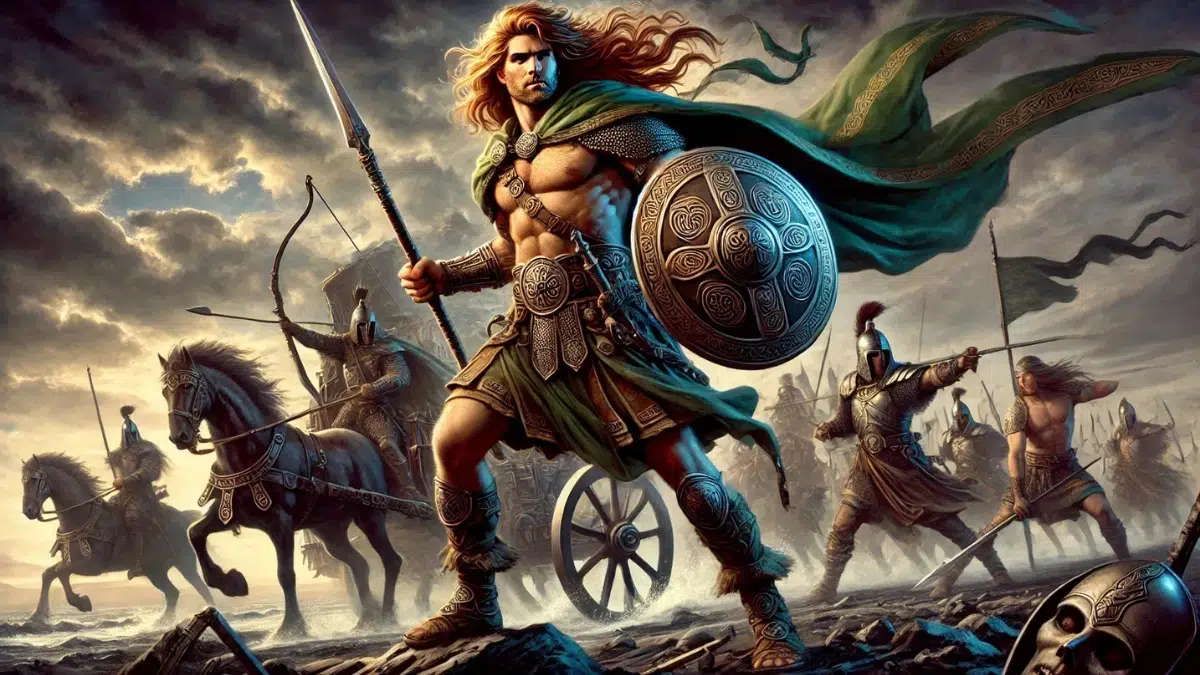
The Ulster Cycle tells heroic tales of warriors, loyalty, and conflict. It centres on Cú Chulainn, a fearless and skilled fighter. These stories take place in the kingdom of Ulster and often involve epic battles and personal sacrifice. A famous tale, The Cattle Raid of Cooley, features Queen Medb’s quest for a prized bull and Cú Chulainn’s heroic defence of Ulster. This cycle celebrates bravery, honour, and the challenges of loyalty.
The Ulster Cycle comes from the Iron Age (about 400 BCE–400 CE) and reflects a society based on warriors. It focuses on the kingdom of Ulster in northern Ireland, especially around Armagh. These stories preserve Celtic values like loyalty, honour, and bravery. The tales often feature heroic figures like Cú Chulainn. Written versions appear in medieval manuscripts, such as The Book of Leinster (12th century), which captured earlier oral traditions.
Fenian Cycle
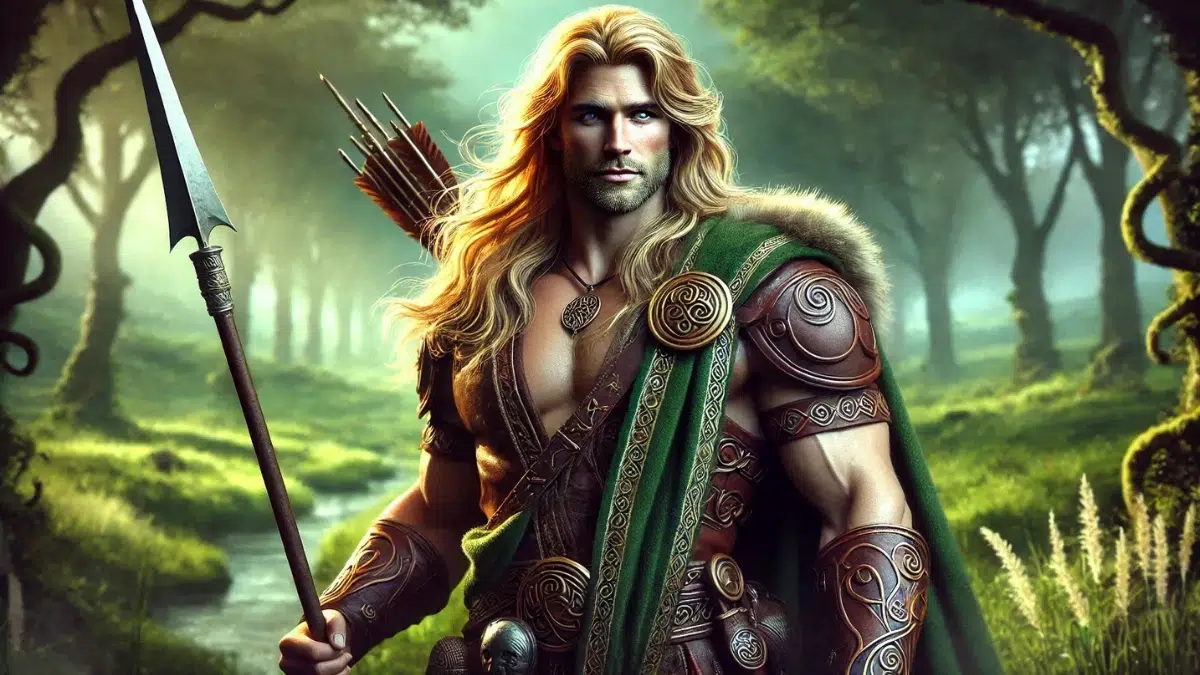
The Fenian Cycle focuses on Fionn mac Cumhaill and his band of warriors, the Fianna. These stories highlight adventure, loyalty, and camaraderie. Fionn’s wisdom and leadership shine as the Fianna defend Ireland and face supernatural challenges. Myths like The Pursuit of Diarmuid and Gráinne blend love, loyalty, and betrayal. This cycle explores themes of friendship, duty, and the bond between humans and nature.
The Fenian Cycle appears later, during the early medieval period (about 300–900 CE). It focuses on Leinster and Munster in southern Ireland. These stories shift from battle tales to adventures, romance, and nature. Fionn mac Cumhaill and the Fianna embody loyalty, courage, and a deep connection to the land. Stories like The Acallam na Senórach (12th century) preserved these myths, often blending them with Christian ideas.
Historical Cycle
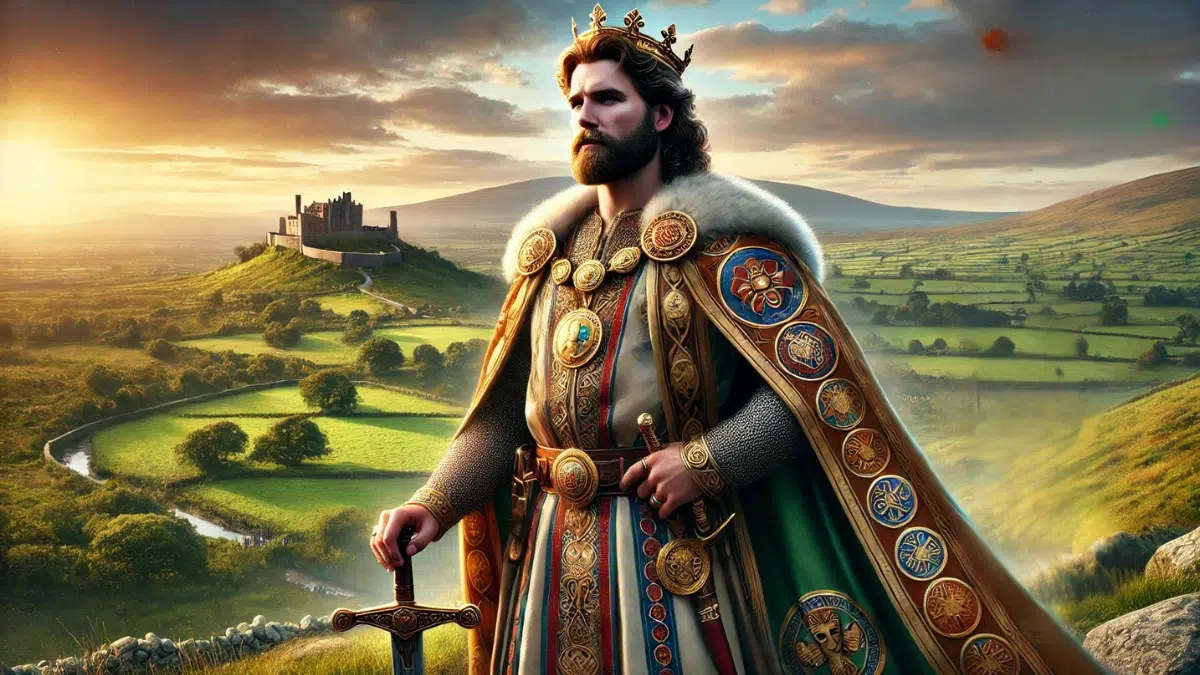
The Historical Cycle tells stories of Ireland’s legendary rulers. These myths blend history and legend, focusing on the challenges and triumphs of kingship. Stories like The Story of Cormac mac Airt and The Tragic Tale of Conaire Mór explore justice, destiny, and the consequences of breaking sacred laws. This cycle highlights leadership, power, and the enduring impact of great rulers.
The Historical Cycle, also called the Cycle of Kings, mixes myth with history. It focuses on Ireland’s legendary kings and rulers. These stories, from about 300–1200 CE, link royal families to heroic ancestors or divine figures. They often centre on Tara, the seat of High Kings. Christian monks recorded these tales to connect Irish history with myth and create a shared cultural identity.
Celtic Historical Top Myths
The Historical Cycle itself focuses on legendary and historical kings. While some of these stories are widely recognized, others are less prominent in popular culture but still hold importance in Irish mythology.
Celtic Historical Myth: The Legend of Niall of the Nine Hostages

Niall of the Nine Hostages stands as one of Ireland’s most legendary High Kings. His story combines leadership, bravery, and cunning. Niall gains his name from the hostages he takes from different provinces and kingdoms, ensuring their loyalty to his rule. This tactic strengthens his position and unites Ireland under his authority.
One key story highlights Niall’s rise to power.
Niall’s Quest for Leadership
As a young man, he and his brothers compete to prove their worth as leaders. In one famous tale, Niall and his brothers search for water during a drought. During a test, they encounter an old woman guarding a well.
She challenges each brother to kiss her, but only Niall agrees. After he kisses her, the woman transforms into a beautiful goddess who represents sovereignty and rewards him with kingship. She declares Niall the rightful king, marking his destiny as a great ruler.
Niall’s reign focuses on expanding Ireland’s influence and protecting its people. Legends describe him leading raids across the British Isles and even into Europe. These exploits bring wealth and prestige to Ireland, securing Niall’s place in history.
Niall’s Legacy
Niall’s adventures focus on his impact as a leader. He established loyalty among kingdoms and ensured Ireland’s strength against external threats. His name also connects to Irish history, as many claim descent from him. Today, Niall remains a symbol of unity, courage, and leadership in Irish folklore.
Celtic Historical Myth: The Death of Muirchertach mac Erca
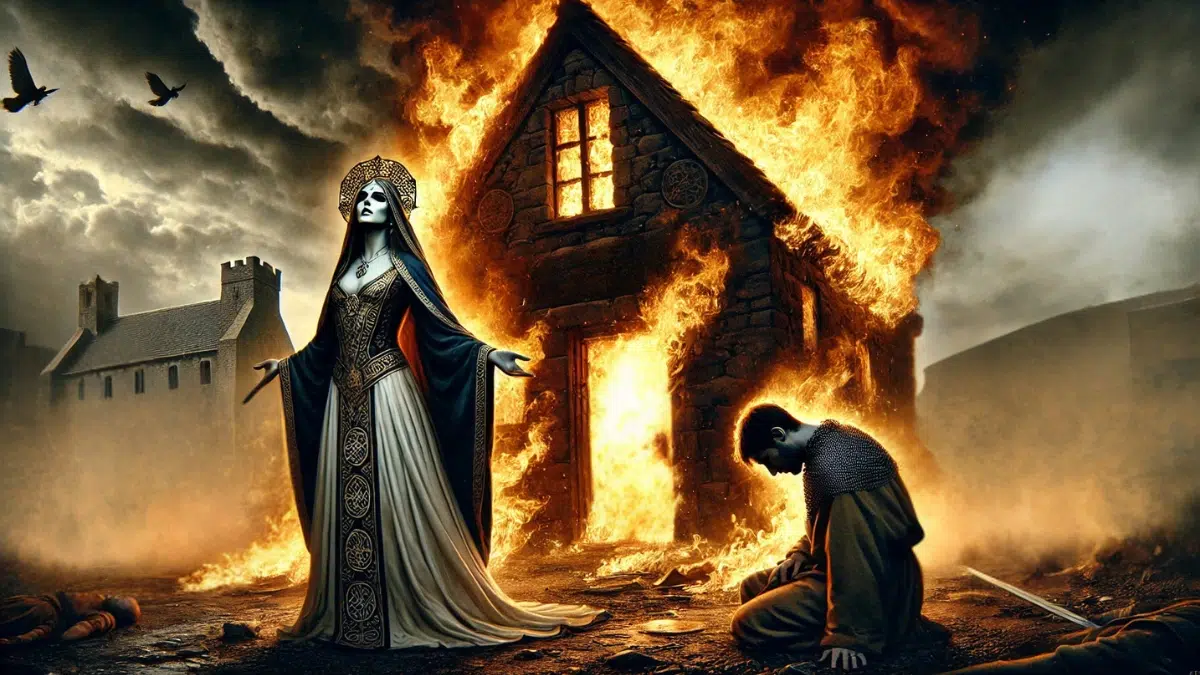
Muirchertach mac Erca stands as one of Ireland’s great legendary kings. The death of Muirchertach mac Erca, a High King of Ireland, reveals themes of betrayal, fate, and tragic irony. Known for his power and influence, Muirchertach’s story ends in an unexpected and mysterious way.
He is remembered for his strength, wisdom, and connection to the gods. Stories about him describe his military skill and his ability to lead during times of conflict. He often appears in myths as a protector of his people and a figure of authority.
Muirchertach’s life reflects the challenges faced by Irish kings and their responsibilities to their people and their land.
The Strange Circumstances of His Death
Muirchertach’s death remains one of the most mysterious and dramatic tales in Irish mythology. According to legend, he meets his end in a burning house. This fire results from a curse tied to his actions and relationships.
The tale begins with Sin, a woman skilled in magic and deception. Sin harbours ulterior motives and works to weaken the king’s power through manipulation. Her schemes ultimately set the stage for his downfall.
She captivates him with her charm, earning his trust and affection. She uses a vat of wine to intoxicate Muirchertach, leaving him defenceless. Once he is unable to fight back, she seals him in the house and sets it ablaze.
The fire spreads uncontrollably, trapping Muirchertach and his guards. Despite his bravery and strength, Muirchertach cannot escape the flames. His death marks the end of his reign and highlights the fragility of even the most powerful leaders.
Another version suggests a tragic series of accidents orchestrated by Sin, leading to his demise. Both versions underline the destructive power of betrayal and manipulation.
The death of Muirchertach mac Erca serves as a cautionary tale about trust, ambition, and the consequences of deception. His legacy as a strong but vulnerable ruler reminds audiences of the balance between power and the forces that challenge it.
Symbolism in Muirchertach’s Death
Muirchertach’s death symbolizes the dangers of power and the consequences of broken promises. The story also reflects the role of fate in Irish myths. Even a strong king cannot escape his destiny. His death reminds listeners of the importance of loyalty, caution, and respect for mystical forces. Today, this tale inspires questions about justice, betrayal, and the strength of leadership.
Celtic Historical Myth: The Wooing of Étaín
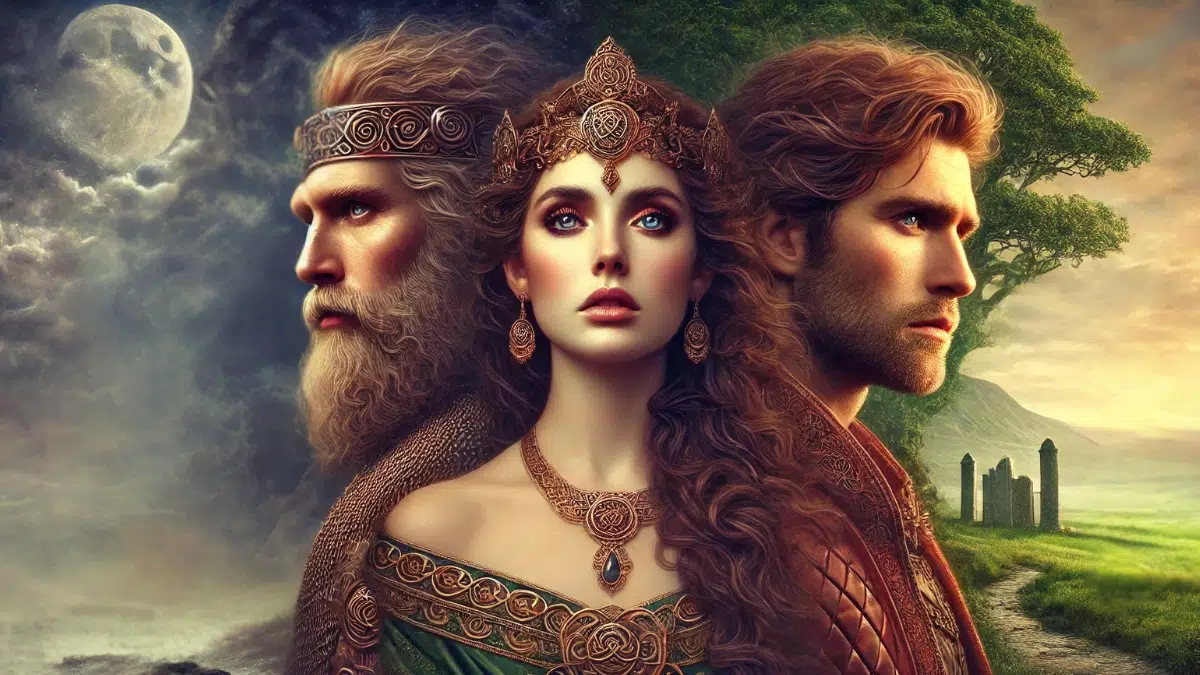
Étaín is one of the most captivating figures in Irish mythology. She embodies beauty, love, and transformation.
Her story intertwines with both the mortal world and the realm of the gods. Étaín becomes the object of desire for many, but her life is filled with trials. Her tale highlights themes of love, jealousy, and perseverance. Étaín’s journey through various lives shows her resilience and the power of destiny in Irish myths.
The Love Triangle with Midir and Eochaid
The Wooing of Étaín focuses on her relationships with two men: Midir, a god of the Tuatha Dé Danann, and Eochaid, a mortal king.
The story of Midir, Eochaid, and Étaín explores love, jealousy, and fate in Irish mythology. Étaín, known for her beauty and grace, becomes the centre of this dramatic love triangle.
Midir, a member of the Tuatha Dé Danann, falls deeply in love with Étaín and marries her. However, Midir’s first wife, Fuamnach, grows jealous and curses Étaín, and casts a spell to separate them. She transforms her into a pool of water, then a butterfly, enduring years of hardship. After many trials, Étaín is reborn as a human and lives a new life, unaware of her past.
As a mortal, Étaín marries Eochaid, a High King of Ireland. Midir discovers her and longs to reunite. He challenges Eochaid to a series of chess games to win Étaín back. When Midir wins, he asks for a kiss from Étaín as his reward. Eochaid reluctantly agrees, not realizing Midir plans to reclaim her completely.
Midir takes Étaín to the Otherworld, leaving Eochaid heartbroken.
The story reveals themes of transformation, loyalty, and the enduring power of love. Étaín’s journey highlights the connection between the mortal and divine worlds, reminding audiences of the complexities of human emotions and the role of destiny in shaping lives.
Celtic Historical Myth: The Story of Cormac mac Airt
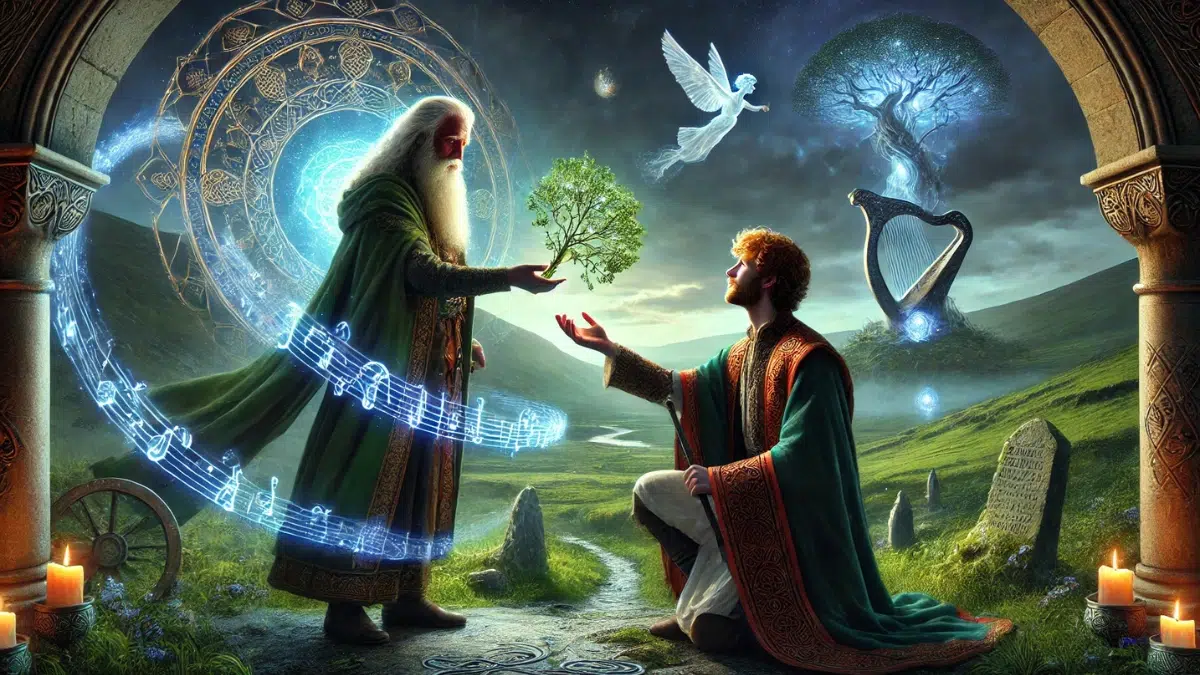
Cormac mac Airt is one of the most celebrated kings in Irish mythology. Known for his wisdom and fairness, he rules at Tara, the seat of power in ancient Ireland. His leadership focuses on justice, harmony, and the well-being of his people.
Myths describe him as a philosopher-king who brings order and prosperity. He is often associated with divine inspiration, symbolizing the ideal ruler in Celtic tradition.
Cormac mac Airt’s Magical Adventures
One of Cormac’s most famous stories involves his encounter with a mysterious otherworldly figure.
One famous tale begins when a mysterious stranger gives Cormac a magical branch. This branch produces sweet music that can lull anyone to sleep. Intrigued by the branch’s power, Cormac agrees to a deal to learn more about its magic. The stranger, who is the Dagda, leads Cormac on an extraordinary journey to the Otherworld.
In the Otherworld, Cormac encounters magical beings, strange landscapes, and powerful lessons.
The Dagda tests Cormac’s character by challenging his sense of justice, loyalty, and courage. At one point, Cormac must choose between selfish desires and the well-being of his people. He consistently chooses fairness and duty.
Cormac also receives a magical cup during this adventure. This figure offers him a magical cup that breaks when lies are spoken. Cormac uses the cup to uphold truth in his kingdom, ensuring fairness in every decision.
It breaks when falsehoods are spoken but repairs itself when truth prevails. This gift becomes a symbol of Cormac’s commitment to justice and honesty as a ruler.
Cormac mac Airt’s magical adventures showcase his wisdom, courage, and deep connection to Irish values. These tales highlight the balance between power and fairness, making Cormac a lasting symbol of honour in Irish mythology.
Celtic Historical Myth: The Tragic Tale of Conaire Mór

Conaire Mór is a legendary High King of Ireland known for his fairness and strength. His reign symbolizes unity and prosperity. Myths describe him as a ruler with divine blessings and strong connections to Irish traditions. His story highlights the challenges of leadership and the risks of breaking sacred laws, known as geasa. Conaire’s life reveals the delicate balance between power and responsibility in Celtic mythology.
The Curse of the Geasa
Conaire’s story revolves around the geasa placed upon him, a set of mystical rules he must follow. These rules protect him but also control his actions. One rule forbids him from killing birds, as he is descended from a bird-like deity. Another warns him to avoid certain roads and places. These restrictions guide his decisions and shape his destiny.
One day, a series of events forces Conaire to break these sacred rules. While fleeing enemies, he takes a forbidden road to a house where he faces betrayal. There, his enemies trap him, and he fights bravely but cannot escape his fate.
Themes and Legacy
The tragic tale of Conaire Mór explores loyalty, destiny, and the consequences of broken promises. His story warns about the dangers of ignoring responsibilities and sacred obligations. Conaire’s courage and sense of duty inspire lessons about leadership, honour, and the price of power. This tale remains a powerful reminder of the importance of respecting traditions and personal values.
Celtic Historical Myth: The Reign of Lóegaire mac Néill
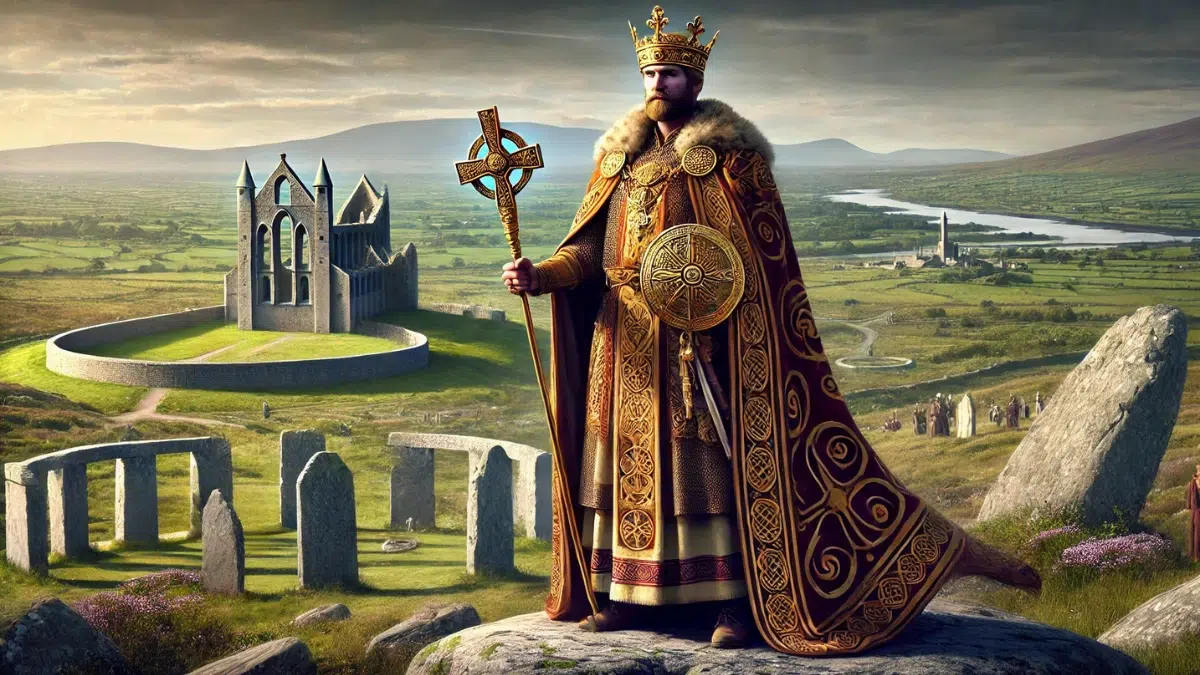
Lóegaire mac Néill stands as an important High King in Irish mythology. He ruled during a time of great change, when Christianity began spreading across Ireland. His reign highlights the tension between old Celtic traditions and the new Christian beliefs.
Lóegaire’s leadership reflects the challenges of balancing power with spiritual and cultural shifts.
Lóegaire and Saint Patrick
One of the most famous stories about Lóegaire involves his encounters with Saint Patrick. Lóegaire resists Patrick’s efforts to spread Christianity and remains loyal to the old gods. However, Patrick performs miracles that impress and influence the king’s court. Despite Lóegaire’s resistance, Patrick gains the support of many Irish people, signalling a turning point in Ireland’s spiritual history.
In another tale, Lóegaire seeks eternal life but faces failure due to his inability to fully embrace Patrick’s teachings. His story highlights the importance of humility, faith, and adaptability in leadership.
Celtic Historical Myth: The Tale of Eochaid Mugmedón

Eochaid Mugmedón is a legendary High King of Ireland. He is best known as the father of Niall of the Nine Hostages. Eochaid’s story focuses on leadership, family, and the struggles for power among his sons.
His rule highlights the complex relationships between kingship, loyalty, and ambition in Irish mythology.
Family and Rivalries
Eochaid has five sons, born to different queens. His first wife, Mongfind, has four sons, while his second wife, Cairenn, gives birth to Niall. Tensions grow within the family as the brothers compete for influence and favour. Niall emerges as a strong and charismatic figure, gaining the attention of Eochaid and the people of Ireland.
One famous tale describes the brothers searching for water during a drought. They find an old woman guarding a well, who challenges them. Only Niall accepts her conditions, showing courage and leadership. The woman transforms into a goddess and names Niall the future king, solidifying his destiny.
Conclusion on Celtic Historical Myths
The Celtic Historical Cycle myths explore the lives and challenges of Ireland’s legendary kings. These stories combine history and legend, teaching lessons about leadership, power, and responsibility. Kings like Cormac mac Airt, Niall of the Nine Hostages, and Conaire Mór show the struggles and rewards of ruling.
These myths focus on justice, loyalty, and the impact of choices. They reveal the importance of sacred laws, personal integrity, and the balance between strength and wisdom. While some stories, like Cormac’s, celebrate fair rule, others, like Conaire’s, highlight the tragic consequences of breaking rules.
The Historical Cycle myths connect deeply to Ireland’s identity. They show how leadership can shape communities and preserve traditions. These tales remain timeless, offering inspiration and lessons for modern audiences. By sharing these myths, we honour Ireland’s rich history and keep its powerful stories alive.