
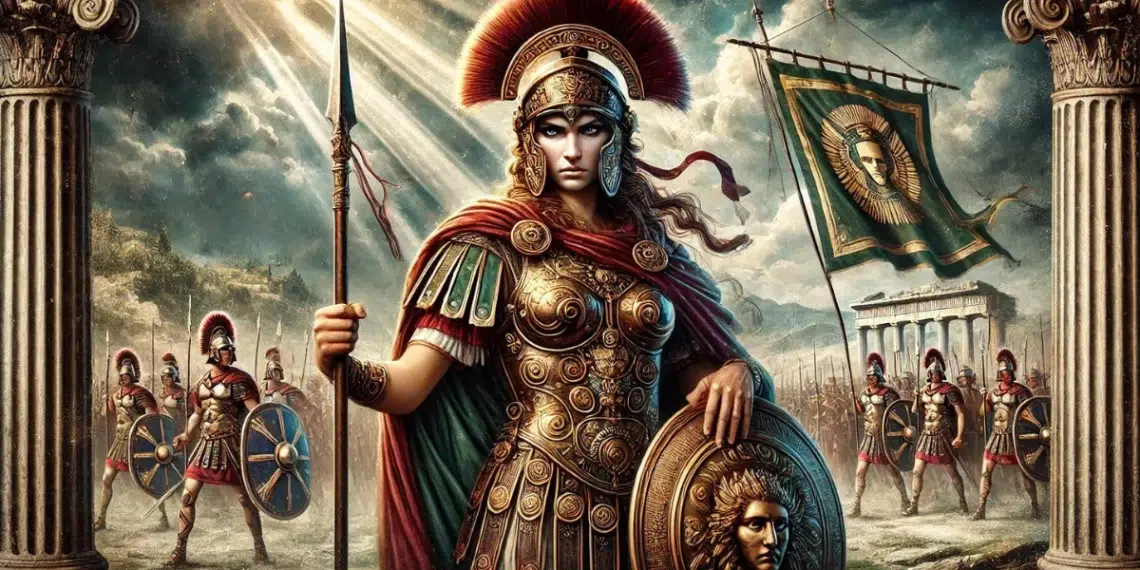
Bellona Goddess of War and Conquest in Roman Mythology
Bellona Goddess of War and Conquest was a key figure in ancient Roman mythology. She was seen as a powerful symbol of Rome’s military strength and drive for expansion. Her story shows how deeply she influenced Roman society.
This piece will delve into Bellona’s role and significance. It will look at her origins, the symbols linked to her, and her lasting impact on the Roman pantheon.
Origins of Bellona in Ancient Rome
The story of Bellona is deeply rooted in Roman history. Scholars believe she might have come from earlier gods of other cultures. These cultures were ones the Romans met and blended into their own.
Bellona was seen as a powerful goddess of war and conflict early on. Her name comes from the Latin word “bellum,” meaning war. As Rome grew, so did Bellona’s place in their gods. She was important to leaders and soldiers, and also to ordinary people.
Bellona was often shown with a sword or spear. Her rituals were about her strength in battle. Adding Bellona to their gods showed how Roman religion changed over time. She became a symbol of Rome’s bravery and strength.
Symbolism and Attributes of Bellona
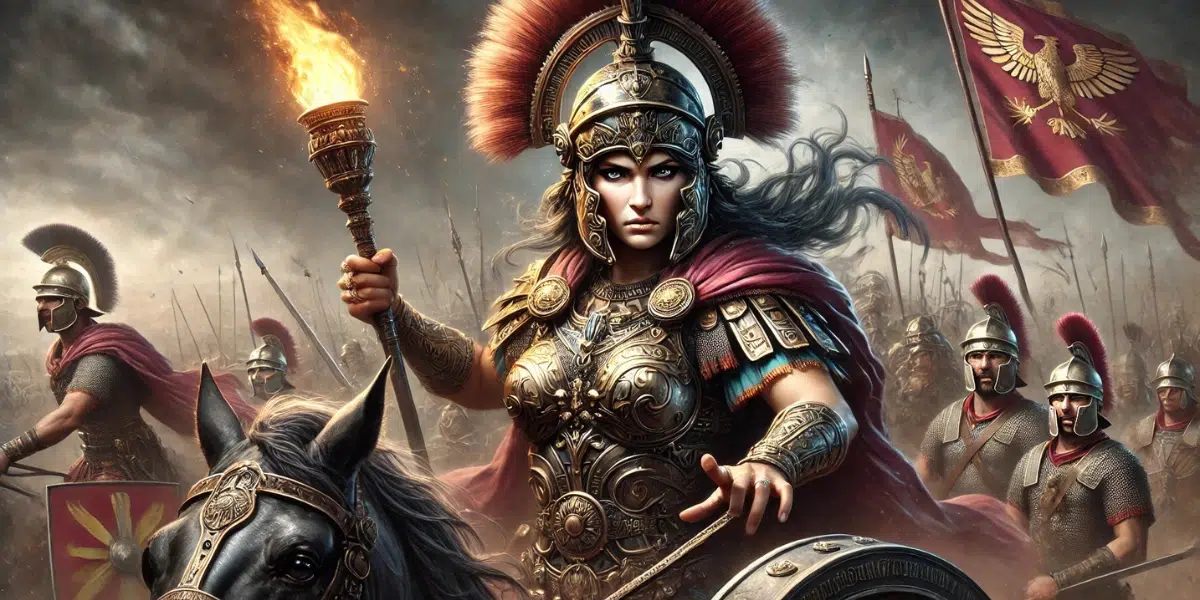
Bellona, the fierce Roman goddess of war, is known for her strong symbolism. She is often shown with martial tools like a sword, spear, and torch. These symbols show her powerful role in war.
Her helmet and armour are key symbols of her role as a protector and leader in battle. The war chariot she rides in is another important symbol. It shows she’s ready to lead warriors into combat.
Roman art often depicts her war chariot, highlighting her control over military victories. Bellona’s clothes and weapons are more than just for show. They carry deep symbolic meanings, showing her unyielding spirit in war.
Bellona’s worship included special rituals that focused on her war-like qualities. These rituals used symbols like the ones mentioned above. They made these symbols even more important in Roman religious life. Bellona is seen as a powerful symbol of military strength and divine intervention in war.
Bellona in Roman Religion
As a key figure in Roman religious life, Bellona plays a big role in the official state religion. She was worshipped in temples set aside for the war goddess. The most famous of these was the Temple of Bellona in the Campus Martius.
This temple was a key spot for honouring Bellona. It also showed Rome’s military power and divine support.
Special groups of priests looked after Bellona’s worship. They carried out rituals to get her blessing for war efforts. Bellona was also a big part of big religious events and calendars, showing her important role in Roman life and military culture.
Bellona’s worship showed that Rome’s victories were seen as blessed by the gods. Her temples were more than just places of worship. They were key spots for rituals that helped Rome’s military goals.
These rituals aimed to get Bellona’s favour, leading to victory in battles and keeping Rome on top.
Adding Bellona to Roman religious life boosted the military spirit. It showed that the gods backed Rome’s empire-building. The many rituals and big temples for Bellona showed a deep trust in divine support. This helped keep Rome strong in both society and war.
Bellona’s Influence on Roman Military Practices
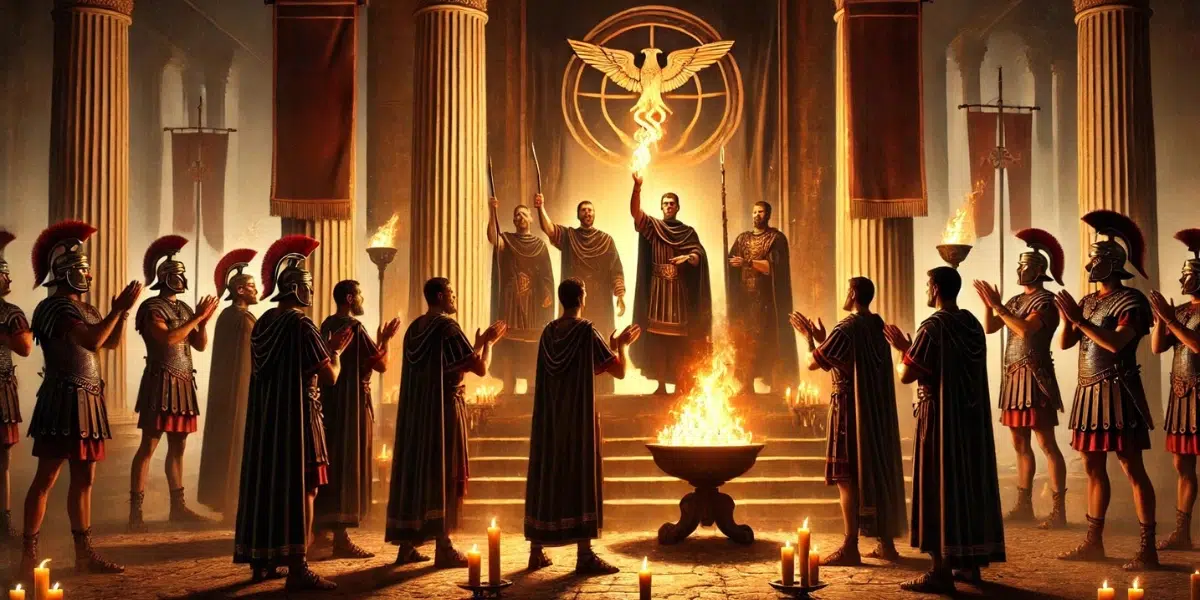
The Roman legions looked up to Bellona as a mighty war goddess. They believed her favour could change the outcome of battles. They included her in their military rituals to get ready for war.
Before fighting, Roman leaders like Julius Caesar would ask for Bellona’s blessing. They did this with detailed ceremonies to win her favour and ensure victory.
Priests, known as Bellonarii, would make sacrifices and pray to her, boosting the soldiers’ confidence.
Omens and signs linked to Bellona also guided the Roman legions. These were seen as messages from the gods, affecting military strategies and decisions. A certain bird or weather could mean a lot, shaping the outcome of battles.
Bellona’s impact went beyond just rituals and signs. She was a symbol of courage and strength for the soldiers. Calling upon Bellona before battles reminded the troops of their duty and divine support. This reminder was key, creating a strong sense of unity and invincibility among the Roman legions.
Bellona and Mars: Comparative Analysis
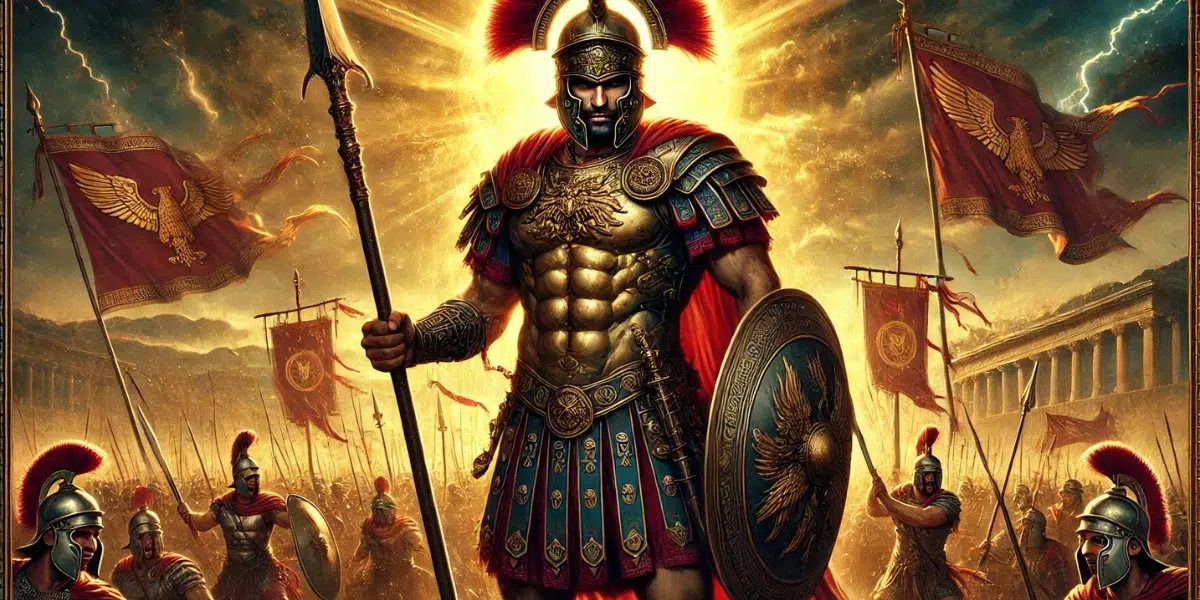
The Roman gods are full of interesting stories, with Bellona and Mars being key figures. Mars is seen as the main god of war in Roman stories. Bellona, a female deity, brings a fresh view to understanding Roman gods and their roles.
Looking at their areas of influence, Bellona and Mars have both similarities and differences. Mars is known for his strength and war strategies, showing the tough side of Roman culture. Bellona, though, is about the chaos and wildness of war. She highlights the important role of women in war, proving it’s not just for men in Roman eyes.
Mars had many temples and festivals to celebrate his power, like the Martius rituals. Bellona also had her own special worship, showing she was important but different from Mars. This tells us more about Roman military and religious life.
In stories, Bellona and Mars show different sides of war. Bellona, Mars’ sister or friend, adds her fierce and vengeful side to his strength. This shows how the Romans saw the balance and clashes between gods in their stories.
Representation in Roman Art and Literature
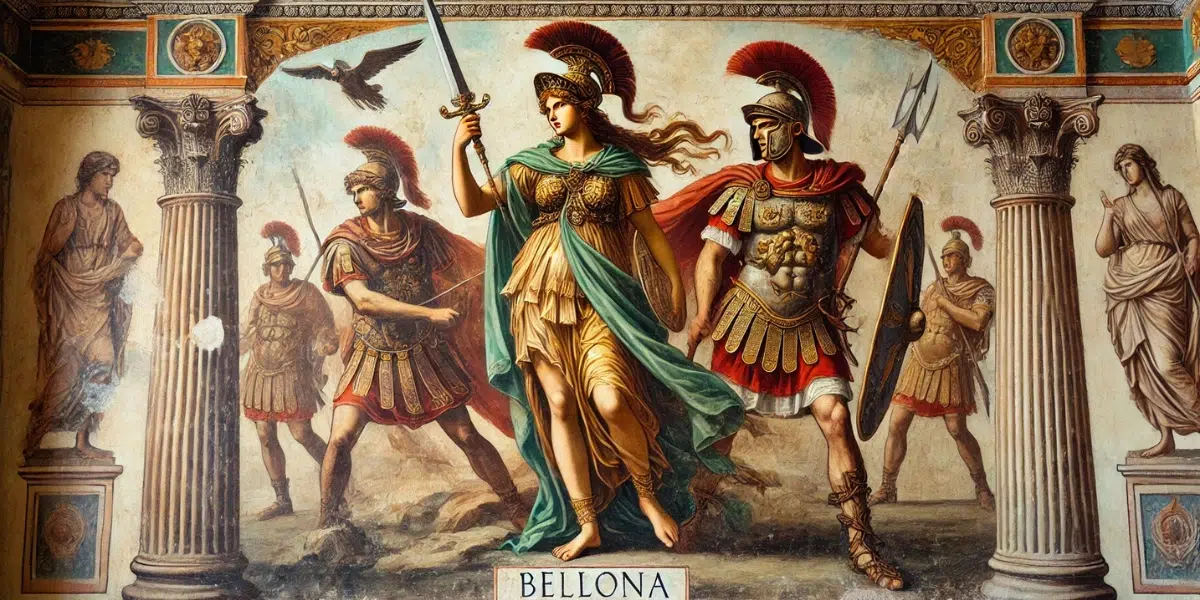
Bellona, the Roman goddess of war, was a big part of Roman culture. She was shown in many forms of art and literature. These works help us see how she was seen and honored in Roman times.
In art, Bellona was often shown in sculptures and carvings. She was depicted as a strong figure, with a spear and a helmet. This showed her bravery and strength. The Ara Pacis is a famous example, with detailed carvings of Bellona among other gods.
Frescoes also played a big role in showing Bellona. These colourful paintings were on the walls of homes and public places. They often showed her in battle or with Mars, the god of war. This shows how important she was in everyday life.
Classical literature also gives us a deep look at Bellona’s importance. Poets and writers often talked about her in their works. For example, Virgil’s “Aeneid” mentions her in stories about gods and humans. Ovid’s “Metamorphoses” and other writings also helped make Bellona more famous.
Together, art and literature made Bellona a key figure in Roman society. They linked her with the spirit of Rome. This made sure her story stayed alive in Roman culture.
Bellona in Mythology and Legends
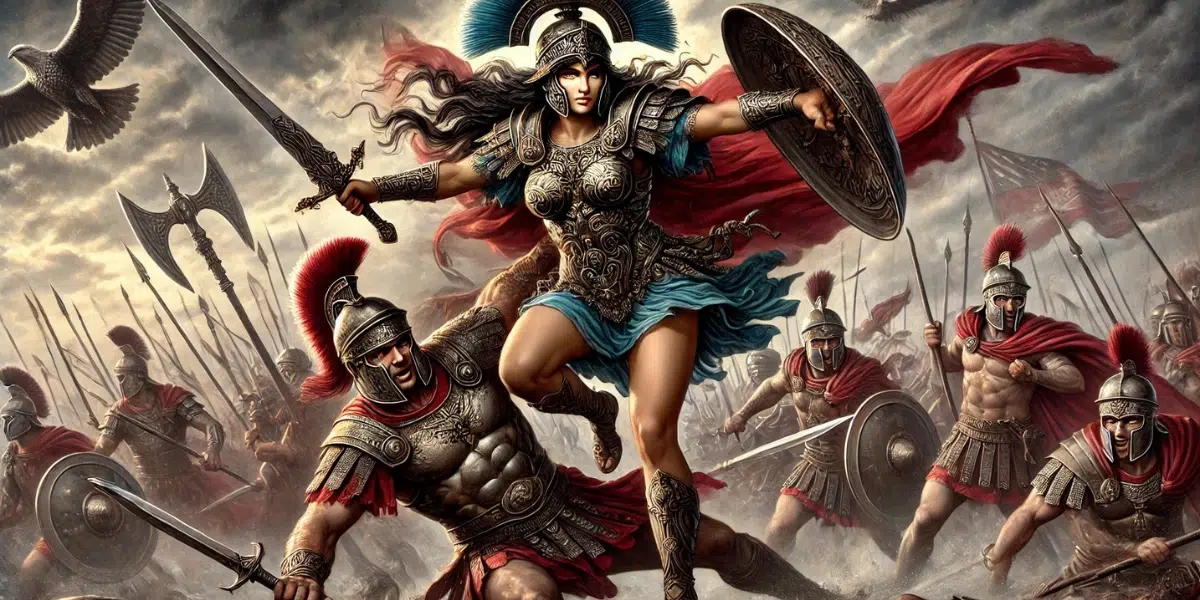
Bellona’s stories are famous in Roman myths, showing her key role in legendary tales. She is known as the fierce goddess of war. Her stories tell of her as Mars’ sister, the Roman god of war, linking her to a strong family bond.
Some myths show Bellona wearing a helmet and carrying a sword, fighting alongside her brother Mars. These stories highlight her as a smart and determined warrior. They say Roman generals would call on her for help before big battles, seeking her blessing for victory.
Bellona also stars in stories of important events, where she’s a key figure. She’s seen leading armies with great bravery. These stories helped keep her memory alive in the Roman Empire, making sure people still worshipped her over time.
Her stories show how powerful and important goddesses were in Roman culture. Bellona’s tales mix with Roman myths, showing a goddess who was key in battles and daily life. This made her a highly respected figure in Roman mythology.
The Roman Goddess Bellona Compared to Others on Mythology
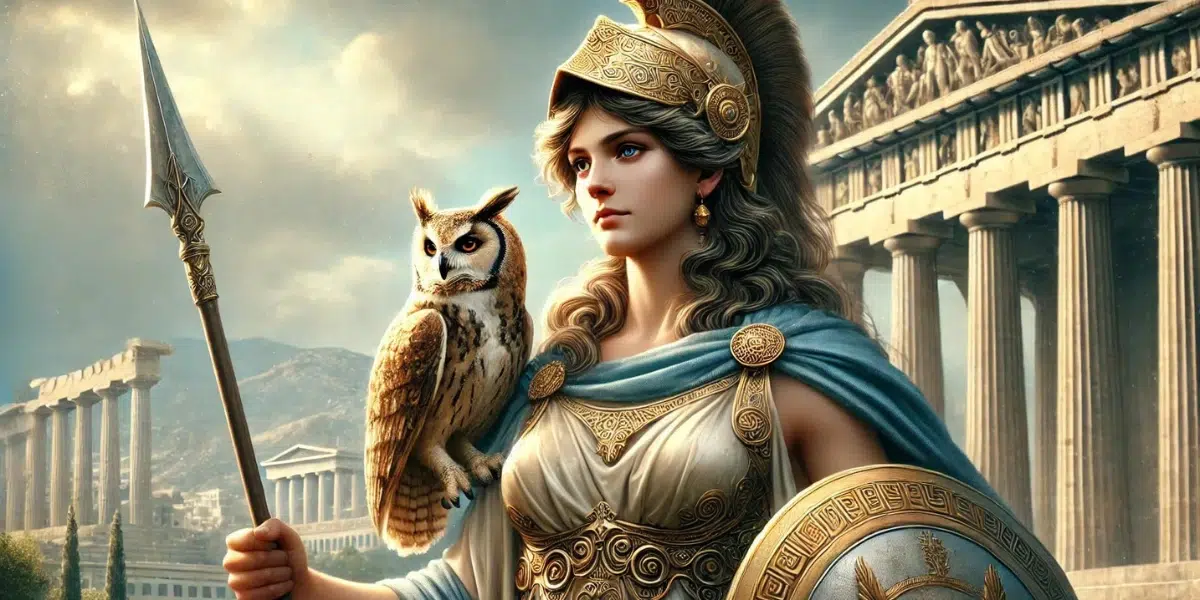
Bellona and the Feminine Divine in Roman Culture
As a Roman goddesses, Bellona offers a different view of the divine feminine. Unlike Vesta, who was all about family and home, Bellona was a warrior goddess. She showed a unique kind of female power that was not typical for her time.
Rome’s goddesses showed many sides of female power and presence. Bellona was not just about war; she was a symbol of female strength in a world mostly ruled by men. This gave women in Rome a powerful, active deity to look up to. She was different from the usual image of women as passive and caring.
- Bellona’s nature was unlike the peaceful roles of goddesses like Juno and Minerva, showing her special place in Roman beliefs.
- Her role among Rome’s goddesses shows how complex and varied divine femininity was in Roman culture.
- Being a key figure in worship and military traditions, Bellona proved that a strong female figure could challenge and change traditional gender roles.
Looking at Bellona among Rome’s goddesses helps us see spiritual gender roles were more complex than we think. Bellona mixed strength and authority in a way that went beyond usual femininity. This made Roman religious and cultural life richer.
Modern Interpretations of Bellona
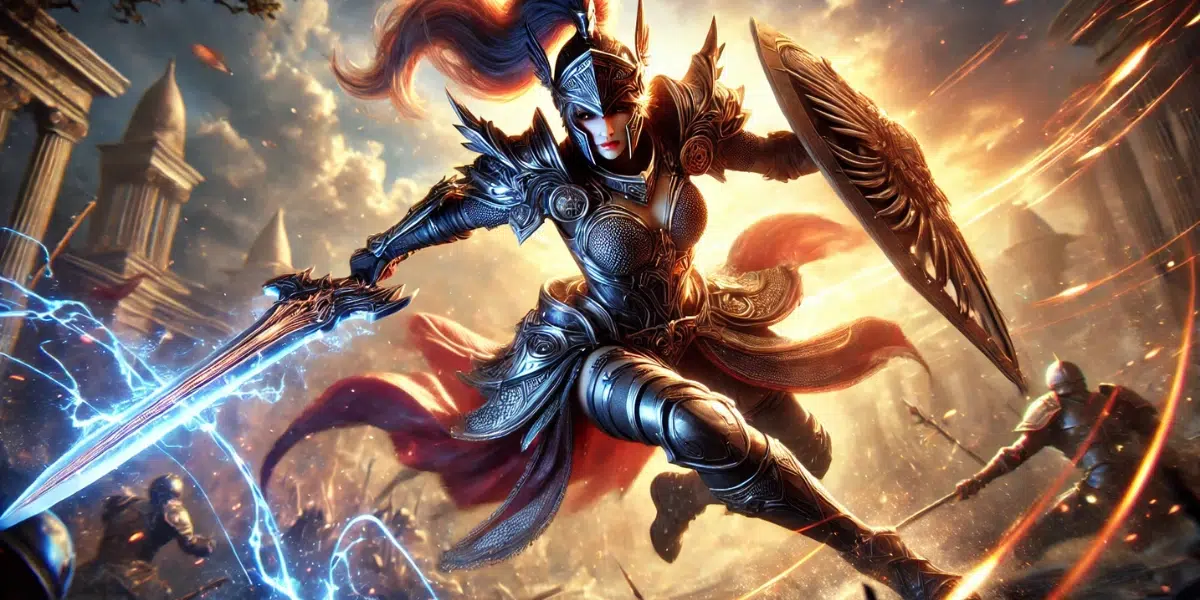
People still see Bellona as a symbol of war, power, and strategy. Artists, writers, and game designers include her in modern stories.
In video games, Bellona appears as a fierce warrior. In Smite, a popular game, she fights with different weapons, showing her strength and battle skills. Players choose her for her power and ability to lead in combat.
Writers also include Bellona in books and comics. Some stories show her as a wise war leader, while others make her a dangerous force. In Rick Riordan’s Camp Jupiter Classified, characters mention Bellona as an important Roman war goddess.
Artists create paintings and statues of Bellona, often showing her in armour with a sword or shield. Some use her image to represent strong women in history.
People also name things after Bellona. A small town in New York carries her name. Some military groups use her name or image to show bravery and strength.
Even today, Bellona still stands for war, courage, and leadership.
Bellona: The Legacy of a Goddess of War
Bellona’s impact is huge in ancient Rome’s story. She was a key goddess, showing the harsh side of war and its complex nature. Her legacy shows how war deities like her affect us today, beyond just Roman religion.
Her influence is still seen in many cultural forms today. The stories about her show how war was a big part of the Roman identity. These stories have lived on, touching people across time and places.
Bellona played a big role in teaching Roman soldiers about war. Her worship was key to their military life, with special ceremonies before fights. These rituals helped keep the soldiers disciplined and boosted their morale, showing Bellona’s big impact on them.
War deities like Bellona also taught us about being strong and brave, values ancient Rome held dear. These stories celebrated Roman wins and helped build the legend of the Roman Empire. Bellona’s stories and her important place in Roman culture show her lasting effect on other cultures too.
Looking at Bellona’s legacy, we see her as a symbol of war and a reflection of ancient Rome’s values. Her impact on myths and culture shows how she has shaped our view of war and heroism over time.
Conclusion
Bellona’s story through history is full of myth, culture, and military tradition. She was the Roman Goddess of War. Her beginnings showed more than just fighting; she was the strength and resilience of the Roman spirit.
Her traits, seen in Roman art and literature, made her a powerful deity. People respected and revered her.
Bellona played a big role in Roman religion. She influenced how the military fought and how people saw the feminine divine. When we compare her to Mars, we see she was a force to be reckoned with.
Her cult spread far, showing her big impact on the Roman world and beyond.
Today, Bellona still inspires us with her legacy. She stands for strength and determination. She connects ancient myths with today’s thoughts on power and divinity.
In the end, Bellona’s story adds a lot to our understanding of Roman culture, war, and the divine feminine. She helped shape one of history’s greatest civilizations.