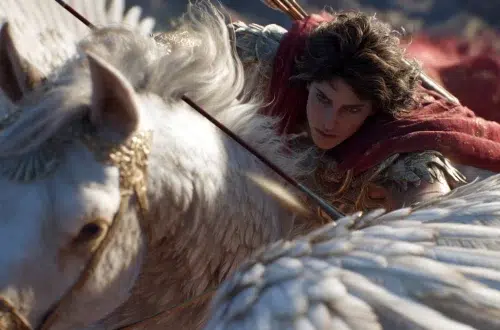

Ares Quick Tempered Greek God of War
Ares is known as the Greek god of war and represents the brutal and aggressive side of battles. As a prominent figure among the Twelve Olympian gods, he ruled over the war domain for the ancient Greeks.
Despite being the son of Zeus and Hera, he wasn’t well-liked. He was a complex deity.
This was because of his love for fighting and his quick temper. He stood for the brutal force of war, yet his stories present him in diverse and intriguing ways in Greek mythology.
Family Background of Ares

Ares’ family background is full of power from the Olympian gods. He is one of the Twelve Greek Olympians. In Greek mythology the twelve Olympians are the major gods or deities of the Greek pantheon. These gods would reside on Mount Olympus, which is why they were called Olympians.
The Olympians included: Aphrodite, Apollo, Ares, Artemis, Athena, Demeter, Dionysus, Hephaestus, Hera, Hermes, Hestia, Poseidon and Zeus.
He is one of two sons of Zeus, the king of gods, and Hera, the queen goddess. His brother Hephaestus, a smithing god, would make all the weapons for the gods in Olympus.
Even though Ares was from a powerful family, the gods and people generally did not like him. The one exception was Aphrodite, the goddess of love, who he had an affair with.
Some of his other siblings include Athena, Apollo and Artemis. Ares represents the physical or violent part of war. In contrast his sister, Athena a goddess, symbolizes the military strategy of war. She is also known for her wisdom and intelligence.
Learn more about Ares’ siblings in Greek mythology:
Children With Aphrodite

Ares was a busy father, having many kids who were important in Greek myths. His love affair with Aphrodite would create children representing love, harmony, fright, and panic. Deimos and Phobos are often companions of Ares in war.
They include:
- Deimos (“dread” or “terror”)
- Phobos (“panic” or “fear”)
- Harmonia, a goddess of harmony
- Eros, the God of Love
- Anteros, the god of requited love, punisher of those who scorn love
Other Children and Mortal Descendants

Ares also had other children with mortal women and goddesses.
Mortality didn’t stop Ares’ family from being amazing. It is said that he was a father to 25 mortal kids across Greece, from Elis to Boiotia.
He had four daughters with the Queen and Founder of the Amazons, Otrera.
Ares in Greek Mythology
Ares is a figure of both celebration and controversy. Known for his courage, he also embodies the brutal side of warfare.
His quick temper and love for battle overshadow his leadership skills, unlike the war goddess Athena. He is often disliked because of his affair with Aphrodite, leading to his public humiliation by her husband Hephaestus.
Still, Ares is a fascinating character, showcasing the raw power and dangers of war. His tales present a unique view on the nature of conflict, prompting thought on human complexities in times of strife.
Relationships with the Other Gods

Ares has complex relationships with other gods and goddesses in Greek mythology. His aggressive nature often leads to conflicts, yet he also forms alliances.
One of Ares’ most well-known relationships is with Aphrodite, the goddess of love. This affair causes tension among the gods, particularly with Hephaestus, who feels the betrayal.
He also has a rivalry with Athena, the goddess of wisdom and war strategy. While he embodies the chaos and violence of war, Athena represents the intelligence and tactics of warfare. They often oppose each other in myths, especially in battles like those of the Trojan War. This contrast highlights the different aspects of war.
Ares’ father, Zeus, sometimes shows disappointment in him. Zeus views Ares’ brutal nature as uncontrolled and destructive, which sometimes embarrasses the king of the gods.
However, he does have supporters.
His sister, Eris, the goddess of discord, often accompanies him in battle, reveling in the strife he creates. Their teamwork emphasizes the chaotic side of conflicts.
Through these relationships, the myths explore the dynamics of power, loyalty, and conflict among the divine beings.
The Embodiment of War

In Greek mythology, Ares is known for embodying the brutal and uncontrolled parts of warfare. He stands for violence, chaos, and the urge for bloodshed in conflicts.
This differs from his sister, Athena, who symbolizes war’s strategic and logical side.
Ares reminds us that war is more than just winning and being praised. It’s also about the massive power, devastation, and significant emotional hurt it causes.
Although not liked by many gods and people, his character shows the range of human feelings and actions during war. He reveals the courage and valiance of fighters alongside the wild brutality that war sometimes creates.
As the symbol of war’s unpredictable nature, Ares is a complex and interesting part of Greek myths.
The Symbolism of Ares
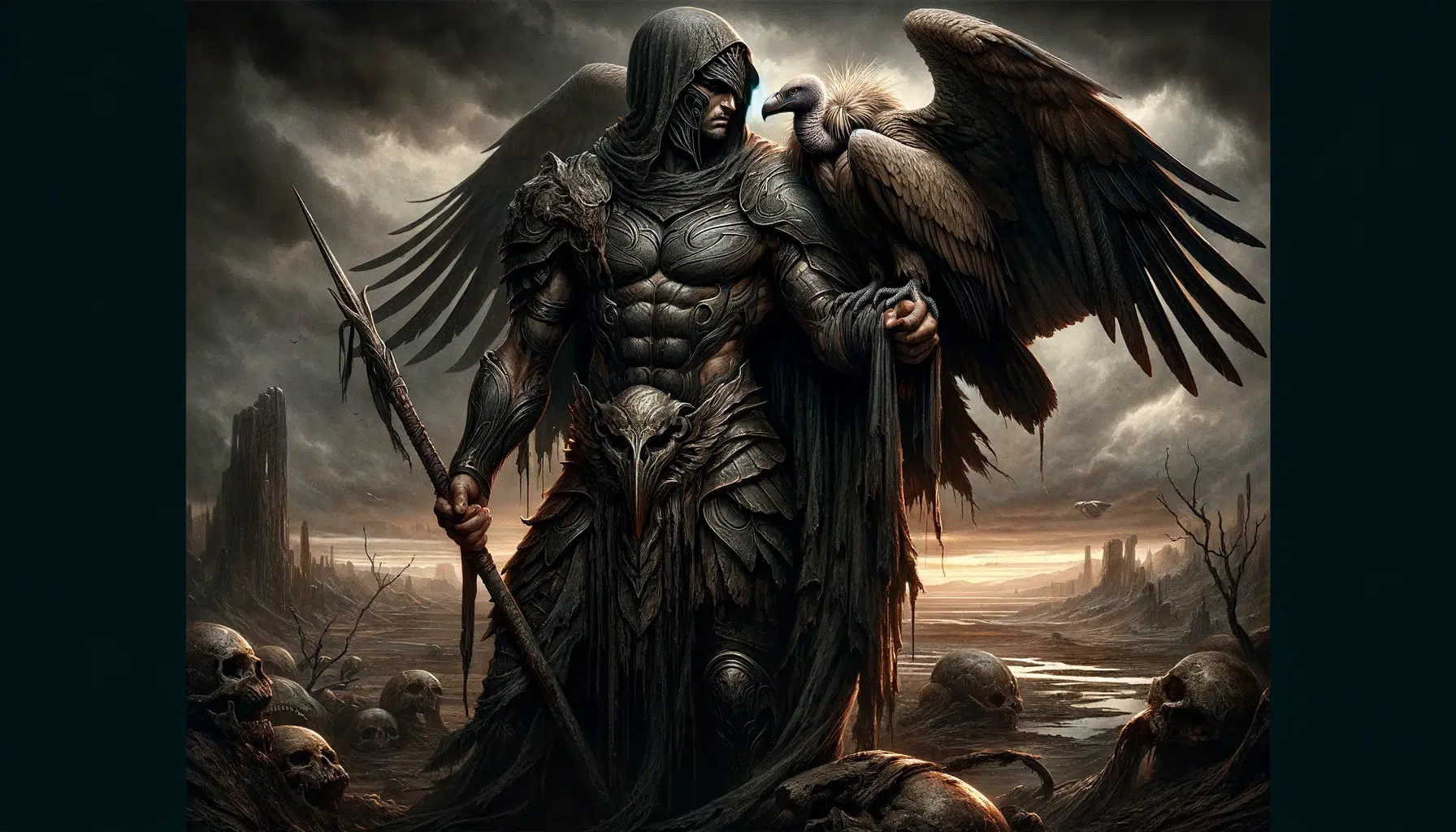
Ares, the Greek god of war, symbolizes several key aspects of battle and conflict. Unlike Ares, his Roman form Mars is more honoured, seen as a protector of the family in Rome.
Here are the main symbols and what they represent:
Spear and Sword: Symbolize Ares’ role as a warrior and his readiness for combat, representing physical aggression and violence.
Shield and Helmet: Signify protection and defense in battle and also highlight the preparedness and the constant state of war that Ares represents.
Chariot: Ares is often riding a chariot, symbolizing his swift and aggressive approach to warfare showing his mobility and the chaos.
Animals:
- Vulture: A bird that feeds on the aftermath of war, symbolizes his connection to death and destruction
- Dog: Represents loyalty and aggressiveness, but also the scavenging nature of war
- Serpent: Symbolizes danger and the deadly nature of conflict
Symbolism in Mythology
- Violence and Bloodlust: Ares personifies the brutal and untamed aspects of war, unlike Athena, who represents strategic warfare
- Fear and Panic: His sons, Phobos (Fear) and Deimos (Panic), often accompany him, symbolizing the terror and chaos that war brings
- Conflict and Strife: Ares frequently associates with Eris (Strife), highlighting his connection to discord and the destructive nature of war
- Embarrassment and Humiliation: The affair with Aphrodite illustrates the complex relationships among the Olympian gods, as well as impacting Ares’ pride and reputation
Learn more about Greek Gods and their Symbols: Greek Mythology Symbols
Cultural Significance
- Unpopularity: Ares was not widely worshipped in Greece because he represents the negative aspects of war. The Greeks prefer Athena’s strategic and protective qualities over Ares’ chaotic and destructive nature.
- Contrast with Athena: While Athena symbolizes wisdom and strategy in warfare, Ares represents the raw, violent, and chaotic side of battle.
Ares’ symbols and the qualities they represent paint a picture of a god who embodies the darker, more destructive side of human conflict and warfare.
Comparison to Mars, God of War

Ares and Mars, though both gods of war, show some key differences.
Ares represents the brutal and chaotic side of war. People often view him as fierce and uncontrollable.
Mars, on the other hand, embodies more than just battle. He also stands for strategy and military might. Unlike Ares, Mars earns respect and admiration in Roman culture.
He even has links to agriculture, showing his role in peace and fertility. This makes Mars a more complex and revered figure compared to the often feared Ares.
These differences highlight how cultures shape their gods according to what they value.
Myths Involving the God of War
Affair with Aphrodite, the Goddess of Love

Ares and Aphrodite were lovers despite Aphrodite being married to Hephaestus, the god of blacksmiths and craftsmanship. Their affair was not a well-kept secret among the gods. Helios, the sun god who could see everything, discovers the affair and informed Hephaestus.
In response, Hephaestus devises a cunning plan to catch the lovers in the act.
Hephaestus crafts a fine, nearly invisible net and set it over his bed. When Ares and Aphrodite next met in the bed, they were ensnared by the net and unable to move.
Hephaestus then calls upon the other gods to witness the scene, exposing Ares and Aphrodite to the ridicule and laughter of the entire pantheon. The gods mock the trapped lovers, and this public humiliation was a significant blow to Ares’ pride and reputation.
Significance of the Myth
- Humiliation and Defeat: Ares, despite being the god of war, often faces humiliation and defeat in myths, reflecting his impulsive and less strategic nature compared to other deities like Athena
- Divine Relationships: The affair with Aphrodite illustrates the complex and often contentious relationships among the Olympian gods
- Moral Lessons: Serves as a moral lesson about the consequences of infidelity and the importance of intelligence over brute strength
Ares and His Capture by the Aloadae
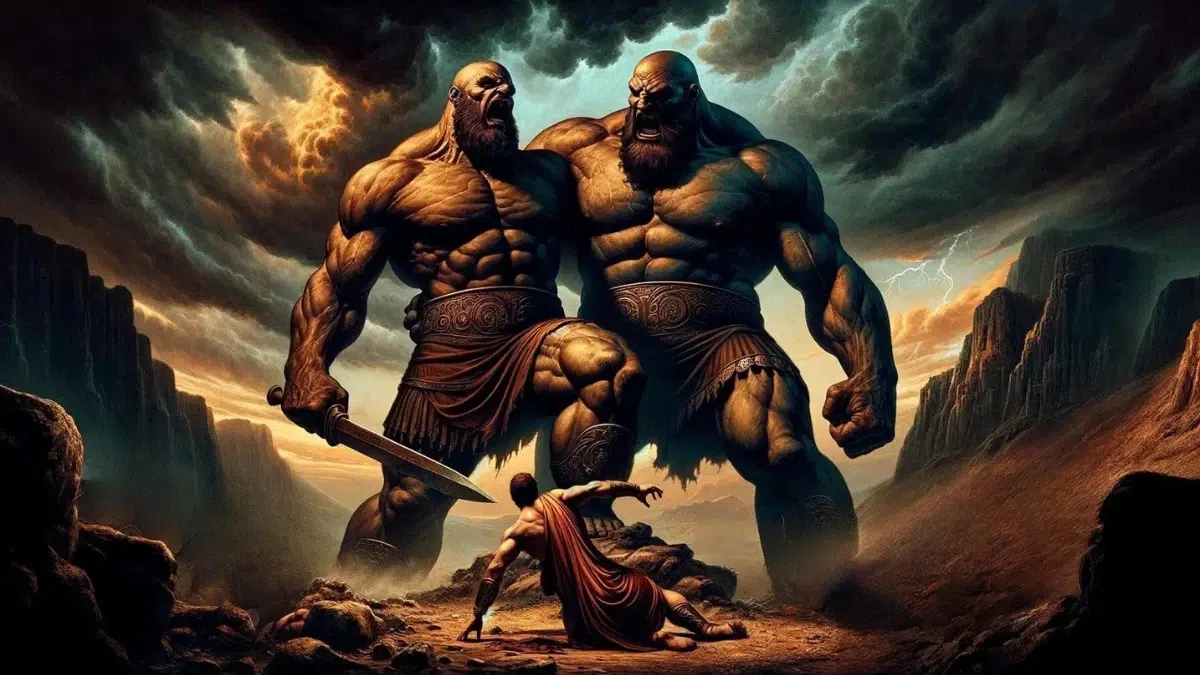
The Aloadae are the sons of Poseidon and Iphimedeia, and they are known for their immense strength and ambition. When they were nine years old, they were already gigantic, measuring eighteen feet across and fifty-four feet tall.
They decide to challenge the Olympian gods. They pile Mount Ossa on top of Mount Olympus and then place Mount Pelion on top of Ossa. Thus intending to climb to the heavens and overthrow the gods.
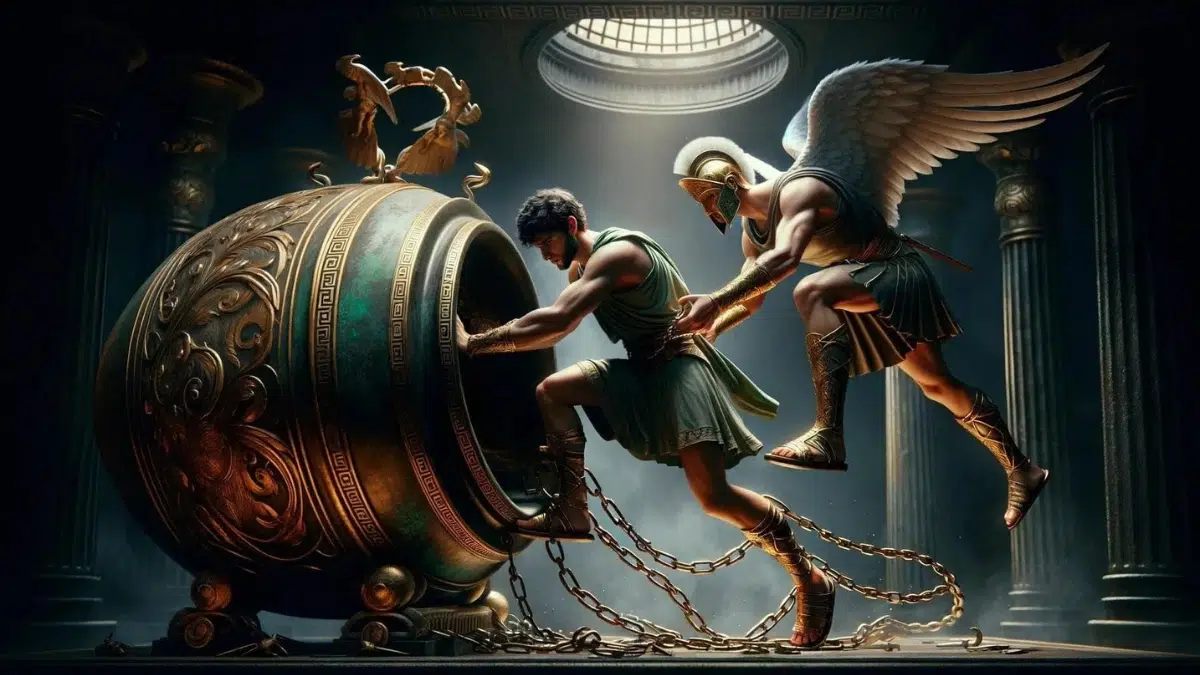
Ares, the god of war, attempts to stop them but is overpowered. The Aloadae capture Ares and imprison him in a bronze jar, where he remained for thirteen months. During this time, Ares’ absence was keenly felt, and he grew weak from his prolonged captivity.
The Rescue
The stepmother of the Aloadae, Eriboea, eventually informs Hermes of Ares’ plight. Hermes, known for his cunning and speed, manages to rescue Ares from the jar.
In some versions of the myth, Artemis also plays a crucial role in the downfall of the Aloadae. She transforms herself into a deer and ran between the two giants.
In their attempt to hit the deer, the brothers accidentally struck each other with their spears, leading to their deaths.
Significance of the Myth
- Ares’ Vulnerability: Highlights the theme that brute strength alone is not always sufficient
- Cunning Over Strength: The rescue of Ares by Hermes and the trickery of Artemis emphasize the importance of intelligence and cunning in overcoming challenges
- Divine Interactions: Illustrates the complex relationships and interactions among the gods, as well as their reliance on each other in times of need
The story of Ares and the Aloadae is a fascinating example of Greek mythology’s rich tapestry of tales. Even the mightiest gods could find themselves in peril and require the aid of their divine peers.
His Role in the Trojan War

In Homer’s Iliad, Ares is a fierce and tumultuous god who initially promises to support the Greeks but is persuaded by Aphrodite to fight for the Trojans.
His involvement in the war is marked by several key events:
- Switching Sides: Ares initially sides with the Greeks but switches to the Trojan side due to Aphrodite’s influence. This change of allegiance causes tension among the gods, especially with his sister Athena, who supports the Greek.
- Battlefield Presence: Ares actively participates in battles, often leading the Trojan forces and inspiring their warriors. He is described as a powerful but chaotic force on the battlefield, embodying the brutal and violent aspects of war.
- Wounding by Diomedes: One of the most notable incidents involving Ares in the Trojan War is his wounding by the Greek hero Diomedes. With the help of Athena, Diomedes is granted the strength to injure Ares, who is driven from the battlefield. Ares’ scream is said to be as loud as the shouts of 10,000 men, and he retreats to Olympus to complain to Zeus, who shows little sympathy for his son.
- Conflict with Athena: Ares’ rivalry with Athena is highlighted during the war. In one encounter, Athena defeats Ares by striking him with a large rock, further humiliating him and showcasing the triumph of strategy and intelligence over brute force.
Significance of Ares’ Role
- Divine Influence: The gods’ involvement in the war reflects their capricious nature and the impact of divine intervention on humans
- Contrast with Athena: Ares’ impulsive and violent nature contrasts with Athena’s strategic and calculated approach to warfare
- Humiliation and Defeat: Ares’ defeats and humiliations, especially at the hands of mortals and other gods, highlight his limitations and the Greek view of mindless aggression as a weakness
Learn more about the Trojan War:
- Achilles: Greek Warrior Hero’s Journey from Glory to Grief
- Hector of Troy: Legendary Trojan Warrior
- Paris: Tragic Hero, Villain or Pawn of the Gods
- Penthesilea: Amazon Queen Who Died in Trojan War
- Philoctetes: The Legendary Greek Archer and Healer
These tales help us understand how the ancient Greeks viewed the turbulent and unpredictable nature of war through the figure of Ares.
Temples and Worship of Ares
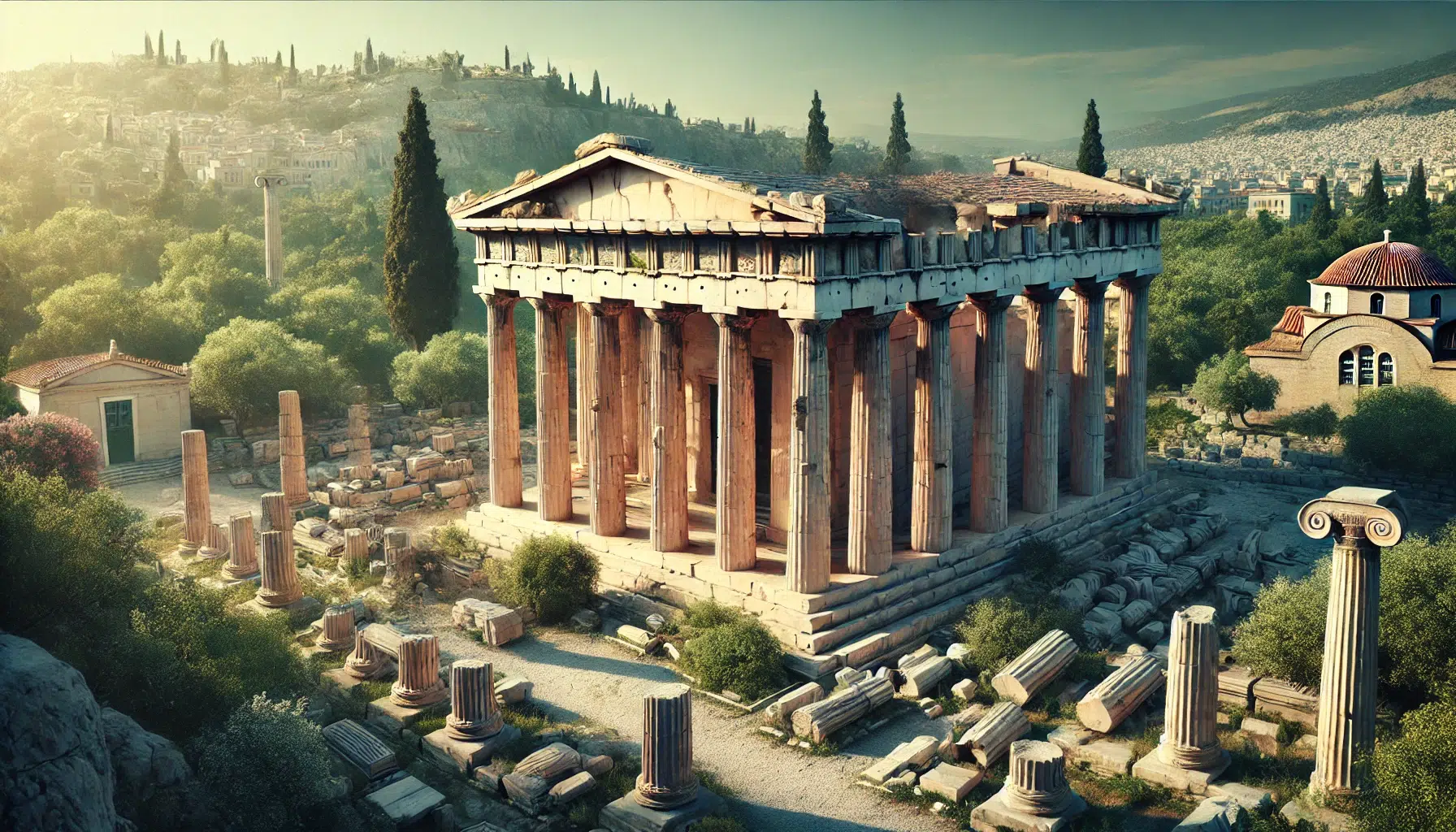
Ares has a few notable temples and places of worship, although he is not as widely revered as other gods like Athena or Zeus.
Ares had few temples because not everyone worshiped him. One special place for him was the Areopagus Hill in Athens. It was known for ancient trials.
Temple of Ares in Athens
This temple is located in the northern part of the Ancient Agora of Athens. Originally, it was built at Pallene and dedicated to Athena and Apollo.
It was moved to the Agora during the reign of Augustus and rededicated to Ares. The temple features a large altar and statues of various gods, including Ares, Aphrodite, and Athena. In the Agora, the Temple of Ares had a special east staircase. A wall to hold up part of the area was over a meter tall.
| Temple of Ares: Ancient Greek temple dedicated to the god Ares | |
|---|---|
| Original Location | Originally located at Pallene (modern Gerakas), dedicated to Athena Pallenis and probably Apollo, before being moved to the Ancient Agora of Athens. |
| Historical Period | Probably built around 440-436 or 430-425 BC; sculptures defaced in the 5th century AD and structure demolished in the 6th century AD. |
| Architectural Style | Doric hexastyle peripteral temple, the largest by the ‘Theseum architect’ and part of several ‘itinerant temples.’ |
Other Sites Associated With Ares
- Temple in Geronthrae, Laconia: This temple includes a sacred grove and hosts an annual festival in honour of Ares. During this festival, women are not allowed to approach the temple.
- Temple in Metropolis, Anatolia: There are few temples dedicated to Ares in Anatolia, but one notable example exists in Metropolis.
- The Areopagus, also known as the “Hill of Ares”: Northwest of the Acropolis and is historically significant for its association with the Athenian judicial council and various mythological events involving Ares.
- Other Locations: Ares also has altars and images in places like Olympia, Tegea, and Thebes. In Sparta, there is an ancient statue of Ares in chains, symbolizing that the martial spirit and victory should never leave the city.
Worship Practices
In places like Geronthrae, annual festivals honour Ares. These festivals often include sacrifices and other rituals to invoke his favor and protection in battle.
Common offerings to Ares include incense, red flowers, and items symbolizing war, such as weapons and armour. Some people also offer black coffee, which is believed to be favored by Ares.
Worshippers pray to Ares for strength, courage, and protection in battle. Prayers often ask for his guidance and support in overcoming challenges and enemies.
Devotees set up altars with symbols of Ares, such as spears, helmets, and shields. These altars serve as focal points for worship and offerings
Ares’ worship involves a mix of rituals, offerings, and prayers aimed at invoking his martial strength and protective qualities. His temples, though fewer in number, serve as important sites for honouring the god of war.
Ares in Literature and Art
The Greek god of war, Ares, appears frequently in literature and art, symbolizing the violent and chaotic aspects of battle. Ares has fascinated artists and writers for centuries.
Literature
In the Iliad (Homer’s Epic), Ares represents the brutal and destructive side of war. He fights for the Trojans but often faces humiliation, such as when the Greek hero Diomedes wounds him with the help of Athena.
In the Iliad, he isn’t shown in a good light. He’s painted as a cowardly warrior who runs from the fight when hurt. This funny portrayal shows how the ancient Greeks saw him – brave yet reckless.
Ares appears in various Greek tragedies, often symbolizing the chaos and bloodshed of war. For example, in Aeschylus’ plays, he embodies the destructive force that brings suffering to humanity
Ares features in contemporary works and modern literature. In the Percy Jackson series, he is portrayed as a major antagonist. He also appears in comic books from both DC and Marvel, often as a villain.
Art
In ancient art, the god of war is pictured as a warrior in full armour. In the Parthenon frieze, however, he’s among other gods in regular clothes. This shows his not-so-simple role in Greek culture. The frieze at Pergamum also shows Ares, underlining his importance in Greek mythology and art.
- Ancient Greek Art: Ares is depicted as a mature, bearded warrior armed for battle or as a nude, beardless youth with a helm and spear. These images emphasize his readiness for combat and his role as a god of war.
- Renaissance Art: Artists like Botticelli and Velázquez show Ares, often highlighting his relationship with Aphrodite. Botticelli’s Venus and Mars shows Ares in a relaxed state after lovemaking, surrounded by playful fauns.
- Sculpture: The Ludovisi Ares is a famous sculpture showing Ares seated, holding his sword, with a figure of Cupid at his feet. This piece contrasts Ares’ warlike nature with a softer, more contemplative side.
Popular Culture
- Movies and TV: Ares appears in various films and TV shows, such as Wonder Woman, where he is portrayed as the main antagonist. He also features in the Netflix series Blood of Zeus and the Disney+ series Percy Jackson and the Olympian.
- Video Games: Ares is a character in games like Fortnite and Immortals Fenyx Rising, where he often plays a significant role in the storyline.
Ares in the Percy Jackson Series

Ares is the God of War in the Percy Jackson series. Rick Riordan wrote these books. In “The Lightning Thief,” he seems like a friend, helping Percy, Grover, and Annabeth.
But his real plan was to start a war between Poseidon and Hades. After a big fight, Percy beats him in a duel. Ares gets mad and warns Percy about his weapon.
In “The Sea of Monsters,” Ares wants Percy and his friends dead. His daughter tries but fails to kill them. Ares stands for the might and mess of war in the series. He loves chaos, fights, and showing his strength as the God of War.
He often meddles in human affairs, bringing trouble and destruction and enjoys stirring up trouble between demigods.
Adam Copeland portrays Ares in the Percy Jackson world. He is like a not-quite friend to Percy. He carries a big sword and rides a motorcycle. This shows his warrior nature. Even though Percy defeats him once, he comes back. He acts like an annoying big brother to Percy.
Conclusion
Ares was a key figure in ancient Greek myths. He was the god of war. He stood for the brutal and uncontrolled parts of war. This included its power, destruction, and effects on people.
Ares shows us the many sides of war. He tells us about its glory and its dark truths.
We look at his stories, powers, and background. This helps us understand how the ancient Greeks saw war.
He remains important in our culture. This shows his lasting impact as a complex god of Greek mythology.
Our learning about Ares ends here. Now we see war in a new light. We understand its deep effects through the tales of this god.
These stories challenge and inspire us. They show the true feelings and facts of war.