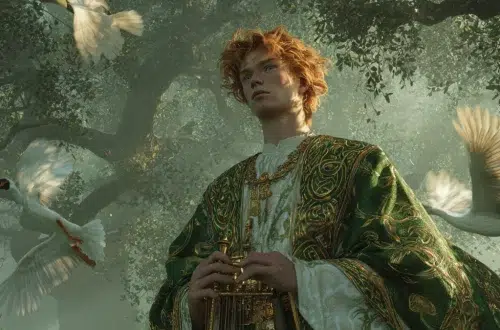

Arawn: The Enigmatic Celtic God of the Underworld
Arawn is a key figure in Welsh mythology, known as the ruler of the underworld. He is a major Celtic deity, with his realm, Annwn, seen as a magical Otherworld. The ‘Mabinogion’ mentions Arawn, showing his deep and mysterious nature.
Arawn’s stories are filled with magic, war, and justice. He is often linked with other gods and heroes. One famous story tells of his deep bond with Pwyll, Prince of Dyfed, showing honour and respect.
This story adds to Arawn’s importance in Celtic culture. It makes him a fascinating subject for scholars and fans to study.
The Origins of Arawn
Arawn’s story begins in ancient Welsh literature, first seen in the Mabinogion. This collection of stories is key to understanding Welsh legends and the ancient Celtic gods. It shows how important Arawn was among mythological figures.
Arawn is a key figure in Welsh mythology. He is best known as the ruler of Annwn, the Otherworld. His story shows the mix of cultural beliefs, storytelling, and religious changes.
Arawn’s main story is in the Mabinogion, a collection of old Welsh tales and the Book of Taliesin, a medieval manuscript of the oldest Welsh poetry.
The name Arawn might come from the Hebrew name Aaron, meaning “exalted.” Some experts think it links to the Celtic god Arubianus.
Arawn is connected to hunting, nature, and the balance between life and death. People compare Arawn to the Gaulish god Cernunnos, who is also linked to wild animals and fertility.
The Realm of Annwn

Annwn is a magical Otherworld in Welsh mythology, ruled by Arawn. It’s a place of unmatched beauty and mystery. It has eternal happiness, plenty of fruit, and no disease. Annwn is sometimes described as an island off the coast of Wales, a cauldron or kingdom beneath the sea, or simply underground.
Unlike the dark Christian underworld, Annwn shines with beauty. This contrast makes it a key part of Celtic afterlife stories.
People see Annwn as a paradise of endless youth and happiness or a place for spirits. These different views show its important role in Celtic stories. In Annwn, magic is everywhere. Fantastical creatures, hidden treasures, and strange events await those who enter.
Getting into Annwn is hard; only the bravest heroes or those invited by Arawn can go. This shows how much the Celts valued the afterlife. In Annwn, time and life don’t follow the usual rules. This reflects the Celtic view of life’s cycles and the link between the physical and spiritual worlds.
When Christianity spread in the British Isles, Arawn’s image changed a lot. He went from a just and kind ruler to a figure linked with death. Christians turned Annwn into a place for the damned. They saw Arawn’s hounds, the Cŵn Annwn, as hellhounds hunting lost souls.
Arawn’s Role in the Celtic Pantheon
Arawn is a key figure in Celtic mythology, ruling over the underworld. He keeps the balance between life and death and looks after the souls of the dead.
Arawn is linked to the wild hunt, a common theme in European myths. He leads a group of supernatural beings at night. This shows his power and the magical nature of his world.
He is known for his strength, rule, and deep connection to nature and animals, especially white hounds and stags. These traits highlight his important role in Celtic spirituality. They show how his duties are linked to the natural world.
Arawn’s role is deeply connected to life, death, and nature. This shows the complex balance in the Celtic pantheon. Arawn is a crucial figure in this balance.
Comparisons to Other Mythological Figures
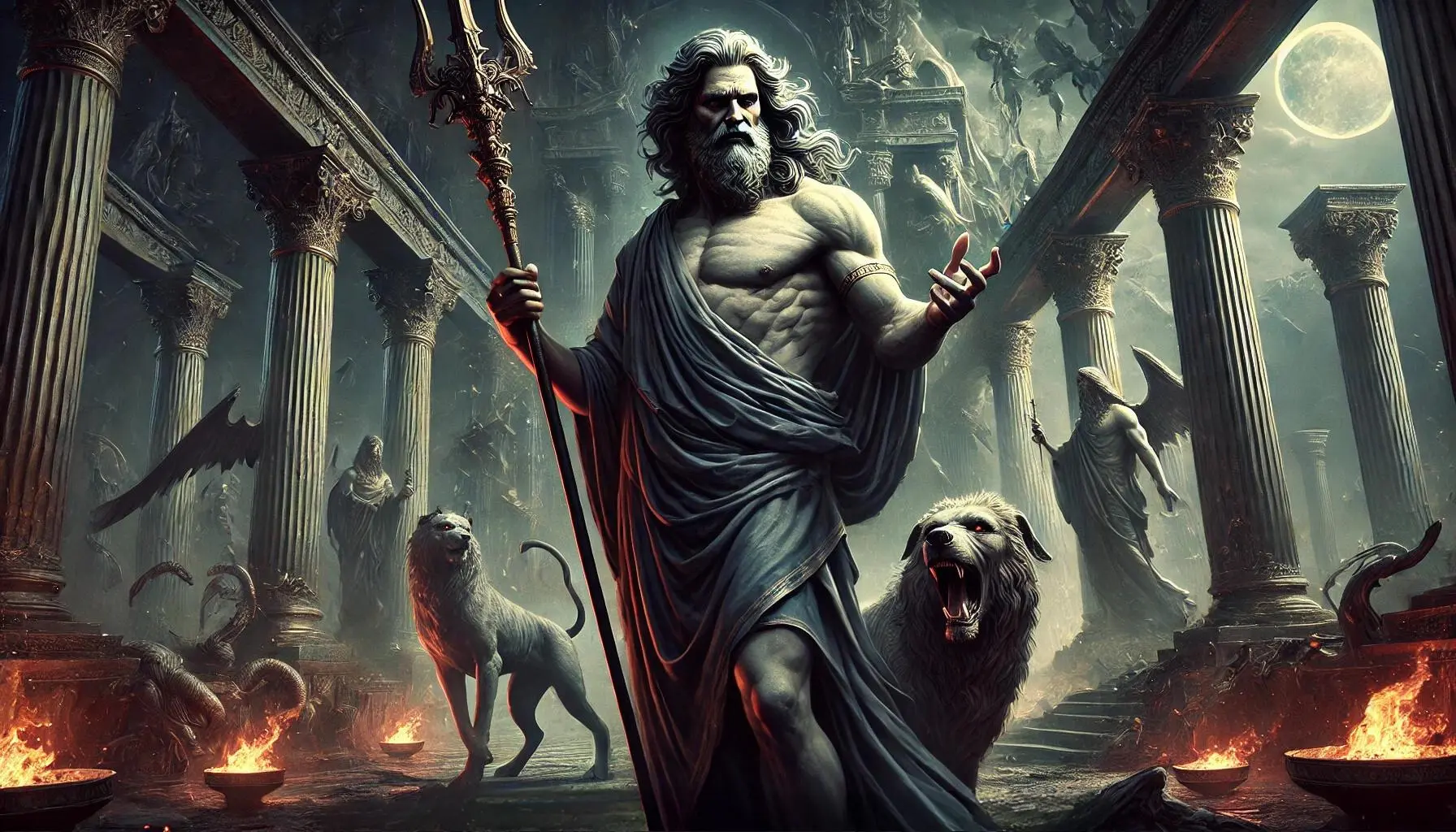
Arawn, ruler of the Otherworld, is similar to the Greco-Roman gods Hades and Pluto.
Like Hades in Greek mythology, Arawn governs the realm of the dead. He is not evil but is linked to death and the afterlife. Both gods oversee realms that are feared and respected. They maintain the balance between life and death, ensuring the natural order. While people often fear them, they also honour these gods for their crucial role in the cycle of life.
Arawn shares traits with Odin, the Norse god, who is a master magician and a guide for souls.
Odin’s Germanic form, Wotan, is associated with the Wild Hunt, a title also linked to Arawn. This shows Arawn’s role as a leader of ghostly hunts and his control over life and death.
Both gods use magic and possess deep wisdom, guiding spirits to the afterlife. They also lead spectral hunts, emphasizing their connection to the supernatural and the natural world.
Symbols of Arawn
Arawn, the ruler of Annwn in Welsh mythology, connects with powerful symbols that show his role and traits. These symbols highlight his ties to the Otherworld, his magic, and his control over life and death.
Magical Cauldron
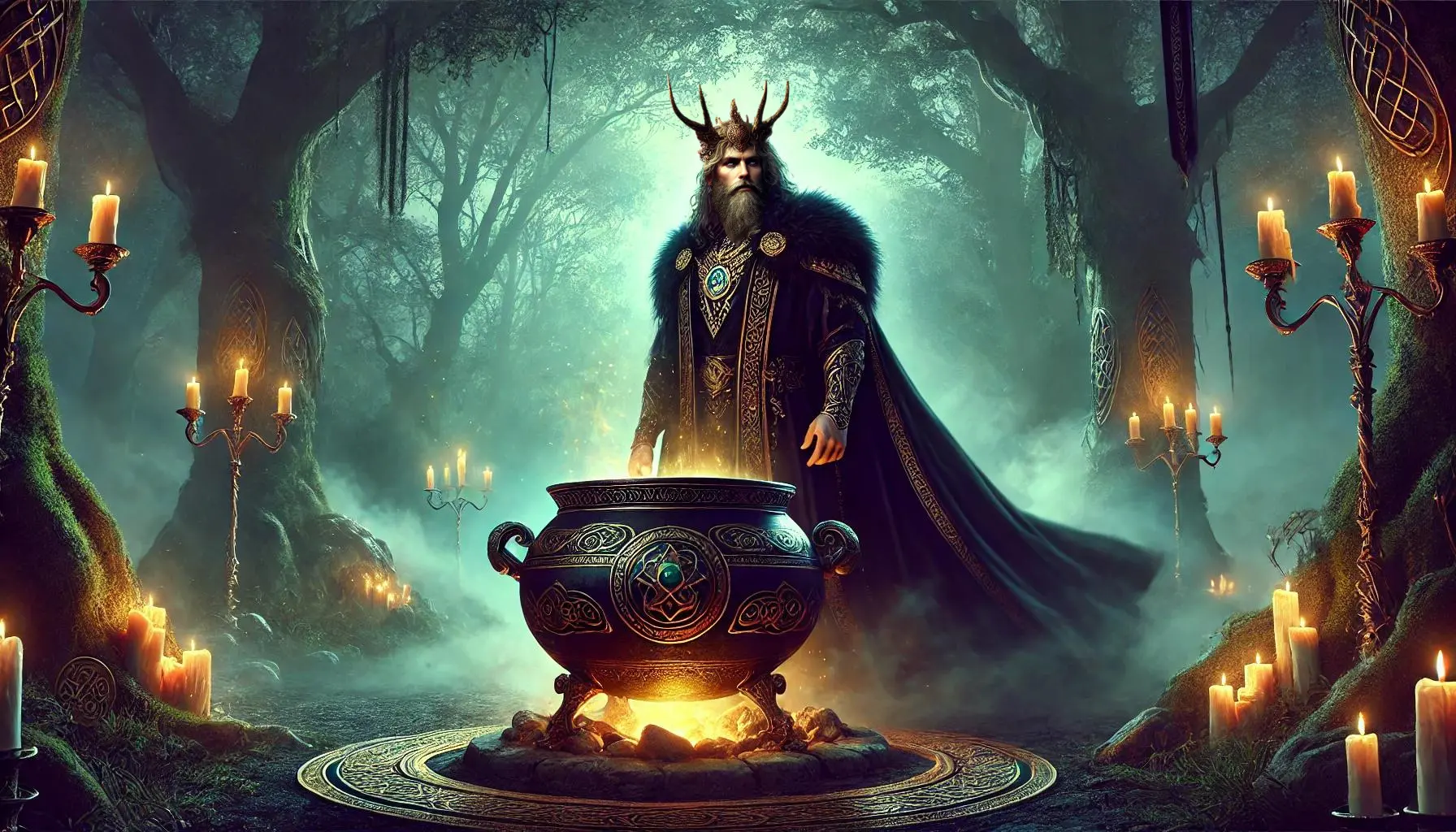
Arawn’s most important artifact is the Cauldron of Rebirth. This cauldron brings the dead back to life. It won’t cook food for cowards, showing the value of bravery and valour in Celtic culture. The cauldron stands for regeneration, transformation, and the cycle of life and death. It also shows Arawn’s magical powers and his rule over the Otherworld.
Cŵn Annwn (Hounds of Annwn)
Arawn has a pack of supernatural hounds called the Cŵn Annwn. These hounds, with white fur and red ears, guide lost souls to the Otherworld. They show Arawn’s role as a guide for souls and represent the hunt and the wild forces of nature. This connection links Arawn to the wilderness and the life-death cycle. These hounds symbolize guidance and protection in the afterlife.
Golden Torc
The golden torc is a key symbol of Arawn. In Celtic culture, torcs are more than just jewellery; they show status, power, and spiritual meaning. Arawn’s golden torc shows his royalty and authority as the ruler of Annwn. It highlights his high status among the gods and his connection to the divine. The torc in many images of Arawn shows its importance as a symbol of nobility and power in Celtic society.
Horns and Antlers
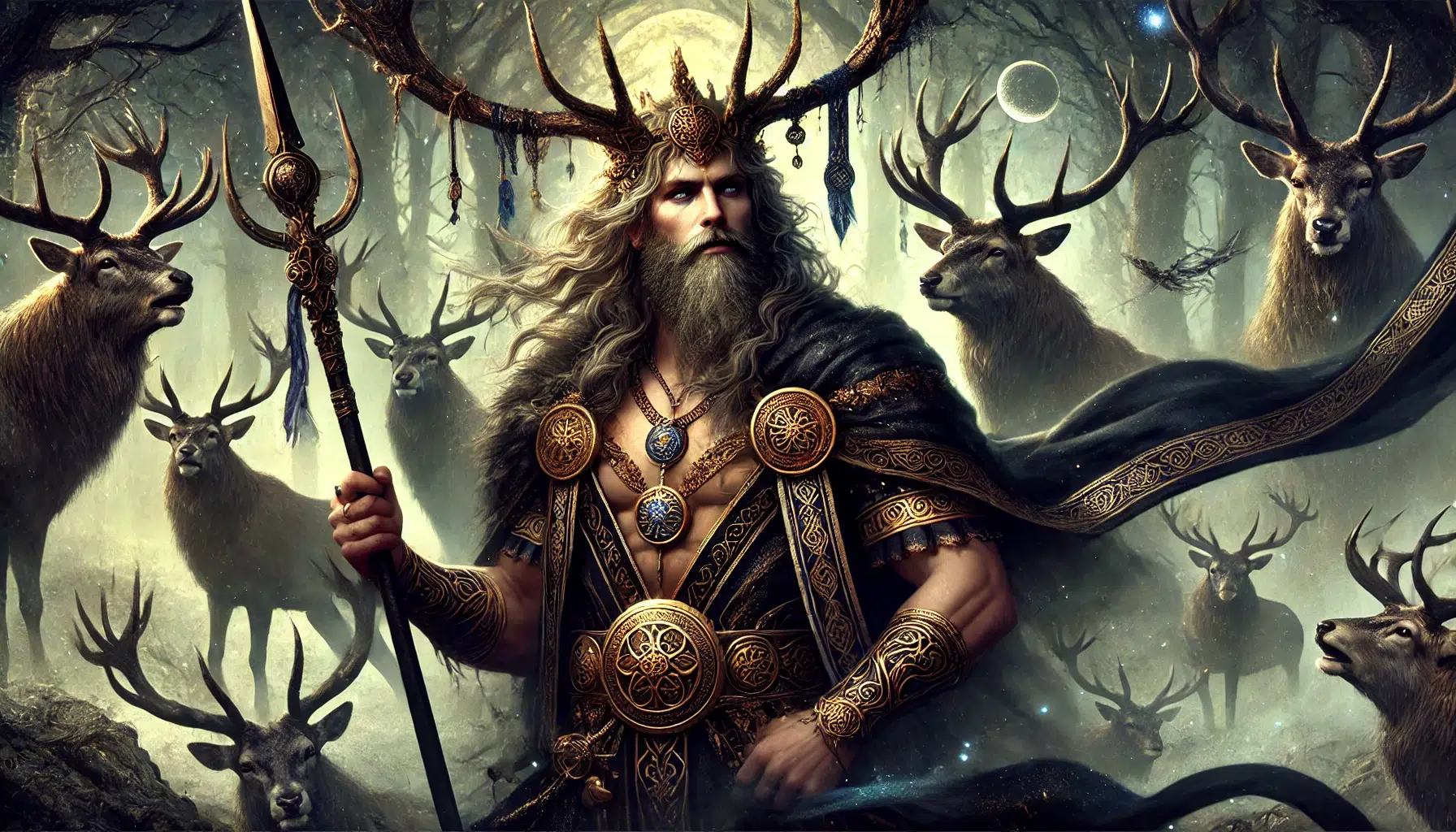
Arawn sometimes wears a Horned Crown with stag antlers. This connects him to nature and symbolizes fertility and wildness. The antlers show his power and royal status in the Otherworld. Stags represent nobility, nature, and the hunt.
Black Horse
Arawn often rides a black horse, symbolizing his role as a guide and his power over death. The black horse shows Arawn’s ability to move between the worlds of the living and the dead, guiding souls to Annwn. This image reinforces his link to nature and the cycles of life and death.
Cloak of Invisibility
Arawn is a skilled magician who can shapeshift and summon darkness. He sometimes wears a black cloak that makes him unseen and unheard, matching his powers to become invisible and control the unseen parts of the Otherworld.
Black Spear
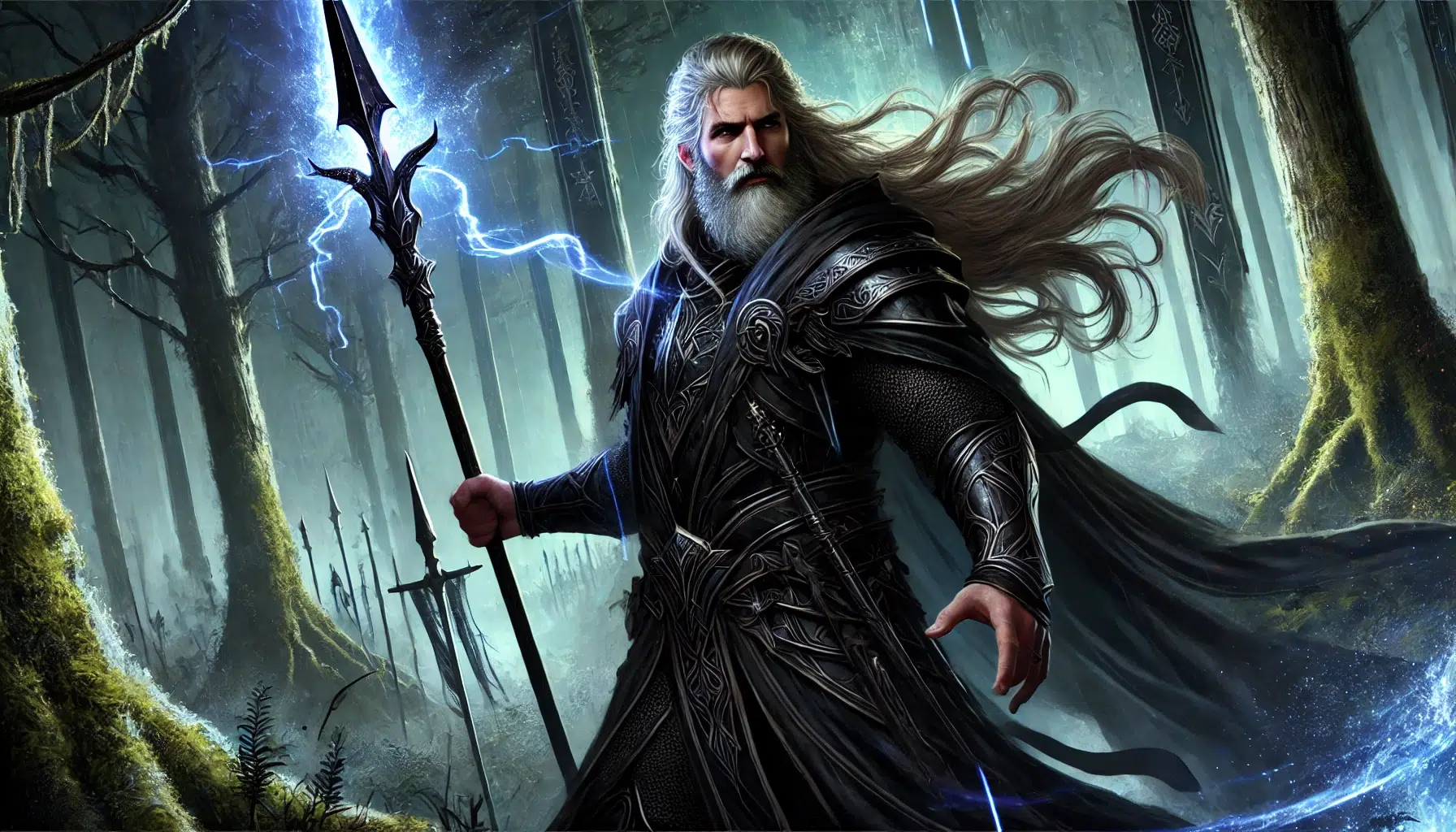
Arawn also has a Black Spear, a powerful weapon with dark magic. This spear shows Arawn’s skill in battle and his ability to break through any armour or shield. It highlights his strength as a warrior and protector of Annwn.
Other Symbols of Arawn
- The Wild Hunt: A spectral procession led by Arawn, symbolizing his power and authority. It represents the endless cycle of life and death
- The Raven: Linked with death and the afterlife, the raven is Arawn’s messenger and symbolizes his control over the spirits of the dead
- The Skull: A symbol of death and mortality, representing Arawn’s power over the afterlife and the certainty of death
- The Triple Moon: This symbol shows the cycles of life, death, and rebirth. It is central to Arawn’s teachings about the interconnectedness of all things
Arawn in Popular Culture
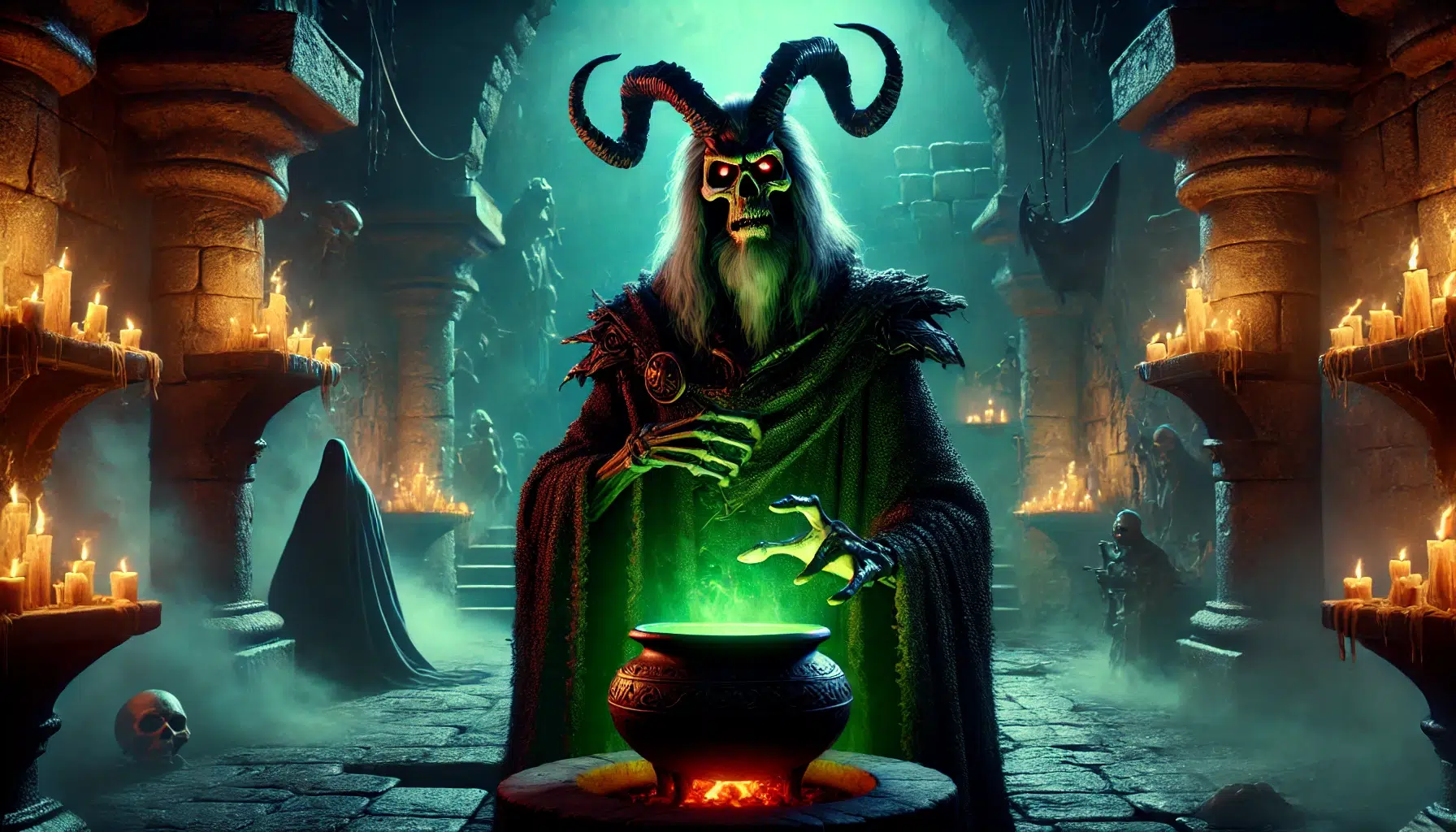
Arawn, the mysterious ruler of Annwn in Welsh mythology, appears in modern popular culture. His character shows up in literature, comics, games, and music. These versions keep his mystical and otherworldly traits, focusing on themes of death and the supernatural.
Influence of Arawn in Literature
In The Chronicles of Prydain series, Arawn becomes Arawn Death-Lord, the main villain. He is an evil ruler who struggles to control Annwn. Arawn is sneaky and manipulative, using proxies like the Horned King and Morgant to do his work. His presence influences the whole series.
Disney’s animated film The Black Cauldron, based on the second book of The Chronicles of Prydain, features Arawn’s influence through the Horned King. Although Arawn does not appear, his role as the main villain shapes the story’s dark tone. The Horned King and other villains can summon the dead, hinting at Arawn’s powers over the Otherworld.
The French comic series Arawn retells stories from the Mabinogi with a gritty style. This series explores Arawn’s adventures and complex character, mixing traditional myths with modern storytelling.
Influence and Parallels in Other Literature
Arawn’s story influences other works, like the Arthurian tale Sir Gawain and the Green Knight. Both Arawn and the Green Knight deal with themes of honour, loyalty, and testing character. Both protagonists, Pwyll and Gawain, face challenges that test their integrity.
In Brut y Brenhinedd, a Welsh translation of Geoffrey of Monmouth’s Historia Regum Britanniae, Arawn vab Kynvarch is the King of Scotland. He allies with King Arthur, providing troops for Arthur’s battles against the Romans. This story links Arawn to the Arthurian legend.
Games Featuring Arawn
In Dungeons & Dragons, Arawn appears as the Celtic Lord of the Underworld. This version stays true to his mythological role, highlighting his rule over the dead and his ties to the Otherworld. Arawn’s character often represents themes of death, rebirth, and the supernatural.
In the video game Bloodforge, Arawn plays a key role in the hero’s story. The main character, Crom, meets Arawn on a hunting trip, leading to a demon attack on Crom’s village. Arawn’s presence in the game shows his connection to hunting and the darker side of the supernatural.
Stories and Myths of Arawn in Historical Texts
Arawn, a central figure in Welsh mythology, is the ruler of Annwn, the Otherworld. His stories are in the Mabinogion, a collection of medieval Welsh tales.
Arawn is also in the Book of Taliesin.
The Book of Taliesin is a medieval manuscript with some of the oldest Welsh poetry. Dating from the first half of the 14th century, it includes poems that might be from the 6th century. The manuscript is named after Taliesin, a legendary bard with a huge impact on Welsh literature. This collection includes several references to Arawn and the mystical realm of Annwn.
The First Branch of the Mabinogion: Pwyll, Prince of Dyfed

Arawn’s main story is in the First Branch of the Mabinogion, Pwyll, Prince of Dyfed. Pwyll, Lord of Dyfed, offends Arawn by driving away his hounds from a stag they killed. To make up for this, Pwyll swaps places with Arawn for a year and a day. During this time, Pwyll must defeat Arawn’s rival, Hafgan, and rule Annwn. Even Arawn’s wife does not notice the switch. Pwyll defeats Hafgan and does not sleep with Arawn’s wife, earning Arawn’s friendship and the title “Head of Annwn” (Penn Annwn).
The Fourth Branch of the Mabinogion: Pryderi’s Gift
In the Fourth Branch, Arawn does not appear directly but sends otherworldly pigs to Pwyll’s son, Pryderi. Arawn sends magical pigs to Pryderi as a token of friendship. When the trickster Gwydion steals these pigs, it leads to a conflict between Dyfed and Gwynedd. These pigs cause conflict between Dyfed and Gwynedd. This story shows Arawn’s influence and the link between Annwn and the mortal world.
Book of Taliesin: Cad Goddeu (The Battle of the Trees)
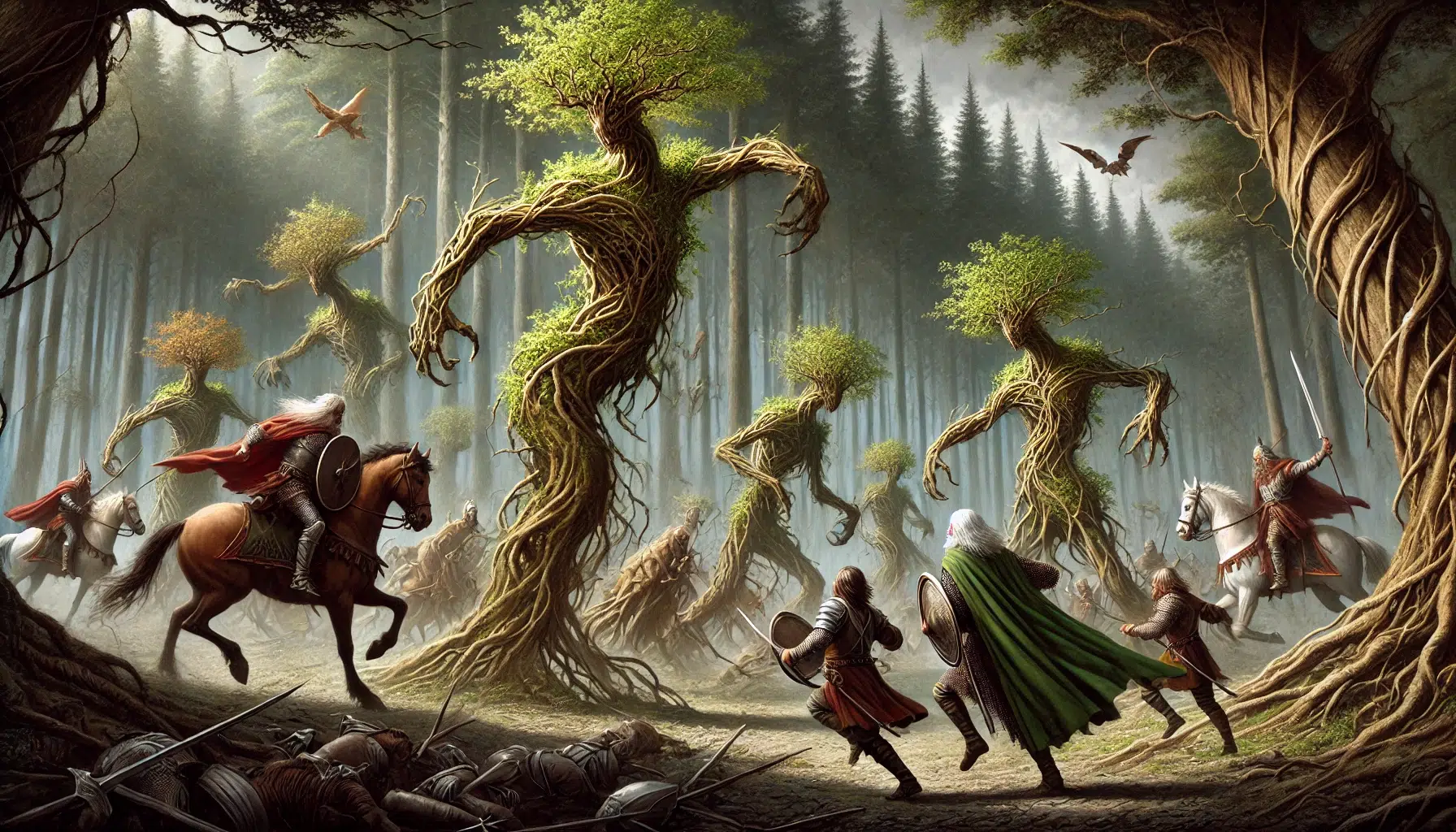
One famous poem in the Book of Taliesin is “Cad Goddeu” or “The Battle of the Trees.” This poem tells of a mythical battle where Arawn, ruler of Annwn, plays a key role.
The conflict starts when Amaethon, a figure from Welsh mythology, steals a dog, a lapwing, and a buck from Annwn. Arawn leads Annwn’s forces into battle against Gwynedd. Arawn summons magical creatures. Amaethon’s brother Gwydion uses his magic to animate the trees to fight, defeating Arawn.
The poem is full of rich symbolism and shows a magical fight where trees come to life and battle as warriors.
Book of Taliesin: Preiddeu Annwfn (The Spoils of Annwn)
Another important poem from the Book of Taliesin is “Preiddeu Annwfn” or “The Spoils of Annwn.” This poem describes a journey to the Otherworld led by King Arthur and his warriors. They aim to retrieve a magical cauldron from Annwn. Guarded by nine maidens, the cauldron symbolizes rebirth and inspiration.
The poem highlights the dangers and wonders of Annwn, showing Arawn’s role as its ruler and the mystical nature of his realm. The journey and the retrieval of the cauldron reflect themes of heroism, the supernatural, and the quest for knowledge.
Conclusion
Exploring Arawn, the Celtic god of the underworld, helps us understand ancient deities and Celtic spiritual beliefs. His stories show the deep cultural roots of Welsh mythology. They let us see the complexities of old beliefs.
Looking into Arawn’s role and symbols shows us the lasting impact of Celtic mythology. Arawn connects the old world with today’s culture and spirituality. His story is a proof of our ongoing search to understand life, death, and what’s after.
Reflecting on Arawn’s mythology shows us how myths and legends shape our imagination. These stories last through time, touching many with their mix of the natural and supernatural. Arawn’s legacy, full of mystery and symbols, still touches us. It reminds us of the deep cultural roots that shape how we see the world.