African Mythology and Archery
Introduction to African Mythology
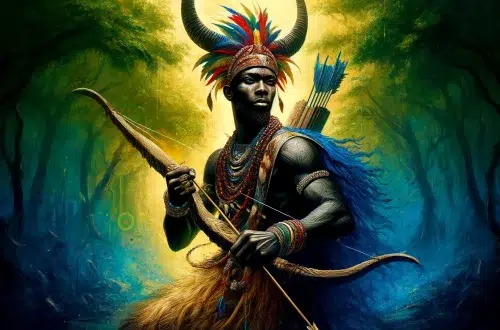
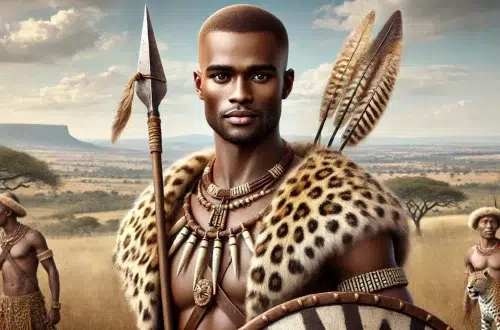
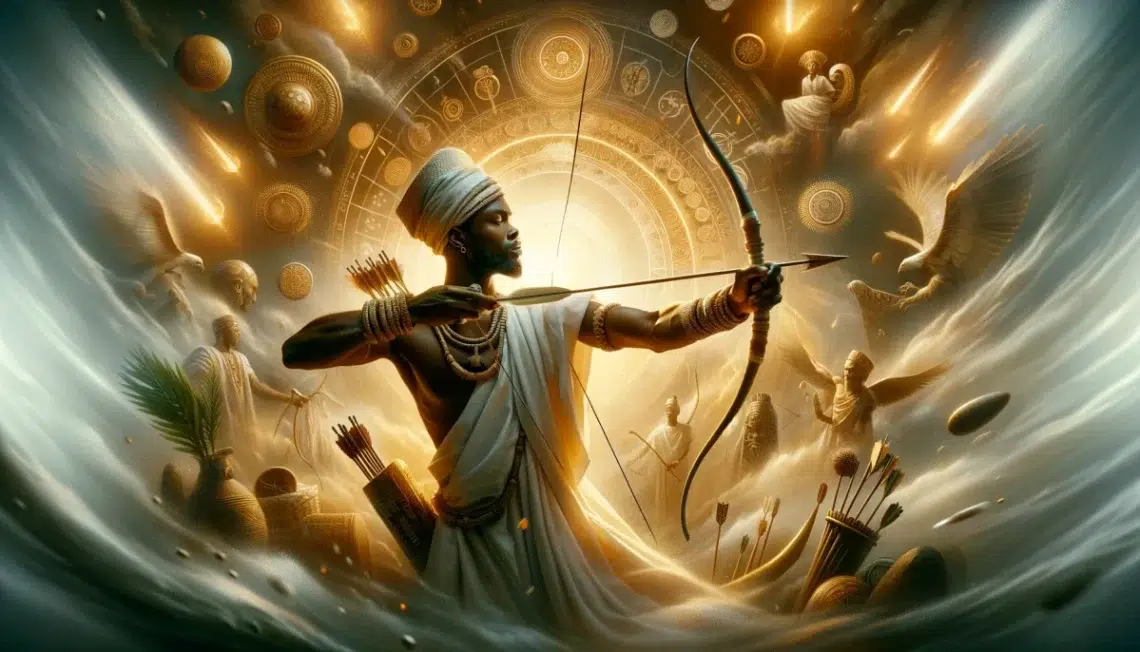
African mythology includes rich stories and beliefs from various cultures. These stories often show deep connections to nature and the environment. Archery plays an important role in many of these myths. Bows and arrows are not just hunting tools; they carry symbolic meaning and appear in rituals.
In many African cultures, gods, heroes, and spirits use bows and arrows. For example, in San mythology, the bow represents survival and a strong bond with nature. These elements highlight the importance of archery in African traditions and its role in storytelling and cultural practices.
East African Mythology

The myths from Kenya, Tanzania, and Sudan focus on the origins of the world, the natural environment, and the interconnectedness of people and animals. These stories reflect the rich cultural heritage and respect for nature inherent in many East African communities.
Maasai Mythology (Kenya and Tanzania)
The Maasai people live in southern Kenya and northern Tanzania. They follow a semi-nomadic lifestyle, moving with their cattle. Cattle are central to their culture and are considered sacred. The Maasai believe all cattle belong to them, given by their god, Enkai (also called Ngai).
The Maasai’s supreme god is Engai. This god can be both kind and tough, just like nature. Engai Narok (Black God) brings rain and prosperity, helping the Maasai people and their cattle. Engai Nanyokie (Red God) is vengeful and brings drought and bad luck.
According to Maasai mythology, Enkai would gift the Maasai people with cattle. They are sacred and central to their way of life. The myth explains that Enkai lowered cattle from the sky.
The Maasai as the chosen people responsible for caring for these animals. The number of cattle a person owns is a measure of their wealth and social status within the community
Kikuyu Mythology (Kenya)
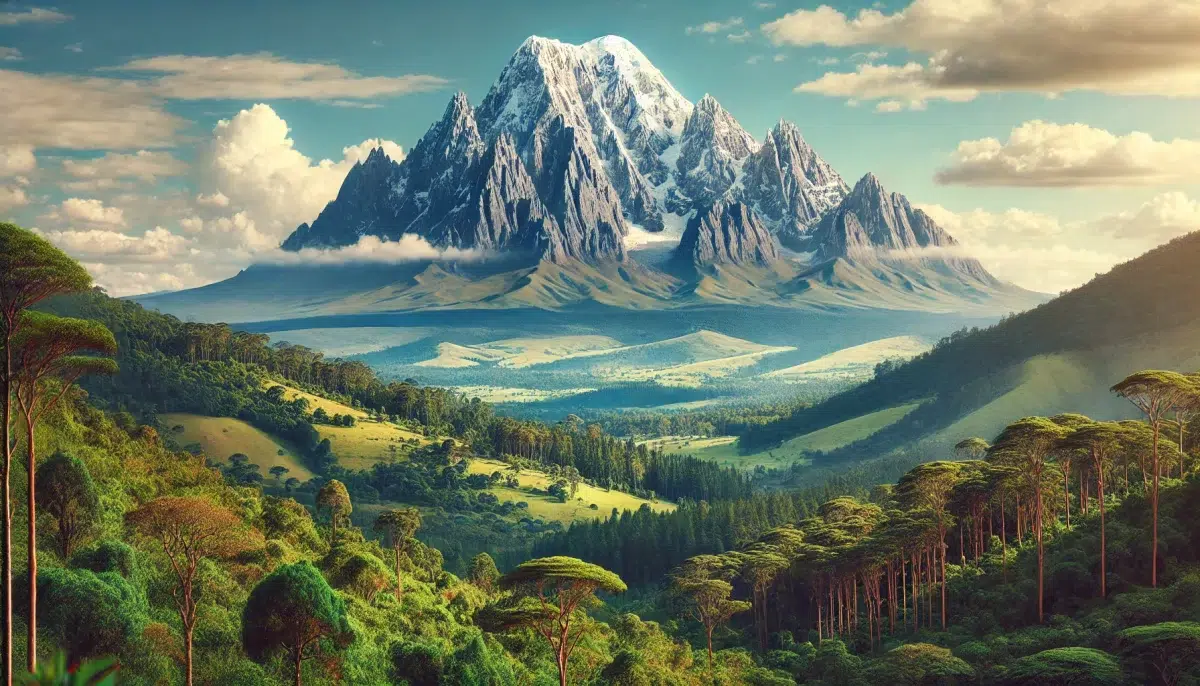
The Kikuyu people are the largest ethnic group in Kenya. Their mythology includes many stories about creation, nature, and Mount Kenya, which they call Kirinyaga. The Kikuyu believe their god, Ngai, lives on Mount Kenya and watches over them.
Their myths highlight the importance of land and farming. These elements are central to Kikuyu life. The Kikuyu hold the Mugumo tree (fig tree) in high regard, considering it sacred and a dwelling place for spirits. They symbolize fertility, life, and the connection between the earthly and spiritual realms.
Ngai, the supreme god, has links to creation, life, and nature. Mount Kenya holds spiritual meaning for the Kikuyu. They believe Ngai created the first man, Gikuyu, and the first woman, Mumbi, there. Ngai gave them land and taught them how to farm, setting the foundation for Kikuyu society. They would have nine daughters.
Dinka Mythology (South Sudan)
The Dinka people of South Sudan follow a spiritual tradition linked to their pastoral way of life. Their mythology includes stories about creation, nature, and the connection between humans and the divine. Central to Dinka beliefs is the idea of balance and harmony with nature. This concept appears in their rituals and ceremonies.
The Dinka believe in Nhialic, a supreme god who keeps balance between the human and spiritual worlds. Nhialic is central to their beliefs. The Dinka perform prayers and rituals to seek harmony and blessings from Nhialic.
Nhialic, the supreme god in Dinka mythology, represents the sky and controls the balance between the human and spiritual worlds. Nhialic has links to creation, life, and death. The Dinka believe Nhialic communicates with humans through prophets and priests.
One of the creation myths involves the first humans, Garang and Abuk. According to the myth, Nhialic creates Garang and Abuk from the clay of Sudan.
Oromo Mythology (Ethiopia)
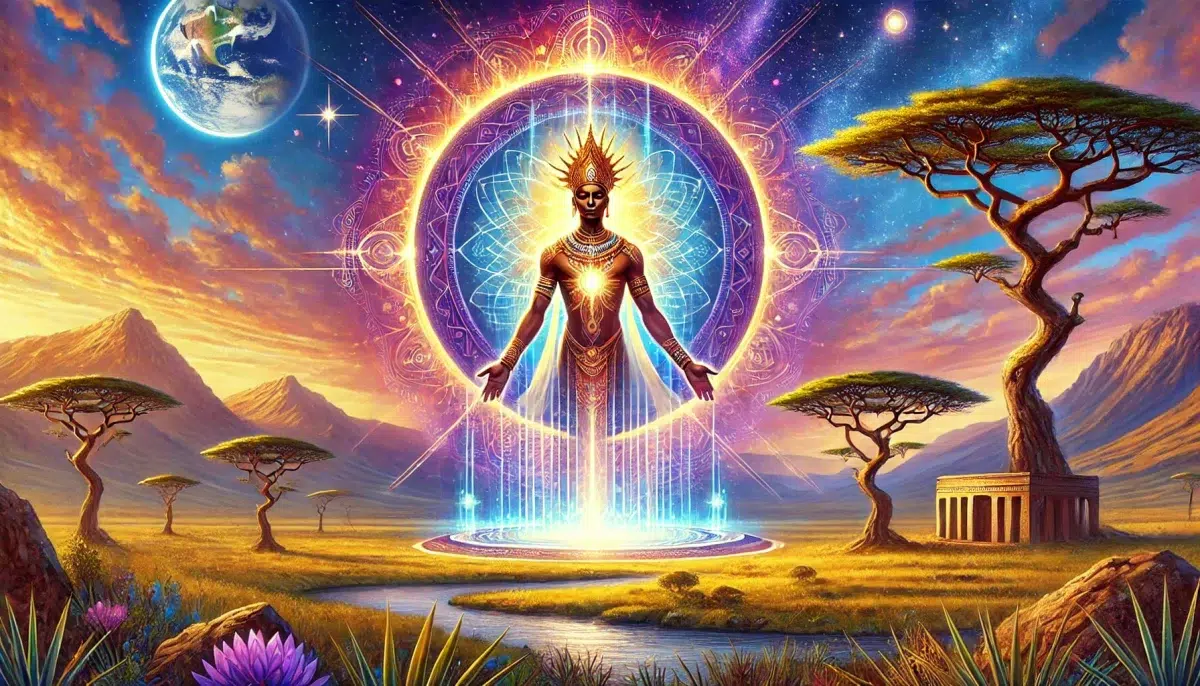
The Oromo people are one of the largest ethnic groups in Ethiopia. Their mythology includes many stories that show their strong connection to nature and farming.
Oromo mythology (Waaqeffanna) is the traditional belief system of the Oromo people, who primarily reside in Ethiopia and parts of Kenya. This mythology is centred around the worship of a single supreme deity, Waaqa.
Central to Oromo beliefs are the ideas of fate and destiny, often shown through rituals with arrows and divination.
The Oromo believe arrows have special powers for predicting the future and making decisions. Arrows are not only tools for hunting or warfare but also powerful instruments for divination and connecting with the divine.
Waaqa (Waaqayoo): Waaqa is the supreme god in Oromo mythology, or as Waaqa Tokkicha (the one God). Waaqa is considered the creator of the universe and all life within it.
Waaq has links to the sky, creation, and life. The Oromo see Waaq as all-powerful, overseeing the universe and ensuring order and harmony.
The Oromo pray to Waaq and perform rituals to seek blessings, protection, and guidance. Waaq’s presence is deeply felt in Oromo culture, with many ceremonies and festivals honouring the god.
The Ayyaana are spirits that serve as intermediaries between Waaqa and humans. They are believed to possess individuals and communicate divine messages.
Southern African Mythology
Zulu Mythology (South Africa)
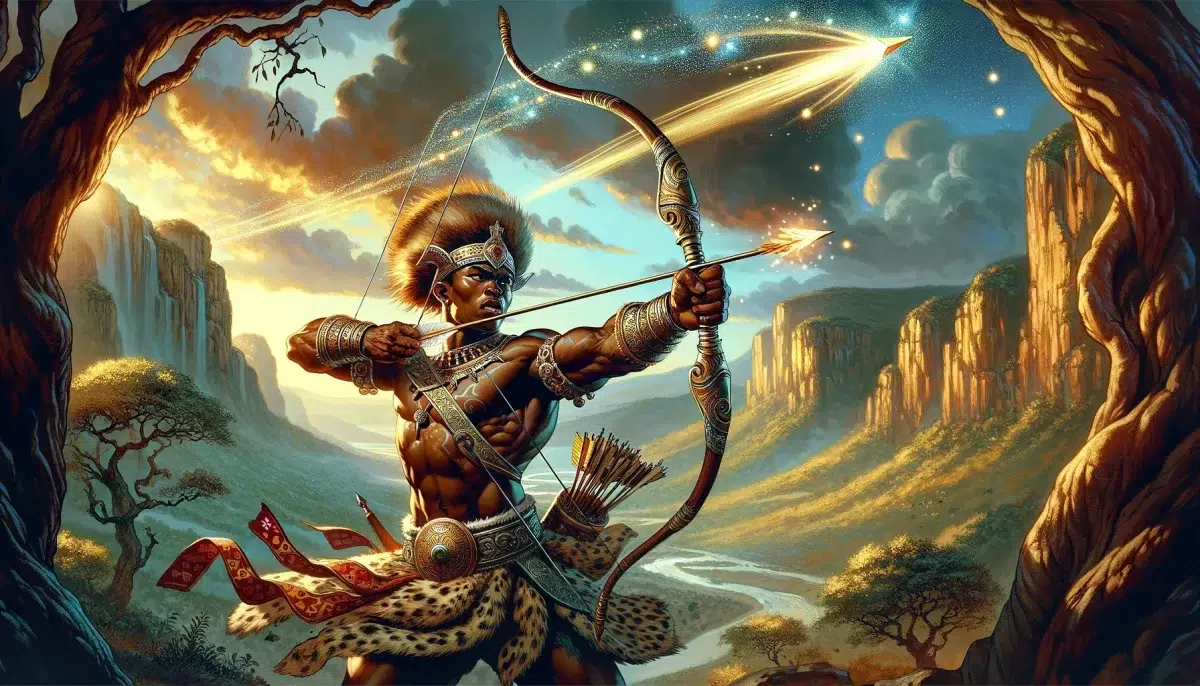
The Zulu people of South Africa have a rich mythology with many gods and spirits. Zulu myths also feature mythical creatures like the Lightning Bird (Impundulu) and the Rainbow Serpent (Mamlambo). These stories and deities show the rich and diverse beliefs of the Zulu people.
Xhosa Mythology (South Africa)
Xhosa mythology is a rich and diverse collection of stories, deities, and spiritual practices that have been passed down through generations. The Xhosa believe they can communicate with ancestors through dreams and rituals.
Qamata is the supreme creator god who made the heavens and the earth and is the originator of all things. In Xhosa culture, another name for God is Thixo (Mdali), who is sometimes considered an aspect of Qamata.
The goddess Nomkhubulwana is revered for her roles in agriculture, fertility, and rain. The Xhosa people invoke her for good harvests and favourable weather, reflecting their strong connection to the land and nature.
Ndebele Mythology (Zimbabwe and South Africa)
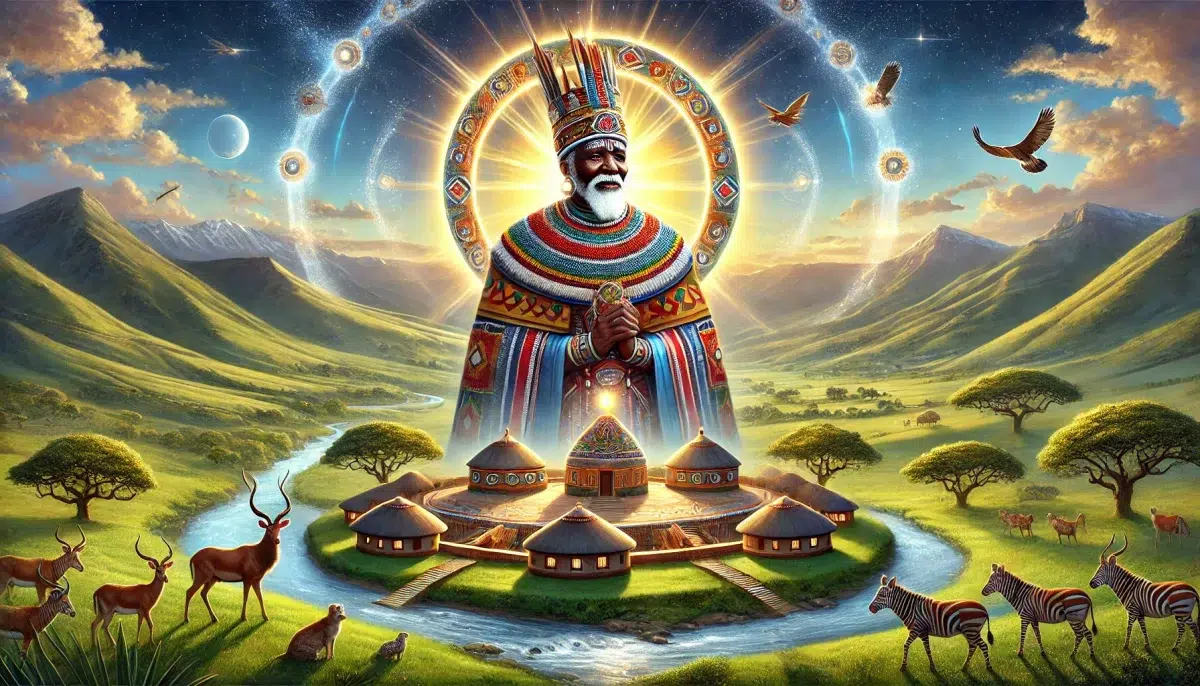
The Ndebele people, split into Southern and Northern groups, have rich traditions and myths. They believe in a supreme god and various spirits that protect their land and people.
Ndebele mythology also highlights the importance of ancestral spirits, honoured in rituals and ceremonies. Their distinctive art and beadwork hold cultural and spiritual significance.
uNkulunkulu is their supreme god known by various names, including uNkulunkulu (the Great Great One), uMlimu, uMdali (the Creator), and Inkosi Yezulu (the King of Heavens). He emerges from a reed in a primordial swamp called Uhlanga,. He creates humanity and the natural world.
Abezimu (Amadlozi): Ancestral spirits, known as abezimu or amadlozi, play a crucial role in Ndebele spirituality. They protect the living and provide guidance through dreams.
San Mythology (Botswana, Namibia, Angola, Zambia, Zimbabwe, and South Africa)
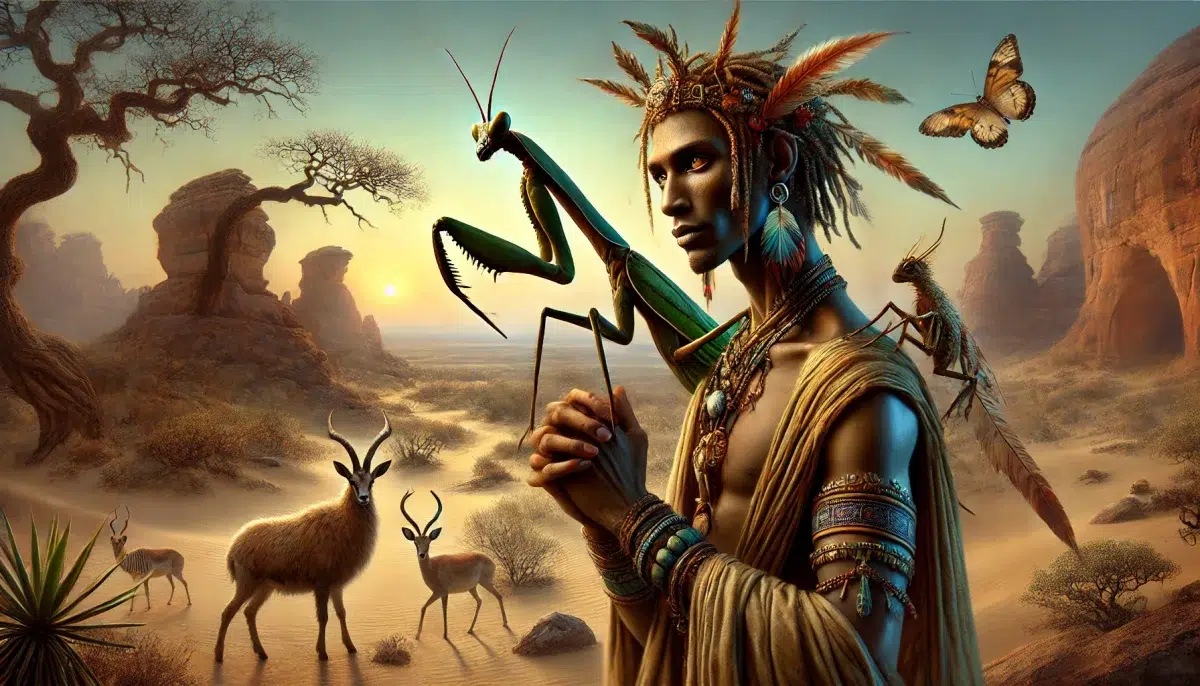
The San people are one of the oldest indigenous groups in Southern Africa. Their myths show a deep connection to nature.
Heitsi-eibib is a cultural hero who battles monsters like Ga-Gorib, a creature that traps people in pits. San mythology includes many stories explaining natural events and human-environment relationships.
The bow is important in San culture. It appears in their rock art and is crucial for hunting. The bow represents their survival skills and bond with nature.
San rock art often shows hunting scenes with bows and arrows. These artworks connect to their spiritual beliefs and show their reliance on nature. The art serves as both historical records and spiritual symbols, reflecting the San’s link to the supernatural world.
San mythology and art highlight their respect for nature and their environment. These elements are key to understanding their culture and beliefs.
Primary gods and spiritual figures in San mythology
- /Kaggen (Cagn) is the trickster god and creator deity. He is known for his ability to shape-shift into various forms and is central to many myths that explain natural phenomena and the creation of the world.
- //Gauwa is considered a god of sickness and death. He is associated with misfortune and is often invoked in the context of illness.
- !Khwa is the rain god. Rain is crucial for the San, who live in arid regions, making !Khwa a vital deity for their survival.
- /Xam is a cultural hero and sometimes a trickster figure, similar to /Kaggen. He represents the ancestral spirits and the connection between the living and the dead.
- Eland not a god, the eland holds a sacred status in San mythology and is associated with /Kaggen and features prominently in their rock art and rituals.
West African Mythology
West African myths come from places like Nigeria, Ghana, and Benin. They are full of oral stories and lively gods.
These stories come from many groups in West Africa, like the Yoruba, Ashanti, Fon, and Igbo people. Archery shows up in stories, not as the main focus but as a sign of wisdom and planning. In many West African tales, archers protect villages. They use magic arrows to keep evil spirits away.
Yoruba Mythology (Nigeria)
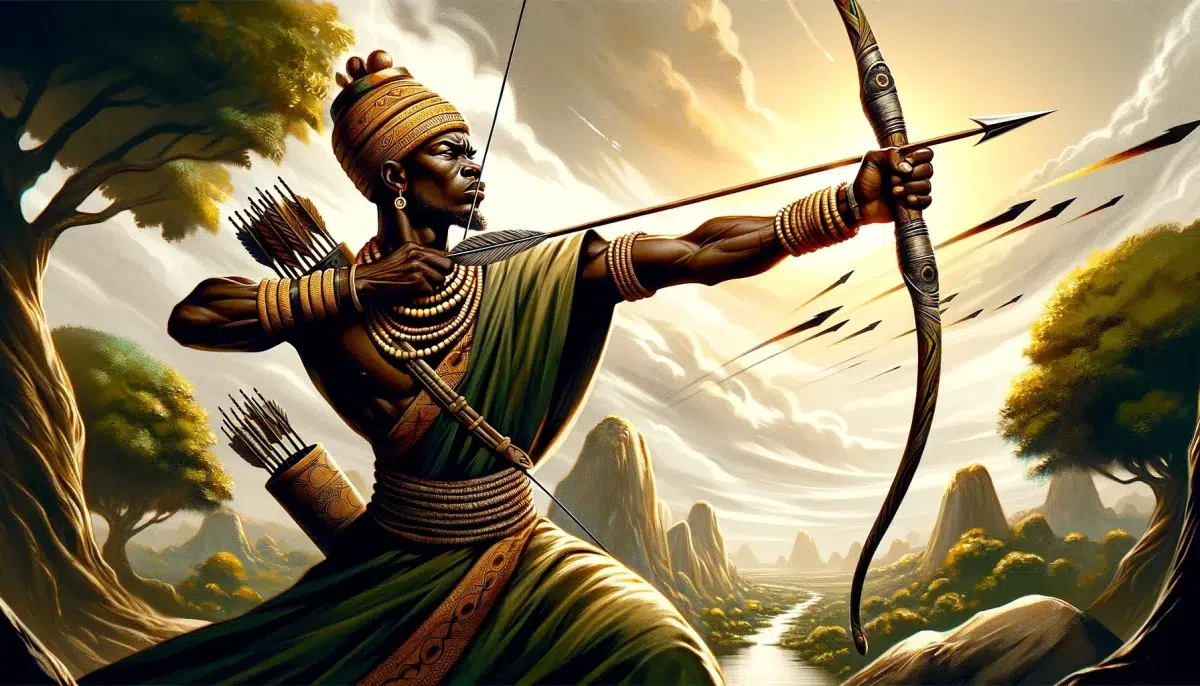
The Yoruba people, primarily located in Nigeria, have a well-documented and intricate mythology. Yoruba mythology includes a vast pantheon of gods known as Orishas, each governing different aspects of the natural and spiritual world.
The Yoruba universe is divided into two realms: Aye (the physical world) and Orun (the spiritual world).
This area is rich with tales of gods, goddesses, spirits, and ancestors. They love telling stories out loud. Famous gods include the Yoruba Orishas, like Ogun, the war and iron god, and Oshun, the love and river goddess.
Oshun stands for fertility and beauty. People deeply respect her for her caring and protective ways.
Primary Gods of Yoruba Mythology
- Olodumare: The supreme god and creator, Olodumare is the source of all life and energy. He is often considered distant, with his will enacted through the Orishas.
- Ochosi: The Orisha of the hunt, forests, and justice, guards those who seek truth and righteousness. Ochosi has exceptional skills as a hunter and tracker, and he is successful in hunting, as well as for justice and protection.
- Obatala: The Orisha of wisdom, purity, and creation. Obatala is responsible for molding human beings, with guidance and protection. He has a peaceful and just nature.
- Shango: The Orisha of thunder, lightning, and fire, Shango is a powerful and temperamental deity. He is associated with justice and retribution, and his followers seek his favour for strength and courage.
- Oshun: The Orisha of love, fertility, and fresh waters, Oshun is revered for her beauty and nurturing qualities. She is often called upon for matters of the heart, fertility, and wealth.
Learn more about: Yoruba Mythology and Archery from West Africa
Ashanti Mythology (Ghana)
The Ashanti people of Ghana have a rich mythology centered around a supreme god and numerous lesser deities and spirits. Their beliefs are deeply intertwined with their daily lives, cultural practices, and social structures.
Nyame is the supreme god in Ashanti mythology, the creator of the universe and all living beings. Nyame is seen as all-powerful, governing the world with justice and wisdom, along with the sun and the sky.
Asase Yaa, the earth goddess, is a vital deity in Ashanti mythology responsible for fertility, agriculture, and the sustenance of life. Thursdays are considered sacred to her, marked by a day of rest from farming.
Tano, the river god associated with the Tano River, governs water, rain, storms, and justice. Anansi, a cunning spider and one of the most beloved figures in Ashanti folklore, is known for his wit, wisdom, and mischief.
Dogon Mythology (Mali)
The Dogon people of Mali are known for their intricate creation myth. They have profound astronomical knowledge and unique religious practices.
The Dogon people of Mali talk about their star hunter god, Nommo. He uses a space bow and keeps the universe in balance. His arrows act like beams of life force.
Their myths are deeply connected to astronomy and the natural world.
Fon Mythology (Benin)

The Fon people of Benin have a rich pantheon of deities and spirits, with their mythology deeply influencing their religious practices and cultural traditions. Vodun (Voodoo) is a significant religious practice among the Fon, with a complex system of gods and spirits.
Nana Buluku is the original creator god, an androgynous deity who gave birth to the twins Mawu and Lisa.
In Fon mythology, Mawu-Lisa is the supreme god, a dual deity representing both the moon (Mawu) and the sun (Lisa). Mawu is associated with fertility, motherhood, and the night, while Lisa represents strength, war, and the day. Together, they balance the cosmos and govern the natural world.
Igbo Mythology (Nigeria)
The Igbo people of Nigeria have a rich spiritual tradition with a pantheon of deities and ancestral spirits. Their mythology emphasizes the importance of balance, justice, and harmony in the universe.
Igbo mythology is rich with tales and legends that convey moral lessons. These stories often feature animals and supernatural beings to teach important ethics and cultural values.
Chukwu (Chineke) is the supreme god in Igbo mythology, the creator of the universe and the source of all life. Chukwu governs both the natural and spiritual worlds, as well as the sun and fertility.
Ala (Ani), the earth goddess and deity of fertility, is one of the most important figures in Igbo mythology, governing fertility, morality, and the underworld. Amadioha, the god of thunder and lightning, also has a connection to justice and the sky.
Central African Mythology
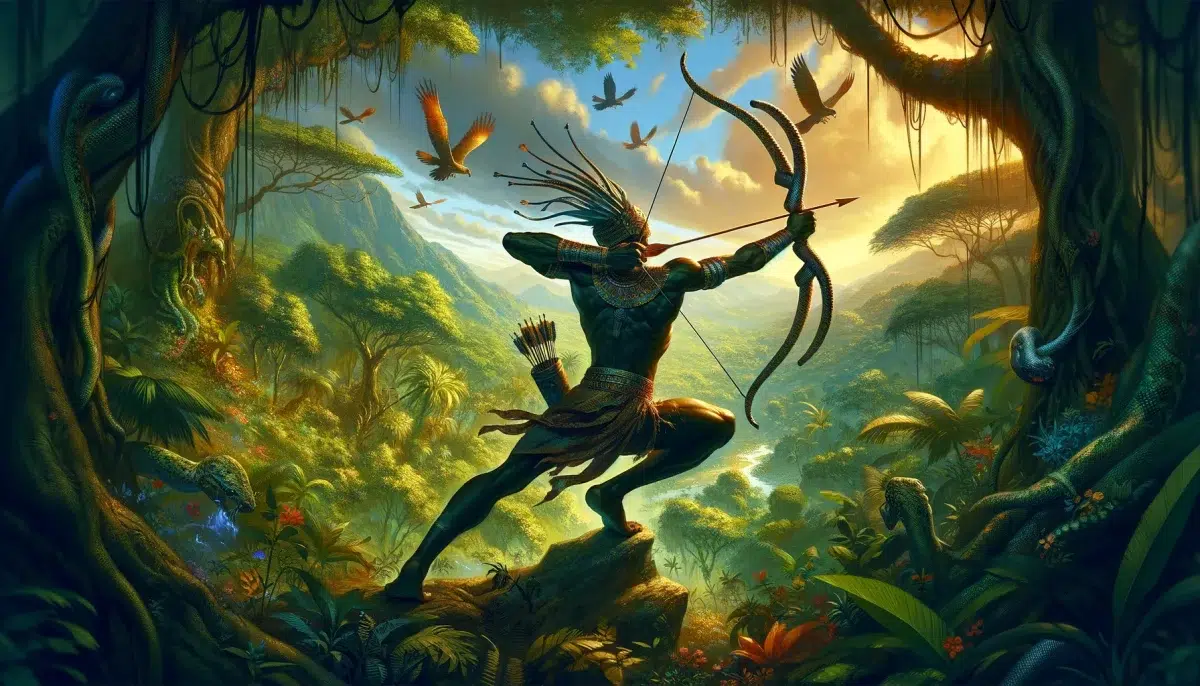
Central African myths cover the Congo Basin and nearby areas. It includes a rich tapestry of beliefs, deities, and myths among various ethnic groups.
The major mythologies of Central Africa encompass the beliefs of the Bantu-speaking peoples, including the Kongo, Luba, and Mongo, as well as the unique spiritual practices of the Pygmy groups.
They highlight how life, community, and nature are all connected. These stories include a rich mix of spirits and ancestors. They often tell about how the world began, teach moral lessons, and stress the importance of families and communities.
Kongo Mythology (Congo and Angola)
Kongo mythology emphasizes the importance of the ancestors and the spirit world. Rituals and sacrifices regularly honour ancestors. The Kongo people primarily reside in the Democratic Republic of the Congo, Republic of the Congo, and Angola.
The Kongo cosmology includes a belief in the cyclical nature of life. The living, the dead, and the yet-to-be-born have a connection through a continuum of existence.
Nzambi a Mpungu, the supreme creator god, is central to Kongo religious beliefs. He is the architect of the universe, having set the cosmos into motion.
Simbi are a range of lesser deities or nature spirits associated with various aspects of the natural world and human life. They are often linked to specific places such as rivers, mountains, and forests, and are associated with healing and protection. Each Simbi has specific roles.
Luba Mythology (Congo)
Luba mythology includes a rich tradition of oral history, where myths serve to explain the origins of the Luba people, their kingship, and their societal norms. The stories often reflect the importance of harmony between the human and spiritual worlds.
Kalumba is the creator god in Luba mythology. He is the creator of the world and all its inhabitants. Kalumba’s creation stories often explain the origins of natural phenomena and the structure of society.
Another name for the supreme god is Mvidi Mukulu. This deity oversees the balance and harmony of the universe.
Nkongolo is a prominent cultural hero and sometimes a trickster figure in Luba mythology. Stories of Nkongolo often involve themes of leadership, power struggles, and the establishment of social order.
Mongo Mythology (Congo)
The Mongo people, primarily reside in the Democratic Republic of Congo. They have a deep connection to their ancestral beliefs and practices, despite the influences of colonialism and modern religions like Christianity and Islam.
Ancestors influence the living, providing guidance and protection. Rituals and ceremonies often involve offerings and prayers to ensure harmony between the living and the spiritual world.
Lianja is a prominent figure in Mongo mythology, Lianja is a hero whose epic saga includes various supernatural feats and battles. The Mongo believe in a Supreme Being who is approachable only through the intervention of deceased relative.
Efile Mukulu is the supreme creator god of the Mongo people. He is responsible for the creation of the world and all life within it. Efile Mukulu is a powerful and just deity, governing the natural and spiritual realms.
Pygmy Mythology (Central African Republic and Congo)
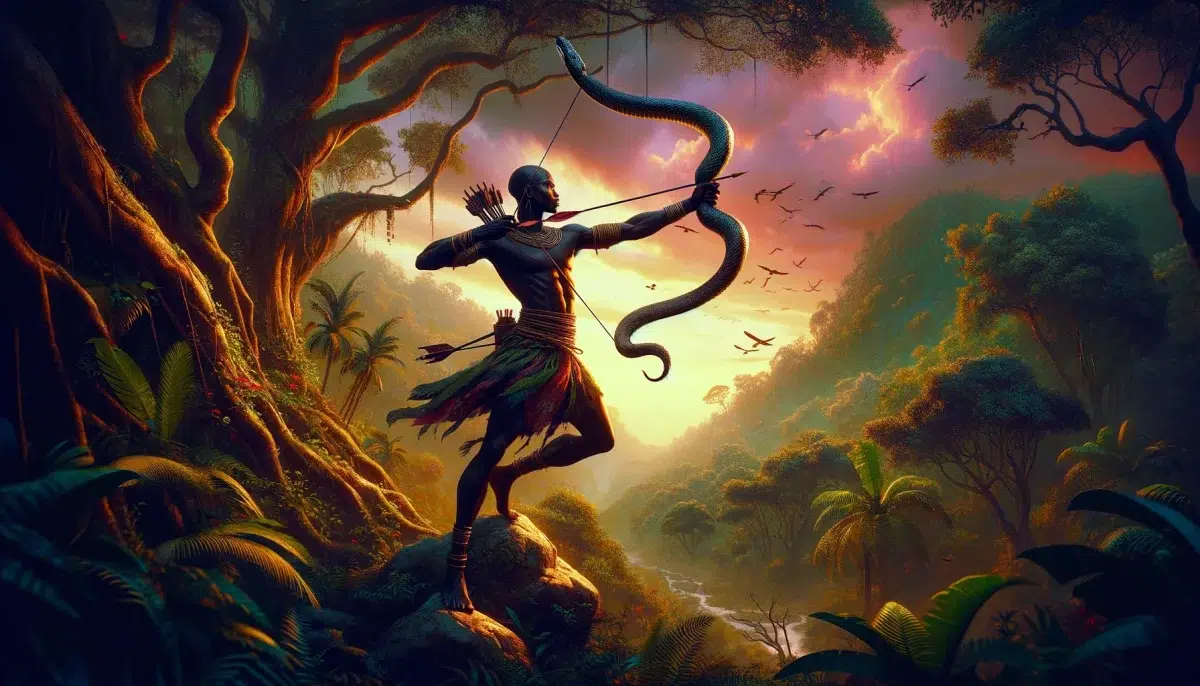
Pygmy mythology encompasses the traditional beliefs and stories of various Pygmy groups, such as the Aka, Baka, and Mbuti. These groups share a deep connection with the rainforest, which is central to their spiritual and cultural life.
Pygmy mythology intertwines deeply with the natural world, reflecting their hunter-gatherer lifestyle. They see the forest as sacred and respect nature and the spirits within it. Many myths emphasize this reverence.
Khonvoum is the supreme god and creator deity among the Pygmy groups (the Mbuti and Aka). He is the god of the hunt, wielding a bow made from a rainbow. Khonvoum would create different races from different types of clay.
Tore primarily associates with the Mbuti Pygmies. Tore acts as a cultural hero and forest spirit, involved in rituals that highlight the relationship between the Pygmies and the forest.
The Baka Pygmies respect Jengi, the guardian spirit of the forest. He plays a crucial role in ceremonies and the protection of the forest’s resources.
North African Mythology
North African mythology is a rich blend of indigenous Berber traditions, ancient Egyptian beliefs, and influences from the Islamic and Mediterranean worlds. This region’s myths encompass a variety of gods, spirits, and legendary figures that reflect the diverse cultural heritage of North Africa.
These tales are full of spirits and saints, showing how the desert affects its people.
Berber Mythology (Morocco, Algeria, Tunisia, and Libya)
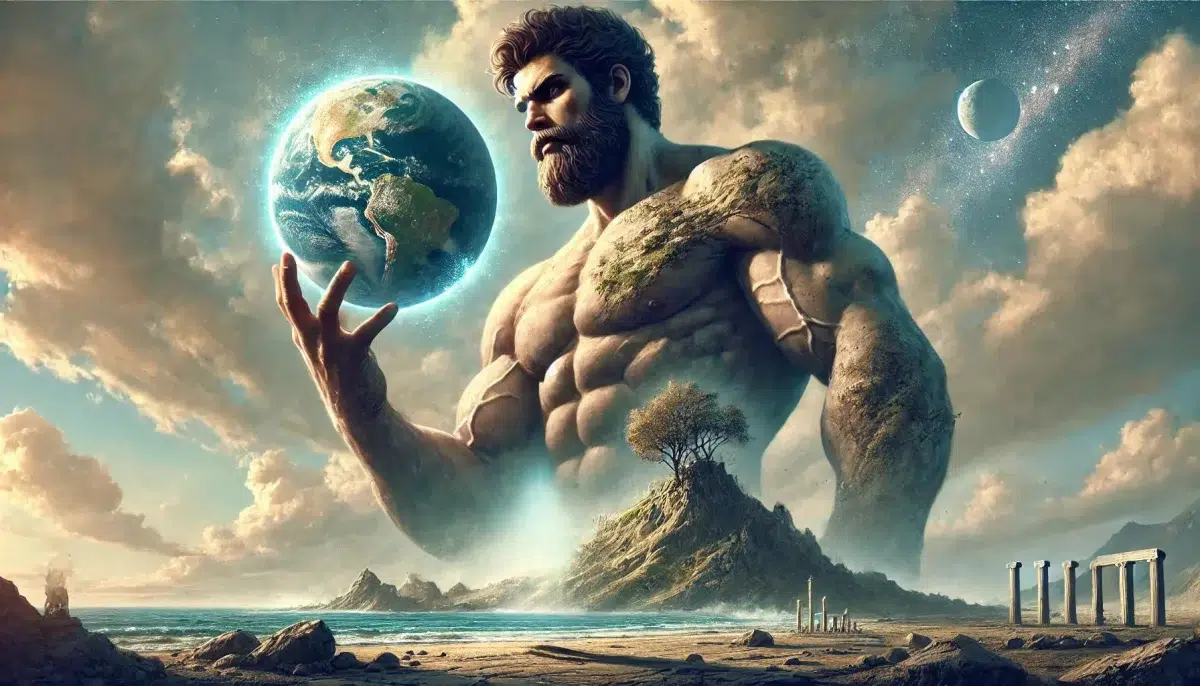
Berber mythology (Amazigh mythology) is the collection of traditional beliefs and stories. These have been passed down through generations among the Berber people, indigenous to North Africa.
This mythology is rich and diverse. Various cultures and religions over time influence their mythology. This includes ancient Egyptian, Phoenician, Greek, Roman, and later, Islamic traditions.
Egyptian deities like Isis, Osiris, and Set have links to Berber beliefs. The Berbers also worship Amun, a major Egyptian god. The Carthaginian (Phoenician) deities Baal and Tanit would be adopted into Berber mythology. Greek and Romans such as Atlas and Antaeus were also linked to local myths.
Primary Gods
The Berber pantheon includes a wide array of deities, each associated with different aspects of life and nature.
- Afri (Afrika): Goddess of fortune and fertility
- Ammon (Amun): Life-god, also worshipped in ancient Egypt
- He sometimes appears as a ram or with ram’s horns
- Anzar: God of rain
- People pray and perform rituals to Anzar to bring rain and ensure the land’s fertility
- Atlas: Mountain god, associated with the Atlas Mountains
- Gurzil: Sun-god and god of war
- Tanit: Goddess of fertility, war and the moon
- Also worshipped in Carthage
- Antaeus: A giant and son of Poseidon and Gaia
- Linked to the city of Tangier
Ancient Egyptian Mythology (Egypt)
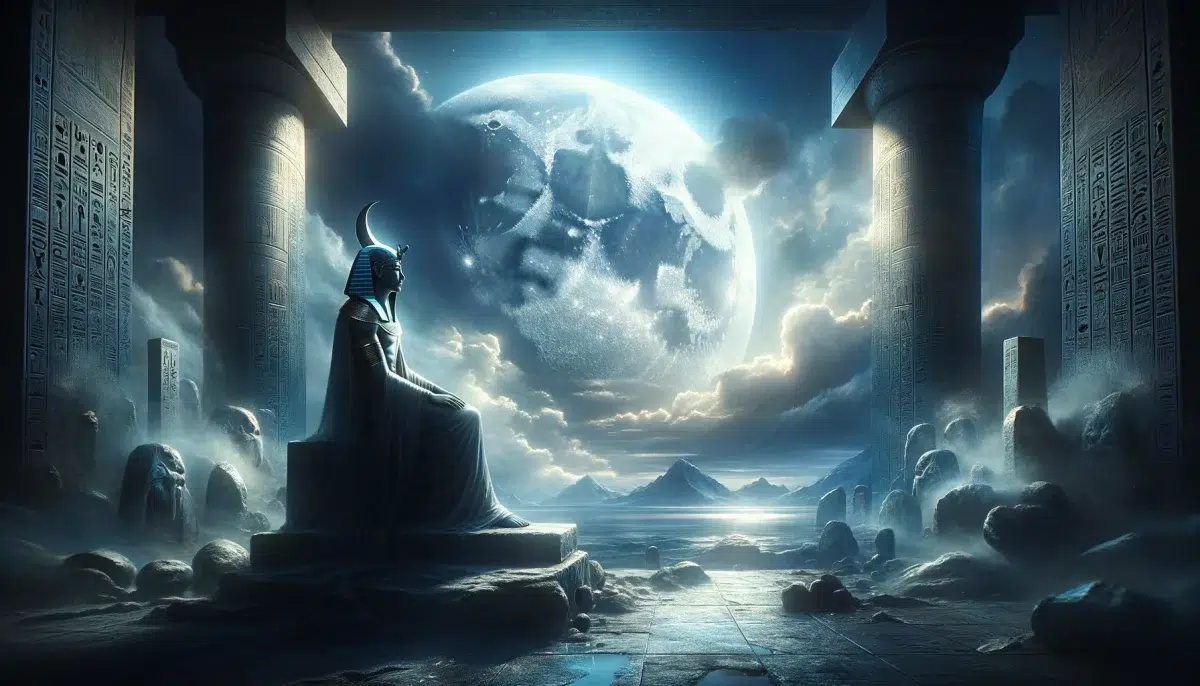
Ancient Egyptian mythology, one of the oldest and most documented, revolves around gods, the afterlife, and the cosmos. It is one of the most influential mythologies in Africa and the world.
Ancient Egyptian mythology has a complex pantheon and cosmology. Myths often revolve around the creation of the world, the journey of the soul in the afterlife, and the eternal battle between order and chaos.
Primary Gods of Egyptian Mythology
- Ra: The sun god and one of the most important deities in Egyptian mythology, Ra is the creator of the world. He travels through the sky during the day and the underworld at night, symbolizing the cycle of life and death.
- Osiris: The god of the afterlife, resurrection, and fertility. Osiris is a green-skinned deity and has associations with the annual flooding of the Nile, which fertilizes the land.
- Isis: The goddess of magic, motherhood, and fertility. Isis is the wife of Osiris and mother of Horus, and she has protective and nurturing qualities.
- Horus: The falcon-headed god of the sky and kingship is the son of Osiris and Isis. Horus is often a protector of the pharaohs.
- Anubis: The god of mummification and the afterlife, Anubis has a jackal head and is responsible for guiding souls to the afterlife.
Role of Women Archers in African Mythology
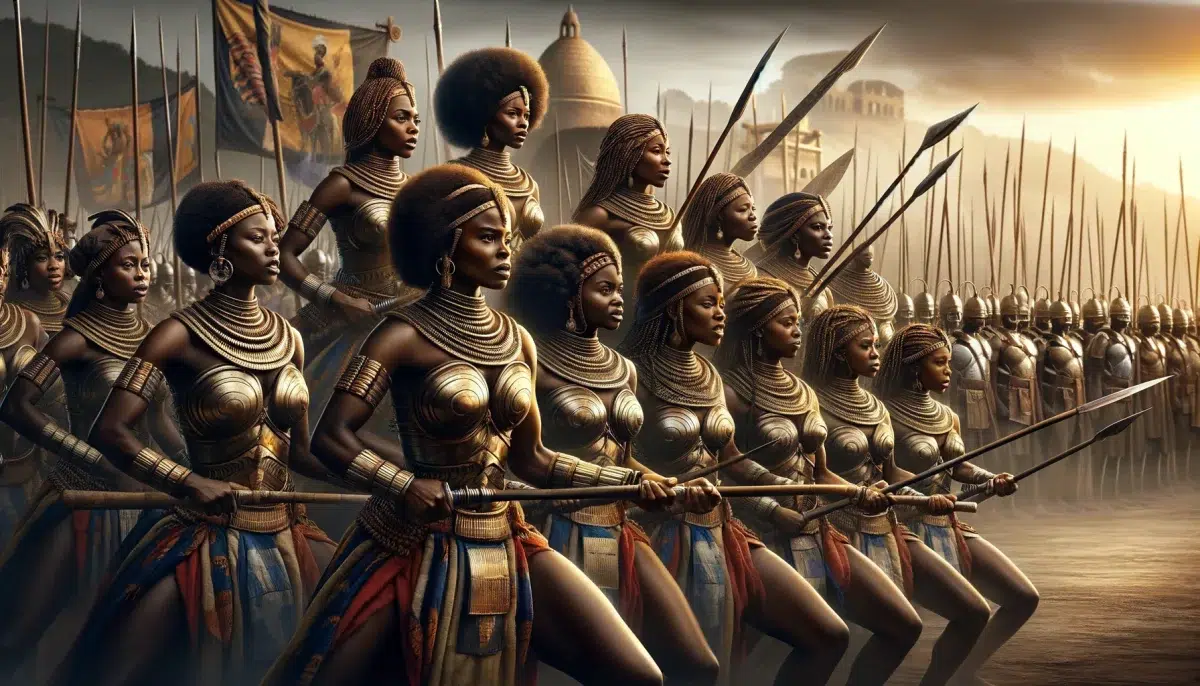
Women archers in African mythology occupy significant roles as protectors, huntresses, divine warriors, and heroines. Their presence underscores the importance of female strength and autonomy in various African cultures.
Protectors of the Realm
In many African mythologies, women archers are fierce protectors of their communities. An excellent example is Queen Nzinga of Ndongo and Matamba in Angola.
Although a historical figure, Nzinga’s life has been mythologized. Portraying her as a skilled warrior and archer who would defend her kingdom against Portuguese colonization. Her legend emphasizes her tactical prowess and leadership, making her a symbol of resistance and protection.
Gudit, Queen of Ethiopia (Queen Judith), is a legendary figure. She is famous for leading a rebellion that overthrows the Aksumite Empire. Her strategic skills and military tactics in warfare suggest she knows how to handle weapons like the bow and arrow.
The Dahomey Amazons, an all-female military regiment from the Kingdom of Dahomey, now Benin, show bravery and combat skills.
They protect their kingdom as a group, not just as individuals.
Read more about women in archery:
Huntresses & Heroines
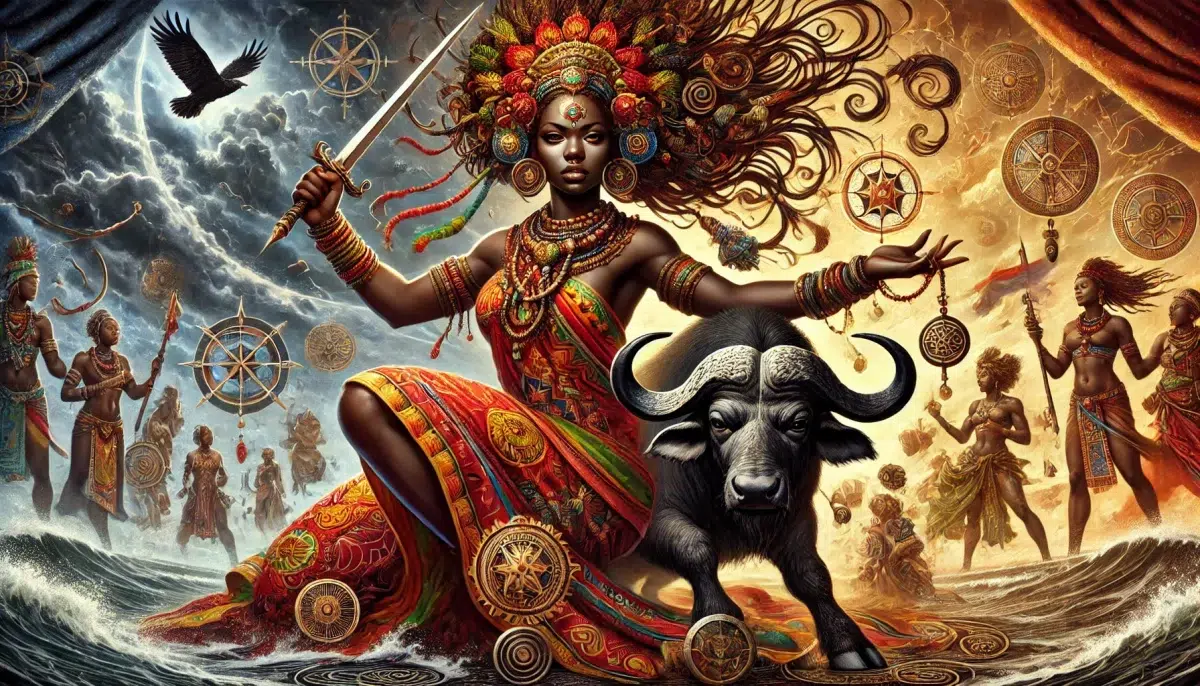
Hunting is a recurring theme in African mythology, with female archers often depicted as master hunters.
In Yoruba mythology, Oya is the goddess of winds, storms, and transformation, but she is also a huntress. Oya wields a bow and arrow, symbolizing her ability to hunt and provide, as well as to protect and transform. Her role as a huntress is integral to her identity as a powerful and dynamic deity.
Oya, a powerful orisha in the Yoruba religion, has links to hunting and storms. Her warrior spirit reflects the huntress archetype.
Queen Pokou (Abla Pokou), would refuse to join the Ashanti Empire. She leads her people from the enemies. Legend has it that to cross the river she has to sacrifice a noble child. She then would sacrifice her own son, ensuring their safety and founding the Baoule kingdom.
Divine Warriors

Neith, an ancient Egyptian goddess of war and hunting, is a prominent example of a divine warrior and archer. Using a bow and arrows, she protects the pharaohs and the nation, embodying the dual roles of a creator and destroyer. Her warrior aspect highlights the position of female deities in maintaining cosmic order and justice
Sekhmet, from ancient Egyptian mythology, is a warrior and healing goddess depicted as a fierce lioness. Her warrior side matches the divine warrior archetype.
The Lasting Legacy of Archery in African Heritage
In African heritage, the bow stands as a symbol of survival, skill, and cultural identity. African archery has observed history for thousands of years. From hunting and war to spiritual symbols.
It has left its mark on mythology, representing strength and wisdom. Today, this tradition continues and links African people to their history. While inspiring modern craftsmanship and stories.
The bow’s legacy defies time. Serving as a proud emblem of African innovation and cultural richness.