
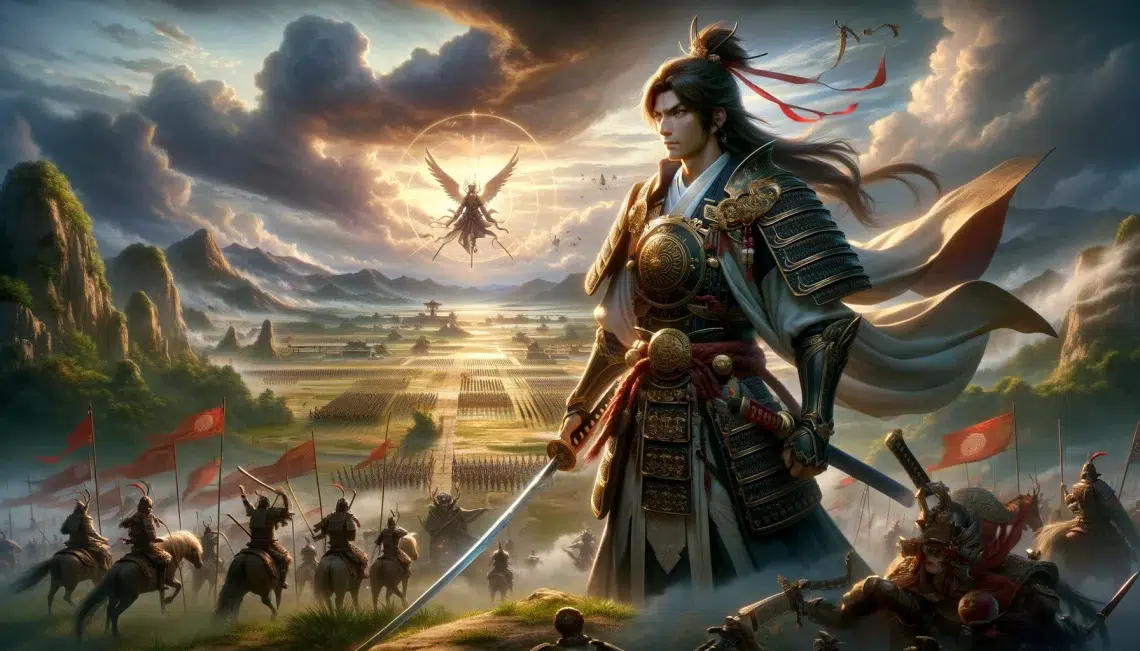
Yamato Takeru: Japan’s Legendary Folk Hero
A prince once dressed as a woman to assassinate his enemy.
He carried a sacred sword that could cut through grass and command the wind. He crossed mountains, defeated rebel clans, and faced betrayal within his own family.
Yamato Takeru stands as one of Japan’s most powerful legendary heroes.
As the son of Emperor Keikō, he carried out dangerous missions to secure the Yamato court’s authority. His story appears in the ancient chronicles Kojiki and Nihon Shoki, where myth and history blend together.
His life was marked by courage, exile, divine weapons, and a tragic end.
Who Was Yamato Takeru?
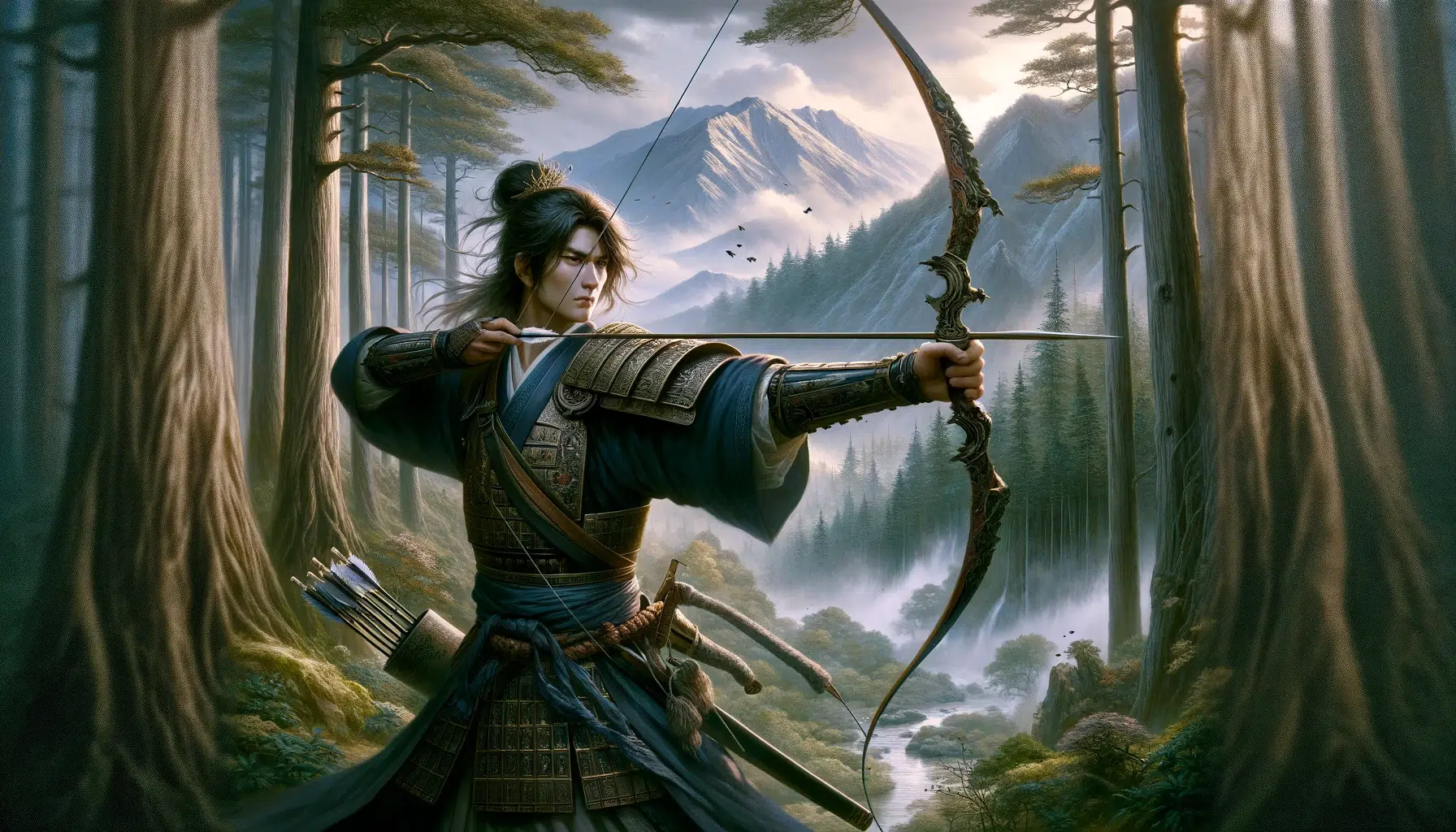
Yamato Takeru, a brave prince and legendary son of Japan’s 12th emperor, Emperor Keiko, stars in Japanese tales.
His exciting stories of adventure and great deeds are in the Kojiki and Nihon Shoki books.
He helped expand his kingdom’s land. People admire Yamato Takeru for his courage and well thought out battle plans.
His bold adventures win over everyone who learns about him, placing him at the heart of Japan’s myths.
The old books, Kojiki and Nihon Shoki, tell us about his amazing adventures. Yamato Takeru became a legend in Japan through his brave actions and smart plans.
Why Did His Father Send Him Away?
Yamato Takeru’s exile begins with violence inside his own family.
According to the Kojiki and Nihon Shoki, he kills his older brother after a dispute. The act shocks the court. Instead of punishing him directly, Emperor Keikō chooses another path.
He sends his son away.
Officially, the emperor assigns Yamato Takeru dangerous missions to suppress rebellious clans in distant regions. Unofficially, the move keeps the volatile prince far from the capital.
The missions serve two purposes. They expand the Yamato court’s control across Japan, and they remove a potential threat from the centre of power.
Yamato Takeru does not protest. He accepts the assignments and leaves the court, beginning a series of campaigns that will define his legend.
His father’s decision shapes the rest of his life. What begins as exile becomes transformation. Through hardship and battle, the prince grows into a warrior whose name survives long after the court that feared him.
The Assassination Disguise

Yamato Takeru did not rely on strength alone. He relied on strategy.
When his father sent him to confront the Kumaso leaders in southern Kyushu, he chose deception over open battle.
He cut his hair, dressed as a young woman, and attended a feast held by the enemy chiefs. The Kumaso warriors, unaware of his identity, welcomed him into their gathering.
As the evening wore on and the leaders grew drunk, Yamato Takeru struck.
He drew his hidden blade and killed the two brothers swiftly before their men could react.
One of the dying chiefs is said to have given him the name “Yamato Takeru,” meaning “Brave of Yamato.”
The chronicles portray this moment as a turning point. It reveals not only his courage, but his willingness to use disguise and surprise to achieve victory.
Later, during another campaign, enemies trapped him in a burning field. Armed with the sacred sword Kusanagi, he cut through the grass and set a counterfire, turning the wind against his attackers.
These episodes in the Kojiki and Nihon Shoki shape his reputation as a warrior who combined daring with intelligence.
The Sword Kusanagi and the Burning Grass
During his campaigns, Yamato Takeru received a sacred weapon tied to the sun goddess Amaterasu.
His aunt, Princess Yamato-hime, served as high priestess at the Ise Grand Shrine. She entrusted him with the sword Kusanagi, one of Japan’s most important imperial treasures.
The sword carried its own legend.
The storm god Susanoo discovered it inside the body of the eight-headed serpent Yamata no Orochi. He later presented it to Amaterasu. From there, it became a symbol of divine authority.
Kusanagi earned the name “Grass-Cutting Sword” during one of Yamato Takeru’s most famous trials.
Enemies set fire to a field to trap him. As flames closed in, he used the sword to cut the tall grass around him and clear a path. He then set a counterfire, using the wind to turn the blaze against his attackers.
The escape cemented the sword’s name and strengthened his image as a warrior protected by the divine.
In the Kojiki and Nihon Shoki, Kusanagi represents more than a weapon. It links Yamato Takeru to the gods and reinforces his role in expanding imperial authority.
His Campaigns Across Japan
After defeating the Kumaso in the south, Yamato Takeru did not return home to rest.
Emperor Keikō sent him east, where powerful clans resisted Yamato control. These regions included what is now eastern Honshu, far from the imperial centre.
The journey was long and dangerous.
He crossed mountains, rivers, and coastal plains to confront local leaders who challenged the authority of the Yamato court. Some surrendered quickly. Others resisted fiercely.
In the eastern provinces, he faced ambushes and shifting alliances. The chronicles describe harsh terrain and unpredictable enemies. Yet he continued to press forward, bringing rebellious territories under imperial rule.
These campaigns were not only military missions. They served a political purpose. By extending control over distant regions, Yamato Takeru strengthened the reach of the early Japanese state.
His victories helped connect scattered territories to the growing power of the Yamato court.
But the campaigns took a toll.
Long marches, constant fighting, and isolation from the capital shaped him into a hardened warrior. The prince who once acted recklessly became a leader tested by distance and danger.
Through these expeditions, Yamato Takeru transformed from an exiled son into a symbol of expansion and authority.
How Did Yamato Takeru Die?

According to the Kojiki and Nihon Shoki, Yamato Takeru’s final campaign led him toward Mount Ibuki.
There, he encountered a powerful spirit or deity. Confident in his strength, he chose to confront it without relying on the sacred sword Kusanagi.
The decision proved costly.
Soon after, he fell gravely ill. The chronicles describe his strength fading as he travelled west, unable to recover from the encounter. The once unstoppable warrior grew weaker with each step.
He eventually died during the journey home.
Legend says that after his death, his spirit transformed into a white bird, often described as a plover, and flew away from his burial mound. The image of the white bird became part of his enduring myth.
His death marks a turning point in the story. The warrior who conquered distant lands could not conquer fate. The chronicles portray his final illness as a reminder that even heroes remain subject to the will of the gods.
Through this ending, Yamato Takeru’s story shifts from conquest to legend. His life ends, but his name continues across Japan’s sacred and historical traditions.
Yamato Takeru in Popular Culture

Yamato Takeru continues to influence Japanese storytelling.
Writers, game designers, and artists draw on his image as a warrior prince tied to divine power. His name and traits appear in modern reinterpretations that blend myth with fantasy.
Literature
Modern authors sometimes reference Yamato Takeru when exploring themes of exile, divine weapons, and tragic heroes. His story, recorded in the Kojiki and Nihon Shoki, remains a source of inspiration for historical fiction and myth-based novels.
These adaptations do not always retell his life directly. Instead, they echo his character traits: courage, pride, and a close link to sacred authority.
Video Games
Japanese video games frequently draw on Shinto mythology and legendary heroes. Characters inspired by Yamato Takeru appear in fantasy and role-playing titles, where developers adapt his name, sword, or warrior identity into new narratives.
These reinterpretations keep the legend visible to younger audiences.
Manga and Anime
Manga and anime often incorporate figures from Japanese myth. While not always direct portrayals, elements such as sacred swords, imperial lineage, and divine missions reflect themes from Yamato Takeru’s story.
Through these retellings, his legend evolves while remaining rooted in Japan’s mythic tradition.
Comparative Legends and Influences

Scholars often compare Yamato Takeru to heroic figures from other cultures. His story shares themes found in other mythologies.
Comparison with King Arthur
Like King Arthur, Yamato Takeru carries a sacred sword linked to divine authority. Arthur wields Excalibur. Yamato Takeru carries Kusanagi.
Both swords symbolize legitimacy and destiny. Each hero also serves a ruling power and undertakes dangerous missions that shape a nation’s identity.
However, their endings differ. Arthur becomes a king remembered for unity and justice. Yamato Takeru dies young, and his story carries a stronger warning about pride and fate.
Similarities with Heracles
Yamato Takeru also resembles Heracles from Greek mythology. Both heroes have divine connections and face extreme physical trials.
Heracles performs labours set by the gods. Yamato Takeru carries out missions ordered by the imperial court and shaped by divine will.
Each moves between the human and divine worlds. Each shows strength, courage, and fatal flaws.
Shared Mythic Themes
These comparisons reveal shared patterns in heroic myths:
- A sacred weapon
- A divine mission
- Tests of strength and character
- A tragic or transformative ending
Across cultures, heroic legends explore power, destiny, pride, and mortality. Yamato Takeru fits within this larger tradition while remaining uniquely rooted in early Japanese belief and imperial mythology.
Imperial Lineage of Yamato Takeru
Yamato Takeru is not just a wandering hero. He is the son of Emperor Keiko and a member of the early Yamato imperial line.
The Kojiki and Nihon Shoki trace his ancestry through Japan’s early rulers. Later traditions also connect him to Emperor Chūai and Empress Jingū through extended lineage.
This genealogy matters.
By placing Yamato Takeru within the imperial family, the chronicles strengthen the divine legitimacy of the Yamato court. His victories are not random heroic acts. They support imperial expansion and reinforce the idea that the ruling house carries divine favour.
In this way, Yamato Takeru serves two roles:
- Mythic warrior
- Political symbol
His story blends legend and state ideology, which helps explain why it appears in Japan’s earliest historical texts.
The Enduring Legacy of Yamato Takeru
Yamato Takeru remains one of the most respected figures in Japanese mythology.
Tradition links his death to the image of a white plover, and his tomb in Ise is known as the Mausoleum of the White Plover. The bird symbolizes transformation and spiritual ascent, reinforcing his connection to the divine.
Shrines also honour him under the name Ōtori-sama, meaning “Great Bird.” Festivals such as Tori no Ichi continue to celebrate his spirit, where people pray for protection and good fortune.
His story survives because it serves more than one purpose. It entertains, but it also reinforces imperial lineage, divine authority, and moral lessons about courage and humility.
Ancient texts like the Kojiki and Nihon Shoki preserve his deeds, ensuring his place in Japan’s earliest recorded history.
Though his life ends in tragedy, his legend does not. Yamato Takeru represents bravery, strategy, ambition, and the consequences of pride. His story reminds readers that heroism carries both glory and cost.
For generations, his name has symbolized strength and destiny. Today, he stands not only as a warrior of myth, but as a lasting symbol of early Japanese identity.