Vertical Crossbow: From Warfare to Sport
![]() Introduction to the Vertical Crossbow
Introduction to the Vertical Crossbow
The vertical crossbow has a long history, used in wars throughout time.
It’s a simple but powerful weapon: a bow attached to a stock, shooting bolts fast.
It’s been used for survival and conquest, crossing cultures and continents.
Its purpose was always to win battles.
Now, it’s evolved for sport, still a big part of archery today.
Vertical Crossbows in Archery
Vertical crossbows are also known as reverse draw crossbows. They have a unique design that sets them apart from traditional crossbows.
In a vertical crossbow, the limb assembly is reversed, meaning the limbs face away from the shooter.
This design offers several benefits:
- Improved Balance: The reverse limb design moves the center of gravity closer to the shooter’s body. This makes the crossbow easier to hold steady, improving accuracy.
- Reduced Noise and Vibration: Vertical crossbows are quieter and vibrate less when fired. This is due to the reverse draw technology, which evenly distributes energy throughout the shot.
- Increased Power and Speed: Despite their compact size, vertical crossbows can generate high power and fast arrow speeds. This is because the reverse draw design allows for longer power stroke lengths within a shorter overall frame.
- Compact Size: Vertical crossbows are more compact than traditional crossbows, making them easier to maneuver in tight spaces like tree stands or hunting blinds.
- Enhanced Safety: The design of vertical crossbows often includes safety features that make them safer to load and fire.
Vertical crossbows are a great choice for hunters and archers looking for a powerful, accurate, and quiet crossbow.
They are especially appreciated by those who hunt in dense woods or need to make precise shots without disturbing nearby wildlife.
Background of the Vertical Crossbow
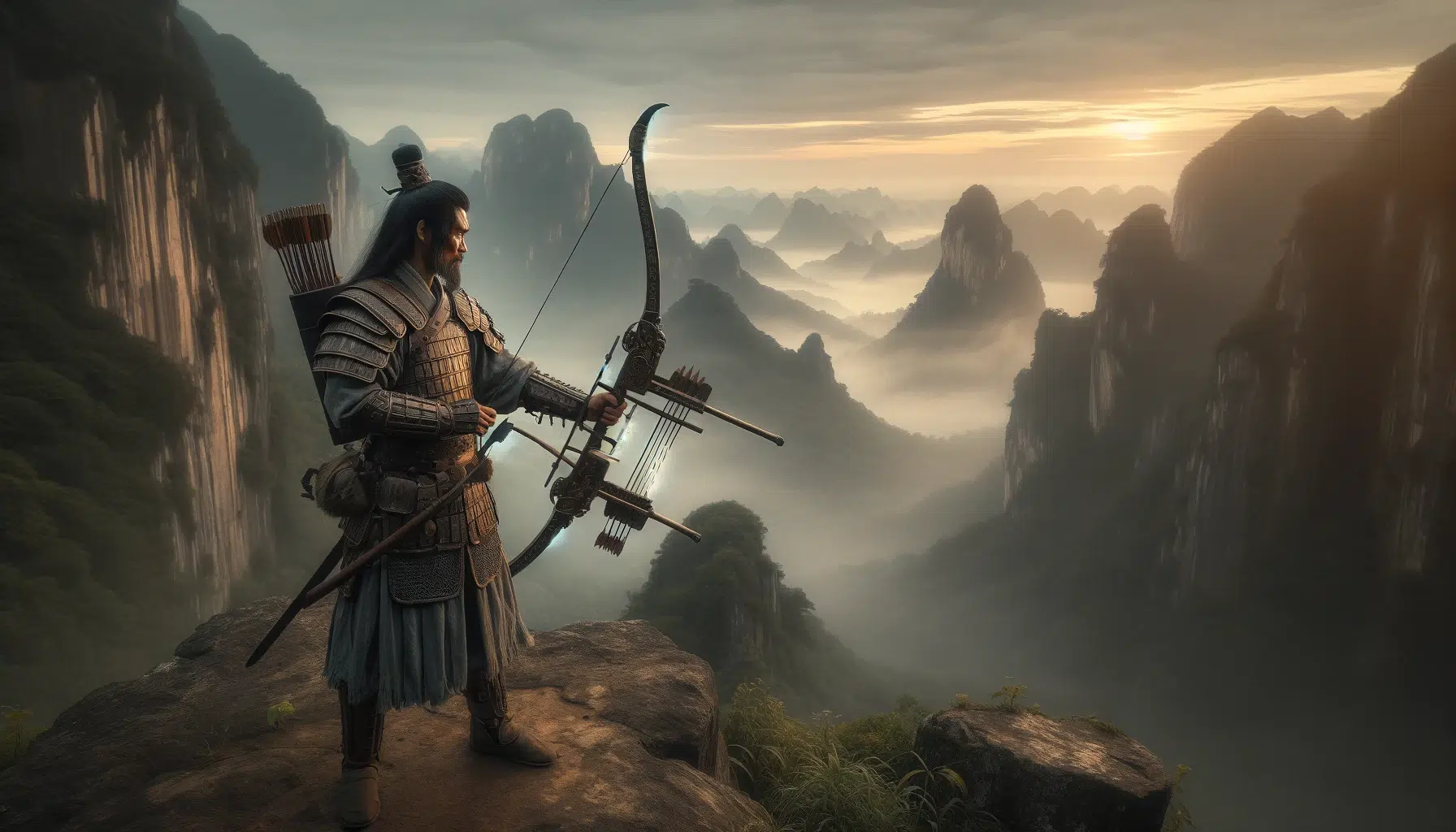
The vertical crossbow itself is an ancient weapon.
Originating over 2,500 years ago in ancient China, it provided a distinct advantage in battles of the era.
It later spreading to Europe and other parts of the world.
Traditional crossbows evolved over centuries, with various designs aiming to improve power, accuracy, and ease of use.
Early Chinese writings from the 4th century BC reference this ingenious weapon.
Thus hinting at its pivotal role in military tactics.
Crafted with meticulous artistry, ancient crossbows featured sophisticated trigger mechanisms, a revolutionary development.
Its diffusion throughout Eurasia over centuries exemplifies the crossbow’s lasting impact on warfare.
Laying the groundwork for its enduring presence in cultures worldwide.
Recent Innovation: Vertical Crossbow
The modern vertical or reverse draw crossbow is a recent innovation, emerging in the late 20th and early 21st centuries.
It was developed to improve crossbows for sports and hunting.
The reverse draw technology used in vertical crossbows offers benefits like more power efficiency, less vibration, and a smaller size.
This innovation is part of advancements in materials science and engineering.
Manufacturers wanted to make crossbows better, so they created the reverse draw design.
It makes crossbows more efficient, quieter, and easier to handle. Hunters especially like it because it’s stealthier and easier to use.
Vertical crossbows show how the archery community is open to new technology while keeping traditional skills.
They’re now a big part of the crossbow market, with many companies making their versions.
Evolution in Crossbow Construction
Vertical crossbows typically use a variety of materials in their construction, including but not limited to:
- Aluminum: For the frame or riser of the crossbow due to its lightweight yet durable nature.
- Carbon fiber: In components such as limbs or bolts to provide strength and flexibility while keeping weight to a minimum.
- Composite materials: These may include a combination of fiberglass, plastics, and other synthetic materials to create parts such as stocks, grips, and limb tips.
- Steel: Components using steel require high strength and rigidity, such as trigger mechanisms or bolts.
- Synthetic polymers: Manufacturers commonly use these materials for components. These include string dampeners, cable guards, and limb pockets, providing resilience and corrosion resistance.
Overall, there are several choice of materials in vertical crossbows.
Each aims to optimize performance, durability, and weight distribution, resulting in a balanced and efficient archery tool.
Design Benefits of the Vertical Crossbow
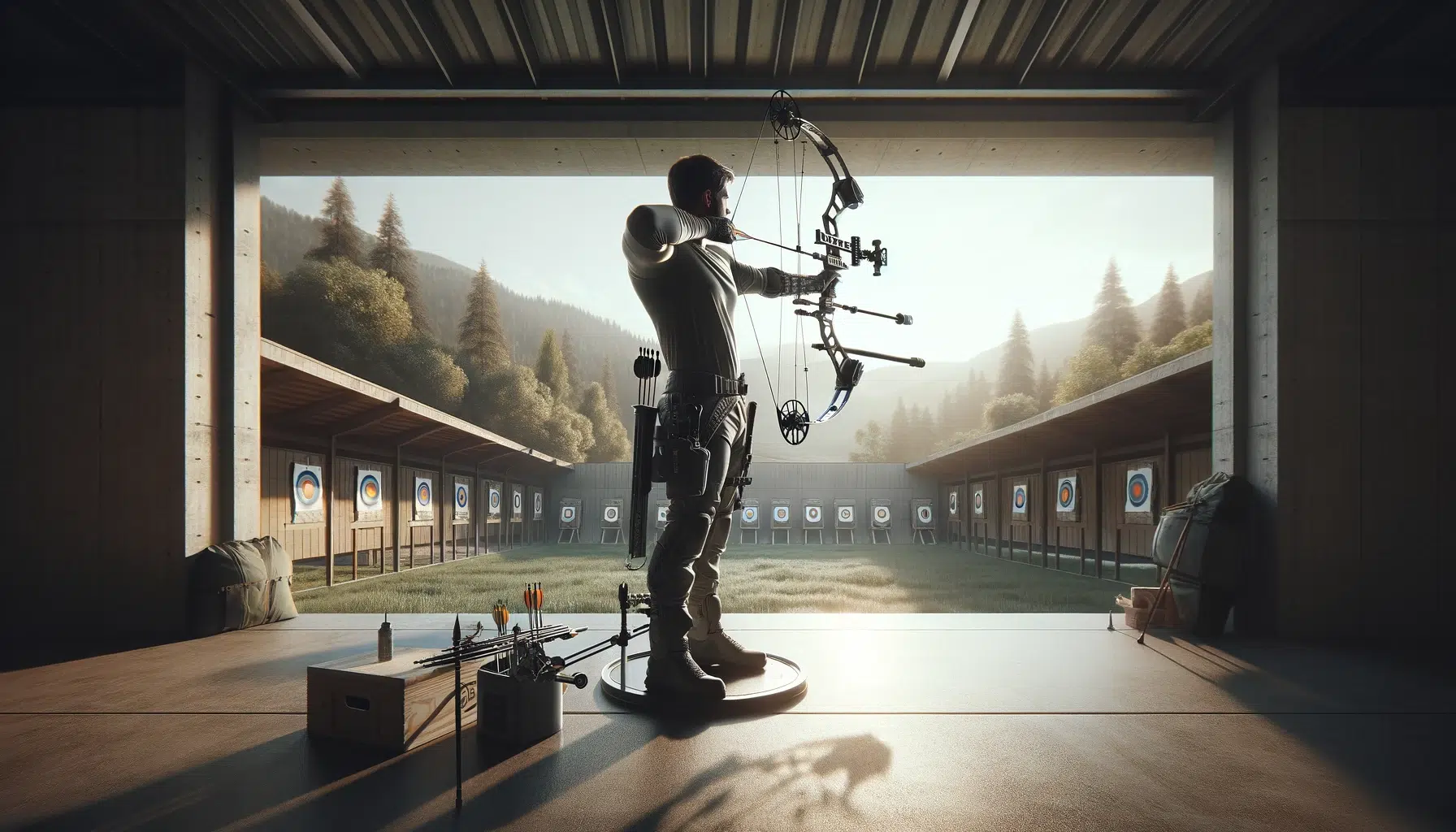
Improved Balance
Vertical crossbows with a reverse limb design make it easier for shooters to hold and aim.
This design moves the weight closer to the shooter.
This makes the crossbow steadier in your hands. When you aim for a long time, like in hunting or sports shooting, this steadiness is key.
Even small shakes can make you miss. But with the weight closer, you don’t have to work as hard to aim straight.
This means you can shoot more comfortably and accurately. Shooters can stay focused and hit their target better.
Plus, these crossbows are good for everyone, no matter how strong you are. They make archery more open to more people.
In short, this design helps you handle the crossbow better and feel more sure of yourself. Your gear helps you stay stable and hit right on point.
Reduced Noise and Vibration
Vertical crossbows are special because they are quieter and shake less when you shoot them.
This is because of their reverse draw design. This design spreads out the shot’s energy better than in old-style crossbows.
Old crossbows make a lot of noise and shake a lot when fired. But with vertical crossbows, this isn’t a big problem.
The energy spreads out, making everything smoother when you shoot an arrow. So, the arrow goes quietly, and there’s hardly any kickback.
This is great for hunters who don’t want to scare away animals.
Also, because there’s less shaking, the crossbow lasts longer. Parts don’t wear out as fast. This means archers can enjoy shooting more.
They won’t get tired from noise and shaking. And they can shoot longer without bothering anyone or getting sore hands.
Increased Power and Speed
Vertical crossbows pack a lot of power and speed, even though they look small.
This is thanks to the reverse draw design they use.
This design lets these crossbows have a longer power stroke.
A power stroke is the distance the string travels when you fire the crossbow.
Even with a smaller frame, the reverse draw allows for this longer travel.
So, when you shoot an arrow, it can go really fast and hit hard.
This is great for hunters or anyone who needs their shot to be strong and quick.
The clever design of vertical crossbows makes them powerful tools, despite their size.
This means you don’t need a big, bulky crossbow to get the power and speed you want.
Compact Size
Vertical crossbows are smaller and easier to use than old-style crossbows.
Their small size helps a lot, especially when you don’t have much space. In a tree stand or hunting blind, room is tight.
Big crossbows can be clumsy and hard to aim.
But vertical crossbows let you move and aim without hitting anything. This helps you hunt better.
They also make waiting for the right shot more comfortable. Plus, carrying a lighter crossbow through thick woods or far away is easier.
In short, vertical crossbows are great for hunters who need to move in small spaces.
Enhanced Safety
Vertical crossbows focus on safety, often incorporating advanced safety features.
These features ensure that loading and firing the crossbow are done with utmost safety in mind.
This gives shooters peace of mind, knowing that they can handle their crossbow confidently and without unnecessary risks.
Vertical Crossbow’s Place in the Future of Archery
Explore the world of vertical crossbows, blending modern design with ancient archery.
These crossbows are compact, powerful, and easy to handle, with less noise and vibration.
They’re also safer and faster, perfect for both experienced hunters and beginners.
Discover how vertical crossbows are changing archery.