The Trojan War: Heroic Figures and Myths
The Trojan War mixes history, myth, and heroism. It happened around the 12th or 13th century BCE.
Early Greeks would battle the city of Troy in western Anatolia.
This war is at the heart of ancient Greek tales and is well-known in works like the Iliad and the Odyssey.
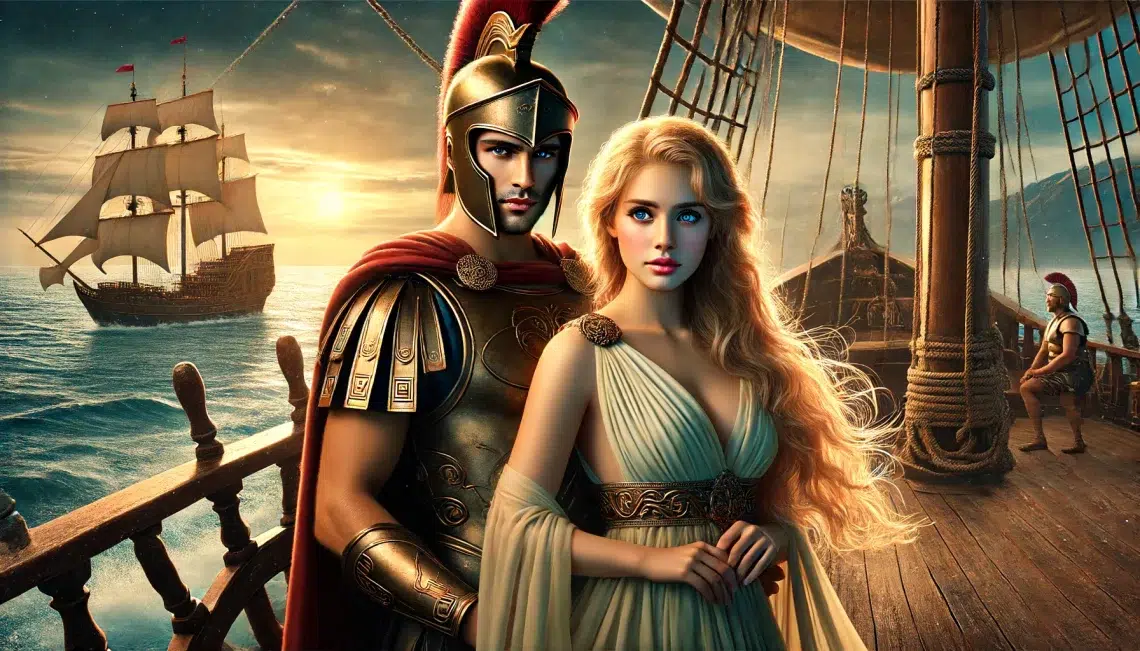
The tale starts when Paris of Troy runs off with Helen from Sparta.
This caused a ten-year war. Greek heroes united to win her back and punish Troy.
The Iliad captures the war’s last year in detail, showing the fierce battles.
Experts think the war may have some truth from Mycenaean Greek times.
They say Troy was near the Dardanelles. Discoveries have found signs of a city that matched the war’s time.
The Trojan War left a big mark on Greek myth, literature, and art.
They tell of nobility, gods getting involved, and the emotions of war.
The story of the Trojan War shapes how we think about history and heroism.
The Judgement of Paris
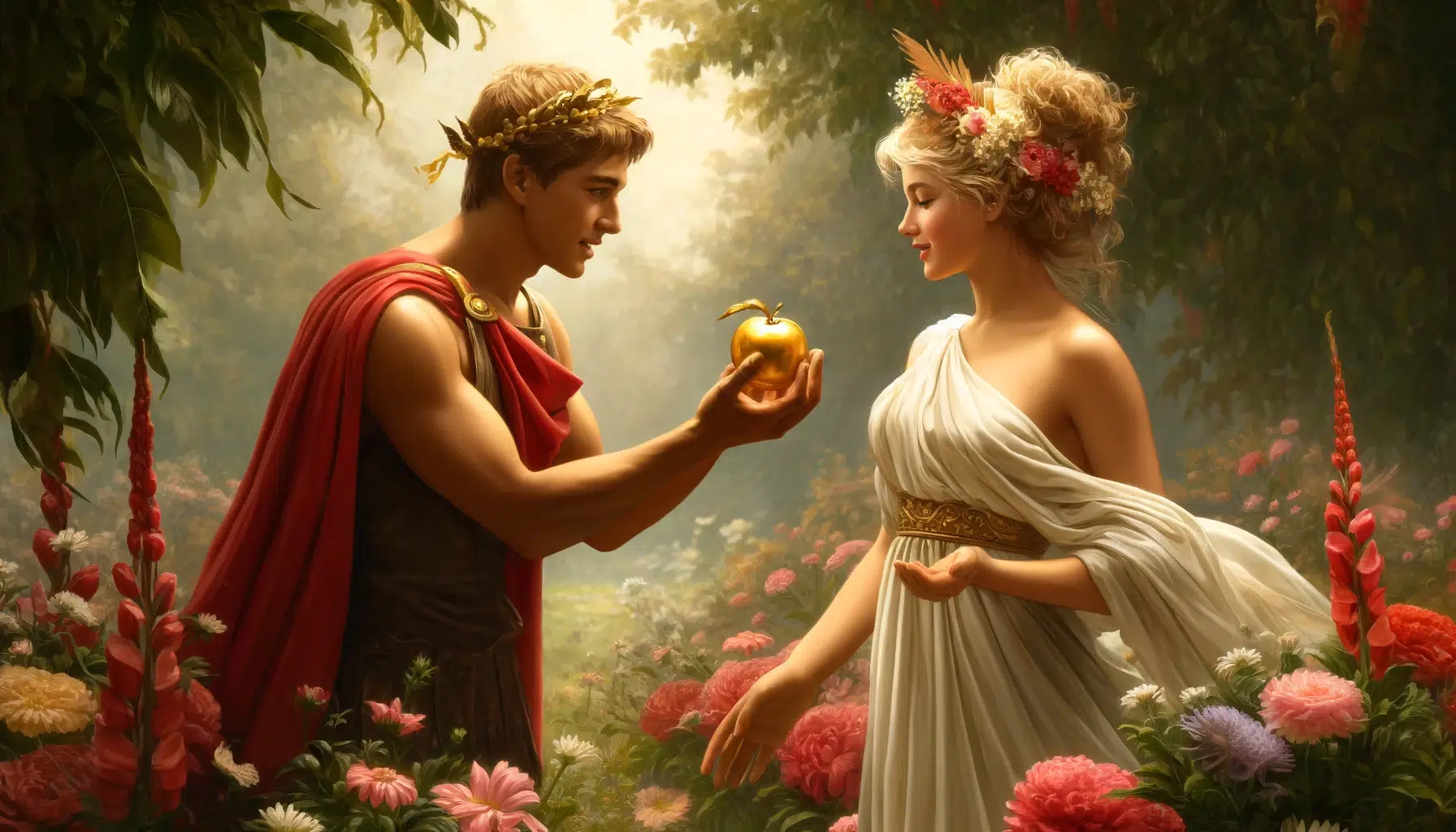
The origins of the Trojan War can be traced back to the Judgement of Paris, a tale that highlights the power and influence of Greek goddesses.
It all began with a wedding where the Greek goddess Eris, the goddess of strife was feeling excluded and resentful.
She threw a golden apple that had “to the fairest” written on it into the midst of the guests.
The three goddesses, Hera, Athena, and Aphrodite, each believed they deserved the golden apple.
Zeus did not want to get involved so to settle the dispute, the Trojan prince Paris was chosen as the judge.
Knowing the magnitude of the decision, the goddesses sought to sway Paris in their favour.
- Hera, the queen of the gods, promised Paris power and influence.
- Athena, the goddess of wisdom and war, offered him victory and glory in battle.
- Aphrodite, the goddess of love and beauty, tempted Paris with the most beautiful mortal woman in the world.
Ultimately, Paris succumbed to the allure of Aphrodite’s promise.

She pledged that he would possess Helen of Troy, reputedly the most beautiful mortal woman.
However Helen was already married to Menelaus, the king of Sparta.
Paris in an act of choosing love over loyalty, abducted Helen took her to Troy, which angered many and started the war.
This was not just a fight over Helen.
It was about revenge and honour, lasting ten years.
Learn more about:
The Start of the War

Menelaus, upset over losing Helen, asks for help from his powerful brother, Agamemnon.
They gathered an army to get Helen back from Troy.
The reasons for going to war were personal and deeply important.
They mixed human emotions with the will of the gods.
It serves as a reminder of the lasting impact that mythological tales have had on shaping ancient civilizations and their understanding of love, beauty, and destiny.
The ten-year siege of Troy stands out in ancient warfare history. It took place around the 12th or 13th century BCE.
This war was long and would require clever tactics and strong will.
Key Figures in the Trojan War

The story of the Trojan War features both Greek and Trojan heroes.
From Agamemnon to Hector and Odysseus, these figures are the heart of the Trojan War tales.
They and many others paint a vivid picture of bravery, tragedy, and the role of the gods in shaping destinies.
They are the legends that live on in human history.
Greek Heroes
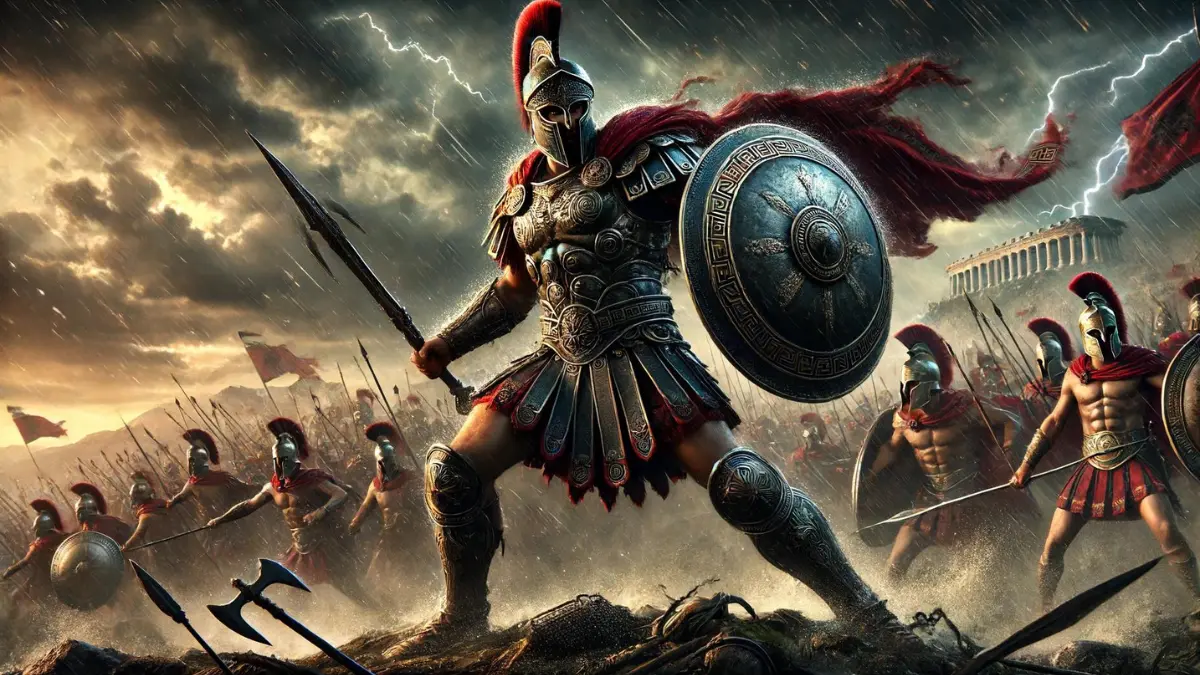
These include Agamemnon, the fierce Greek leader.
He’s matched by Achilles, the top Greek hero, known for his amazing bravery.
Odysseus is famous for his cleverness, crucial for the war’s outcome.
He plays a key role in the Greek victory with the Trojan Horse.
Ajax, a powerful Greek warrior, also stands out because of his strength.
Trojan Heroes
Hector, on the Trojan side, leads the defense against the Greeks.
His brother, Paris, starts the war by taking Helen, Menelaus’ wife.
This event sets up a story of both love and revenge.
In Troy, King Priam and Queen Hecuba endure the city’s fall with dignity.
Andromache, Hector’s wife, shows incredible loyalty.
Cassandra, the princess, predicts Troy’s fall, but no one listens to her.
Learn more about other stories of the Trojan War:
The Role of Achilles in the Trojan War

One of the central figures in the Trojan War is the brave Greek hero Achilles.
Achilles was the greatest Greek warrior in the Trojan War.
Achilles sailed with 50 ships to Troy and fought for nine years, capturing 12 cities and making a huge impact.
However, Achilles’ rage is a driving force behind the events of the Trojan War, but it also comes at a great cost.
While his actions lead to victory for the Greeks, his anger and reckless pursuit of glory contribute to the deaths of many, both Greek and Trojan alike.
The Rage of Achilles

In the war’s 10th year, Achilles got angry with the Greek leader Agamemnon.
The war then takes a dramatic turn when Achilles withdraws from battle after his honour is insulted by Agamemnon.
This withdrawal results in a string of victories for the Trojans, which was bad for the Greeks.
Hector then killed Patroclus, Achilles’ friend. This made Achilles very upset.
The gods often manipulate Achilles, amplifying his rage and influencing the outcome of the war.
Seeking vengeance for the death of his close friend Patroclus, Achilles eventually returns to battle.
He wears new armour provided by his mother, the sea goddess Thetis.
Achilles returned to the fight, meeting Hector in a famous battle.
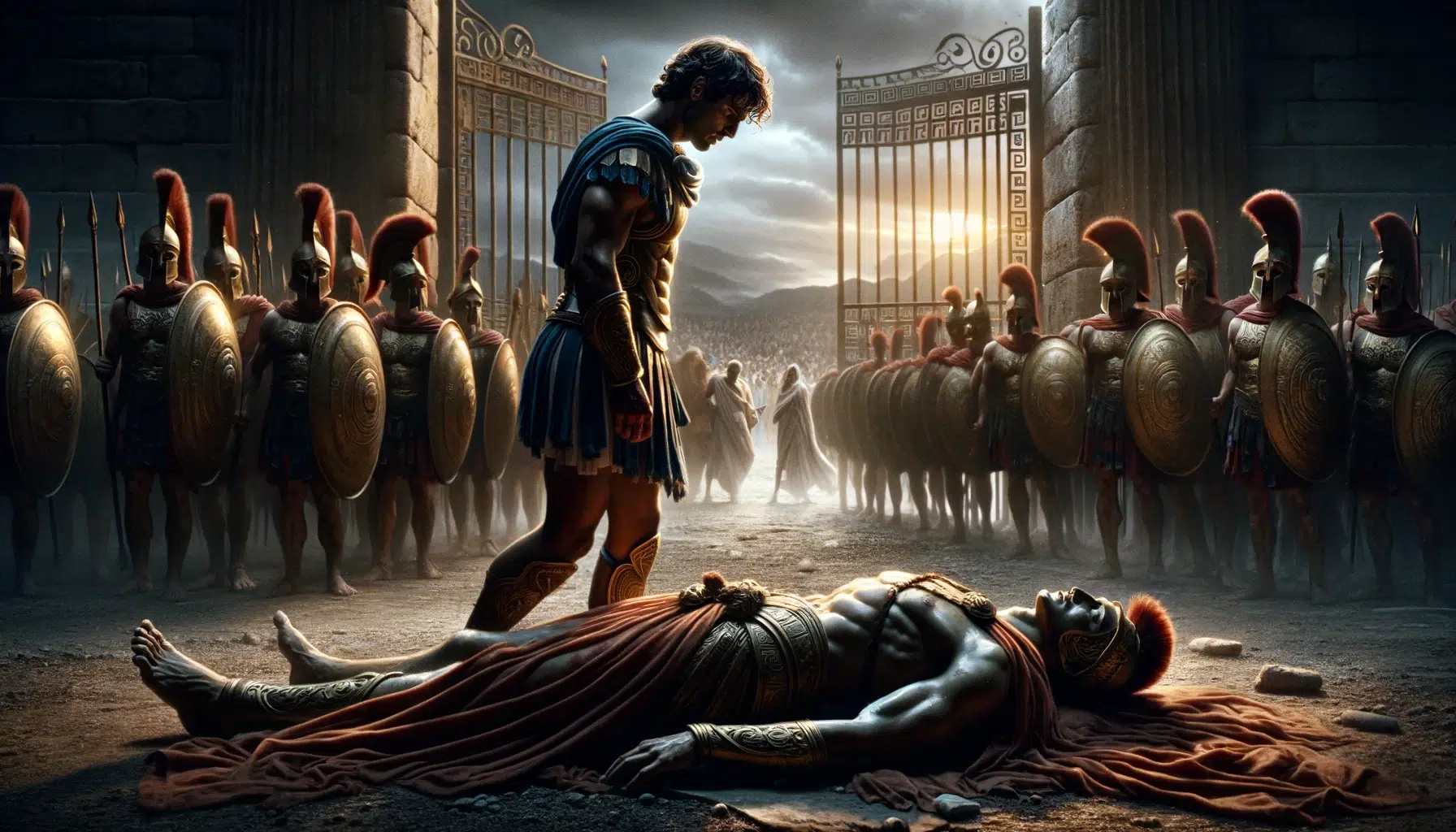
In a fit of rage, he kills Hector, the greatest Trojan warrior, and desecrates his body.
He only stopped when Hector’s father asks for his son’s body back.
This moment showed the themes of honour and revenge clearly in the Iliad.
The Iliad does not tell about Achilles’ own death.
| Achilles’ Victories | Achilles’ Tragic Flaws |
|---|---|
| Achilles defeats Hector, the greatest Trojan warrior | Achilles’ pride leads to the death of Patroclus |
| Achilles leads the Greeks to victory in numerous battles | Achilles’ anger blinds him to the consequences of his actions |
| Achilles’ new armour empowers him on the battlefield | Achilles’ relentless pursuit of honor leads to the loss of his own life |
The Death of Achilles

Despite his accomplishments on the battlefield, Achilles met an untimely demise.
In Greek mythology, it is believed that Achilles’ mother sought to make him invincible by immersing him in the river Styx.
However, she held onto his heel, leaving it as his only vulnerable spot.
This weakness, known as Achilles’ heel, was ultimately exploited by the Trojan prince Paris, leading to Achilles’ downfall.
Paris, equipped with a deadly arrow, and with the help of Apollo, took advantage of this knowledge.
He aims for Achilles’ vulnerable heel, inflicting a fatal wound.
This marks Achilles’ tragic end.
Achilles’ death had far-reaching consequences, that ultimately leads to the triumph of the Greeks and the destruction of Troy.
This act marks a pivotal moment in the war, setting in motion the events that would ultimately lead to the fall of Troy.
Learn more about:
- Achilles: Greek Warrior Hero’s Journey
- Hector of Troy: Legendary Trojan Warrior
- Apollo: Exploring the Archer God’s Myths
The Trojan Horse and the Fall of Troy

Key Facts about the Fall of Troy
- The Greek warriors hid inside the Trojan Horse to gain access to the city.
- The Trojans believed the horse was a symbol of victory and brought it inside the city walls.
- Under the cover of darkness, the Greeks emerged from the horse and opened the gates for their comrades.
- Troy was sacked, and its people faced destruction and devastation.
- The fall of Troy marked the end of the Trojan War and the surrender of the city.
The fall of Troy was a defining moment in the Trojan War, bringing about the city’s destruction and the surrender of its people.
Unable to breach the formidable walls of Troy, the Greek warriors would devise a cunning plan to infiltrate the city’s defenses.
The Deception of the Trojan Horse
The tale of the Trojan Horse is a powerful example of ancient trickery.
Odysseus came up with the idea. It plays a key role in the ruin of Troy.
The Greeks, under Epeius, built the huge wooden horse in just three days.
Odysseus and the soldiers were hiding in the horse.
Some famous warriors inside were Acamas, Ajax the Lesser, Diomedes, Menelaus, Neoptolemus, Teucer, and Thrasymedes.
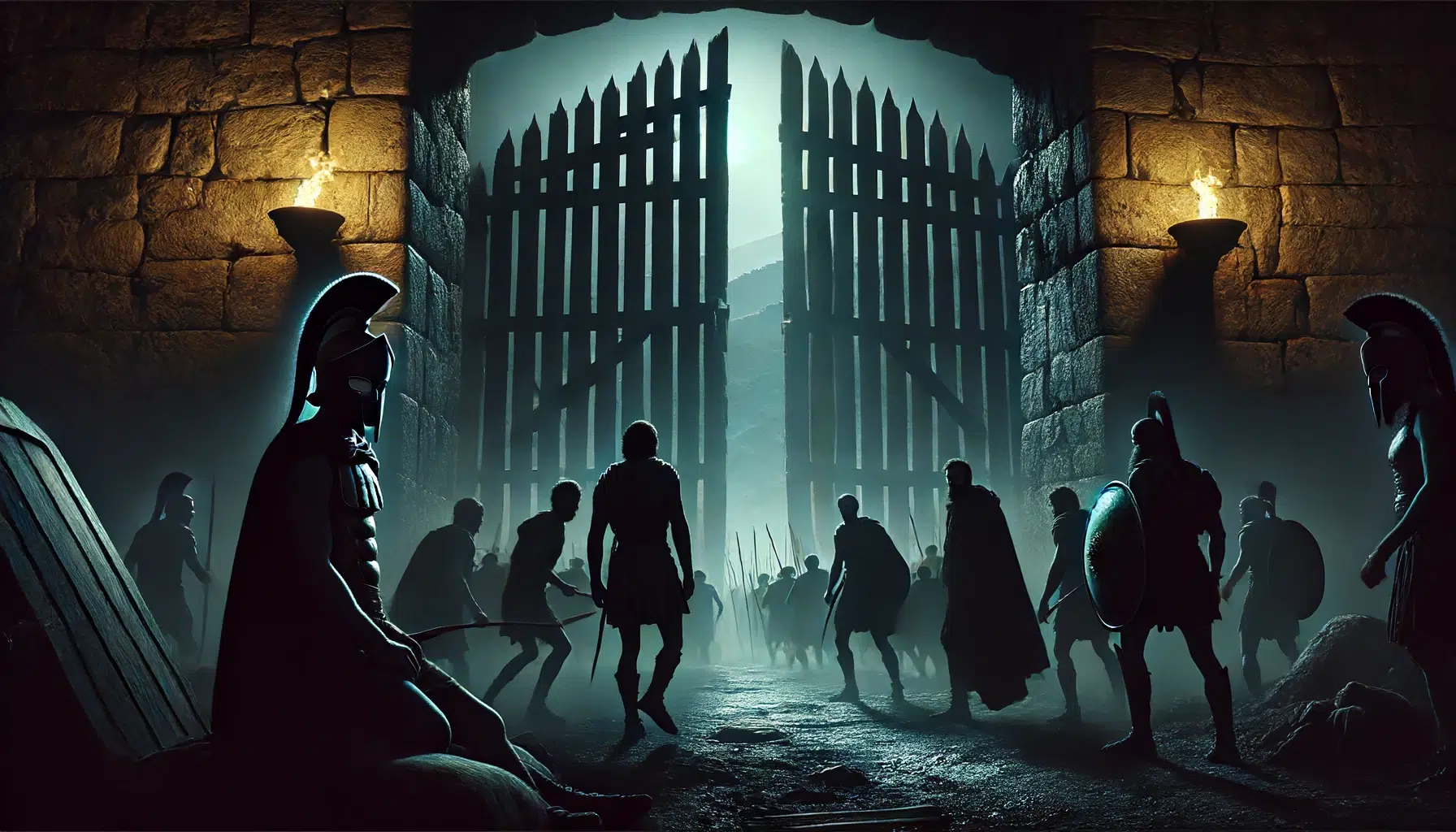
This strategy shows the Greeks’ smart thinking, ensuring Troy’s downfall.
The Trojan Horse was left outside the gates of Troy as a supposed offering to the gods.
The Trojans, believing the horse to be a symbol of victory, brought it inside their city, unaware of the Greek warriors hidden within its hollow belly.
The Trojans celebrated, eating and drinking for three days.
Quintus Smyrnaeus wrote about this feat.
There’s a bit of a debate on how many soldiers were inside.
Quintus said thirty, but the Bibliotheca claimed fifty.
Tzetzes stated twenty-three, while the common number later became forty.
Laocoön, a Trojan priest tried to caution the Trojans about the horse.
But the gods intervened and struck him blind.
Later they sent two serpents to kill him and him sons so that he wouldn’t interfere with the plan.
Cassandra, a priestess, also had a vision of what would happen but her warnings were not taken seriously.
The Fall of Troy
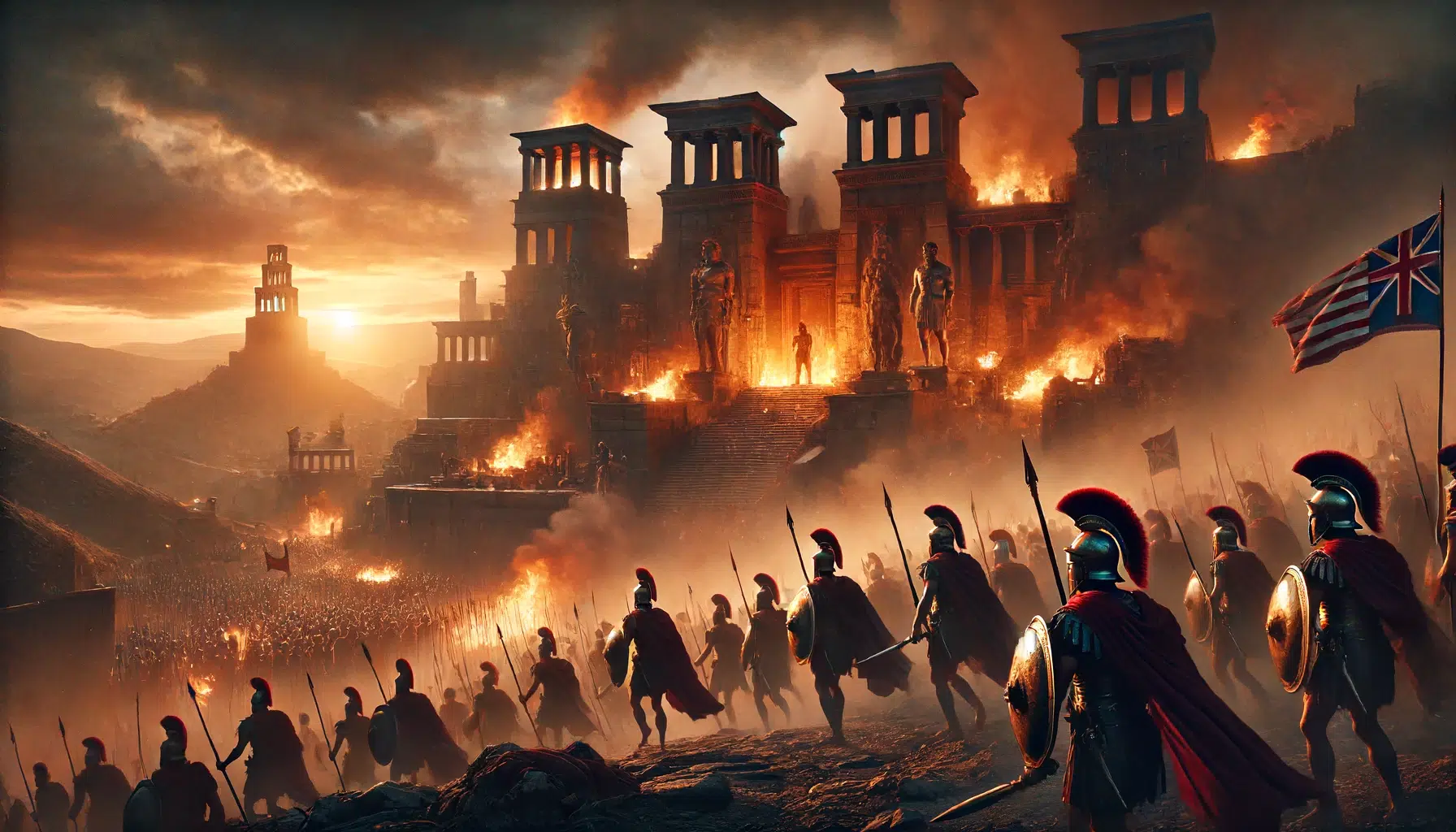
On the third night, under the cover of darkness, the Greek warriors emerged from the horse, opened the city gates, and allowed their comrades to enter.
The unsuspecting Trojans, caught off guard, were unable to defend themselves effectively.
The Greeks proceeded to sack the city, unleashing destruction and chaos.
The Trojan Horse story is famous in ancient Greek tales.
It appears in the Odyssey and Euripides’ “Trojan Women.”
This myth captures Greek cleverness and Troy’s tragic fate.
It is a key moment in ancient stories of deceit, remembered through the ages.
The Trojan Horse and the deceptive tactics employed by the Greek warriors ultimately led to the downfall of Troy.
The city was ravaged, and its once-mighty walls were breached.
The Trojan War, which had endured for ten long years, came to an end with the surrender of Troy.
Aftermath of the Trojan War and Returning Home
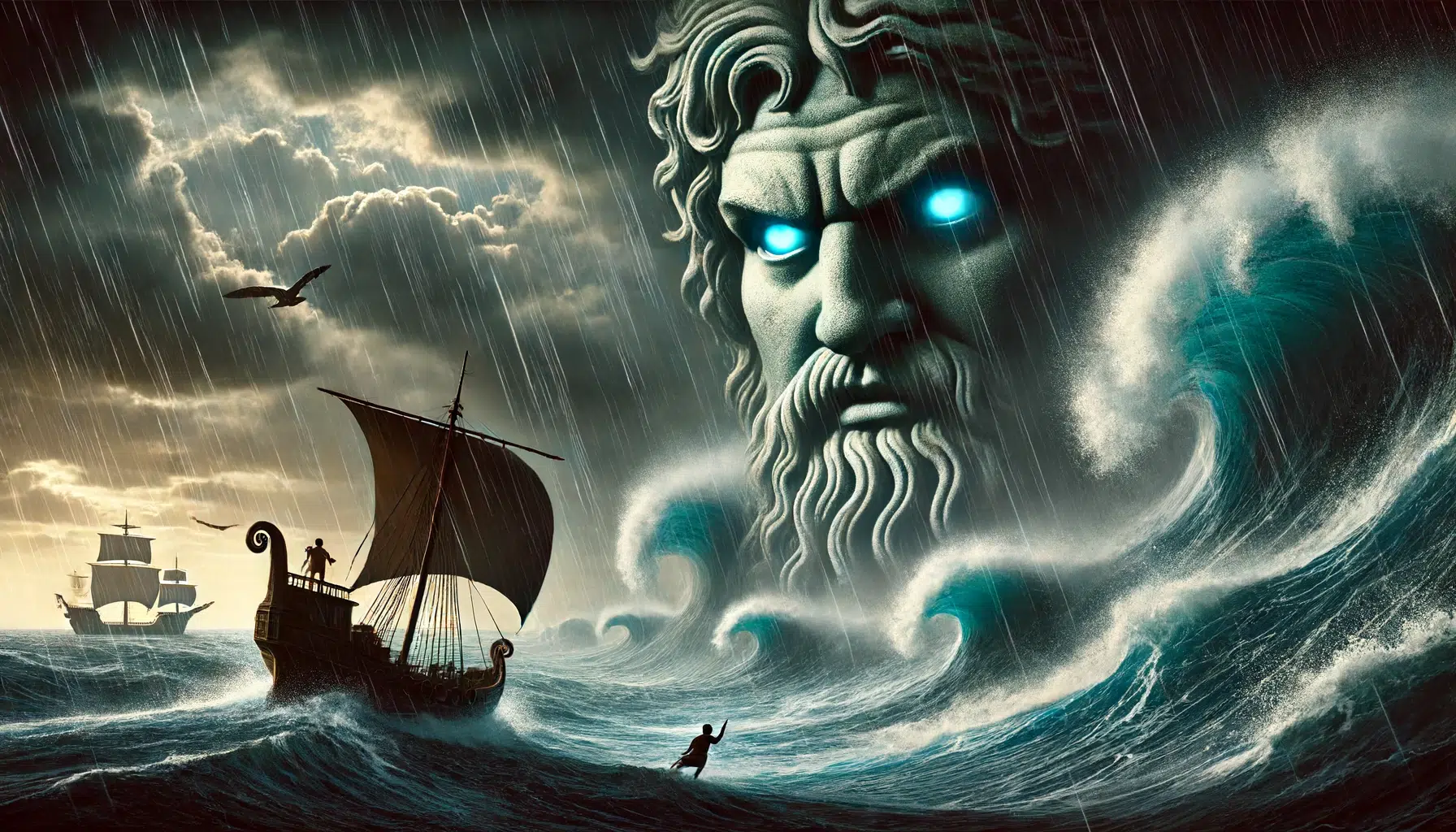
After the fall of Troy, the surviving Greek heroes faced daunting journeys back to their homelands.
One of the most renowned of these journeys is that of Odysseus, chronicled in the epic poem, The Odyssey.
Odysseus, the clever and resourceful warrior, encountered numerous obstacles and hardships during his ten-year odyssey.
Throughout his journey, Odysseus encountered mythical creatures such as the Cyclops and the enchanting Sirens, who tried to lure him off course.
The sea god Poseidon, angered by Odysseus’ role in the destruction of Troy, also constantly impedes his progress.
These trials test Odysseus both physically and mentally, as he navigates treacherous waters and faced formidable foes.
However, despite the hardships, Odysseus remains steadfast in his determination to return to his kingdom of Ithaca.
Upon his arrival, he found his homeland overrun by suitors for his faithful wife, Penelope.
Odysseus, disguised as a beggar, devised a plan to eliminate the suitors and reclaim his rightful place as the king of Ithaca.
Ultimately, Odysseus triumphed over his adversaries through wit and bravery, proving himself to be a true Greek hero.
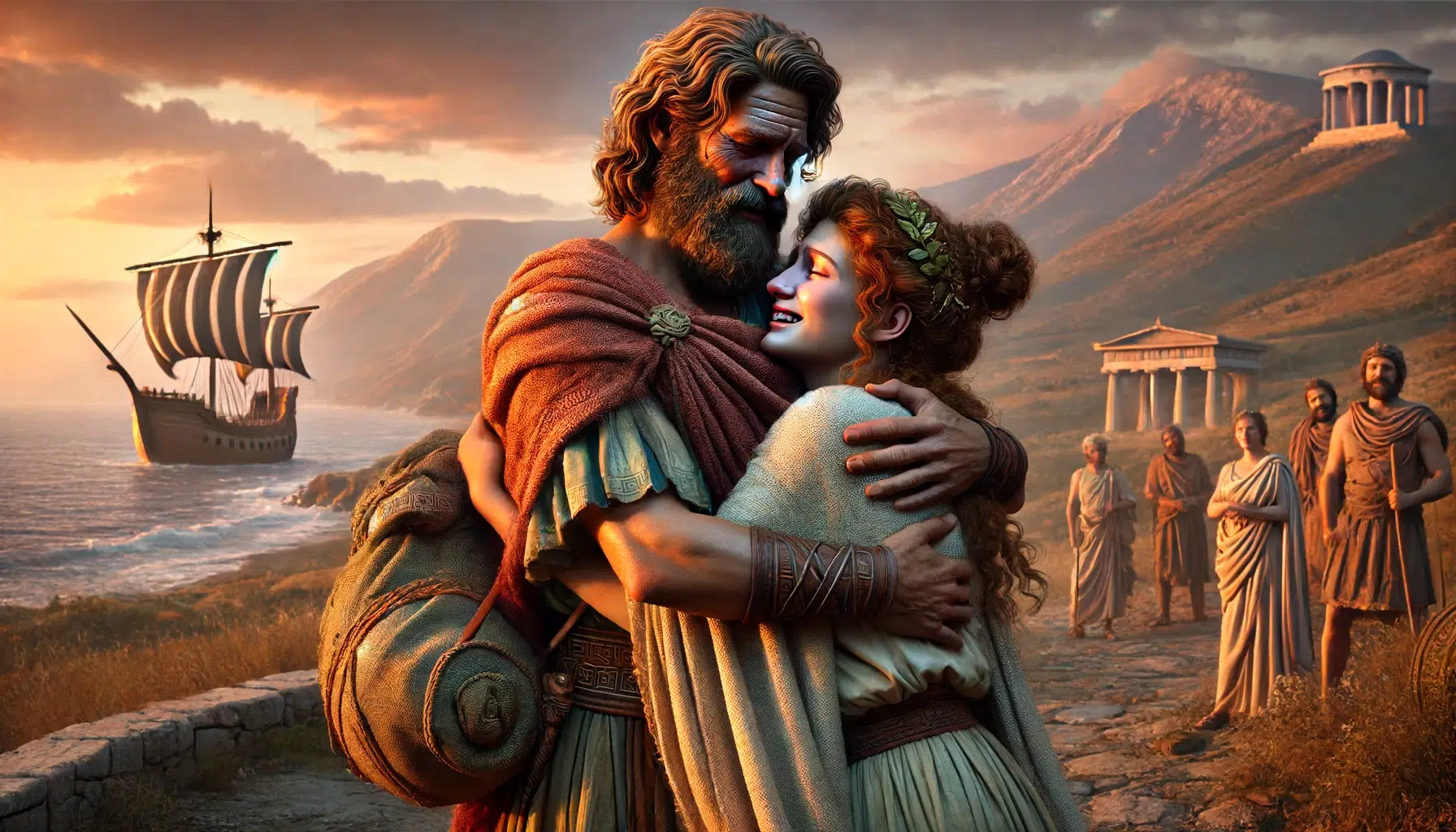
He is reunited with Penelope, and order is restored in Ithaca.
The journey of Odysseus in The Odyssey serves as a symbolic representation of the trials and tribulations that Greek heroes faced on their journey back home after the Trojan War.
Other Journeys After the War
While some, like Nestor, the wise counselor returned safely, others met tragic ends.
The fall of Troy left deep scars, affecting its women and the royal family. Cassandra, Andromache, and Queen Hecuba suffered greatly.
Trojan survivors scattered in various directions after the war.
For instance, Aeneas, a Trojan prince would escape the seize of Troy and embarked on a major journey to Italy.
On the other hand, the Greeks found themselves dealing with the war’s lasting impacts.
This post-war period became a significant time for both groups, marked by rebuilding and transformation.
The Role of Women in the Trojan War Legends
Women in the Trojan War myths play key roles, not just supporting characters. They drive the story with their choices and lives.

Helen of Troy, known for her beauty, started a major war by leaving her husband for Paris.
She is both a victim and a force, showing the varied roles of women in Greek stories.
Queen Hecuba, wife of King Priam, was a central figure in Troy.
She gave birth to many children, including the famous Hector and beautiful Paris. The war left her without her children, and it destroyed her city.
She becomes a symbol of women’s suffering during war times.
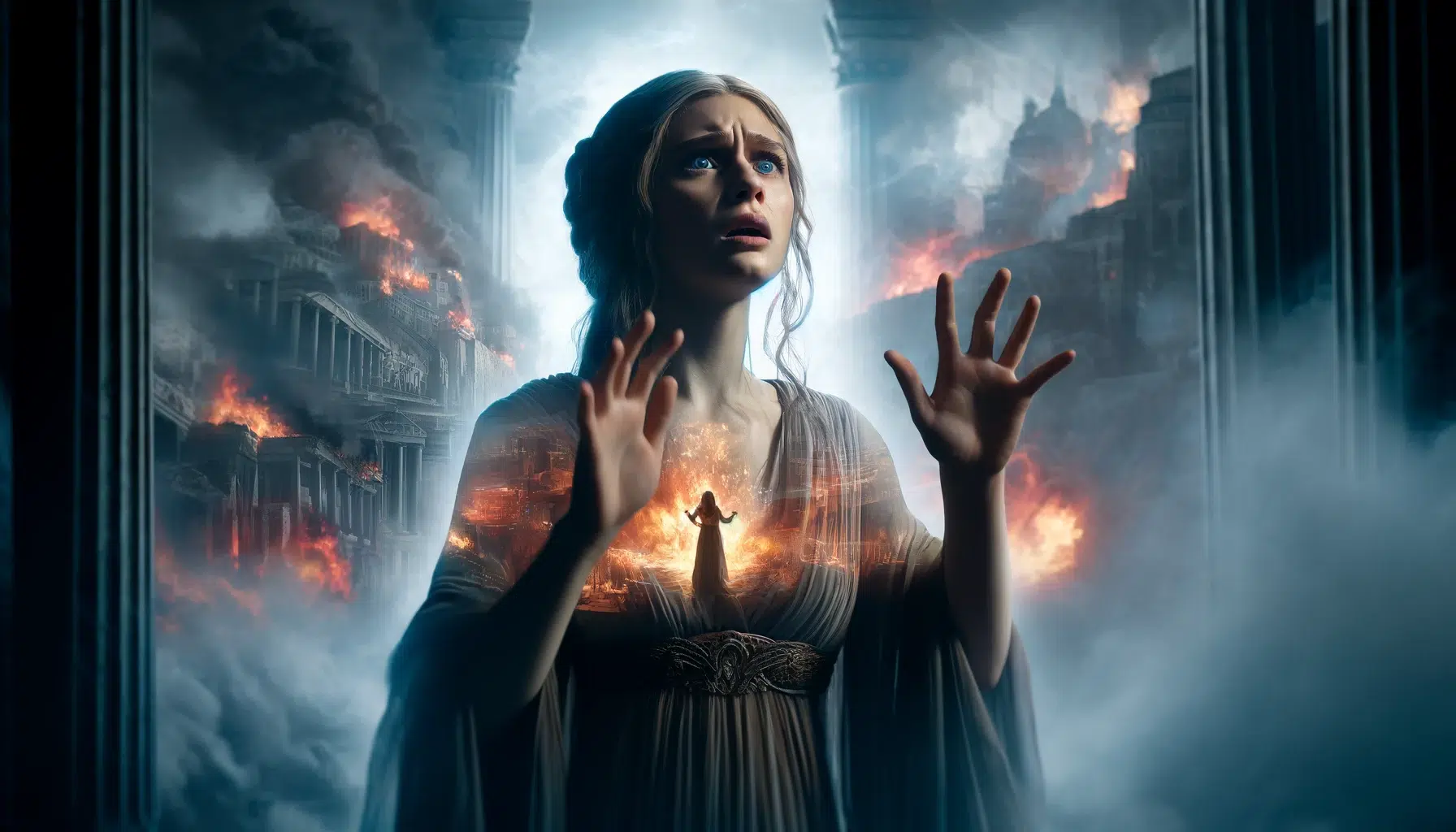
Cassandra, another of Hecuba’s daughters, and a priestess had a gift for seeing the future but no one believed her.
Her prophecy about Troy’s fall proved true, but she couldn’t prevent it.
She faced brutal assaults and eventually died. Her story shows the suffering and disbelief women often face in conflict.
Andromache, Hector’s wife, depended on him for safety and food, showing women’s vulnerability in old societies.
After losing her family in the war, she becomes a slave mother. This change from a respected life shows the hardships women faced then.
Penelope, Queen of Ithaca, uses her wit to keep the kingdom safe while her husband was away.
She was clever, keeping men at bay until Odysseus returned. Her story is about preserving society through her own strength and intelligence.
Learn more about:
Heroic Deeds and Tragic Fates

The Trojan War is a well-known epic from Greek mythology.
It tells a story of courage, sacrifice, and tragic heroes. It lasted for ten years and was full of brave acts and deep sorrows.
Homer’s Iliad is a crucial work in Greek literature, focusing on Achilles and Hector.
These two warriors’ stories are central to the story’s tragic themes.
Achilles was known for his might but faced great loss when his friend Patroclus died. This loss drove him to kill Hector.
Though both Achilles and Hector were heroes, their stories ended tragically.
Achilles’ weak spot, his heel, was his undoing, leading to his death.
Hector showed great courage but met with a tragic end as well. Their stories reveal the mix of glory and sadness in the war.
The stories of these heroes live on in ancient art and literature.
Artists and writers like Aeschylus and Virgil have kept their memories alive.
These tales remain powerful, reminding us of the costs and complexities of war.
The Influence of the Trojan War on Literature
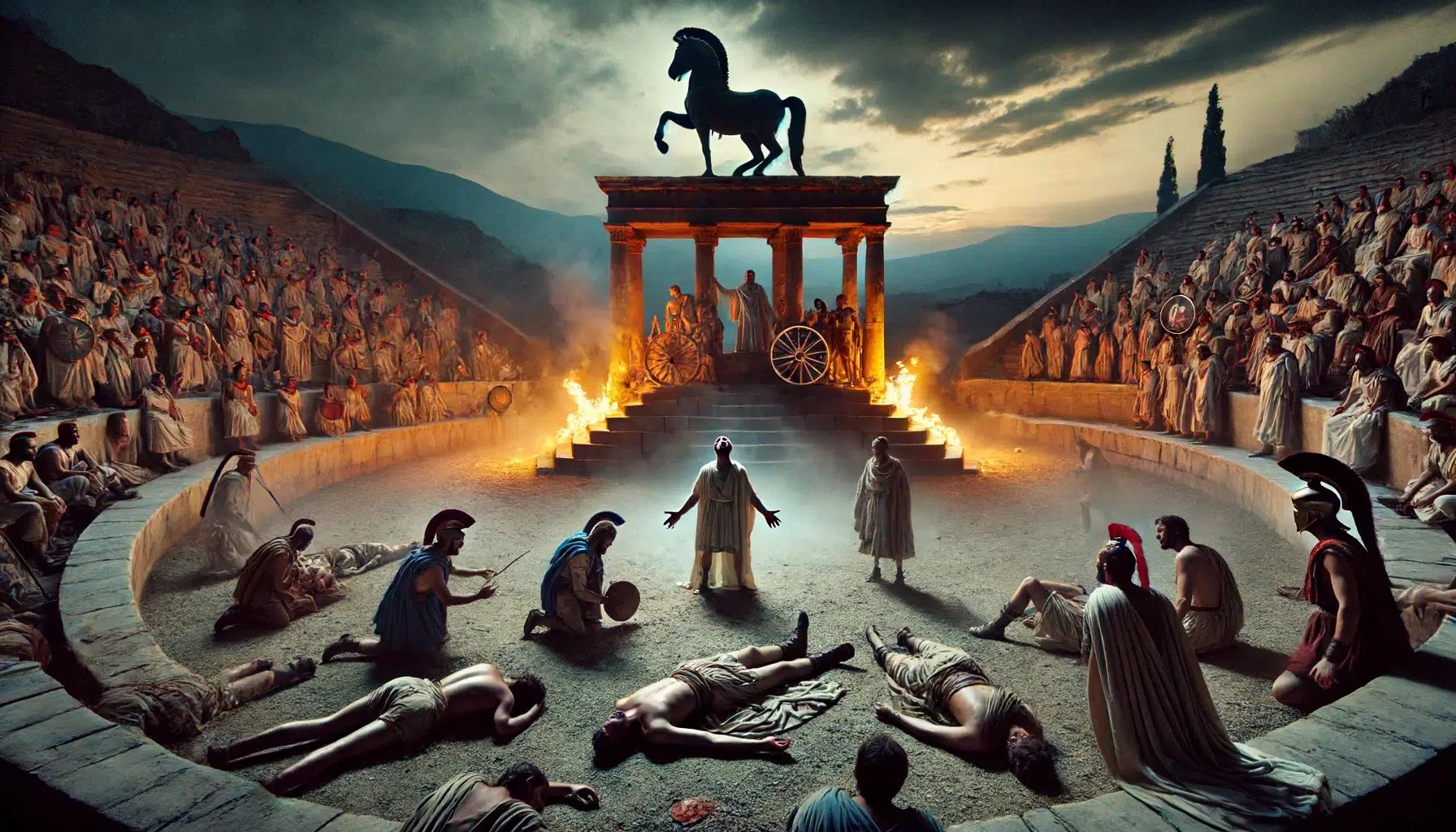
The Trojan War has greatly shaped our literary world over the years. Books, poems, and more keep telling its story.
In the middle ages, people found a new interest in the Trojan War stories.
Poets reimagined them in ways that mixed big epic stories with love and fancy.
Plays by Aeschylus and Euripides then showed the war’s drama and despair.
This creativity showed how broad and lasting the war’s tales are.
Over time, people kept remaking the Trojan War stories to fit their own times.
Today, we see this in everything from books to shows and the internet.
This shows how the Trojan War stays relevant, always finding new ways to captivate us.
It carries both history and meaning through the ages.
Thompson’s bibliography shows just how much the Trojan War has inspired over the centuries.
It highlights the lasting impact and appeal of these stories.
From the ancient world to the 20th century, the Trojan War continues to be a wellspring of creative inspiration.
Its reach goes beyond just books, influencing art, music, and film.
All of these forms show how the war’s stories are a deep part of our shared cultural heritage.
The stories of the Trojan War still captivate people today. They mix history with myths. The war reminds us of deep truths about life and human nature.
Learn more about:
- Greek Mythology Movies Showcasing Archers
- Gods and Archery in Greek Mythology Books
- Euripides Famous Playwright of Greek Tragedy
The Trojan War Epics
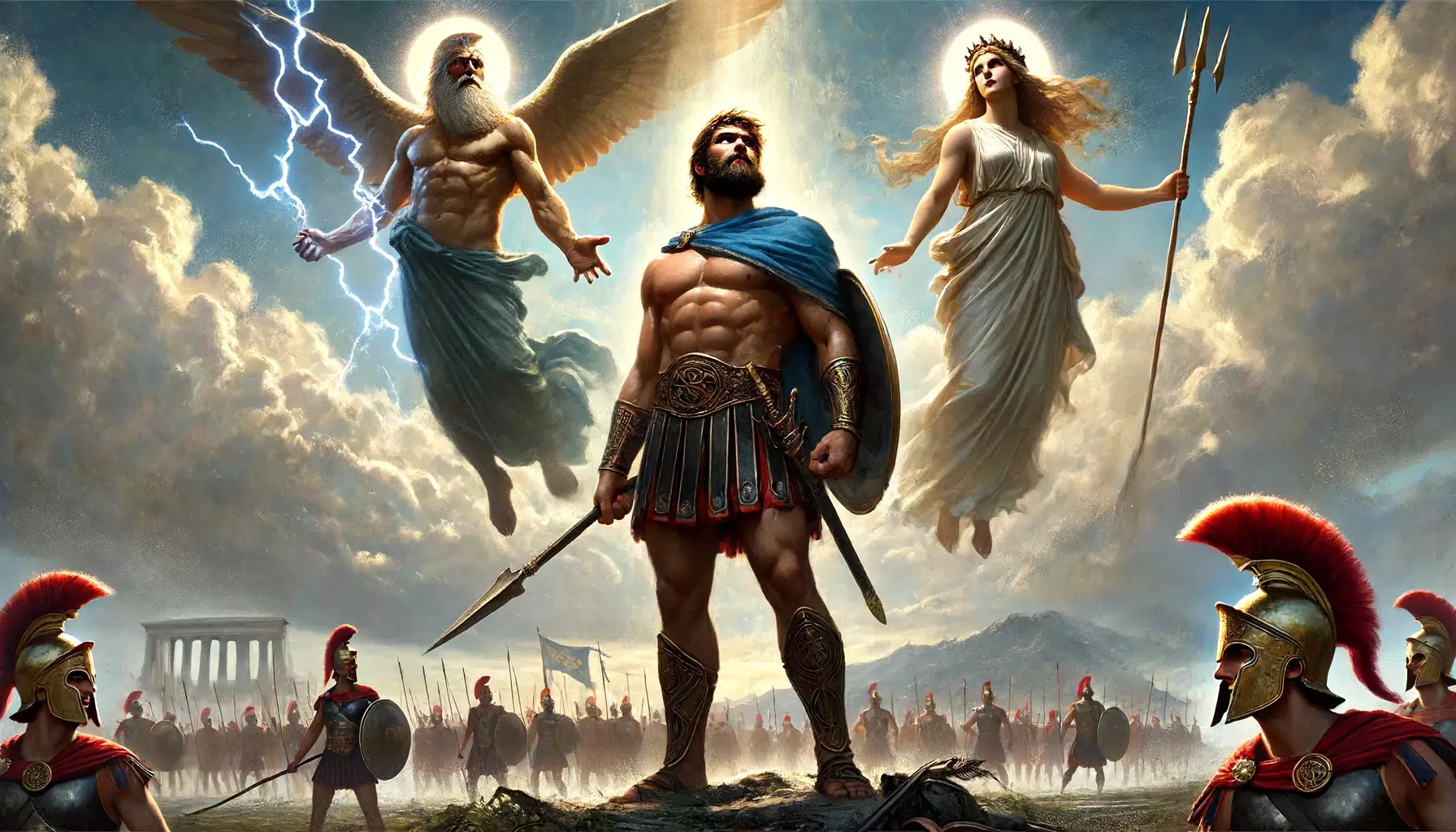
The Trojan War has inspired some of the greatest works of classical literature.
The Greek poet Homer is credited with composing the epic poems, the Iliad and the Odyssey, which delve into the events of the war and its aftermath.
These works, initially transmitted orally and later transcribed, have become foundational texts in Western literature.
In the first century B.C., the Roman poet Virgil wrote the Aeneid, an epic poem that tells the story of a group of Trojan refugees founding the city of Rome.
The Trojan War narratives have had a lasting impact on the literary tradition of both ancient Greece and Rome.
Through the epic poems of Homer and Virgil, the legends of the Trojan War have been immortalized.
The Iliad focuses on the final year of the war, highlighting the heroism and tragic fate of the Greek warrior Achilles.
Achilles’ relationship with the gods is a prominent theme in the Iliad.
He is both aided and hindered by divine intervention, highlighting the complex relationship between mortals and the Greek gods.

Meanwhile, the Odyssey chronicles the arduous journey of Odysseus as he attempts to return home after the war.
These works not only chronicle the battles and events of the war but also explore the complexities of human nature, the role of the gods, and the consequences of pride and hubris.
Virgil’s Aeneid takes a different approach to the Trojan War narratives, emphasizing the founding of Rome by Aeneas, a Trojan prince and survivor of the war.
The poem celebrates the Roman ideal of duty, sacrifice, and the establishment of an empire, drawing parallels between the destiny of Aeneas and the glory of Rome.
The Aeneid serves as a bridge between the Greek and Roman worlds, blending elements of the Trojan War with Roman mythology and history.
Comparison of the Trojan War Epics
| Epic Poem | Author | Main Focus |
|---|---|---|
| Iliad | Homer | The final year of the Trojan War and the heroism of Achilles |
| Odyssey | Homer | Odysseus’ journey home after the war and the challenges he faces |
| Aeneid | Virgil | Aeneas’ journey and the founding of Rome |
It would shape ancient tragedies, myths, and even later works of literature.
The mix of facts and stories around the Trojan War keeps experts and enthusiasts engaged, weaving the remains of Troy with ageless tales.
Archaeological Evidence of the Trojan War
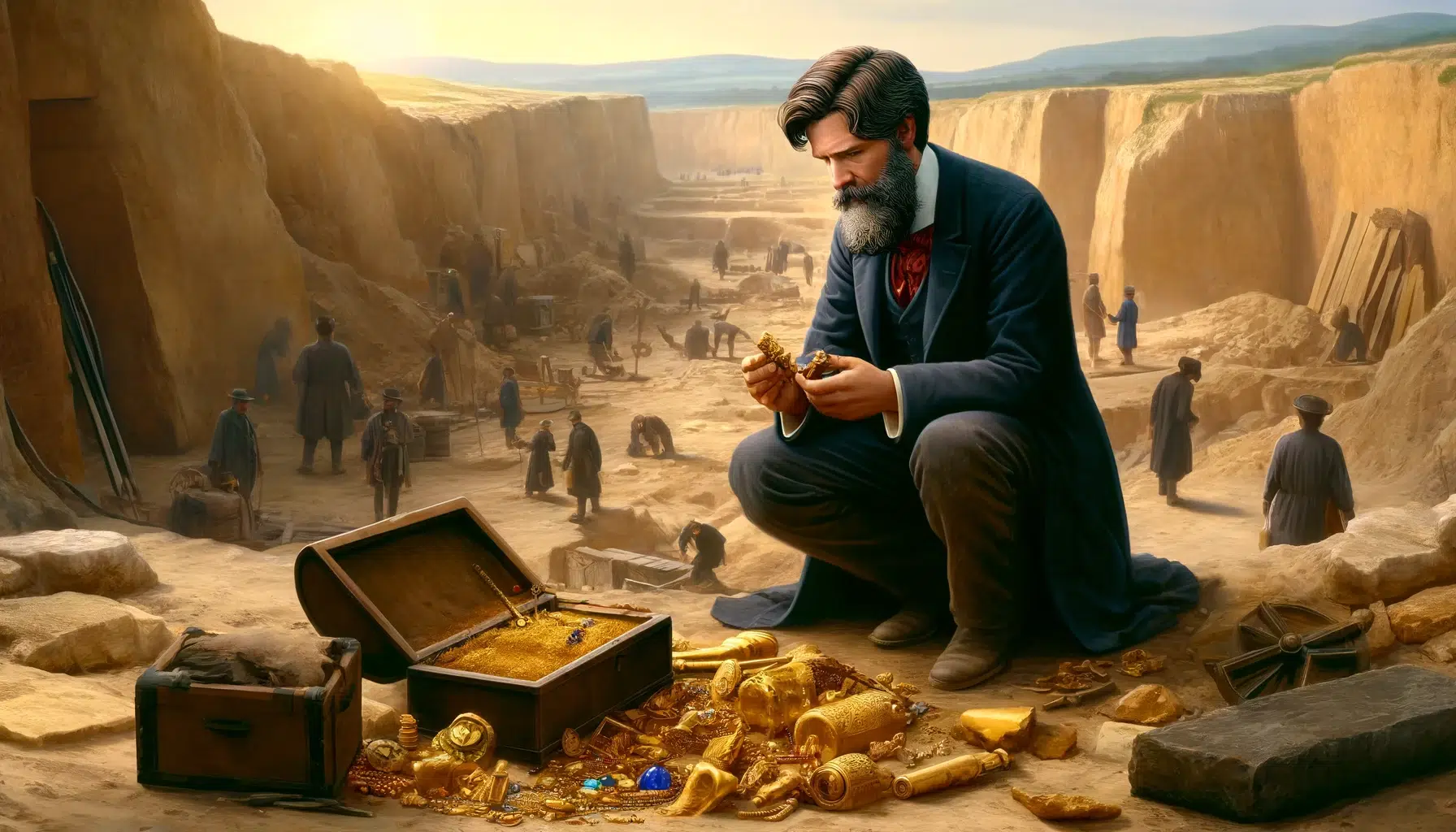
Archaeology has greatly helped us learn about the Trojan War’s history.
Some experts point to specific years, like 1194–1184 BCE, for the Trojan War.
This period matches with signs of a violent past found at the site believed to be Troy.
Items like arrowheads and layers of ash from fires indicate a possible war.
As the 7th and 6th century BCE literature reflects, these ancient tales might have roots in real events.
Heinrich Schliemann Finds Treasures
Heinrich Schliemann worked to uncover Troy’s remains. These findings link closely to the time of the Trojan War, as Eratosthenes suggested.
In 1868, Heinrich Schliemann dug at Hisarlık in what’s now Turkey. His excavations found a layer dating to about 1180 B.C. It contained burned debris and bones.
This supports the idea that the Trojan War stories come from real events.
In 1873, Heinrich Schliemann found treasures that were thought to be King Priam’s. This discovery added real proof to the mythic story.
These treasures prove that Troy was indeed wealthy and important during the Bronze Age.
Schliemann found remains that fit a war around 1200 BCE, close to when the Trojan War may have happened.
His discoveries suggest a big event like the Trojan War happened then.
This shows how archaeology can confirm ancient stories.
But, not many weapons from the time of the Trojan War were found. This raises questions about the war’s real scale and if it matched Homer’s stories.
However, the few arrowheads that were found do connect Troy to its historical past.
This link supports the idea that Homer’s tales might have been real events. Even though not all scholars agree on this, the evidence found is still crucial.
In the end, archaeology and legends work together to give us a clearer view of ancient Troy.
Conclusion
The Trojan War lasted for ten long years, marking itself deeply in our history. According to Homer’s “Iliad,” the Greeks used a clever plan to win.
This story shows features of ancient tales we still find fascinating today.
It’s about conflict, strategy, and the triumph of clever thinking. The myth of the Trojan War has kept people talking and exploring for centuries.
Through the tales of Achilles, Odysseus, and Hector, we dive into the heart of this war.
Their stories are tragic yet inspiring, rich in messages about bravery and sacrifice.
The Trojan War is among the first stories found in Western literature. It layers myth with history, sparking endless questions and research.
Even though some doubt if Helen existed, the story’s essence stays with us.
It turns into inspiration for generations, seen in subsequent epics like the “Aeneid” and the “Argonautica.” By remembering these ancient stories, we learn about the human condition.
We treasure the myths and what they teach us about life.