

Saracens Influence on Medieval Warfare and Culture
Historically, “Saracen” identified people from the Middle East and North Africa’s desert regions. The Saracens originated from the Arabian Peninsula, North Africa, and the Levant.
These regions became Islamic strongholds after Islam’s swift expansion in the 7th and 8th centuries.
Initially, it referred to Arab peoples, but evolved to denote Islamic forces during the Crusades.
The origins of “Saracen” remain debated, with some linking it to the Greek “Sarakēnoí” or Arabic “sharqiyin,” translating to “easterners.”
These warriors gained prominence with the onset of Islamic conquests in the 7th century, under Prophet Muhammad and the Rashidun Caliphs.
Saracens Reshape Medieval Warfare
Known for their fierce combat skills, Saracens reshaped medieval warfare. They introduced innovative tactics and weaponry, compelling Christian kingdoms to evolve.
Their adoption of light cavalry over traditional heavy armor highlighted a shift towards speed and agility on the battlefield.
Saracens also made significant cultural contributions.
Through both conflict and peaceful interactions, they facilitated the exchange of knowledge and ideas.
Key players during the Islamic Golden Age, they safeguarded and expanded upon Greek and Roman scholarly works, influencing the realms of science, philosophy, and medicine.
Their expertise extended to craftsmanship, impacting European arts with intricate metalwork, textiles, and ceramics.
These aesthetic influences blended with Europe’s diverse cultures, creating a lasting legacy beyond their military achievements.
European encounters with Saracen governance and lifestyle prompted a reevaluation of political and social structures.
Exploring Saracen history requires balancing myth with reality.
A careful examination of historical records reveals their profound influence on medieval European warfare and culture, showcasing a legacy rich with innovation and exchange.
Origins of the Saracens: Tracing the Early Roots

Initially, it referred to Arab peoples, evolving to denote Islamic forces during the Crusades.
The origins of “Saracen” remain debated, with some linking it to the Greek “Sarakēnoí” or Arabic “sharqiyin,” translating to “easterners.”
These warriors gained prominence with the onset of Islamic conquests in the 7th century, under Prophet Muhammad and the Rashidun Caliphs.
Pre-Islamic Nomadic Lifestyle
Tracing Saracen history reveals their pre-Islamic nomadic lifestyle, engaging in trade and raiding across harsh deserts.
The unification under Islam marked a significant shift, enhancing their military capabilities with cavalry and camel warfare.
This mastery in navigating and fighting in desert terrains was crucial for their swift territorial expansions across Byzantine and Persian empires.
The Saracens were known for their adaptability and hit-and-run tactics, setting a foundation for future medieval warfare strategies.
To fully appreciate the Saracens’ contributions, one must delve into their early roots.
This exploration sheds light on their significant role in shaping military tactics and their enduring impact on the cultural and political fabric of the medieval world.
Saracens in the Early Medieval Period
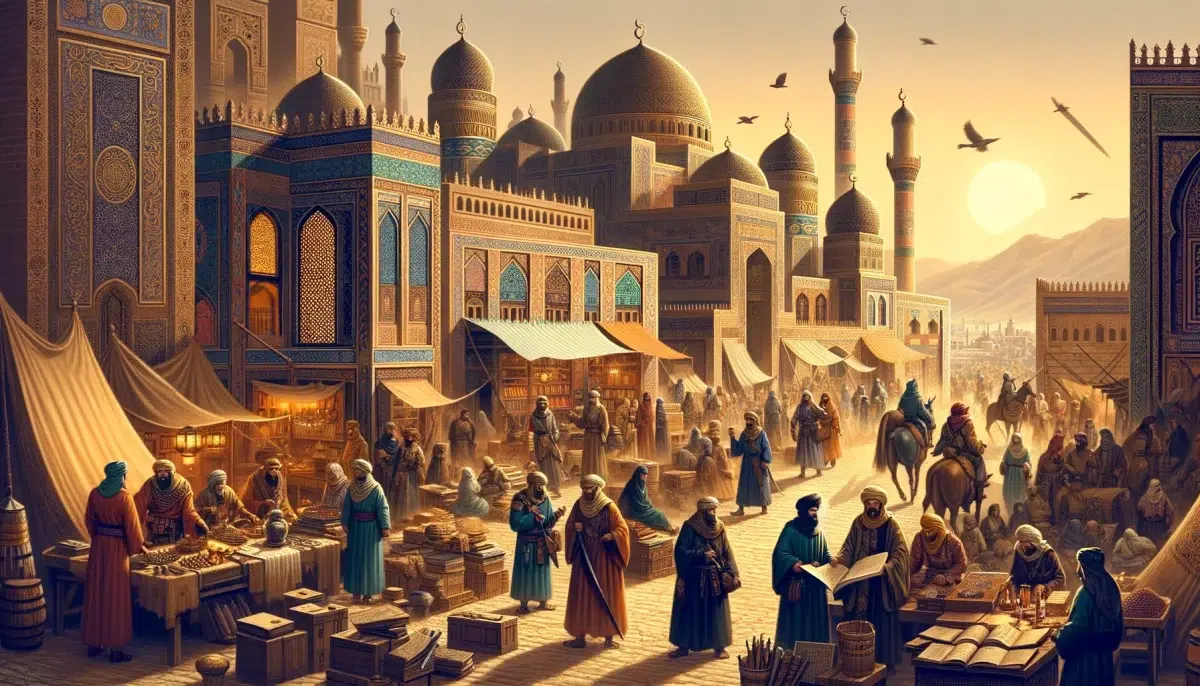
In the Early Medieval period, European chronicles labeled Arab peoples from the Arabian Peninsula’s desert lands as “Saracens.”
These warriors emerged as a significant force following Islam’s rise in the 7th century, driven by religious zeal and a conquest thirst.
Saracens excelled in battle due to their:
- Mobility: Swift horses and camels allowed them to cover vast distances quickly, launch surprise attacks, and retreat before facing a counterattack.
- Military Tactics: They implemented innovative strategies, starkly different from European warfare methods. Their approach included rapid hit-and-run raids and light cavalry usage, outmaneuvering Europe’s heavier cavalry and infantry.
- Weaponry: Saracen warriors mastered the curved sword or scimitar, perfect for slashing during fast cavalry charges. They also used composite bows, offering greater range and accuracy than European longbows.
- Cultural Understanding: Their skill in engaging with diverse cultures helped them forge alliances and adopt new technologies and strategies from other peoples.
Saracens dramatically reshaped medieval warfare. They would confront the Byzantine Empire and swiftly conquer territories in North Africa, the Middle East, and Southern Europe.
Their ventures into Europe brought forth military techniques and practices that soon melded into European warfare strategies.
The Saracens’ combat skill spurred the formation of knightly orders in Europe to counter the threat during the Crusades.
An example is the Knights Templar and the Knights Hospitaller.
Learn more about: Famous Archers in History: Legends of the Bow and Arrow
Cultural and Religious Influence of the Saracens
The Saracen impact on the cultural and religious landscape of the Middle Ages was deep and enduring.
Through trade and warfare, these Islamic societies contributed significantly to European cultural growth. This included in areas stretching from philosophy to medicine.
As a result, the culture they influenced extended well beyond the battlegrounds.
Saracen Impact on the Religious Landscape
In terms of religious influence, the Saracen advances in Spain and the Crusades brought Christians into close contact with Muslim beliefs and practices.
These interactions often led to greater understanding and sometimes even respect for Islamic religious texts and traditions.
The Crusades, while primarily religious in nature, also served as a conduit for cultural exchange.
Crusaders returning home brought with them a taste for Saracen artifacts and knowledge.
These include textiles, spices, and works of translation by ancient Greek philosophers.
Saracen Contribution to European Cultural
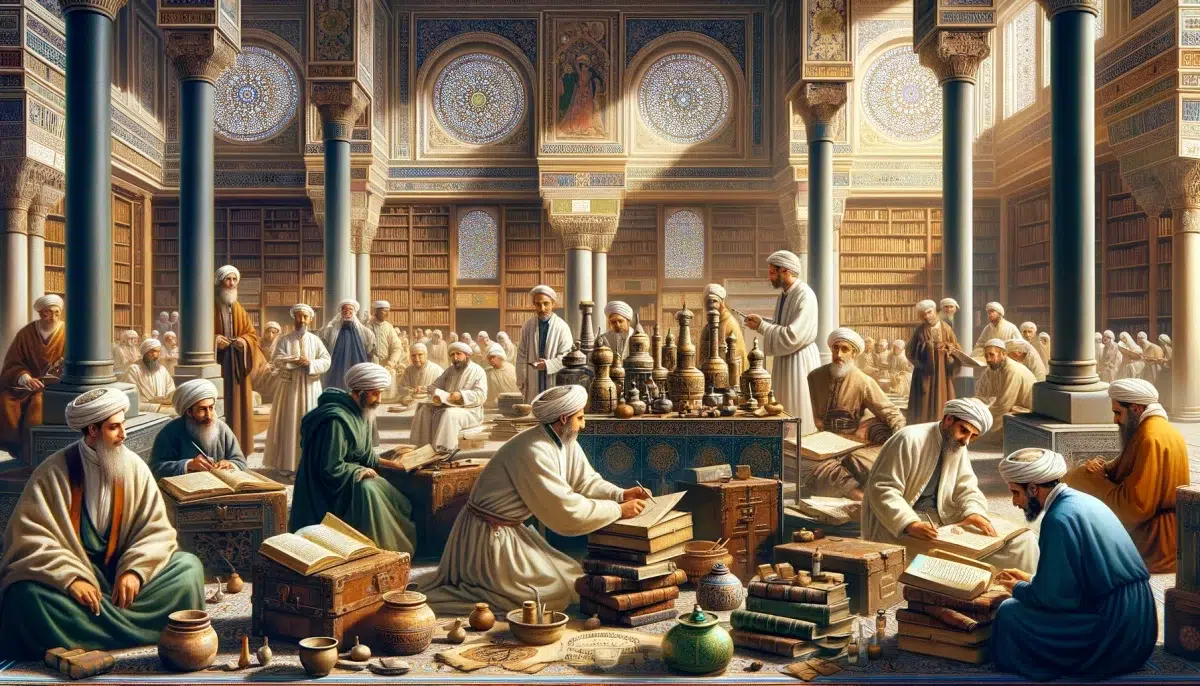
Saracen scholars and scientists greatly contributed to mathematical concepts, including the introduction of Arabic numerals and advancements in algebra and trigonometry, which found receptive audiences in Europe.
The expanse of Saracen influence is noted particularly in the architectural sphere.
The Gothic arch, a hallmark of European architecture, was inspired by the pointed arches and intricate designs of Moorish structures.
Perhaps one of the most significant contributions was the transmission of medical knowledge.
The works of Saracen physicians, which encompassed centuries of accumulated wisdom, were translated into Latin, and became fundamental texts in European universities.
On the linguistic front, the Saracen influence permeated the evolving languages of Europe with the introduction of thousands of Arabic words into Spanish, Portuguese, and Sicilian, many of which are related to science, philosophy, and the sophistication of Saracen civilization.
While the relationship between the Christian West and the Islamic East was often contentious, it was also a period of significant cultural and religious interchange, which indelibly shaped the contours of European civilization.
The Role of the Saracens in the Crusades
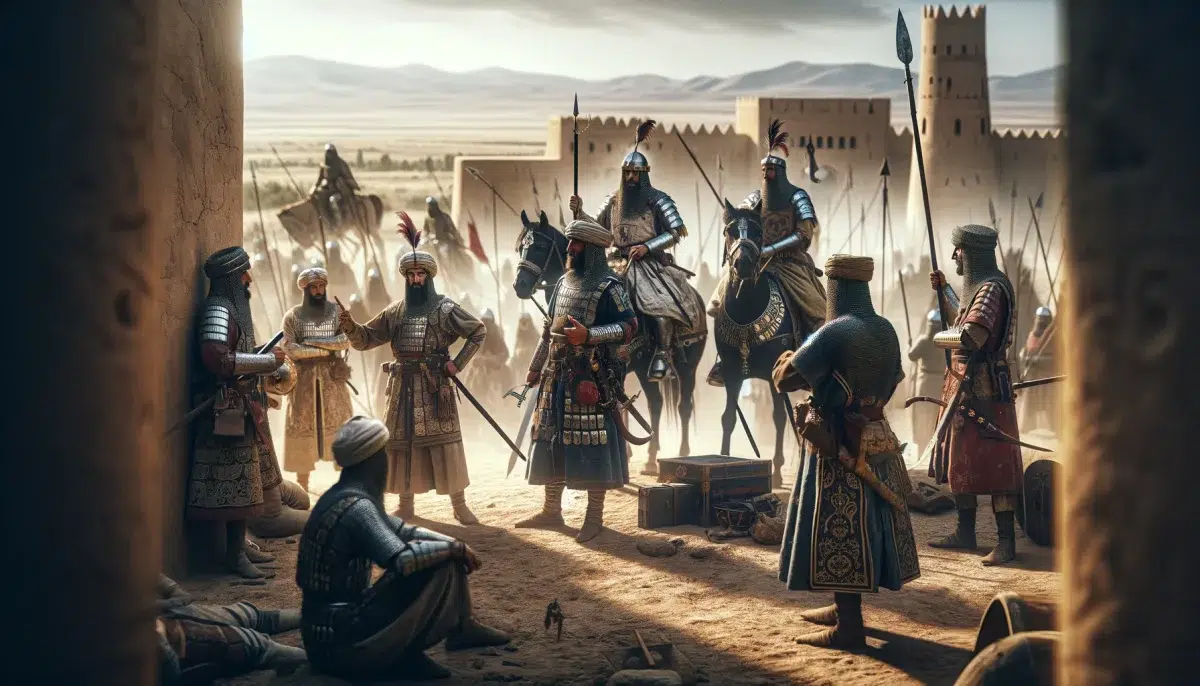
The Saracens played a pivotal role during the Crusades.
These were a series of religious wars initiated by Latin Christians to reclaim the Holy Lands from Muslim control.
Primarily composed of Arabs and Turks, the Saracens were the primary opposition to the European crusaders.
Their influence on medieval warfare was considerable due to several factors:
- Defensive Strategies: Saracen forces skillfully held off Crusaders through the use of well-fortified cities and castles. Their use of the double-wall defensive system in their fortifications made sieges a difficult and lengthy endeavor for the invading armies.
- Tactical Warfare: In the battlefield, Saracen military tactics were a blend of traditional melee combat and skilled archery. They effectively used light cavalry, excelling in fast, hit-and-run tactics. This mobility was a contrast to the often heavily-armored Crusader knights, and it enabled them to harass and wear down their enemies.
- Naval Prowess: The Saracens also exhibited naval strength, particularly the Egyptians. They challenged the Crusader states’ trade and supply lines in the Mediterranean, showcasing their adept naval strategies.
- Cultural Influence: Beyond the battlefield, the Saracens’ influence permeated through the exchange of knowledge. Their advancements in science, mathematics, and medicine would later influence European societies, shaping the cultures beyond mere warfare.
- Diplomatic Acumen: Saracen leaders such as Saladin became known for their diplomatic skills. Saladin, in particular, earned a reputation for chivalry and honor, which was admired by both his contemporaries and later generations.
The enduring legacy of the Saracens in the Crusades persisted not only through their defensive victories and tactical expertise but also through the cultural and intellectual exchanges that took place during this tumultuous period of history.
These aspects played an integral role in defining the nature and outcome of the medieval Crusades, highlighting the complex interplay between warfare and cultural development.
Art and Architecture: The Saracenic Contributions
The Saracen influence on art and architecture during the medieval period was a significant cultural exchange that deeply impacted European aesthetics. Saracenic art, also referred to as Islamic art, is characterized by its intricate geometric patterns, calligraphy, and a strong emphasis on decorative motifs.
Saracenic architects were masters of constructing mosques, madrasas, palaces, and fortresses, which showcased their advanced understanding of structural engineering and aesthetics.
- Ornamental Design: Saracenic art introduced sophisticated ornamental designs which were often based on mathematical principles. These designs included arabesques — interlacing foliage or tendrils — and intricate tile work known as zellige, which became hallmarks in Islamic-influenced regions. The use of abstract and vegetal motifs was a distinctive departure from the figurative art more common in European tradition.
- Architectural Marvels: Saracenic architecture is renowned for its domes, minarets, and large halls. The introduction of the pointed arch and the use of muqarnas (stalactite vaulting) were notable architectural features that spread throughout Europe. Their edifices often featured large courtyards and were illuminated with elaborately decorated lamps, promoting a sense of awe and reverence.
- Materials and Techniques: They employed a wide range of materials, such as stone, wood, ceramics, and metal, and were particularly famed for their work in inlaid metalwork and ivories. Techniques such as lusterware in pottery, which gave ceramics a metallic sheen, found their way into European craftsmanship.
The Saracenic contributions to art and architecture went beyond aesthetic appeal. Thus offering functional innovations that were critical to the design and construction of buildings during the medieval era.
This interchange of cultural ideas and practices greatly enriched the artistic and architectural landscapes of the regions.
Saracen Economy and Trade Networks in the Mediterranean
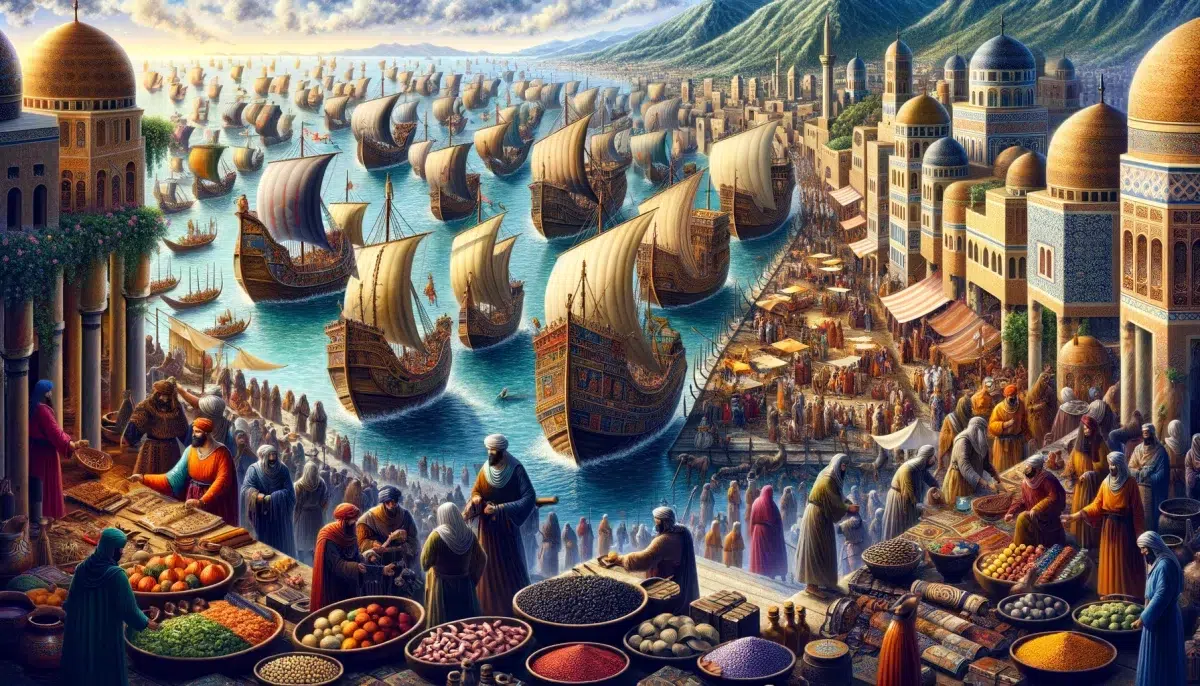
The economy of the Saracen regions, primarily during the high medieval period, was remarkably advanced and diverse. Stretching from the Levant through North Africa, Saracen economic power was fueled by their strategic control over key trade routes in the Mediterranean.
Saracens Set Up Trade Networks
The robust trade networks established by Saracens facilitated the exchange of a vast array of goods, ideas, and culture.
- Agricultural production flourished especially in areas like Egypt and the Levant, where they cultivated crops such as wheat, olives, and various fruits. These were not only consumed locally but also exported to distant markets.
- The Saracens were also renowned for their skill in manufacturing, producing textiles, glassware, and metalworks that were highly sought after throughout Europe, Byzantium, and beyond.
- Trade centers, such as Cairo and Damascus, became melting pots of commerce, attracting merchants from all corners of the Mediterranean and the Islamic world.
Saracens Traded Knowledge and Science
The Saracens also played a pivotal role in the dissemination of goods from the East to Europe.
They were central in the spice trade, dealing in valuable commodities like pepper, cloves, and nutmeg, which were weighty in gold.
Their trade networks were not confined to tangible goods; they were also conduits of knowledge, transporting texts on philosophy, science, and medicine that would later spark intellectual revivals in Europe.
- Currency circulation, facilitated by the introduction of a standardized system of coinage, helped stabilize and expand commercial activities across the Saracen-held territories.
- Merchants were protected by a framework of laws which safeguarded trade and provided assurances for safe passage, emphasizing the Saracen commitment to encouraging commerce.
The economic might of the Saracens was a significant force in the Mediterranean, shaping not only their own society but also influencing the economies and cultures with which they traded.
Their trade network was a testament to their sophisticated approach to commerce and their ability to integrate and thrive within the diverse economic landscape of the medieval world.
Military Innovations and Strategies of the Saracens
The Saracens is a term used during medieval times to refer to Arab Muslims. They were renowned for their military prowess, which had a significant influence on medieval warfare.
Their strategies and innovations were a result of adapting to different environments and encounters with various foes.
Saracen Armies are Very Mobile
One of their notable strategies was the effective use of mobile warfare.
Saracen armies were highly mobile, often striking quickly and retreating before the enemy could mount a structured defense.
Their use of light cavalry allowed them to move swiftly across the battlefield and engage in hit-and-run tactics. This proved to be highly effective against the slower, heavily armored knights of Europe.
Other Saracen Military Tactics
- The Saracens also implemented psychological warfare, spreading fear and uncertainty among their enemies. Tales of their fierceness in combat and seemingly relentless sieges added to their intimidating reputation.
- In terms of defensive strategies, the Saracens were innovative in fortification design. They constructed advanced castles and fortresses with multiple fallback positions, which allowed them to defend effectively against crusader forces.
- Their mastery of siege warfare was equally impressive. Saracens employed sappers to undermine fortress walls and used trebuchets and other siege engines with skill. They understood the importance of cutting off supplies and isolating fortresses before an assault, which often led to the surrender of their adversaries without significant bloodshed.
- Furthermore, the Saracens refined the use of incendiary weapons, notably Greek fire, which they both adopted and advanced. This weapon caused havoc among wooden siege engines and ships alike.
In the realm of naval warfare, Saracen pirates and fleets were adept at raiding and controlling key Mediterranean trade routes, demonstrating their understanding of economic as well as military aspects of warfare.
This control of trade routes allowed them to exert influence far beyond their territorial holdings.
Saracens and their Interactions with the European Kingdoms
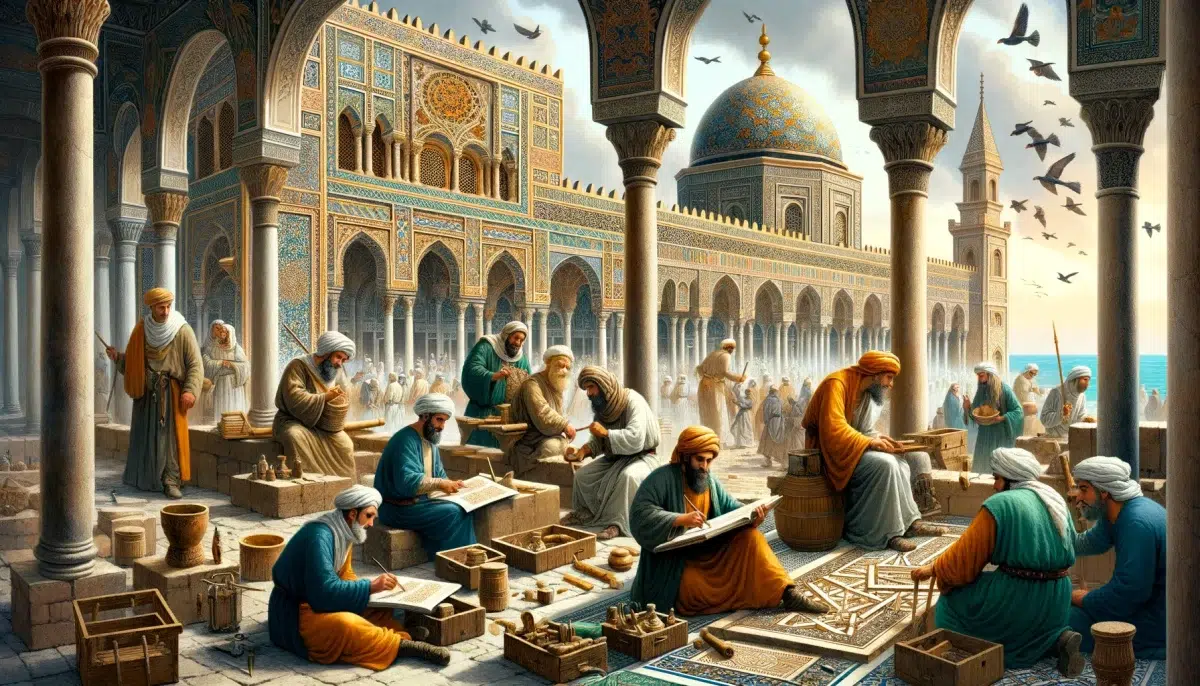
During the Middle Ages, the Saracens—a term used by medieval Europeans to describe Arab Muslims—had significant interactions with European kingdoms, primarily through conflict, trade, and cultural exchange.
Prominent among these encounters were the Crusades, a series of religious and military campaigns waged by European Christians to reclaim the Holy Lands from Muslim control.
Saracens Influence European Martial Tactics
The persistent state of warfare significantly influenced European martial tactics and fortification styles.
- The Crusaders encountered Saracen armies that utilized swift horse archers and light cavalry, prompting European forces to adapt by improving their own cavalry tactics.
- Saracen siege technology and military engineering, including the use of counterweight trebuchets, had a detectable impact on European siege warfare.
Trading Good with Europeans
Trade was another arena of interaction. Despite ongoing conflicts, there was a brisk exchange of goods and knowledge between the two cultures.
- Saracen influence was notable in the transmission of goods such as spices, silk, and other luxury items via the Mediterranean trade routes.
- European scholars gained access to ancient Greek and Roman texts preserved by Saracen scholars, along with advancements in mathematics and sciences such as algebra, chemistry, and medicine.
Introduction of Architectural Styles
Culturally, the Saracens contributed to European society through the introduction of novel artistic and architectural styles. These influences were often integrated into European designs, sometimes leading to the creation of hybrid styles.
- The use of decorative arabesques and geometric patterns in art and architecture became more widespread in Europe after contact with the Saracens.
- Notably, the Norman kings of Sicily employed Saracen artisans to build and decorate their palaces, such as the Palazzo dei Normanni, blending Norman and Arab features.
European kingdoms’ responses to Saracen presence varied, from outright warfare to begrudging respect and appropriation of beneficial advances.
These interactions, while often contentious, played a pivotal role in shaping Medieval European warfare, trade practices, and cultural identity, leaving a legacy that profoundly influenced the course of European history.
Saracenic Contributions to Science and Philosophy
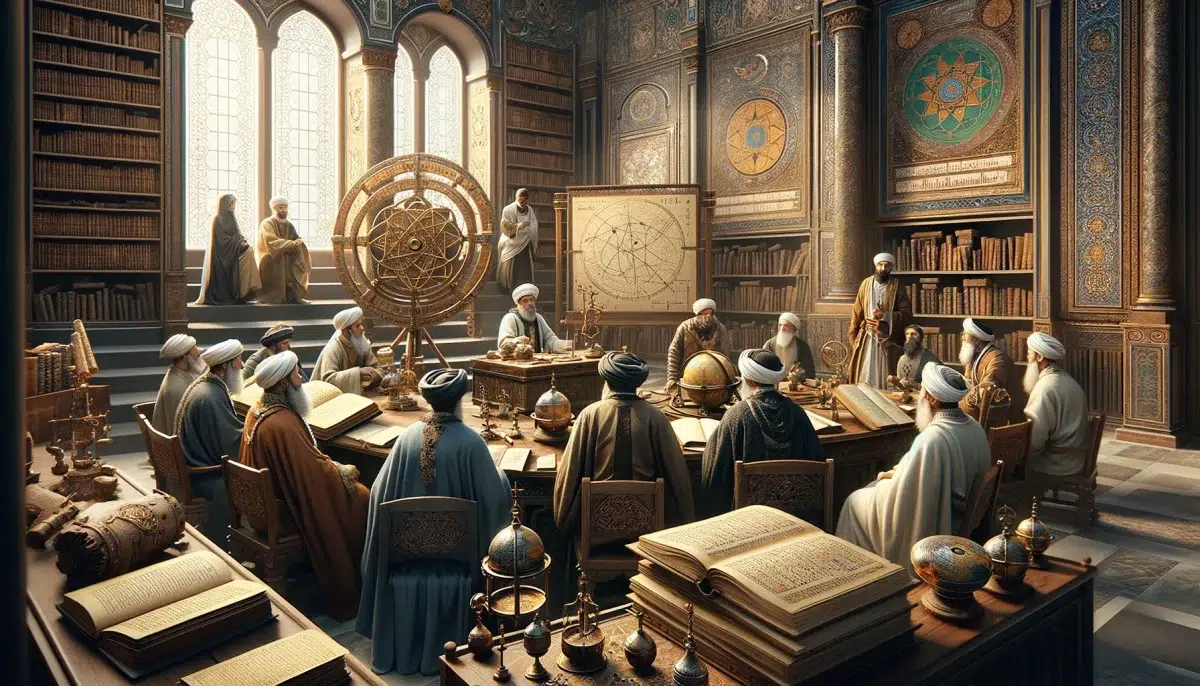
The intellectual contributions of the Saracens, or medieval Muslims, to science and philosophy during the Middle Ages were substantial and have had lingering effects on Western civilization. At a time when Europe struggled to emerge from the Dark Ages, Islamic scholars were preserving and expanding upon the knowledge of ancient civilizations.
Saracens Excel in Science
In the field of science, Saracenic scholars excelled:
- Astronomy: The works of Al-Battani and others laid the groundwork for modern astronomy. They corrected Ptolemy’s geocentric model, developed astrolabes and astronomical tables which were used for centuries.
- Mathematics: Al-Khwarizmi, the Persian polymath, is recognized as the father of algebra—a term derived from his book “Al-Kitab al-Mukhtasar fi Hisab al-Jabr wal-Muqabala.” Concepts such as algorithms also originate from his name and works. Arabic numerals, including the concept of zero, were introduced to Europe by Saracens, revolutionizing mathematics and accounting.
- Philosophy: Averroes and Avicenna also made significant contributions to philosophy, blending Greek thought, namely Aristotle’s, with Islamic theology to introduce and provoke new ideas about reason and faith.
- Technology: In addition to theoretical science, Saracens contributed to practical technology with innovations such as the water clock and sophisticated irrigation methods.
Saracens Excel in Medicine
- Medicine: The compilation of medical knowledge in works like those of Avicenna, particularly “The Canon of Medicine,” was used in European universities up until the 17th century.
- Optics: Ibn al-Haytham’s “Book of Optics” was pivotal in understanding light and vision, influencing later European scholars like Roger Bacon and Johannes Kepler.
The Saracen civilization’s approach to knowledge, characterized by rigorous empirical observation and a deep respect for learning, set the foundations for the scientific method.
It is evident that their intellectual achievements went beyond the battlefield to sow seeds of progress in the Western world.
Through translation movements such as the House of Wisdom in Baghdad, these scientific and philosophical works were eventually transmitted to medieval Europe, where they fueled the Renaissance and helped to forge the way towards modern science and thought.
The Decline of Saracen Power and its Historical Causes
The Saracens, often identified with Arabs or Muslims during the Middle Ages, experienced a significant decline in power influencing many historical trajectories, especially in the Mediterranean and the Near East regions.
Factors Influencing the Saracen Decline
This reduction in the Saracen influence can be attributed to a myriad of factors.
- Fragmentation within the Islamic world was a pivotal cause. The Abbasid Caliphate’s authority waned as regional dynasties such as the Fatimids, Ayyubids, and later the Mamluks carved out their own territories and spheres of influence.
- Another significant factor was the internal conflict and civil strife which destabilized the lands under Saracen control. Notably, the fitna, or Muslim civil wars, led to political fragmentation and weakened centralized power.
- The arrival of the Crusaders in the late 11th century also played a role in the decline of Saracen power. The series of military campaigns launched by European kingdoms not only took control of key territories but also disrupted trade routes and economic stability.
- Advancements in military technology in Europe also tipped the balance of power. Innovations in siege technology, ship design, and weaponry allowed European forces to challenge Saracen dominance more effectively.
- The Mongol invasions of the 13th century further eroded the power base of the Islamic world. The sacking of Baghdad in 1258 marked not only the end of the Abbasid Caliphate but also a monumental shift in regional power dynamics.
- Economic factors cannot be overlooked, as the changing trade patterns favored the Italian city-states like Venice and Genoa over the traditional overland routes controlled by the Saracens.
This culmination of events signifies how a once-dominant power could be eroded by internal strife, external pressures, and the relentless march of time and innovation.
The Saracen influence, while reduced in a military and political sense, continued to inform aspects of medieval culture and warfare through the transfer of knowledge, technology, and ideas.
Legacy of the Saracens in Modern History
The Saracens, a term used historically by Europeans to describe Arab Muslims during the Middle Ages, left a profound legacy that echoes through modern history.
Their influence can be traced in various aspects of current civilization, including military tactics, architecture, and scientific thought.
Military Tactics of the Saracens Studied
Military prowess and tactics of the Saracens, such as light cavalry and the use of mobility, have been studied and incorporated into modern military strategies.
The emphasis on quick, strategic strikes and the use of intelligence can be seen in contemporary doctrines. Moreover, the concept of chivalry and knighthood in Europe, which shaped medieval warfare, was strongly influenced by the Saracens’ own warrior code.
In architecture, the Saracens’ contributions are visible in the ornate designs and structural innovations found across Europe. The pointed arch, an integral element in Gothic architecture, was inspired by Islamic designs that Saracens introduced. Additionally, their intricate tile work and arabesque patterns continue to influence aesthetic sensibilities.
Pioneers in Scientific Advancement
The Saracens were also pioneers in scientific advancement. Their studies in mathematics, astronomy, and medicine set the groundwork for the Renaissance and have been integrated into modern scientific disciplines.
The numeral system and the algorithms in computer science are the basis of many medical practices have roots in Saracen civilization.
The Saracens’ input in cultural exchanges during the Crusades led to a diffusion of knowledge across continents.
The transmission of texts and preservation of ancient Greek philosophy by Saracen scholars were vital to the European intellectual awakening.
- Military Strategies
- Mobile cavalry tactics
- Emphasis on intelligence and quick strikes
- Architectural Innovations
- Pointed arches in Gothic architecture
- Influence on European tile work and design
- Scientific Contributions
- Foundation in mathematics, astronomy, and medicine
- Introduction of Arabic numerals and algorithms
- Cultural Exchange
- Dissemination of classical texts
- Preservation and transmission of Greek philosophy
The impact of the Saracens stretched beyond the medieval period. This left indelible traces on contemporary culture, warfare, and science.