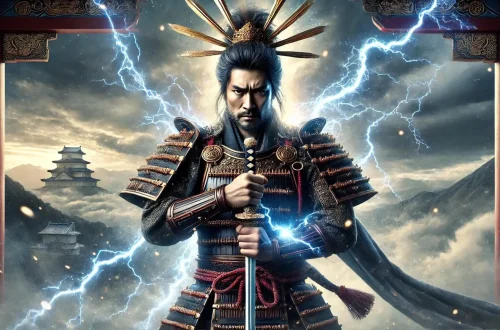
Raijin and Fujin: Thunder & Wind Gods in Japanese Mythology
Raijin and Fujin are Japan’s thunder and wind gods. They shake the sky with storms, lightning, and roaring winds.
Introduction to Raijin and Fujin
Raijin beats his drums to make thunder, while Fujin opens his bag to release powerful gusts of wind. These gods appear in Japanese myths, temples, and even modern art.
Many people see Raijin throwing lightning like arrows, giving him a link to archery. Their wild energy shows both danger and protection, making them important in Japan’s culture and beliefs.
This story takes you into their world of storms, power, and legends that still inspire today.
Learn more about Japanese mythology:
- Japanese Mythology Gods: Explore the Pantheon
- Hachiman: God of War in Japanese Mythology
- Yamato Takeru: Japan’s Legendary Folk Hero
Birth and Family of the Thunder and Wind Gods

Raijin and Fujin, twin gods of thunder and wind, trace their origin to the Shinto creation myth. Their parents Izanagi and Izanami form the divine pair who bring the Japanese islands and many deities into existence.
During the birth of the fire god Kagutsuchi, Izanami suffers fatal injuries and dies, sending Izanagi into the underworld, Yomi, to retrieve her.
While in Yomi, Izanagi sees Izanami’s decaying corpse. Disturbed, he flees. From Izanami’s body parts emerge several powerful kami, including the Yakusanoikazuchi—the eight thunder spirits—which combine into Raijin, the thunder god.
Fujin, the wind god, also comes into being at that time—or through the escape of oni when Izanagi seals Yomi’s entrance, letting wind and storm spirits loose into the world.
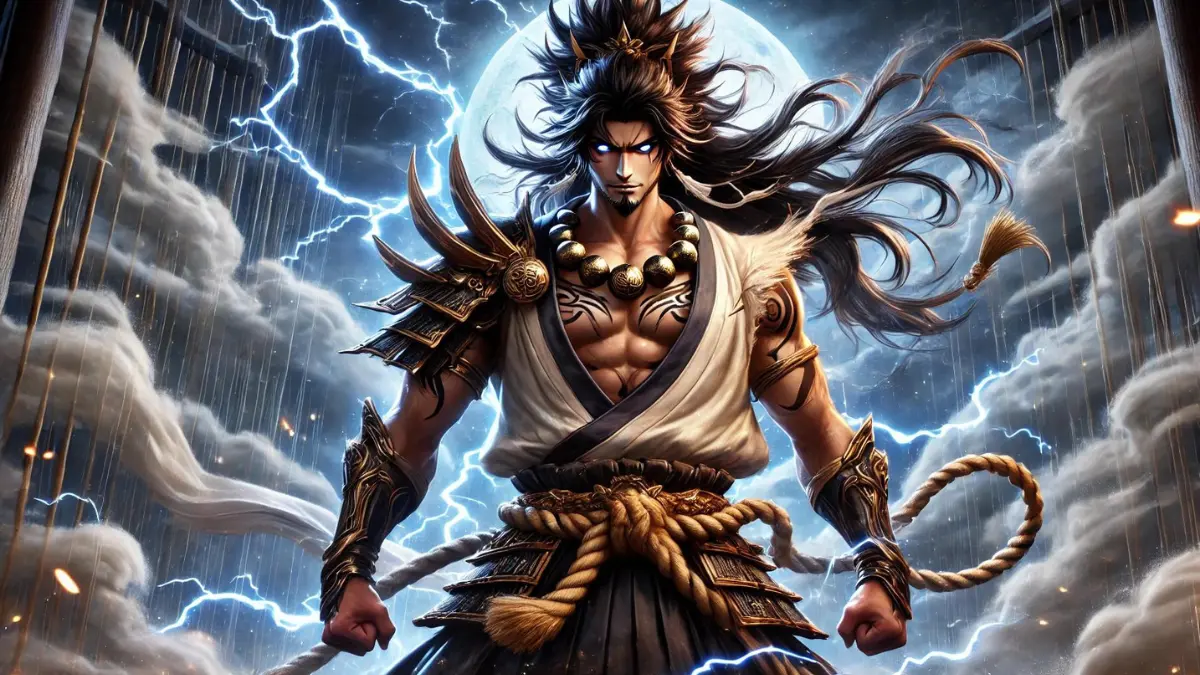
Raijin and Fujin appear as siblings among other major gods like Amaterasu (sun), Tsukuyomi (moon), Susanoo (storms), and fire‑god Kagutsuchi, all children of Izanami and Izanagi as recorded in Kojiki and Nihon Shoki.
In early Buddhist‑influenced tales, the pair represent fierce oni or storm spirits who oppose Buddha and then transform into protective deities through spiritual conversion.
These gods emerge at the creation of order from chaos. Izanagi and Izanami stand at the beginning of a world shaped by storms. Raijin and Fujin take roles over thunder and wind. This deep origin underscores their power and presence in Shinto, Buddhism and folklore. Their roots in grief and chaos give rise to gods who shape rain, wind, storms, and justice in stories told across centuries.
What Raijin and Fujin Look Like
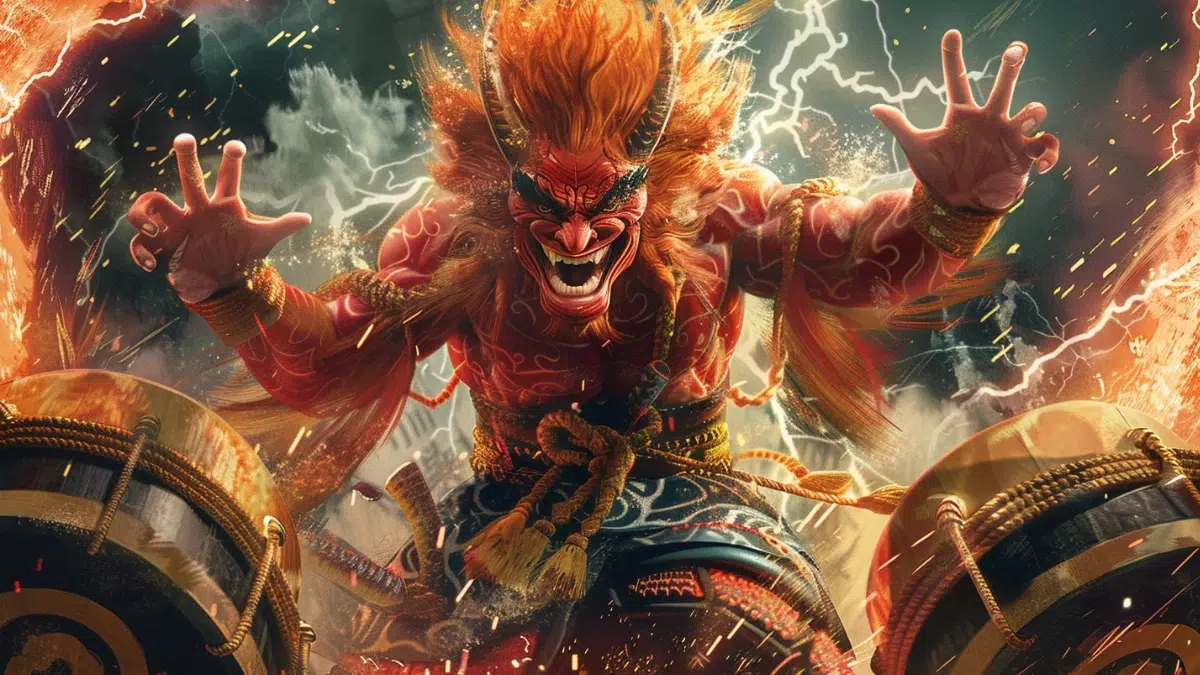
Raijin and Fujin have striking and fierce appearances that show their power over storms and wind.
Raijin, the thunder god, has bright red skin, sharp claws, and wild hair that stands up like flames. He often appears with three fingers on each hand, which represent the past, present, and future. Raijin surrounds himself with drums, each marked with a tomoe swirl, which he beats to create thunder. His fierce face often carries a wide, toothy grin, giving him a fearsome but playful look.
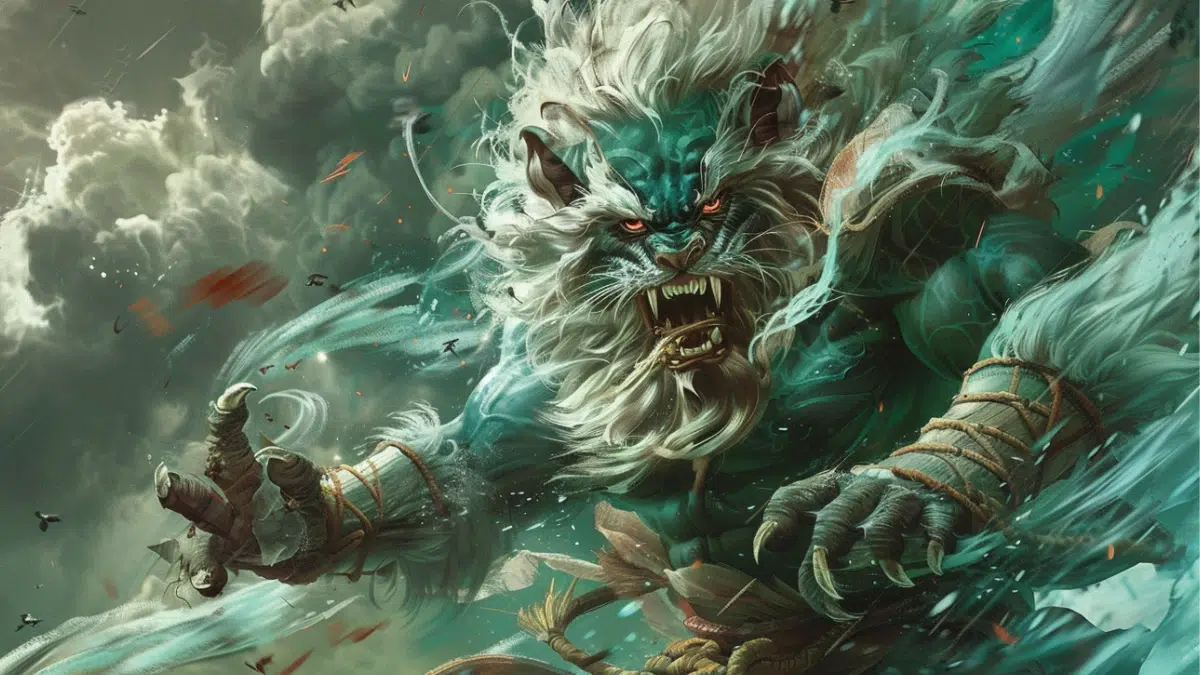
Fujin, the wind god, looks quite different.
He has green or blue skin, messy white hair, and sharp teeth. Fujin carries a giant bag over his shoulders filled with wind. When he opens the bag, he releases powerful gusts and storms. He usually wears a tiger-skin loincloth, adding to his wild, untamed style. His face sometimes appears animal-like, with bat-like ears or monkey-like features, showing his link to chaotic natural forces.
Together, these gods often appear in Japanese art as fearsome guardians.
They stand side by side above temple gates, especially at Kaminarimon (“Thunder Gate”) in Tokyo’s Sensō-ji Temple. Their images also appear at Sanjūsangen-dō Temple in Kyoto, where detailed statues show them ready to unleash storms. These depictions remind people of their strength and their role in protecting sacred places.
Their bold colours, fierce faces, and dramatic poses leave a lasting impression. They look both dangerous and protective, fitting for gods who control forces that can bring both destruction and renewal.
Raijin and Fujin’s Role in History and Myth

Raijin and Fujin hold an important place in Japanese history, myth, and culture. As gods of thunder and wind, they control storms, protect temples, and appear in key events that shape Japan’s identity.
Mongol invasions of Japan
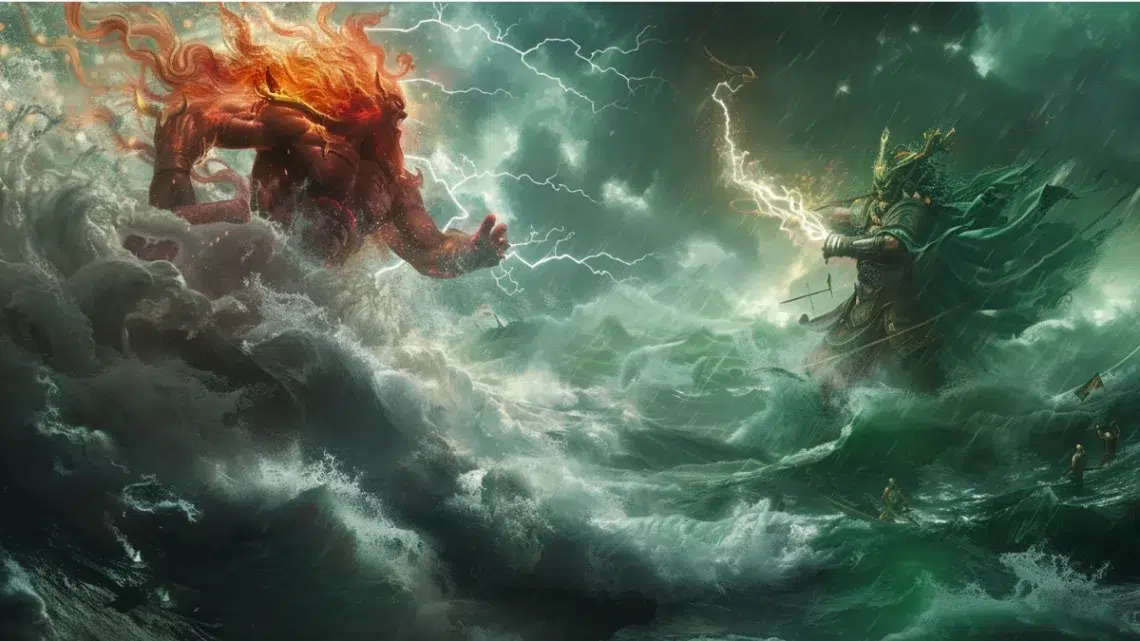
One famous story links them to the Mongol invasions of Japan in 1274 and 1281. When Mongol fleets attack, fierce storms destroy their ships. Many believe Raijin and Fujin send these tempests, protecting Japan.
These “divine winds,” or kamikaze, become symbols of divine favour and national defence.
Raijin also earns respect as a rain-bringer. Farmers pray to him for rainfall, knowing his thunder signals water for crops.
Fujin, meanwhile, helps guide seasonal winds that support farming and travel. Their combined power connects them to nature’s cycle of growth and renewal.
Art and Religion
Art and religion cement their legacy. They stand as guardians at temple gates, such as Tokyo’s Kaminarimon at Sensō-ji Temple, warning evil spirits to stay away. Their statues also appear in Kyoto’s Sanjūsangen-dō Temple, where they flank Buddhist icons.
These roles show their transformation from feared storm demons into protectors of holy spaces.
Japanese Folklore
Their influence spreads beyond religion. In Japanese folklore, Raijin’s lightning sometimes appears as “arrows from the sky,” echoing archery imagery. Children also hear tales about hiding their belly buttons so Raijin won’t strike them with lightning, blending myth with playful warnings.
Today, they appear in tattoos, anime, video games, and pop culture, from Street Fighter’s Akuma drawing inspiration from their design to countless artistic works. Their lasting presence shows how Raijin and Fujin embody the raw power of nature, balanced by their protective role over Japan.
Myths of Japan’s Thunder and Wind Gods

Birth from Izanami’s Corpse
Raijin and Fujin come from Japan’s earliest creation myths. When the goddess Izanami dies after giving birth to the fire god Kagutsuchi, her body lies in the underworld, Yomi. From her decaying form, several new gods emerge.
Thunder rumbles, and from this chaos, Raijin is born, striking his drums to announce his arrival. Fujin, the god of wind, also appears, either escaping from Yomi alongside Raijin or forming from swirling storms released during Izanagi’s desperate flight.
Their birth links storms to death and renewal, showing how destruction can lead to new forces. This story explains why thunder and wind feel wild and dangerous but also bring rain, growth, and balance. It roots Raijin and Fujin deeply in nature’s cycle. Their fierce energy reflects the untamed power of Japan’s weather and its ties to life and death in Shinto belief.
Raijin’s Capture by Sugaru
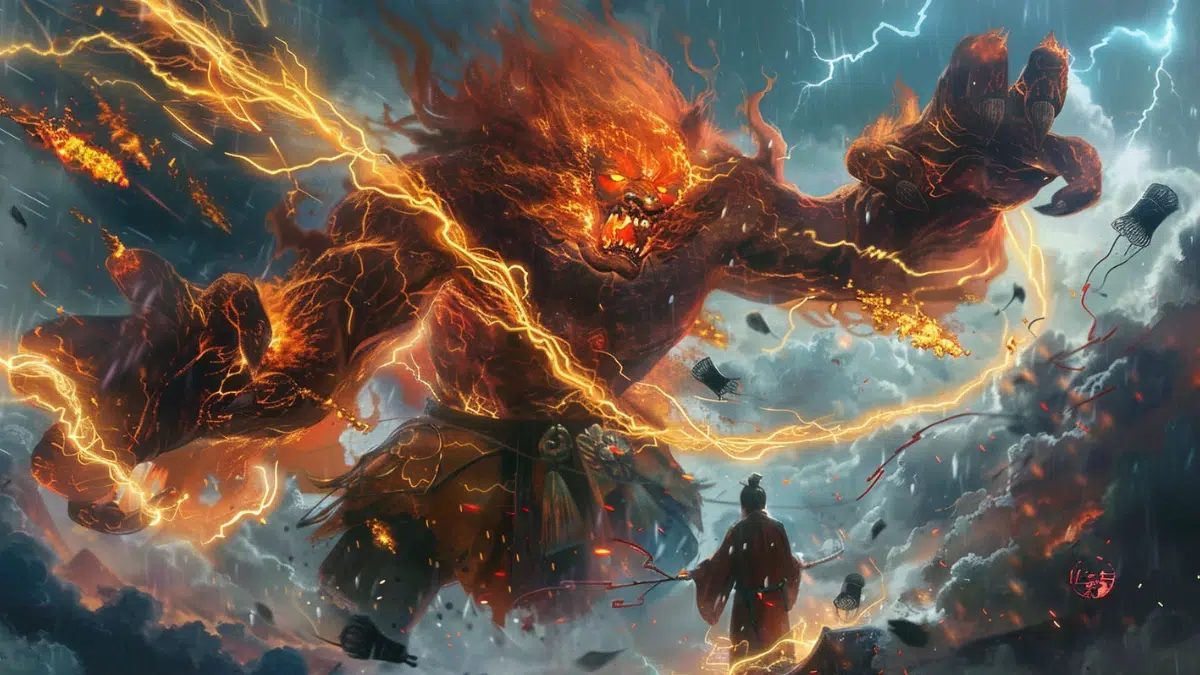
One famous tale tells how Raijin once causes endless storms, frightening villages and ruining crops. People pray to Buddhist monks for help. A monk named Sugaru sets out to confront Raijin. He chants powerful sutras and, with spiritual strength, binds Raijin in chains. Raijin struggles but cannot break free from the monk’s prayers.
Sugaru then presents Raijin to the Buddha, who orders the god to stop his destruction. Raijin obeys and promises to use his power to protect rather than harm. This myth shows how Buddhism blends with Shinto belief, turning a feared storm demon into a guardian.
After this story, Raijin often appears guarding temples alongside Fujin. It explains why their statues stand at temple gates today, not as threats but as defenders. The myth also shows how faith and discipline can tame even the wildest forces of nature.
The Divine Winds and Mongol Invasions
During the 13th century, Mongol fleets sail to invade Japan. In 1274 and again in 1281, their massive armies approach the coast. As the ships draw near, sudden, violent storms strike. Fierce winds and lightning tear apart the fleets, sinking ships and scattering survivors.
Many believe Raijin hurls thunderbolts while Fujin unleashes deadly gales, saving Japan from conquest. These storms become known as kamikaze, meaning “divine wind.” They inspire the belief that Japan’s gods protect the nation from foreign threats.
This myth strengthens Raijin and Fujin’s roles as defenders and connects natural disasters to divine intervention. It also shapes Japanese identity, turning weather events into proof of divine favour. Even centuries later, the story of the kamikaze links these storm gods to patriotism and national pride.
Interesting Facts About Raijin and Fujin

Raijin and Fujin hold fascinating roles in Japanese culture beyond their myths. Their influence reaches daily life, art, and even playful traditions.
- Tale about hiding belly buttons during storms – parents tell children to cover their stomachs because Raijin might eat their belly buttons when thunder roars. This fun superstition teaches kids to respect storms while linking daily life to myth.
- Raijin’s lightning connection to archery – some tales describe his thunderbolts as “lightning arrows,” fired from the heavens. This detail blends his storm power with archery symbolism, highlighting his precision and fierce strength.
- Fujin has deep historical roots linked to the Silk Road – his design resembles the Greek wind god Boreas and the Central Asian god Wardo. As Buddhism spreads to Japan, Fujin’s image evolves, merging foreign art styles into Japanese culture.
- Raijin is linked to the raijū – a mythical thunder beast that sleeps in people’s navels during storms. When Raijin strikes, lightning wakes it, explaining thunder’s sudden crash.
- Both gods appear in anime, video games, and modern art – their dramatic look inspires characters in Naruto, Street Fighter, and even Pokémon’s Thundurus.
Conclusion
Raijin and Fujin remain two of Japan’s most powerful and lasting gods. As thunder and wind deities, they shape storms, protect temples, and inspire awe through myth and art.
Their stories from fierce births in the underworld to saving Japan from the Mongol fleets show their strength and importance.
Their myths remind us that power can protect as well as destroy. Raijin and Fujin continue to stand as symbols of strength, balance, and awe—proof that ancient stories still shape how people see storms and the world around them.