Primordial Gods: Raw Forces Before the Titans and Olympians
The Primordial Gods stand at the very beginning of Greek mythology. They represent the raw forces of nature and existence before any Olympian gods appear. These beings are not like Zeus, Athena, or Apollo.
Instead, they embody the sky, the earth, the sea, darkness, and even the void itself.
Introduction to the Primordial Gods
Primordial gods are the first gods in mythology. They come before the well-known gods like Zeus or Odin. These gods often represent basic forces of nature or the universe—like night, sky, earth, sea, or chaos.
They are not always human-like and sometimes don’t have clear shapes or stories. But they create or give birth to other gods, titans, and creatures.
So, “primordial” means “first” or “earliest,” and these gods form the foundation of the world in many myths.
The Primordials shape the universe.
From them come the Titans, who later give rise to the Olympian gods.
Each one symbolizes a basic element of creation: Chaos sparks existence, Gaia forms the earth, Uranus spreads across the sky, Nyx cloaks the world in night, Erebus fills it with shadow, Pontus covers it with water, and Tartarus becomes the deep abyss.
Unlike later gods, they rarely take human form or appear in stories of love and war. Instead, they exist as cosmic forces. Their power creates everything else, laying the foundation for all myths that follow.
Understanding these ancient beings gives insight into how the Greeks saw their world. They imagined the universe as alive, ruled by forces far older and stronger than even the Olympians. The Primordial Gods stand as timeless symbols of creation itself, forever linked to the start of existence and the roots of mythology.
Chaos: The Beginning
In Greek mythology, Chaos marks the very start of existence. Chaos is not disorder. Instead, it is a vast, empty void, a gap where nothing yet exists. From this endless space, all things begin. The ancient poet Hesiod describes Chaos as the first of all beings, the silent source from which the universe unfolds.
To ancient Greeks, the universe does not appear suddenly. It grows step by step, starting with nothingness, then gaining earth, sky, sea, and life. Chaos is that first step, a reminder that before anything else, there is emptiness waiting to be filled.
The name “Chaos” later comes to mean confusion or disorder in modern language. However, in its original sense, Chaos is simply the void. It is the still and silent beginning that gives birth to the powerful forces shaping the cosmos.
It is not a god with a body but a boundless presence.
From this void, the first Primordial beings emerge:
- Gaia, the Earth
- Tartarus, the Abyss
- Nyx, the Night
- Erebus, the Darkness
- Eros, Force of Attraction
Each one takes on a domain of existence, slowly building the world we know.
Eros is sometimes included among the first primordial beings in Greek mythology, depending on the source.
In Hesiod’s Theogony (one of the earliest accounts), Eros appears right after Chaos, Gaia (Earth), and Tartarus.
However, this Eros is not the playful god of love often seen later (like the Roman Cupid). Instead, he is a cosmic force of attraction, the power that brings elements together and sparks creation.
Primordial Gaia: Mother Earth
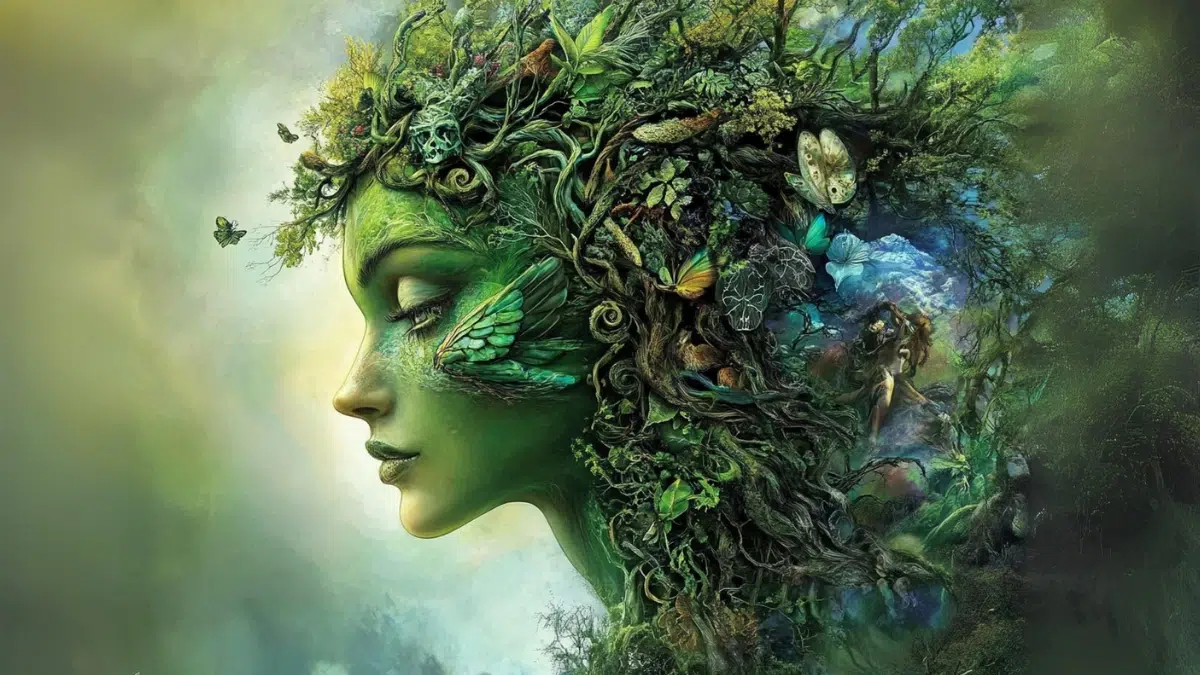
After Chaos, Gaia emerges as the solid ground beneath everything.
She is the Earth itself, firm, nurturing, and eternal.
In Greek mythology, Gaia is not just land and soil but is the living force that supports all life. She gives form to the world, creating mountains, plains, and fertile ground where plants and creatures can grow.
Gaia becomes the mother of many powerful beings.
She gives birth to Uranus (the Sky), who later becomes her partner, covering her like a vast dome. Together, they produce the Titans, who go on to shape the next age of gods.
Gaia also bears the Giants and sea gods, showing her role as the source of both land and life.
Her importance goes beyond creation. Gaia often acts as a guiding force in myths. She helps Zeus in his battle against the Titans by advising him and offering support. This shows that even when the Olympians rise, Gaia remains a deep, ancient power linked to the very foundation of existence.
In art and literature, Gaia is sometimes shown as a maternal figure, half rising from the ground, symbolizing her connection to nature. She represents stability, growth, and the enduring power of the Earth itself. To the Greeks, she is both a goddess and the planet beneath their feet—a reminder that life depends on the ground they walk on.
Primordial Uranus: The Sky

Uranus is the personification of the sky and Gaia’s firstborn son.
He stretches above her as a vast, endless dome, covering the Earth and enclosing the world.
Together, Gaia and Uranus form the foundation of existence: Earth below and Sky above. This union creates balance, linking the land with the heavens.
Uranus becomes Gaia’s partner and father of the:
- Titans
- Cyclopes (One-eyed giants)
- Hecatoncheires (Hundred -Handed Giants)
- Aphrodite (Born from Uranus’ severed parts and sea foam, in one version)
However, Uranus fears his powerful children. To keep control, he pushes them deep into Gaia’s womb, trapping them within the Earth. His cruelty causes Gaia great pain and sparks her plan for revenge.
Gaia urges her Titan son Cronus to act. She gives him a sickle, and together they ambush Uranus. Cronus strikes his father, separating sky from earth and ending Uranus’s rule. From his blood fall new beings, including the Furies and Giants. This act also frees Gaia’s trapped children and begins the age of the Titans.
Uranus rarely appears in myths after this, but his role is crucial. His defeat marks one of the first great shifts of power among the gods. It also sets a pattern in Greek mythology where younger generations overthrow older ones.
As the sky itself, Uranus symbolizes the vast unknown above, eternal yet distant. His story shows how even cosmic forces can be challenged, making way for change and the rise of new powers.
Primordial Nyx: Night Itself
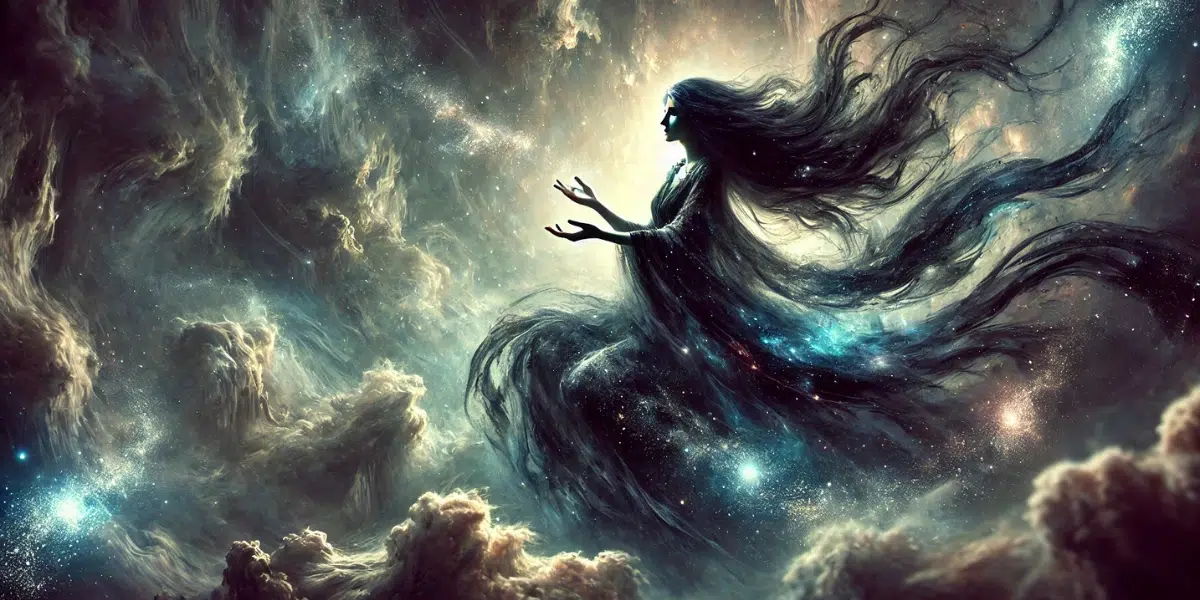
Nyx is the goddess and personification of night, one of the most mysterious of the Primordial gods. She rises from Chaos alongside Gaia and Erebus, cloaking the world in darkness. Nyx does not simply represent nighttime—she embodies the deep, endless night that existed before the sun, stars, and moon.
Even Zeus fears her. Ancient poets describe Nyx as a power so old and vast that not even the king of the Olympians dares to confront her. Her presence shows the Greeks’ belief that darkness is an ancient and unstoppable force, older than the sky or sea.
Nyx’s offspring reflect her eerie nature. She gives birth to powerful and shadowy beings, many without a partner:
-
Hypnos (Sleep)
-
Thanatos (Death)
- Moros (Doom)
-
Eris (Strife)
-
The Fates (control the thread of life)
-
Geras (Old Age)
-
Oneiroi (Dream spirits)
Children (with Erebus, God of Darkness):
-
Aether (Upper Sky and Light) – treated more like a cosmic force
-
Hemera (Day)
Each of these children ties back to forces linked with destiny, endings, and the balance of the universe.
Nyx lives in a shadowy realm at the edge of the world. Hesiod places her home near Tartarus, far beyond the reach of mortals and gods alike. She travels across the sky each night, veiling the world in her dark cloak, while her daughter Hemera (Day) follows behind her.
Nyx’s mythic presence shows how the Greeks saw night: not only as the absence of light but as an ancient, living power that commands respect. Her role makes her one of the most awe-inspiring figures among the Primordial gods.
Primordial Erebus: Shadow and Darkness
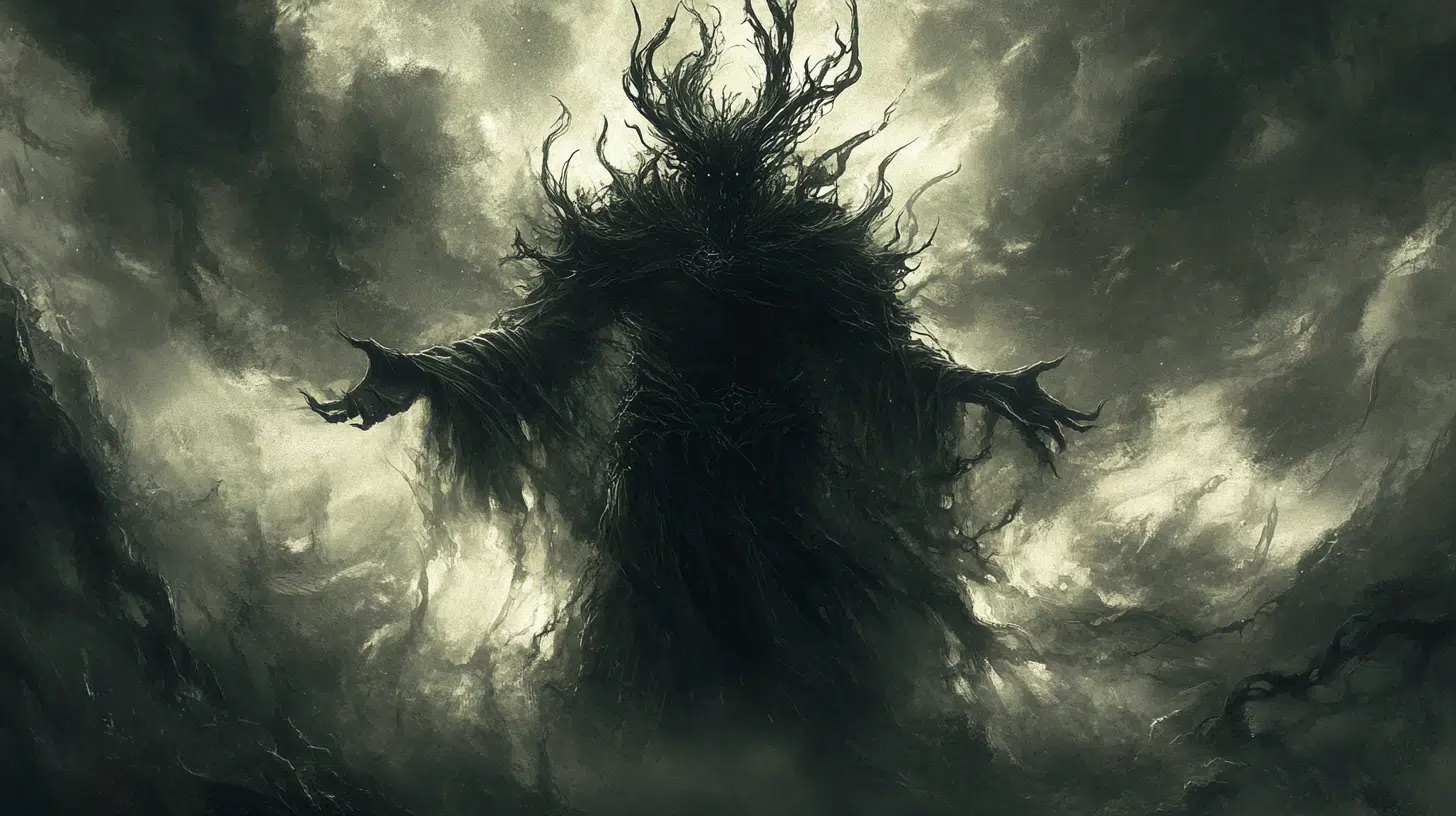
Erebus is the personification of deep darkness and shadow, often tied closely to Nyx. He represents the dim, misty gloom between the world of the living and the Underworld. While Nyx covers the world in night, Erebus fills it with shadow, creating the eerie stillness that comes before dawn or after sunset.
Erebus emerges from Chaos alongside Nyx, and together they bring forth several important deities.
From their union come Aether (Light) and Hemera (Day), who balance their darkness with brightness. This pairing shows how the Greeks saw light and dark as inseparable, each giving meaning to the other.
In myths, Erebus is often linked to the borders of Hades. Poets describe the souls of the dead passing through Erebus on their way to the Underworld. This makes him a figure closely tied to death and the unknown. His presence surrounds the path between life and the afterlife, marking the shift from one state of being to another.
Though Erebus rarely appears in direct stories, his influence is constant. He symbolizes twilight, shadowed places, and the unseen spaces between worlds. His role reminds us of the Greeks’ deep respect for balance: without darkness, light loses its meaning, and without shadow, brightness has no contrast.
Erebus is not a god of evil or fear. Instead, he embodies the quiet and stillness that frame the universe. His power lies in the unseen, reminding mortals and gods alike that creation begins not only with earth and sky but also with the shadows in between.
Other Key Primordial Figures
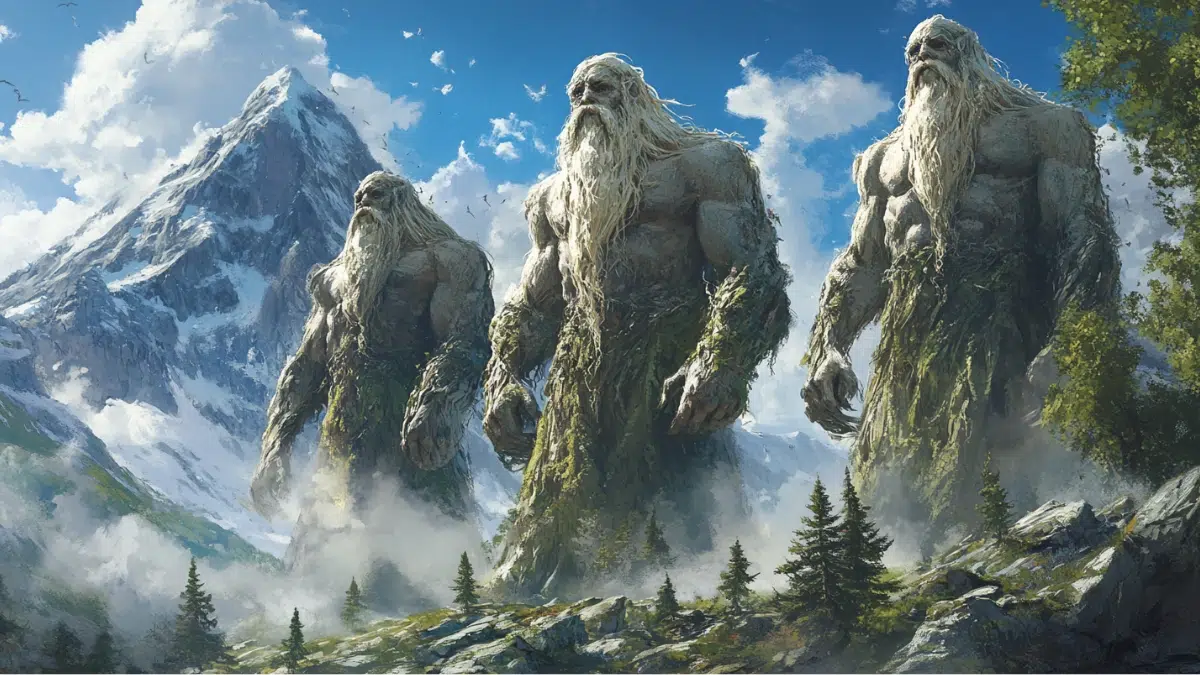
The Primordial gods include several other powerful forces that shape the universe:
Ourea (Mountains)
Ourea represents the towering mountains that rise from Gaia. These deities symbolize strength, permanence, and the wild places untouched by humans. Unlike other primordial forces, the Ourea are often seen as numerous, with each mountain linked to a distinct spirit. They stand as barriers, landmarks, and sacred sites in many myths, connecting earth and sky while remaining rooted in nature.
Aether (Light)
Aether is the personification of the bright upper air that gods breathe. He represents pure light and the glowing atmosphere above the clouds. Born from Nyx (Night) and Erebus (Darkness), Aether contrasts his parents by bringing brightness to the world. He symbolizes clarity and the heavens, standing for the divine realm above mortal reach.
Hemera (Day)
Hemera is the goddess of daylight and sister to Aether. Each day, she chases her mother Nyx across the sky, replacing night with day. Their endless cycle reflects how the Greeks explained the natural rhythm of time, blending myth with daily life.
Pontus (Sea)
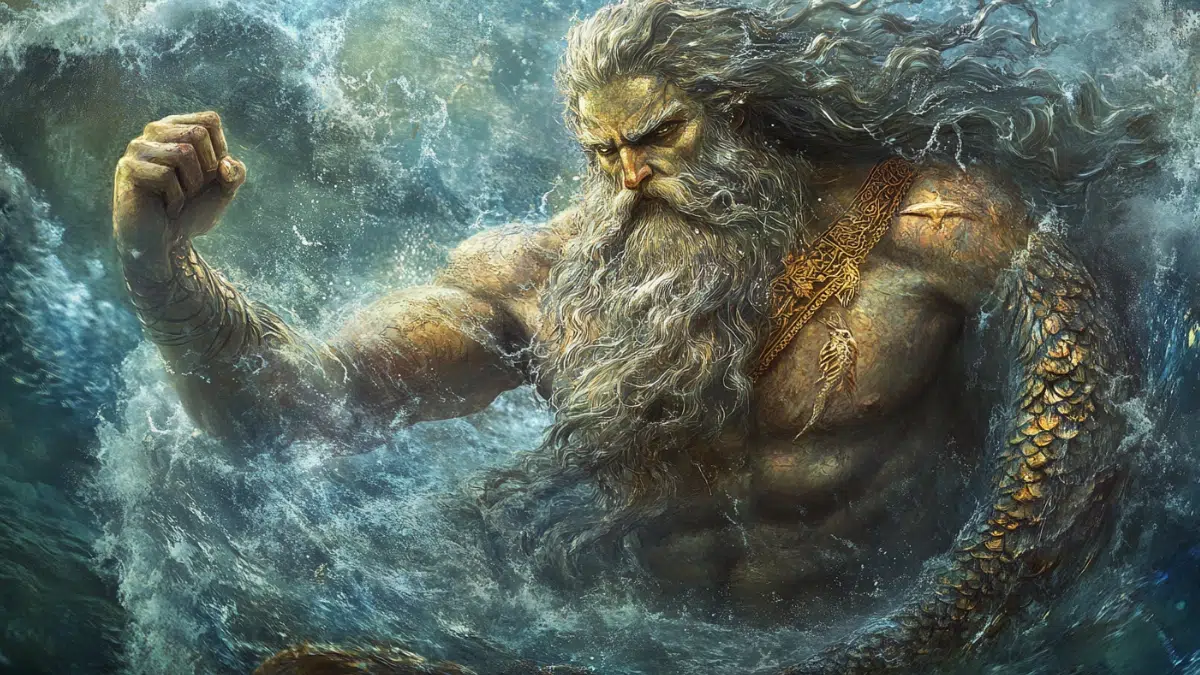
Pontus is the primordial god of the sea. He emerges directly from Gaia and represents the vast, ancient waters that cover the earth. From Pontus come sea deities and creatures, including Nereus, the “Old Man of the Sea,” and the ancestors of countless ocean gods who later appear in Greek myth.
Children (with Gaia):
-
Nereus (The Old Man of the Sea)
-
Thaumas (God of sea wonders)
-
Phorcys (Sea god with crab-claw arms)
-
Ceto (Goddess of Sea Monsters)
-
Eurybia (Goddess of mastery over the sea’s forces)
Tartarus (The Abyss)
Tartarus is both a deity and a place. As a being, he personifies the deepest, most terrifying pit of the Underworld. As a location, Tartarus serves as a prison for defeated gods like the Titans after their war with Zeus. It is darker and deeper than even Hades, a realm where only the most cursed are cast.
These figures show that the Greeks saw their world as alive with forces: earth, sea, sky, light, darkness, and time itself. Before Olympians ruled, these primal beings shaped the foundation of all creation.
Interesting Lesser-Known Facts
The Primordial gods hold many fascinating details that often go unnoticed:
-
Eros Was Among the First: In Hesiod’s Theogony, Eros appears right after Chaos. Unlike the later playful god of love, this early Eros embodies the force of attraction that binds the universe together.
-
Nyx’s Power Over Zeus: Even the mighty Zeus avoids conflict with Nyx. Ancient texts show her as one of the few beings he respects and fears, highlighting her immense, untouchable power.
-
Gaia’s Role in Prophecy: Gaia often speaks through oracles, offering guidance even to Olympian gods. Her deep connection to the earth links her with divine knowledge and foresight.
-
Ourea’s Sacred Nature: Mountains tied to Ourea become holy places where gods meet mortals. Many myths use mountain peaks as settings for divine encounters, symbolizing closeness to the heavens.
-
Aether’s Divine Air: The Greeks believed mortals breathe common air, but gods inhale Aether, a pure and bright upper air beyond human reach. This separates mortal and divine realms.
-
Tartarus as Both Place and Being: Rarely do myths treat Tartarus as a god, yet Hesiod lists him among the first Primordials. This duality blurs the line between deity and domain.
These details reveal that the Primordial gods are not only the building blocks of existence but also sources of deep mystery. Their abstract, powerful forms set them apart from later deities, making them timeless forces that stand at the very roots of Greek mythology.
Conclusion
The Primordial Gods stand as the foundation of Greek mythology.
They are not like the Olympians, who rule with human-like traits and personalities.
Instead, they embody the raw forces of existence—earth, sky, sea, light, darkness, and even the void itself. From Chaos to Gaia, Nyx, Erebus, Pontus, Ourea, and Tartarus, each one represents a piece of the universe itself.
These ancient beings pave the way for the Titans and, later, the Olympian gods. Their influence never fades, shaping the world long after their time in the myths ends. Even Zeus shows respect and caution toward the oldest among them, proving that their power remains beyond challenge.