Oya: Storm Goddess in Yoruba Mythology
Goddess Oya is more than just a figure in African tales with links to storms and lightning. She’s known for her role as a protector and guide, helping people through life and death changes.
Oya is a symbol of change and nature’s strength, vital among African deities. Apart from being a warrior, she guides souls to the next life and guards the cemetery gates.
Oya’s reach goes beyond Nigeria, Benin, and Togo, touching Brazil and the Caribbean. She goes by names like Iansã and Ayaba there.
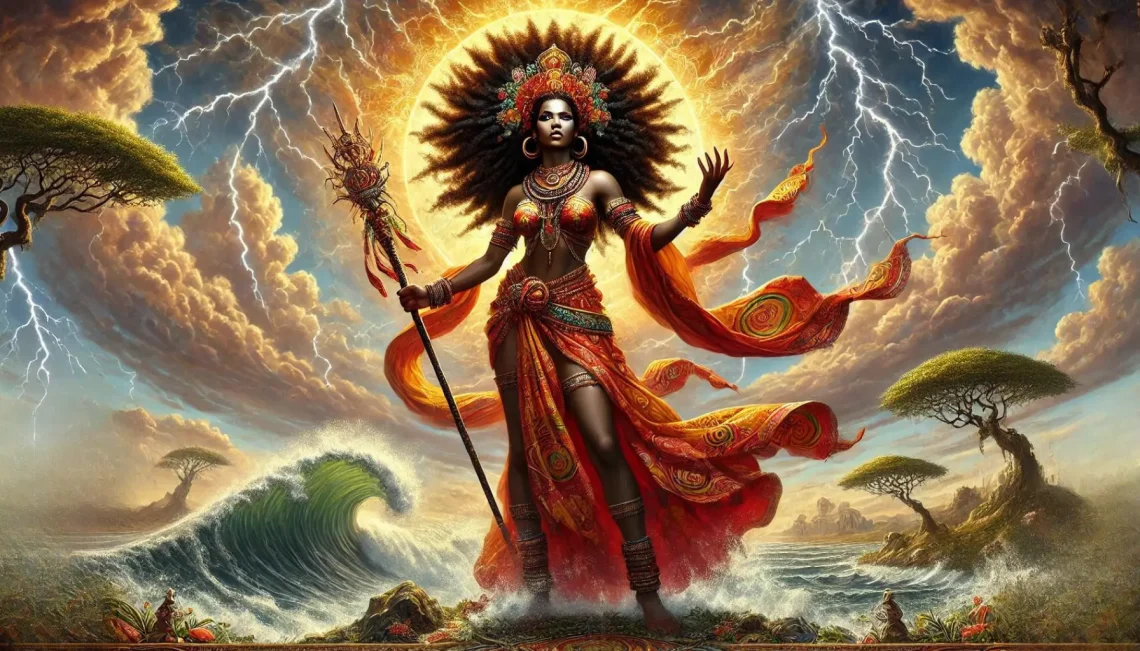
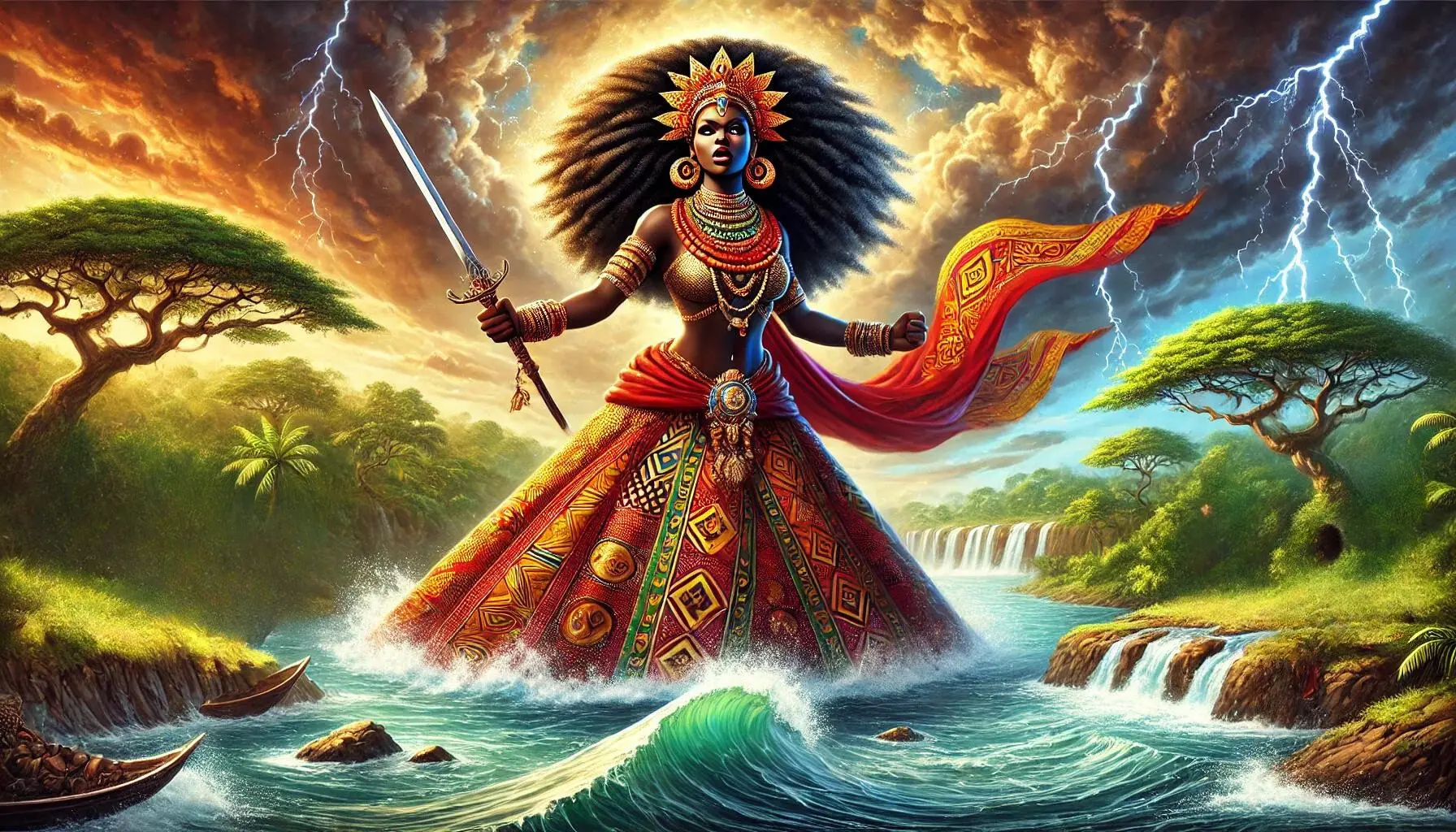
In artwork, Oya is often shown as a strong black woman with untamed hair. This represents her link with change and bravery. Depicted as a storm goddess and a fierce warrior, she carries a sword or a machete along with a fan. Such imagery shows her power over life and death, and the ability to renew the Earth with rain. It further solidifies her spiritual strength.
In old and new stories, Oya remains a symbol of change, bravery, and care. Her legacy endures as a beacon of strength and transformation.
Origins and Mythological Journey
Oya’s story starts in the Yoruba faith, from what’s now Nigeria, Benin, and Togo. She showed great power on Earth, becoming a goddess in the Yoruba tales. From being a human to a deity, she shows how powerful and timeless her story is.
In the Yoruba mythos, Oya is tied to the Niger River, a sign of life for many. She’s the goddess of storms, death, and life anew. Oya is seen as a strong, beautiful black woman in her myths, with symbols showing her might.
The slave trade moved Oya’s worship to the Americas. Yoruba people took their beliefs, making Oya part of the African diaspora. In Brazil, she’s Iansã in Candomblé. In Cuba, they know her as Ochún in Santería. This shows how she adapts and continues to be celebrated.
Oya helps link Diaspora communities through her worship today. Her roles in festivals and worldwide celebrations are key. They show she’s vital in keeping the cultural and spiritual line within the diaspora.
In art, music, and culture, Oya’s stories still move and inspire people. She’s a symbol of pushing through hardship, with power over storms and change. Even beyond the Yoruba faith, her influence is deep within the diaspora’s spiritual life.
Symbolism and Attributes of Goddess Oya
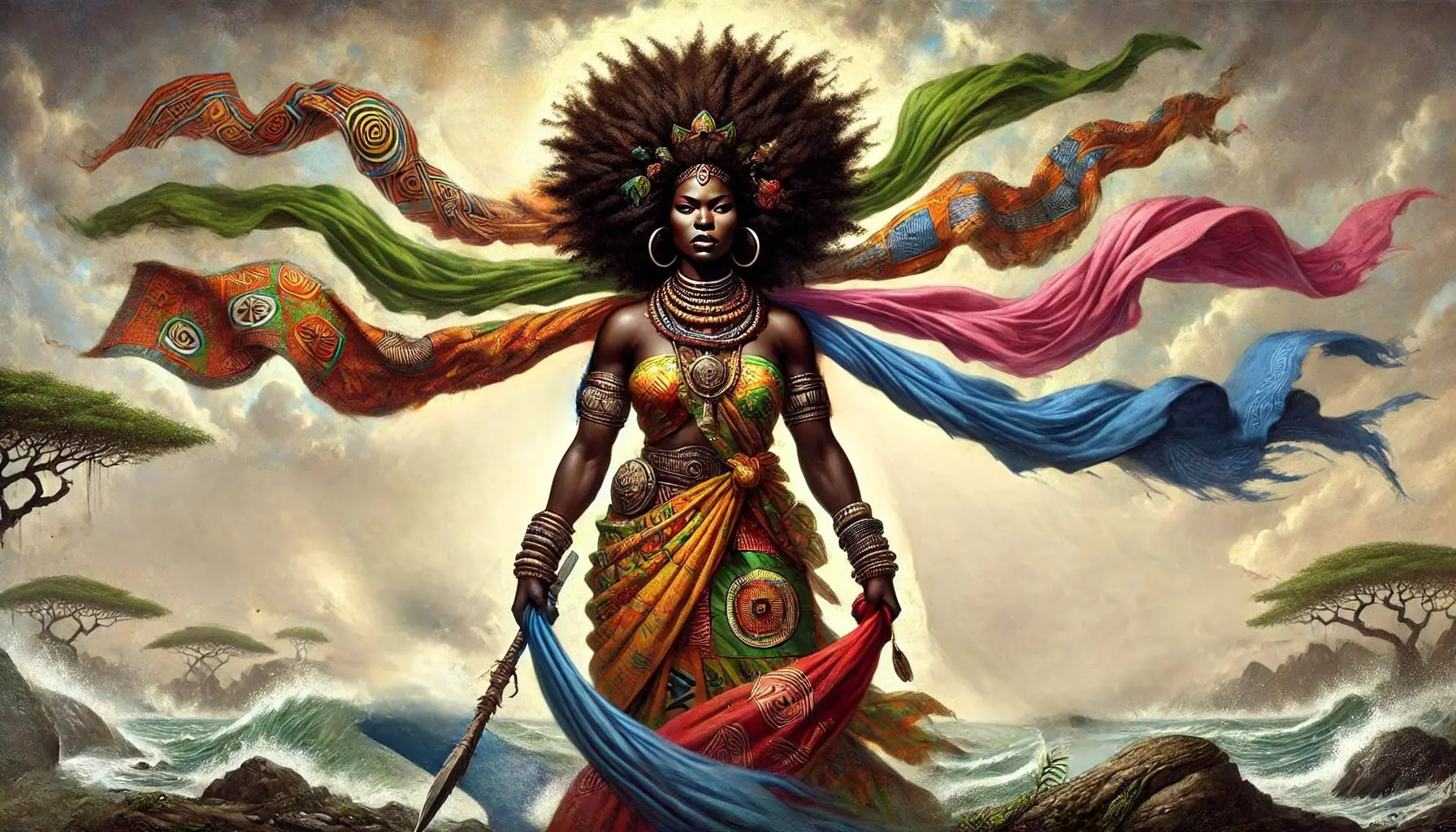
Oya is very important across West Africa, Brazil, and the Caribbean. She is a transformational deity with a fierce nature. She is known for protecting others. The symbolism of Oya shows she is a warrior goddess. She makes change and watches over the moving of souls. Oy often has wild hair. She carries a sword or machete. This shows the powerful forces of nature she represents.
In the Yoruba religion, Oya is key during the Egungun festival in Nigeria. She’s vital in Afro-centric beliefs. Oya is the orisha of wind, storms, lightning, death, and rebirth. These show her role as a transformational deity. She is shown with a fly whisk. She’s linked with whirlwinds and the colour wine.
Oya’s influence grew in the Americas through slavery. She became part of the Santeria religion in Cuba. In Brazil and Haiti’s Feast of the Ancestors, both respect her. In Santeria, she is very powerful. She’s shown as a stunning yet fierce black woman. This shows her divine attributes and Afro-centric spirituality.
Oya is seen in art, music, and books across the African Diaspora. She guards the cemetery gates. This shows her duty with souls going to the afterlife. Oya is important for life and death, and for protecting and destroying. This made her a big figure in African myths and religion today.
Ruling over the marketplace in Santeria, Oya shows her many sides and powers. She has links to the river Niger. Oya wears nine different coloured scarves for her lost kids. This adds to the symbolism of Oya. Altogether, these show her as a strong figure who can change things.
Goddess Oya in the Yoruba Religion
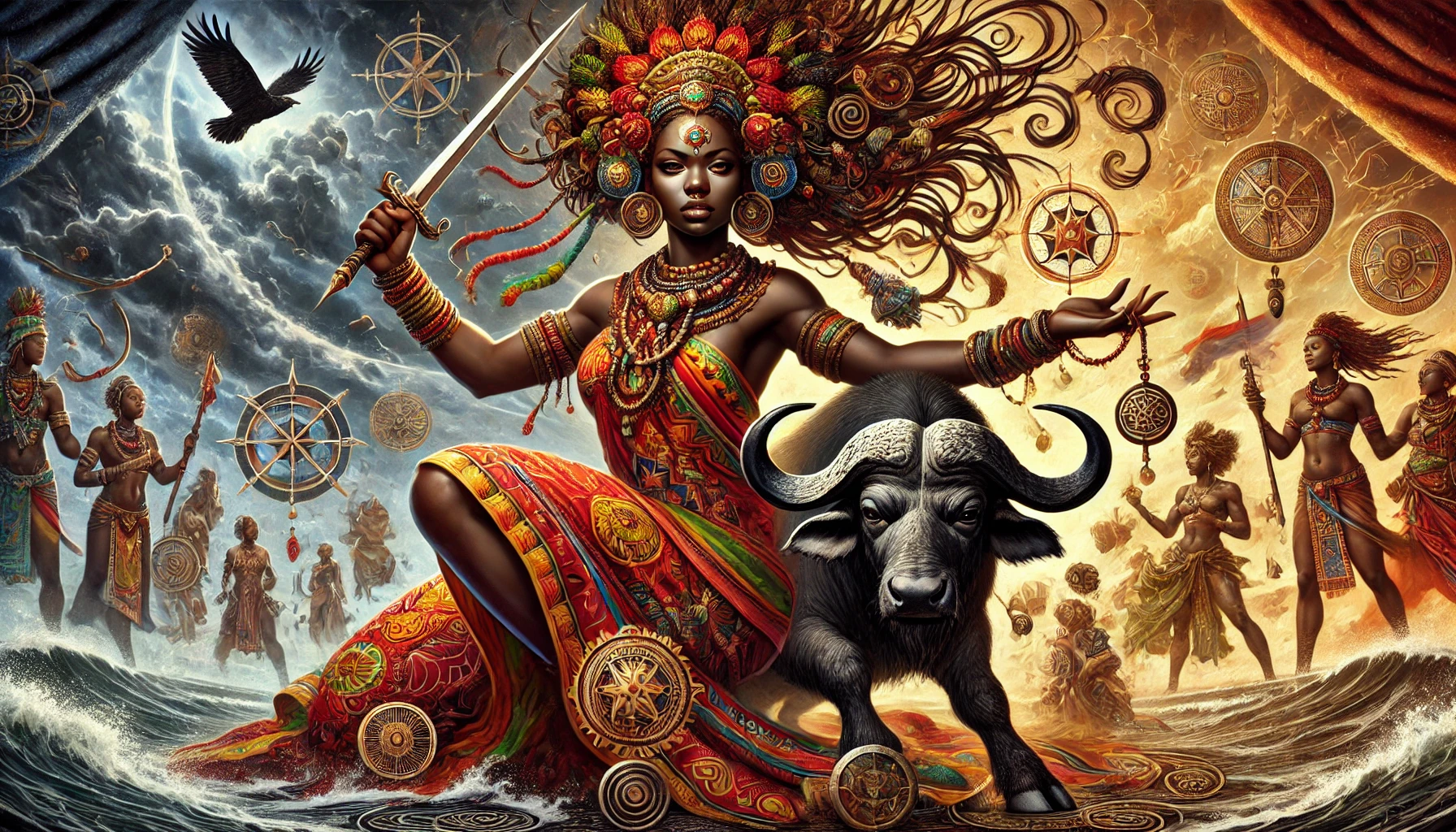
Oya is a key deity in Yoruba beliefs, tied to the Niger River. She stands for the power of winds. They bring both growth and storm.
In Brazil and Cuba, the worship of this Orisha grew because of the slave trade. Special events like Brazil’s Feast of the Ancestors honour Oya. In Cuba, there’s the Imbolu festival too. These events show her lasting impact.
She’s often shown as a strong woman, holding a sword and buffalo horns. These symbols mean she’s a warrior for fertility. Her influence can be felt in many forms of art, music, and literature.
In Nigeria, there’s the Egungun festival every August to honour Oya. It lasts for weeks, celebrating her connection with spirits. She helps with change and personal growth, like the wind she represents.
Some believe that Oya was living as a human in Nigeria’s Kwara state. There she was named Ọya Ìyáńsàn-án or “mother of nine”. She was later deified for her powers. Today, she’s still very important in Santeria. She links followers to the spiritual side of the natural world and life’s complexities.
Goddess Oya’s Role in Death and Rebirth
Oya, sometimes known as Oiá, is a key figure in many regions like West Africa, Brazil, and the Caribbean. She plays a big role in the Yoruba religion. Here, she’s seen as the guard of the place between life and death. She’s a powerful warrior too. Oya watches over the cemetery gates, making sure souls move smoothly from one world to the next.
In Nigeria, the Egungun festival honours Oya and starts in August. It lasts for many weeks, showing how important she is. Through this festival, she leads souls to the afterlife. She does this job with respect, making sure the spiritual world stays in balance.
Her reach isn’t just in one place though. In Brazil and Haiti, people celebrate the Feast of the Ancestors on November 2nd. In Cuba, there’s the Imbolu feast on February 2nd. These celebrations show her role in the cycle of life and rebirth. They honour her and mark life’s ongoing change and growth under her watch.
In Brazil, Oya’s link to death and rebirth is deeply embedded in music and stories. She’s a deity of storms and lightning, bringing both destruction and new beginnings. This balance is key in the Santeria faith, where she is a powerful symbol.
Oya is often seen with a sword or machete in her hand. These show her ability to cut through challenges, and her control over things like the wind and lightning. This shows her strength as a warrior, but also her caring side as a guardian. Her number is nine, marking a sad part of her story where she lost all her children at birth.
Oya is central to the process of moving between life and death. As a guide to the afterlife, her work ensures a peaceful journey for the departed.
Goddess Oya’s Relationships with Other Orishas
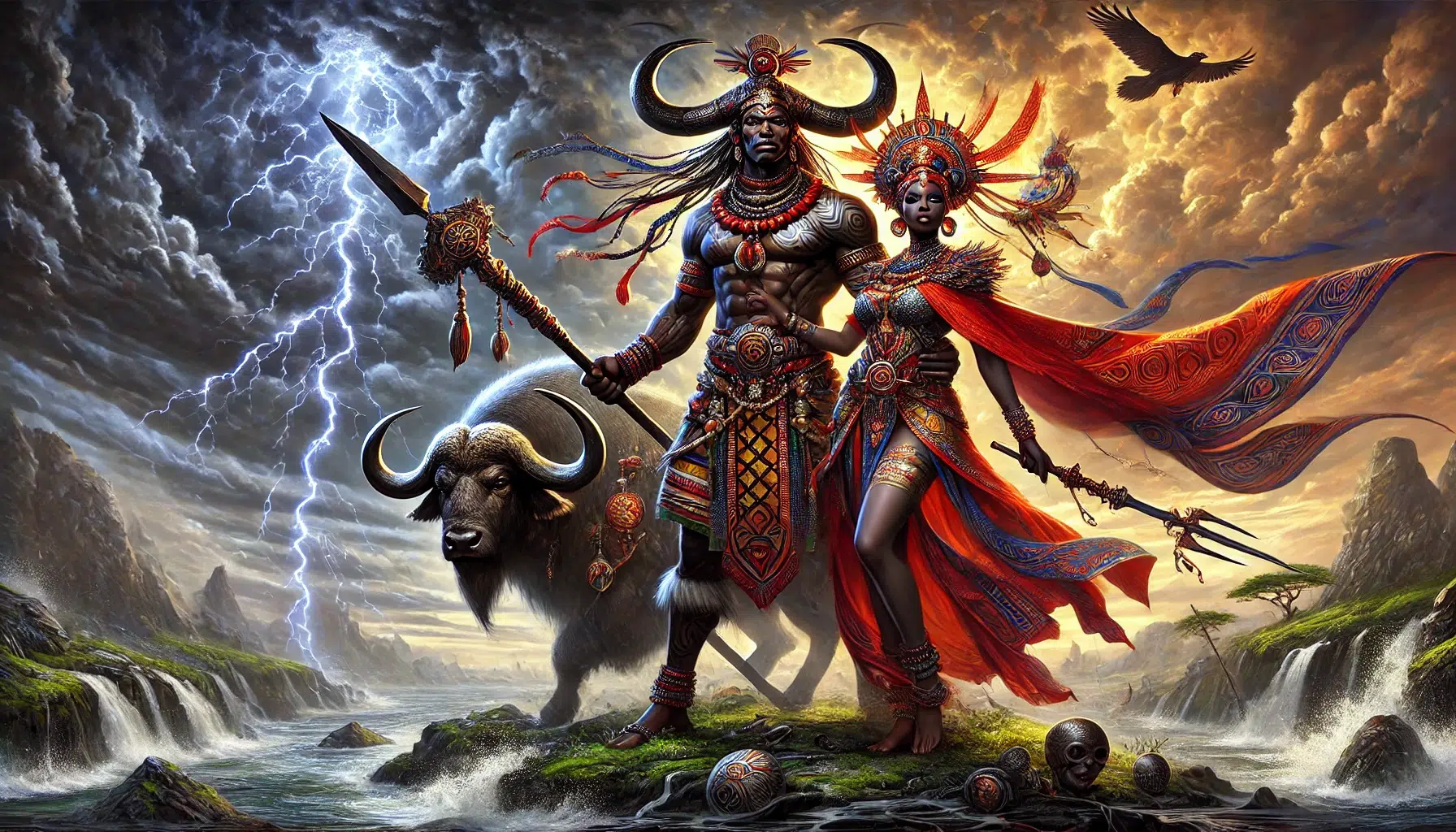
Oya plays a big part in the African pantheon’s stories. She has respect in many places, including West Africa, Brazil, and the Caribbean. Her link with Shango, the god of thunder, is key to who she is. Together, they show the powerful bond between thunder and wind. This is a strong example of the deep spiritual connections in their stories.
Oya also has ties to Ogun, the god of iron and war. Their marriage shows the mix of battle and the change storms bring. It highlights how she influences both fighting and the natural world.
Oya has a special friendship with Oshun, the goddess of love and fertility. Their bond shows a peaceful mix of creation and destruction. Oshun being Oya’s confidant deepens the story of the orishas. It shows the strong friendships that hold their community together.
As the slave trade happened, Oya’s worship would reach places like Cuba, Brazil, and Haiti. She blends with local cultures, like with Catholic saints. Through Santeria, African and Christian beliefs combine, showing her lasting influence.
Festivals like the Feast of the Ancestors and the Oya Egungun festival celebrate Oya. These events highlight her role in protecting her followers. They also honor the complex web of divinity she’s part of.
Rituals and Offerings Dedicated to Goddess Oya
Devotees of Oya, an Orisha from West African roots, honour her through special practices. They offer traditional items like eggplant and dark chocolate. They believe these gifts connect them deeply with Oya and win her favor.
Rituals in Oya’s name celebrate her power to bring change. In Brazil and Haiti, celebrations happen on November 2nd at the Feast of the Ancestors. Cuba’s Santeria dedicates February 2nd to Oya during the Imbolu feast. Nigeria’s Egungun festival also honours her as a protector and guide.
Honouring Oya often involves rites at places like markets and graveyards, symbolizing change and transformation. These rituals focus not only on food and drink offerings but also on actions to honor the spirit world. They highlight Oya’s domain over winds and change.
Oya’s veneration links many African and diasporic cultures, making her a central figure. Through practices, her devotees feel a deep spiritual connection. This fosters a strong bond with Oya and an appreciation of her powerful and caring nature.
Cultural Influences and Worship Practices
Oya’s influence reaches through many cultures in the African Diaspora. It not only touches spiritual life but also art, music, and literature. In places like Brazil and Cuba, she is Iansã and Ochún. This shows her strong effect in those areas through religious blending.
In West Africa, Brazil, and the Caribbean, Oya’s worship has mixed old stories with new practices. Various festivals celebrate her power. For example, in Brazil, there’s the Feast of the Ancestors. In Haiti and Brazil, people celebrate the Imbolu festival. In Nigeria, they have the Egungun festival. These events show how important Oya is across many regions.
Oya’s presence is also clear in art and stories. Whether in Yorùbá myths or modern stories like Marvel Comics, Oya is a symbol of change and power. Her story continues in many ways, making her important in both old and new times.
Besides, people honour Oya in several religious traditions like Umbanda, Quimbanda, and Haitian Vodou. They pray to her for her control over the wind, storms, and lightning. They offer her food and have ceremonies to ask for her help.
Oya is well-known in many festivals and ceremonies. She shows up in different ways, connecting various cultures. This shows how her story and influence continue. It keeps her important in today’s spiritual world.
Conclusion
Oya is a special figure in the Yoruba beliefs, known for her fierce spirit, protection, and change. She is the goddess of storms, deaths, and new beginnings.
With names like Iansã and Ayaba, she enjoys widespread love in many places, including West Africa and the Americas.
Her story and fame spread during the slave trade, especially in Brazil and Cuba. Festivals like the Feast of the Ancestors honour her there. Her presence is also felt in Nigeria’s Egungun festival, showcasing her spirit of change and bravery.
Oya embodies both creative and destructive power, representing femininity.
Her stories use symbols like windmills and fire, showing her many sides. People honour her with food and drinks, keeping her legacy alive as a protector and warrior in African belief.