
Orion Greek Mythology Hunter to Constellation
Orion, a famous figure in Greek mythology, is known as a giant huntsman.
His adventures and tragic fate led to his place among the stars as the constellation Orion. Different myths tell of his origins.
Some say he is the son of Poseidon and Euryale, while others mention a miraculous birth involving Zeus, Poseidon, and Hermes.
Orion is known for his amazing hunting skills. His stories include his blinding by King Oenopion, his friendship with the goddess Artemis, and his death by a scorpion sent by Gaia.
Orion’s legacy lives on in ancient stories and in the night sky, symbolizing the eternal hunter.
Birth Stories of Orion Greek Mythology
Orion’s birth and parentage have varied and fascinating myths in Greek mythology, reflecting diverse traditions and storytelling.
One prominent version involves the gods Zeus, Poseidon, and Hermes. These gods visit a poor farmer named Hyrieus in Boeotia. To reward Hyrieus for his hospitality, they grant him a wish.
Hyrieus wishes for a son, so the gods urinate on a bullhide and bury it in the earth. From this act, Orion was born, symbolizing a miraculous and divine conception.
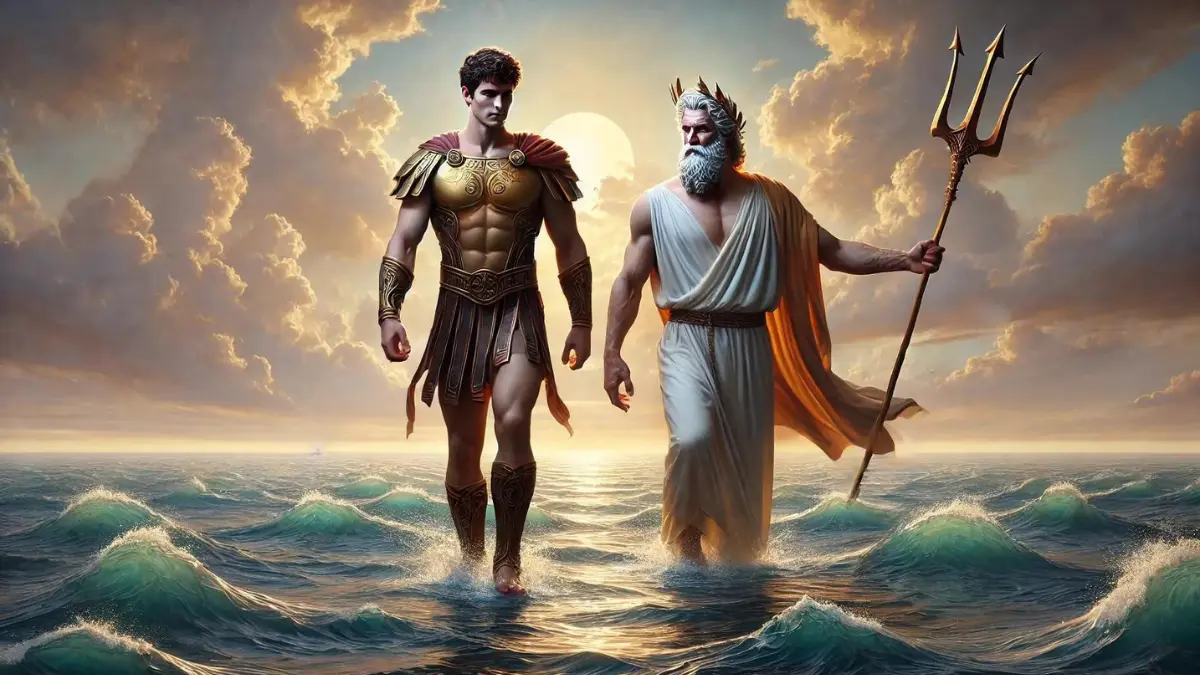
Another tradition holds that Orion was the son of Poseidon and Euryale, a daughter of King Minos of Crete. This version emphasizes his divine heritage. Orion’s ability to walk on water comes from his father Poseidon. This power made him an extraordinary figure in Greek mythology.
Orion’s fascinating birth stories add to his legendary status, making him a beloved character in ancient tales and the night sky.
Birth Abilities
Orion’s birth from the bullhide stands out for its symbolic elements. The gods urinating on the hide and burying it in the earth symbolizes fertility and divine intervention. This myth also explains Orion’s name, which some sources suggest comes from the Greek word for urine, ourios.
From his father Poseidon, Orion inherits the ability to walk on water. This trait underscores his extraordinary nature and connects him to the sea. This unique ability allows him to travel effortlessly across waters. This enhances his reputation as a formidable hunter and adventurer.
Orion’s divine heritage and extraordinary abilities make him a fascinating character in Greek mythology. His stories highlight his unique connection to both the gods and nature. This ensures his place among the stars as a legendary figure.
Cultural Significance
Orion’s varied parentage and miraculous birth highlight the rich tapestry of Greek mythology. Multiple traditions often coexisted and evolved over time. His story reflects themes of divine favour, miraculous birth, and the extraordinary abilities bestowed upon heroes by the gods.
Orion’s legacy as a giant huntsman and his placement among the stars as a constellation continue to captivate and inspire. His story symbolizes the enduring power of myth and storytelling in human culture.
The rich details of Orion’s story, from his divine origins to his adventures, show the depth of Greek mythology. These tales continue to resonate, showing the timeless appeal of these ancient stories.
Major Myths and Adventures of Orion
Orion is a giant huntsman of extraordinary size and strength. He is a prominent figure in Greek mythology with a series of notable myths and adventures captivating audiences for centuries. His most popular myths Orion and Merope, friendship with Artemis and his death.
Orion and Merope
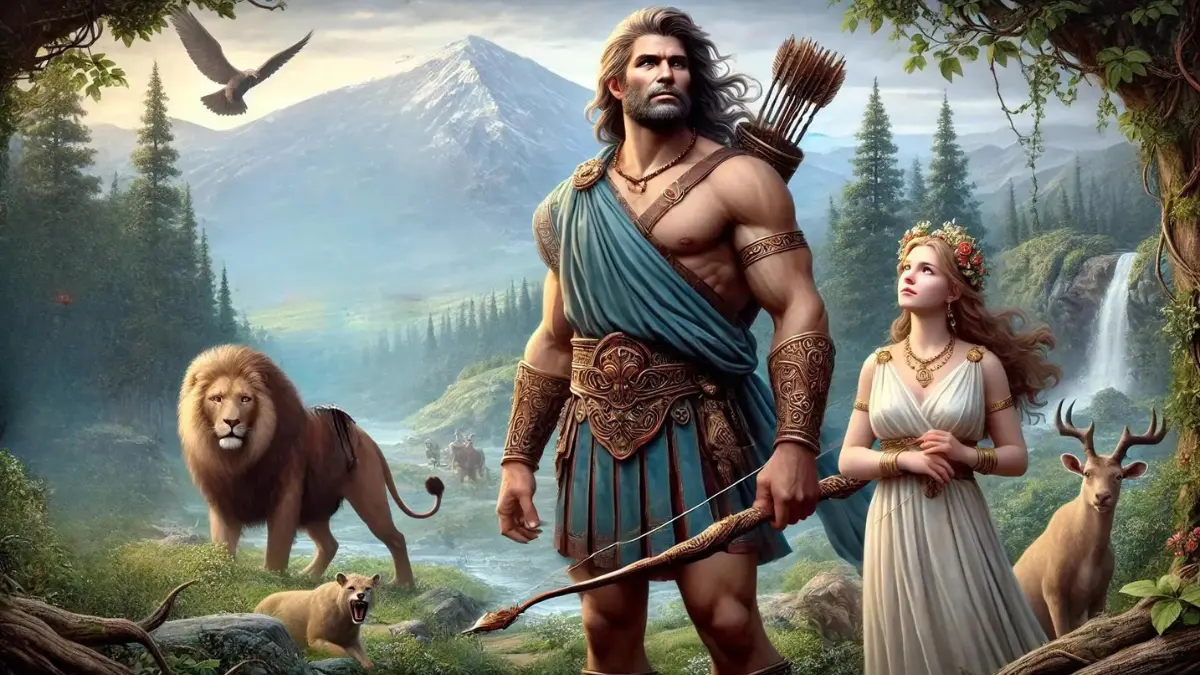
The myth of Orion and Merope is a notable episode in the life of Orion. Orion arrives on the island of Chios and falls in love with Merope, the daughter of King Oenopion.
To win her hand, Orion undertakes the task of ridding the island of wild beasts, showcasing his exceptional hunting skills. Despite his efforts, King Oenopion has no intention of allowing Orion to marry his daughter and continually postpones the marriage.
Frustrated by the delays, Orion takes matters into his own hands. In a moment of drunkenness, he rapes Merope. Enraged, Oenopion seeks retribution. With the assistance of Dionysus, god of wine, Oenopion put Orion into a deep sleep. He then blinds him, abandoning him on the shores of Chios.
Blinded and desperate, Orion learns that his sight could be restored if he travels to the eastern part of the earth and faces the rising sun.
Guided by the sound of hammering from Hephaestus’ forge, Orion makes his way to Lemnos. There, Hephaestus takes pity on him and provides his servant Cedalion as a guide.
Cedalion sits on Orion’s shoulders and directs him towards the East. As the sun god Helios rises, Orion’s sight is miraculously restored.
With his vision restored, Orion seeks revenge on Oenopion but is unable to find him, as the king had been hidden by his people.
This myth highlights Orion’s tragic flaws and the consequences of his actions. It weaves a tale of love, betrayal, and retribution that remains a poignant part of Greek mythology.
Friendship with Artemis
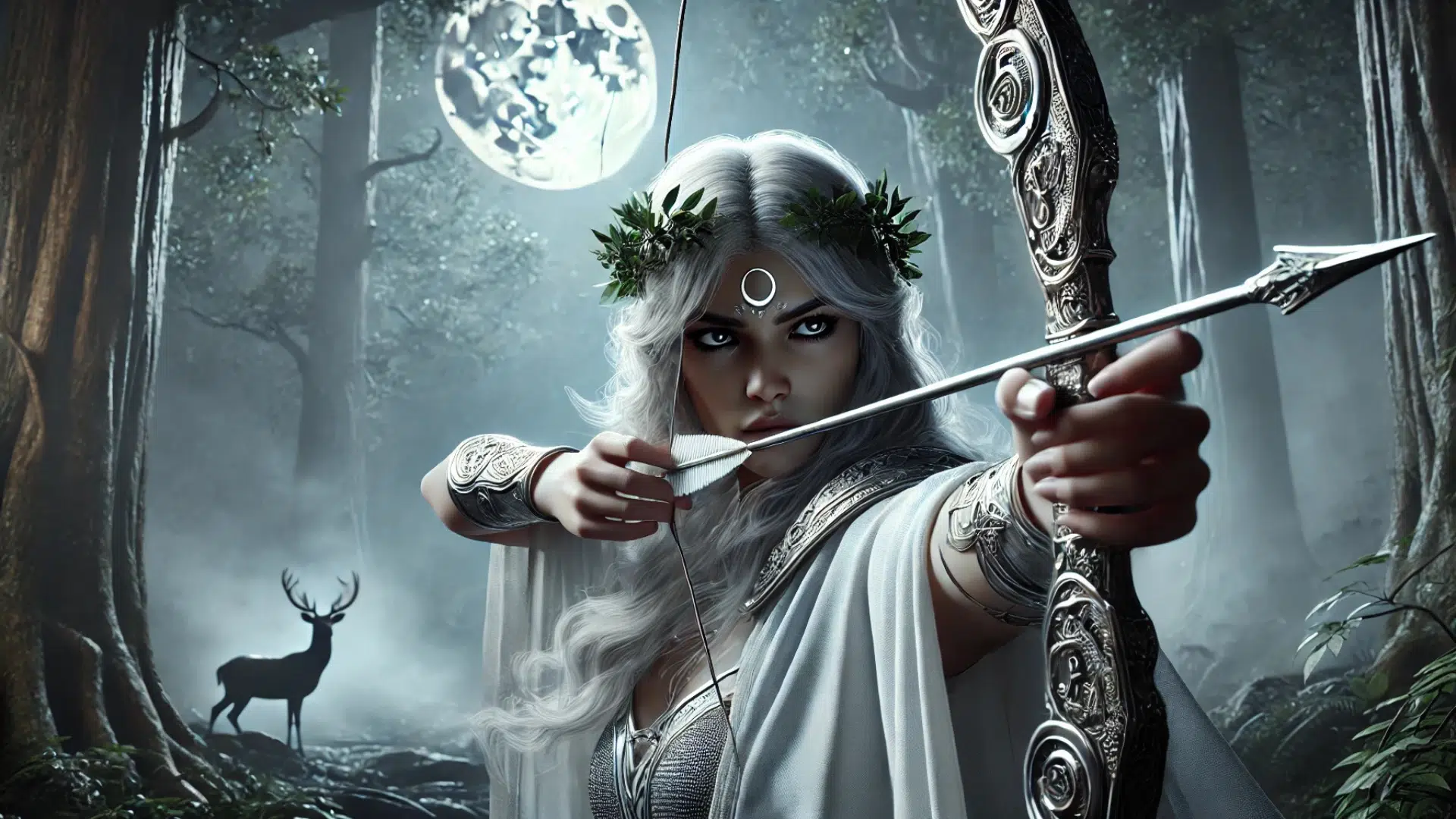
Orion’s relationship with Artemis, the goddess of the hunt, is one of the most intriguing aspects of his mythology. Their bond, rooted in their shared passion for hunting, includes camaraderie, rivalry, and tragedy.
Orion, known for his exceptional hunting skills, meets Artemis on the island of Crete. Artemis, an unparalleled huntress, finds a kindred spirit in Orion.
Their mutual love for the hunt and nature forges a strong connection. They often hunt together, forming a formidable team. Their partnership includes a friendly rivalry, with each trying to outdo the other in hunting.

The Boast and Gaia’s Wrath
One famous myth involves Orion’s boastful nature.
Orion is known for his strength and hunting skills. However, his pride led to his downfall.
Orion once boasted that he would hunt and kill every animal on Earth. This claim angered Gaia, the Earth goddess, who saw it as a threat to her domain. To punish Orion, Gaia sent a giant scorpion to stop him.
Despite Orion’s immense strength and skills, he could not defeat the scorpion. The creature’s deadly sting brought Orion to his knees. This battle highlights the dangers of hubris and disrespecting nature.
Orion’s boastful nature also shows his tragic flaw. He let pride cloud his judgement, leading to his demise. The scorpion, sent by Gaia, serves as a reminder of the power of nature and the consequences of arrogance.
Orion’s story continues to captivate audiences. His battle with the scorpion appears in many artworks and stories. The constellation Scorpius, representing the scorpion, forever chases Orion across the night sky. This eternal chase symbolizes the ongoing struggle between human pride and the forces of nature.
Apollo’s Jealousy

Another myth highlights Apollo’s jealousy.
Apollo, Artemis’s twin brother, disapproves of their close relationship. He fears it might compromise Artemis’s vow of chastity. To protect her honour, Apollo devises a cruel trick.
He challenges Artemis to prove her archery skills by shooting a distant target, which was actually Orion swimming in the ocean. Unaware of the deception, Artemis takes aim and fatally strikes Orion.
When she realizes what she had done, she was devastated.
Immortalization in the Stars
In both versions of the myth, Orion’s death deeply affects Artemis.
To honour him, Artemis asks Zeus to place Orion among the stars. Thus, Orion is immortalized as a constellation, visible in the night sky.
The myths of Orion and Artemis express themes of friendship, rivalry, and tragic fate. Their stories highlight the complexities of their relationship and the consequences of hubris and jealousy.
Orion’s immortalization as a constellation serves as a lasting tribute to his skills and the profound impact he had on the goddess of the hunt.
Transformation into a Constellation
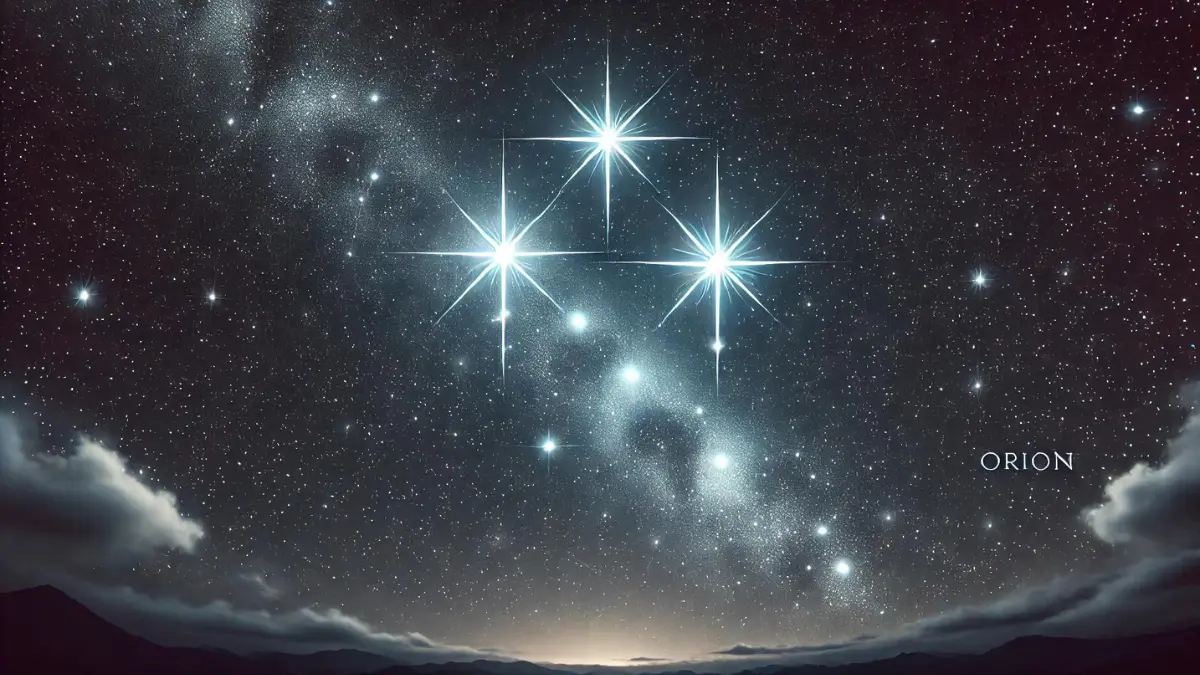
According to Greek mythology, Orion is a giant and a skilled hunter, often associated with the gods. His adventures and tragic death leads to his immortalization among the stars.
Orion’s prowess as a hunter and his close association with Artemis, the goddess of the hunt, are central to his legend.
His constellation often shows his club, lion’s skin, girdle, and sword, symbolizing his prowess as a hunter. Additionally, the constellation Scorpius, representing the scorpion that kills him, was placed in the sky to chase Orion forever.
Named after the giant huntsman Orion, it is visible worldwide and holds significant cultural and astronomical importance.
The constellation Orion stands out in the night sky with its distinctive hourglass shape, marked by some of the brightest stars. This shape makes Orion easily identifiable and a favourite among stargazers.
Orion’s Belt
The three stars of Orion’s Belt—Alnitak, Alnilam, and Mintaka—form a straight line that is a key feature of the constellation. These stars make it simple to spot Orion in the sky. The Belt also helps find other constellations, making it an essential guide for stargazers.
Betelgeuse, a red supergiant, marks Orion’s right shoulder. This star shines brightly and appears reddish, adding to Orion’s distinctive look.
Rigel, a blue supergiant, represents his left foot and is one of the brightest stars in the sky. Together with other stars, these points outline the figure of a hunter wielding a club and shield or bow.
Orion’s Outline
The stars in Orion create the image of a mighty hunter, adding to the constellation’s allure. This visual appeal and the brightness of its stars make Orion a prominent figure in the night sky. Stargazers and astronomers alike enjoy the beauty and significance of this constellation.
Orion’s easy-to-recognize shape and bright stars make it a central feature of the night sky. Its beauty and historical significance continue to inspire and fascinate people around the world.
Canis Major
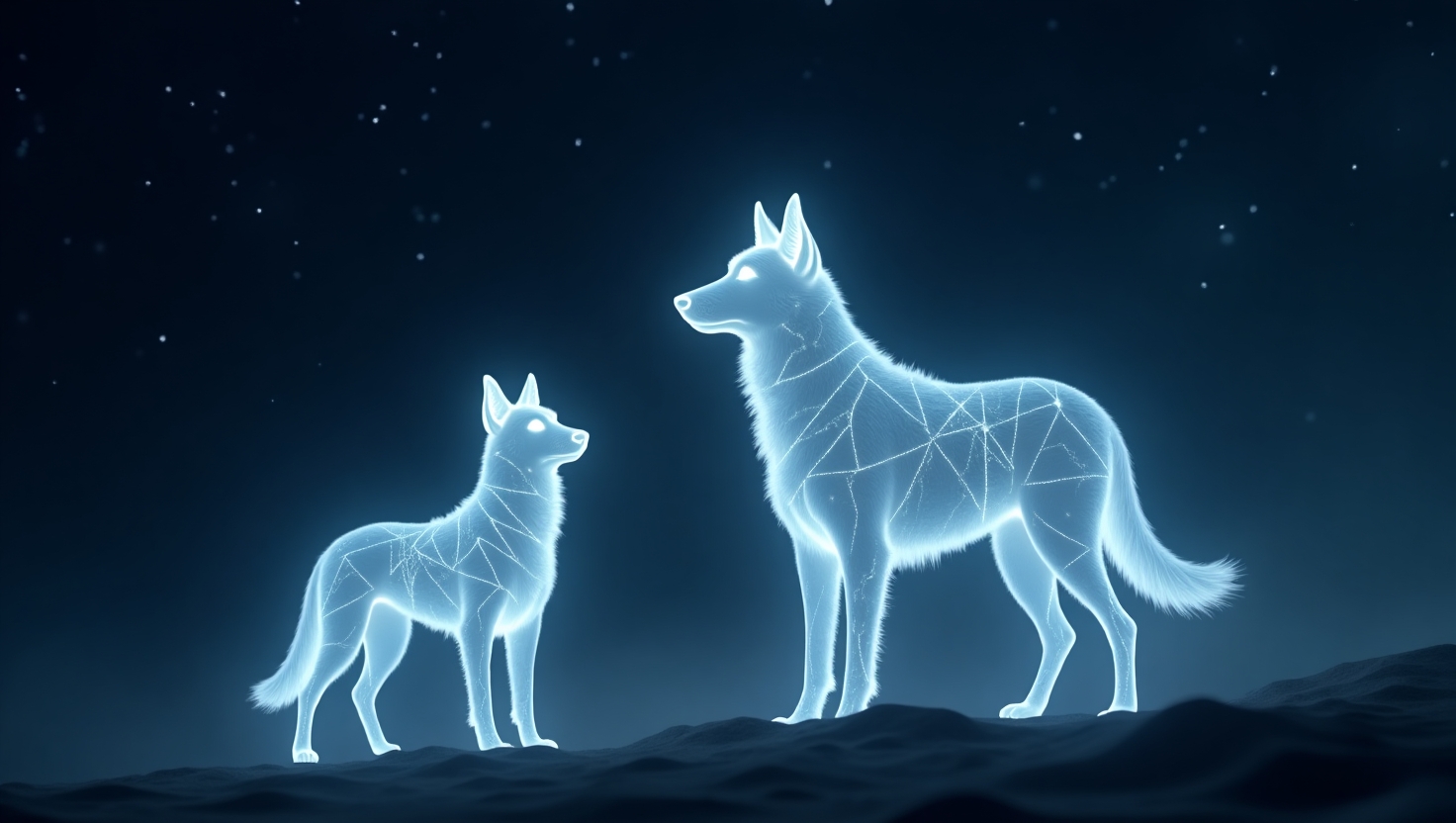
Canis Major, or the “Greater Dog,” is the more prominent of Orion’s two dogs.
This constellation is home to Sirius, the brightest star in the night sky, often referred to as the Dog Star. Sirius’s brilliance and proximity to Earth make it a key feature in the constellation.
Canis Major is depicted as leaping after Lepus, the hare, which cowers at Orion’s feet.
In some myths, Canis Major is identified as Laelaps, a dog so swift that no prey could escape it. Zeus honoured this incredible speed by placing Laelaps among the stars.
Canis Minor
Canis Minor, or the “Lesser Dog,” is a smaller and less conspicuous constellation compared to Canis Major.
It contains only two principal stars, with Procyon being the brightest.
The name Procyon means “before the dog,” indicating that it rises just before Sirius in the night sky.
Canis Minor is sometimes associated with Maera, one of the dogs of Icarus, who was placed in the sky to honour its loyalty after a tragic series of events involving Icarus and his daughter Erigone.
The constellations Canis Major and Canis Minor follow Orion across the sky, reflecting the enduring bond between the hunter and his faithful dogs.
Learn more about: Greek Myths About the Stars: Orion to Sagittarius
Symbolism of Orion Greek Mythology

Orion carries rich symbolism that spans different cultures and eras. Known for his unmatched hunting skills and adventures, Orion represents strength, bravery, and the human spirit’s relentless pursuit.
Orion’s myths often depict him as a formidable hunter with divine abilities. His stories involve themes of love, betrayal, and tragedy, reflecting the complexities of human nature.
Orion’s pursuit of the Pleiades and his battle with Scorpius, the scorpion that killed him, emphasize his role as a relentless and courageous figure.
Iconic Depictions
Artistic representations of Orion frequently show him wielding a club, wearing a lion’s skin, and carrying a sword and girdle.
The club and sword symbolize his strength and readiness for battle, while the lion’s skin highlights his connection to heroic feats and his dominance over wild beasts. The girdle represents his warrior status, adding to his image as a mighty hunter and hero.
Orion’s depiction with his loyal hunting dogs, Laelaps and Maera, is more in artistic depictions than in myths. They are referenced in the Orion constellation. These dogs enhance Orion’s image as a master hunter.
Laelaps was so swift that no prey could escape it. This dog was sometimes a gift to various mythological figures, including Procris, the daughter of the king of Athens, and later to Cephalus, her husband.
Laelaps’ incredible speed and hunting prowess made it a fitting companion for Orion, the mighty hunter. The mythological Laelaps would catch any prey it pursued, making it an ideal hunting partner for Orion.
Maera’s Story
Maera, whose name means “the sparkler,” was the loyal hound of Erigone, daughter of Icarius of Athens.
Icarius teaches the art of winemaking, having learned from the god Dionysus. When Icarius shares his wine with some shepherds, they became intoxicated and, believing they had been poisoned, kill him.
Maera leads Erigone to her father’s body, and both were so overcome with grief that Erigone hangs herself, and Maera leaps off a cliff.
In response to their tragic deaths, Dionysus or Zeus places Icarius, Erigone, and Maera in the sky as the constellations Boötes, Virgo, and the star Procyon, respectively.
Cultural Impact and Worship
Orion, the giant huntsman of Greek mythology, left a significant cultural impact and was a subject of worship in ancient Greece. His legacy extends beyond mythological tales to tangible cultural practices and artistic representations.
Orion’s constellation has been recognized since ancient times, with references found in the works of Homer and Hesiod. Various cultures have found Orion fascinating, symbolizing different myths and stories.
In Greek mythology, Orion often appears as eternally chasing the Pleiades. Pleiades is a cluster of stars representing the seven daughters of Atlas and Pleione. Being pursued by Scorpius, the scorpion that killed him.
Hero Cult and Worship
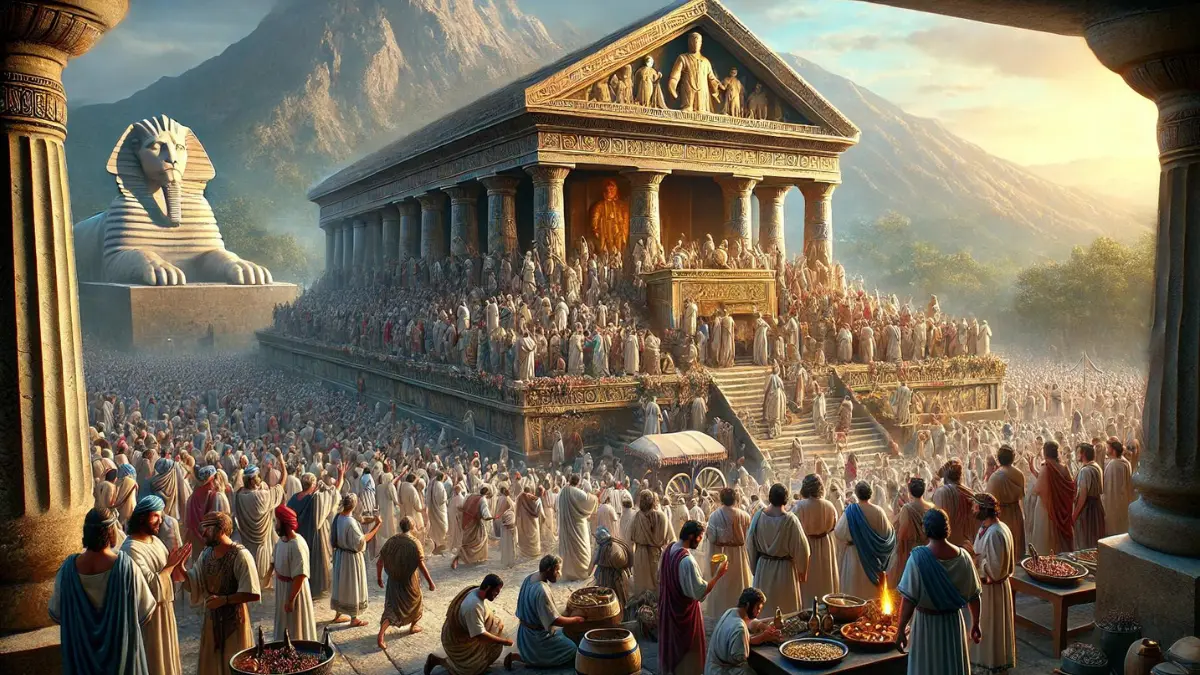
Orion was particularly revered in Boeotia, where he was considered a local hero. The region claims to be his birthplace.
A hero cult was established near his tomb in Tanagra, at the foot of Mount Cerycius (modern-day Mount Tanagra). This cult includes annual feasts in his honour, which continued until the Roman Empire.
The presence of a tomb and the associated rituals suggest that Orion was revered as a hero who could provide protection and blessings to his followers.
Artistic Representations
Orion’s cultural significance is also evident in artistic representations. Ancient art often depicts him as a mighty hunter with a club and shield or bow. These images reinforced his role as a formidable figure in Greek mythology.
Orion’s significant cultural impact, worship practices, and artistic representations reflect his enduring legacy in Greek mythology and beyond. His constellation remains a prominent feature in the night sky, symbolizing the eternal hunter.
Chronicling Orion’s Myth
Prominent ancient writers such as Homer and Hesiod chronicled Orion’s myth.
In Homer’s Odyssey, Orion appears as a ghostly figure in the Underworld, still hunting the shades of the beasts he killed on Earth.
Hesiod’s lost work Astronomia also detail Orion’s exploits, emphasizing his divine parentage and extraordinary abilities.
In art, Orion often appears as a towering figure with a club and shield, symbolizing his prowess as a hunter. Ancient Greek vases frequently illustrate scenes of Orion’s adventures. These include his battles with the scorpion sent by Gaia and his companionship with Artemis.
During the Renaissance, artists like Nicolas Poussin portray Orion’s tales with a blend of realism and romanticism, further cementing his place in Western art.
Modern Interpretations
Orion’s myth continues to inspire contemporary literature and music. Twentieth-century authors such as René Char and Claude Simon use Orion as a symbol of human life and creativity.
In modern music, composers like Philip Glass and Tōru Takemitsu have created works inspired by Orion’s story, highlighting his enduring influence across different artistic mediums.
Orion’s cultural impact and worship in ancient Greece underscore his importance as a mythological figure. His legacy as a mighty hunter and hero continues to resonate through literature, art, and modern interpretations, reflecting the timeless appeal of his story.
Orion’s tales of heroism and adventure remain a powerful inspiration across cultures and generations, illustrating the enduring power of mythology.
Legacy of Orion
Orion’s myths, though varied and sometimes contradictory, highlight his role as a mighty hunter and a figure of great strength and tragedy.
His adventures, from his blinding and miraculous recovery to his companionship with Artemis and his eventual death, have left a lasting legacy in both ancient literature and modern interpretations.
The constellation Orion remains one of the most recognizable and storied patterns in the night sky, symbolizing the enduring power of myth and the human fascination with the stars.
Orion’s constellation remains a prominent feature in the night sky, serving as a guide for stargazers and a symbol of the enduring power of myth.
Its bright stars and rich mythology continue to captivate and inspire, making Orion one of the most celebrated constellations in both ancient and modern astronomy.
Conclusion
Orion in Greek mythology, the giant huntsman, is a figure of immense strength, skill, and tragic fate.
His adventures, from his blinding by King Oenopion to his companionship with Artemis and eventual death by a scorpion, highlight his complex character.
Immortalized as a constellation, Orion’s legacy endures in both ancient literature and the night sky.
Revered in Boeotia and depicted in various art forms, his myth continues to inspire modern interpretations.
Orion’s story, rich with themes of heroism, hubris, and divine intervention, remains a captivating testament to the enduring power of myth.