
The Symbolic Legacy of Navajo Archery
![]() Cultural Significance of Archery in Navajo Tradition
Cultural Significance of Archery in Navajo Tradition
For centuries, archery has woven itself into the fabric of Navajo culture. This ancient practice surpasses mere sport, embodying key spiritual, symbolic, and functional roles.
In Navajo tradition, the bow and arrow are more than tools for hunting or warfare; they represent a deeper connection to the natural world and cultural identity.
The crafting of these instruments and the skill of their use are steeped in ritual and lore.
Archery is integral to the Navajo people’s resilience and has helped sustain their communities through times of change, symbolizing strength, precision, and the continuity of ancient wisdom.
The Spiritual Essence of the Bow and Arrow in Navajo Lore

In Navajo tradition, the bow and arrow are not merely tools for hunting or warfare; they signify a deeper, spiritual connection.
To the Navajo people, these instruments embody protection, sustenance, and the ability to harness natural forces.
The bow, shaped like a rainbow, represents the sky, while the arrow signifies lightning—both elements are crucial in Navajo cosmology.
Archery, therefore, is seen as a sacred act, intertwining the archer with the universe’s fundamental energies.
Rituals and ceremonies often involve bows and arrows, emphasizing their spiritual significance beyond physical utility.
Craftsmanship and Skill: The Art of Navajo Bow Making
The Navajo Nation possesses a rich tradition of archery, where bow making stands as a symbol of both survival and cultural identity.
Navajo bowyers select materials with utmost care, typically favoring woods like mountain mahogany or juniper.
These woods offer resilience and flexibility, key traits for effective bows.
Meticulous craftsmanship is central to Navajo bows, which are shaped and sinewed with precision.
The process involves:
- Hand carving the wood following the natural grain
- Applying sinew to the back of the bow for additional strength
- Decorating with pigments from natural minerals, imbuing each bow with distinctive patterns
This proficiency reflects generations of knowledge—each bow is not just a weapon, but a masterwork of Navajo artistry.
Archery in Navajo Mythology: Tales of the Bow and Heroes
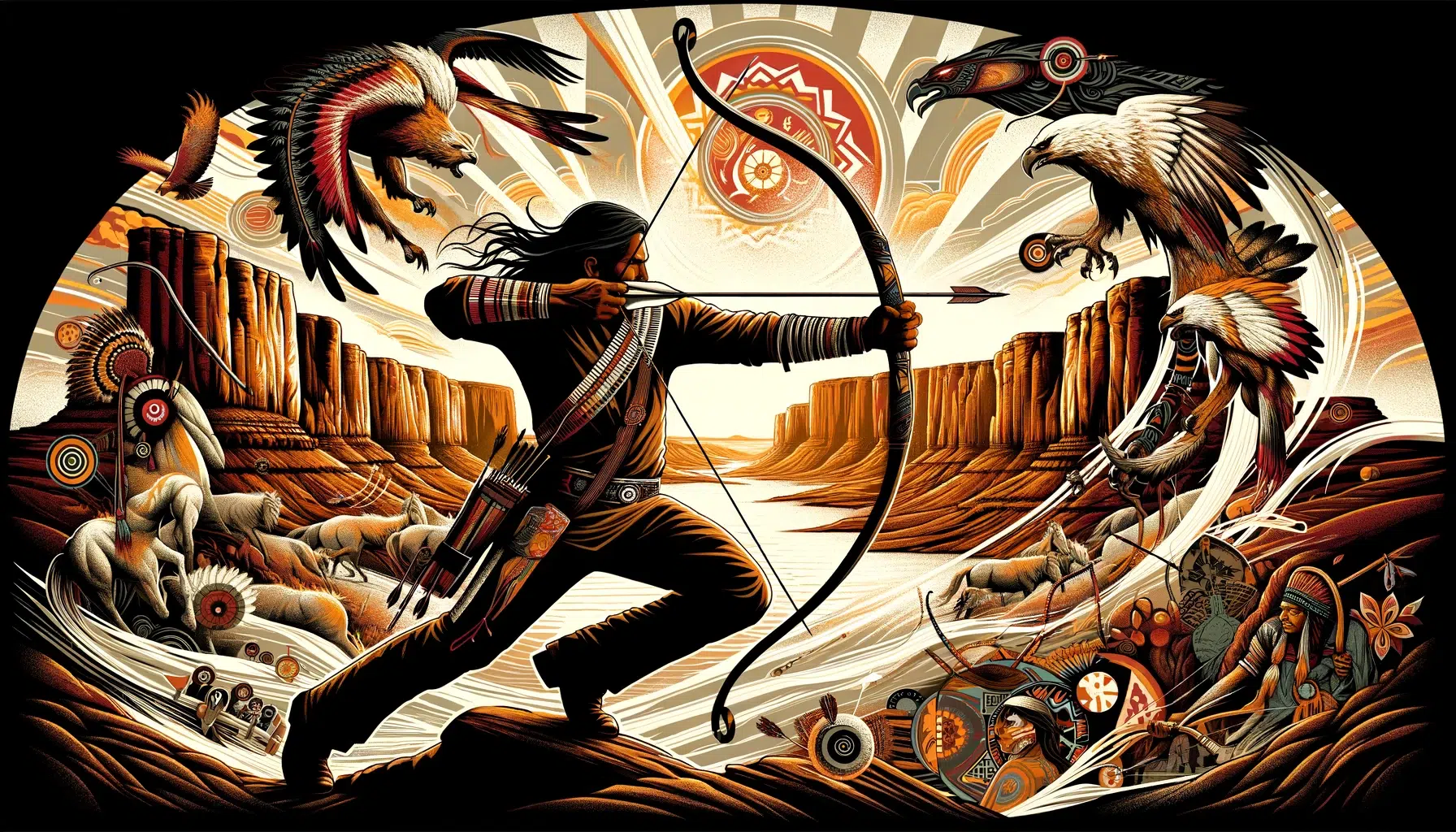
In Navajo mythology, the bow is a venerated symbol, appearing in numerous tales that convey vital life lessons and cultural values.
Many stories spotlight archery as a means to triumph over malevolent forces.
A recurring theme is the hero’s journey, where protagonists must master the art of the bow to fulfill their destiny.
Such tales often feature legendary figures like Monster Slayer and Child-Born-of-Water, demigods who wield powerful bows gifted by deities or made from sacred materials.
These stories, passed down through generations, not only teach hunting skills but also instill moral principles and a sense of identity within the Navajo community.
Learn more about: Legendary Archery Mythology
The Role of Archery in Navajo Rites
In Navajo culture, archery is more than a tool for hunting or warfare; it embodies deep spiritual symbolism and is integral to several rituals and ceremonies.
Archery equipment is often sanctified, treating bows and arrows with reverence and ascribing to them protective qualities.
During the Enemy Way ceremony—designed to restore harmony and health—archery plays a prominent role.
Participants may shoot arrows into the air to ward off evil spirits or towards the four cardinal directions to honor sacred elements.
Such practices highlight archery’s function as a bridge between the physical and spiritual worlds, reinforcing community bonds and individual well-being.
Understanding Navajo Archers in History
In Navajo tradition, archers held a distinct role deeply rooted in aspects of survival, defense, and spiritual significance.
Historically, the bow and arrow were not merely tools for hunting but symbols of protection and providers of sustenance.
Navajo warriors were revered for their skill and bravery in utilizing archery to defend their land and people from external threats.
Navajo archers cultivated a warrior spirit, characterized by:
- Mastery of complex archery skills, which required dexterity, strength, and precision.
- Spiritual alignment, as the bow symbolized life’s journey and arrow, life’s intention.
- Fearlessness in the face of adversaries, embracing the responsibility to protect the community.
- The strategic use of terrain to their advantage during skirmishes and battles.
- A deep understanding of harmony and balance, blending the art of war with cultural teachings.
The legacy of these archers remains a testament to the endurance and resilience of the Navajo people.
Navajo Creation Story

The Navajo creation story, known as Diné Bahaneʼ, is a complex narrative that describes the origin of the earth, its people, and their journey through a series of worlds.
It is a foundational myth that not only explains the creation of the universe but also instills cultural values and the Navajo way of life.
The Journey Through the Worlds
The story begins in the First World, Niʼ Hodootłʼizh, the Black World, where First Man and First Woman were created.
As the narrative unfolds, it tells of their journey through four sacred worlds:
- The First World (Black World): Characterized by darkness and inhabited by insect-like creatures, this world was where First Man and First Woman began their existence.
- The Second World (Blue World): Here, the inhabitants encountered various beings and faced challenges that led them to seek a path to the next world.
- The Third World (Yellow World): This world introduced more complex beings, including the introduction of animals and the creation of the seasons. Conflicts and natural disasters in this world prompted the sacred beings and the Navajo ancestors to move to the next level.
- The Fourth World (White World): In this world, the Navajo people encountered the Holy People, deities who taught them agriculture, ceremonies, and the laws of the universe. It was from the Fourth World that the Navajo emerged into the current, Fifth World, the Earth Surface World, where they live today.
The Role of the Twins
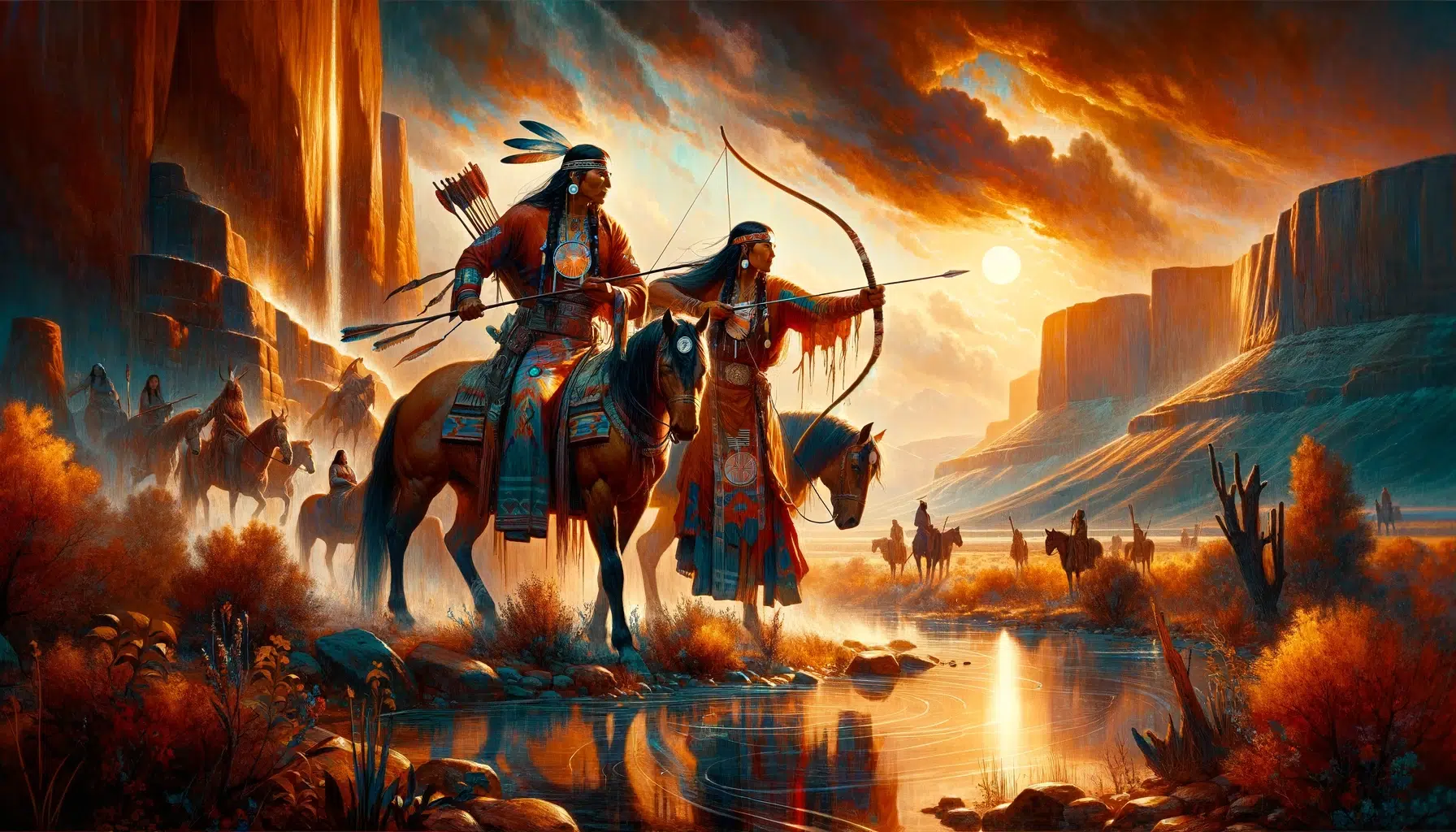
Central to the story are the Hero Twins, Naayéé’ Neizghání (Monster Slayer) and Tóbájíshchíní (Born-for-Water), born to Changing Woman and the Sun.
They embarked on a series of quests to rid the world of monsters that threatened the existence of the Navajo people.
These tales symbolize the struggle against adversity and the maintenance of harmony in the world.
Themes and Values
The Diné Bahaneʼ teaches important themes such as:
- the importance of harmony between humans and nature
- the value of cooperation and respect among people
- the significance of rituals and ceremonies in daily life
The creation story serves as a guide for living a balanced and respectful life, emphasizing the interconnectedness of all beings.
Cultural Significance
The Navajo creation story is more than a myth; it is a living narrative that continues to guide the Navajo people.
It is recounted in ceremonies, taught to younger generations, and embedded in the cultural and spiritual identity of the Navajo Nation.
Diné Bahaneʼ underscores the resilience of the Navajo people and their deep connection to the land and the spiritual world.
Navajo Archery in the Modern World
In an era dominated by technological advancements, the Navajo people tenaciously uphold the art of archery, viewing it as a vital link to their history and ancestry.
Faced with the challenges of modernity, Navajo communities work diligently to interweave archery into contemporary life while respecting its profound ceremonial and cultural importance.
Educational programs and competitions have emerged, allowing youth to engage with their heritage and ensuring the survival of traditional techniques.
These initiatives also serve as a means for cultural exchange, and foster a sense of pride and identity among the Navajo.
Through such efforts, archery remains an enduring testament to Navajo resilience and cultural continuity.
Archery and Navajo Nationhood
For the Navajo Nation, archery is not merely a historical tool for hunting and defense; it is a profound symbol of sovereignty and identity.
Traditional stories passed down through generations emphasize the bow and arrow’s sacred nature, symbolizing protection and autonomy.
Mastery of archery once reflected readiness for leadership, embedding these skills within the culture’s fundamental values.
Today, through archery, Navajo people connect with their ancestors, reinforce community bonds, and celebrate the resilience that has preserved their national consciousness.
The bow, as both a weapon and a tool, represents the strength and unity required to maintain the Nation’s sovereignty.
Educational and Youth Programs Reviving Archery Skills
In communities across Navajo Nation, educational and youth programs are pivotal in revitalizing archery proficiency, a skill deeply rooted in Navajo culture.
These initiatives encompass:
- Traditional archery workshops led by elders and masters, combining skill-building with cultural teachings.
- School curricula integrating archery to connect students with their heritage while promoting physical education.
- Competitive youth archery teams fostering discipline, focus, and cultural pride.
- Collaboration with organizations like the National Archery in the Schools Program (NASP) to provide structured training and equipment.
- Seasonal community tournaments that celebrate and continue the tradition of archery.
By engaging the youth, these programs aim not only to revive a cultural practice but also to strengthen community bonds.
Lessons from the Navajo Perspective
In Navajo culture, archery extends beyond mere sport; it serves as a profound metaphor for life’s journey.
Through archery, the Navajo teach patience, focus, and a deep respect for all living things—principles that are foundational to their world view.
To draw the bow and aim is to align with one’s intentions; releasing the arrow parallels letting go of what is beyond control.
A true marksman embodies harmony with the universe, illustrating that success stems from internal balance rather than mere technical skill.
Thus, Navajo archery symbolizes the path to ethical conduct and personal growth.
Contemporary Challenges of Navajo Archery Traditions
Navajo archery traditions confront challenges like technology, less youth interest, cultural pressure, and restricted hunting areas.
Yet, community efforts show resilience, with programs that engage youth, educate culturally, and revive traditional craftsmanship.
These efforts aim to preserve Navajo archery’s history and practice, reinforcing cultural identity and community ties.
Archery’s Lasting Legacy in Navajo Culture
Navajo archery maintains a profound significance, having sustained its cultural and symbolic essence through the ages.
Despite the shifts toward modernity, the bow and arrow remain emblems of survival, craftsmanship, and spiritual connectivity.
They foster a timeless link to ancestral heritage and traditions of hunting and protection.
As part of ceremonial practices and artistic expressions, Navajo archery continues to echo the resilience and adaptability of the people. Thus preserving a legacy that is cherished and passed down through generations.