Mixcoatl: Aztec God of Hunting and Celestial Realm
Mixcoatl, the Aztec god of hunting, has associations with the Milky Way and the stars.
This ancient deity holds significant cultural importance in Mesoamerican civilizations and continues to captivate and inspire with his fascinating mythology and symbols.
Key Takeaways:
- In Aztec mythology, Mixcoatl serves as the god of hunting and has associations with the Milky Way and the stars.
- Artists depict him as a hunter armed with a bow and arrow, a basket, and a net, his skin adorned with white and red stripes.
- Many believe Mixcoatl to be an avatar of Tezcatlipoca and also recognize him as Quetzalcoatl’s father.
- Various Mesoamerican populations worshiped him, dedicating the month of Quecholli to hunting and feasting in his honour.
- His representation in art includes distinctive symbols such as a fanged mask, deer hoove ear-spools, and an eagle-feather headdress.
The Origin and Name of Mixcoatl
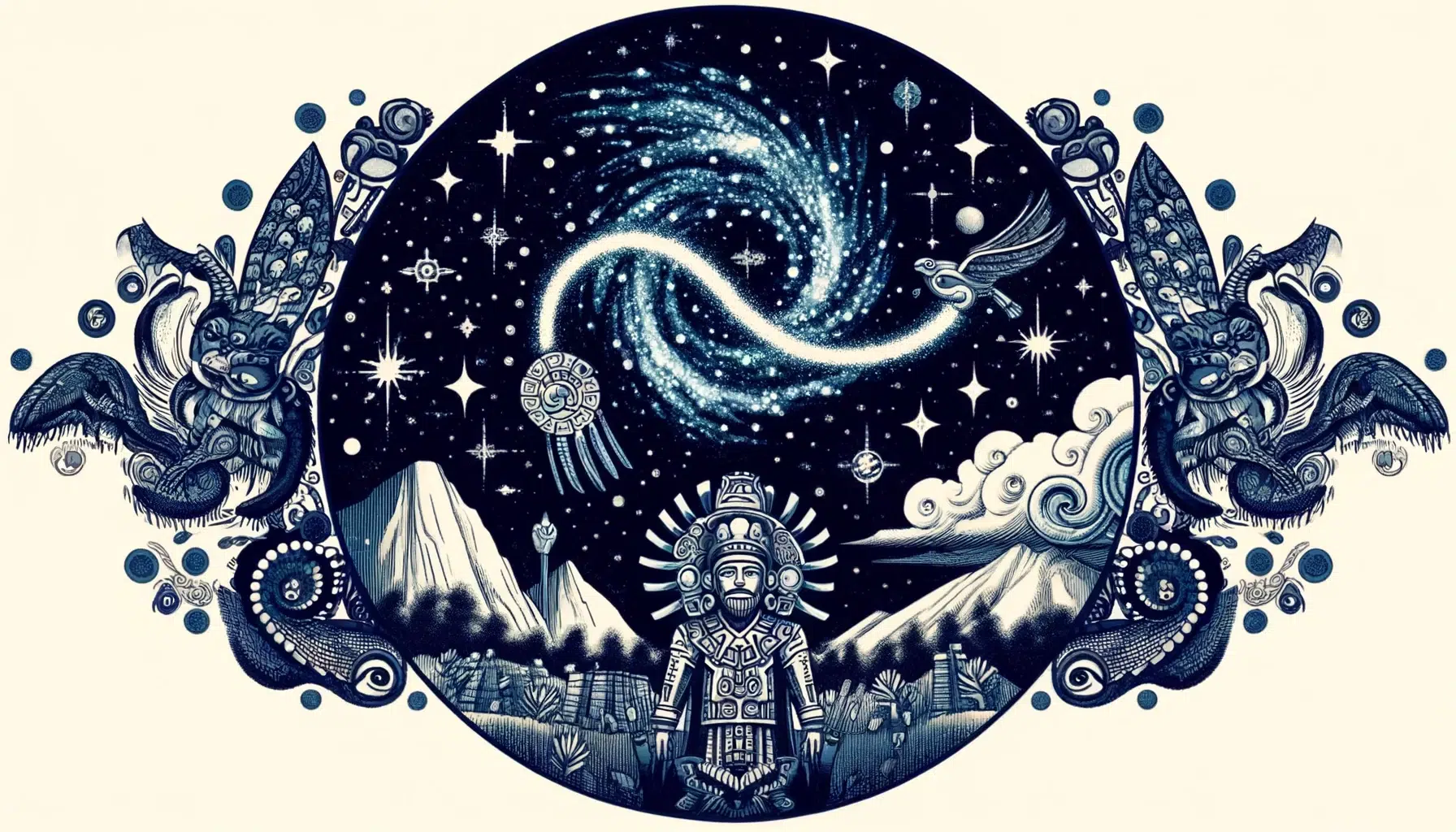
In the realm of Aztec mythology, Mixcoatl is an ancient deity.
Known as the god of hunting and associated with the mesmerizing grandeur of the Milky Way and the radiant stars.
The name “Mixcoatl” holds deep significance as it emerges from the blending of two powerful Nahuatl words:
- “mixtli” meaning “cloud”
- “coatl” meaning “serpent”
This rich etymology suggests Mixcoatl’s intimate connection with the celestial expanse, particularly the awe-inspiring beauty of the Milky Way.
Mixcoatl is also referred to as Camaxtl.
A name derived from the Nahuatl word “camaz” signifying “deer sandal,” emblematic of his prominent role as the god of hunting.
The profound symbolism in the name Mixcoatl underscores his alliance with the heavens and his association with hunting and the natural world.
The Role of Mixcoatl in Aztec Mythology
In Aztec mythology, Mixcoatl plays various roles and holds significant importance in the religious beliefs of the Aztec people.
Mixcoatl as Tezcatlipoca
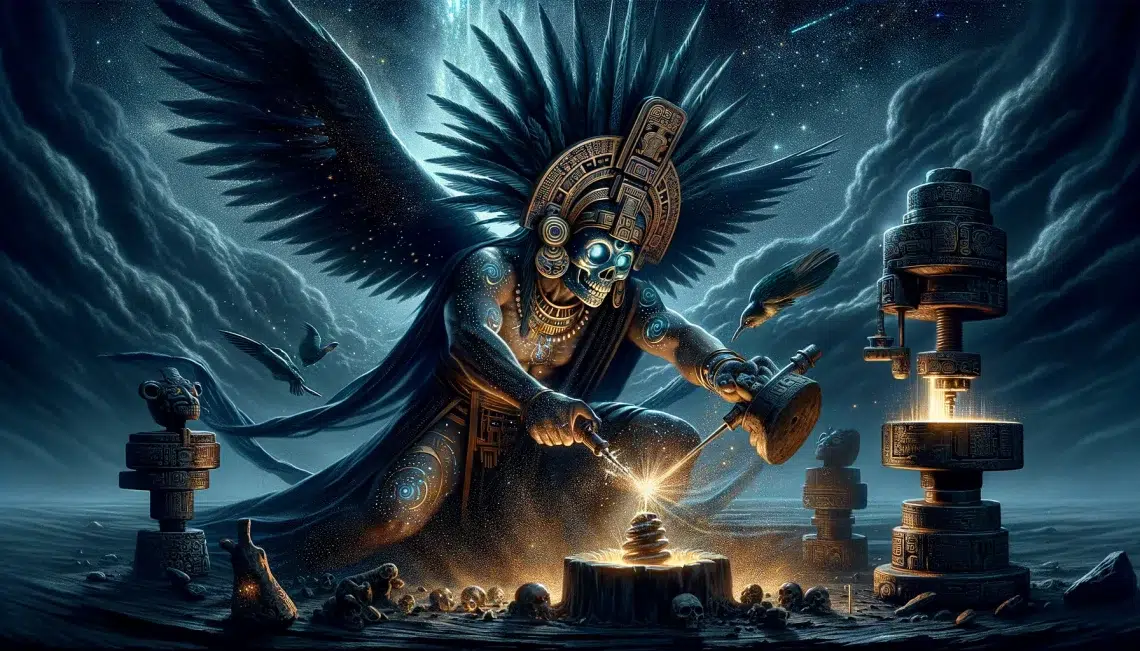
In some myths, Mixcoatl is an avatar of Tezcatlipoca, the god of obsidian and the night sky.
One significant myth depicts Mixcoatl transforming himself into Tezcatlipoca and inventing the fire drill.
He then gifts this invention to humanity, symbolizing Mixcoatl’s role as a benefactor of all peoples.
Mixcoatl as the Father of Quetzalcoatl
Another significant aspect of Mixcoatl’s role in Aztec mythology is his association with Quetzalcoatl, one of the most revered gods in Aztec religion.
Mixcoatl is believed to be the father of Quetzalcoatl.
Thus highlighting his importance as a progenitor figure and connecting him to the lineage of powerful deities.
Mixcoatl and the Centzon Huitznahua
Mixcoatl is also associated with the Centzon Huitznahua, the 400 gods of the southern stars.
As their father, Mixcoatl holds a position of authority and reverence.
This connection reinforces Mixcoatl’s role as a sky god and his association with the celestial realm.
Through these various roles, Mixcoatl emerges as a powerful and multifaceted deity in Aztec mythology.
| Key Aspects of Mixcoatl’s Role |
|---|
| Mixcoatl as a Tezcatlipoca avatar |
| Mixcoatl as the father of Quetzalcoatl |
| Mixcoatl’s association with the Centzon Huitznahua |
Worship and Festivals Dedicated to Mixcoatl
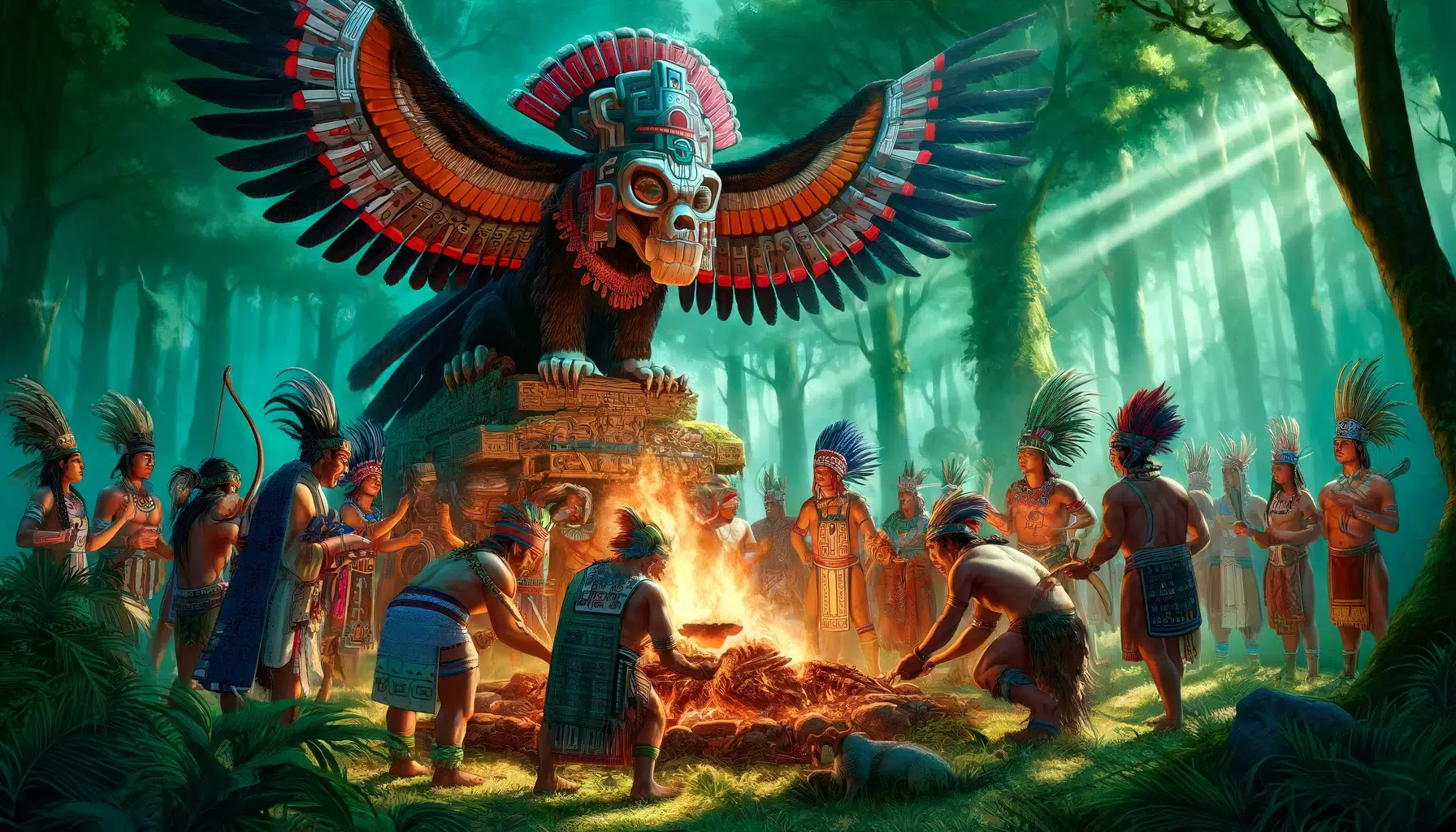
Mixcoatl, the deity of hunting, was revered and worshipped by various Mesoamerican populations, including:
- the Chichimecs
- the Otomi
- the Aztecs
The Aztec calendar dedicated the 14th month, known as Quecholli, to honour Mixcoatl.
This month was filled with vibrant festivities and rituals that celebrated the god’s significance in the Aztec culture.
During the Quecholli month, hunting trips were organized in homage to Mixcoatl’s association with game animals and the skill of hunting.
These hunting trips were not only a practical means of acquiring food but also symbolized the spiritual connection between the hunters and Mixcoatl.
The hunters, dressed as Mixcoatl, performed sacred rituals while roasting their prey, expressing gratitude to the god for providing sustenance.
The worship of Mixcoatl during the Quecholli month extended beyond hunting and feasting.
Rituals and ceremonies were held to pay homage to the god and seek his favour.
These ceremonies often took place at Mixcoatl’s temple, a sacred space where devotees gathered to offer sacrifices and prayers.
Human sacrifices played a role in the worship of Mixcoatl during the Quecholli month.
As part of the ceremonies, a man and a woman were chosen to be sacrificed at Mixcoatl’s temple.
This act was believed to ensure fertility and abundance for the community, as Mixcoatl was closely associated with agricultural fertility and the provision of resources.
The following summarizes the key aspects of the Quecholli month celebrations:
| Aspects | Description |
|---|---|
| Hunting Trips | Organized hunting trips in honour of Mixcoatl |
| Feasts | Grand feasts and banquets featuring the spoils of the hunt |
| Rituals and Ceremonies | Performing sacred rituals and ceremonies to honour Mixcoatl |
| Human Sacrifices | Sacrificing a man and a woman at Mixcoatl’s temple |
Mixcoatl in Toltec Civilization
Mixcoatl, a revered figure in Toltec civilization, is believed to have originated as a deified hunter and warrior-leader of the Toltec-Chichimec peoples in Central Mexico.
According to tradition, Ce Tecpatl Mixcoatl, a legendary Toltec chieftain, led the Toltecs from the northwestern deserts to the Valley of Mexico.
Solidifying Mixcoatl’s role as a prominent Toltec leader.
Mixcoatl’s association with hunting and leadership played a significant part in his deification and subsequent worship among the Toltec civilization.
As a revered deity, Mixcoatl became a central figure in Toltec mythology.
Thus influencing the development of Aztec mythology and the worship of Mixcoatl among other Mesoamerican peoples.
The Role of Mixcoatl in Toltec Civilization
As a Toltec leader, Mixcoatl held immense importance in the daily lives and cultural practices of his people.
He represented qualities such as courage, strength, and skill in hunting, which were highly valued in Toltec society.
Mixcoatl’s leadership qualities and ability to provide food and resources contributed to his widespread worship and reverence among the Toltec-Chichimec peoples.
Furthermore, Mixcoatl’s association with hunting and his role as a warrior-leader influenced the development of Toltec mythology.
His remarkable feats in battle and his symbolic representation as a skilled hunter made him a powerful and revered figure among the Toltecs.
Mixcoatl’s Cultural Significance and Legacy
The cultural significance of Mixcoatl in Toltec civilization cannot be overstated.
He represented the ideals of bravery, resourcefulness, and protection, which resonated deeply with the Toltec-Chichimec peoples.
Mixcoatl’s worship and mythology were integrally linked to the daily lives and belief systems of these ancient Mesoamerican communities.
This enduring legacy can be seen in the art and symbols associated with Mixcoatl.
His depictions often highlight his connection to hunting and leadership, with imagery such as the bow and arrow, deer symbolism, and warrior-like attributes.
These representations continue to inspire artists and scholars, providing insight into the rich cultural tapestry of Toltec civilization.
| Key Aspects of Mixcoatl in Toltec Civilization | Cultural Impact |
|---|---|
| Deified hunter and warrior-leader | Revered and worshipped figure in Toltec-Chichimec society |
| Symbolized bravery, strength, and hunting skills | Influenced the development of Toltec mythology |
| Represented courage, resourcefulness, and protection | Integral to the cultural practices and belief systems of the Toltecs |
| Depicted in art with hunting symbols and warrior attributes | Continues to inspire artists and provide insight into Toltec civilization |
As we delve further into the myth and significance of Mixcoatl, we uncover a deep-rooted connection between Toltec civilization and this revered leader.
Mixcoatl’s role as a deified hunter and warrior-leader exemplifies the ideals and values cherished by the Toltec-Chichimec peoples.
Leaving an indelible mark on their culture and mythology.
Representation of Mixcoatl in Art and Symbols
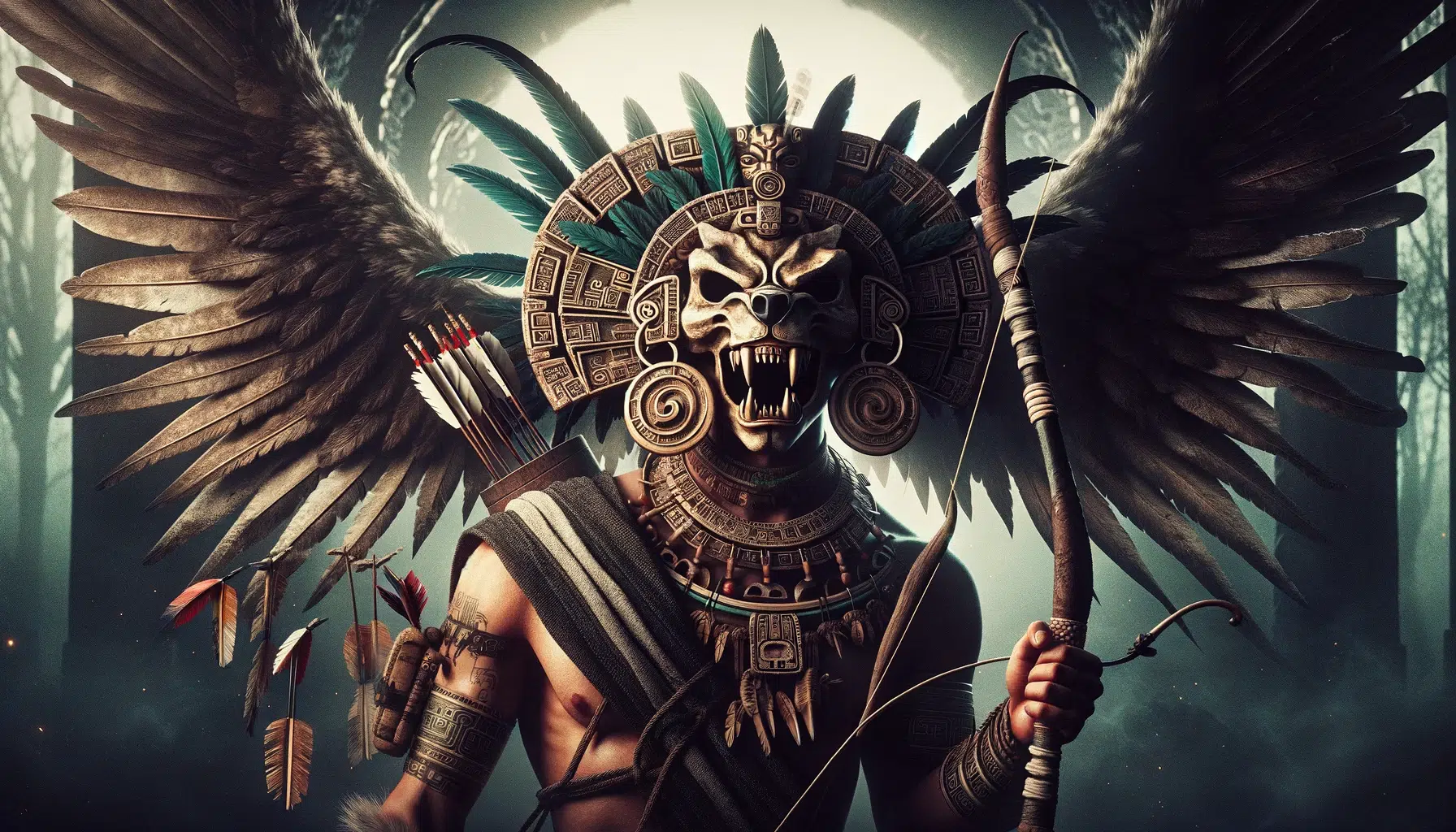
Mixcoatl, the god of hunting in Aztec mythology, is frequently depicted in art with distinct symbols and attributes that reflect his role and significance.
These representations provide a visual language through which Mixcoatl’s identity and connections are conveyed.
Fanged Mask
One of the most prominent features in Mixcoatl’s depictions is his fanged mask, which symbolizes his ferocity and power as a hunter.
The mask serves as a visual representation of his connection to the natural world and his ability to navigate the realms of hunting and warfare.
Association with Hunting and the Animal Kingdom
Mixcoatl is often portrayed wearing ear-spools in the form of deer hooves.
This further emphasizes his association with hunting and the animal kingdom.
These ear-spools serve as a visual reminder of his dominion over the wildlife and his ability to guide hunters in their pursuits.
Another distinctive attribute seen in Mixcoatl’s representations is his eagle-feather headdress.
The eagle feathers symbolize his connection to the celestial realm and the spiritual power associated with the heavens.
This headdress signifies his role as a divine figure and his ability to bridge the gap between the earthly and celestial realms.
Mastery of Archery
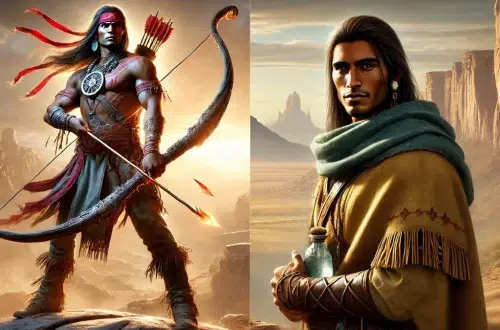
In addition to his attire, Mixcoatl is often depicted carrying a bow, arrows, and a hunting net or basket.
These objects represent his role as the god of hunting and his mastery of archery.
They serve as symbols of his authority and skill in providing sustenance for his worshipers through hunting and gathering.
Symbolically, Mixcoatl’s portraits often showcase black masks, candy cane stripes on his body, and stars on his face.
Connection to the Celestial Realm
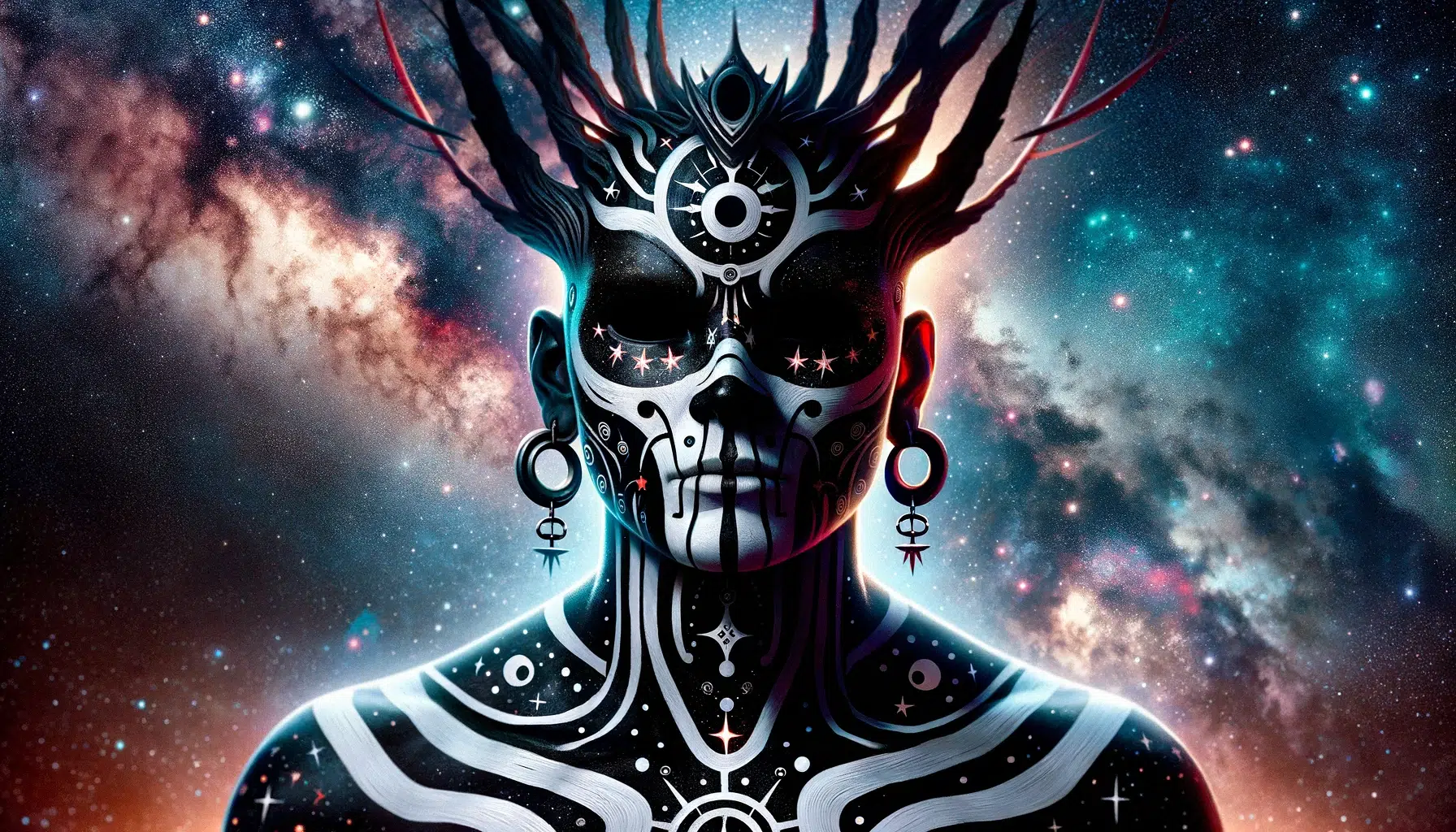
These symbols highlight Mixcoatl’s connection to the Milky Way and the celestial realm.
The black masks represent the night sky, while the stripes symbolize his association with the natural world and the cycles of life and death.
The stars on his face further emphasize his celestial nature and his role as a guide in the night sky.
Mixcoatl’s representation in art and symbols not only visually portrays his attributes and role.
They also convey the spiritual and cultural significance of hunting in Mesoamerican societies.
Through these depictions, the worshipers of Mixcoatl were able to connect with and honour the god.
Thus seeking his guidance and protection in their hunting endeavors.
Powers and Abilities of Mixcoatl
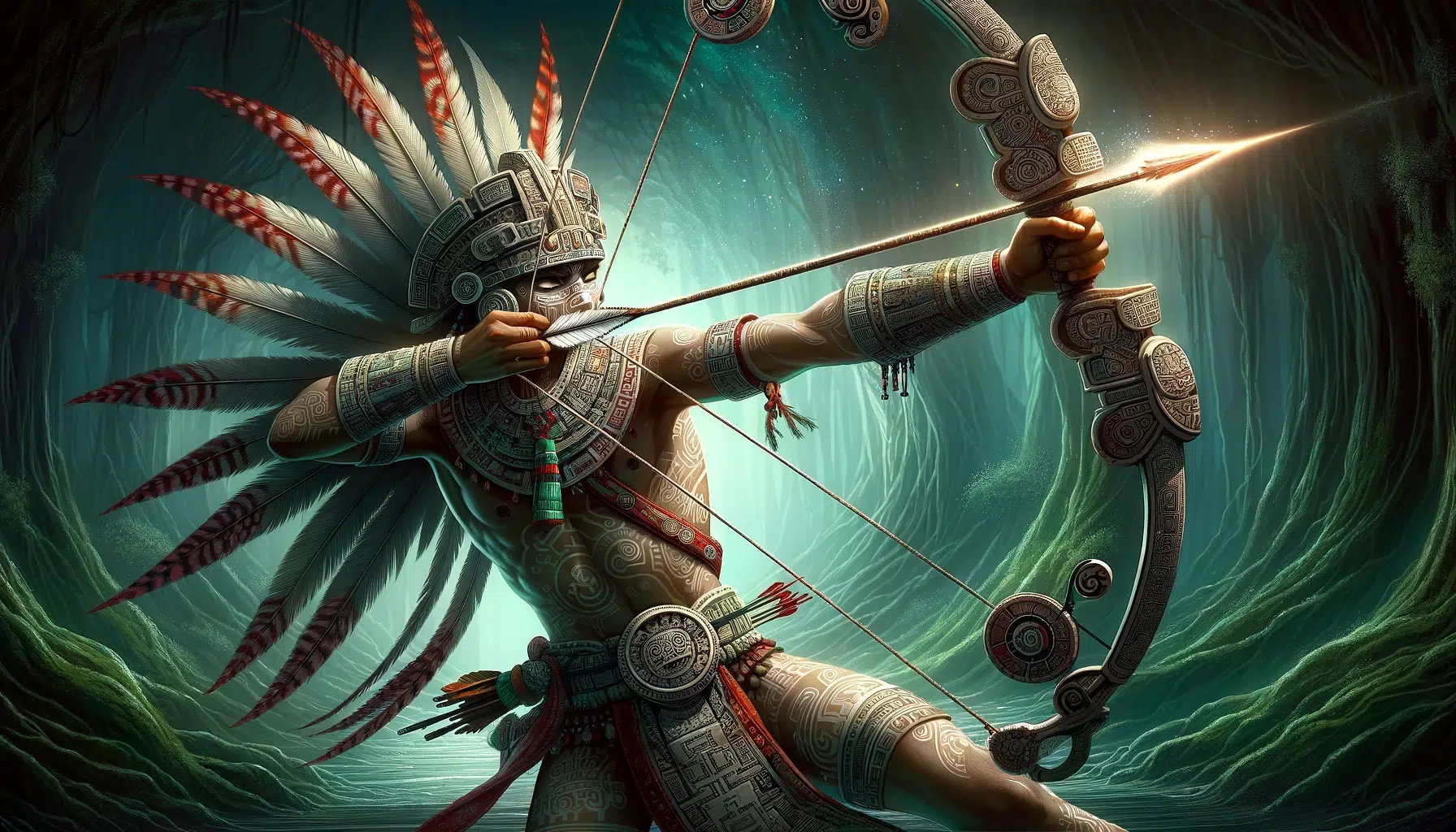
Mixcoatl, the Aztec god of hunting, possesses various extraordinary powers.
These abilities establish him as a formidable and revered deity in Aztec mythology.
His innate connection to the natural world grants him unparalleled skills and strengths.
Shapeshifting
Like many Aztec gods, Mixcoatl has the incredible power to transform his form, enabling him to assume the shape of different animals.
One of his favored transformations is that of a deer, embodying his role as the god of hunting.
His ability to shapeshift allows him to move through the natural world with agility and stealth.
Archery Skills
Mixcoatl is renowned for his exceptional skill in archery.
Armed with a bow and arrows, he displays unwavering precision, accuracy, and strength when taking aim.
His mastery of archery ensures that his every shot strikes the mark, making him an unparalleled hunter and guardian.
Images of him drawing his bow with determination, his arrow poised to be released, representing his formidable abilities in a captivating way.
| Powers and Abilities | Description |
|---|---|
| Shapeshifting | Mixcoatl possesses the ability to transform into different animals, with a particular affinity for appearing as a deer. |
| Archery | With unmatched precision and strength, Mixcoatl wields his bow and arrows to strike down prey and defend his worshippers. |
The table above summarizes Mixcoatl’s extraordinary powers and abilities, showcasing the distinct aspects of his divine nature.
His shapeshifting and archery skills enable him to fulfill his role as the god of hunting, guarding both the natural world and the Aztec people with unwavering efficiency.
The Significance of Mixcoatl in Ancient Culture
Mixcoatl holds significant cultural importance in ancient Mesoamerican civilizations.
As the god of hunting, he plays a crucial role in providing food and resources for communities.
His association with the Milky Way and the stars connect him to the celestial realm and attest to his role as a powerful deity.
Mixcoatl’s worship and festivals were integral to the cultural practices of various Mesoamerican peoples.
Highlighting the importance of hunting and the natural world in their daily lives.
These celebrations serve as opportunities to honour and seek the god’s favor for successful hunts, bountiful harvests, and overall prosperity.
By paying homage to Mixcoatl, ancient civilizations recognize the vital role of hunting as a means of survival and the inherent connection between humans and the natural world.
The enduring legacy of Mixcoatl can still be seen today in the myths, art, and cultural traditions of modern-day Mexico.
His representation in various forms of artwork, such as sculptures, murals, and codices, serves as a visual testament to his cultural significance.
The symbols associated with Mixcoatl continue to be recognized and revered as powerful cultural icons including:
- his distinctive fanged mask
- deer-hoof ear-spools
- eagle-feather headdress
Mixcoatl’s Cultural Significance
From ancient times to the present day, Mixcoatl continues to be an important figure in Mexican culture.
Mixcoatl festivals, such as the Quecholli month in the Aztec calendar, still continue in some regions.
Further showcasing the enduring influence of this deity.
Furthermore, Mixcoatl’s cultural significance extends beyond the realm of mythology and religious practices.
His depiction in art and symbolism reflects the deep connection between humans and the natural world.
Thus emphasizing the importance of preserving and respecting the environment.
Mixcoatl serves as a cultural reminder of the balance between humanity and nature.
A concept that holds relevance in contemporary discussions surrounding sustainability and conservation.
The Legacy of Mixcoatl in Modern Mexico
Mixcoatl’s enduring legacy continues in various aspects of Mexican culture and society.
His depiction and symbols continue to inspire contemporary artists.
They incorporate Mixcoatl’s imagery into their works as a way to connect with ancient traditions and preserve cultural heritage.
Mixcoatl’s role as the god of hunting and provider of resources resonates in modern-day Mexico.
Hunting and agriculture still play a vital role in many communities.
The recognition of Mixcoatl’s significance reinforces the importance of sustainable practices and ethical treatment of the environment.
Mixcoatl’s legacy as a symbol of cultural identity, sustainability, and respect for nature affirms his relevance in Mexican culture and society.
Conclusion
The god Mixcoatl holds a significant place in Aztec mythology and ancient Mesoamerican culture.
Mixcoatl links to hunting, stars, and the sky, show how people connect with nature.
People long ago revered Mixcoatl for his abundance, power, and protection. His impact continues in Mexico’s traditions today.
Mixcoatl was important in old beliefs as a creator, protector, and provider.
He was a key god who looked after people’s well-being and their access to essential resources.
Ancient civilizations celebrated him through rituals and art, showing how central he was in their lives.
The story of Mixcoatl still fascinates and teaches us about the strong beliefs of the past.
Mixcoatl represents our deep bond with nature and our basic needs for food and safety.
Mixcoatl’s influence continues through Mexico’s rich traditions, showing how old myths shape our identity.