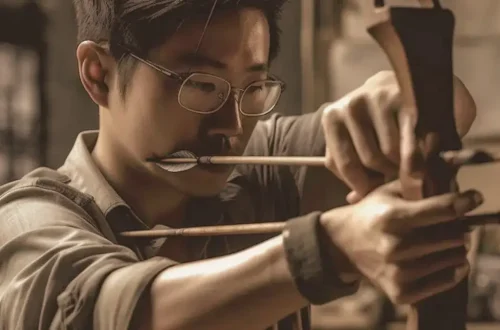

Mastering the Thumb Release in Archery
Introduction to the Thumb Release Technique
The thumb release technique is an ancient method practiced in the art of archery, especially renowned in Eastern traditions.
It involves drawing the bowstring using the thumb, often supported by a thumb ring to protect the skin and aid in a smoother release. This method contrasts with the more widely-known Mediterranean draw, where the index, middle, and ring fingers are used.
Archers adept in the thumb release technique enjoy an advantage of faster arrow release and less finger strain, making it a coveted skill in traditional archery circles.
The road to mastering this technique requires dedication, but with methodical practice, one can integrate it seamlessly into their archery practice.
Historical Significance of Thumb Release in Archery
The thumb release technique in archery boasts an ancient heritage, tracing back to esteemed mounted warriors of Eastern civilizations.
Foremost among these were the Mongols and Ottoman Turks, whose archers wielded this method with deadly precision.
This technique suited their nomadic lifestyle, which required shooting arrows swiftly and accurately from horseback. The thumb release was integral to their military prowess, contributing significantly to the expansion of empires.
Additionally, the technique’s historical prominence is depicted in various artworks, including Persian miniatures and Chinese scrolls, illustrating its widespread utilization across Asia.
Today, the thumb release is celebrated as a cultural legacy, practiced by traditional archers and historians alike, eager to preserve and honor the formidable skills of their ancestors.
Fundamentals of a Proper Thumb Release Grip
In mastering thumb release archery, establishing a consistent grip is crucial. An archer must:
- Maintain a relaxed, yet controlled grip to avoid undue tension.
- Position the thumb under the arrow, slightly angled towards the bow, ensuring a stable base.
- Curl the index finger around the thumb to create a loop; this is where the string will sit.
- Apply pressure between the thumb and the finger, enough to hold the string but not too tight to hinder the shot.
- Keep the remaining fingers out of the way, either by extending or loosely curling them to avoid interfering with the string upon release.
- Focus on a smooth motion where the thumb and index finger effortlessly open to release the string without jerking.
Attention to these grip details fosters precision and repeatable accuracy.
Understanding the Draw: Key Movements in Thumb Release
When executing a thumb release in archery, the archer must focus on precise movements.
Here are the key steps:
- Anchor the thumb ring solidly against the jaw or cheekbone, ensuring a consistent reference point for each shot.
- Draw the string back with the thumb by pushing the bow away simultaneously with the bow hand.
- Maintain a relaxed grip on the bow to prevent torque and ensure arrow flight stays true.
- Keep the elbow of the drawing arm in alignment with the arrow for structural integrity and power.
- On reaching full draw, the back muscles should be engaged, indicating proper form and tension.
- Release the string by smoothly extending the thumb while allowing the string to roll off the thumb ring, propelling the arrow forward with minimal interference.
Thumb Ring vs. Bare Thumb: Pros and Cons
Pros using a thumb ring:
- Protection: Provides a barrier against the string, reducing the risk of injury.
- Consistency: Ensures a more uniform release due to its non-changing surface.
- Comfort: Can be more comfortable for prolonged shooting sessions.
Cons using a thumb ring:
- Adjustment Period: Requires time to get used to, which might hinder initial performance.
- Sensitivity: Reduces the direct feel of the string, potentially impacting release finesse.
Pros of using a bare thumb:
- Sensitivity: Offers a direct touch on the string, improving control on release.
- No Equipment Needed: Simplifies the archery setup by removing the need for additional gear.
Cons of using a bare thumb:
- Risk of Injury: Increases the chance of blisters or calluses with extensive use.
- Inconsistency: Skin texture and condition can change, affecting the release.
Tools and Gear for Practicing the Thumb Release
For archers intent on mastering the thumb release technique, several specialized tools and items of gear are essential:
- Thumb Ring: A protective thumb ring is critical to prevent injury and facilitate a smooth release.
- Leather Thumb Guard: As an alternative to the thumb ring, some archers may opt for a soft leather guard for comfort.
- Archery Glove: Protects the fingers holding the bow string and provides a better grip.
- Recurve Bow: Preferred for its curved design which complements the thumb release technique.
- Arrows with Appropriately Sized Nocks: Ensures a snug fit on the string for a consistent release.
- Bow String Wax: Keeps the string in optimal condition for a consistent release.
- Target: A good quality target for repetitive practice to build muscle memory.
- Arm Guard: Protects the forearm from string slap and encourages proper form.
Each of these items contributes to a safer and more efficient training regimen, allowing the archer to focus on technique refinement.
Step-by-Step Guide to Mastering Thumb Release
- Select Proper Equipment:
- Use a thumb ring fitted to your size for a smoother release.
- Choose a bow compatible with thumb draw, typically recurve or horse bows.
- Thumb Placement:
- Curl the thumb around the bowstring, placing it beneath the arrow nock.
- Secure the string with the thumb pad, not the joint.
- Finger Positioning:
- Lock the thumb with the index finger’s tip or by resting the index finger lightly on top.
- Keep the remaining fingers relaxed and away from the string.
- Draw and Anchor:
- Pull the string back by extending your shoulder and back muscles.
- Anchor with consistent hand placement, often near the jaw or cheek.
- Release and Follow-Through:
- Relax the thumb smoothly without jerking.
- Maintain your form and continue aiming at the target until the arrow hits.
Practice these steps diligently, focusing on consistency and fine-tuning of each movement for precision.
Common Mistakes and How to Avoid Them
- Improper Thumb Position: The thumb must wrap comfortably around the string. To avoid strain, ensure the pad, not the tip, contacts the string.
- Over-tension in the Hand: Keep the hand relaxed to prevent shaking. Practice grip without the bow to build muscle memory.
- Incorrect Release: A jerky release affects accuracy. Aim for a smooth motion by steadily increasing pressure until the string slips off.
- Neglecting Anchor Point: Inconsistency in anchor point leads to erratic shots. Find a comfortable spot and maintain it each time.
- Rushing the Shot: Rushed shots sacrifice precision. Dedicate time to each step of the draw and release cycle, focusing on consistency.
Learn more: Beginners Tips for Young Archers
Training Drills for Perfecting Your Thumb Release Technique
- Blank Bale Shooting: Stand close to the target with no intention of aiming. Focus solely on executing a clean release using the thumb method.
- String Blinders: Use a piece of tape or a small blinder on the string to block the archer’s view of the arrow. This enhances the ability to feel the release without visual feedback.
- Release and Hold Drills: Draw and hold the string with the thumb release for extended periods to build muscle memory and endurance.
- Clicker Training: Employ a clicker to train the thumb to release exactly at the point of optimal draw length.
- Changing Distances: Practice at different distances to adapt the release technique to varied shooting scenarios.
These exercises reinforce precise thumb release, essential for consistent accuracy.
Fine-Tuning Your Stance and Posture for Thumb Release
- Stand perpendicular to the target with feet shoulder-width apart for balance.
- Keep your body relaxed yet upright, allowing for a natural spinal alignment.
- Bend the knees slightly to ensure flexibility and shock absorption upon release.
- Position the shoulders in line with the target, ensuring they are down and back to reduce tension.
- The arm holding the bow should be straight but not locked, with the elbow rotated outward to prevent string slap.
- Grip the bow handle lightly to avoid torque that can influence arrow flight.
- Engage the core muscles to support the upper body, allowing for a consistent and stable anchor point.
- When drawing the string with your thumb, keep your hand and wrist in a neutral position, avoiding unnecessary strain.
- Focus on a smooth draw, maintaining posture throughout the shot sequence for optimal accuracy.
Mental Preparation and Focus Techniques for Archery
Achieving proficiency in the thumb release technique in archery requires mental preparation and focus. Here are several methods to enhance concentration and mental fortitude:
- Visualization: Before releasing the arrow, archers should visualize the flight path and the arrow hitting the target. This technique establishes a clear mental image of success.
- Breathing Exercises: Controlled breathing helps calm nerves and steady the hand. Implement a consistent breathing pattern when preparing to shoot, such as inhaling while drawing and exhaling upon release.
- Routine Establishment: Following a personal shooting routine before each arrow is released can help maintain focus and consistency in performance.
- Mindfulness Meditation: Practicing mindfulness can help archers stay present and prevent distractions, allowing for a more focused execution of the thumb release technique.
- Positive Self-talk: Replace negative thoughts with positive affirmations, reinforcing confidence and focus in one’s abilities during the shoot.
Applying Thumb Release Skills to Different Archery Styles
Archers can adapt thumb release techniques across various bow types and archery disciplines with practice.
In traditional Asian archery, often associated with horseback archery, the thumb draw is elemental.
Mastery here enhances speed and control. Olympic recurve archers may find the thumb release unconventional, but it might be used for its quickness and unique handle on the string. For compound bow enthusiasts, while a mechanical release is standard, thumb release can offer a historical and instinctual alternative.
In each style, building proficiency requires understanding specific equipment nuances and consistent practice with the chosen method.
Safety Measures and Injury Prevention
When engaging in archery with a focus on the thumb release technique, adhering to safety protocols is vital. Not only does it keep archers and bystanders safe, but it also prevents common injuries associated with improper technique. To ensure safety:
- Warm up properly before practicing to prepare muscles and reduce the risk of strain.
- Use protective gear such as thumb rings or gloves to prevent blisters and abrasions.
- Maintain equipment with regular checks for bow integrity and string condition.
- Practice good form to reduce the chance of repetitive motion injuries.
- Stay aware of your surroundings, ensuring a clear shooting area free of people and potential hazards.
- Follow range rules and guidelines at all times, respecting signals and commands.
- Seek instruction from qualified professionals to learn the correct thumb release method.
Analyzing the Pros Practicing Thumb Release Technique
When examining the benefits of the thumb release technique in archery, several key advantages surface:
- Increased Stability: Archers find that using the thumb creates a more consistent anchor point.
- Quicker Release: The thumb can accelerate the string off faster, potentially increasing shot speed.
- Cultural Heritage: For enthusiasts of Eastern archery, the thumb release is historically accurate and culturally significant.
- Bow Compatibility: This technique is particularly suited for traditional bows with thumb rings.
- Stealth in Hunting: The thumb release is quieter, offering an edge in bowhunting.
Archers who master this technique often report improved accuracy and comfort, especially in traditional shooting styles.
Conclusion: Integrating Thumb Release into Your Archery Practice
When incorporating the thumb release into one’s archery routine, a systematic approach is key. Begin with light, consistent practice, focusing on form and technique rather than power or speed.
- Gradually increase the complexity and duration of practice sessions.
- Use a blunt or low-weight arrow when starting out to ensure safety and control.
- Regularly evaluate progress, seeking feedback from experienced archers or coaches.
Consistently practicing the thumb release technique fosters muscle memory and enhances overall proficiency, culminating in a seamless integration into one’s archery repertoire.