
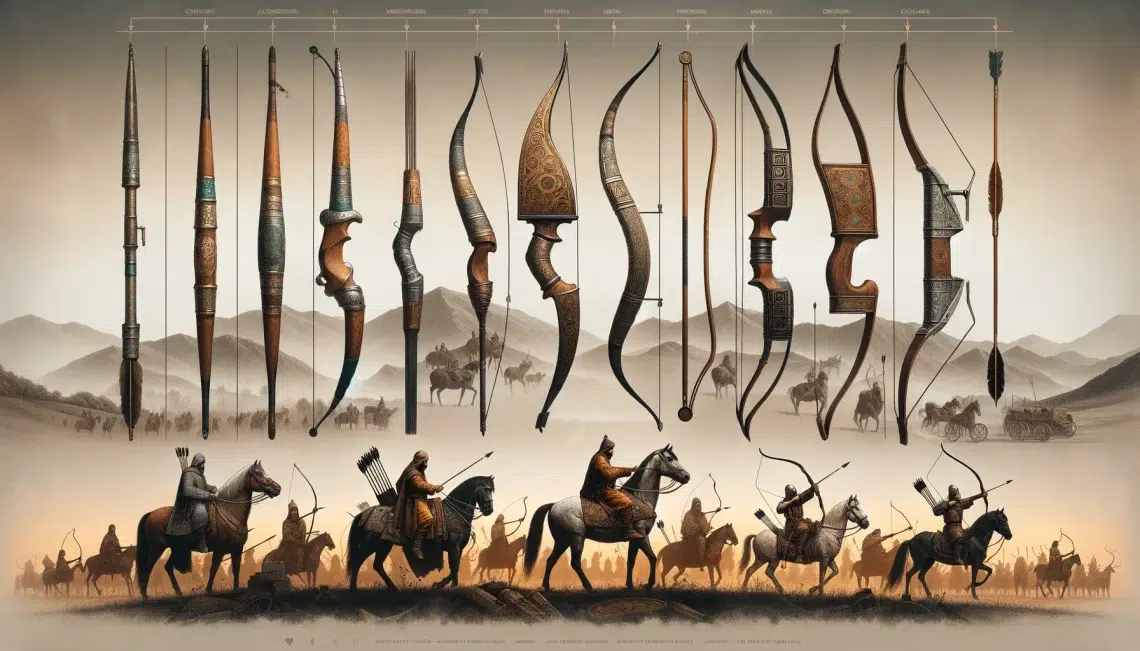
The Evolution of the Horse Bow
Introduction to the Horse Bow in Traditional Archery
The horse bow, a tool of ancient lineage, holds a revered place in the realm of traditional archery.
Designed for use on horseback, these compact, powerful bows were once widespread among nomadic cultures across the Eurasian steppes.
The horse bow’s distinctive curvature and recurve design ergonomically caters to mounted archers, facilitating both the swift release of arrows and ease of maneuverability.
Crafted traditionally from materials like wood, horn, sinew, and later, modern composites, this bow exemplifies the fusion of form and function, deeply embedded in the heritage of various archaic civilizations.
It remains a symbol of finesse and martial prowess to this day.
Historical Significance of the Horse Bow
The horse bow played a pivotal role in the military conquests of various nomadic peoples throughout history, such as the Huns, Mongols, and Turks.
Its compact shape allowed for exceptional maneuverability, making it ideal for use on horseback during high-speed pursuits and battles.
Horse bows revolutionized warfare with swift strikes that confounded larger, less mobile infantry units.
- Enabled archers to shoot accurately while galloping
- Contributed to the expansive empires by facilitating rapid and long-distance assaults
- The horse bow’s efficiency in combat proved critical in confrontations against settled civilizations
- Provided tactical advantages in open field battles and sieges
- Influenced the development of military tactics that prioritized mobility and speed
These aspects illustrate not only the tactical but also the cultural significance of the horse bow, shaping the destiny of empires.
The Unique Design Features of the Horse Bow
Horse bows showcase an ingenious combination of form and function that befit the mounted archer’s needs.
These are some defining characteristics:
- Compact Structure: Their short and recurved design allows for ease of maneuverability without interfering with the horse during full gallop.
- Ambidextrous Use: Symmetrical nature permits use by either left or right-handed archers, which is vital in combat scenarios requiring rapid changes in shooting direction.
- Composite Materials: Constructed traditionally from wood, horn, and sinew, these materials confer resilience and power, enabling the bow to withstand diverse weather and stress.
- String Bridges: Innovative string bridges at the bow’s tips heighten the string’s angle and increase the draw length, boosting arrow velocity and distance.
- Grip Design: The placement and shape of the grip are tailored to provide comfort and enhance control during the dynamic motion of horseback archery.
The Harmony of Power and Portability
Horse bows represent a pinnacle in the marriage of functionality and form.
Historically engineered for horseback warfare, these compact weapons provided riders with both strength and maneuverability.
Crafted from composite materials such as wood, horn, and sinew, horse bows could unleash powerful shots while being small enough not to hinder a rider’s mobility.
Their asymmetric shape, with a shorter limb on the top, ensures smooth operation even on a galloping steed.
This design has made horse bows revered for their balance of power and portability, allowing archers to adapt quickly to the dynamic conditions of mounted combat.
The Versatility of the Horse Bow in Various Archery Practices
From historical reenactments to modern-day sports archery, the adaptability of horse bows is evident.
Traditional archers favor them for their authenticity and maneuverability, often used in mounted archery where the compact design and versatility shine.
These bows also find their place in field archery, demanding versatility to shoot at varying distances and terrains.
Even in recreational archery, enthusiasts appreciate the horse bow for its lightweight, ease of handling, and the unique challenge it presents compared to more modern bow designs.
Its multi-disciplinary utility continues to endear the horse bow to a broad spectrum of archery practices.
The Performance Advantages of the Horse Bow
Horse bows exhibit remarkable precision and accuracy, features that stem from their unique design.
Historically, these bows were crafted to be shot from horseback, necessitating a compact and efficient structure.
Their recurved shape not only made them more manageable in the often chaotic environment of mounted combat, but also allowed for greater energy storage and release.
This energy efficiency translated into faster arrow speeds, increasing the likelihood of a precise hit.
Additionally, the symmetrical design of horse bows promoted balance and eased the aiming process for archers.
As a result, these bows were not only reliable in the heat of battle but also superbly accurate for hunting, thus offering dual advantages in performance.
Traditional Appeal and Aesthetic Beauty of the Horse Bow
Horse bows carry a form that echoes the elegance of ancient practices.
Their design is not merely functional; it is imbued with an artistry that speaks to the cultures from which they originate.
The smooth curves of the bows are crafted to complement the archer’s grip and the horse’s movement, creating a beautiful silhouette against the backdrop of open fields or target ranges.
Traditional materials such as wood, horn, and sinew are often used in their construction, adding organic warmth and distinct visual textures.
Horse bows are frequently adorned with intricate patterns or symbols significant to their historical origins, making each piece a testament to the aesthetic sensibilities of the past.
Handling and Maneuverability: Ergonomics of Horse Bows
The design evolution of horse bows closely aligns with advancements in ergonomics.
Their curved shape and relatively lightweight structure enhanced handling, crucial when mounted on horseback.
Archers could swiftly draw and release arrows, a testimony to the horse bow’s adaptive ergonomics for rapid shooting.
The grip was often tailored to the archer’s hand, ensuring a secure hold without compromising on comfort or control.
This personalization allowed for quick maneuvers, bolstering the rider’s ability to shoot in multiple directions with ease while in motion, thus reflecting the horse bow’s intrinsic link to the ergonomics of horseback warfare.
Modern Archery Competitions
In modern competitive archery, horse bows have carved a niche among traditional archery enthusiasts.
They’re often featured in events focusing on historical accuracy and heritage sportsmanship.
Archers competing with horse bows must master a distinct technique, balancing speed and precision without the aid of contemporary technology.
While not as prevalent as recurve or compound bows in Olympic-style events, horse bows command respect for their intricate craftsmanship and the skill required to wield them effectively.
These competitions serve as a testament to the enduring legacy of horse bows and their place in archery’s evolving narrative.
Comparing Horse Bows to Modern Bow Types
Horse bows, steeped in antiquity, possess a reflex design, curving away from the archer when unstrung, lending them exceptional strength and compactness ideal for horseback archery.
Modern bows, such as compound and recurve varieties, have evolved with technological advancements.
- Compound bows utilize cams and pulleys for increased accuracy and reduced draw weight, facilitating longer aim with less fatigue.
- Recurve bows, used in Olympic sports, have tips curving away from the archer, providing more power and a smoother draw than traditional straight-limbed bows.
- Crossbows, representing another contemporary type, allow a short-range, rifle-like experience with their horizontal design and trigger mechanism.
In contrast to these, horse bows lack sophisticated sighting systems and stabilizers, offering a more instinctual form of archery, emphasizing skill and tradition.
Caring for Your Horse Bow
To ensure longevity and performance of your horse bow, regular maintenance is essential:
- Inspect regularly for damage or wear, particularly on the limbs and string.
- Store properly, horizontally on a rack or a flat surface to prevent warping.
- Use a bow stringer to string and unstring, avoiding limb twist.
- Keep it dry, as moisture can damage the materials. Wipe down after use.
- Apply bow wax to the string frequently to prevent fraying.
- Avoid extreme temperatures, which can cause the bow to become brittle or warp.
- Loosen the string when not in use for extended periods to reduce tension on the limbs.
By following these tips, your horse bow will remain a reliable companion on your archery journey.
How to Choose the Right Horse Bow for Your Needs
When selecting a horse bow, consider the following:
- Purpose: Identify whether the bow will be used for hunting, target shooting, or historical reenactment.
- Draw Weight: Choose a draw weight that matches your strength and shooting style for comfortable, prolonged use.
- Material: Modern horse bows can be made from fiberglass, carbon, or traditional materials like wood and horn. Each material affects performance and feel.
- Draw Length: Ensure the bow is suitable for your draw length to avoid stack (where the bow becomes harder to pull at longer draw lengths).
- Quality: Opt for reputable manufacturers to ensure long-term durability and safety.
- Price: Set a budget that reflects your commitment and usage frequency without compromising on essential features.
These considerations help in finding a horse bow that fits one’s personal archery goals and physical capabilities.
The Cultural Impact of Horse Bows on Traditional Archery
Horse bows, revered for their role in mounted warfare, have equally influenced traditional archery practices across various cultures.
Their compact design and remarkable power heightened nomadic peoples’ effectiveness during hunts and battles, thus becoming emblematic of skill and status.
- Light and portable, horse bows facilitated the integration of shooting techniques in cultural ceremonies.
- Their construction mirrored local customs, with diverse materials and designs reflecting each culture’s identity.
- Traditional archery competitions often showcase horse bows, celebrating historical methods.
- Craftsmanship of horse bows has been passed down through generations, preserving cultural heritage.
- Modern renditions of horse bows blend historical reverence with contemporary performance, maintaining traditional archery’s relevance.
Horse bows serve as a bridge between ancient practices and modern sport, symbolizing the enduring legacy of traditional archery’s cultural significance.
Mastering the Horse Bow
Mastering the horse bow necessitates dedication. Initially, archers must familiarize themselves with the bow’s distinct structure.
Unlike Western bows, horse bows have shorter, recurved limbs that generate greater power.
Practicing the thumb draw, the traditional grip, needs time. Accurate shooting from horseback adds complexity, as it requires balancing on a moving animal while aiming.
Seasoned archers recognize the importance of a strong bond with their horse, as harmony affects accuracy.
Regular practice in varying scenarios enhances skill, preparing the archer for dynamic real-world applications.
Embracing Tradition with the Horse Bow
The horse bow remains a testament to ingenuity and tradition.
Even today, archers and enthusiasts continue to embrace its compact form, appreciating the horse bow for both its historical significance and functionality in modern archery practices.
These resilient artifacts of the past not only symbolize the fusion of cultures and technologies but also stand as a homage to the skills of ancient archers, urging contemporary generations to preserve the art of traditional bowmaking.
Thus, the horse bow’s legacy endures, bridging the past and present, challenging and inspiring.