
Hippolyta: Queen of the Amazons in Greek Mythology
In ancient mythology, Hippolyta stands as a formidable figure, the revered Queen of the Amazons. These warrior women, celebrated for their might and independence, originated in the tales of Greek mythology.
Women alone governed and populated their society, which eschewed the presence of men.
Hippolyta not only emerged as a ruler but also as a symbol of female strength and autonomy at its helm.
Various mythological epics, most notably the labors of Hercules and the exploits of Theseus, weave her narrative. The character of Hippolyta represents more than mythic lore. She encapsulates the empowerment and complexities of women in ancient narratives.
Who Was Hippolyta in Greek Mythology?

Hippolyta reigns in Greek mythology as the formidable queen of the Amazons, a people of warrior women.
According to lore, these Amazons thrived near the Black Sea, establishing a society structured around warfare and devoid of male influence.
Hippolyta was renowned for not only her exceptional combat skills but also for her emblematic possession:
- a magical girdle, a gift from her father, Ares, the god of war.
This girdle symbolizes her authority over the Amazons and became a central element of her myth.
In particular in the tales of Heracles, who was tasked to retrieve it as one of his twelve labors.
Understanding Amazonian Society in Ancient Lore

The Amazons, a matriarchal society in ancient lore, were renowned for their female warriors.
Often depicted as isolated from men, they established a self-sufficient community that valued strength, courage, and military prowess.
Their society challenged patriarchal norms, as women held roles of power and decision-making. Queen Hippolyta epitomized this society’s values as a formidable leader and warrior.
The mystique surrounding the Amazons stemmed from their reputed fierceness and autonomy, making Queen Hippolyta’s role and importance pivotal in understanding the dynamics of Amazonian culture.
Their legacy is a tapestry woven from myth, speculation, and admiration across ancient civilizations.
Learn more about other women in Greek mythology:
Hippolyta’s Lineage: Connections to Ares and Otrera

Hippolyta’s origins are deeply rooted in divine and royal mythological bloodlines.
She was a daughter of Ares, the god of war, demonstrating her connection to the Olympian deities and her inherent martial prowess.
Ares is known for his ferocity and combative nature, passing these qualities on to his descendants. Hippolyta’s mother, Otrera, was the queen of the legendary Amazons.
She was also a priestess with links with the cult of Artemis, further reinforcing the family’s divine affiliations.
Hippolyta had three sisters, Penthesilea, Antiope, and Melanippe, who also belonged to the lineage of fierce Amazon warriors. This parentage bestows Hippolyta with both royal and divine heritage.
Learn more about her family:
- Ares Quick Tempered Greek God of War
- Penthesilea: Amazon Queen Who Died in Trojan War
- Antiope: Amazon Warrior & Daughter of Ares
Hippolyta’s Girdle and the Ninth Labor of Hercules
Hippolyta owned a special girdle, gifted to her by her father, Ares, the god of war. This girdle was a special leather war belt she wore across her armour. It highlights her leadership and the might of her army.
It was believed to give its wearer incredible powers, making Hippolyta a top warrior in Greek stories. Yet, Hera, queen of the gods, was envious. She plotted to take away the girdle as one of Hercules’ tasks.

In one version of the myth, Heracles embarks on his ninth labor to retrieve the girdle of Hippolyta, the queen of the Amazons. King Eurystheus assigns this task because his daughter, Admete, desires the girdle, believing it will grant her the strength and power of an Amazon.
Heracles sets sail with a group of companions to the land of the Amazons, located near the Black Sea. Upon arrival, Heracles and his men are greeted by Hippolyta. The Amazon queen has heard of Heracles’ great deeds and respects his strength and heroism.
Hippolyta, impressed by Heracles, decides to meet him personally. She approaches Heracles and asks about his mission. Heracles explains that he needs the girdle to complete his labor. Recognizing the honour and bravery in Heracles, Hippolyta willingly agrees to give him the girdle. She sees this as an opportunity to form an alliance with a powerful hero who could be a valuable ally in times of war.
Hera’s Interference

However, the situation escalates due to Hera’s interference. Disguised as an Amazon warrior, Hera spreads rumours among the Amazons that Heracles plans to abduct their queen. This rumour incites the Amazons, who arm themselves and prepare for battle.
Seeing the Amazons approaching in full armour, Heracles believes they intend to attack him. A fierce battle ensues. Heracles fights bravely, and in the chaos, he kills Hippolyta and takes her girdle. The Greeks and Amazons clash violently, but Heracles and his men manage to fend off the attackers.
After the battle, Heracles and his crew sail away, stopping briefly at the city of Troy. They eventually return to Mycenae, where Heracles presents the girdle to King Eurystheus, completing his ninth labour.
This win shows his great heroism among the Greeks and proves he could overcome any obstacle to complete his tasks.
Symbolism and Themes
The myth of Heracles’ ninth labor explores themes of trust, betrayal, and the consequences of divine interference.
It highlights Heracles’ strength and determination, as well as the tragic outcomes that often result from misunderstandings and manipulation by the gods.
This labour also underscores the complex relationships between heroes and powerful female figures in Greek mythology.
Several Versions of the Girdle of Hippolyta Myth
The myth of Heracles’ ninth labor has several variations leading to some confusion. In some versions, Heracles kills Hippolyta, while in others, he does not.
Version 1: Heracles Kills Hippolyta
In this version, Heracles arrives at the land of the Amazons and initially receives a warm welcome from Hippolyta. She agrees to give him the girdle without a fight. However, Hera, disguised as an Amazon, spreads a rumor that Heracles plans to abduct Hippolyta, the Queen.
The Amazons, believing the rumour, arm themselves and attack Heracles and his men. In the ensuing battle, Heracles kills Hippolyta, takes the girdle, and fights off the Amazons before sailing way.
Version 2: Hippolyta Gives the Girdle Willingly
In another version, Hippolyta is so impressed by Heracles that she willingly gives him the girdle. Hera, not satisfied with this peaceful resolution, spreads the same rumour among the Amazons.
The Amazons attack, but in this version, Heracles manages to escape with the girdle without killing Hippolyta. The battle still occurs, but Hippolyta survives.
Version 3: Hercules Captures Melanippe
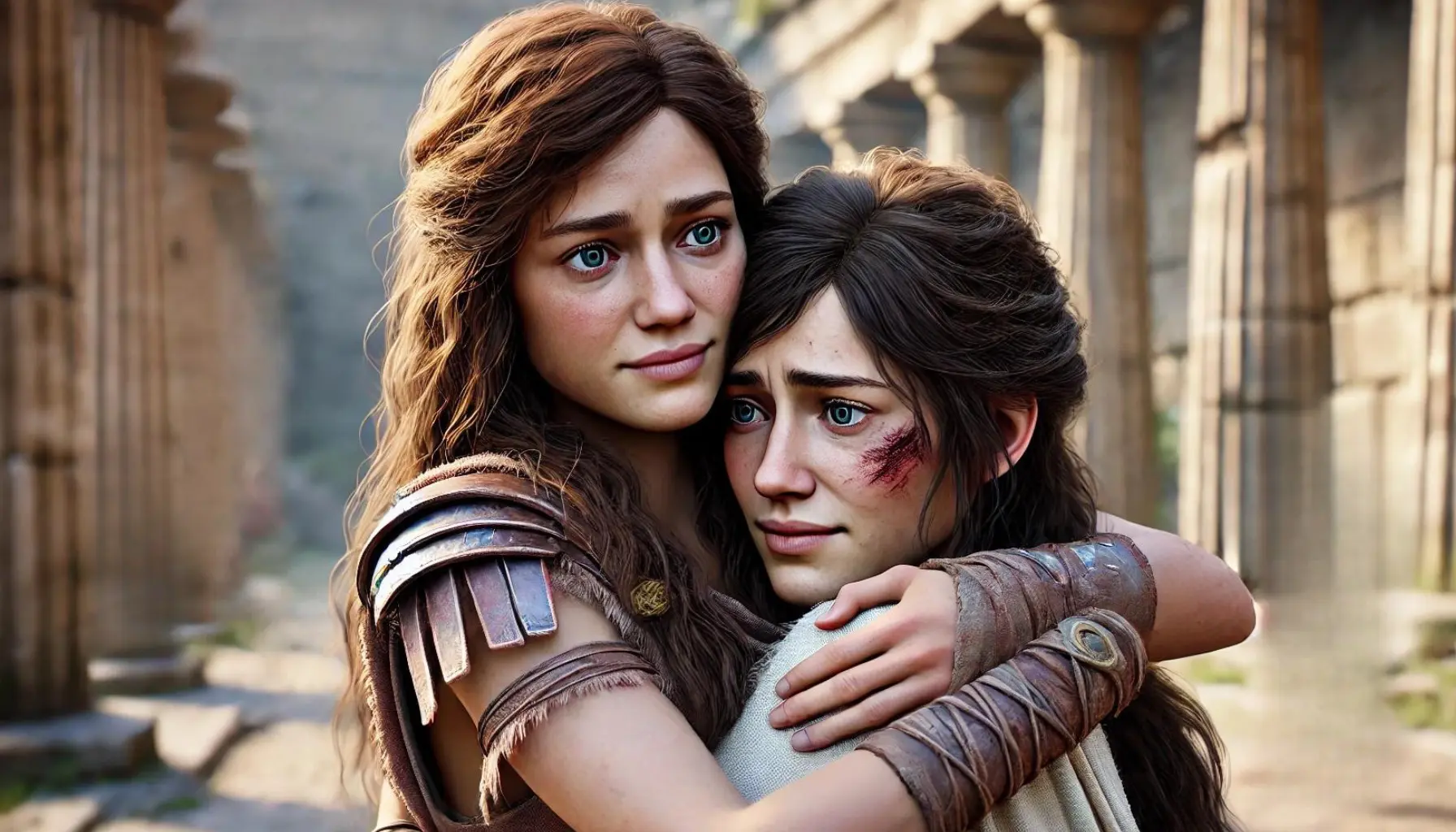
In this version, Heracles arrives at the land of the Amazons with the task of obtaining the girdle of Hippolyta. To achieve his goal, he captures Melanippe, sister to Hippolyta. Heracles knows that capturing Melanippe will give him leverage over Hippolyta.
Hippolyta faces a difficult decision. She values the girdle, but her sister’s life is more important. Hippolyta agrees to Heracles’ demand and hands over the girdle. Heracles keeps his word and releases Melanippe and sails away.
Version 4: Hippolyta’s Fate is Unclear
Some accounts leave Hippolyta’s fate ambiguous. These versions focus more on the conflict and the misunderstanding caused by Hera’s interference. The details of whether Hippolyta survives or dies are not explicitly mentioned, emphasizing the chaos and confusion of the battle rather than the specific outcome for Hippolyta.
The Mystique of Hippolyta’s Warriors
Hippolyta’s warriors, often known as the Amazons, are shrouded in a tapestry of ancient myths and modern misconceptions. Tales depict these women as fierce, independent fighters, but historical interpretations can mislead.
Some believe they were man-haters and rejected all society’s norms, which simplifies their rich cultural narrative. In reality, their representation reflects the grappling with the concept of powerful women throughout history.
Contrary to the belief that they cut off one breast to better wield a bow, there is no evidence of such practices in ancient accounts or archaeological findings.
Their portrayal as Hippolyta’s almost mythical army in literature and art often amplifies mystic qualities while overshadowing their potential basis in real warrior women societies.
Hippolyta’s Offspring: Scythian and Greek Descendants

Hippolyta, the queen of the Amazons in Greek mythology, is said to have had descendants who were part of both Scythian and Greek heritages.
According to legend:
- The Scythians, a nomadic people of skilled horsemen, believe themselves to be descended from the Amazons. Tales of fierce female warriors among the Scythians often referenced Amazonian ancestry.
- In Greek literature and plays, Hippolytus, Hippolyta’s son, represents the Greek line. Fathered by Theseus, he symbolizes the blending of Amazonian strength with Athenian culture and intellect.
- Claims of descent from Hippolyta serve to validate the prowess and legitimacy of these groups in ancient times.
Hippolyta’s Role in Love and War: The Theseus Myth

In Greek mythology, Hippolyta, queen of the Amazons, finds herself enmeshed in both love and conflict with the Athenian hero Theseus.
Euripides Play: Hippolytus (428 BC)
Euripides’ play involves Hippolyta running away with Theseus is Hippolytus. However, it is important to note that in this play, the character is not explicitly named Hippolyta but rather Antiope or Hippolyte, depending on the version of the myth. The confusion often arises because different sources and adaptations use different names for the same or similar characters.
In Hippolytus, Euripides tells the story of Theseus’ son, Hippolytus, who is the offspring of Theseus and an Amazon queen. In some versions of the myth, this Amazon queen is named Antiope, while in others, she is called Hippolyta or Hippolyte.
The play focuses on the tragic events surrounding Hippolytus, including his stepmother Phaedra’s forbidden love for him and the subsequent misunderstandings that lead to his death.
Their legendary encounter combines elements of romance and battle, reflecting the era’s complex dynamics.
- Embodiment of Strength: As an Amazon, Hippolyta represents formidable martial prowess and the challenge faced by Theseus.
- Symbol of Conflict: The quest for Hippolyta’s girdle, a token of her authority, signifies Theseus’s trials and the clash between cultures.
- Romantic Interest: In some Greek literature, the story has Hippolyta falling for Theseus, adding layers of love and betrayal to the lore.
- Narrative Catalyst: Their union, whether through conflict or love, precipitates further adventures and consequences in Theseus’s life.
Hippolyta’s involvement with Theseus showcases her influence over his myth, embodying both conquest and companionship.
Portrayals of Hippolyta Throughout Art and Literature
- In Greek mythology, Hippolyta is the strong and warrior-like Queen of the Amazons.
- Art through the ages often illustrates her with the magical girdle given by her father Ares, god of war.
- Literary works highlight her encounters with Hercules in his quest for her girdle as one of his twelve labors.
- William Shakespeare’s “A Midsummer Night’s Dream” reimagines her as the bride of Theseus, adding a romantic narrative layer.
- In modern times, comic books and films, notably DC Comics’ “Wonder Woman,” re-envision Hippolyta with an emphasis on matriarchal leadership and female empowerment.
- The portrayal of Hippolyta varies from a fierce warrior to a nurturing and diplomatic queen, reflecting the evolution of her narrative through different eras and mediums.
Hippolyta’s Counterparts in Different Cultures
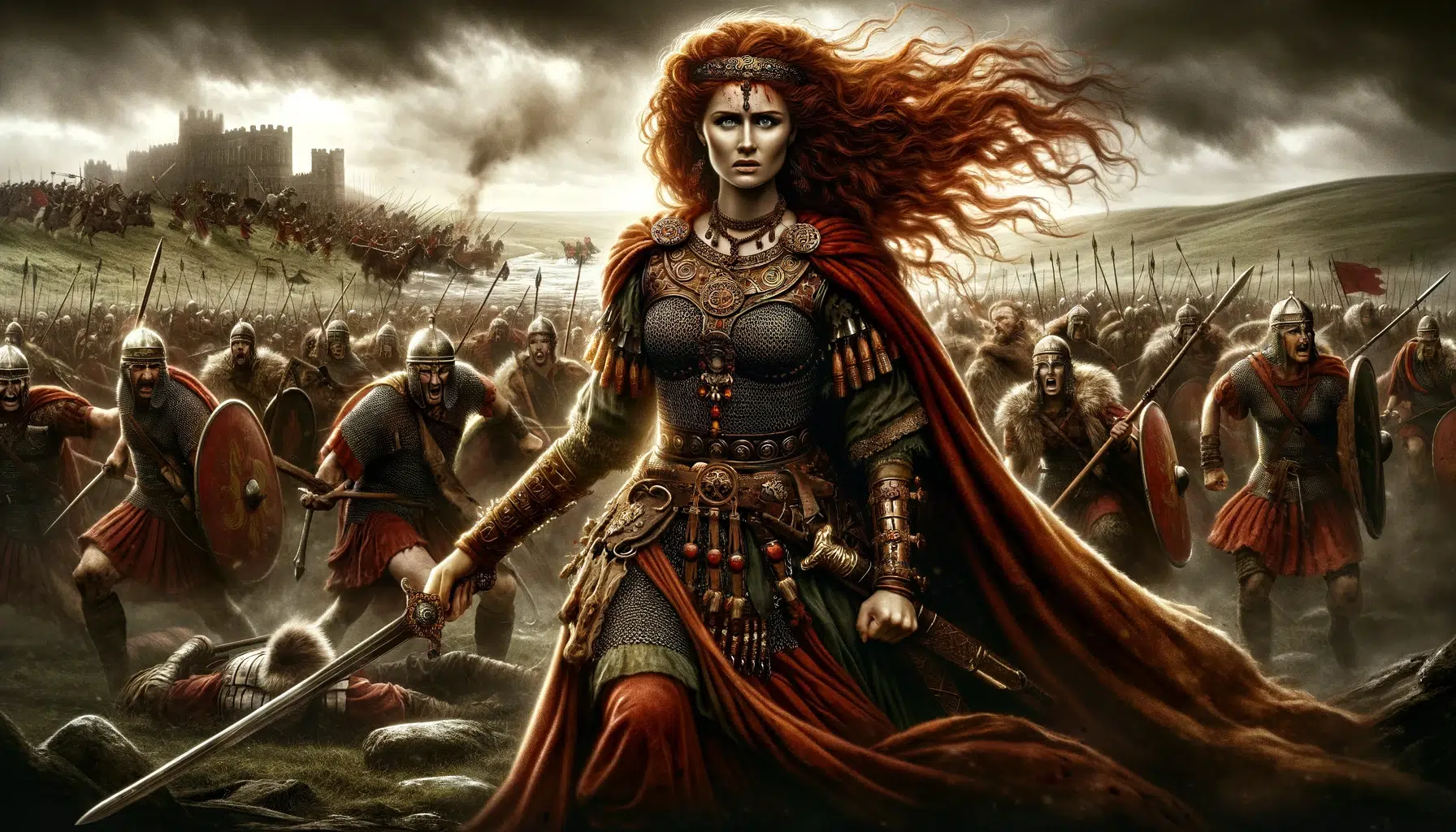
In comparative mythology, figures akin to Hippolyta, the Amazonian queen, emerge globally:
- Penthesilea: Her sister became the Amazon queen after Hippolyta’s accidental death and she later fought in the Trojan War.
- Boudica: The warrior queen of the Iceni people in Britain, like Hippolyta, led her people in battles against oppressors.
- Freya: In Norse mythology, this goddess of love and war embodies a similar duality to Hippolyta’s nurturing yet combative nature.
- Scáthach: From Irish mythology, this warrior woman and teacher of heroes parallels Hippolyta’s role as a strong leader and mentor.
- Durga: This Hindu goddess combines maternal benevolence with warrior-like strength, echoing Hippolyta’s dual characteristics.
Each of these figures exemplifies a blend of femininity and warrior spirit, reflecting Hippolyta’s remarkable legacy across various cultures.
The Legacy of Hippolyta: Impact on Modern Fiction and Culture
Hippolyta’s influence extends beyond ancient myths into contemporary media.
Her portrayal as the Amazonian queen inspires characters in literature, film, and comic books. She is a seminal figure in the Wonder Woman franchise. Often representing strength, leadership, and female empowerment.
Hippolyta’s legacy is evident in:
-
Strong Female Protagonists: Modern narratives often feature powerful women leaders, echoing Hippolyta’s sovereignty.
-
Fantasy and Superhero Genres: She is a template for Amazon characters in blockbuster films and comics.
-
Feminist Ideals: She promotes matriarchal societies in fiction.
-
Cultural Iconography: Her image conveys a blend of femininity and might.
The cultural footprint of Hippolyta continues to shape portrayals of feminine power and leadership.
Learn more about:
The Timeless Allure of Hippolyta’s Story
Hippolyta’s story resonates through centuries. For its reflections on strength, sovereignty, and the complexity of female power. In a tapestry of myth and legend, her character encompasses more than the Queen of the Amazons.
She embodies an enduring symbol of resilience and the dance between love and war. The fascination with Hippolyta’s story continues to persist. Captivating new generations and inspiring interpretations across diverse cultures and artistic expressions.
Her legacy remains as majestic and relevant today as it was in the time of the ancients.